Global Patch Compliance Reporting Market Size, Share and Analysis By Component (Software, Services), By Deployment Mode (On-Premises, Cloud), By Organization Size (Small and Medium Enterprises, Large Enterprises), By End-User (BFSI, Healthcare, IT and Telecommunications, Government, Retail, Manufacturing, Others), By Regional Analysis, Global Trends and Opportunity, Future Outlook By 2025-2035
- Published date: March 2026
- Report ID: 181641
- Number of Pages: 391
- Format:
-
keyboard_arrow_up
Quick Navigation
Report Overview
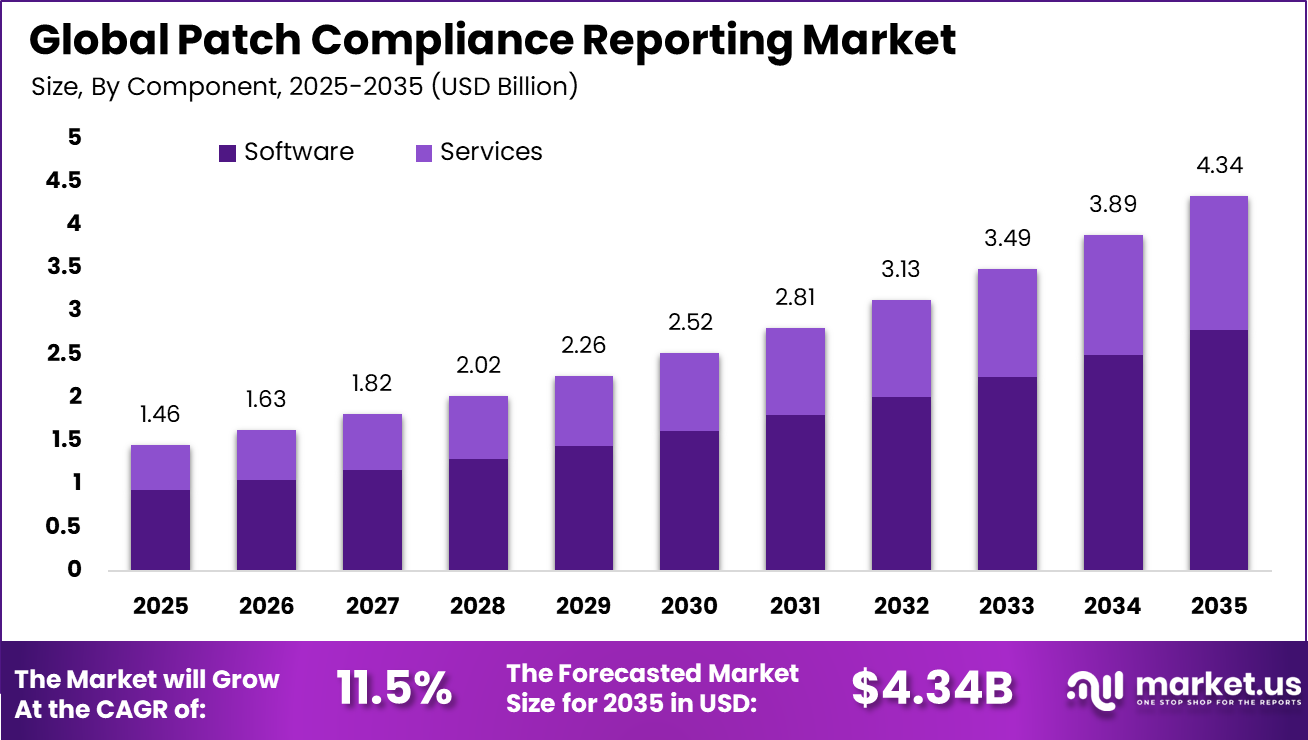
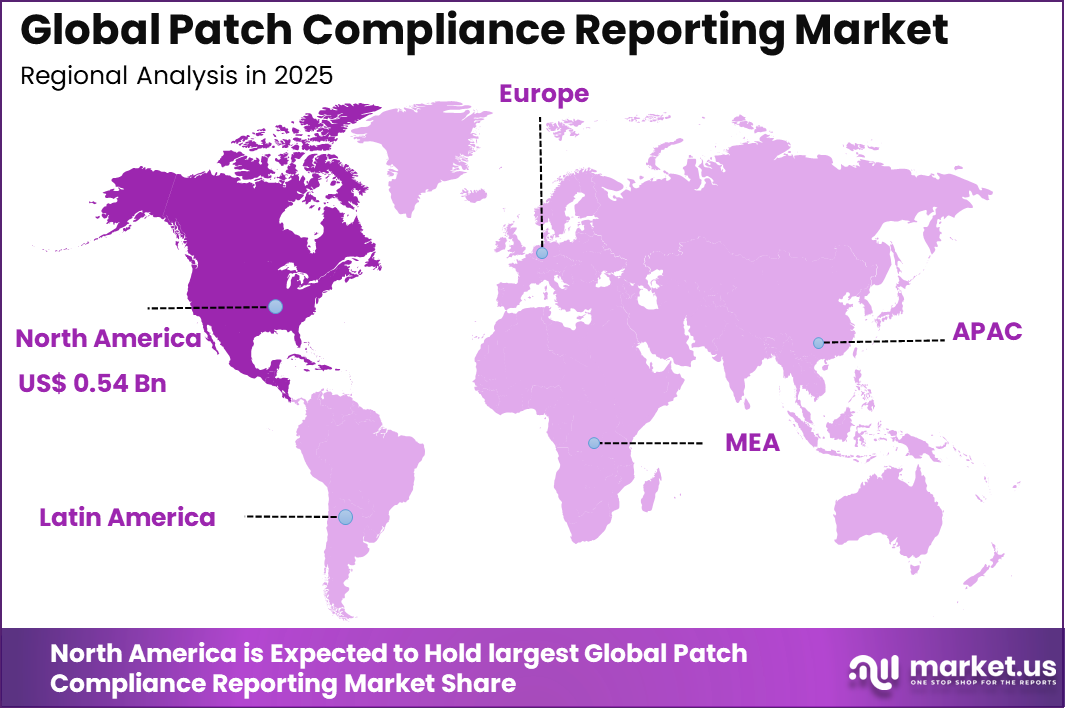
The Global Patch Compliance Reporting Market size is expected to be worth around USD 4.34 billion by 2035, from USD 1.46 billion in 2025, growing at a CAGR of 11.5% during the forecast period from 2025 to 2035. North America held a dominant market position, capturing more than a 37.3% share, holding USD 0.54 billion in revenue.
The Patch Compliance Reporting Market refers to the set of software, platforms, and managed capabilities used to track, verify, and document whether security patches, firmware updates, and software fixes have been applied across enterprise assets. In practical terms, this market sits at the intersection of patch management, vulnerability management, endpoint administration, audit readiness, and cyber risk reporting.
The market has gained importance because patching is no longer limited to office computers and internal servers. NIST states that modern patch planning now applies across IT, OT, IoT, mobile, cloud, virtual machines, and containers, while also noting that many assets are directly exposed to the internet under modern zero trust environments. This broad exposure has increased the need for compliance reporting tools that can prove patch status by asset, severity, business owner, and remediation timeline.
The strongest growth driver is the rise in real-world exploitation of known vulnerabilities. Verizon’s 2025 DBIR reported that exploitation of vulnerabilities surged by 34%, and that edge devices and VPNs represented 22% of vulnerability exploitation actions, up sharply from the prior year. The same report found that only about 54% of those edge device vulnerabilities were fully remediated during the year, with a median remediation time of 32 days, which directly increases the value of patch compliance reporting.
A second major driver is the business cost of weak cyber hygiene. IBM’s 2025 Cost of a Data Breach report places the global average breach cost at USD 4.4 million, while IBM also reports USD 1.9 million in savings for organizations making extensive use of AI in security. At the same time, a Ponemon study published by ServiceNow found that 60% of breach victims were breached through an unpatched known vulnerability, and 52% of respondents said manual processes put them at a disadvantage in responding to vulnerabilities.
Demand is being shaped by the widening technology estate that enterprises must secure and document. NIST explains that enterprise patching now covers cloud assets, mobile devices, containers, OT, and IoT, while its enterprise patching practice guide shows that organizations need inventory and patching capabilities for both routine and emergency situations. As infrastructure becomes more distributed, buyers increasingly need reporting tools that can unify compliance data from many environments into one audit-ready view.
For instance, in January 2026, IBM enhanced its BigFix suite with generative AI for patch impact analysis, predicting downtime risks pre-deployment. Compliance reports now auto-generate for GDPR/SOX, saving audit prep time. BigFix remains a staple for mission-critical systems in regulated U.S. industries like finance and healthcare.
Key Takeaway
- In 2025, the Software segment led the Global Patch Compliance Reporting Market, accounting for 64.2% of total share.
- In 2025, Cloud based deployment dominated with a 55.8% market share.
- In 2025, Large Enterprises represented the primary customer segment, capturing 53.7% of overall demand.
- In 2025, the IT and Telecom sector held the largest industry share at 26.5%.
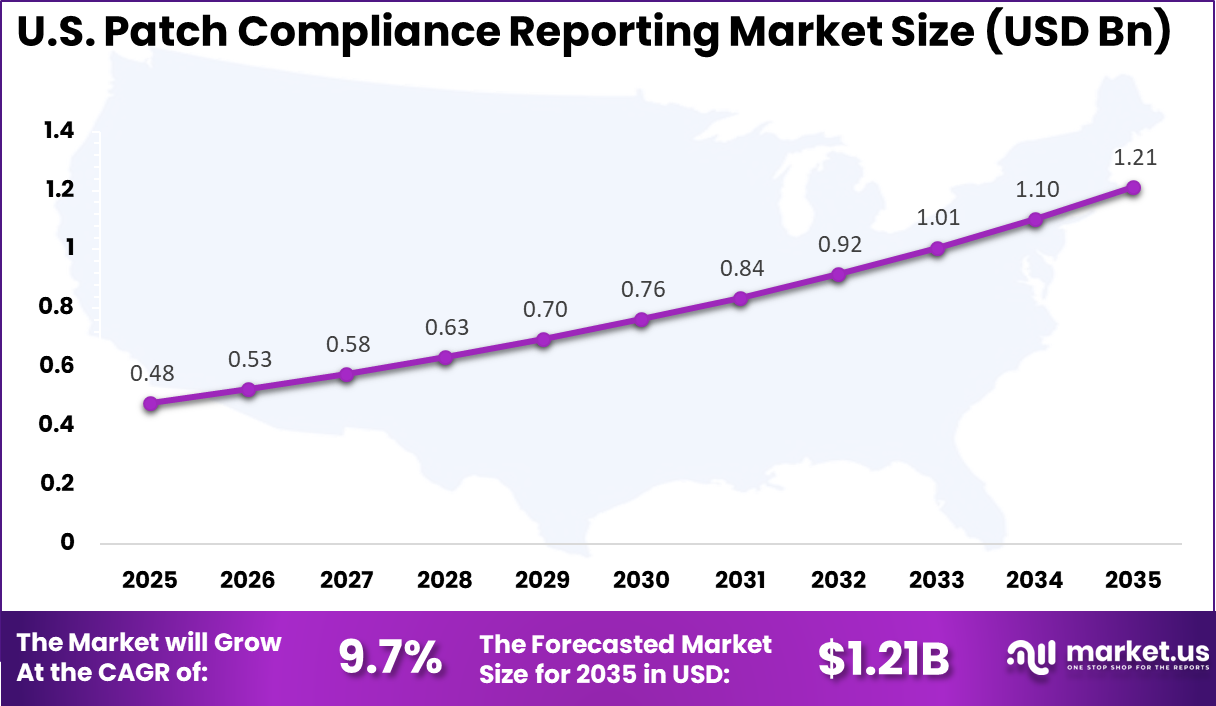
- In 2025, the U.S. Patch Compliance Reporting Market reached USD 0.48 billion and recorded a growth rate of 9.7%.
- In 2025, North America maintained regional leadership, securing more than 37.3% of the Global Patch Compliance Reporting Market.
Role of Generative AI
Generative AI improves patch compliance reporting by automating report creation and identifying patterns in large datasets. Teams using AI tools reduce report preparation time by 65%, enabling deeper analysis. It enhances accuracy by processing complex system logs efficiently, making compliance tracking faster and more reliable across diverse IT environments.
Additionally, AI also predicts patch failures before compliance issues arise, with 78% of early adopters reporting fewer missed updates. Analyzing vulnerability trends highlights high risk gaps early. This reduces manual workload and helps IT teams act proactively, strengthening overall security posture and improving consistency in patch management practices.
By Component
Software accounts for 64.2% of the market, reflecting the strong reliance on digital platforms that automate patch tracking, reporting, and compliance validation processes. These solutions enable organizations to monitor patch deployment across multiple systems and generate reports that highlight vulnerabilities and missing updates. Centralized dashboards provide real time insights into system compliance status.
The adoption of software platforms is also supported by their integration with endpoint management and security systems. Automated reporting reduces manual effort and improves accuracy in compliance monitoring. As organizations focus on strengthening cybersecurity frameworks, software based patch compliance tools continue to play a central role.
For Instance, in January 2026, Qualys launched new software features that simplify reporting on patch status across devices. The update emphasizes real-time alerts and customizable dashboards, easing the burden on IT staff. This kind of innovation drives software growth by fitting right into busy workflows, helping users prove compliance quickly during reviews.
By Deployment Mode
Cloud deployment represents 55.8% of the market, indicating strong enterprise preference for scalable and accessible compliance monitoring systems. Cloud based platforms allow organizations to track patch status across distributed IT environments from centralized dashboards. This approach improves visibility into system updates across multiple locations and remote devices.
Cloud infrastructure also supports real time reporting and automated updates, enabling faster response to emerging vulnerabilities. Organizations benefit from reduced infrastructure management requirements and improved accessibility. As enterprises expand cloud based operations, cloud deployment continues to gain strong adoption.
For instance, in February 2026, Microsoft expanded its cloud-based patch services with better integration for hybrid environments. The changes allow seamless updates from anywhere, cutting down on server maintenance hassles. Cloud’s rise makes sense here, as teams appreciate the flexibility to manage patches remotely without high upfront costs.
By Organization Size
Large enterprises account for 53.7% of market adoption due to the complexity of their IT infrastructure and the scale of their security requirements. These organizations manage large networks of endpoints, servers, and applications that require continuous patch monitoring. Patch compliance reporting platforms help centralize visibility and ensure consistent update deployment.
Large organizations also face strict regulatory requirements that demand accurate reporting and audit readiness. Automated compliance tools provide detailed insights that support governance and risk management strategies. As enterprise cybersecurity frameworks evolve, large enterprises remain key adopters of patch compliance reporting solutions.
For Instance, in January 2026, IBM released tools tailored for enterprise-scale networks, streamlining patch audits for thousands of endpoints. The focus on bulk reporting helps big firms meet tight regulatory deadlines without chaos. Large enterprises lean into this segment because they need robust systems to handle their complexity head-on.
By End User
The IT and telecom sector represents 26.5% of market adoption due to its reliance on secure and continuously updated systems. Organizations in this sector manage extensive digital infrastructure that requires regular patching to maintain performance and security. Patch compliance reporting tools help ensure that all systems remain updated and protected from vulnerabilities.
Telecom providers and IT companies also use these platforms to monitor large scale networks and maintain service reliability. Automated reporting systems provide insights that support proactive security management. As digital infrastructure continues to expand, the IT and telecom sector remains a significant user of patch compliance solutions.
For Instance, in March 2026, Cisco Systems announced telecom-focused enhancements for real-time patch monitoring in high-traffic networks. The solution ensures minimal downtime during updates, vital for always-on services. IT and telecom sectors thrive here as these tools keep critical infrastructure secure amid constant connectivity demands.
By Region
North America holds 37.3% of the market share due to strong adoption of cybersecurity technologies and compliance management systems. Organizations in the region invest in advanced tools to monitor system vulnerabilities and ensure regulatory compliance. The presence of mature enterprise IT ecosystems supports widespread adoption of patch compliance reporting platforms.
For instance, in January 2026, ManageEngine in Pleasanton, California, rolled out AI-driven patch analytics within its Endpoint Central platform, predicting compliance gaps before they escalate. This proactive tool empowers IT teams with actionable insights, reinforcing North America’s dominance in intelligent patch management solutions.
Within North America, the United States contributes USD 0.48 billion with a growth rate of 9.7%. The country’s extensive digital infrastructure and increasing focus on cybersecurity have strengthened demand for patch compliance reporting solutions. Continued investment in security and compliance technologies is expected to support steady market growth.
For instance, in February 2026, Ivanti from South Jordan, Utah, launched an enhanced patch compliance dashboard that automates real-time vulnerability tracking across hybrid environments. This innovation helps enterprises meet strict regulatory standards while reducing breach risks, solidifying U.S. leadership in automated compliance reporting for mission-critical systems.
Emerging Trends
Real time dashboards are transforming patch compliance reporting by offering instant visibility into system update status. Around 62% of IT teams rely on these dashboards for daily checks. This approach helps detect delays quickly and supports audit readiness by providing clear, continuous insights into compliance performance across endpoints.
Automation in patch testing and deployment is gaining traction, with 71% of organizations adopting it to improve success rates. It minimizes human errors and accelerates update cycles. This trend ensures smoother compliance processes, allowing organizations to maintain consistent patching standards while improving efficiency and reducing operational disruptions.
Growth Factors
Increasing cyber threats continue to drive demand for patch compliance reporting, as 85% of breaches are linked to unpatched vulnerabilities. Strong reporting demonstrates risk reduction and encourages executive support for security investments. This creates a cycle where improved visibility leads to broader adoption across industries handling critical data.
Rapid cloud adoption adds complexity to patch management, but integrated reporting tools address this challenge effectively. Hybrid environments have seen 69% growth, requiring unified tracking across on premise and cloud systems. These tools provide complete visibility, enabling organizations to scale securely while maintaining consistent compliance and minimizing potential security gaps.
Key Market Segments
By Component
- Software
- Services
By Deployment Mode
- On-Premises
- Cloud
By Organization Size
- Small and Medium Enterprises
- Large Enterprises
By End-User
- IT and Telecommunications
- BFSI
- Healthcare
- Government
- Retail
- Manufacturing
- Others
Key Regions and Countries
North America
- US
- Canada
Europe
- Germany
- France
- The UK
- Spain
- Italy
- Russia
- Netherlands
- Rest of Europe
Asia Pacific
- China
- Japan
- South Korea
- India
- Australia
- Singapore
- Thailand
- Vietnam
- Rest of APAC
Latin America
- Brazil
- Mexico
- Rest of Latin America
Middle East & Africa
- South Africa
- Saudi Arabia
- UAE
- Rest of MEA
Drivers
Rising Cybersecurity Threats
This growth is driven by the sharp rise in cyberattacks targeting unpatched systems across industries. Organizations are becoming more aware that delayed updates create easy entry points for attackers, pushing them to adopt stronger patch compliance reporting practices to monitor and reduce vulnerabilities effectively.
As threats grow more sophisticated, businesses focus on continuous tracking and faster patch deployment to avoid security incidents. This has increased the importance of accurate reporting tools that provide visibility into patch status, helping organizations respond quickly and maintain a stronger overall security posture.
For instance, in January 2026, SolarWinds tackled a Web Help Desk flaw under active attack, as flagged by security agencies, pushing users to update fast. The patch closed a gap tied to older issues, making it easier for admins to track and report patch status amid growing hack attempts. Teams now have clearer visibility on vulnerable spots.
Restraint
Operational Complexity
Operational complexity acts as a major restraint as organizations manage diverse systems, applications, and devices across multiple environments. Coordinating patch updates across on-premises and cloud infrastructure creates challenges in maintaining consistency and visibility in reporting processes.
Additionally, integrating different tools and ensuring compatibility often requires significant time and effort. These complexities can slow down patch cycles and increase the risk of missed updates, making it difficult for organizations to maintain effective compliance and streamlined operations.
For instance, in March 2026, Ivanti shared details on Desktop and Server Management vulnerabilities, urging standard monthly patches to handle mixed environments. This highlights struggles in keeping servers and endpoints in sync, as teams juggle varied setups that slow uniform reporting. It eases some pain but underscores the ongoing hassle.
Opportunities
Growth of AI Driven Patch Management
This opportunity is emerging as organizations adopt AI driven solutions to simplify patch compliance reporting and improve decision making. AI helps analyze large volumes of data, identify patterns, and prioritize critical vulnerabilities, enabling faster and more accurate patching strategies across complex IT environments.
AI also supports automation in reporting and predictive analysis, reducing manual workload and improving efficiency. By identifying potential risks early and optimizing patch schedules, these solutions enhance overall security posture. This creates strong growth potential for advanced tools that combine intelligence with compliance management.
For instance, in November, 2025, IBM unveiled an AI layer for its patch tools that predicts vulnerability risks by scanning past breach patterns. Early adopters saw faster triage with auto-prioritized updates fed into reports. It points to AI easing the load, turning raw data into actionable insights for proactive compliance.
Challenges
Lack of Skilled Workforce
The lack of a skilled workforce remains a key challenge in managing patch compliance effectively. Many organizations struggle to find professionals with the expertise required to handle advanced security tools and complex IT environments, which can impact reporting accuracy and response times.
This gap also increases dependence on limited resources, leading to delays in patch implementation and monitoring. As technology evolves, continuous training becomes necessary, but not all organizations can keep pace, making it harder to maintain consistent and effective compliance practices.
For instance, in March 2026, Qualys highlighted training gaps in its vulnerability management updates, noting many pros struggle with patch prioritization amid skill shortages. Without enough experts, teams miss full reporting cycles, leaving systems exposed longer and stressing the need for better onboarding.
Key Players Analysis
The Patch Compliance Reporting Market is driven by enterprise IT and cybersecurity providers that deliver solutions for monitoring system updates, vulnerabilities, and regulatory compliance. Microsoft, IBM, ServiceNow, and Broadcom provide integrated platforms that combine patch management with compliance reporting and risk assessment tools. These solutions enable organizations to track patch status across endpoints and ensure adherence to security policies.
Dedicated vulnerability management and IT operations vendors contribute advanced patch monitoring and reporting capabilities. Ivanti, ManageEngine, SolarWinds, Qualys, and Rapid7 offer solutions that automate patch detection, vulnerability scanning, and compliance reporting workflows. These platforms help organizations prioritize patching activities based on risk levels and system criticality.
Additional cybersecurity and infrastructure providers further expand the competitive landscape. Cisco Systems, Trend Micro, VMware, BMC Software, Hewlett Packard Enterprise, McAfee, and Digital Defense provide endpoint security, configuration management, and compliance analytics tools. These vendors focus on delivering centralized dashboards, automated remediation, and audit ready reporting capabilities.
Top Key Players in the Market
- Ivanti
- ManageEngine
- SolarWinds
- Qualys
- Microsoft
- IBM
- ServiceNow
- Broadcom (Symantec)
- Rapid7
- McAfee
- Cisco Systems
- Trend Micro
- VMware
- BMC Software
- Hewlett Packard Enterprise (HPE)
- Digital Defense
- Others
Recent Developments
- In January 2026, Qualys rolled out Patch Management release 3.9 with TruRisk Eliminate enhancements, letting teams create patch jobs for newly activated or long-dormant assets. They also added support for Ubuntu 24.10, 25.04, and RHEL 10, plus new QQL token standardization. This keeps Qualys ahead in automated compliance reporting, helping enterprises stay secure across hybrid environments.
- In March 2026, Microsoft delivered its Patch Tuesday update with fixes for 58 vulnerabilities, including several in Windows Server tied to patch compliance gaps. Their Intune suite now offers better reporting dashboards showing 95%+ deployment success rates. This reinforces U.S. leadership as enterprises prioritize real-time visibility into patch status across global fleets.
Report Scope
Report Features Description Market Value (2025) USD 1.4 Bn Forecast Revenue (2035) USD 4.3 Bn CAGR (2026-2035) 11.5% Base Year for Estimation 2025 Historic Period 2020-2024 Forecast Period 2026-2035 Report Coverage Revenue forecast, AI impact on Market trends, Share Insights, Company ranking, competitive landscape, Recent Developments, Market Dynamics and Emerging Trends Segments Covered By Component (Software, Services), By Deployment Mode (On-Premises, Cloud), By Organization Size (Small and Medium Enterprises, Large Enterprises), By End-User (BFSI, Healthcare, IT and Telecommunications, Government, Retail, Manufacturing, Others) Regional Analysis North America – US, Canada; Europe – Germany, France, The UK, Spain, Italy, Russia, Netherlands, Rest of Europe; Asia Pacific – China, Japan, South Korea, India, New Zealand, Singapore, Thailand, Vietnam, Rest of Latin America; Latin America – Brazil, Mexico, Rest of Latin America; Middle East & Africa – South Africa, Saudi Arabia, UAE, Rest of MEA Competitive Landscape Ivanti, ManageEngine, SolarWinds, Qualys, Microsoft, IBM, ServiceNow, Broadcom (Symantec), Rapid7, McAfee, Cisco Systems, Trend Micro, VMware, BMC Software, Hewlett Packard Enterprise (HPE), Digital Defense, Others Customization Scope Customization for segments, region/country-level will be provided. Moreover, additional customization can be done based on the requirements. Purchase Options We have three license to opt for: Single User License, Multi-User License (Up to 5 Users), Corporate Use License (Unlimited User and Printable PDF)  Patch Compliance Reporting MarketPublished date: March 2026add_shopping_cartBuy Now get_appDownload Sample
 -
-
- Ivanti
- ManageEngine
- SolarWinds
- Qualys
- Microsoft
- IBM
- ServiceNow
- Broadcom (Symantec)
- Rapid7
- McAfee
- Cisco Systems
- Trend Micro
- VMware
- BMC Software
- Hewlett Packard Enterprise (HPE)
- Digital Defense
- Others
Our Clients

- 181641
- March 2026