


Market Overview
The Global Orally Disintegrating Tablet Market size is expected to be worth around US$ 34.87 Billion by 2035 from US$ 15.70 Billion in 2025, growing at a CAGR of 9.3% during the forecast period from 2026 to 2035. In 2025, North America led the market, achieving over 45.96% share with a revenue of US$ 7.21 Billion.
The global Orally Disintegrating Tablet (ODT) market is witnessing robust expansion as healthcare systems increasingly prioritize patient-friendly drug delivery technologies that improve treatment adherence and therapeutic outcomes. Orally disintegrating tablets dissolve rapidly in the mouth without requiring water, making them particularly beneficial for pediatric, geriatric, and dysphagic patients.
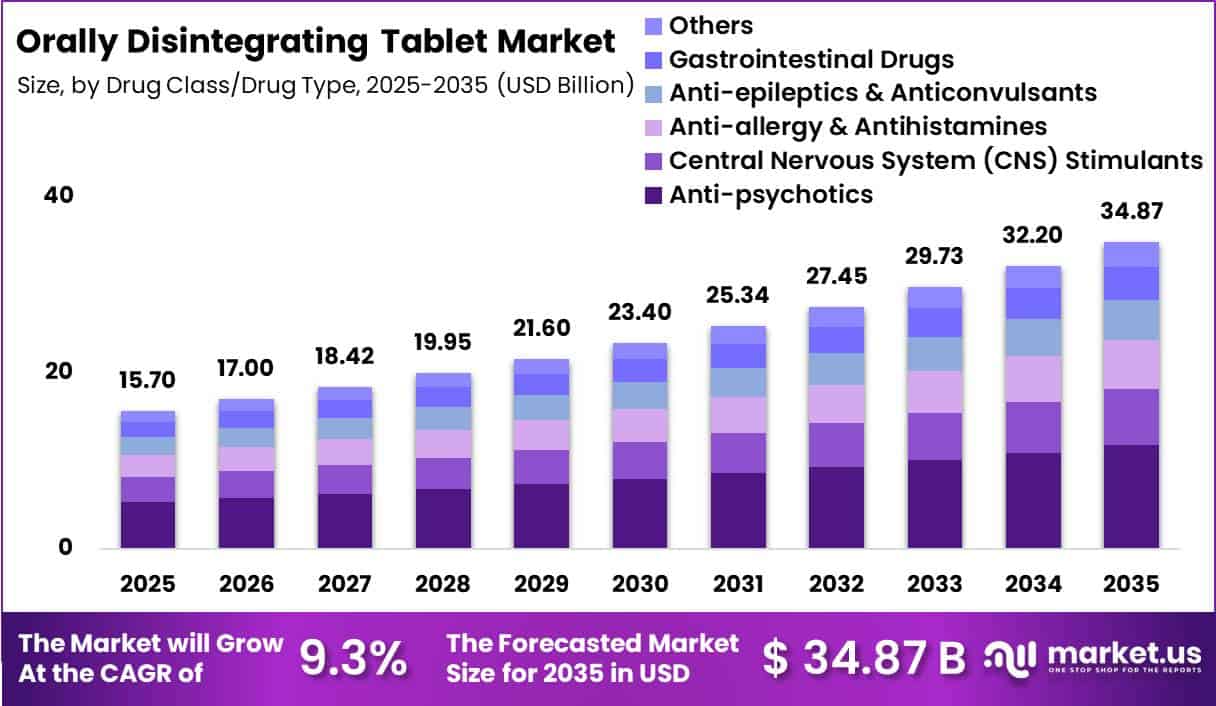
Their convenience has accelerated adoption across therapeutic areas, including central nervous system disorders, allergies, pain management, gastrointestinal diseases, and cardiovascular conditions. Growing demand for self-administration, rising prevalence of chronic diseases, and continuous advancements in pharmaceutical formulation technologies are further strengthening market growth.
Healthcare authorities and trusted organizations continue to emphasize medication adherence and patient-centered drug delivery. According to the U.S. Food and Drug Administration (FDA), orally disintegrating tablets are designed to disintegrate rapidly in the oral cavity, offering an alternative dosage form that can improve ease of administration for appropriate patient populations.
Similarly, the European Medicines Agency (EMA) supports the development of innovative oral formulations that enhance patient compliance while maintaining product quality and safety standards. Increasing investments in taste-masking technologies, advanced excipients, and manufacturing platforms are enabling pharmaceutical companies to develop more effective and commercially viable ODT formulations.
The growing burden of chronic diseases is also supporting long-term demand. According to the World Health Organization (WHO), noncommunicable diseases account for approximately 43 million deaths annually, representing nearly 74% of all global deaths, highlighting the ongoing need for convenient long-term medication options.
Furthermore, the FDA approved more than 50 novel drugs in 2024, reflecting continued innovation in pharmaceutical development that creates opportunities for advanced oral dosage forms, including orally disintegrating tablets. These factors collectively position the ODT market for sustained expansion over the coming decade.
Key Takeaways
- Market Size: Orally Disintegrating Tablet Market size was US$ 15.70 billion in 2025. The market is estimated to grow to US$ 34.87 billion by 2035.
- Market Share: The Compound Annual Growth Rate (CAGR) of the market from 2026 to 2035 will be 9.3%.
- By Drug Class / Drug Type: Anti-psychotics have the largest market share, accounting for 34% of total sales.
- By Technology: Lyophilization (Freeze-Drying), accounting for 38% of total revenue.
- By Age Group: Pediatric leads the segment, accounting for 52% of total revenue.
- By End User: Hospitals & Clinics lead the segment, accounting for 48% of total revenue.
- Regional: North America is the dominant regional market, accounting for 45.96% of global sales.
Drug Class / Drug Type Analysis
The anti-psychotics segment dominated the Orally Disintegrating Tablet (ODT) market in 2025, accounting for 34% of the total market share. This leadership is driven by the growing use of ODT formulations in the treatment of schizophrenia, bipolar disorder, and other psychiatric conditions where patient adherence remains a significant challenge.
Patients experiencing psychiatric disorders often face difficulties swallowing conventional tablets or may intentionally avoid medication, making orally disintegrating formulations an effective solution for improving compliance.
ODT anti-psychotics provide rapid administration without the need for water, supporting treatment continuity in both outpatient and emergency care settings. Rising awareness of mental health disorders and increasing availability of generic formulations have further strengthened this segment’s growth.
The Central Nervous System (CNS) Stimulants segment represented 18% of the market, supported by increasing prescriptions for attention-deficit/hyperactivity disorder (ADHD) and related neurological conditions.
Anti-allergy & Antihistamines accounted for 16%, benefiting from strong seasonal demand and ease of administration among pediatric and elderly patients. Anti-epileptics & Anticonvulsants held 13%, reflecting the importance of uninterrupted therapy for seizure management.
Gastrointestinal Drugs contributed 11%, supported by demand for fast-relieving antiemetic and acid-reducing medications. The Others category captured the remaining 8%, including pain management, cardiovascular, and miscellaneous therapeutic applications that continue to expand the versatility of ODT formulations.
Technology Analysis
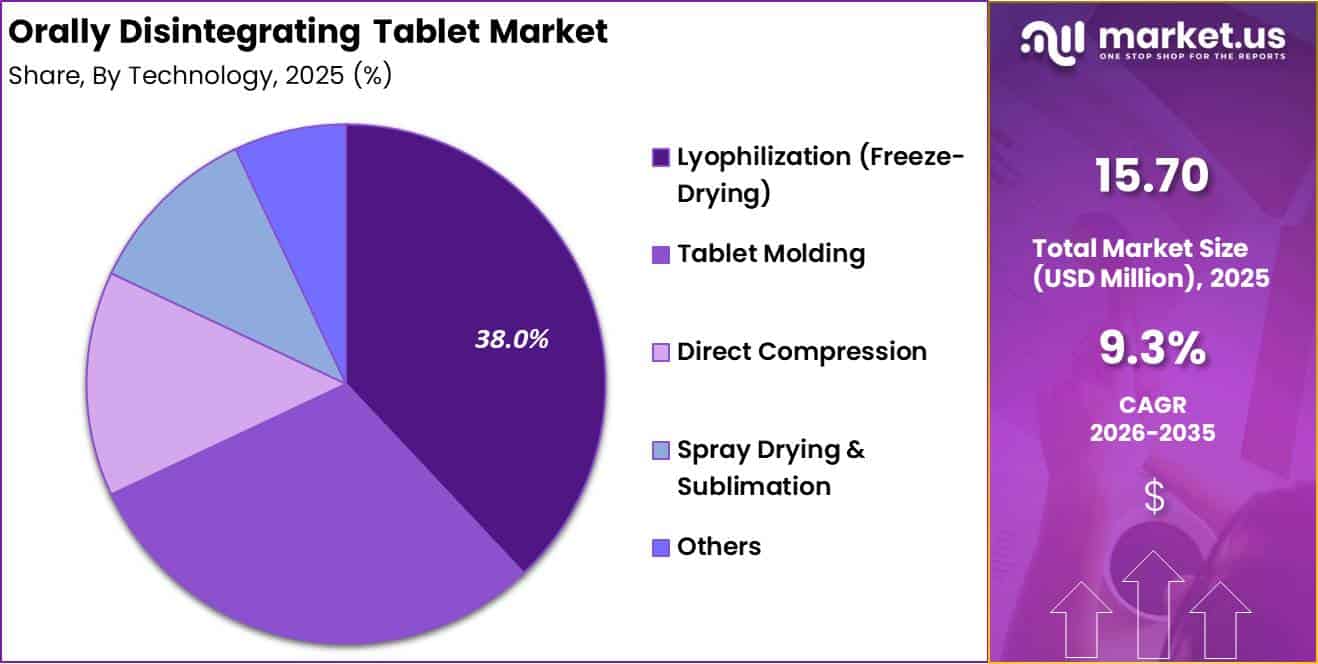
The Lyophilization (Freeze-Drying) segment led the Orally Disintegrating Tablet market in 2025, capturing 38% of the total market share. The technology remains the preferred manufacturing approach due to its ability to produce highly porous tablets that dissolve rapidly upon contact with saliva, delivering excellent patient convenience and faster therapeutic action.
Lyophilized ODTs are particularly suitable for pediatric, geriatric, and dysphagic patients who require medicines that can be administered without water. Pharmaceutical manufacturers continue to invest in freeze-drying technologies to improve tablet stability, optimize drug release, and enhance product differentiation, despite relatively higher production costs.
Tablet Molding accounted for 30% of the market, supported by its capability to manufacture tablets with excellent mouthfeel and rapid disintegration. The Direct Compression segment represented 14%, gaining popularity because of its cost efficiency, manufacturing simplicity, and compatibility with large-scale production using conventional pharmaceutical equipment.
Spray Drying & Sublimation contributed 11%, offering enhanced porosity and rapid dissolution for selected formulations while supporting innovation in specialty drug delivery. The Others segment held 7%, comprising emerging manufacturing technologies and proprietary formulation platforms designed to improve mechanical strength, taste masking, and stability.
Continuous technological advancements are expected to improve production efficiency while expanding the range of drugs available in orally disintegrating tablet formats.
Age Group Analysis
The Pediatric segment dominated the Orally Disintegrating Tablet market in 2025, accounting for 52% of the total market share. Children frequently experience difficulty swallowing conventional tablets and capsules, making orally disintegrating formulations an attractive alternative for improving treatment compliance.
ODTs eliminate the need for water, dissolve quickly in the mouth, and are often formulated with pleasant flavors, making them more acceptable to young patients. The increasing prevalence of pediatric allergies, infections, neurological disorders, and gastrointestinal conditions has significantly expanded the demand for child-friendly dosage forms.
In addition, healthcare providers and caregivers increasingly prefer ODTs because they simplify medication administration and reduce the likelihood of missed doses.
The adult population represents another substantial share of the market, driven by growing demand for convenient dosage forms that support busy lifestyles and improve adherence for chronic disease management. Adults receiving treatment for psychiatric disorders, migraines, allergies, and gastrointestinal diseases continue to contribute to steady adoption of ODT products.
The geriatric population is also experiencing notable growth due to the high prevalence of dysphagia, neurological disorders, and multiple chronic illnesses among older adults. As global populations continue to age, demand for easy-to-administer oral dosage forms is expected to increase further.
Continuous product innovation, improved taste-masking technologies, and broader therapeutic applications will continue supporting strong adoption across all age groups.
End User Analysis
The Hospitals & Clinics segment dominated the Orally Disintegrating Tablet market in 2025, accounting for 48% of the overall market share. Hospitals and clinical settings remain the primary point of care for patients requiring immediate medication administration, particularly in emergency departments, psychiatric units, pediatric wards, and geriatric care facilities.
Orally disintegrating tablets enable healthcare professionals to administer medication quickly without requiring water, improving treatment efficiency for patients with swallowing difficulties, nausea, reduced consciousness, or poor medication compliance.
The availability of diverse ODT formulations for neurological, psychiatric, allergic, and gastrointestinal disorders has further strengthened adoption across hospital environments. Retail pharmacies represent another important end-user segment, supported by increasing outpatient prescriptions and growing consumer preference for convenient medication formats.
The expanding availability of generic ODT products has also improved accessibility through community pharmacy networks. Online pharmacies are experiencing rapid growth due to rising digital healthcare adoption, expanding e-commerce platforms, and improved home delivery services, particularly for chronic disease management.
Specialty healthcare centers and long-term care facilities continue to increase utilization of ODT formulations for elderly and pediatric patients requiring simplified medication administration. As healthcare systems place greater emphasis on patient-centric drug delivery and treatment adherence, demand across all end-user settings is expected to remain strong throughout the forecast period.
Market Segmentations
By Drug Class / Drug Type
- Anti-psychotics
- Central Nervous System (CNS) Stimulants
- Anti-allergy & Antihistamines
- Anti-epileptics & Anticonvulsants
- Gastrointestinal Drugs
- Others
By Technology
- Lyophilization (Freeze-Drying)
- Tablet Molding
- Direct Compression
- Spray Drying & Sublimation
- Others
By Age Group
- Pediatric
- Adults
- Geriatric
By End User
- Hospitals & Clinics
- Retail Pharmacies
- Home Care Settings
- Others
Driver
Dysphagia and Ageing-Led Administration Convenience Driving ODT Adoption
ODT demand is structurally supported by the convergence of population ageing and the persistent burden of swallowing difficulty in adult patients using solid oral dosage forms. WHO states that by 2030 one in six people globally will be aged 60 years or older, with the 60+ population rising from 1.0 billion in 2020 to 1.4 billion by 2030, while the 80+ population is expected to triple to 426 million by 2050. This demographic shift matters because older cohorts carry the highest exposure to polypharmacy, frailty, xerostomia, and dysphagia-related administration challenges.
The NIH-hosted systematic review on adult patients with difficulty swallowing oral dosage forms confirms that swallowing problems are clinically relevant across care settings and directly affect the suitability of conventional tablets and capsules, creating a persistent addressable need for rapidly disintegrating oral alternatives.
Commercially, ODTs reduce the dependency on water availability, swallowing ability, and caregiver handling, making them especially valuable in neurology, psychiatry, allergy, pain, and acute-onset rescue categories where dose acceptance influences treatment adherence and refill persistence.
This driver is modeled at roughly 2.1 % points to CAGR because it does not merely improve patient convenience, it expands therapy continuity among the fastest-growing age groups and increases formulation relevance across hospitals, long-term care facilities, and community settings where administration failure can create measurable downstream healthcare costs.
| Driver | (~) % Impact on CAGR Forecast | Geographic Relevance | Impact Timeline |
|---|---|---|---|
| Dysphagia and ageing-led administration convenience | +2.1% | North America core, EU, Japan, South Korea, urban China | Medium term (2-4 years) |
| Diabetes and chronic therapy expansion into patient-friendly solid formats | +1.7% | U.S. core, EU5, India, China, Brazil spill-over | Medium term (2-4 years) |
| FDA/USP-style quality standardization lowering development ambiguity | +1.3% | U.S. core, EU, regulated APAC export hubs | Short term (≤ 2 years) |
| Taste-masking and direct-compression economics broadening API fit | +1.9% | India, China, EU manufacturing hubs, U.S. specialty brands | Short term (≤ 2 years) |
| Adherence and care-transition pressure in pediatrics and geriatrics | +1.5% | North America, EU, GCC, Southeast Asia urban hospitals | Medium term (2-4 years) |
| Lifecycle management under reimbursement and price pressure | +1.2% | U.S. core, EU tender markets, selected APAC branded generics | Short term (≤ 2 years) |
Challenge
Moisture-Sensitive Packaging Burden Limiting ODT Market Expansion
Moisture-sensitive packaging burden exerts roughly 1.2 %-point friction drag on global ODT CAGR, with the impact most visible in tropical and subtropical climates (ICH Zone IVb; 30–40°C, 75% RH) across South and Southeast Asia, parts of Latin America, and Sub-Saharan Africa, where standard bottle packaging can cause unacceptable increases in disintegration time and friability over 6–12 months of shelf life.
ODTs often incorporate highly porous matrices and hygroscopic excipients, such as mannitol loads of 30–60% w/w along with natural and synthetic disintegrants, leading to moisture-induced softening and sticking. Stability studies routinely show disintegration times increasing from 10–20 seconds at release to 40–60 seconds under high-humidity stress unless individually protected through alu-alu or high-barrier blister packaging.
This drives a shift from multi-dose bottles to unit-dose packaging in many high-volume markets, increasing per-tablet packaging costs by USD 0.03–0.06 and expanding carton volume by 20–30%. As a result, cold-chain or controlled-room transport capacity requirements can rise by 10–15 pallets per 1 million packs compared with conventional tablets.
Across logistics timelines of 5–15 days in regional distribution and 60–90 days in retail inventory, unmanaged humidity can increase complaint rates above 2–3 per 10,000 packs and batch rejection rates near 1%, reducing margins and slowing formulary adoption.
Strategic mitigation requires wider deployment of desiccant-integrated secondary packaging, strict warehouse relative humidity control below 60%, and adoption of smart packaging with embedded humidity indicators.
However, these measures typically increase ODT SKU costs by 5–8% and require 2–4 years of capital planning and production-line redesign across multi-country networks, sustaining medium-term friction until climate-resilient formulations with less hygroscopic excipient systems become standard.
| Challenge | (~) % CAGR Friction Drag | Geographic Relevance | Mitigation Horizon |
|---|---|---|---|
| High-dose formulation limits | -1.4% | North America, EU, Japan | Long term (≥ 4 years) |
| Moisture-sensitive packaging burden | -1.2% | Asia tropics, LATAM, Africa | Medium term (2-4 years) |
| Scale-up and yield variability | -1.0% | Global manufacturing hubs | Medium term (2-4 years) |
| Complex taste-masking and palatability | -0.9% | Pediatrics, geriatrics globally | Short term (≤ 2 years) |
| Regulatory testing complexity | -0.8% | US, EU, high-regulation markets | Long term (≥ 4 years) |
| Specialized talent and equipment gap | -0.7% | Emerging pharma clusters | Long term (≥ 4 years) |
Restraints
Moisture Sensitive Excipient and API Stability Risk Limiting ODT Expansion
The second restraint arises from the intrinsic hygroscopicity and moisture sensitivity of many ODT excipient systems, such as high-porosity disintegrants and sugar-based matrices, along with a significant share of neurologic and psychiatric APIs.
Together, these factors create a narrow operating window for humidity control, shelf life, and packaging, generating chronic cost and risk friction. In high-humidity corridors across APAC, LATAM, and coastal regions globally, ambient relative humidity frequently exceeds 70–80% for several months per year.
Uncontrolled moisture uptake can push disintegration times beyond the 30-second threshold or degrade assay values by 2–5% over a standard 24-month shelf life if barrier protection systems fail.
This risk profile forces ODT manufacturers to deploy alu-alu blisters, desiccant systems, and climate-controlled warehousing, increasing packaging material costs by an estimated 20–35% per 1,000-tablet pack compared with conventional solid oral dosage forms and raising logistics overhead by 5–8% due to temperature- and humidity-controlled transport and storage requirements.
Production yield losses from moisture excursions, including batches failing due to softening, sticking, or out-of-specification disintegration, can reach 2–3% of annual output in poorly controlled facilities, translating into multimillion-dollar value losses for plants producing 1–2 billion tablets annually.
This structural fragility discourages some regional players from scaling ODT offerings in tropical markets, particularly where high-barrier packaging and controlled storage infrastructure remain limited. The result is slower geographic expansion, underutilized demand in pediatric and geriatric segments, and an estimated 1.9 % point downward drag on global CAGR as risk-adjusted portfolio decisions favor more stable dosage forms.
| Restraint | (~) % Impact on CAGR Forecast | Geographic Relevance | Impact Timeline |
|---|---|---|---|
| Stringent ODT performance constraints (FDA/Ph. Eur.) | -1.6% | US, EU core, Japan | Medium term (2–4 years) |
| Moisture-sensitive excipient and API stability risk | -1.9% | Global, APAC humidity belts, LATAM | Long term (≥ 4 years) |
| Pharma supply chain tariffs and API concentration | -2.3% | US, EU, APAC export hubs | Medium term (2–4 years) |
| Serialization and track-and-trace compliance load | -1.4% | North America, EU, select LATAM | Medium term (2–4 years) |
| Neurological burden outpacing formulation capacity | -1.2% | Global, LMIC clusters, aging OECD | Long term (≥ 4 years) |
| Digitalization lag in pharma supply chains | -1.0% | Global, especially fragmented EMs | Short–medium term (≤ 4 years) |
Opportunity
Chronic Disease Adherence ODT Bundles Creating New Growth Opportunities
Unlike current ODT adoption, which is largely limited to single drugs in isolated indications, this opportunity involves structuring multi-drug “adherence bundles” in ODT formats for chronic disease regimens where non-adherence consistently affects nearly 50% of patients worldwide.
Chronic conditions such as hypertension, type 2 diabetes, depression, asthma, and dyslipidemia collectively represent hundreds of billions of dollars in annual drug spending, making even modest adherence improvements commercially and clinically significant.
Operationally, bundled ODT offerings that combine 2–3 key oral agents into swallow-friendly, rapidly dissolving tablets customized by therapy algorithm, such as cardiovascular-metabolic combinations and cardio-oncology supportive care regimens, could reduce unintentional non-adherence associated with pill burden and swallowing difficulty.
These barriers are widely recognized in adherence research as important contributors to treatment discontinuation. If ODT bundling improves adherence by even 8–10 % points among the approximately half of chronic disease patients currently considered non-adherent, effective treated patient-days could increase by around 4–5% in targeted regimens.
Combined with potential 2–3 % point margin expansion from improved persistence and reduced patient churn, this could generate US$2–4 billion in incremental ODT revenues across major markets by 2035.
The opportunity remains largely untapped because existing ODT products are primarily positioned as formulation alternatives rather than integrated adherence solutions co-developed with payers, telemedicine providers, and disease management programs.
Repositioning ODTs as platform components within reimbursed adherence packages could support premium pricing of 5–7% over standard tablets and encourage preferred formulary placement, delivering approximately 1.8% points of CAGR upside beyond the current baseline growth, driven mainly by the expansion of generic formulations.
| Opportunity | (~) % Potential CAGR Upside | Geographic Relevance | Execution Window |
|---|---|---|---|
| Dysphagia-centric geriatric Rx platforms | +2.0% | North America, EU, Japan, South Korea | Medium term (2-4 years) |
| Chronic disease adherence ODT bundles | +1.8% | North America, EU, GCC, Urban APAC | Medium term (2-4 years) |
| Pediatric neuro & rare disease ODT lines | +1.5% | North America, EU, China, India | Long term (≥ 4 years) |
| Extended-release and high-dose ODT tech | +1.2% | North America core, EU, APAC | Medium term (2-4 years) |
| OTC consumer wellness and self-care ODTs | +1.0% | North America, EU, Southeast Asia, LATAM | Short term (≤ 2 years) |
| Digital-therapeutic and telehealth ODT channels | +0.8% | North America, EU, India, China | Long term (≥ 4 years) |
Regional Analysis
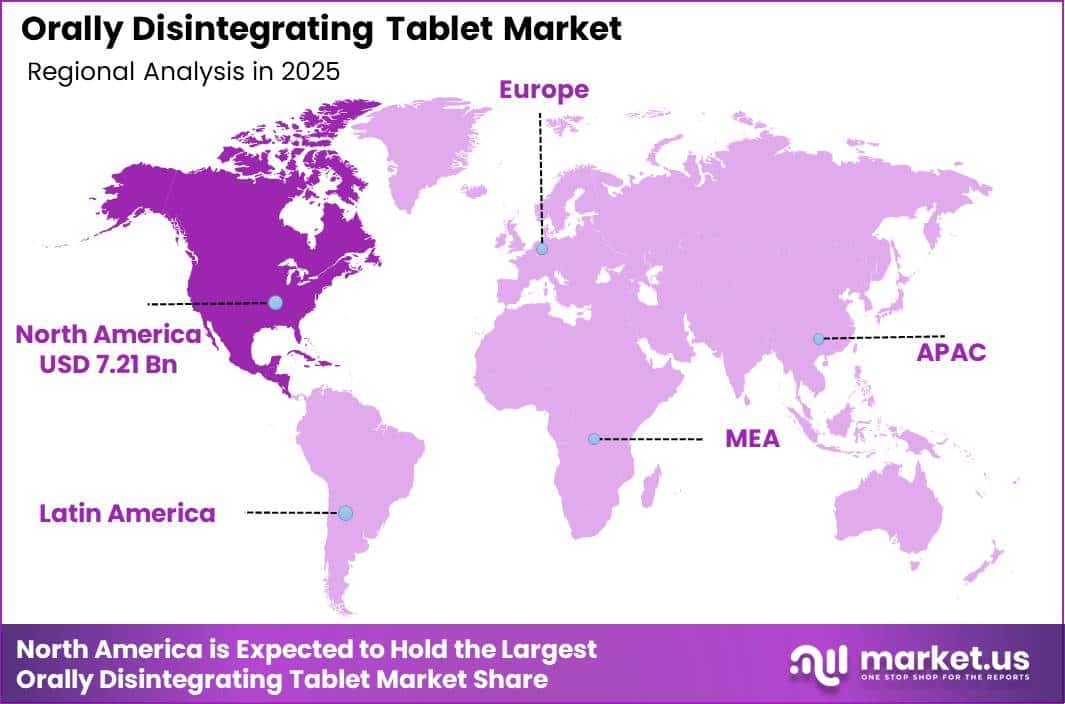
In 2025, North America led the market, achieving over 45.96% share with a revenue of US$7.21 billion.
North America’s leadership is supported by a well-established pharmaceutical industry, advanced drug delivery technologies, and high adoption of patient-centric dosage formulations. The increasing prevalence of chronic diseases, including neurological disorders, psychiatric conditions, allergies, and cardiovascular diseases, has significantly expanded the demand for orally disintegrating tablets, particularly among pediatric and geriatric populations that often experience swallowing difficulties.
Strong healthcare infrastructure, widespread health insurance coverage, and rapid access to innovativ prescription therapies further strengthen regional market growth. The presence of leading pharmaceutical manufacturers and continuous investment in formulation research have accelerated the commercialization of advanced ODT products with improved taste masking, rapid disintegration, and enhanced bioavailability.
In addition, regulatory support for patient-friendly dosage forms and the growing use of generic ODT formulations have expanded product availability across hospital and retail pharmacy channels.
The United States remains the largest contributor within North America due to its high pharmaceutical spending, extensive clinical research activities, and robust distribution networks.
Canada also contributes steadily through increasing adoption of advanced oral drug delivery systems and expanding healthcare access. Rising consumer preference for convenient, easy-to-administer medications, combined with ongoing innovation in formulation technologies, is expected to help North America maintain its leading position throughout the forecast period.
Key Regions and Countries
North America
- The US
- Canada
Europe
- Germany
- France
- The U.K.
- Italy
- Spain
- Russia & CIS
- Rest of Europe
Asia Pacific
- China
- India
- Japan
- South Korea
- ASEAN
- Australia & New Zealand
- Rest of Asia Pacific
Middle East & Africa
- GCC
- South Africa
- Rest of Middle East & Africa
Latin America
- Brazil
- Mexico
- Rest of Latin America
Key Player Analysis
The global orally disintegrating tablet (ODT) market is moderately consolidated, with leading multinational pharmaceutical companies competing alongside specialized formulation and contract development organizations.
Market participants emphasize expanding therapeutic portfolios, enhancing patient-centric drug delivery technologies, and strengthening manufacturing capabilities to address the growing demand for convenient oral dosage forms.
Competition is increasingly driven by proprietary formulation technologies, regulatory approvals, lifecycle management strategies, and investments in advanced drug delivery platforms that improve patient adherence and treatment outcomes.
Key companies continue to differentiate themselves through research and development, strategic partnerships, and product innovation. Teva Pharmaceutical Industries Ltd., Pfizer Inc., Novartis AG, Johnson & Johnson (Janssen), AstraZeneca PLC, Merck & Co. Inc., GlaxoSmithKline PLC (GSK), Dr. Reddy’s Laboratories Ltd., Takeda Pharmaceutical Co. Ltd., and Catalent Pharma Solutions are actively investing in formulation science, taste-masking technologies, and rapid-disintegration platforms to enhance product performance and patient convenience.
Companies are also expanding manufacturing efficiency through workflow integration, digital quality management, and advanced production technologies that support scalable and compliant ODT manufacturing.
Strategic collaborations with contract development and manufacturing partners, technology providers, and healthcare stakeholders are strengthening product development pipelines and accelerating commercialization.
Furthermore, ecosystem-based competition is becoming increasingly important, with companies integrating formulation expertise, regulatory capabilities, supply chain resilience, and patient-focused innovation to build sustainable competitive advantages in the evolving orally disintegrating tablet market.
Top Key Players
- Teva Pharmaceutical Industries Ltd.
- Pfizer Inc.
- Novartis AG
- Johnson & Johnson (Janssen)
- AstraZeneca PLC
- Merck & Co. Inc.
- GlaxoSmithKline PLC (GSK)
- Eli Lilly and Company
- Otsuka Pharmaceutical Co. Ltd.
- Bausch Health Companies Inc.
- F. Hoffmann-La Roche Ltd.
- Sun Pharmaceutical Industries Ltd.
- Dr. Reddy’s Laboratories Ltd.
- Takeda Pharmaceutical Co. Ltd.
- Catalent Pharma Solutions
Recent Developments
- In September 2025, Pfizer Inc. announced its agreement to acquire Metsera, expanding its cardiometabolic pipeline with next-generation oral and injectable obesity drug candidates. The acquisition strengthens Pfizer’s oral therapeutics portfolio.
- In September 2025, Novartis AG received U.S. FDA approval for Rhapsido® (remibrutinib), an oral BTK inhibitor for chronic spontaneous urticaria, expanding its portfolio of innovative oral medicines.
- In June 2026, GlaxoSmithKline PLC (GSK) entered an agreement to acquire Nuvalent, Inc. for approximately US$10.6 billion, significantly expanding its precision oncology pipeline.
Report Scope
| Report Features | Description |
|---|---|
| Market Value (2025) | US$ 15.70 Bn |
| Forecast Revenue (2035) | US$ 34.87 Bn |
| CAGR (2026-2035) | 9.3 % |
| Base Year for Estimation | 2025 |
| Historic Period | 2020-2024 |
| Forecast Period | 2026-2035 |
| Report Coverage | Revenue Forecast, Market Dynamics, Competitive Landscape, Recent Developments |
| Segments Covered | By Drug Class / Drug Type(Anti-psychotics ,Central Nervous System (CNS) Stimulants ,Anti-allergy & Antihistamines ,Anti-epileptics & Anticonvulsants ,Gastrointestinal Drugs ,Others)By Technology(Lyophilization (Freeze-Drying) ,Tablet Molding ,Direct Compression ,Spray Drying & Sublimation ,Others)By Age Group(Pediatric ,Adults ,Geriatric)By End User(Hospitals & Clinics ,Retail Pharmacies ,Home Care Settings, Others) |
| Regional Analysis | North America – The US, Canada; Europe – Germany, France, U.K., Italy, Spain, Russia & CIS, Rest of Europe; Asia Pacific – China, India, Japan, South Korea, ASEAN, Australia & New Zealand, Rest of Asia Pacific; Middle East & Africa – GCC, South Africa, Rest of Middle East & Africa; Latin America – Brazil, Mexico, Rest of Latin America |
| Competitive Landscape | Teva Pharmaceutical Industries Ltd., Pfizer Inc. , Novartis AG , Johnson & Johnson (Janssen) , AstraZeneca PLC, Merck & Co. Inc. , GlaxoSmithKline PLC (GSK) , Eli Lilly and Company, Otsuka Pharmaceutical Co. Ltd. , Bausch Health Companies Inc. ,F. Hoffmann-La Roche Ltd., Sun Pharmaceutical Industries Ltd.,Dr Reddy’s Laboratories Ltd. , Takeda Pharmaceutical Co. Ltd., Catalent Pharma Solutions |
| Customization Scope | Customization for segments, region/country-level will be provided. Moreover, additional customization can be done based on the requirements. |
| Purchase Options | We have three licenses to opt for: Single User License, Multi-User License (Up to 5 Users), Corporate Use License (Unlimited User and Printable PDF) |





































