


Global Micellar Water Market Size, Share, Growth Analysis By Product Type (Cleanser, Makeup Remover, Cleansing Cream), By End Use (Women, Men), By Distribution Channel (Hypermarkets & Supermarkets, Specialty Stores, Pharmacies & Drugstores, Online, Others), By Region and Companies - Industry Segment Outlook, Market Assessment, Competition Scenario, Statistics, Trends and Forecast 2026-2035
- Published date: Feb 2026
- Report ID: 180027
- Number of Pages: 300
- Format:
-
keyboard_arrow_up
Quick Navigation
Report Overview
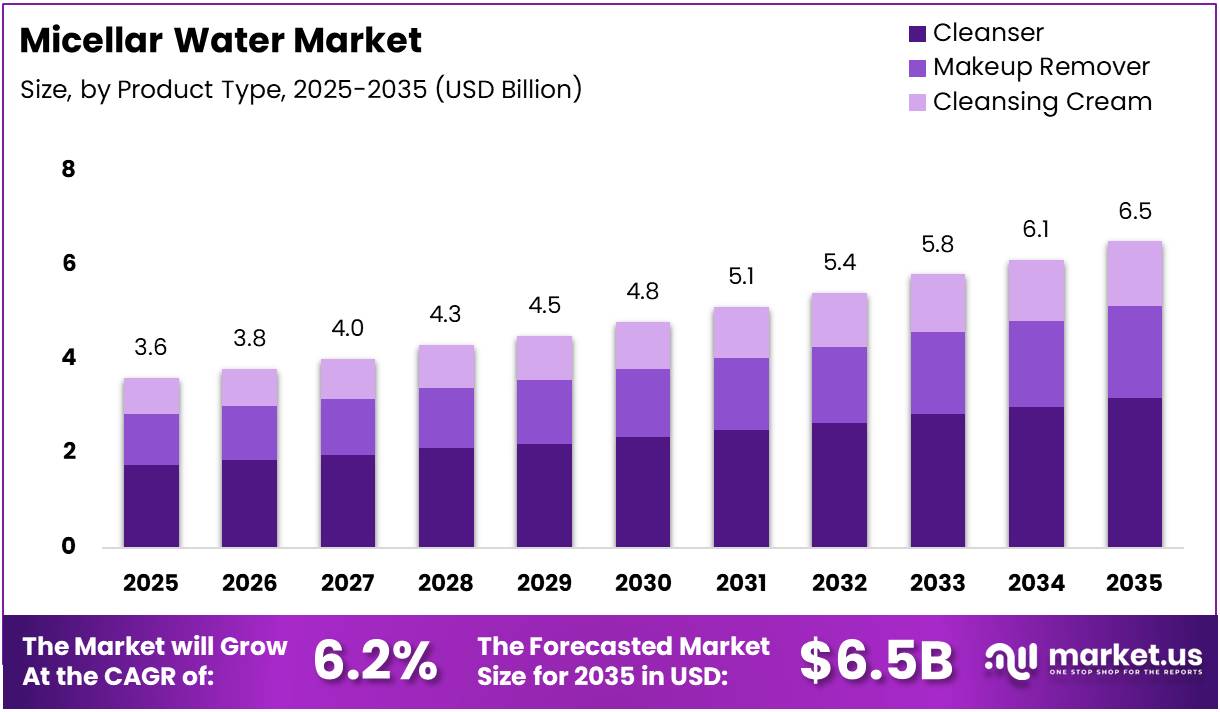
The Global Micellar Water Market size is expected to be worth around USD 6.5 Billion by 2035 from USD 3.6 Billion in 2025, growing at a CAGR of 6.2% during the forecast period 2026 to 2035.
Micellar water is a water-based facial cleanser that uses micelles tiny oil molecules to attract and dissolve dirt, oil, and makeup from the skin surface. It requires no rinsing and leaves minimal residue. Consequently, it has become one of the most widely adopted products in modern skincare routines globally.
The product is especially valued for its dual-action formula that cleanses and tones simultaneously without disrupting the skin’s natural barrier. Moreover, it suits a wide range of skin types, including sensitive, oily, and dry skin. This broad compatibility positions micellar water as a staple in both everyday and professional skincare regimens.
Market growth is being driven by increasing urbanization and a shift toward time-efficient beauty routines. Consumers in fast-paced environments prefer multi-functional products that deliver results without lengthy application processes. Additionally, growing awareness around skin health and hygiene has encouraged more consumers to adopt gentle, no-rinse facial cleansing formats.
Government and regulatory bodies in key markets are enforcing stricter guidelines on cosmetic ingredient safety and labeling. These regulations are prompting manufacturers to invest in cleaner, clinically validated formulations. Therefore, brands that align with international safety and sustainability standards are gaining a competitive advantage in both developed and emerging markets.
Significant growth opportunities exist in the development of natural and organic micellar water variants aligned with the clean beauty movement. Product innovation targeting specific skin concerns such as acne-prone, rosacea-affected, and mature skin is opening new consumer segments. These advancements are expected to sustain long-term market momentum across all regions.
Clinical evidence continues to validate the effectiveness of micellar water in skin health management. According to PubMed, micellar water use as part of a skincare regimen was associated with a 16% reduction in skin redness after 8 weeks. Moreover, rosacea-related symptoms decreased by 57.1%, supporting growing adoption among consumers with sensitive and reactive skin types.
Consumer survey data further confirms rising global adoption. According to Seppic, micellar water is used by 22.34% of respondents in facial skincare routine surveys.According to Dr. Batul, micellar water made from 99.8% naturally-derived ingredients does not strip the skin of softness, reinforcing its appeal among consumers seeking clean and gentle formulations. Additionally, according to Iconic Elements, micellar water products have a pH range of 4.25 to 7.87, reflecting broad formulation compatibility across diverse skin types and consumer needs.
Key Takeaways
- The Global Micellar Water Market was valued at USD 3.6 Billion in 2025.
- The market is projected to reach USD 6.5 Billion by 2035, growing at a CAGR of 6.2% from 2026 to 2035.
- By Product Type, the Cleanser segment holds the largest share at 48.9% in 2025.
- By End Use, the Women segment dominates with a 67.2% market share.
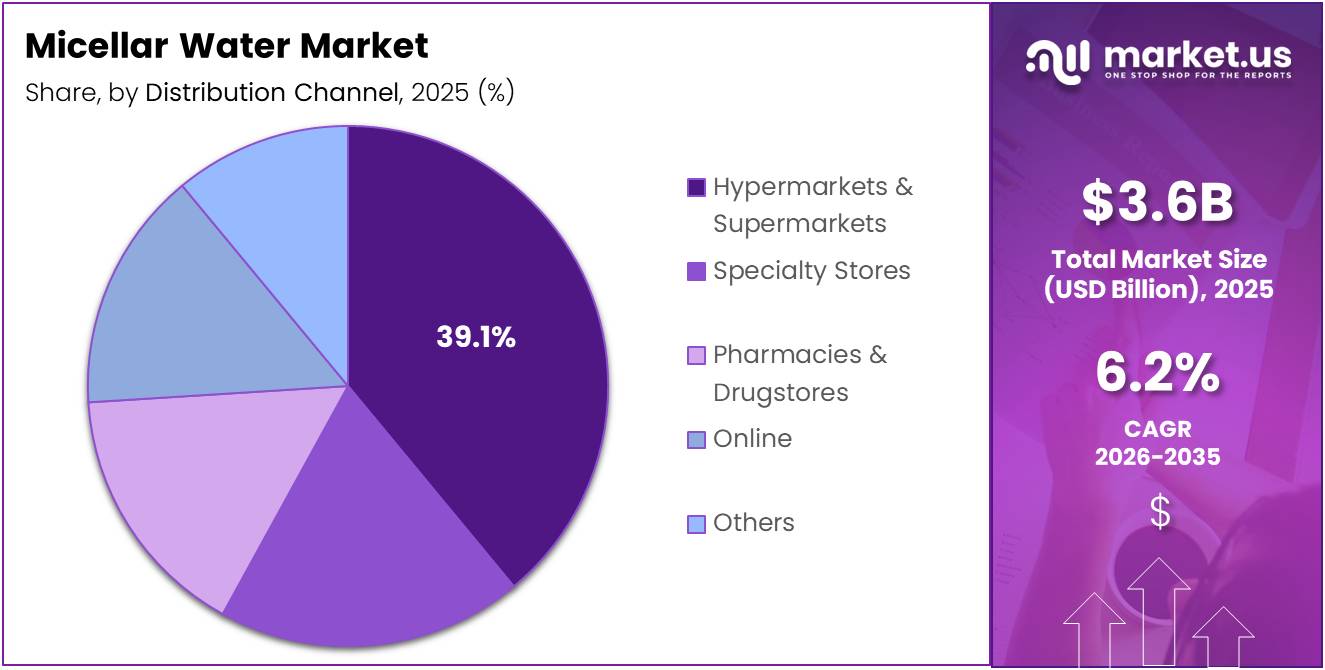
- By Distribution Channel, Hypermarkets and Supermarkets lead with a 39.1% share.
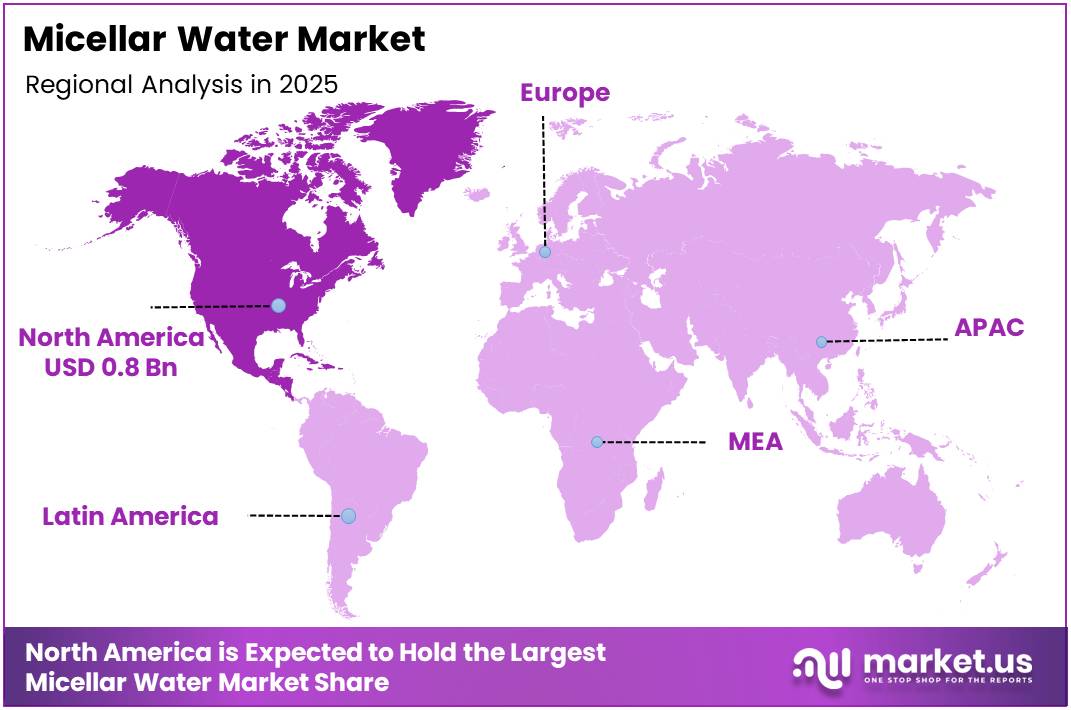
- North America is the dominant region, accounting for 34.80% of the global market, valued at approximately USD 0.8 Billion.
Product Type Analysis
Cleanser dominates with 48.9% due to its widespread use in daily gentle cleansing routines.
In 2025, Cleanser held a dominant market position in the By Product Type segment of the Micellar Water Market, with a 48.9% share. Cleansers are widely used for everyday facial care due to their gentle, no-rinse formula. Moreover, their broad compatibility with sensitive and combination skin makes them the most preferred micellar format globally.
Makeup Remover is a key sub-segment driven by growing consumer demand for gentle yet effective solutions to remove heavy and waterproof makeup. The increasing influence of beauty trends and social media has heightened interest in skin-safe removal products. Additionally, its ease of use positions it as a popular choice among daily makeup users.
Cleansing Cream micellar variants are gaining traction among consumers with dry and mature skin. These formulations combine micellar cleansing action with moisturizing properties, providing a richer skincare experience. Consequently, they appeal to users seeking both effective cleansing and added hydration benefits, further broadening the product range within this market segment.
End Use Analysis
Women dominate with 67.2% due to their higher engagement in skincare and daily beauty routines.
In 2025, Women held a dominant market position in the By End Use segment of the Micellar Water Market, with a 67.2% share. Women represent the largest consumer base, driven by strong engagement with daily skincare, makeup application, and cleansing habits. Moreover, growing awareness around clean beauty and skin health has further reinforced this segment’s leading position.
The Men segment is experiencing steady growth as male grooming culture continues to evolve globally. Men are increasingly incorporating micellar water into their daily routines for fast, effective, and rinse-free cleansing. Additionally, brands are launching targeted formulations designed to address male skin concerns, expanding market penetration and driving further growth within this emerging consumer segment.
Distribution Channel Analysis
Hypermarkets and Supermarkets dominate with 39.1% due to wide product availability and high consumer footfall.
In 2025, Hypermarkets and Supermarkets held a dominant market position in the By Distribution Channel segment of the Micellar Water Market, with a 39.1% share. These retail formats offer wide product variety and competitive pricing. Moreover, high consumer footfall and strong brand visibility drive consistent purchase volumes through this channel.
Specialty Stores serve as a preferred channel for premium and niche micellar water brands. Consumers visiting these stores seek expert guidance and curated skincare selections. Consequently, specialty retailers support higher-value purchases and foster brand loyalty among skincare-conscious consumers looking for professional-grade or dermatologist-recommended products.
Pharmacies and Drugstores play an important role in distributing dermatologist-recommended and clinically formulated micellar water products. Consumers with sensitive or problem-prone skin often rely on pharmacies for trusted skincare choices. Additionally, the availability of medicated and gentle formulations in this channel reinforces its relevance in health-focused beauty purchasing.
Online channel is growing rapidly, driven by the convenience of e-commerce and the influence of digital beauty content. Consumers are increasingly purchasing micellar water through brand websites and major online retailers. Furthermore, subscription models and personalized product recommendations are enhancing the online shopping experience for beauty consumers.
Others category includes salon distribution, direct sales, and emerging formats such as beauty subscription boxes. These alternative channels are gaining traction as brands explore diverse ways to reach consumers. Therefore, they represent a growing opportunity for product trial, brand discovery, and customer acquisition beyond traditional retail formats.
Key Market Segments
By Product Type
- Cleanser
- Makeup Remover
- Cleansing Cream
By End Use
- Women
- Men
By Distribution Channel
- Hypermarkets and Supermarkets
- Specialty Stores
- Pharmacies and Drugstores
- Online
- Others
Drivers
Rising Demand for No-Rinse and Gentle Skincare Drives Micellar Water Market Growth
Consumer preference for no-rinse and waterless cleansing solutions has grown significantly in recent years. Micellar water addresses this demand by offering a gentle, effective, and residue-free cleansing experience. Consequently, it has become a staple product for consumers seeking convenient and skin-friendly alternatives to traditional facial cleansers and rinse-off products.
Rapid urbanization and increasingly busy lifestyles have created strong demand for multi-functional beauty products. Urban consumers value products that save time while delivering measurable skincare results. Moreover, micellar water’s ability to cleanse, tone, and hydrate in a single step aligns perfectly with the needs of time-conscious modern beauty consumers.
Growing awareness of sensitive skin conditions and the harmful effects of harsh cleansing agents has accelerated the shift toward gentler formulations. Soap-free and surfactant-light micellar water products are widely recommended by dermatologists. Therefore, rising consumer education and medical endorsements are further strengthening market adoption across both developed and emerging markets globally.
Restraints
Competition from Alternative Formats and Ingredient Concerns Limit Micellar Water Market Expansion
The availability of alternative cleansing formats such as cleansing balms, oil-based makeup removers, and micellar gel pads presents a significant challenge for market growth. Consumers have a wide variety of options, making it harder to maintain brand loyalty. Consequently, market penetration in segments with established alternative preferences remains a persistent challenge.
Consumer scrutiny over the use of preservatives and synthetic surfactants in cosmetic formulations is a growing restraint. Many shoppers actively check ingredient labels for potential irritants, particularly those with skin sensitivities. Moreover, negative online reviews and social media discussions around specific ingredients can deter new consumers and slow overall adoption rates.
These concerns collectively create barriers to market expansion, particularly in regions where clean-label awareness is high. Brands must invest in transparent communication and reformulation efforts to address consumer apprehension effectively. Therefore, managing ingredient perception while maintaining product efficacy remains one of the most critical challenges facing micellar water manufacturers today.
Growth Factors
Dermatologist-Tested Formulations and Clean Beauty Innovation Accelerate Micellar Water Market Growth
The development of dermatologist-tested and clinically proven micellar water formulations presents a major growth opportunity. These advanced products build consumer trust by demonstrating measurable benefits for specific skin conditions. Moreover, clinical validation supports professional endorsements, helping brands gain credibility and expand their presence within the medical and therapeutic skincare segment.
The introduction of natural, organic, and clean-label micellar water variants is opening new growth avenues across global markets. Consumers increasingly seek formulations free from parabens, sulfates, and synthetic fragrances. Additionally, certifications such as vegan, cruelty-free, and organic labels are becoming important purchasing drivers, particularly among younger, environmentally conscious consumers worldwide.
Product innovation focused on specific skin concerns such as acne-prone and mature skin is creating significant new market opportunities. Targeted formulations with active ingredients deliver added therapeutic value beyond basic cleansing. Consequently, these specialized products attract consumers seeking personalized skincare solutions, driving premiumization and higher average selling prices within the micellar water category.
Emerging Trends
Vegan Formulations and Skin-Barrier Ingredients Define the Future of the Micellar Water Market
The surge in demand for vegan, cruelty-free, and minimal-ingredient skincare products is reshaping the micellar water market. Consumers are becoming more selective, favoring products with transparent ingredient lists and ethical sourcing. Moreover, global campaigns promoting animal welfare and sustainability are encouraging brands to adopt cruelty-free certification as a standard requirement.
Brands are increasingly integrating skin-barrier supporting ingredients such as ceramides and hyaluronic acid into micellar water formulations. These additions enhance hydration and skin protection beyond basic cleansing. Consequently, the evolution from simple cleansers to multi-functional, barrier-strengthening products reflects a broader shift in consumer expectations and premium skincare positioning within this category.
The growing popularity of minimalist and multi-step skincare regimens is boosting demand for versatile products that simplify daily routines. Micellar water fits naturally into both approaches as an effective first-cleanse or all-in-one option. Therefore, its adaptability to evolving skincare philosophies continues to strengthen its relevance across diverse consumer demographics globally.
Regional Analysis
North America Dominates the Micellar Water Market with a Market Share of 34.80%, Valued at USD 0.8 Billion
North America holds the dominant position in the global micellar water market, accounting for a 34.80% share valued at approximately USD 0.8 Billion in 2025. The region benefits from high consumer awareness, strong retail infrastructure, and widespread availability of premium skincare products. Moreover, growing preference for clean-label and dermatologist-approved formulations continues to sustain strong demand across the US and Canada.
Europe Micellar Water Market Trends
Europe represents a mature and influential market for micellar water, with France widely recognized as the origin of the product. The region has a deeply established skincare culture and strong demand for premium formulations. Moreover, stringent European cosmetic regulations continue to drive innovation in clean, safe, and ingredient-transparent micellar water products across the continent.
Asia Pacific Micellar Water Market Trends
Asia Pacific is emerging as a high-growth region, driven by expanding middle-class populations and increasing beauty awareness in countries such as China, Japan, India, and South Korea. Furthermore, the influence of K-beauty and J-beauty trends is accelerating consumer interest in gentle and multi-functional facial cleansing solutions throughout the region.
Latin America Micellar Water Market Trends
Latin America presents growing opportunities for micellar water brands as beauty and personal care spending rises across Brazil and Mexico. Younger urban consumers are increasingly adopting modern skincare routines. Additionally, the expansion of e-commerce and specialty retail channels is improving product accessibility and broadening consumer reach across the region.
Middle East and Africa Micellar Water Market Trends
The Middle East and Africa market is at an early stage of development but shows promising growth potential. Rising disposable incomes and expanding modern retail infrastructure in GCC countries are supporting increased skincare spending. Consequently, international brands are targeting this region with localized product strategies to capture emerging consumer demand.
Key Regions and Countries
North America
- US
- Canada
Europe
- Germany
- France
- The UK
- Spain
- Italy
- Rest of Europe
Asia Pacific
- China
- Japan
- South Korea
- India
- Australia
- Rest of APAC
Latin America
- Brazil
- Mexico
- Rest of Latin America
Middle East & Africa
- GCC
- South Africa
- Rest of MEA
Key Company Insights
L’Oréal S.A. is one of the most prominent players in the global micellar water market, driven by its extensive portfolio of skincare and cosmetic brands. The company continues to invest in research and development, launching innovative formulations that combine cleansing with active skincare ingredients. Its strong global distribution network ensures wide product availability across all major retail channels worldwide.
NAOS is recognized for its science-driven approach to skincare, particularly through its BIODERMA brand, which is widely credited with popularizing micellar water as a mainstream skincare product. The company remains a key innovator in the segment, continuously developing formulations that balance clinical efficacy with tolerability for sensitive skin. Moreover, its credibility among dermatologists reinforces its strong market positioning.
Shiseido Company, Limited brings deep expertise in premium skincare and cosmetics to the micellar water segment. With a strong presence across Asia Pacific and global markets, the company leverages advanced formulation technologies and culturally inspired innovations. Additionally, Shiseido’s focus on sustainable beauty and ingredient transparency aligns well with growing consumer demand for responsible and effective cleansing products.
Byphasse is a value-positioned brand offering accessible micellar water products across European and international markets. The brand focuses on delivering effective and affordable cleansing solutions that cater to everyday consumer needs. Furthermore, its broad product range targeting different skin types and preferences allows it to compete effectively in price-sensitive markets while maintaining a strong retail footprint.
Key Players
- L’Oréal S.A.
- NAOS
- Shiseido Company, Limited
- Byphasse
- Kao Corporation
- Kenvue
- Clarins
- Caudalie
- Pierre Fabre
Recent Developments
- November 2025 – Garnier announced plans for a Vitamin C-infused version of its micellar water as part of its “High-Tech Nature” beauty range. Broader product launches are planned for 2026, expanding the brand’s premium functional skincare lineup across global markets.
- March 2025 – French skincare brand BIODERMA announced a collaboration with British designer Victoria Beckham to mark the 30th anniversary of its micellar water. The limited-edition partnership highlighted the product’s enduring cultural relevance and prestige positioning within the global skincare industry.
- February 2025 – Ilana Glazer introduced the “De-Glazing” skincare concept in partnership with Garnier, featuring its Micellar Water with Salicylic Acid formulation. The campaign emphasized accessible, effective cleansing routines targeted at acne-prone skin consumers seeking gentle and clarifying daily care solutions.
- January 2025 – Qosmedix launched a new Micellar Cleansing Water available in a large 32-ounce refill size for professional or bulk use. This product format expansion targets salon, spa, and institutional markets, broadening the brand’s reach beyond traditional retail consumer channels.
Report Scope
Report Features Description Market Value (2025) USD 3.6 Billion Forecast Revenue (2035) USD 6.5 Billion CAGR (2026-2035) 6.2% Base Year for Estimation 2025 Historic Period 2020-2024 Forecast Period 2026-2035 Report Coverage Revenue Forecast, Market Dynamics, Competitive Landscape, Recent Developments Segments Covered By Product Type (Cleanser, Makeup Remover, Cleansing Cream), By End Use (Women, Men), By Distribution Channel (Hypermarkets & Supermarkets, Specialty Stores, Pharmacies & Drugstores, Online, Others) Regional Analysis North America (US and Canada), Europe (Germany, France, The UK, Spain, Italy, and Rest of Europe), Asia Pacific (China, Japan, South Korea, India, Australia, and Rest of APAC), Latin America (Brazil, Mexico, and Rest of Latin America), Middle East & Africa (GCC, South Africa, and Rest of MEA) Competitive Landscape L’Oréal S.A., NAOS, Shiseido Company, Limited, Byphasse, Kao Corporation, Kenvue, Clarins, Caudalie, Pierre Fabre Customization Scope Customization for segments, region/country-level will be provided. Moreover, additional customization can be done based on the requirements. Purchase Options We have three licenses to opt for: Single User License, Multi-User License (Up to 5 Users), Corporate Use License (Unlimited User and Printable PDF) 
-
-
- L'Oréal S.A.
- NAOS
- Shiseido Company, Limited
- Byphasse
- Kao Corporation
- Kenvue
- Clarins
- Caudalie
- Pierre Fabre
Our Clients

- 180027
- Feb 2026






