


Market Overview
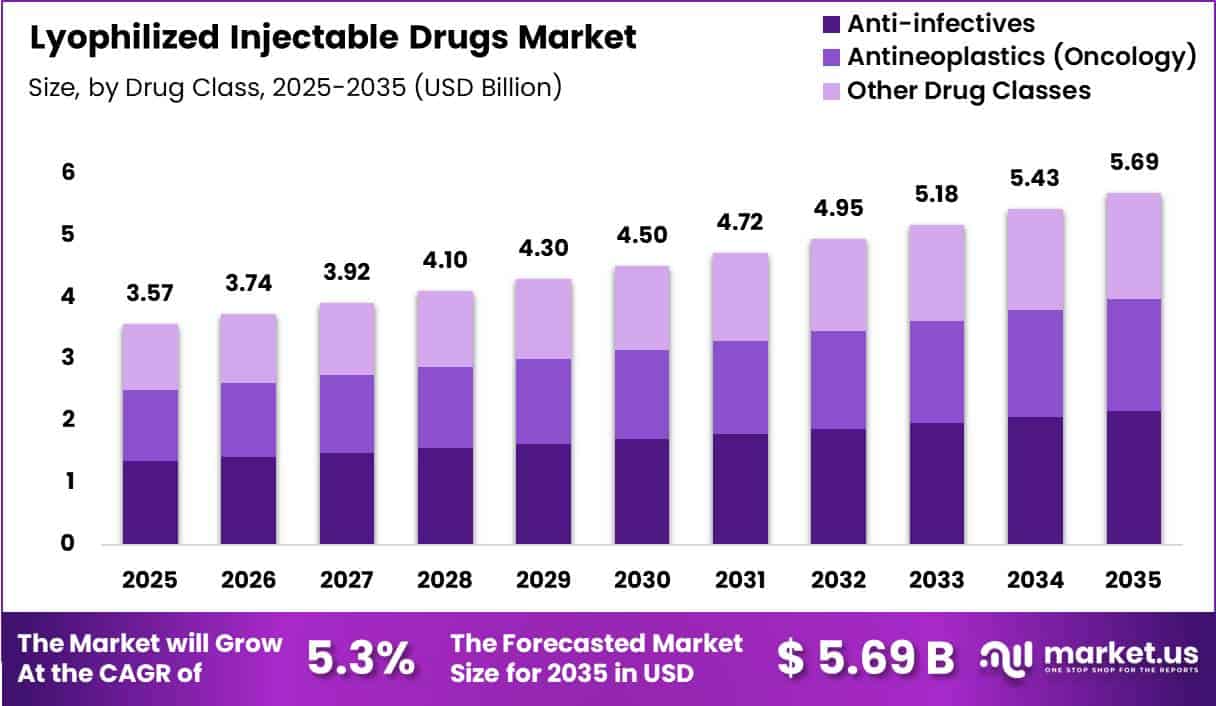
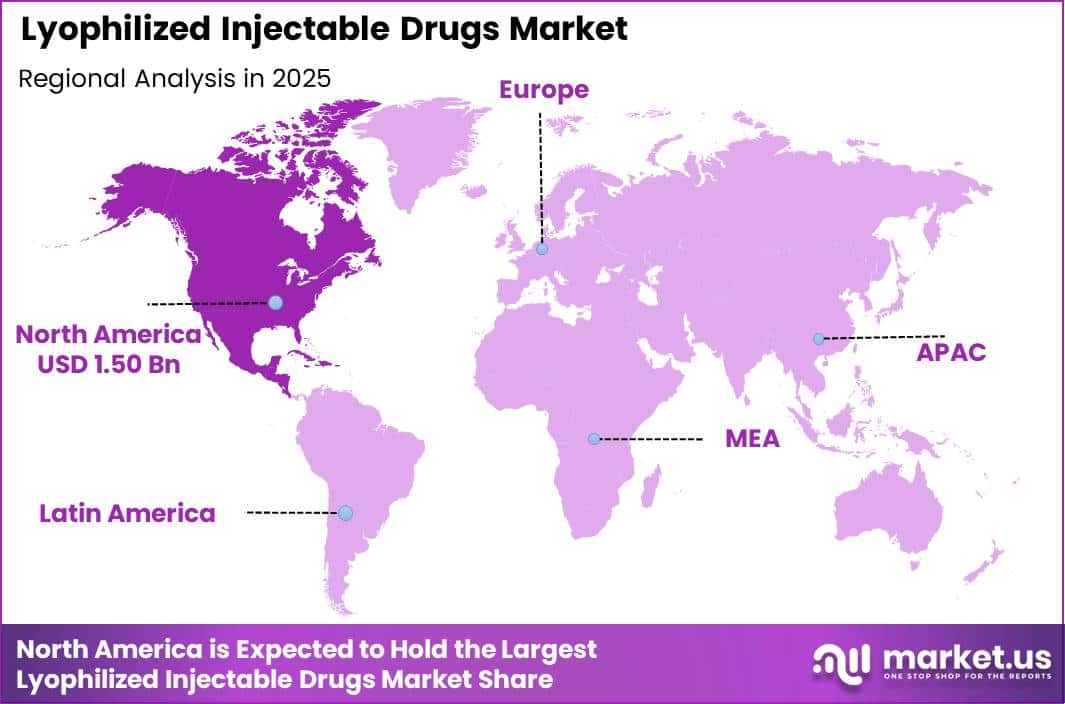
The Global Lyophilized Injectable Drugs Market size is expected to be worth around US$ 5.69 Billion by 2035 from US$ 3.57 Billion in 2025, growing at a CAGR of 5.3% during the forecast period from 2026 to 2035. In 2025, North America led the market, achieving over 42% share with a revenue of US$1.50 Billion.
The lyophilized injectable drugs market is supported by the increasing demand for stable, high-quality injectable medicines used in the treatment of cancer, infectious diseases, autoimmune disorders, and rare diseases.
Lyophilization, commonly known as freeze-drying, removes water from drug formulations under controlled conditions, significantly improving product stability, extending shelf life, and reducing the need for continuous cold-chain storage. This technology is especially valuable for temperature-sensitive biologics, vaccines, monoclonal antibodies, peptides, and advanced therapeutics.
According to the U.S. Food and Drug Administration (FDA), sterile injectable products require strict manufacturing controls to ensure product quality, sterility, and safety. Lyophilized formulations help preserve active pharmaceutical ingredients and minimize degradation during transportation and storage, making them an essential dosage form for critical care medicines.
The World Health Organization (WHO) also recognizes freeze-dried vaccines and injectable medicines as important for improving distribution and maintaining potency, particularly in regions with limited refrigeration infrastructure.
The rising burden of chronic diseases continues to increase demand for injectable therapies. The World Health Organization estimates that cancer caused approximately 20 million new cases and 9.7 million deaths worldwide in 2022, highlighting the growing need for advanced oncology treatments, many of which are supplied as lyophilized injectables.
Furthermore, the FDA’s Center for Drug Evaluation and Research (CDER) approved 50 novel drugs in 2024, reflecting continued innovation in biologics and specialty pharmaceuticals that frequently utilize lyophilized formulations. Ongoing investments in aseptic manufacturing, biologic drug development, and advanced freeze-drying technologies are expected to support sustained growth in the lyophilized injectable drugs industry over the coming years.
Key Takeaways
- Market Size: Lyophilized Injectable Drugs Market size was US$ 3.57 billion in 2025. The market is estimated to grow to US$ 5.69 billion by 2035.
- Market Share: The Compound Annual Growth Rate (CAGR) of the market from 2026 to 2035 will be 5.3%.
- By Drug Class: Anti-infectives has the largest market share, accounting for 38% of total sales.
- By Indication/Therapeutic Area: Oncology, accounting for 44% of total revenue.
- By Packaging Type: Single-Use Vials leads the segment, accounting for 57% of total revenue.
- By Route of Administration: Intravenous (IV) / Infusion leads the segment, accounting for 63% of total revenue.
- By End-User:Hospitals leads the segment, accounting for 69% of total revenue.
- By Distribution Channel: Direct Tenders leads the segment, accounting for 72% of total revenue.
- Regional: In 2025, North America led the market, achieving over 42% share with a revenue of US$ 1.50 Billion.
Drug Class Analysis
The Drug Class segment is led by Anti-infectives, which accounted for 38% of the market share in 2025. The dominance of this segment is driven by the widespread use of lyophilized antibiotics, antifungals, and antiviral drugs that require enhanced stability and extended shelf life.
Freeze-drying helps preserve the potency of sensitive anti-infective molecules, making these formulations suitable for emergency care, intensive care units, and hospital pharmacies. The increasing prevalence of antimicrobial-resistant infections and rising hospitalization rates further support demand for lyophilized anti-infective products. Healthcare providers also prefer these formulations because they can be stored longer and reconstituted quickly before administration.
The Antineoplastics (Oncology) segment represented 32% of the market in 2025. Many chemotherapy agents and targeted biologics are manufactured as lyophilized formulations to protect complex molecules from degradation and maintain therapeutic effectiveness.
The growing incidence of cancer and expansion of oncology treatment programs continue to strengthen this segment. Meanwhile, Other Drug Classes, accounting for 30%, include cardiovascular drugs, hormones, immunomodulators, vaccines, and central nervous system therapies. Increasing development of biologics and specialty pharmaceuticals is expected to broaden the adoption of lyophilized injectable formulations across multiple therapeutic categories over the coming years.
Indication/Therapeutic Area Analysis
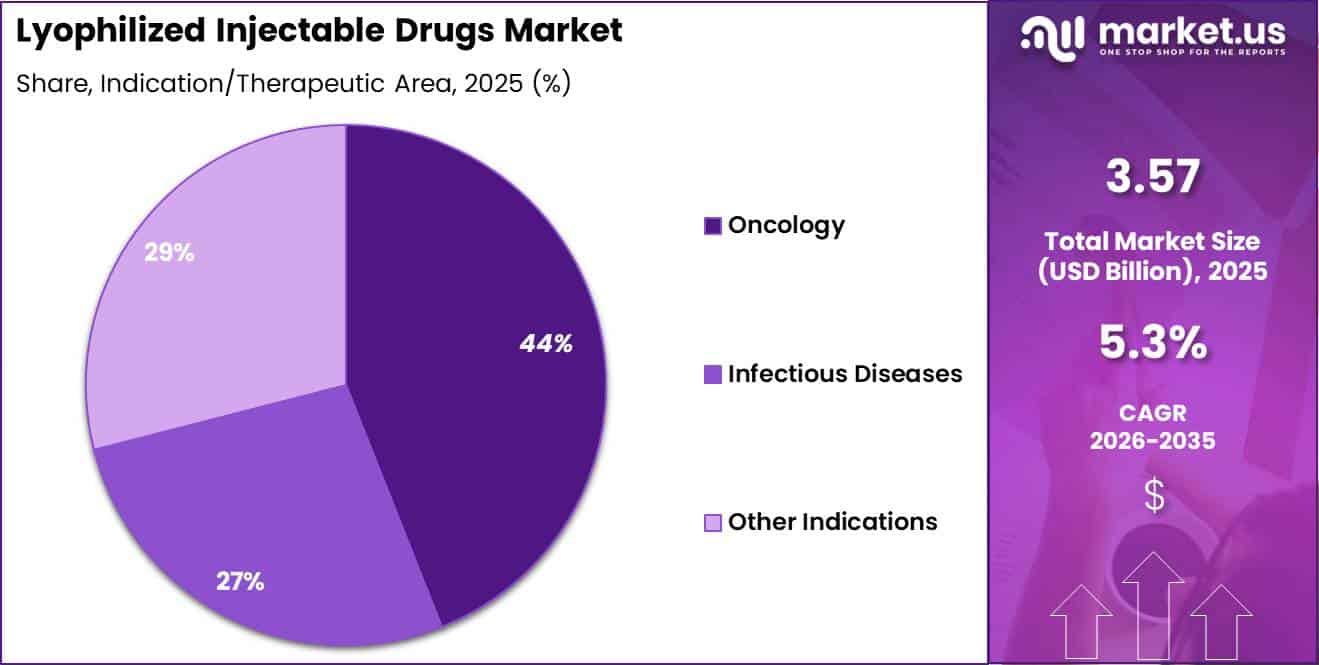
The Indication/Therapeutic Area segment dominated by Oncology, which captured 44% of the market share in 2025. The strong position of this segment reflects the increasing use of lyophilized formulations for chemotherapy drugs, monoclonal antibodies, and targeted cancer therapies.
These products require high stability to preserve their efficacy during storage and transportation, making freeze-drying an ideal manufacturing process. Rising global cancer incidence, expanding access to advanced oncology treatments, and increasing investments in biologic drug development continue to support the segment’s leadership. Hospitals and specialty cancer centers remain the primary users of these injectable therapies.
The Infectious Diseases segment accounted for 27% of the market in 2025. Demand is driven by the widespread administration of lyophilized antibiotics, antivirals, and antifungal agents in hospitals and emergency care settings, where rapid drug preparation and long shelf life are essential.
The Other Indications segment contributed 29%, covering autoimmune disorders, metabolic diseases, endocrine conditions, cardiovascular disorders, and rare diseases. Growth in biologic medicines and personalized treatment approaches is encouraging pharmaceutical manufacturers to expand lyophilized injectable products across a broader range of therapeutic applications, supporting long-term market expansion.
Packaging Type Analysis
The Packaging Type segment dominated by Single-Use Vials, which held 57% of the market share in 2025. Their leadership is attributed to superior sterility, reduced contamination risk, and accurate single-dose administration in hospitals and specialty clinics.
Single-use vials are widely preferred for antibiotics, oncology drugs, vaccines, and biologics because they maintain product integrity while minimizing medication errors and drug wastage. Pharmaceutical manufacturers also favor this packaging due to compatibility with automated filling and lyophilization equipment, ensuring consistent product quality and regulatory compliance. Growing demand for biologics and high-value injectable medicines continues to reinforce adoption of this packaging format.
Other packaging formats, including multi-dose vials, dual-chamber systems, ampoules, and prefilled reconstitution devices, collectively account for the remaining market share. Multi-dose vials are mainly used where repeated dosing improves cost efficiency, although concerns regarding contamination have limited their adoption.
Dual-chamber packaging is gaining attention because it simplifies reconstitution and reduces preparation time, especially in emergency care and outpatient settings. Increasing emphasis on patient safety, improved storage stability, and convenient drug administration is encouraging pharmaceutical companies to invest in innovative packaging technologies that enhance usability while preserving the quality of lyophilized injectable products.
Route of Administration Analysis
The Route of Administration segment led by Intravenous (IV) / Infusion, which accounted for 63% of the market share in 2025. This dominance reflects the widespread use of intravenous delivery for critical care, oncology, infectious disease management, and emergency medicine.
IV administration enables rapid drug distribution, precise dose control, and immediate therapeutic effects, making it the preferred route for many lyophilized antibiotics, biologics, and chemotherapy products. Hospitals rely extensively on intravenous formulations because they provide reliable treatment for seriously ill patients requiring continuous monitoring and fast clinical intervention.
Other administration routes, including intramuscular, subcutaneous, and specialized injectable methods, represented the remaining market share. Subcutaneous administration is expanding with the development of biologics that support self-administration and outpatient treatment, improving patient convenience.
Intramuscular injections remain important for selected vaccines, hormone therapies, and anti-infective medications where slower drug absorption is beneficial. Pharmaceutical companies are increasingly developing formulations compatible with multiple administration routes to improve treatment flexibility and patient outcomes.
Advances in injectable drug delivery technologies and the growing adoption of specialty biologics are expected to further diversify route preferences while intravenous administration continues to maintain its leading position.
End-User Analysis
The End-User segment of the Lyophilized Injectable Drugs Market was dominated by Hospitals, which captured 69% of the market share in 2025. Hospitals remain the largest consumers because they administer high volumes of lyophilized injectable medicines for oncology, infectious diseases, emergency care, intensive care, and surgical procedures.
These healthcare facilities possess specialized pharmacy infrastructure, trained healthcare professionals, and advanced reconstitution systems required for safe preparation and administration of freeze-dried injectable drugs. The growing number of hospital admissions, increasing use of biologics, and rising prevalence of chronic and life-threatening diseases continue to support this segment’s leadership.
Other end users include specialty clinics, ambulatory surgical centers, infusion centers, and research institutions. Specialty clinics are witnessing steady growth due to increasing outpatient cancer treatments and biologic therapies that reduce hospitalization requirements.
Infusion centers are also expanding as healthcare systems shift toward cost-effective outpatient care while maintaining high-quality treatment standards. Research organizations utilize lyophilized injectable formulations during clinical trials and drug development activities.
Growing investments in specialty healthcare services and expanding access to advanced injectable therapies are expected to increase demand across these alternative end-user segments while hospitals continue to remain the primary revenue contributor.
Distribution Channel Analysis
The Distribution Channel segment of the Lyophilized Injectable Drugs Market was dominated by Direct Tenders, accounting for 72% of the market share in 2025. Government healthcare systems, public hospitals, defense healthcare organizations, and large private hospital networks commonly procure injectable medicines through direct tender contracts to secure consistent product availability at competitive prices.
This procurement model enables pharmaceutical manufacturers to establish long-term supply agreements while ensuring uninterrupted access to essential medicines. The increasing demand for oncology drugs, antibiotics, vaccines, and critical care injectables has further strengthened the importance of direct tender procurement in both developed and emerging healthcare markets.
Other distribution channels include hospital pharmacies, retail pharmacies, specialty distributors, and online pharmaceutical procurement platforms. Hospital pharmacies continue to play an important role in dispensing lyophilized injectable medicines within healthcare facilities, while specialty distributors facilitate efficient supply chain management for temperature-sensitive products.
Retail pharmacies primarily support selected outpatient injectable therapies, although their contribution remains comparatively smaller. Digital procurement platforms are gradually improving purchasing efficiency and inventory management across healthcare systems.
As healthcare infrastructure expands and governments continue investing in centralized medicine procurement programs, direct tenders are expected to remain the leading distribution channel throughout the forecast period.
Market Segmentations
By Drug Class
- Anti-infectives
- Antineoplastics (Oncology)
- Other Drug Classes
By Indication/Therapeutic Area
- Oncology
- Infectious Diseases
- Other Indications
By Packaging Type
- Single-Use Vials
- Dual-Chamber Systems
- Other Packaging
By Route of Administration
- Intravenous (IV) / Infusion
- Intramuscular (IM)
By End-User
- Hospitals
- Specialty Clinics
- Home Healthcare
By Distribution Channel
- Direct Tenders
- Retail Sales
Driver
CDMO Fill Finish and Freeze Dry Capacity Expansion Driving Growth
Advanced manufacturing analysis published in 2025 identifies lyophilized injectables as an area where both short-term and long-term manufacturing interventions are needed, which points directly to increasing reliance on specialized CDMOs and outsourced fill-finish networks.
The driver is structural: installing or upgrading commercial lyophilizers, automated loading systems, isolators, and container-closure validation workflows requires large capital commitments, multi-quarter qualification timelines, and specialized tech-transfer capability, so many innovators prefer asset-light outsourcing rather than building captive sterile capacity.
Lyophilized presentations increasingly align with hospital and public-procurement priorities because they can reduce storage stress, lower emergency replenishment frequency, and improve inventory survivability across long shipping lanes.
Freeze-drying is specifically valued for reducing dependence on costly cold-chain logistics while extending usable shelf life for temperature-sensitive products, which is especially relevant for import-reliant markets and health systems managing intermittent demand spikes.
The economic mechanism is straightforward: when buyers can hold more stable stock with lower spoilage risk, total landed cost becomes more attractive even if unit manufacturing cost is higher, favoring tenders for freeze-dried antibiotics, anti-infectives, biologics, and hospital injectables.
Over the longer term, this driver broadens the serviceable market into secondary cities and cross-border supply programs where refrigeration reliability is uneven, making lyophilization not just a formulation choice but a distribution-enablement strategy.
| Driver | (~) % Impact on CAGR Forecast | Geographic Relevance | Impact Timeline |
|---|---|---|---|
| Biologic stability push in temperature-sensitive injectables | +2.1% | North America core, EU, Japan, South Korea, China urban biopharma hubs | Medium term (2-4 years) |
| Sterile injectable shortage mitigation through resilient formats | +1.7% | U.S. core, EU hospital markets, selective APAC tender systems | Short term (≤ 2 years) |
| Tightened aseptic quality expectations favor validated lyophilized lines | +1.3% | U.S., EU, UK, Japan, Gulf sterile manufacturing clusters | Short term (≤ 2 years) |
| Oncology and critical-care mix shift toward injectable regimens | +1.9% | U.S., EU5, China, India tertiary-care corridors, Brazil metro systems | Medium term (2-4 years) |
| CDMO fill-finish and freeze-dry capacity expansion | +1.5% | North America, Western Europe, Singapore, South Korea, India export nodes | Medium term (2-4 years) |
| Shelf-life and cold-chain optimization for hospital procurement | +1.2% | U.S. IDNs, EU public tenders, MENA import markets, Southeast Asia | Long term (≥ 4 years) |
Challenge
Complex Cycle Development Limiting Lyophilization Efficiency
The lyophilization process requires precise freezing, primary drying, and secondary drying profiles, and each new injectable formulation typically demands 6–12 months of experimental cycle development, including thermal analysis, product resistance measurements, and scale-up verification runs that can consume 50–120 pilot batches and over 3,000 machine hours per site.
This complexity creates quantifiable friction because many facilities operate at 80–90% utilization on critical lyophilizers, so adding one complex biologic or vaccine can reduce available capacity for other products by 8–12% and lengthen tech-transfer timelines from an ideal 9 months to 14–18 months, depressing achievable launch-aligned volume growth by roughly 1.2 % points versus unconstrained scenarios.
At a unit level, each failed or suboptimal cycle iteration often results in off-spec moisture content, greater than 4–5% instead of the targeted 1–3%, leading to shelf-life reductions from three years to 18–24 months and forcing more frequent production campaigns that raise per-vial conversion cost by an estimated 5–10% and increase batch-failure risk by 2–3 % points.
Strategically, sponsors are being pushed into systematic investments in process analytical technology, including inline temperature and pressure mapping on every shelf, design-of-experiment libraries for platform cycles, and multi-site harmonized recipes.
These measures aim to reduce average cycle development effort per new molecule from 10–12 iterations to 4–6 by 2028–2030 and cut overall process-related growth drag to below 0.5 % points.
| Challenge | (~) % CAGR Friction Drag | Geographic Relevance | Mitigation Horizon |
|---|---|---|---|
| Complex cycle development | -1.2% | US, EU, Japan, Korea | Medium term (2-4 years) |
| Sterility & contamination risk | -1.0% | Global GMP hubs | Long term (≥ 4 years) |
| Skilled lyophilization talent gap | -0.8% | North America, EU, APAC | Long term (≥ 4 years) |
| Equipment scale-up bottlenecks | -1.1% | Global biologics clusters | Medium term (2-4 years) |
| Regulatory data integrity pressure | -0.9% | US, EU, WHO-aligned markets | Long term (≥ 4 years) |
| Cold-chain & reconstitution complexity | -0.7% | Emerging markets, rural care | Medium term (2-4 years) |
Restraints
High Lyophilization CapEx and Opex Limiting Market Expansion
The lyophilized injectable drugs market faces structurally high capital and operating intensity, with industrial-scale freeze dryers alone often requiring investments of tens of millions of dollars per site and driving cycle times of 24–72 hours per batch, which sharply constrains throughput and raises unit conversion costs.
In practice, multi-vial lines combining aseptic filling and lyophilization demand Class 100 (ISO 5) environments between filling lines and lyophilizers, redundant sterilization systems for air and inert gas lines, and validated moist-heat sterilization cycles with dual temperature sensing systems.
These requirements add several million dollars of ancillary infrastructure outlays and increase depreciation per annual batch by 10–15% versus non-lyophilized injectables. Operating expenses further escalate because long cycles reduce equipment utilization, with effective availability potentially dropping below 60% once loading, sterilization, and cleaning are included.
Media fills, bioburden and endotoxin monitoring, and frequent fill-volume checks, such as every 15 minutes under good manufacturing practices, add labor, consumable, and downtime overhead that can raise the cost of goods sold for lyophilized formulations by an estimated 20–30% relative to standard liquid injectables.
Taken together, this cost structure delays greenfield investments in new lyophilization suites, pushes smaller manufacturers to defer capacity expansions by 2–4 years, and increases the payback threshold for advanced lyophilized biologics.
Sponsors facing 3–5-year CapEx payback periods and elevated validation costs may slow product launches or outsource to CDMOs, effectively suppressing market growth and creating a long-term CAGR impact penalty of around 2 % points for capital-intensive geographies such as North America, Europe, Japan, and rapidly industrializing hubs.
| Restraint | (~) % Impact on CAGR Forecast | Geographic Relevance | Impact Timeline |
|---|---|---|---|
| High lyophilization CapEx & Opex | -2.2% | North America, EU, Japan, India | Long term (≥ 4 years) |
| Complex sterile / quality compliance | -1.9% | North America, EU, China, India | Medium term (2-4 years) |
| Vulnerable API & vial supply chains | -2.0% | North America core, EU, APAC corridors | Medium term (2-4 years) |
| Persistent sterile injectable shortages | -1.5% | US, EU, Canada, Middle East | Short–Medium (≤ 3 years) |
| Pricing pressure & tariff-driven cost inflation | -1.3% | US, EU, Emerging Asia | Short–Medium (≤ 3 years) |
| Advanced biologic formulation complexity | -1.1% | US, EU, Japan, China | Long term (≥ 4 years) |
Opportunity
Biosimilar and Generic Lyo Injectables Creating Growth Opportunities
The targeted expansion of biosimilar and generic lyophilized injectables is an upside opportunity because, while the broader injectable drug delivery market is projected to grow robustly in value terms, most baseline models underweight the specific conversion of high-value reference biologics and complex sterile brands into lyophilized biosimilar formats aimed at emerging payer cost-containment policies.
CMS has already shifted toward unique reimbursement codes and average sales price-based payments for biosimilars, creating clear incentives for physicians and health systems to adopt lower-cost alternatives when clinically interchangeable.
If biosimilar lyo products capture an additional 10–15% share of relevant biologic segments, including oncology, autoimmune, and endocrine categories, by 2035 beyond current expectations, this could unlock USD 1.5–2.0 billion of incremental annual revenue globally in lyophilized dosage forms, with margin potential of 20–25% for efficient manufacturers due to lower R&D risk compared with novel entities and streamlined regulatory pathways.
This is distinctly an opportunity rather than a driver because realizing it depends on active portfolio decisions, including selecting which reference products to convert, funding interchangeability studies, and building market access strategies with payers, rather than passive volume growth.
For players that aggressively prioritize 8–10 key molecules across the U.S., EU, and select APAC markets over the next 2–4 years, the result could be an incremental 2.3 % points CAGR upside relative to a scenario where biosimilar lyo penetration remains limited.
| Opportunity | (~) % Potential CAGR Upside | Geographic Relevance | Execution Window |
|---|---|---|---|
| Shift to continuous lyophilization lines | +2.0% | North America, EU, Japan | Medium term |
| Hospital–CDMO hybrid outsourcing models | +1.5% | North America, EU core | Short term |
| Biosimilar & generic lyo injectables push | +2.3% | EU, North America, key APAC | Medium term |
| Ambient-stable biologic lyo platforms | +1.8% | Emerging APAC, LATAM, Africa | Long term |
| Decentralized & home-administered lyo kits | +1.2% | North America, EU, urban APAC | Medium term |
| AI-driven cycle design & energy optimization | +1.0% | Global tier-1 manufacturers | Short term |
Regional Analysis
In 2025, North America led the market, achieving over 42% share with a revenue of US$1.50 billion.
North America region’s leadership is supported by its advanced pharmaceutical manufacturing infrastructure, high adoption of sterile injectable therapies, and strong demand for biologics, oncology drugs, and anti-infective treatments.
The United States represents the largest contributor due to the presence of major pharmaceutical companies, extensive hospital networks, and continuous investment in the development of complex injectable formulations.
The increasing prevalence of chronic diseases, cancer, and severe infectious conditions has further accelerated the demand for lyophilized injectable products, which offer superior stability, extended shelf life, and easier transportation compared to liquid formulations.
Regulatory support for high-quality sterile manufacturing and expanding production capacities have also strengthened regional market growth. Canada contributes through rising healthcare expenditure, expanding biologics adoption, and increased investments in pharmaceutical research and contract manufacturing.
Furthermore, the growing use of specialty medicines and biosimilars continues to create opportunities for lyophilized injectable drug manufacturers across North America. Continuous technological advancements in freeze-drying equipment, aseptic processing, and packaging solutions are improving production efficiency and product quality.
The region also benefits from strong collaborations between pharmaceutical companies, contract development and manufacturing organizations (CDMOs), and research institutions, enabling faster commercialization of innovative injectable therapies. These factors are expected to help North America maintain its leading position throughout the forecast period.
Key Regions and Countries
North America
- The US
- Canada
Europe
- Germany
- France
- The U.K.
- Italy
- Spain
- Russia & CIS
- Rest of Europe
Asia Pacific
- China
- India
- Japan
- South Korea
- ASEAN
- Australia & New Zealand
- Rest of Asia Pacific
Middle East & Africa
- GCC
- South Africa
- Rest of Middle East & Africa
Latin America
- Brazil
- Mexico
- Rest of Latin America
Key Player Analysis
The global Lyophilized Injectable Drugs Market is moderately consolidated, with a combination of multinational pharmaceutical companies and regional manufacturers competing through innovation, manufacturing scale, and specialized injectable capabilities.
Competition is driven by expanding biologics portfolios, increasing demand for sterile formulations, and investments in advanced lyophilization technologies that improve product stability, shelf life, and global distribution.
Market participants are strengthening their positions through continuous research, manufacturing modernization, and strategic collaborations to address the growing demand for oncology, anti-infective, and specialty injectable therapies.
Leading companies including Pfizer Inc., F. Hoffmann-La Roche (Genentech), Sanofi S.A., Merck & Co. Inc., Johnson & Johnson (Janssen), Bristol Myers Squibb, Novo Nordisk A/S, Takeda Pharmaceutical, Fresenius Kabi AG, Gilead Sciences Inc., Aurobindo Pharma Ltd., Cipla Ltd., Gufic Biosciences Ltd., Akums Drugs & Pharmaceuticals, and Bora Pharmaceuticals are actively enhancing their competitive positions through robust R&D investments, new product development, and expanded sterile manufacturing infrastructure.
Product innovation remains a key strategy, particularly for temperature-sensitive biologics, peptide-based medicines, vaccines, and oncology therapies requiring lyophilized formulations. Companies are also pursuing strategic partnerships, contract manufacturing collaborations, and technology transfer agreements to accelerate commercialization and strengthen global supply chains.
Workflow integration through digital manufacturing systems, automation, and quality-by-design practices is improving production efficiency and regulatory compliance.
Additionally, ecosystem-based competition is becoming increasingly important as manufacturers collaborate with contract development and manufacturing organizations (CDMOs), packaging specialists, logistics providers, and healthcare institutions to deliver integrated solutions that support reliable production, distribution, and patient access to high-value lyophilized injectable drugs worldwide.
Top Key Players
- Pfizer Inc.
- F. Hoffmann-La Roche (Genentech)
- Sanofi S.A.
- Merck & Co. Inc.
- Johnson & Johnson (Janssen)
- Bristol Myers Squibb
- Novo Nordisk A/S
- Takeda Pharmaceutical
- Fresenius Kabi AG
- Gilead Sciences Inc.
- Aurobindo Pharma Ltd.
- Cipla Ltd.
- Gufic Biosciences Ltd.
- Akums Drugs & Pharmaceuticals
- Bora Pharmaceuticals
Recent Developments
- In March 2025, Sanofi S.A. announced its US$9.1 billion acquisition of Dren Bio’s DR-0201 program, strengthening its immunology pipeline with next-generation biologic therapies.
- In June 2025, F. Hoffmann-La Roche (Genentech) received European Commission approval for the Evrysdi tablet formulation for spinal muscular atrophy, expanding its neurology portfolio and lifecycle management strategy.
- In July 2025, Merck & Co., Inc. announced the acquisition of Verona Pharma, expanding its respiratory disease portfolio with innovative therapies and reinforcing its specialty pharmaceutical business.
- In June 2026, Pfizer Inc. announced the acquisition of Metsera, Inc. and entered strategic in-licensing agreements with 3SBio and YaoPharma to strengthen its innovative medicines pipeline, including injectable biologics.
Report Scope
| Report Features | Description |
|---|---|
| Market Value (2025) | US$ 3.57 Bn |
| Forecast Revenue (2035) | US$ 5.69 Bn |
| CAGR (2026-2035) | 5.3% |
| Base Year for Estimation | 2025 |
| Historic Period | 2020-2024 |
| Forecast Period | 2026-2035 |
| Report Coverage | Revenue Forecast, Market Dynamics, Competitive Landscape, Recent Developments |
| Segments Covered | By Drug Class (Anti-infectives, Antineoplastics (Oncology), Other Drug Classes) By Indication/Therapeutic Area (Oncology, Infectious Diseases,Other Indications) By Packaging Type (Single-Use Vials, Dual-Chamber Systems,Other Packaging) By Route of Administration (Intravenous (IV) / Infusion, Intramuscular (IM)) By End-User (Hospitals, Specialty Clinics, Home Healthcare) By Distribution Channel (Direct Tenders,Retail Sales) |
| Regional Analysis | North America – The US, Canada; Europe – Germany, France, U.K., Italy, Spain, Russia & CIS, Rest of Europe; Asia Pacific – China, India, Japan, South Korea, ASEAN, Australia & New Zealand, Rest of Asia Pacific; Middle East & Africa – GCC, South Africa, Rest of Middle East & Africa; Latin America – Brazil, Mexico, Rest of Latin America |
| Competitive Landscape | Pfizer Inc., F. Hoffmann-La Roche (Genentech), Sanofi S.A., Merck & Co. Inc., Johnson & Johnson (Janssen), Bristol Myers Squibb, Novo Nordisk A/S, Takeda Pharmaceutical, Fresenius Kabi AG, Gilead Sciences Inc., Aurobindo Pharma Ltd., Cipla Ltd., Gufic Biosciences Ltd., Akums Drugs & Pharmaceuticals, Bora Pharmaceuticals |
| Customization Scope | Customization for segments, region/country-level will be provided. Moreover, additional customization can be done based on the requirements. |
| Purchase Options | We have three licenses to opt for: Single User License, Multi-User License (Up to 5 Users), Corporate Use License (Unlimited User and Printable PDF) |
Frequently Asked Questions (FAQ)
The market spans diverse therapeutic indications, including autoimmune diseases, hormonal disorders, respiratory diseases, gastrointestinal disorders, dermatological disorders, and ophthalmic diseases.
The global Lyophilized Injectable Drugs Market size was estimated at USD 3.3 Billion in 2023 and is expected to reach USD 6.3 Billion in 2033.
The global Lyophilized Injectable Drugs Market is expected to grow at a compound annual growth rate of 6.6%. From 2024 To 2033
Some of the key players in the Lyophilized Injectable Drugs Markets are Schott AG, CIRON Drugs & Pharmaceuticals Pvt. Ltd, Mylan N.V., Baxter, Vetter Pharma, BD, SHL Group, Novartis AG, B. Braun Melsungen AG, Jubilant HollisterStier.
The market serves as a crucial catalyst for medical innovation, actively advancing pharmaceutical solutions to address evolving healthcare challenges.
The market strategically focuses on therapeutic areas like autoimmune diseases and hormonal disorders, responding to the growing prevalence of chronic health conditions globally.
A combination of diverse therapeutic indications, ongoing research initiatives, and a commitment to development fuels sustained market growth and fosters continuous innovation in lyophilized injectable drugs.





































