


Report Overview
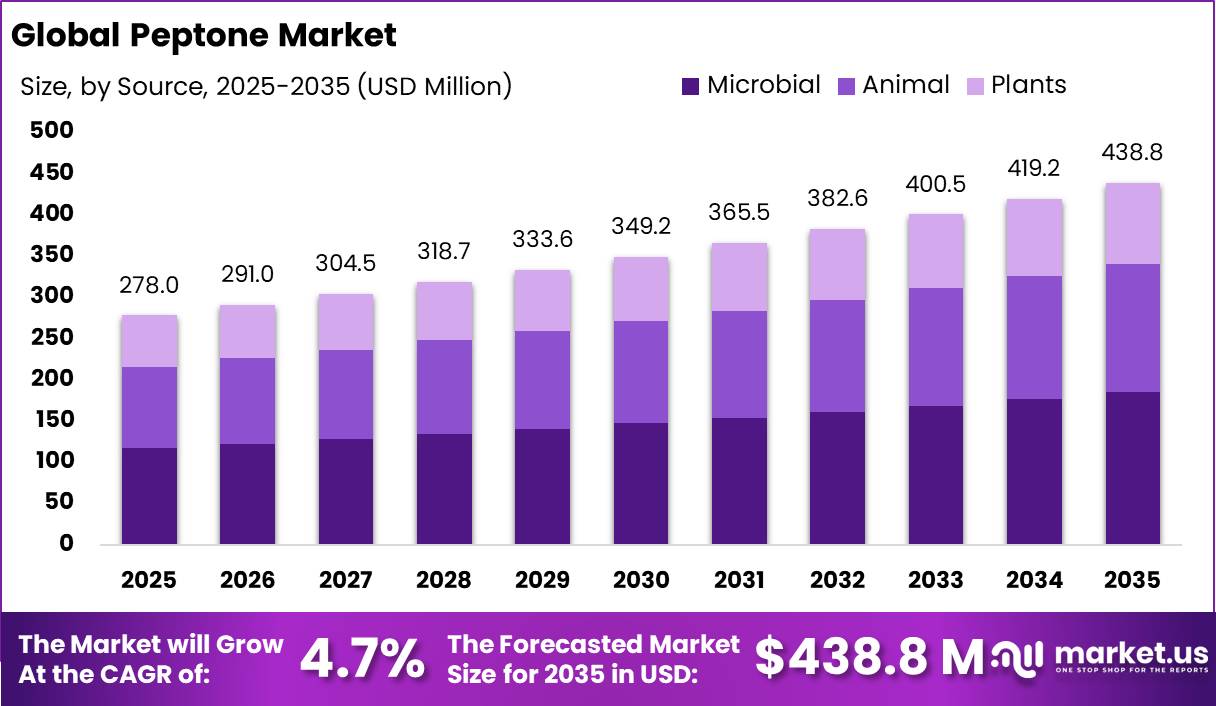
The Global Peptone Market size is expected to be worth around USD 438.8 Million by 2035, from USD 278.0 Million in 2025, growing at a CAGR of 4.7% during the forecast period from 2026 to 2035. In 2025, North America held a dominant market position, capturing more than a 34.60% share, holding USD 96.1 Million revenue.
Peptone is a protein hydrolysate used as a nitrogen, peptide, amino-acid and growth-factor source in microbiology, fermentation, vaccine, enzyme, probiotic and biopharmaceutical media. Industrial demand is supported by biomanufacturing scale-up, where media consistency, traceability and animal-origin-free inputs are increasingly valued. Merck KGaA supplies peptones and extracts for culture-media production in industrial microbiology, while its wider Life Science platform serves biopharma manufacturing and analytical testing across 65 countries with more than 62,000 employees.
Key Takeaways
- Peptone Market size is expected to be worth around USD 438.8 Million by 2035, from USD 278.0 Million in 2025, growing at a CAGR of 4.7%.
- Microbial held a dominant market position, capturing more than a 42.10% share in the peptone market.
- Yeast Peptone held a dominant market position, capturing more than a 38.30% share in the peptone market.
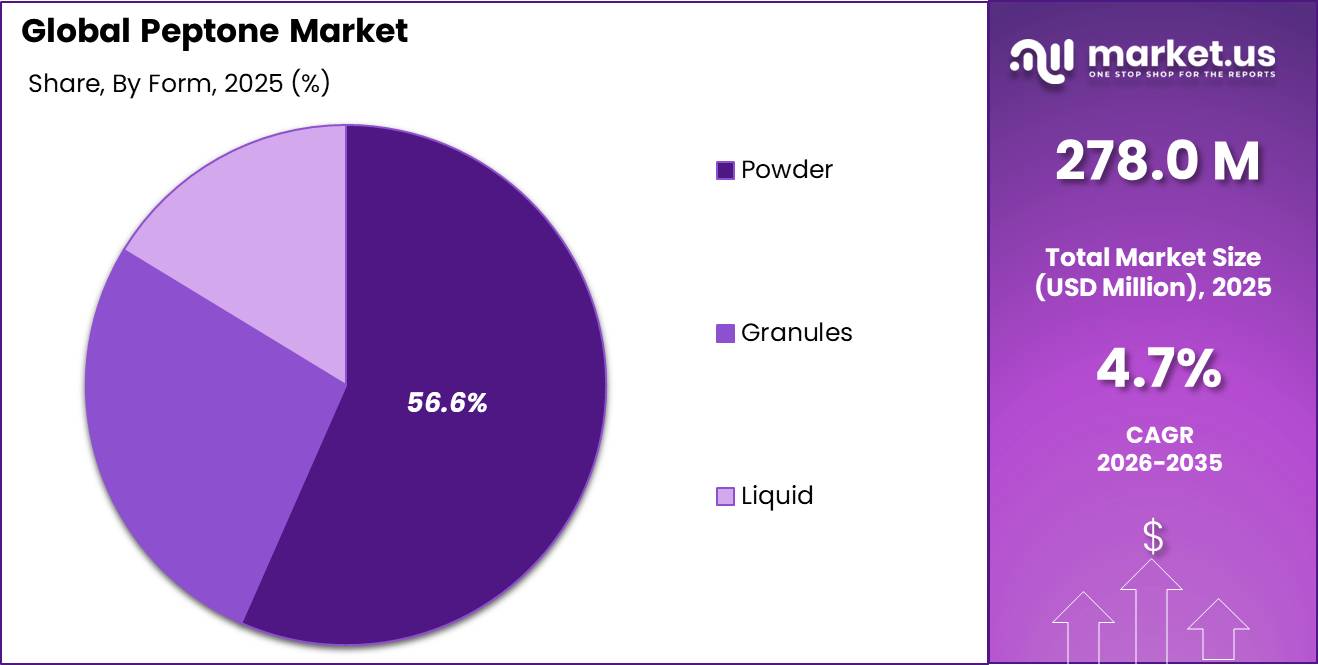
- Powder held a dominant market position, capturing more than a 56.60% share in the peptone market.
- Pharmaceuticals held a dominant market position, capturing more than a 27.20% share in the peptone market.
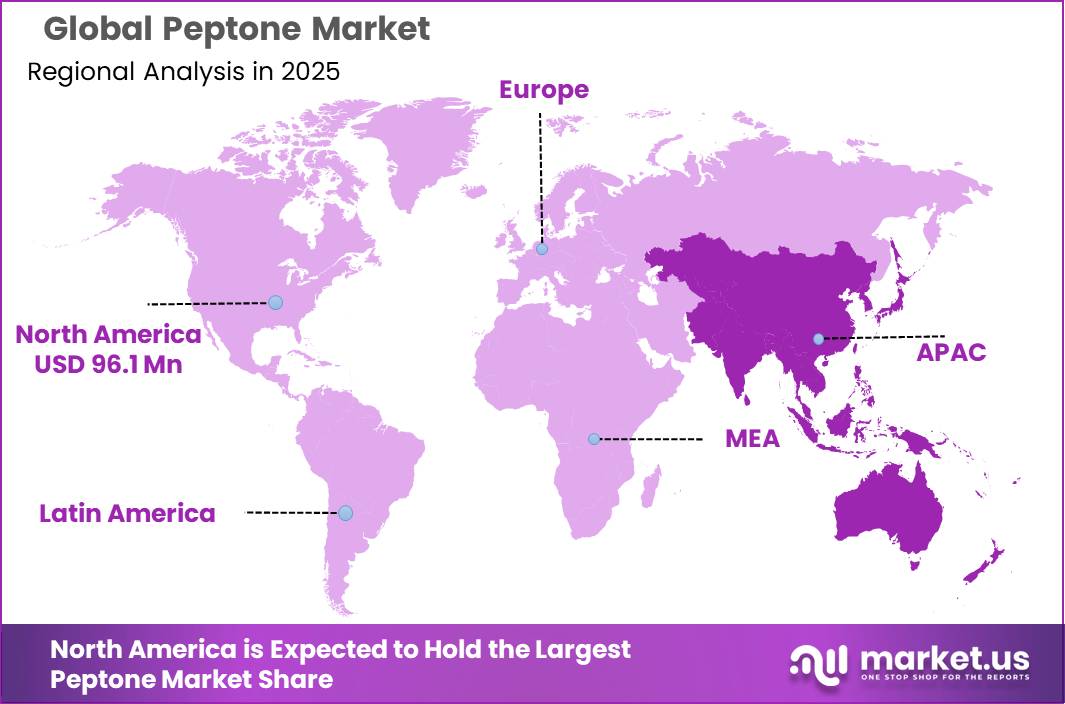
- North America held a dominant position in the global peptone market, accounting for 34.60% of the total market share and reaching a value of USD 96.1 million.
The industrial scenario is being shaped by rising biologics and advanced-therapy pipelines. The U.S. FDA’s CDER approved 46 novel drugs in 2025, while FDA CBER listed 2025 biological license approvals separately, showing continued regulatory throughput for biologics that depend on high-quality upstream and microbial process inputs.
Government support is also material: the U.S. National Biotechnology and Biomanufacturing Initiative announced more than US$2 billion in funding to strengthen bioeconomy supply chains, health outcomes and domestic biomanufacturing capacity. In the EU, biotechnology and biomanufacturing accounted for EUR 38.1 billion of GDP and 913,160 jobs in 2022, while each industrial biotechnology job generated 3.4 additional jobs in the broader economy.
Driving factors include growth in vaccines, recombinant proteins, diagnostics, probiotics, cell-culture supplements and industrial fermentation. Peptone demand is also linked to customers’ need for reproducible nitrogen profiles, lower batch variability and specialized grades such as casein, soy, meat and animal-origin-free peptones. Merck lists casein peptone with ≥12% nitrogen, reflecting the specification-led nature of the industry.
Government and trusted institutional initiatives are also strengthening the demand base. WHO’s Immunization Agenda 2030 targets vaccination benefits for “everyone, everywhere, at every age,” while the European Commission proposed targeted actions in March 2024 to boost biotechnology and biomanufacturing in the EU.
The U.S. manufacturing.gov portal also reported 25 Distributed Bioindustrial Manufacturing Program awards totaling US$42 million by September 2024. The U.S. Department of Energy announced up to USD 23 million in January 2025 for renewable chemicals and fuels from biomass and waste resources, directly supporting bioeconomy and biomanufacturing pathways.
Merck KGaA remains relevant through its Life Science and MilliporeSigma portfolio, which covers microbial culture media, peptones, media-fill products, and bioprocessing inputs. In 2025, Merck and Siemens signed an MoU to extend their strategic partnership, connecting software, systems, consumables, automation, data, and AI from drug discovery to manufacturing. Merck also entered a definitive agreement in April 2025 to acquire SpringWorks Therapeutics, strengthening its broader healthcare growth platform.
By Source Analysis
Microbial peptone dominates with 42.10% share due to its high protein yield and strong demand in fermentation applications.
In 2025, Microbial held a dominant market position, capturing more than a 42.10% share in the peptone market by source. The segment continued to gain strong attention from biotechnology, pharmaceutical, and industrial fermentation companies because microbial peptones offer consistent quality, better nutrient composition, and reliable performance during microbial cultivation. Their growing use in vaccine production, enzyme manufacturing, and cell culture applications further supported market growth during the year.
By Product Analysis
Yeast Peptone leads the market with 38.30% share driven by its rich nutrient profile and broad use in microbial culture production.
In 2025, Yeast Peptone held a dominant market position, capturing more than a 38.30% share in the peptone market by product. The segment showed strong demand across pharmaceutical, biotechnology, and food processing industries because yeast peptone provides high nutritional value and supports efficient microbial growth. Its ability to supply essential amino acids, vitamins, and nitrogen sources made it a preferred ingredient in fermentation and culture media applications. The rising use of yeast-based ingredients in biologics production and laboratory research also contributed to the segment’s growth during the year.
By Form Analysis
Powder form dominates with 56.60% share owing to its easy storage, longer shelf life, and convenient handling in laboratories.
In 2025, Powder held a dominant market position, capturing more than a 56.60% share in the peptone market by form. The strong preference for powdered peptone was mainly linked to its longer shelf stability, easy transportation, and better compatibility with large-scale industrial applications. Pharmaceutical companies, research laboratories, and biotechnology manufacturers widely used powdered peptone because it allows accurate formulation and simple mixing during media preparation. The segment also benefited from lower storage costs and reduced contamination risks compared to liquid alternatives.
By Application Analysis
Pharmaceuticals leads the market with 27.20% share supported by rising demand for biologics and microbial culture production.
In 2025, Pharmaceuticals held a dominant market position, capturing more than a 27.20% share in the peptone market by application. The segment experienced strong demand due to the increasing use of peptones in antibiotic production, vaccine development, and biopharmaceutical manufacturing. Pharmaceutical companies relied heavily on peptones as nutrient-rich ingredients for microbial growth and fermentation processes, helping improve production efficiency and product consistency. The expansion of biologics research and growing investments in drug development activities also supported the segment’s growth throughout the year.
Key Market Segments
By Source
- Plants
- Animal
- Microbial
By Product
- Casein Peptone
- Meat Peptone
- Gelatin Peptone
- Yeast Peptone
- Other Products
By Form
- Powder
- Granules
- Liquid
By Application
- Cell Culture
- Pharmaceuticals
- Food & Beverages
- Biotechnology & Applications
- Other Applications
Emerging Trends
Precision fermentation and alternative protein production are becoming the biggest trends shaping the peptone market
One of the latest trends in the peptone market is the growing use of precision fermentation and alternative protein technologies across the food and biotechnology industries. Peptones are important nutrient ingredients used in microbial fermentation, helping microorganisms grow efficiently during the production of proteins, enzymes, vitamins, and bioactive compounds. In 2025, the Food and Agriculture Organization (FAO) reported that precision fermentation is increasingly being used to produce dairy proteins, egg proteins, collagen, and other food ingredients through microorganisms such as yeast, fungi, and bacteria.
FAO also noted that innovative fermentation technologies are becoming an important part of future food systems because of their ability to support sustainable food production and reduce pressure on traditional animal agriculture. This trend is increasing the demand for high-quality peptones used in microbial culture media and fermentation processes. Food manufacturers and biotechnology companies are also expanding investments in fermentation-based production systems to improve efficiency and sustainability.
Governments and food safety organizations are increasing focus on regulation and safety of fermentation-based food production
Another important trend influencing the peptone market is the growing involvement of governments and food safety organizations in regulating precision fermentation and cell-based food technologies. In 2025, FAO released detailed studies focused on food safety aspects of precision fermentation and highlighted the need for proper regulatory frameworks for fermentation-derived food products. The organization explained that precision fermentation can produce proteins, vitamins, fats, and enzymes more efficiently while supporting sustainable food systems.
This growing regulatory attention is encouraging food and biotechnology companies to invest more confidently in fermentation infrastructure and high-quality microbial nutrients such as peptones. The trend is also helping improve transparency and quality standards across the industry, especially in pharmaceutical and food-grade fermentation applications. As regulations become clearer and adoption increases globally, peptone manufacturers are expected to benefit from rising production activities in advanced microbial processing industries.
Drivers
Growing biotechnology and fermentation industries are increasing the demand for peptone in food and pharmaceutical production
The rising use of biotechnology and precision fermentation has become one of the major driving factors for the peptone market. Peptones are widely used as nutrient sources in microbial fermentation, which is important for producing enzymes, probiotics, vaccines, antibiotics, and food ingredients. In 2025, the Food and Agriculture Organization (FAO) highlighted that biotechnology is playing a major role in transforming global agrifood systems and improving sustainable food production.
FAO also noted that precision fermentation and microbial technologies are becoming more important in food innovation and industrial processing. This trend is directly supporting the demand for high-quality peptones used in microbial culture media. In addition, FAO’s food innovation study identified 44 emerging food production technologies, including single-cell proteins and fermentation-based systems, which are expected to expand strongly over the coming years.
Government and food organizations are supporting sustainable bio-based production technologies
Government bodies and international food organizations are also encouraging the use of biotechnology and sustainable microbial production, which is creating long-term growth opportunities for the peptone market. In 2025, FAO organized the Global Agrifood Biotechnologies Conference in Rome to promote advanced biotechnology solutions for food security, nutrition, and sustainable agriculture. The organization stated that biotechnologies can improve productivity, reduce environmental impact, and strengthen food systems worldwide.
Such initiatives are encouraging research institutes, pharmaceutical companies, and food manufacturers to increase investments in microbial processing and fermentation technologies where peptones are essential growth nutrients. FAO further emphasized that biotechnology tools are being used to improve food quality, enhance nutrition, and support environmentally responsible production systems. As more countries focus on bio-based manufacturing and sustainable industrial practices, the consumption of peptones in laboratories, fermentation plants, and bioprocessing units is expected to rise steadily in the coming years.
Restraints
Disease outbreaks in livestock supply chains are creating raw material shortages for peptone manufacturers
One of the major restraining factors for the peptone market is the growing risk of animal disease outbreaks affecting the global livestock and meat processing industry. Animal-based peptones are commonly produced from meat by-products and protein-rich animal tissues. When outbreaks such as Foot-and-Mouth Disease (FMD), African Swine Fever (ASF), and Highly Pathogenic Avian Influenza (HPAI) occur, supply chains become unstable and raw material availability declines.
In 2025, the OECD-FAO Agricultural Outlook reported that global meat production reached nearly 365 million tonnes, but the sector continued to face disruptions due to recurring animal disease outbreaks and rising biosecurity costs. The report also highlighted that HPAI outbreaks caused major pressure on poultry supply chains and increased operational expenses for meat producers. Such disruptions directly affect peptone manufacturers that depend on consistent animal protein sources for production.
Rising biosecurity regulations and livestock losses are increasing production pressure across the peptone industry
Government agencies and international food organizations are also warning about the economic damage caused by livestock diseases, which is becoming a challenge for industries connected to animal-derived ingredients like peptones.
- In 2025, FAO reported that transboundary animal diseases are causing annual livestock losses between USD 48 billion and USD 330 billion globally. The organization also noted that Foot-and-Mouth Disease alone leads to nearly USD 21 billion in production losses and vaccination expenses every year.
In addition, WOAH reported that between January 2024 and May 2025, around 16.24 million poultry cases and 148.68 million poultry losses were linked to avian influenza outbreaks worldwide. These large-scale losses reduce the availability of animal by-products used in peptone production and force manufacturers to spend more on sourcing and compliance. Governments are increasing monitoring, vaccination, and biosecurity rules to protect food systems, but these measures are also adding operational complexity for ingredient manufacturers.
Opportunity
Rising investment in biopharmaceutical and vaccine production is opening strong growth opportunities for the peptone market
One major growth opportunity for the peptone market is the rapid expansion of biopharmaceutical manufacturing and vaccine production across the world. Peptones are widely used in microbial fermentation and cell culture media, which are essential for producing vaccines, antibiotics, enzymes, and biologic drugs. In 2025, the World Health Organization (WHO) emphasized the importance of expanding local vaccine and biologics manufacturing capacity to improve global healthcare preparedness.
WHO reported that more than 70 countries are now actively strengthening biotechnology and vaccine production infrastructure through public and private investments. This increase in manufacturing activity is creating higher demand for reliable nutrient ingredients such as peptones used during microbial growth and fermentation processes. Governments are also supporting domestic pharmaceutical production to reduce dependency on imports and improve healthcare supply chains.
Government support for biotechnology and fermentation industries is driving future demand for peptones
Another major opportunity for the peptone market is the increasing support from governments and international organizations for biotechnology and industrial fermentation projects. In 2025, the Food and Agriculture Organization (FAO) stated that biotechnology and microbial fermentation technologies are becoming important tools for sustainable food systems, healthcare innovation, and industrial production. FAO also highlighted that fermentation-based technologies can help improve food security, reduce environmental pressure, and support advanced ingredient manufacturing.
These developments are creating long-term demand for peptones because they are important nutrient sources used in fermentation media for microorganisms and cell cultures. Research institutions and pharmaceutical companies are also increasing spending on biologics, probiotics, and enzyme production, further supporting the market. As biotechnology adoption expands globally, peptone manufacturers are expected to benefit from increasing applications across healthcare, food processing, and industrial microbiology sectors.
Regional Insights
North America dominates the peptone market with 34.60% share valued at USD 96.1 Mn due to strong biotechnology and pharmaceutical production
In 2025, North America held a dominant position in the global peptone market, accounting for 34.60% of the total market share and reaching a value of USD 96.1 million. The region’s leadership was mainly supported by its advanced biotechnology industry, strong pharmaceutical manufacturing base, and growing investments in microbial fermentation technologies.
The United States remained the key contributor to regional growth because of increasing production of biologics, vaccines, probiotics, and fermentation-derived ingredients that require high-quality peptones for microbial culture media. The presence of well-established pharmaceutical companies, research laboratories, and biotechnology firms also strengthened market demand across the region.
North America continued to witness rising demand for peptones in microbiology research, diagnostic testing, and industrial enzyme production. Government support for biotechnology innovation and healthcare infrastructure further contributed to market expansion. According to data from the U.S. Food and Drug Administration (FDA), biologics and biosimilar approvals continued to increase steadily in recent years, encouraging higher use of fermentation-based production systems.
Key Regions and Countries Insights
- North America
- US
- Canada
- Europe
- Germany
- France
- The UK
- Spain
- Italy
- Rest of Europe
- Asia Pacific
- China
- Japan
- South Korea
- India
- Australia
- Rest of APAC
- Latin America
- Brazil
- Mexico
- Rest of Latin America
- Middle East & Africa
- GCC
- South Africa
- Rest of MEA
Key Players Analysis
Merck KGaA remains one of the leading companies in the peptone market with a strong biotechnology and life science presence across more than 65 countries. In 2025, the company continued expanding its microbiology and cell culture product portfolio to support pharmaceutical and industrial research demand. The company generated annual revenues exceeding EUR 21 billion from its diversified operations, including life science products.
Titan Biotech Limited is a recognized manufacturer of peptones, culture media, and biological ingredients used in pharmaceutical and industrial microbiology applications. In 2025, the company strengthened its exports across more than 100 countries, supporting global demand for microbiological products. The company operates advanced manufacturing facilities in India with production capacities serving food testing, diagnostics, and fermentation industries.
Thermo Fisher Scientific Inc. maintained a strong position in the peptone market through its broad life sciences and laboratory solutions business. In 2025, the company reported annual revenues above USD 40 billion, supported by growing demand from pharmaceutical, biotechnology, and healthcare industries. The company offers a wide range of microbiology and cell culture products used in vaccine production, fermentation, and biologics manufacturing.
Top Key Players Outlook
- Merck KGaA
- Titan Biotech Limited
- Thermo Fisher Scientific Inc.
- Kerry Group
- CONDALAB
- HiMedia Laboratories
- Solabia Group
- Titan Biotech
- Suvidhinath Laboratories
Recent Industry Developments
In 2025, Kerry Group strengthened its role in the peptone sector through fermentation solutions, yeast extracts, plant peptones, and cell culture media supplements for biotech, pharma, and food applications. Kerry reported €6,758 million revenue, €1,208 million EBITDA, 17.9% EBITDA margin, and 3.0% volume growth in 2025. Its fermentation portfolio combines yeast extracts and plant peptones, supporting better yield and media performance.
In 2025, CONDALAB continued to work in the peptone sector through its microbiology and bioprocess product range, including Peptonas Condalow®, dehydrated culture media, agars, and agaroses. The company was founded in 1960 and exports from its Madrid factory to 130+ countries, directly and through authorized distributors. Its dehydrated powder media offer shelf life of up to 5 years, supporting food, pharma, vaccines, cosmetics, animal health, and laboratory testing.
Report Scope
| Report Features | Description |
|---|---|
| Market Value (2025) | USD 278.0 Mn |
| Forecast Revenue (2035) | USD 438.8 Mn |
| CAGR (2026-2035) | 4.7% |
| Base Year for Estimation | 2025 |
| Historic Period | 2020-2024 |
| Forecast Period | 2026-2035 |
| Report Coverage | Revenue Forecast, Market Dynamics, Competitive Landscape, Recent Developments |
| Segments Covered | By Source (Plants, Animal, Microbial), By Product (Casein Peptone, Meat Peptone, Gelatin Peptone, Yeast Peptone, Other Products), By Form (Powder, Granules, Liquid), By Application (Cell Culture, Pharmaceuticals, Food And Beverages, Biotechnology And Applications, Other Applications) |
| Regional Analysis | North America – US, Canada; Europe – Germany, France, The UK, Spain, Italy, Rest of Europe; Asia Pacific – China, Japan, South Korea, India, Australia, Singapore, Rest of APAC; Latin America – Brazil, Mexico, Rest of Latin America; Middle East & Africa – GCC, South Africa, Rest of MEA |
| Competitive Landscape | Merck KGaA, Titan Biotech Limited, Thermo Fisher Scientific Inc., Kerry Group, CONDALAB, HiMedia Laboratories, Solabia Group, Titan Biotech, Suvidhinath Laboratories |
| Customization Scope | Customization for segments, region/country-level will be provided. Moreover, additional customization can be done based on the requirements. |
| Purchase Options | We have three licenses to opt for: Single User License, Multi-User License (Up to 5 Users), Corporate Use License (Unlimited User and Printable PDF) |





































