


Global Electric Cookware Market Size, Share, Growth Analysis By Type (Rice Cooker, Slow Cooker, Deep Fryer, Frypan, Others), By Application (Household, Commercial), By Region and Companies - Industry Segment Outlook, Market Assessment, Competition Scenario, Statistics, Trends and Forecast 2025-2034
- Published date: Jan 2026
- Report ID: 173139
- Number of Pages: 349
- Format:
-
keyboard_arrow_up
Quick Navigation
Report Overview
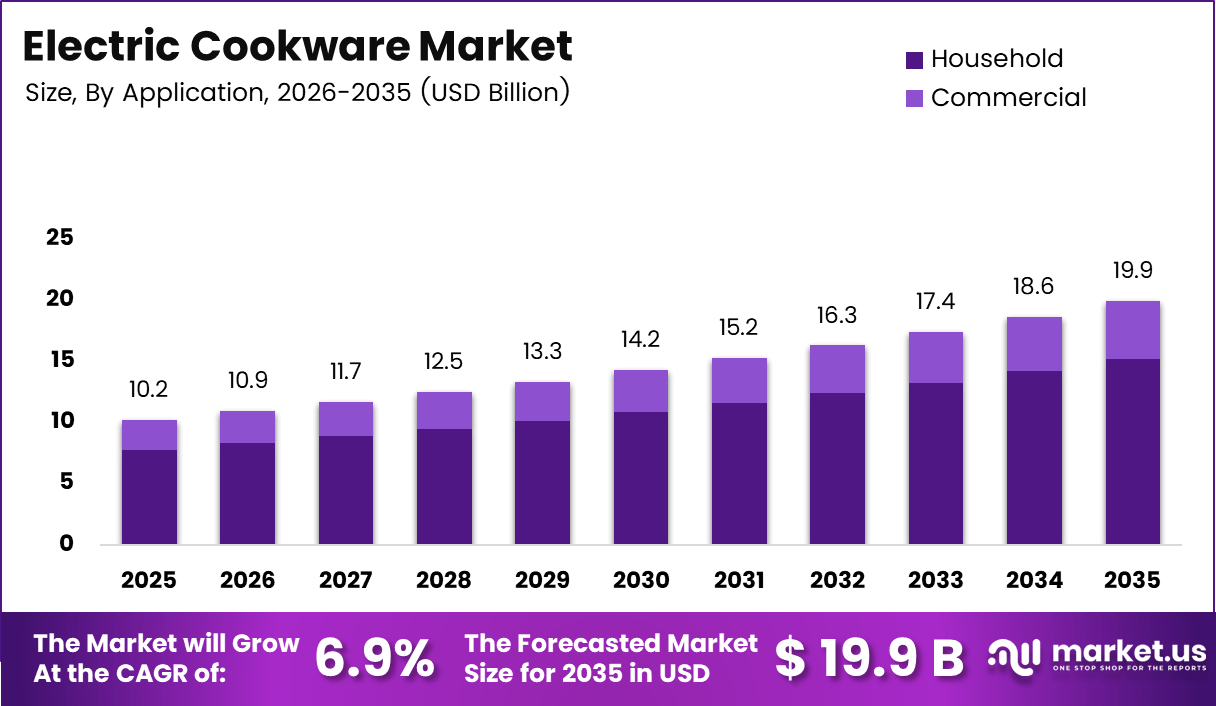
The Global Electric Cookware Market size is expected to be worth around USD 19.9 billion by 2035, from USD 10.2 billion in 2025, growing at a CAGR of 6.9% during the forecast period from 2026 to 2035.
The electric cookware market refers to electrically powered kitchen appliances designed to cook, heat, or prepare food with controlled temperature settings. This market includes products such as electric rice cookers, fryers, kettles, and multifunctional cookers. Increasing demand for energy efficient cooking appliances continues to reshape modern household kitchens globally.
electric cookware represents a convergence of convenience, safety, and consistent cooking performance. As urban lifestyles accelerate, consumers increasingly prefer compact electric cookware solutions that reduce preparation time. Consequently, demand is strengthening across residential segments, supported by rising adoption of smart and countertop kitchen appliances.
Growth in the electric cookware market remains steady, driven by electrification trends and heightened awareness of controlled temperature cooking. Governments across developed and emerging economies promote energy efficient appliances through labeling standards and incentive programs. As a result, manufacturers prioritize compliance with safety, efficiency, and material regulations to sustain long term market expansion.
Product design plays a critical role in purchase decisions within the electric cookware market. Typical configurations include matte coated steel bodies with nonstick interiors and tempered glass lids, supporting durability and ease of cleaning. Standard product dimensions such as 15.3 x 12.1 x 7.87 inches balance capacity with countertop compatibility, enhancing usability.
Operational flexibility further strengthens adoption, as electric cookware commonly offers adjustable heat control from low to high across 5 increments. With an average weight of 7 pounds, portability remains manageable for daily use. Capacity configurations around 5 quarts, extendable to 7 quarts, support both small and larger households efficiently.
From a market opportunity perspective, rising consumer investment in kitchen upgrades supports sustained demand. According to a survey, 68% of respondents considered purchasing a kitchen appliance within the next 12 months. This purchasing intent highlights strong transactional momentum for electric cookware across multiple appliance categories.
Usage patterns also reinforce long term market potential. According to the same survey findings, electric kettles recorded weekly usage rates of 57%, while air fryers reached 47%. Purchase consideration rates stood at 29% for air fryers, 25% for toaster ovens, and 17% for rice cookers, signaling diversified growth across electric cookware segments.
Key Takeaways
- The global Electric Cookware Market is projected to grow from USD 10.2 billion in 2025 to USD 19.9 billion by 2035, expanding at a 6.9% CAGR during 2026–2035.
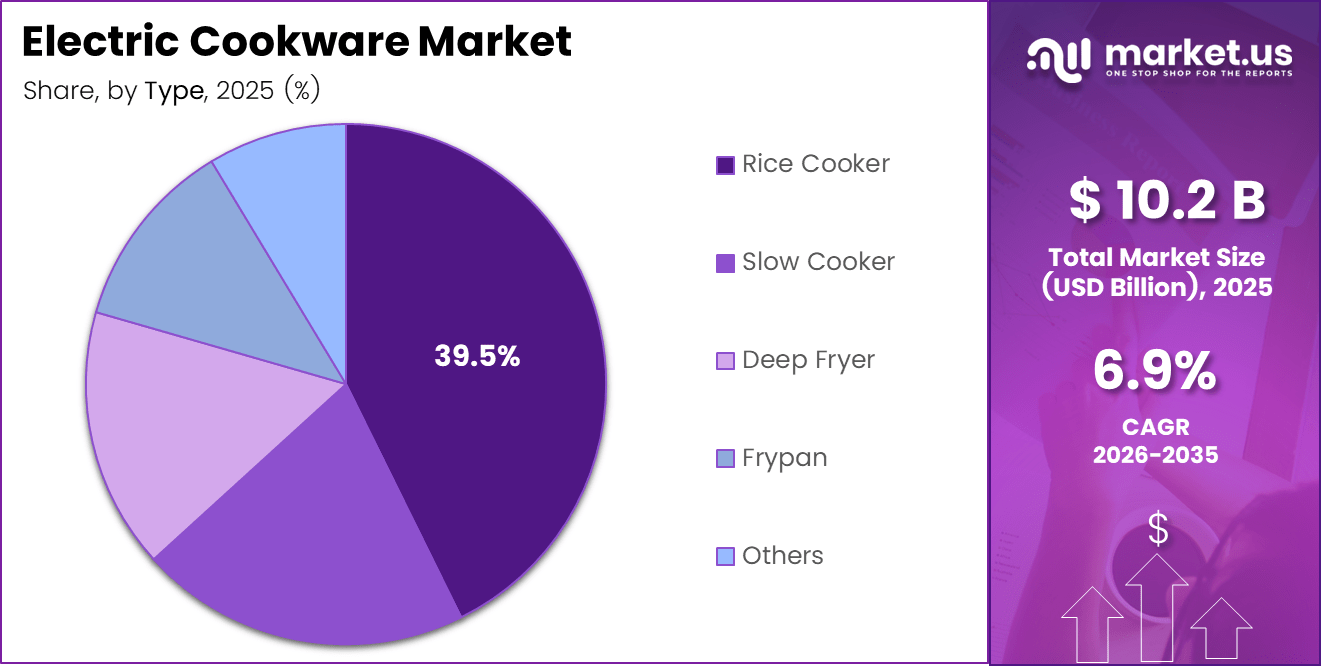
- Rice Cookers represent the leading product segment, accounting for a dominant 39.5% share due to everyday usage and staple food preparation relevance.
- Household applications dominate the market with a 76.1% share, supported by rising home cooking, convenience driven lifestyles, and appliance penetration.
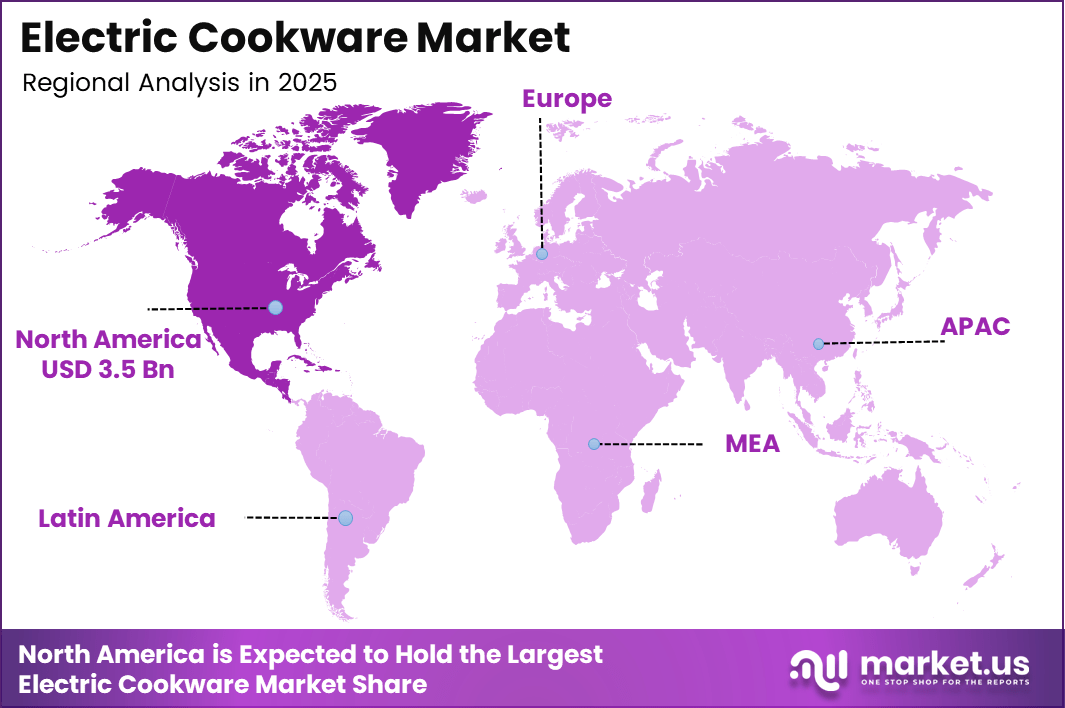
- North America leads regional performance with a 34.8% market share, generating approximately USD 3.5 billion in revenue in 2025.
- Asia Pacific emerges as the fastest growing regional market, driven by urbanization, compact kitchens, and increasing adoption of electric cooking appliances.
By Type Analysis
Rice Cooker dominates with 39.5% due to its everyday relevance, ease of use, and strong alignment with staple food consumption habits.
Rice Cooker held a dominant market position in the By Type Analysis segment of Electric Cookware Market, with a 39.5% share. Adoption remained strong as households increasingly favored automated cooking solutions. Moreover, consistent cooking results, energy efficiency, and compact designs supported frequent replacement and first time purchases across urban and semi urban settings.
Slow Cooker maintained a steady presence in the By Type Analysis segment of Electric Cookware Market. Demand gradually expanded as consumers shifted toward convenient meal preparation. Additionally, slow cooking supported healthier eating preferences, encouraging usage for soups, stews, and home style recipes that required minimal supervision.
Deep Fryer continued to serve a defined niche within the By Type Analysis segment of Electric Cookware Market. Usage remained linked to indulgent food consumption trends. Furthermore, controlled temperature settings and safer indoor frying capabilities supported adoption among users seeking consistency without traditional stovetop risks.
Frypan sustained relevance in the By Type Analysis segment of Electric Cookware Market. Electric frypans attracted users seeking versatile cooking in limited kitchen spaces. Consequently, portability, uniform heating surfaces, and suitability for multiple recipes reinforced its functional appeal across diverse households.
Others category addressed specialized needs within the By Type Analysis segment of Electric Cookware Market. This segment benefited from innovation driven demand. As a result, niche appliances supported experimentation, gifting, and lifestyle based cooking preferences without replacing core cookware products.
By Application Analysis
Household dominates with 76.1% driven by rising home cooking, convenience focused lifestyles, and expanding appliance penetration.
Household held a dominant market position in the By Application Analysis segment of Electric Cookware Market, with a 76.1% share. Growth remained supported by daily cooking requirements. Moreover, time saving features, compact designs, and safety enhancements encouraged frequent usage across apartments and independent homes.
Commercial segment retained a smaller yet stable role in the By Application Analysis segment of Electric Cookware Market. Adoption focused on controlled cooking environments. Additionally, cafes, small eateries, and catering units utilized electric cookware for consistency, reduced labor dependency, and compliance with indoor kitchen safety standards.
Key Market Segments
By Type
- Rice Cooker
- Slow Cooker
- Deep Fryer
- Frypan
- Others
By Application
- Household
- Commercial
Drivers
Accelerating Shift Toward Energy Efficient Cooking Appliances Drives Market Growth
Urban households are increasingly moving toward energy efficient and electric based cooking appliances to reduce fuel dependency and improve kitchen safety. Electric cookware supports cleaner cooking environments and aligns with rising awareness around energy conservation.
This shift is especially visible in apartments and modern housing projects where electric connections are more reliable than gas pipelines. At the same time, compact kitchen layouts are becoming common in urban homes, encouraging demand for multifunctional countertop cookware. Products that combine boiling, frying, steaming, and slow cooking help consumers save space and reduce the need for multiple utensils. This practicality supports steady market expansion.
Another important driver is the growing preference for controlled temperature cooking. Electric cookware allows users to maintain consistent heat levels, which supports healthier food preparation and reduces the risk of overcooking. Health focused consumers value these benefits. Additionally, the expansion of organized retail e-commerce platforms is improving product accessibility. Wider product displays, discounts, and easy home delivery are making electric cookware more visible and affordable to urban and semi urban buyers.
Restraints
High Upfront Cost Sensitivity Limits Wider Market Adoption
One of the key restraints affecting the electric cookware market is high upfront cost sensitivity. Many price conscious consumers prefer traditional cookware due to lower initial expenses. Electric cookware often includes advanced heating elements and safety features, which increase product pricing and slow adoption among budget focused households.
Another restraint is the dependence on stable electricity supply. In semi urban and rural regions, power interruptions and voltage fluctuations limit the reliable use of electric cooking appliances. This restricts consistent daily usage. Consumers in these areas often rely on gas or solid fuel alternatives that offer uninterrupted cooking access.
As a result, electric cookware penetration remains uneven across regions. Limited awareness about long term energy savings also affects purchase decisions. Many buyers focus on upfront cost rather than operational efficiency. Addressing affordability concerns and infrastructure gaps remains important for broader market acceptance.
Growth Factors
Product Innovation and Electrification Initiatives Create Strong Growth Opportunities
The increasing adoption of smart kitchens is opening new growth opportunities for electric cookware. Connected and app enabled cookware supports remote monitoring, preset recipes, and energy management System, appealing to tech aware consumers.
Product innovation focused on multi mode cooking is also gaining traction. smart kitchen Appliances that replace multiple traditional tools help reduce kitchen clutter and improve cooking efficiency, making them attractive to modern households.
Rising electrification initiatives are encouraging consumers to transition away from gas based cooking systems. Government support for electric infrastructure strengthens this shift and supports long term demand growth. Additionally, growing institutional and small food service demand is creating opportunities. Cafes, hostels, and small kitchens prefer compact electric solutions due to ease of use, safety, and reduced ventilation requirements.
Emerging Trends
Rising Adoption of Induction Cooking Shapes Market Trends
Induction based cookware is witnessing rapid adoption due to faster heating and improved safety. Consumers appreciate reduced heat loss and quicker cooking times, making induction technology a key market trend. There is also rising demand for aesthetically designed premium electric cookware in urban markets.
Sleek designs and modern finishes are influencing purchase decisions alongside functionality. Integration of safety features such as auto shut off and child lock systems is becoming standard. These features increase consumer confidence and support household safety.
The growing popularity of meal prep and home chef culture is driving frequent appliance upgrades. Consumers experimenting with new recipes seek advanced cookware that enhances convenience and cooking precision.
Regional Analysis
North America Dominates the Electric Cookware Market with a Market Share of 34.8%, Valued at USD 3.5 Billion
North America holds a leading position in the electric cookware market, driven by high adoption of smart kitchen appliances and strong consumer spending on premium home cooking solutions. In 2025, the region accounted for a dominant 34.8% share, supported by rising health awareness, preference for energy efficient appliances, and widespread use of electric cooking in urban households. The market value reached approximately USD 3.5 billion, reflecting steady replacement demand and growing interest in multifunctional cookware for convenience focused lifestyles.
Europe Electric Cookware Market Trends
Europe represents a mature yet steadily expanding market, supported by strong regulations promoting energy efficiency and sustainable household appliances. Consumers across the region show increasing preference for controlled temperature cooking to support healthier diets. Growth is further supported by high penetration of modern kitchens, compact living spaces, and rising demand for durable, long lasting electric cookware products designed for daily use.
Asia Pacific Electric Cookware Market Trends
Asia Pacific is emerging as a high growth region due to rapid urbanization, rising disposable incomes, and changing cooking habits. Increasing adoption of electric rice cookers, frypans, and multifunctional appliances supports market expansion. Growth is also reinforced by smaller household sizes, space constrained kitchens, and expanding availability of affordable electric cookware through organized retail and e commerce platforms.
Middle East and Africa Electric Cookware Market Trends
The Middle East and Africa market is developing at a gradual pace, supported by urban population growth and modernization of residential infrastructure. Demand is primarily driven by premium households and hospitality linked consumption in urban centers. However, adoption remains influenced by electricity availability and price sensitivity, particularly in semi urban and rural areas.
Latin America Electric Cookware Market Trends
Latin America shows moderate growth potential, supported by increasing urban households and gradual shift toward electric based cooking appliances. Rising awareness of convenience cooking, combined with improving retail access, supports demand growth. Economic volatility and cost sensitivity remain key factors shaping purchasing behavior across the region.
Key Regions and Countries
North America
- US
- Canada
Europe
- Germany
- France
- The UK
- Spain
- Italy
- Rest of Europe
Asia Pacific
- China
- Japan
- South Korea
- India
- Australia
- Rest of APAC
Latin America
- Brazil
- Mexico
- Rest of Latin America
Middle East & Africa
- GCC
- South Africa
- Rest of MEA
Key Electric Cookware Company Insights
The global electric cookware market in 2025 reflects a balance between innovation, energy efficiency, and evolving consumer cooking habits. Leading players focus on smart features, durable materials, and multifunctional designs to address rising demand for convenient kitchen appliances. The following companies shape market direction through scale, design leadership, and regional expansion strategies.
Koninklijke Philips N.V. maintains a strong position in electric cookware through its emphasis on health focused cooking technologies and intuitive appliance design. The company’s strategy centers on controlled temperature performance, energy efficiency, and user friendly interfaces, aligning well with growing demand for healthier and faster home cooking solutions.
Maxim competes in the electric cookware market by targeting value driven consumers seeking reliable everyday appliances. Its portfolio emphasizes functional simplicity, compact form factors, and accessible pricing. This positioning supports adoption in price sensitive households while sustaining consistent volume demand across emerging and mid income markets.
Midea Group leverages large scale manufacturing capabilities and broad product portfolios to strengthen its electric cookware presence. The company focuses on smart integration, durable materials, and rapid product refresh cycles. This approach allows Midea to address both mass market demand and premium kitchen appliance trends efficiently.
Breville differentiates itself through premium design, precision cooking controls, and performance oriented electric cookware solutions. Its strategy prioritizes professional grade functionality for home users, supporting higher price points. This positioning resonates with consumers seeking advanced cooking experiences and long term product reliability.
Top Key Players in the Market
- Koninklijke Philips N.V.
- Maxim
- Midea Group
- Breville
- Williams-Sonoma Inc.
- Joyoung Singapore
- Toshiba Corporation
- Dacor
- BSH Home Appliances FZE
- Electrolux
Recent Developments
- In September 2024, Versuni NA expanded its electric cookware portfolio with the launch of Philips Airfryer 2000 Series single basket and 3000 Series dual basket models, integrating RapidAir technology to improve heat circulation and everyday cooking efficiency for households seeking faster and healthier meal preparation.
- In March 2024, Midea showcased multiple new electric cookware and small appliance innovations at the Inspired Home Show 2024 in Chicago, introducing the Double Decker Dual-Zone Air Fryer, Barista Brew Smart Coffee Maker, and Easy Sauté Multicooker, reinforcing its focus on multifunctional, smart, and convenience driven cooking solutions.
Report Scope
Report Features Description Market Value (2025) USD 10.2 billion Forecast Revenue (2035) USD 19.9 billion CAGR (2026-2035) 6.9% Base Year for Estimation 2025 Historic Period 2020-2024 Forecast Period 2026-2035 Report Coverage Revenue Forecast, Market Dynamics, Competitive Landscape, Recent Developments Segments Covered By Type (Rice Cooker, Slow Cooker, Deep Fryer, Frypan, Others), By Application (Household, Commercial) Regional Analysis North America (US and Canada), Europe (Germany, France, The UK, Spain, Italy, and Rest of Europe), Asia Pacific (China, Japan, South Korea, India, Australia, and Rest of APAC), Latin America (Brazil, Mexico, and Rest of Latin America), Middle East & Africa (GCC, South Africa, and Rest of MEA) Competitive Landscape Koninklijke Philips N.V., Maxim, Midea Group, Breville, Williams-Sonoma Inc., Joyoung Singapore, Toshiba Corporation, Dacor, BSH Home Appliances FZE, Electrolux Customization Scope Customization for segments, region/country-level will be provided. Moreover, additional customization can be done based on the requirements. Purchase Options We have three licenses to opt for: Single User License, Multi-User License (Up to 5 Users), Corporate Use License (Unlimited User and Printable PDF) 
-
-
- Koninklijke Philips N.V.
- Maxim
- Midea Group
- Breville
- Williams-Sonoma Inc.
- Joyoung Singapore
- Toshiba Corporation
- Dacor
- BSH Home Appliances FZE
- Electrolux
Our Clients

- 173139
- Jan 2026






