


Report Overview
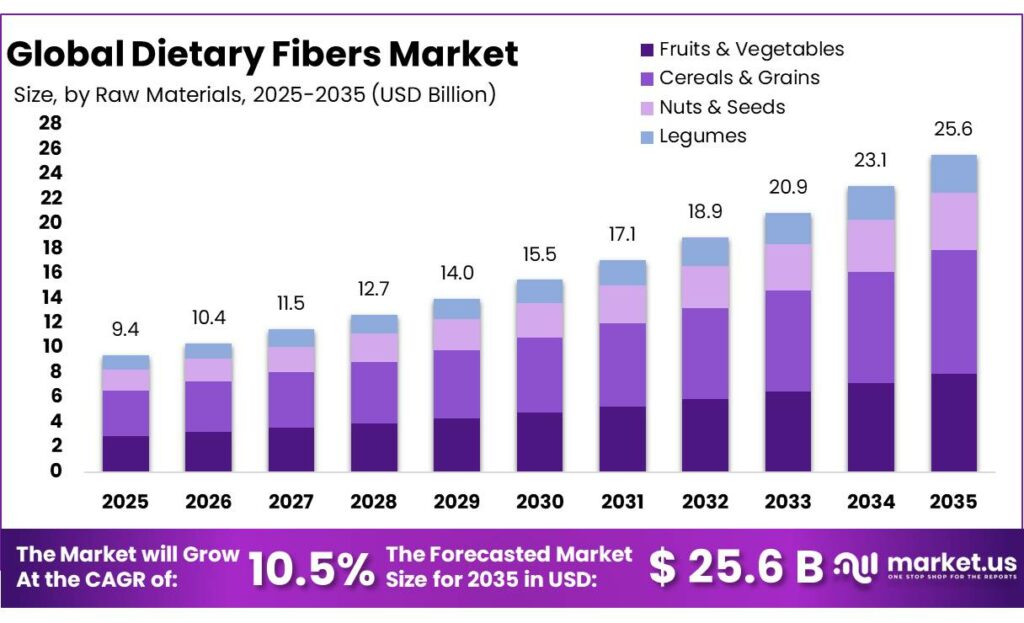
The Global Dietary Fibers Market size is expected to be worth around USD 25.6 Billion by 2035, from USD 9.4 Billion in 2025, growing at a CAGR of 10.5% during the forecast period from 2026 to 2035. In 2025, Asia-Pacific held a dominant market position, capturing more than a 47.9% share, holding USD 4.5 Billion revenue.
Dietary fibers are positioned as functional food ingredients because they support digestive health, satiety, blood-glucose management and reformulation goals such as sugar reduction. From an industrial perspective, demand is being shaped by public-health guidance: WHO recommends at least 25 g/day of naturally occurring dietary fiber for people aged 10+, alongside 400 g/day of fruits and vegetables, while the U.S. FDA sets the Daily Value for dietary fiber at 28 g/day on a 2,000-calorie diet.
The industrial scenario is moving from basic enrichment toward functional positioning in bakery, beverages, dairy alternatives, supplements, meal replacements and weight-management products. European rules support clear pack claims: “source of fiber” requires 3 g/100 g or 1.5 g/100 kcal, while “high fiber” requires 6 g/100 g or 3 g/100 kcal, encouraging reformulation with inulin, oligofructose, beta-glucan, psyllium, acacia and resistant starch. In the U.K., official 2025 nutrition-survey reporting showed that 96% of adults and 11–18-year-olds did not meet the government fiber recommendation of 30 g/day, highlighting a major fiber-intake gap and a clear reformulation opportunity for food manufacturers.
Driving factors include digestive-health awareness, clean-label reformulation, sugar reduction, GLP-1-era weight management and public-health policy. EFSA states 25 g/day is adequate for normal bowel function in adults and notes benefits at higher intakes for heart disease, type 2 diabetes and weight maintenance. In the U.S., more than 90% of women and 97% of men do not meet recommended fiber intakes, creating a strong nutritional gap for food manufacturers.
Government and policy support also strengthens the outlook. The EU Farm to Fork strategy promotes healthier and more sustainable food systems, while WHO guidance emphasizes whole grains, vegetables, fruits and pulses as core carbohydrate sources. These policies favor dietary fibers from chicory root, oats, barley beta-glucan, legumes, fruits and cereals.
BENEO remains a key industrial reference through chicory-root fibers such as Orafti® Inulin and Oligofructose. In January 2025, BENEO highlighted a systematic review covering 29 trials and 1,184 adults, where chicory-root fiber supplementation was associated with a clinically meaningful 2% reduction in body weight versus placebo, with significant effects also seen at 10 g/day and after at least 8 weeks for body-fat percentage outcomes.
Key Takeaways
- Dietary Fibers Market size is expected to be worth around USD 25.6 Billion by 2035, from USD 9.4 Billion in 2025, growing at a CAGR of 10.5%.
- Cereals & Grains held a dominant market position, capturing more than a 39.4% share.
- Insoluble held a dominant market position, capturing more than a 58.3% share in the dietary fibers market.
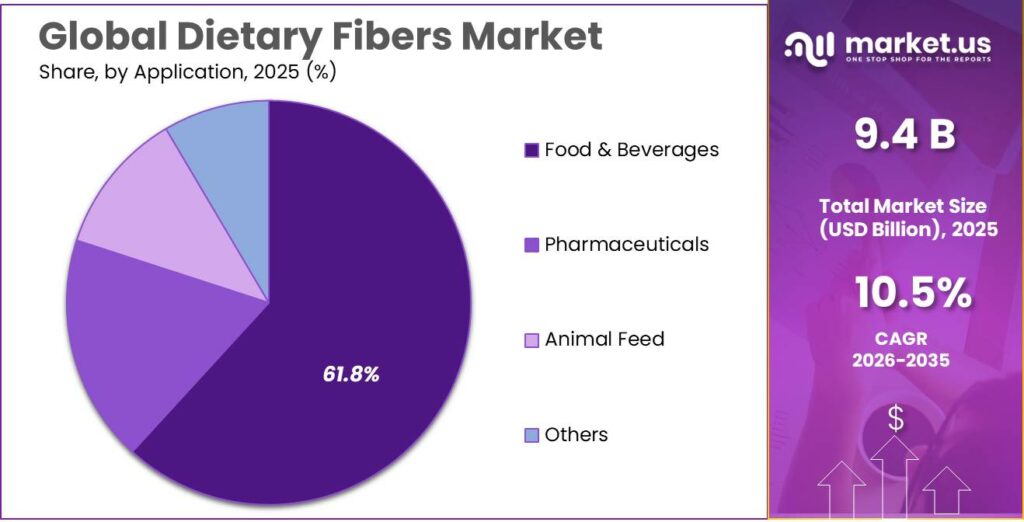
- Food & Beverages held a dominant market position, capturing more than a 61.8% share.
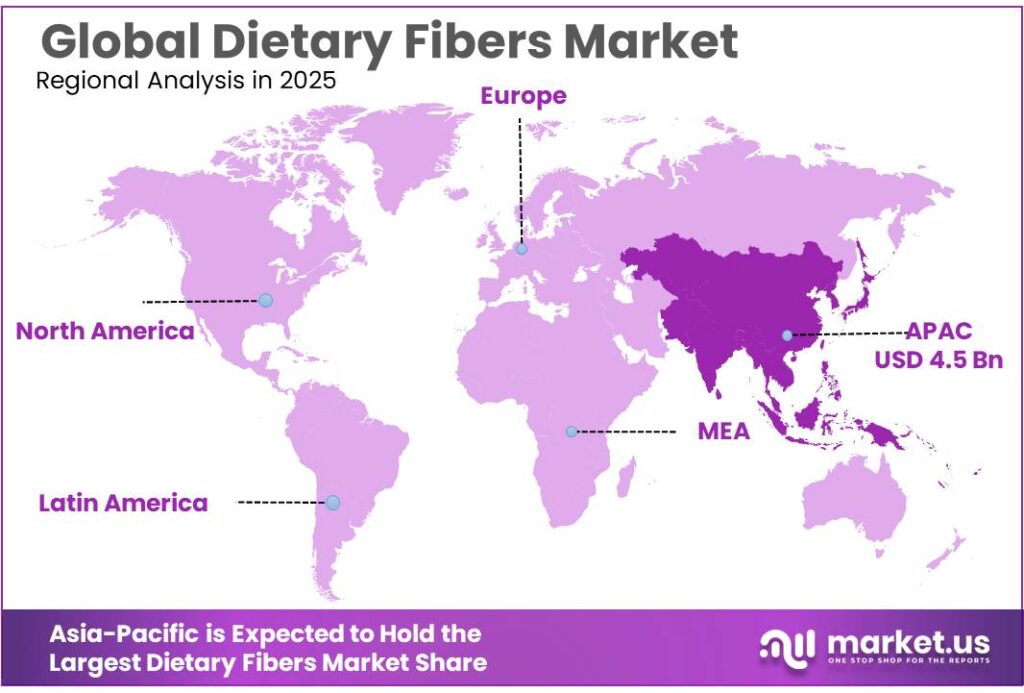
- Asia-Pacific emerged as the dominating region in the dietary fibers market, accounting for 47.9% of the global share with a market value of around USD 4.5 billion.
By Raw Materials Analysis
Cereals & Grains dominate with 39.4% due to their wide availability and everyday consumption
In 2025, Cereals & Grains held a dominant market position, capturing more than a 39.4% share in the dietary fibers market by raw materials. This strong position is mainly supported by the consistent global consumption of staple foods like wheat, rice, oats, and corn, which are naturally rich in fiber. Consumers are increasingly choosing familiar, grain-based fiber sources over synthetic alternatives, especially as awareness around digestive health continues to grow. Food manufacturers are also actively using cereal-derived fibers in bakery, breakfast cereals, and snack products, as these ingredients are easy to process and blend well without affecting taste or texture significantly.
By Type Analysis
Insoluble fiber dominates with 58.3% as it supports digestion and regular gut health
In 2025, Insoluble held a dominant market position, capturing more than a 58.3% share in the dietary fibers market by type. This leading position is largely because insoluble fiber plays a direct role in improving digestion and preventing constipation, which are common health concerns among consumers. It is widely found in everyday foods like whole grains, wheat bran, and vegetables, making it a regular part of daily diets. Food producers also prefer insoluble fiber in many applications since it helps improve texture and bulk in products like bread, cereals, and snacks without changing the taste too much.
By Application Analysis
Food & Beverages leads with 61.8% as fiber-rich products become part of everyday eating
In 2025, Food & Beverages held a dominant market position, capturing more than a 61.8% share in the dietary fibers market by application. This strong lead is mainly because fiber is now being added to a wide range of daily food products such as bakery items, breakfast cereals, dairy alternatives, and ready-to-eat snacks. Consumers are paying more attention to what they eat, and fiber-enriched foods are seen as a simple way to support digestion and overall health without making big changes to their routine.
Key Market Segments
By Raw Materials
- Fruits & Vegetables
- Cereals & Grains
- Nuts & Seeds
- Legumes
By Type
- Insoluble
- Cellulose
- Hemicelluloses
- Chitin & Chitosan
- Lignin
- Oat Bran
- Wheat Fiber
- Others
- Soluble
- Inulin
- Pectin
- Beta-Glucan
- Corn Fibers
- Others
By Application
- Food & Beverages
- Pharmaceuticals
- Animal Feed
- Others
Emerging Trends
Fiber-first eating trend is reshaping daily food choices and product innovation
One of the most noticeable trends in the dietary fibers space is the shift toward what many call “fiber-first eating.” People are now actively trying to increase fiber in their daily meals, not just through traditional foods but also through packaged and ready-to-eat options. A 2025 nutrition poll showed that around 64% of consumers are intentionally trying to add more fiber to their diets, which clearly reflects a change in everyday food behavior.
This shift is also strongly linked to health recommendations. According to dietary guidelines from organizations like the USDA, adults are advised to consume around 25–38 grams of fiber per day, yet most people still fall short of this target. This gap is pushing both governments and food brands to highlight fiber more clearly on labels and in public health campaigns. As a result, products such as high-fiber cereals, breads, and snacks are becoming more common in stores.
Functional and fortified foods with added fiber are gaining strong momentum
Another major trend is the growing use of dietary fiber in functional and fortified food products. Food companies are now adding fiber into everyday items like bread, beverages, snacks, and even convenience meals. This is not just a small shift—it’s becoming a core part of product development. For example, whole grain and high-fiber foods are seeing strong demand, with staple items like bread continuing to play a key role in daily nutrition and fiber intake.
At the same time, intake levels still show a large gap. In some regions, adults consume only around 16 grams of fiber per day, which is far below recommended levels, and only a small portion of the population meets daily fiber guidelines. This shortfall is pushing governments and health bodies to promote whole grains and fortified foods as easy ways to increase intake without changing eating habits too much.
Drivers
Rising health awareness is pushing people toward fiber-rich diets
One of the biggest drivers for dietary fibers today is the growing awareness around health and digestion. People are slowly understanding that simple food changes can prevent bigger health issues. Health organizations have played a major role in this shift. For example, the World Health Organization recommends improving overall diet quality to reduce risks of diseases like diabetes and heart conditions. At the same time, nutrition guidelines suggest adults should consume around 25 grams of fiber daily to maintain good health and digestion
However, the gap between recommended and actual intake is still large. In many regions, people consume much less fiber than needed. In the UK, average intake is around 17 grams per day compared to the recommended 30 grams. This gap is pushing both governments and food brands to promote fiber-rich foods more actively. As a result, everyday products like bread, cereals, and snacks are now being reformulated with added fiber. People are not just eating for taste anymore—they are thinking about long-term health, and fiber fits naturally into that mindset.
Government guidelines and nutrition programs are boosting fiber demand
Government initiatives and dietary guidelines are also playing a strong role in increasing fiber consumption. Many public health agencies now clearly promote fiber as part of a balanced diet. For example, the National Health Service recommends that adults aim for about 30 grams of fiber per day, yet most people consume only around 20 grams, showing a clear need for improvement
These guidelines are not just suggestions—they are shaping food policies, school meal programs, and labeling rules. Countries are encouraging the use of whole grains, fruits, and vegetables in daily meals. At the same time, fiber is being highlighted as a key nutrient that helps reduce the risk of heart disease, stroke, and type 2 diabetes. This push is influencing both consumers and manufacturers. Food companies are now more focused on adding fiber into packaged foods, while governments continue to run awareness campaigns around balanced diets.
Restraints
Low consumer awareness and intake gaps continue to slow fiber adoption
One of the biggest challenges for the dietary fibers market is that many people still do not consume enough fiber, mainly due to low awareness and unclear understanding of its benefits. Even though health bodies promote fiber regularly, the message has not fully reached everyday eating habits.
According to the World Health Organization, adults should aim for at least 25 grams of fiber per day, yet actual intake in many countries remains much lower. For instance, data shared through global nutrition studies shows that average intake often falls below this level, especially in urban populations relying on processed foods.
This gap highlights a simple issue—people are not fully aware of how much fiber they need or where to get it from. While governments promote healthier diets, changing eating habits takes time. Many consumers still prefer refined grains and fast food options, which are low in fiber. Even when fiber-rich products are available, they are not always the first choice. This slow shift in behavior directly affects the growth of the dietary fibers market, as demand depends heavily on everyday consumption patterns.
Digestive discomfort concerns limit regular consumption
Another key restraining factor is the discomfort some people experience when increasing fiber intake too quickly. Health organizations like the National Health Service advise that fiber should be added gradually to avoid issues like bloating, gas, or stomach cramps. Despite fiber being beneficial, these short-term effects can discourage people from continuing high-fiber diets. The NHS also highlights that adults should aim for around 30 grams of fiber daily, but many people stay below this level partly due to such concerns.
This creates a barrier, especially for new consumers who are trying to improve their diet. If the experience is uncomfortable, they often return to low-fiber foods. Food manufacturers are trying to solve this by improving product formulations, but the perception still exists. Government awareness campaigns are encouraging gradual intake and proper hydration, yet behavior change remains slow. As a result, even though the long-term benefits of fiber are well known, short-term discomfort continues to hold back consistent consumption.
Opportunity
Expansion of food fortification programs is creating new demand for dietary fiber
One of the biggest growth opportunities for dietary fibers is the rapid expansion of food fortification programs across the world. Governments and global organizations are actively encouraging the addition of nutrients into everyday foods, and fiber is increasingly becoming part of that movement. The World Health Organization highlights food fortification as a cost-effective way to improve public nutrition and reduce deficiencies.
Large-scale efforts are already showing impact. The Food Fortification Initiative has helped reduce micronutrient risks for around 1.3 billion people across 27 countries, showing how wide the reach of fortified food systems has become. While earlier programs focused mainly on vitamins and minerals, there is now a shift toward adding functional ingredients like dietary fiber to improve digestion and long-term health. Governments are also promoting fortified staples such as wheat flour, rice, and maize, which are ideal carriers for fiber enrichment.
Rising functional food consumption is opening new space for fiber use
Another strong opportunity is the growing demand for functional foods—products that offer added health benefits beyond basic nutrition. People today are looking for foods that support digestion, weight control, and overall wellness, and dietary fiber fits perfectly into this trend. Programs led by the World Food Programme are already pushing this shift. For example, there is a plan to increase the share of fortified cereals from 24% to 50% between 2025 and 2028, which shows how quickly fortified and functional foods are expanding.
This growth is not limited to aid programs—it is visible in everyday markets as well. Consumers are choosing fiber-enriched snacks, beverages, and ready-to-eat foods as part of their routine. Many food brands are responding by adding fiber to products like cereals, bakery items, and drinks to meet this demand. At the same time, awareness around gut health is increasing, making fiber one of the most preferred ingredients in product innovation.
Regional Insights
Asia-Pacific dominates with 47.9% share, reaching USD 4.5 Billion driven by strong population base and rising health awareness
In 2025, Asia-Pacific emerged as the dominating region in the dietary fibers market, accounting for 47.9% of the global share with a market value of around USD 4.5 billion. The region’s strong position is mainly supported by its large and growing population, along with increasing awareness around digestive health and balanced diets.
Countries such as China, India, and Japan are major contributors, where changing food habits and rising demand for functional foods are pushing fiber consumption. The region has already shown consistent growth, with market size reaching over USD 3.1 billion in 2023 and expanding steadily at around 10% CAGR toward 2030, reflecting strong long-term demand.
One of the key strengths of Asia-Pacific lies in its strong food and beverage industry, where dietary fibers are widely used in bakery products, cereals, beverages, and traditional foods. Increasing urbanization and rising disposable income are also influencing consumers to shift toward healthier food choices. Additionally, governments across the region are promoting balanced diets and whole grain consumption, which directly supports fiber demand.
Key Regions and Countries Insights
- North America
- US
- Canada
- Europe
- Germany
- France
- The UK
- Spain
- Italy
- Rest of Europe
- Asia Pacific
- China
- Japan
- South Korea
- India
- Australia
- Rest of APAC
- Latin America
- Brazil
- Mexico
- Rest of Latin America
- Middle East & Africa
- GCC
- South Africa
- Rest of MEA
Key Players Analysis
ADM is one of the largest global agricultural processors, supplying dietary fibers derived from grains and plant sources. The company operates in more than 190 countries and generated over USD 90 billion in revenue in recent years. ADM is part of the top players collectively holding 30.7% market share in 2025, highlighting its strong industry influence.
DuPont de Nemours plays a key role in dietary fibers through its nutrition and biosciences division, offering soluble fibers and functional ingredients. The company operates in over 70 countries and invests heavily in innovation, with annual R&D spending exceeding USD 1 billion across segments.
Lonza is known for its specialty ingredients and nutritional solutions, including dietary fiber-based formulations used in supplements and pharmaceuticals. The company operates across 100+ sites globally and serves customers in more than 120 countries, strengthening its presence in the fiber ecosystem. Lonza focuses on high-value formulations and clean-label solutions, aligning with growing demand for functional foods.
Top Key Players Outlook
- BENEO
- Lonza
- DuPont de Nemours, Inc.
- Archer Daniels Midland Company (ADM)
- Batory Foods
- Ingredion Incorporated
- Roquette Freres
- PURIS
- Tate & Lyle
- Emsland Group
- Cargill, Incorporated
- Kerry Inc.
- The Green Labs LLC
- Nexira
- Farbest Brands
- J. RETTENMAIER & SOHNE GmbH + Co KG
- Taiyo International
- AGT Food and Ingredients
Recent Industry Developments
BENEO’s investment strategy also reflects growth focus, including capacity expansions of up to 40%–50% in fiber production facilities and new plant developments to process plant-based ingredients.
DuPont operates with around 15,000 employees globally and continues to serve multiple industries through advanced ingredient solutions.
Report Scope
| Report Features | Description |
|---|---|
| Market Value (2025) | USD 9.4 Bn |
| Forecast Revenue (2035) | USD 25.6 Bn |
| CAGR (2026-2035) | 10.5% |
| Base Year for Estimation | 2025 |
| Historic Period | 2020-2024 |
| Forecast Period | 2026-2035 |
| Report Coverage | Revenue Forecast, Market Dynamics, Competitive Landscape, Recent Developments |
| Segments Covered | By Raw Materials (Fruits And Vegetables, Cereals And Grains, Nuts And Seeds, Legumes), By Type (Insoluble, Soluble), By Application (Food And Beverages, Pharmaceuticals, Animal Feed, Others) |
| Regional Analysis | North America – US, Canada; Europe – Germany, France, The UK, Spain, Italy, Rest of Europe; Asia Pacific – China, Japan, South Korea, India, Australia, Singapore, Rest of APAC; Latin America – Brazil, Mexico, Rest of Latin America; Middle East & Africa – GCC, South Africa, Rest of MEA |
| Competitive Landscape | BENEO, Lonza, DuPont de Nemours, Inc., Archer Daniels Midland Company (ADM), Batory Foods, Ingredion Incorporated, Roquette Freres, PURIS, Tate & Lyle, Emsland Group, Cargill, Incorporated, Kerry Inc., The Green Labs LLC, Nexira, Farbest Brands, J. RETTENMAIER & SOHNE GmbH + Co KG, Taiyo International, AGT Food and Ingredients |
| Customization Scope | Customization for segments, region/country-level will be provided. Moreover, additional customization can be done based on the requirements. |
| Purchase Options | We have three licenses to opt for: Single User License, Multi-User License (Up to 5 Users), Corporate Use License (Unlimited User and Printable PDF) |





































