


Market Overview
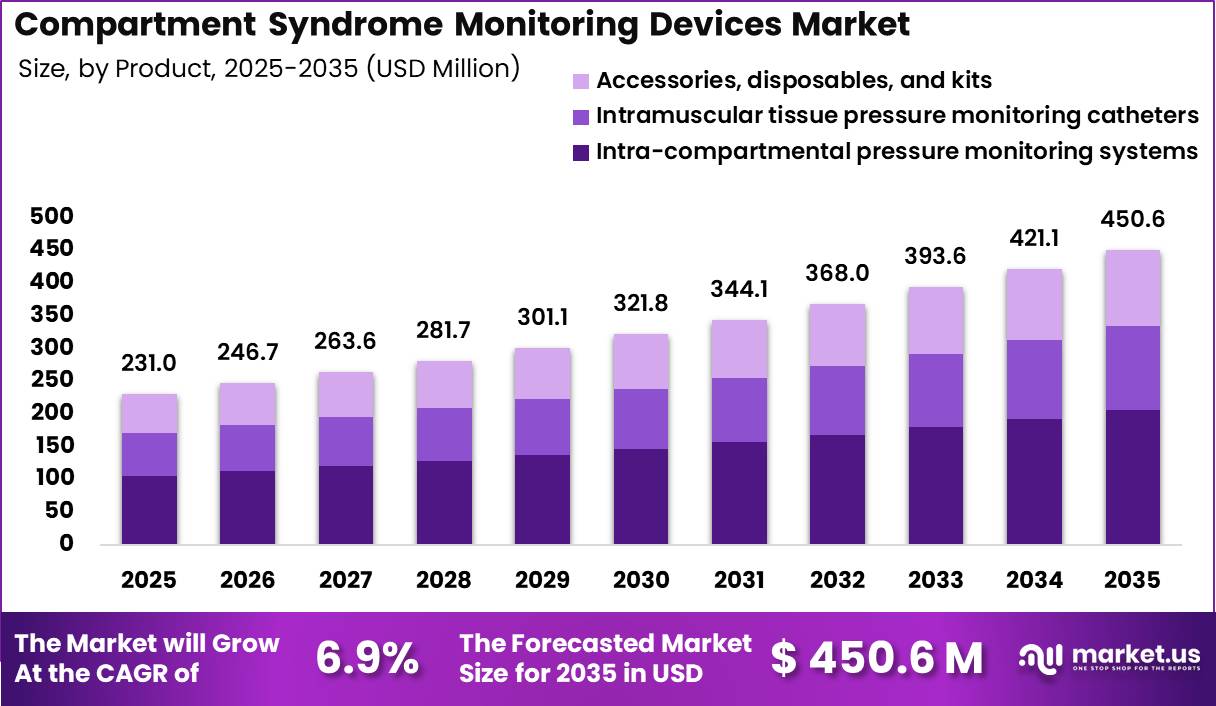
Global Compartment Syndrome Monitoring Devices Market size is expected to be worth around US$ 450.6 Million by 2035 from US$ 231.0 Million in 2025, growing at a CAGR of 6.9% during the forecast period from 2026 to 2035. In 2025, North America led the market, achieving over 40.1% share with a revenue of US$ 92.6 Million.
The global Compartment Syndrome Monitoring Devices Market is gaining attention as healthcare systems focus on earlier diagnosis of acute compartment syndrome, a serious condition in which pressure builds within a muscle compartment and can compromise blood flow and nerve function. These devices are used to support pressure measurement and clinical assessment in trauma, orthopedic, vascular, and emergency care settings.
According to the National Institutes of Health, acute compartment syndrome occurs most commonly after fractures and severe limb injuries, with tibial fractures representing a major risk group. Delayed diagnosis can lead to permanent muscle and nerve damage, making timely pressure monitoring clinically important.
The U.S. Centers for Disease Control and Prevention reports that millions of emergency department visits occur annually for injuries and fractures, highlighting the large patient population that may require assessment for compartment syndrome.
Government and hospital initiatives aimed at improving trauma care are also supporting demand for monitoring technologies. The World Health Organization estimates that road traffic injuries cause more than 1 million deaths globally each year and many more serious limb injuries, increasing the need for effective orthopedic and trauma management tools.
The market includes handheld pressure monitors, disposable pressure measurement kits, and integrated monitoring systems used in hospitals, ambulatory surgical centers, and military medicine. Ongoing advances in sensor accuracy, portability, and digital data recording are expected to support adoption across emergency and orthopedic care pathways.
Key Takeaways
- Market Size: Global Compartment Syndrome Monitoring Devices Market size is expected to be worth around US$ 450.6 Million by 2035 from US$ 231.0 Million in 2025.
- Market Share: The market is growing at a CAGR of 6.9% during the forecast period from 2026 to 2035.
- Product: The compartment syndrome monitoring devices market by outsourced Product is led by Intra-compartmental pressure monitoring systems, which accounted for 45.6% of the global market share in 2025.
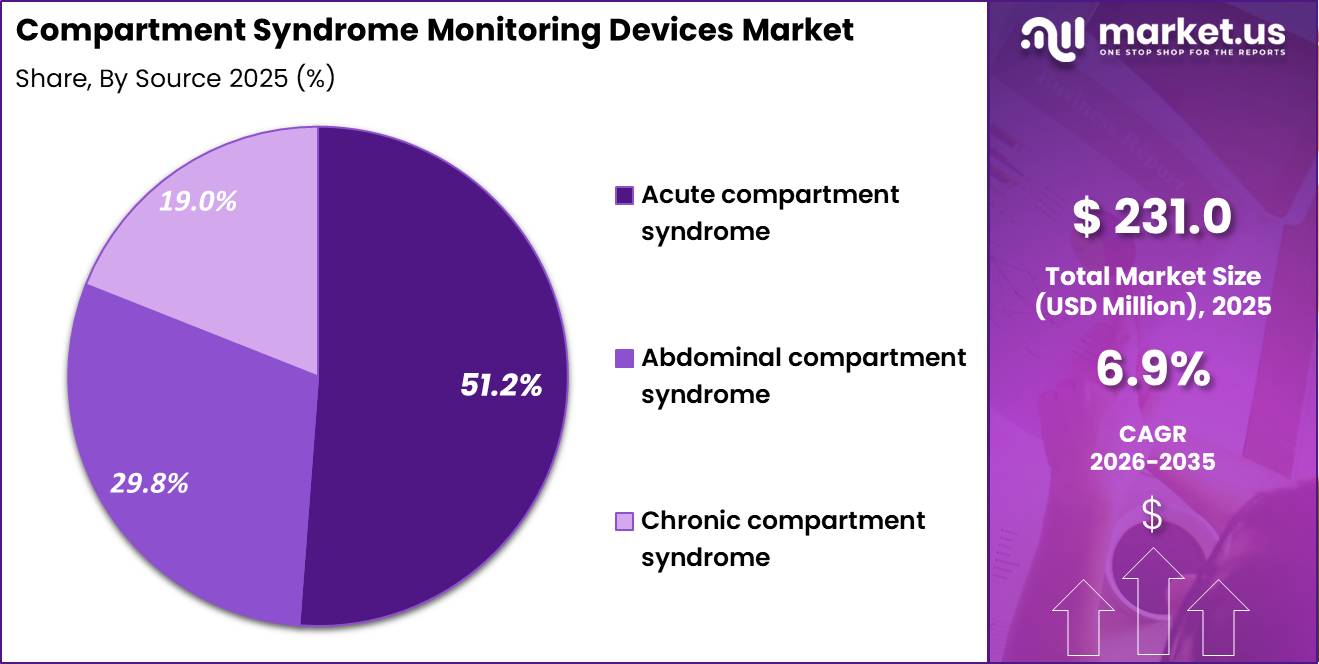
- Source: The Acute compartment syndrome segment held the largest share of the compartment syndrome monitoring devices market, accounting for 51.2% of total revenue in 2025.
- Service Type: The Hospitals segments captured the largest 60.1% share of the compartment syndrome monitoring devices market in 2025.
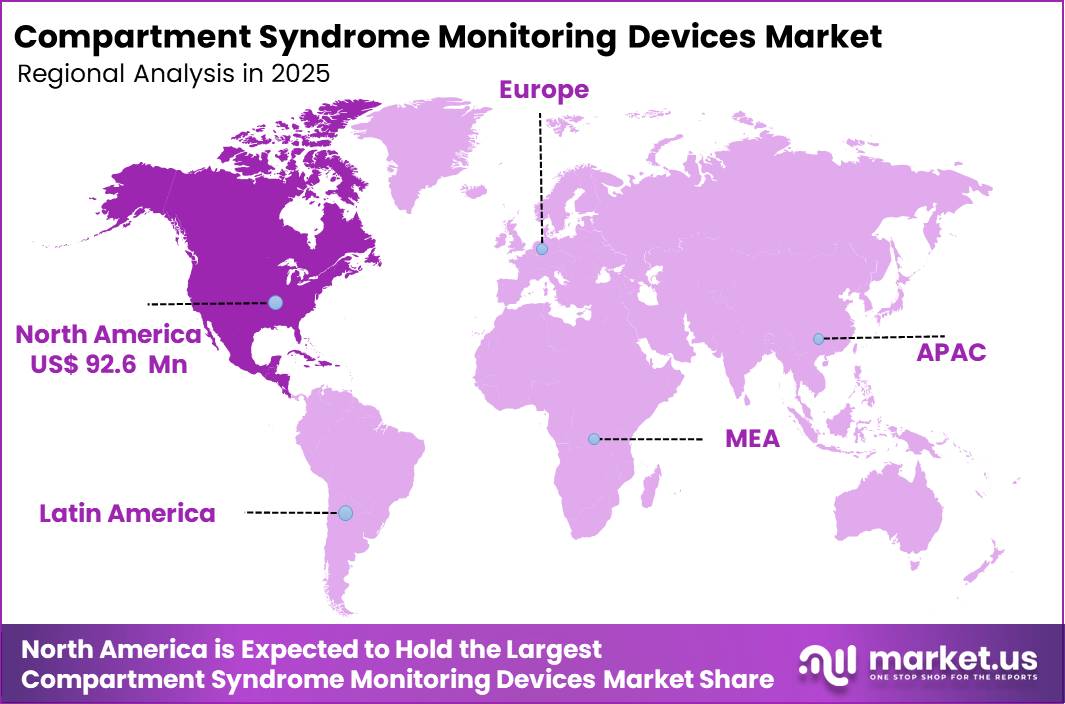
- Regional Analysis: In 2025, North America dominated the global compartment syndrome monitoring devices market, accounting for over 40.1% of total revenue and reaching approximately US$ 92.6 million.
Product Analysis
Intra-compartmental Pressure Monitoring Systems Lead Product Segment, Dominating the Compartment Syndrome Monitoring Devices Market.
The Intra-compartmental pressure monitoring systems segment accounted for the largest 45.6% market share in 2025, reflecting its position as the clinical standard for objective compartment pressure assessment.
These systems provide direct and quantitative pressure measurements that assist physicians in confirming suspected compartment syndrome, particularly when physical examination findings are inconclusive. Their widespread adoption in emergency departments, trauma centers, and orthopedic units is driven by the need for rapid diagnosis to prevent irreversible muscle and nerve damage.
Technological improvements, including portable handheld monitors, digital pressure displays, and enhanced measurement accuracy, continue to strengthen demand for these systems across developed and emerging healthcare markets.
The Intramuscular tissue pressure monitoring catheters segment captured 28.6% of the market, supported by increasing utilization in trauma surgery, sports medicine, and postoperative monitoring where accurate pressure readings are essential. These catheters are valued for their compatibility with multiple pressure monitoring platforms and their ability to deliver reliable diagnostic data during invasive assessments.
Meanwhile, Accessories, disposables, and kits represented 25.8% of the market, benefiting from recurring procurement by hospitals and surgical facilities. Single-use needles, tubing, connectors, sterile kits, and calibration components contribute to continuous replacement demand while supporting infection control protocols and ensuring uninterrupted operation of pressure monitoring systems.
Source Analysis
Acute Compartment Syndrome Leads Source Segment, Dominating the Compartment Syndrome Monitoring Devices Market.
The Acute compartment syndrome segment dominated the market with a 51.2% share in 2025, primarily due to its high incidence following fractures, crush injuries, vascular trauma, and orthopedic emergencies. Because acute compartment syndrome is considered a surgical emergency requiring prompt diagnosis and intervention, healthcare providers increasingly rely on compartment pressure monitoring devices to support clinical decision-making when symptoms are uncertain.
The growing number of traumatic injuries worldwide, combined with expanding trauma care infrastructure and greater awareness among orthopedic surgeons, continues to reinforce the segment’s leadership.
The Abdominal compartment syndrome segment accounted for 29.8% of the market, supported by rising monitoring requirements in critically ill patients admitted to intensive care units following major surgery, severe sepsis, burns, pancreatitis, or abdominal trauma.
Increasing adoption of advanced critical care protocols has encouraged earlier pressure assessment to reduce organ dysfunction risks. Meanwhile, Chronic compartment syndrome represented 19.0% of the market, driven largely by athletes, military personnel, and individuals engaged in repetitive physical activity.
Although this condition occurs less frequently than acute cases, improved recognition of exercise-induced compartment syndrome and increasing referrals to orthopedic and sports medicine specialists continue to support steady demand for pressure monitoring devices in elective diagnostic evaluations.
Service Type Analysis
Hospitals Lead Service Type Segment, Dominating the Compartment Syndrome Monitoring Devices Market.
The Hospitals segment held the largest 60.1% market share in 2025, reflecting their role as the primary treatment centers for trauma, orthopedic emergencies, vascular surgery, and intensive care management. Hospitals possess the specialized surgical teams, emergency departments, and diagnostic infrastructure required for rapid compartment syndrome evaluation and treatment.
The increasing volume of road accidents, complex fractures, and emergency surgical procedures has further strengthened demand for compartment syndrome monitoring devices within hospital settings. Investments in advanced trauma care facilities and standardized emergency care protocols also continue to drive adoption.
Specialty clinics represent the second-largest service segment, benefiting from increasing referrals for orthopedic, sports medicine, vascular, and rehabilitation services. These clinics utilize compartment pressure monitoring devices for diagnosing chronic exertional compartment syndrome and conducting follow-up evaluations for patients with persistent limb pain.
Growing participation in sports and recreational activities has contributed to higher patient volumes in these specialized facilities. The Other healthcare facilities segment, including ambulatory surgical centers, military medical facilities, and select outpatient care centers, continues to expand as access to specialized musculoskeletal and trauma services improves.
Although these facilities account for a smaller market share, their adoption of portable and easy-to-operate monitoring systems supports broader availability of compartment pressure assessment outside large hospital environments.
Key Market Segments
By Product
- Intra‑compartmental pressure monitoring systems
- Intramuscular tissue pressure monitoring catheters
- Accessories, disposables, and kits
By Source
- Acute compartment syndrome
- Abdominal compartment syndrome
- Chronic compartment syndrome
By Service Type
- Hospitals
- Specialty clinics
- Other healthcare facilities
Challenges
Nursing Capacity Compression.
The compartment syndrome monitoring devices market faces a significant adoption barrier from persistent nursing workforce shortages and increasing bedside workload pressures rather than from a lack of clinical demand.
According to the World Health Organization, the global nursing workforce remains under strain from economic pressures and prolonged healthcare system challenges, with multi-million nurse shortages projected through 2030.
Continuous compartment syndrome monitoring requires consistent device placement verification, documentation, escalation communication, and continuity across clinical shifts, all of which compete for limited nursing time.
Even a modest 5%–8% increase in nurse task saturation can reduce the prioritization of optional monitoring technologies, extending pilot-to-procurement conversion cycles by 4–9 months, increasing training refresh costs by 10%–15%, and creating an estimated 0.9% point drag on achievable market growth, particularly within trauma centers and intensive care units experiencing high staff turnover.
To mitigate this challenge, manufacturers are focusing on workflow simplification through easier insertion procedures, reduced manual data-entry requirements, training programs that can be completed in under 30 minutes, and field-clinical support models that provide coverage during nights and weekends.
However, meaningful relief is expected to depend on broader healthcare workforce stabilization efforts, which are unlikely to be fully realized within the next four years.
| Challenge | (~) % CAGR Friction Drag | Geographic Relevance | Mitigation Horizon |
|---|---|---|---|
| MEMS Sensor Supply Tightness | -1.2% | North America core, EU manufacturing nodes, APAC electronics corridors | Medium term (2-4 years) |
| Specialist Workflow Adoption Gaps | -1.0% | North America trauma centers, EU orthopedic hubs, GCC tertiary hospitals | Medium term (2-4 years) |
| Nursing Capacity Compression | -0.9% | North America core, Western Europe, high-growth APAC metros | Long term (≥ 4 years) |
| Regulatory Documentation Burden | -0.8% | EU regulatory hubs, UK, export-oriented APAC suppliers | Medium term (2-4 years) |
| Evidence Standardization Deficit | -0.7% | Global, strongest in non-academic hospital networks | Long term (≥ 4 years) |
| Data Integration Cyber Friction | -0.6% | North America IDNs, EU digital hospitals, advanced APAC systems | Medium term (2-4 years) |
Opportunity
Sports and military CECS expansion.
A second underpenetrated opportunity is the deliberate expansion from acute hospital trauma into chronic exertional compartment syndrome, especially in sports medicine, military medicine, and high-performance rehabilitation networks, where the market today remains structurally underserved because most device positioning still centers on emergency acute diagnosis.
CECS has documented visibility in athletic and military populations, with one review citing military incidence near 1 in 2,000 persons annually and one large non-military retrospective study noting that 92.2% of affected individuals participated in sports, yet device commercialization has not fully translated that burden into dedicated outpatient diagnostic pathways.
That makes this an adjacency play, not a current driver: vendors can create exercise-provocation testing kits, bundled clinic software, and recurring evaluation pathways for sports orthopedics, generating a new procedural and monitoring market where case confirmation depends on pre-exercise and post-exercise pressure measurements rather than inpatient trauma triggers.
With focused penetration into sports medicine centers, military hospitals, and elite rehab chains, the segment could support 25% to 35% gross-margin expansion versus conventional capital equipment sales because it lends itself to consumables, diagnostic service packages, and repeat testing across bilateral limbs and follow-up visits, while customer acquisition costs also fall when products are sold through concentrated referral hubs rather than fragmented emergency departments.
| Opportunity | (~) % Potential CAGR Upside | Geographic Relevance | Execution Window |
|---|---|---|---|
| Continuous non-invasive monitoring platforms | +2.4% | North America core, EU5, Japan | Medium term (2-4 years) |
| Sports and military CECS expansion | +1.7% | U.S., UK, Nordics, Australia | Medium term (2-4 years) |
| Trauma network SaaS and disposables model | +1.5% | North America core, EU, GCC | Short term (≤ 2 years) |
| Emerging-market tiered handheld systems | +2.0% | APAC emerging, LATAM, MENA | Medium term (2-4 years) |
| Post-op and outpatient surveillance | +1.3% | U.S., Western Europe, developed APAC | Short term (≤ 2 years) |
| Ortho-trauma roll-up and protocol integration | +1.1% | U.S., EU, select APAC | Long term (≥ 4 years) |
Drivers
Continuous pressure monitoring upgrade cycle.
The clearest 2026 demand catalyst is the shift from intermittent needle checks toward continuous compartment pressure monitoring with bedside trending, because the latest FDA-cleared MY01 configuration now supports real-time continuous pressure display, Bluetooth-linked mobile viewing, continuous display of estimated perfusion pressure, CSV data export, and a validated sterile shelf life of 24 months, while keeping intended use at up to 18 hours and a pressure range of -99.9 to 99.9 mmHg.
That matters commercially because it changes the product from a one-time diagnostic accessory into a time-series monitoring workflow tool, raising device utilization per suspected case, widening the addressable buying center from surgeons alone to trauma units and emergency departments, and improving the value proposition in equivocal presentations where a single normal reading does not exclude syndrome.
The market effect is strongest in U.S. and Canadian trauma hospitals first, since 510(k)-cleared feature expansion in March 2025 creates a near-term replacement and protocol refresh cycle rather than a greenfield education cycle
| Driver | (~) % Impact on CAGR Forecast | Geographic Relevance | Impact Timeline |
|---|---|---|---|
| Continuous pressure monitoring upgrade cycle | +1.4% | North America core, EU tertiary trauma centers, APAC premium hospitals | Short term (≤ 2 years) |
| Tibial fracture and high-energy trauma concentration | +1.1% | North America core, EU, APAC urban trauma corridors, Middle East referral centers | Medium term (2-4 years) |
| Formalized serial-measurement protocols in equivocal cases | +0.9% | UK/EU, North America, Australia, advanced APAC systems | Short term (≤ 2 years) |
| Cost avoidance from earlier fasciotomy decisions | +1.2% | North America core, EU reimbursement-sensitive systems, Gulf private hospitals | Medium term (2-4 years) |
| Mobile, cloud, and perfusion-pressure workflow integration | +0.8% | North America, EU, APAC digital hospitals | Medium term (2-4 years) |
| Shelf-life extension and consumable deployment efficiency | +0.5% | North America, EU, APAC distributor-led markets, Latin America spill-over | Long term (≥ 4 years) |
Restraint
Diagnostic ambiguity.
The market’s first structural restraint is that acute compartment syndrome remains primarily a clinical diagnosis, with pressure monitoring used as an adjunct rather than a universally decisive trigger, which caps device penetration even in high-acuity centers.
Current literature still points to inconsistent usability and accuracy in traditional intracompartmental pressure systems, while mainstream practice continues to rely on thresholds such as absolute pressure above 30 mmHg or delta pressure at or below 30 mmHg, neither of which fully eliminates false negatives in sedated patients or false positives in borderline trauma cases.
Because irreversible myoneural injury risk rises materially after roughly 6 hours of untreated ischemia, hospitals often prefer surgeon-led serial examination and selective measurement over broad protocolized device deployment, which suppresses routine stocking density and limits use largely to ambiguous limb trauma, obtunded patients, and medico-legally sensitive cases.
In commercial terms, that narrows annual utilization per site, weakens the ROI argument for premium digital systems, elongates evidence-to-procurement cycles by 9 to 18 months in academic hospitals, and plausibly removes about 1.6% points from the market’s forward CAGR versus a scenario in which pressure monitoring were treated as a standard-of-care universal screening layer.
| Restraint | (~) % Impact on CAGR Forecast | Geographic Relevance | Impact Timeline |
|---|---|---|---|
| Diagnostic ambiguity | -1.6% | North America core, EU, Japan | Medium term (2-4 years) |
| Limited procedure volumes | -1.2% | North America, EU5, Tier-1 APAC | Long term (≥ 4 years) |
| Hospital budget pressure | -1.9% | U.S., UK, EU, Latin America | Short term (≤ 2 years) |
| Tariff and component inflation | -1.4% | U.S. import corridors, EU, APAC | Short term (≤ 2 years) |
| Recall and liability risk | -1.1% | U.S. core, EU regulated markets | Medium term (2-4 years) |
| Staffing and workflow burden | -1.3% | U.S., UK, GCC, urban APAC | Medium term (2-4 years) |
Regional Analysis
North America Dominated the Compartment Syndrome Monitoring Devices Market.
In 2025, North America dominated the global compartment syndrome monitoring devices market, accounting for over 40.1% of total revenue and reaching approximately US$ 92.6 million.
The region’s leadership is supported by its advanced trauma care infrastructure, widespread adoption of pressure monitoring technologies, and high awareness among orthopedic surgeons, emergency physicians, and sports medicine specialists regarding the importance of early compartment syndrome diagnosis.
The United States contributes the largest share due to a high volume of orthopedic trauma procedures, increasing sports-related injuries, and strong availability of technologically advanced monitoring systems across hospitals and trauma centers.
Favorable reimbursement policies, continuous investments in healthcare modernization, and the presence of major medical device manufacturers further strengthen regional market growth. In addition, increasing adoption of minimally invasive diagnostic techniques and expanding use of continuous intracompartmental pressure monitoring in critical care settings support demand.
Europe represents the second-largest regional market, driven by well-established healthcare systems, growing geriatric populations susceptible to fractures, and increasing incidence of road traffic and occupational injuries. Government support for advanced emergency care and orthopedic treatment also contributes to market expansion.
The Asia-Pacific region is expected to register the fastest growth during the forecast period. Rising healthcare investments, expanding hospital infrastructure, increasing trauma cases associated with rapid urbanization, and improving access to advanced diagnostic technologies are accelerating market development across countries such as China, India, Japan, and South Korea.
Meanwhile, Latin America and the Middle East & Africa are experiencing gradual market growth, supported by ongoing improvements in healthcare infrastructure, expanding trauma care capabilities, and greater awareness of early diagnosis and timely intervention for compartment syndrome.
Key Regions and Countries
North America
- The US
- Canada
Europe
- Germany
- France
- The U.K.
- Italy
- Spain
- Russia & CIS
- Rest of Europe
Asia Pacific
- China
- India
- Japan
- South Korea
- ASEAN
- Australia & New Zealand
- Rest of Asia Pacific
Middle East & Africa
- GCC
- South Africa
- Rest of Middle East & Africa
Latin America
- Brazil
- Mexico
- Rest of Latin America
Key Player Analysis
The global compartment syndrome monitoring devices market is moderately fragmented, with competition driven by continuous product innovation, clinical validation, and strategic collaborations aimed at improving diagnostic accuracy and workflow efficiency.
Companies are investing in advanced pressure-monitoring technologies, digital integration, and user-friendly solutions that enable rapid diagnosis in emergency, orthopedic, and trauma care settings.
Competitive differentiation increasingly depends on device precision, ease of use, portability, and compatibility with hospital information systems, while ecosystem-based strategies involving healthcare providers and research institutions are becoming more prominent.
Leading participants include GELITA AG, Collagen Solutions plc, Rousselot, Royal DSM / DSM-Firmenich, and Nitta Gelatin Inc., which emphasize research and development, product quality enhancement, and strategic collaborations to strengthen their market presence.
Symatese, NuCollagen LLC, Tessenderlo Group / PB Leiner, and Vornia Biomaterials focus on expanding technology capabilities, improving manufacturing efficiency, and supporting innovation through partnerships with healthcare and research organizations.
Meanwhile, Advanced BioMatrix, Jellagen, EnColl Corporation, XIAMEN HYFINE GELATIN CO., LTD, Collagen Matrix, Inc., and Integra LifeSciences continue to enhance their competitive positions through targeted R&D investments, specialized product development, and integration of advanced biomaterial technologies into clinical workflows.
These companies are also expanding geographic reach through distribution partnerships and regulatory approvals. The Others category comprises regional and emerging manufacturers that compete through cost-effective offerings, niche product portfolios, localized distribution networks, and customer-focused service strategies, contributing to ongoing innovation and competitive intensity across the global market.
Top Key Players
- GELITA AG
- Collagen Solutions plc
- Rousselot
- Royal DSM / DSM‑Firmenich
- Nitta Gelatin Inc.
- Symatese
- NuCollagen LLC
- Tessenderlo Group / PB Leiner
- Vornia Biomaterials
- Advanced BioMatrix
- Jellagen
- EnColl Corporation
- XIAMEN HYFINE GELATIN CO., LTD
- Collagen Matrix, Inc.
- Integra LifeSciences
- Others
Recent Developments
- In April 2025, Rousselot launched and showcased Nextida® GC at Vitafoods Europe 2025, expanding its Nextida collagen peptide platform following the product’s U.S. introduction and broadening its collagen innovation portfolio.
- In December 2025, Rousselot and Tessenderlo Group / PB Leiner signed the definitive agreement to establish Nextida, with completion expected in 2026 following regulatory approvals.
- In October 2025, Integra LifeSciences spotlighted the Durepair® Dura Regeneration Matrix as part of its neurosurgical regenerative product portfolio expansion, strengthening its collagen-based tissue regeneration offerings.
- In February 2025, Integra LifeSciences highlighted the integration of previously acquired Durepair Regeneration Matrix rights into its regenerative medicine portfolio, further strengthening its collagen-based surgical product lineup.
Report Scope
| Report Features | Description |
|---|---|
| Market Value (2025) | US$ 231.0 Million |
| Forecast Revenue (2035) | US$ 450.6 Million |
| CAGR (2026-2035) | 6.9% |
| Base Year for Estimation | 2025 |
| Historic Period | 2020-2024 |
| Forecast Period | 2026-2035 |
| Report Coverage | Revenue Forecast, Market Dynamics, Competitive Landscape, Recent Developments |
| Segments Covered | By Product (Intra-compartmental pressure monitoring systems, Intramuscular tissue pressure monitoring catheters, Accessories, disposables, and kits), By Source (Acute compartment syndrome, Abdominal compartment syndrome, Chronic compartment syndrome), By Service Type (Hospitals, Specialty clinics, Other healthcare facilities) |
| Regional Analysis | North America – The US, Canada; Europe – Germany, France, U.K., Italy, Spain, Russia & CIS, Rest of Europe; Asia Pacific – China, India, Japan, South Korea, ASEAN, Australia & New Zealand, Rest of Asia Pacific; Middle East & Africa – GCC, South Africa, Rest of Middle East & Africa; Latin America – Brazil, Mexico, Rest of Latin America |
| Competitive Landscape | GELITA AG, Collagen Solutions plc, Rousselot, Royal DSM / DSM‑Firmenich, Nitta Gelatin Inc., Symatese, NuCollagen LLC, Tessenderlo Group / PB Leiner, Vornia Biomaterials, Advanced BioMatrix, Jellagen, EnColl Corporation, XIAMEN HYFINE GELATIN CO., LTD, Collagen Matrix, Inc., Integra LifeSciences, Others |
| Customization Scope | Customization for segments, region/country-level will be provided. Moreover, additional customization can be done based on the requirements. |
| Purchase Options | We have three licenses to opt for: Single User License, Multi-User License (Up to 5 Users), Corporate Use License (Unlimited User and Printable PDF) |





































