


Global Back and Shoulder Massagers Market Size, Share, Growth Analysis Product Type (Manual, Vibrating, Impulse, Shiatsu, Others), Power Type (Corded, Cordless), End-User (Spas and Massage Parlors, Households, Physiotherapy Clinics, Private Hospitals, Others), Age Group (Adults, Older People, Babies), Distribution Channel (Direct Sales, Supermarkets & Hypermarkets, Specialty Stores, Departmental Stores, Multi-Brand Stores, Online Retailers, Others), Region and Companies - Industry Segment Outlook, Market Assessment, Competition Scenario, Statistics, Trends and Forecast 2026-2035
- Published date: Mar 2026
- Report ID: 181546
- Number of Pages: 364
- Format:
-
keyboard_arrow_up
Quick Navigation
Report Overview
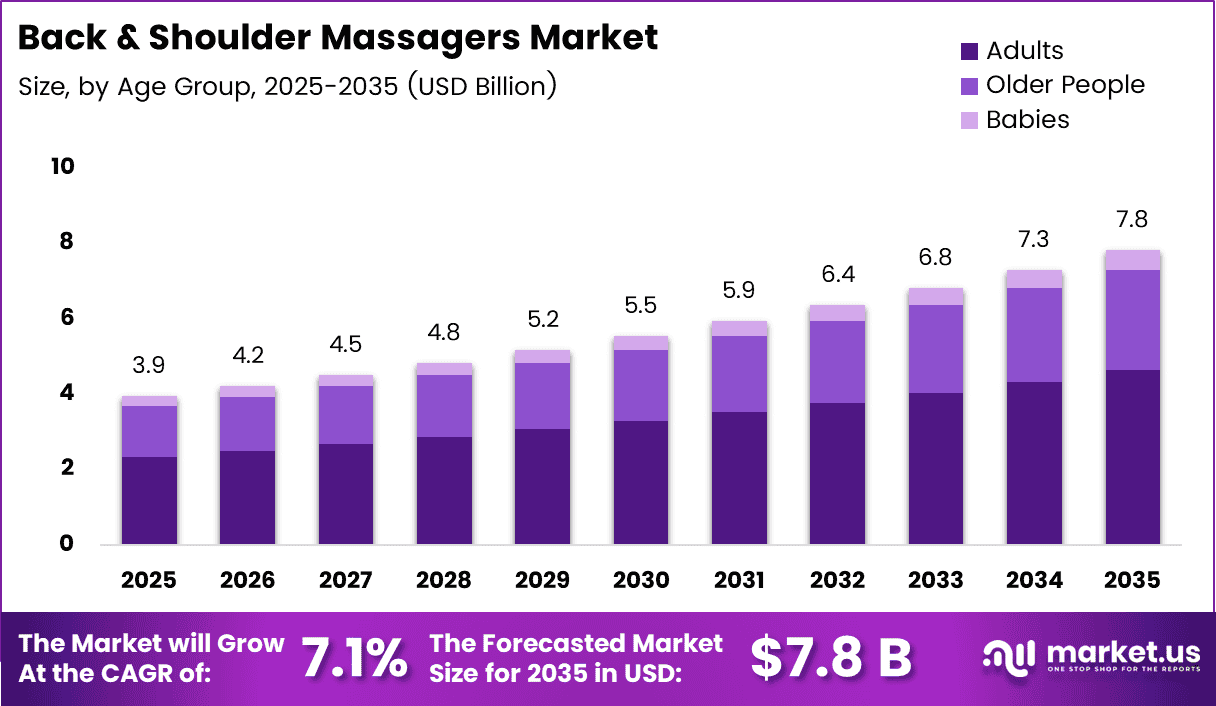
Global Back and Shoulder Massagers Market size is expected to be worth around USD 7.8 Billion by 2035 from USD 3.9 Billion in 2025, growing at a CAGR of 7.1% during the forecast period 2026 to 2035.
The back and shoulder massagers market includes a wide range of devices designed to relieve muscle tension, reduce pain, and improve circulation. These products range from manual handheld tools to advanced electric and shiatsu-style massagers. Moreover, they are used across households, clinics, spas, and physiotherapy centers worldwide.
Rising awareness of self-care and preventive health has positioned back and shoulder massagers as everyday wellness products. Consumers increasingly seek affordable, convenient alternatives to professional massage therapy. Consequently, demand for at-home devices has grown steadily across all age groups and income levels.
The market is supported by favorable government initiatives promoting preventive healthcare and worker wellness programs. Several countries have introduced regulations allowing heat therapy and therapeutic features in consumer massagers. Therefore, product innovation has accelerated, giving manufacturers clear pathways for premium product launches.
Technological advancements have enabled manufacturers to develop smarter, more effective devices. Features such as app connectivity, customizable intensity settings, and ergonomic designs have improved user experience significantly. Additionally, the cordless segment continues to gain momentum as consumers prioritize convenience and portability in their wellness routines.
Online retail expansion has further widened market access globally. E-commerce platforms allow brands to reach consumers in tier-2 and tier-3 cities where physical distribution remains limited. However, product awareness and education remain key challenges that brands must overcome through digital marketing strategies.
According to the National Institutes of Health, 10.5% to 68.1% of individuals with back pain use massage therapy or related devices. Furthermore, 17.6% to 56% of chronic pain sufferers rely on such solutions regularly. Active users typically engage 3 to 4 times per week, with sessions lasting 10 to 30 minutes, reinforcing strong habit formation.
Around 52% of users cite relaxation as a primary reason for using back and shoulder massagers, while pain relief remains a dominant driver. These behavioral patterns indicate deep market penetration and rising repeat purchase rates. Therefore, long-term demand remains robust across both developed and emerging economies.
Key Takeaways
- The global Back and Shoulder Massagers Market was valued at USD 3.9 Billion in 2025.
- The market is projected to reach USD 7.8 Billion by 2035, growing at a CAGR of 7.1%.
- By Product Type, Shiatsu dominates with a market share of 39.5% in 2025.
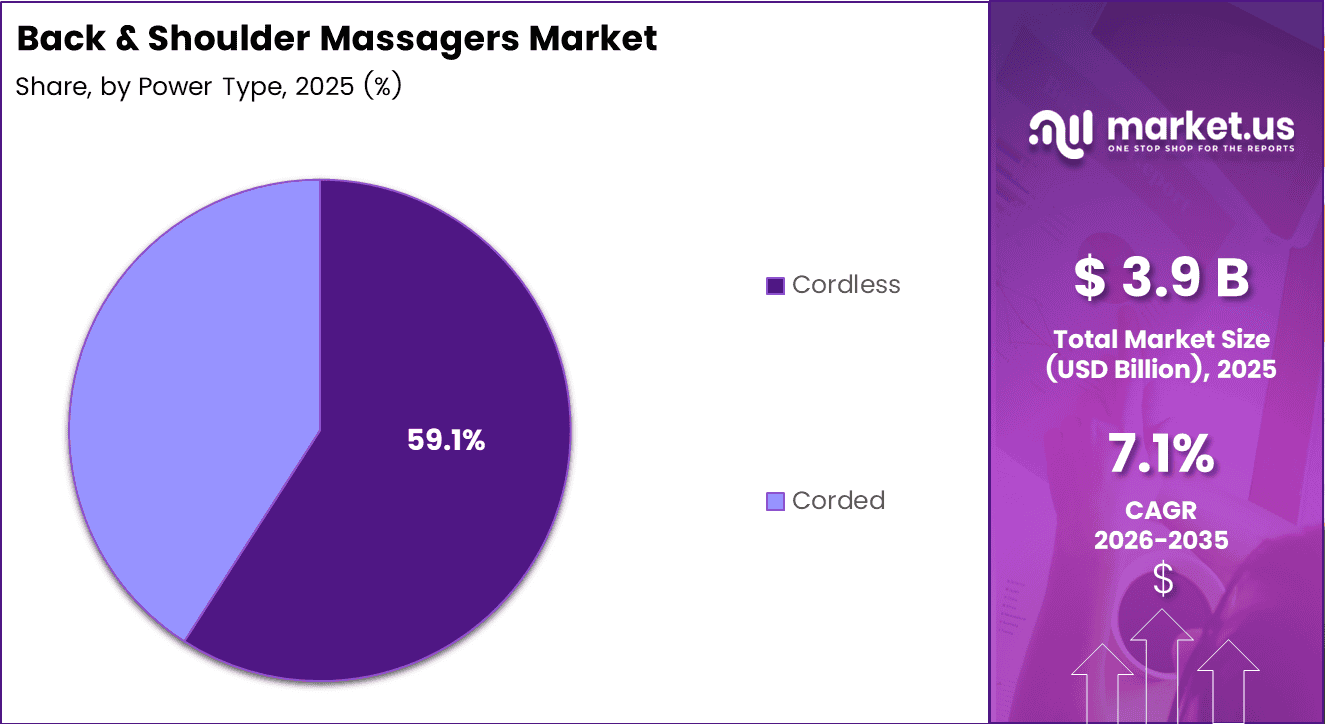
- By Power Type, Cordless leads the segment with a share of 59.1%.
- By End-User, Households hold the largest share at 48.6%.
- By Age Group, Adults represent the dominant segment with a share of 59.2%.
- By Distribution Channel, Online Retailers lead with a share of 44.7%.
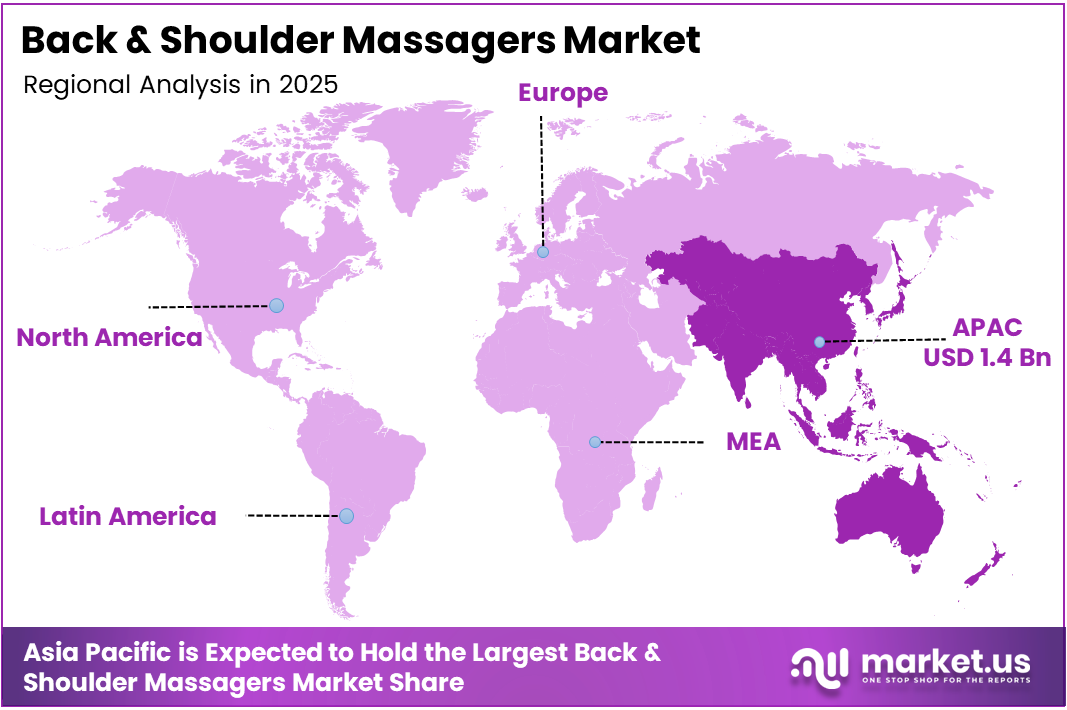
- Asia Pacific dominates the regional landscape with a 37.50% share, valued at USD 1.4 Billion.
Product Type Analysis
Shiatsu dominates with 39.5% due to its advanced therapeutic functionality and strong consumer preference.
In 2025, Shiatsu held a dominant market position in the Product Type segment of the Back and Shoulder Massagers Market, with a 39.5% share. Shiatsu massagers replicate professional kneading techniques, delivering deep-tissue relief. Their effectiveness for chronic back pain management has driven strong consumer adoption across households and wellness centers globally.
Vibrating massagers represent another significant sub-segment, valued for their affordability and ease of use. These devices appeal to budget-conscious consumers seeking daily muscle relief. Additionally, vibrating massagers are widely available across both offline retail stores and online platforms, supporting broad market penetration.
Manual massagers continue to serve a niche yet consistent audience preferring non-electric, portable options. They are popular among travelers and older users with limited technical familiarity. However, their market share remains modest compared to electric alternatives due to lower effectiveness for deep muscle pain.
Impulse massagers use electrical pulse technology to stimulate muscles and improve circulation effectively. These devices are commonly recommended in physiotherapy settings. Moreover, growing awareness of electro-stimulation therapy has supported demand. Others include combination or specialty devices catering to emerging wellness preferences globally.
Power Type Analysis
Cordless dominates with 59.1% due to convenience, portability, and superior user experience.
In 2025, Cordless held a dominant market position in the Power Type segment of the Back and Shoulder Massagers Market, with a 59.1% share. Cordless devices offer users flexibility to use massagers in any setting without restrictions. Advances in battery technology have extended usage time significantly, making cordless models the clear consumer preference.
Corded massagers continue to serve users who prioritize consistent power output over portability. These models are commonly used in professional spa settings and physiotherapy clinics where power reliability is essential. However, their share has been gradually declining as cordless technology improves and becomes more cost-competitive in the market.
End-User Analysis
Households dominate with 48.6% due to rising demand for convenient at-home pain relief solutions.
In 2025, Households held a dominant market position in the End-User segment of the Back and Shoulder Massagers Market, with a 48.6% share. Growing consumer awareness of self-care and rising disposable income have fueled at-home massager adoption. Moreover, the convenience of personal devices has reduced dependence on costly professional massage services.
Spas and Massage Parlors represent a key commercial end-user segment, investing in high-grade electric and shiatsu massagers for client services. These establishments prioritize device durability and therapeutic effectiveness. Consequently, demand for premium products remains strong within this segment despite the post-pandemic recovery period globally.
Physiotherapy Clinics utilize back and shoulder massagers as complementary tools for patient rehabilitation programs. These clinics favor medical-grade devices with adjustable settings and clinical certifications. Additionally, Private Hospitals are increasing adoption of such devices in wellness and pain management units. Others include corporate wellness programs and rehabilitation centers.
Age Group Analysis
Adults dominate with 59.2% due to high prevalence of back pain and active wellness adoption.
In 2025, Adults held a dominant market position in the Age Group segment of the Back and Shoulder Massagers Market, with a 59.2% share. Working-age adults face significant muscle strain from sedentary jobs and long screen hours. Therefore, demand for effective back and shoulder relief devices remains consistently high across this demographic.
Older People represent the second largest age segment, driven by higher incidence of chronic pain, arthritis, and mobility limitations. This group prefers easy-to-use, lightweight devices with simple controls. Additionally, growing healthcare awareness among seniors is pushing adoption of therapeutic massagers as part of daily pain management routines.
Babies form a niche but growing sub-segment, primarily through specialized gentle-vibration devices used under parental or clinical supervision. Products in this category are designed for colic relief and calming. However, strict safety regulations and limited product range keep this segment considerably smaller than adult-focused categories in the overall market.
Distribution Channel Analysis
Online Retailers dominate with 44.7% due to convenience, wider product range, and competitive pricing.
In 2025, Online Retailers held a dominant market position in the Distribution Channel segment of the Back and Shoulder Massagers Market, with a 44.7% share. E-commerce platforms offer consumers easy product comparison, customer reviews, and home delivery. Moreover, flash sales and discount strategies on online platforms have significantly accelerated purchase decisions globally.
Supermarkets and Hypermarkets provide accessible retail touchpoints where consumers can physically assess products before purchase. This format supports impulse buying and benefits from high foot traffic. Specialty Stores cater to health-conscious consumers seeking expert guidance, while Departmental Stores and Multi-Brand Stores offer broader product assortments for varied budgets.
Direct Sales channels remain relevant for premium and medical-grade massagers requiring personalized demonstrations. Brands utilize direct sales through wellness expos and in-home consultations effectively. Additionally, Others include pharmacy chains and wellness boutiques that serve targeted consumer groups seeking clinically recommended back and shoulder pain relief solutions.
Key Market Segments
By Product Type
- Manual
- Vibrating
- Impulse
- Shiatsu
- Others
By Power Type
- Corded
- Cordless
By End-User
- Spas and Massage Parlors
- Households
- Physiotherapy Clinics
- Private Hospitals
- Others
By Age Group
- Adults
- Older People
- Babies
By Distribution Channel
- Direct Sales
- Supermarkets & Hypermarkets
- Specialty Stores
- Departmental Stores
- Multi-Brand Stores
- Online Retailers
- Others
Drivers
Rising Prevalence of Chronic Back Pain Drives Back and Shoulder Massagers Market Growth
Chronic back and shoulder pain has become one of the most common health complaints among working adults globally. Sedentary lifestyles, long office hours, and poor posture have significantly increased muscle strain. Consequently, consumers are actively seeking affordable and effective relief solutions that can be used conveniently at home.
The growing preference for self-care and preventive wellness has further accelerated product demand. Consumers increasingly view massagers as essential wellness tools rather than luxury items. Moreover, rising disposable incomes in emerging markets have expanded the addressable consumer base, allowing more households to invest in personal therapeutic devices.
E-commerce growth has made back and shoulder massagers more accessible to a global audience. Online platforms offer wide product variety, competitive pricing, and customer reviews that ease purchase decisions. Therefore, digital retail expansion continues to be a strong demand driver, particularly in Asia Pacific and Latin American markets where e-commerce adoption is rapidly growing.
Restraints
High Product Costs and Limited Consumer Awareness Restrain Market Adoption
Premium back and shoulder massagers, particularly shiatsu and electric models, carry high price points that limit adoption among price-sensitive consumer segments. In many developing economies, consumers prioritize essential spending over wellness devices. Consequently, this cost barrier restricts market penetration in lower-income demographics despite strong underlying demand for pain relief solutions.
Limited product awareness remains a challenge, particularly in rural and semi-urban markets. Many potential consumers are unaware of the therapeutic benefits or safe usage guidelines for these devices. However, without adequate education and trial opportunities, purchase intent stays low, slowing overall market growth in untapped geographic regions.
Concerns around product safety and quality consistency also act as restraints. Unregulated or low-quality products in the market have led to consumer skepticism and post-purchase dissatisfaction. Therefore, lack of standardized safety certifications in certain markets makes consumers hesitant to invest in new or lesser-known massager brands without trusted recommendations.
Growth Factors
Technological Innovation and Wellness Trends Accelerate Market Expansion
Advancements in massager technology, including app integration, AI-powered intensity adjustment, and heat therapy features, have elevated product value significantly. These innovations attract tech-savvy consumers seeking personalized wellness experiences. Moreover, regulatory approvals for therapeutic features have enabled manufacturers to expand their product lines with clinically effective solutions.
Corporate wellness programs are emerging as a meaningful growth channel for back and shoulder massagers. Organizations are investing in employee wellness to reduce absenteeism and improve productivity. Consequently, bulk procurement of massagers for office use and wellness packages is creating new B2B revenue streams for manufacturers and distributors in key markets.
The aging global population presents a sustained long-term growth opportunity for this market. Older adults experience higher rates of musculoskeletal pain and require regular therapeutic support. Additionally, growing healthcare awareness and increasing senior spending on health products have made this demographic a high-value consumer segment driving consistent demand for back and shoulder massager products.
Emerging Trends
Smart Technology Integration and Personalized Wellness Reshape the Massagers Market
Smart back and shoulder massagers equipped with Bluetooth connectivity and mobile app controls are gaining rapid consumer traction. Users can now customize massage programs, intensity levels, and session durations through their smartphones. Moreover, integration with health tracking apps allows users to monitor wellness metrics, enhancing product value and encouraging daily use.
Cordless and wearable massager designs are emerging as a dominant product trend. Consumers increasingly prefer hands-free or belt-style devices that allow massage therapy during daily activities. Additionally, lightweight and ergonomic designs are expanding usage occasions beyond home settings to offices, commutes, and travel, broadening the overall consumer reach effectively.
Sustainability and eco-conscious product design are becoming important purchasing factors among younger consumers. Brands are introducing energy-efficient models using recyclable materials and minimal packaging. Therefore, manufacturers aligning their product development with sustainability values are gaining competitive advantage, especially in European and North American markets where environmental awareness strongly influences buying behavior.
Regional Analysis
Asia Pacific Dominates the Back and Shoulder Massagers Market with a Market Share of 37.50%, Valued at USD 1.4 Billion
Asia Pacific leads the global back and shoulder massagers market, accounting for a 37.50% share valued at USD 1.4 Billion in 2025. The region benefits from large consumer populations, rising disposable incomes, and a strong cultural affinity for massage therapy. Moreover, robust e-commerce infrastructure and growing wellness awareness in China, Japan, and India continue to accelerate regional market growth.
North America Back and Shoulder Massagers Market Trends
North America holds a significant market share driven by high consumer spending on personal wellness and healthcare products. The United States leads regional demand, supported by a large working population prone to chronic back pain. Additionally, strong e-commerce penetration and consumer awareness of therapeutic devices sustain steady product adoption across the region.
Europe Back and Shoulder Massagers Market Trends
Europe represents a mature and stable market for back and shoulder massagers, supported by strong healthcare infrastructure and wellness culture. Germany, the UK, and France are key contributors to regional revenue. Furthermore, growing preference for at-home physiotherapy solutions and favorable regulatory frameworks for therapeutic devices support continued market growth across Western Europe.
Latin America Back and Shoulder Massagers Market Trends
Latin America is an emerging market showing promising growth potential, particularly in Brazil and Mexico. Rising middle-class income levels and expanding e-commerce access are opening new consumer segments. However, economic volatility and limited product awareness in smaller markets remain challenges that manufacturers must address to fully capitalize on regional growth opportunities.
Middle East and Africa Back and Shoulder Massagers Market Trends
The Middle East and Africa market is at an early stage of development but demonstrates growing interest in wellness products. GCC countries, particularly the UAE and Saudi Arabia, lead regional adoption due to high income levels and wellness tourism. Additionally, increasing health awareness and urbanization across African markets present long-term growth opportunities for this segment.
Key Regions and Countries
North America
- US
- Canada
Europe
- Germany
- France
- The UK
- Spain
- Italy
- Rest of Europe
Asia Pacific
- China
- Japan
- South Korea
- India
- Australia
- Rest of APAC
Latin America
- Brazil
- Mexico
- Rest of Latin America
Middle East & Africa
- GCC
- South Africa
- Rest of MEA
Key Company Insights
JSB Health and Fitness Pvt. Ltd. is a prominent player in the back and shoulder massagers market, known for offering a broad range of affordable therapeutic devices for the Indian and South Asian markets. The company focuses on delivering value-driven products across multiple price segments. Moreover, its strong distribution network across online and offline retail channels supports consistent revenue growth.
Panasonic Corp. brings decades of consumer electronics expertise to the massagers market, offering technologically advanced shiatsu and vibration-based devices. The company emphasizes product reliability, ergonomic design, and therapeutic efficacy across its massager lineup. Consequently, Panasonic maintains a strong presence in both developed markets and high-growth Asia Pacific economies through a well-established global retail network.
Fujiiryoki Co., Ltd. is a specialist wellness brand with deep expertise in developing professional-grade back and shoulder massagers. The company is recognized for high-quality shiatsu technology and durable product construction. Additionally, Fujiiryoki targets premium consumer segments in Japan and international markets, leveraging its reputation for therapeutic precision and long product lifecycles.
HOMEDICS is a globally recognized wellness brand offering an extensive range of personal massagers, including targeted back and shoulder solutions. The company’s strength lies in its diverse product portfolio spanning multiple price points and consumer segments. Therefore, HOMEDICS effectively captures broad market demand across retail channels in North America, Europe, and Asia Pacific regions.
Key Players
- JSB Health & Fitness Pvt. Ltd.
- Panasonic Corp.
- Fujiiryoki Co., Ltd.
- HOMEDICS
- Human Touch, LLC.
- Breo International Group Ltd.
- OSIM International Ltd.
- SKG Electric Co., Ltd.
- Beurer GmbH
- Family Inada Co., Ltd.
Recent Developments
- May 2025 – Regulatory approval enabled the integration of heat therapy features in massage chairs, accelerating new product development in therapeutic back and shoulder massagers. This development is expected to unlock premium product segments and drive innovation across established and emerging manufacturers in the global market.
Report Scope
Report Features Description Market Value (2025) USD 3.9 Billion Forecast Revenue (2035) USD 7.8 Billion CAGR (2026-2035) 7.1% Base Year for Estimation 2025 Historic Period 2020-2024 Forecast Period 2026-2035 Report Coverage Revenue Forecast, Market Dynamics, Competitive Landscape, Recent Developments Segments Covered Product Type (Manual, Vibrating, Impulse, Shiatsu, Others), Power Type (Corded, Cordless), End-User (Spas and Massage Parlors, Households, Physiotherapy Clinics, Private Hospitals, Others), Age Group (Adults, Older People, Babies), Distribution Channel (Direct Sales, Supermarkets & Hypermarkets, Specialty Stores, Departmental Stores, Multi-Brand Stores, Online Retailers, Others) Regional Analysis North America (US and Canada), Europe (Germany, France, The UK, Spain, Italy, and Rest of Europe), Asia Pacific (China, Japan, South Korea, India, Australia, and Rest of APAC), Latin America (Brazil, Mexico, and Rest of Latin America), Middle East & Africa (GCC, South Africa, and Rest of MEA) Competitive Landscape JSB Health & Fitness Pvt. Ltd., Panasonic Corp., Fujiiryoki Co., Ltd., HOMEDICS, Human Touch LLC., Breo International Group Ltd., OSIM International Ltd., SKG Electric Co. Ltd., Beurer GmbH, Family Inada Co. Ltd. Customization Scope Customization for segments, region/country-level will be provided. Moreover, additional customization can be done based on the requirements. Purchase Options We have three licenses to opt for: Single User License, Multi-User License (Up to 5 Users), Corporate Use License (Unlimited User and Printable PDF)  Back & Shoulder Massagers MarketPublished date: Mar 2026add_shopping_cartBuy Now get_appDownload Sample
 -
-
- JSB Health & Fitness Pvt. Ltd.
- Panasonic Corp.
- Fujiiryoki Co., Ltd.
- HOMEDICS
- Human Touch, LLC.
- Breo International Group Ltd.
- OSIM International Ltd.
- SKG Electric Co., Ltd.
- Beurer GmbH
- Family Inada Co., Ltd.
Our Clients

- 181546
- Mar 2026






