


Global Baby Cribs Market Size, Share, Growth Analysis By Product Type (Traditional Cribs, Bassinet Cribs, Portable/Folding Cribs, Convertible Cribs, Others), By Material (Wood, Plastic, Metal, Others), By Distribution Channel (Specialty Baby Stores, Online Retailers, Furniture Stores, Mass Merchandise Stores), By Region and Companies - Industry Segment Outlook, Market Assessment, Competition Scenario, Statistics, Trends and Forecast 2025-2034
- Published date: Jul 2025
- Report ID: 153277
- Number of Pages: 336
- Format:
-
keyboard_arrow_up
Quick Navigation
Report Overview
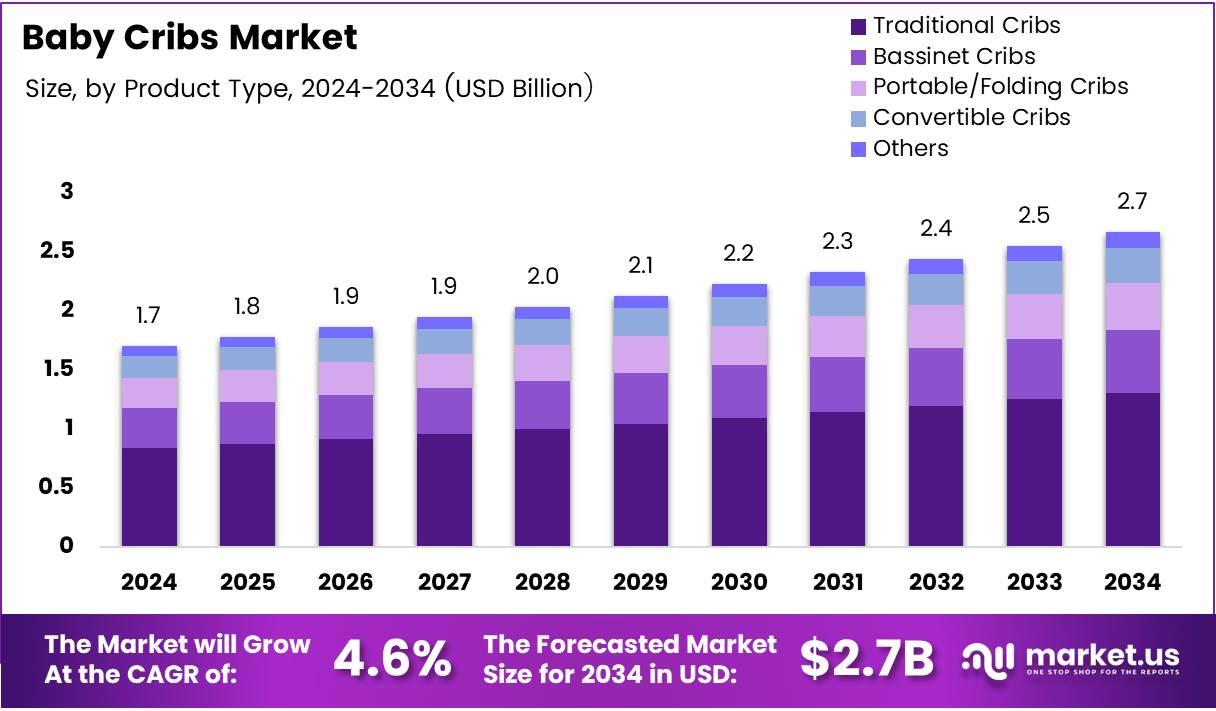
The Global Baby Cribs Market size is expected to be worth around USD 2.7 Billion by 2034, from USD 1.7 Billion in 2024, growing at a CAGR of 4.6% during the forecast period from 2025 to 2034.
The Baby Cribs Market has been experiencing steady growth driven by increasing parental awareness regarding child safety and comfort. The demand for durable, safe, and aesthetically pleasing cribs has surged, with many parents opting for sustainable and eco-friendly materials. This growing inclination towards premium, safe products has been one of the primary factors driving the market forward.
Government investments and regulations have played a pivotal role in shaping the baby cribs market. Safety standards have been enforced in various regions, particularly in North America and Europe, where authorities ensure that cribs meet stringent safety regulations. These measures have not only protected children but also driven market growth by building consumer trust.
The market also offers significant opportunities for expansion, especially in developing regions. With rising disposable incomes and increasing awareness about child safety, the demand for high-quality cribs is expected to grow. Furthermore, innovations in design, functionality, and materials, such as convertible cribs and those made from non-toxic materials, are expected to attract a larger consumer base.
Technological advancements in manufacturing have resulted in more customizable options in the Baby Cribs Market. Features such as adjustable mattress heights, convertibility into toddler beds, and additional storage space are becoming more common. These innovations enhance the overall value proposition, making cribs more versatile and appealing to modern parents.
Despite these opportunities, challenges persist, including the fluctuating cost of raw materials and stringent import-export regulations. These factors can lead to price fluctuations, which may affect market dynamics. Manufacturers are focusing on efficiency and cost-effective production methods to mitigate these issues and remain competitive in the global market.
In terms of market outlook, it is expected that the Baby Cribs Market will continue to expand steadily in the next few years. Rising awareness of child safety, along with continuous technological and design innovations, will be key drivers of this growth. Consequently, stakeholders in the market are advised to focus on compliance with regulations, consumer preferences, and sustainable production methods to stay ahead.
Key Takeaways
- The Global Baby Cribs Market is projected to reach USD 2.7 Billion by 2034, growing at a CAGR of 4.6% from 2025 to 2034.
- Traditional Cribs captured 44.3% of the market share in 2024, remaining the most popular choice for parents.
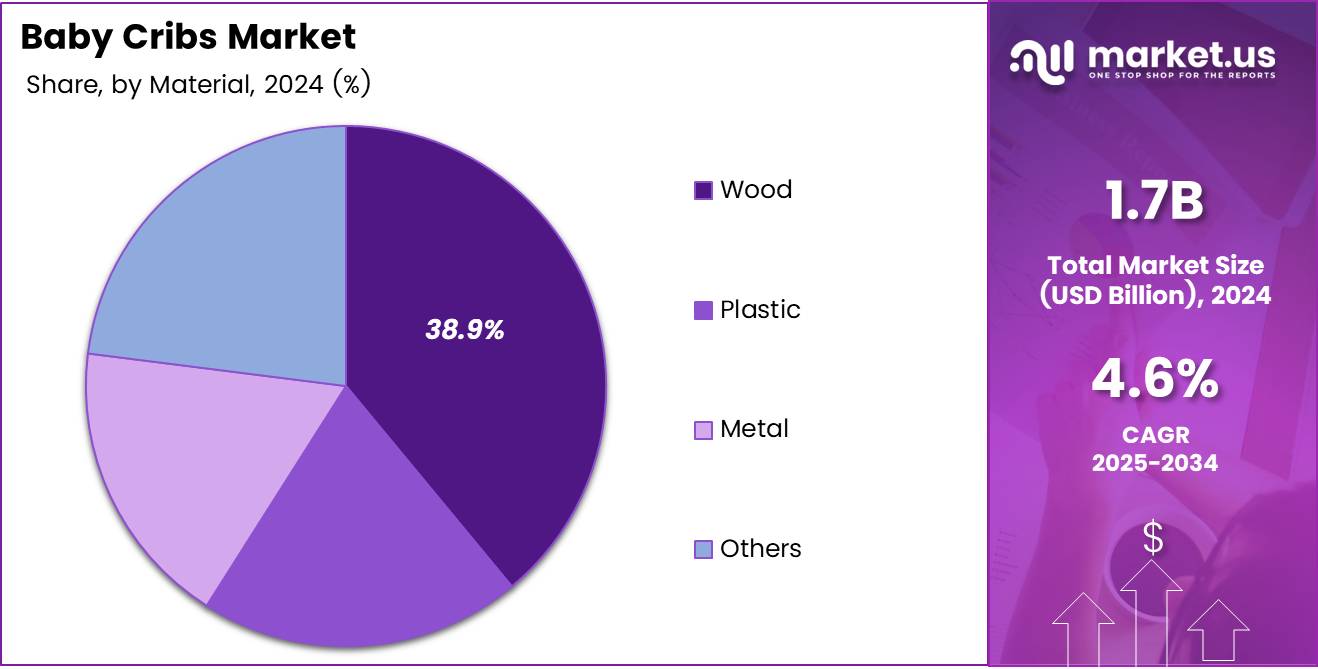
- Wood dominated the market in 2024, with a 38.9% share in the By Material Analysis segment.
- Specialty Baby Stores led the distribution channel in 2024, holding a 42.2% market share.
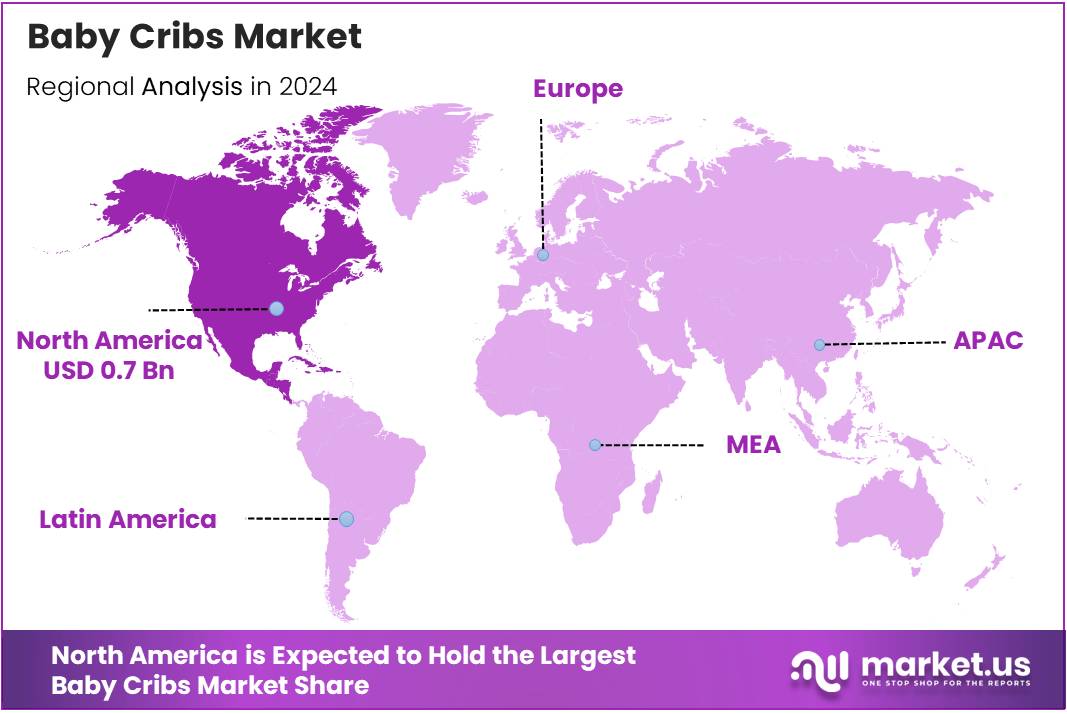
- North America held a dominant position in the global market in 2024, with 39.8% market share, valued at USD 0.7 Billion.
Product Type Analysis
In 2024, Traditional Cribs held a dominant market position in By Product Type Analysis segment of Baby Cribs Market, with a 44.3% share.
In 2024, Traditional Cribs remained the most popular choice in the Baby Cribs market, capturing 44.3% of the market share. These cribs, known for their sturdy structure and classic design, are preferred by many parents for their reliability and aesthetic appeal. The demand for Traditional Cribs continues to be driven by their long-term usage potential and the sense of security they provide.
Bassinet Cribs followed closely, accounting for a significant portion of the market. These cribs, which offer portability and space-saving features, gained traction among new parents looking for convenience. Despite their increasing popularity, Bassinet Cribs still lagged behind Traditional Cribs in terms of market share.
Portable/Folding Cribs, with their versatility, accounted for a smaller yet steady share, attracting consumers seeking a compact, easy-to-transport option for their babies. Convertible Cribs, known for their ability to transform into toddler beds, also garnered a respectable portion of the market.
Other categories, while present, made up a smaller fraction of the market, reflecting niche preferences for specialty baby furniture.
Material Analysis
In 2024, Wood held a dominant market position in By Material Analysis segment of Baby Cribs Market, with a 38.9% share.
In 2024, Wood dominated the Baby Cribs market in the By Material Analysis segment, with a market share of 38.9%. Wood cribs are highly regarded for their durability, aesthetic appeal, and natural feel. Parents often prefer wood for its strength and the wide variety of designs it offers, which makes it a popular choice in both traditional and modern nursery setups.
Plastic cribs followed, holding a substantial share of the market. These cribs are favored for their affordability, ease of cleaning, and lightweight nature, making them particularly attractive to parents looking for low-maintenance solutions.
Metal cribs, while less common, still accounted for a notable portion of the market due to their sleek, contemporary look and solid construction. These cribs are often seen as an investment for their longevity and minimalistic design.
Other materials contributed to the market but in a smaller capacity, primarily targeting specific consumer needs or design preferences.
Distribution Channel Analysis
In 2024, Specialty Baby Stores held a dominant market position in By Distribution Channel Analysis segment of Baby Cribs Market, with a 42.2% share.
In 2024, Specialty Baby Stores led the Baby Cribs market’s distribution channel segment, capturing 42.2% of the market share. These stores offer a wide range of baby products, providing personalized advice and a dedicated shopping experience for parents. The hands-on approach and ability to view cribs in person drove their popularity among consumers.
Online Retailers followed as the second-largest distribution channel, driven by the growing trend of e-commerce. The convenience of shopping from home, combined with competitive pricing, made online retailers a preferred option for many parents.
Furniture Stores held a steady share in the market, offering baby cribs as part of their broader furniture collection. This segment’s appeal lies in the integration of cribs with other home furnishings, appealing to consumers looking for a cohesive nursery design.
Mass Merchandise Stores, while present, represented a smaller segment of the market, focusing more on budget-conscious consumers seeking convenience and value.
Key Market Segments
By Product Type
- Traditional Cribs
- Bassinet Cribs
- Portable/Folding Cribs
- Convertible Cribs
- Others
By Material
- Wood
- Plastic
- Metal
- Others
By Distribution Channel
- Specialty Baby Stores
- Online Retailers
- Furniture Stores
- Mass Merchandise Stores
Drivers
Increasing Awareness of Baby Safety Standards Drives Market Growth
The increasing awareness of baby safety standards has led to a rise in the demand for baby cribs that meet these higher safety criteria. Parents are more conscious about selecting cribs that comply with strict regulations, ensuring their baby’s safety while they sleep. This heightened awareness influences consumer choices and drives the overall market.
Along with safety, the rising demand for multi-functional baby furniture is also shaping the market. Cribs that offer additional features, such as adjustable heights and convertible designs, are becoming more popular. This trend meets the growing need for space-saving and versatile furniture in modern homes.
Another key factor contributing to market growth is the increase in disposable income and parents’ spending power. With more financial resources available, parents are more likely to invest in higher-quality, durable baby furniture, thus expanding the market further.
The surge in e-commerce and online retail for baby products is another significant driver. Online platforms provide convenience, a wider variety of choices, and easy access to safety certifications, making it easier for parents to purchase baby cribs that align with their needs.
Restraints
High Cost of Premium Cribs and Luxury Designs Restrain Market Growth
One of the major restraints in the baby crib market is the high cost of premium cribs and luxury designs. While these cribs often offer enhanced features, the high price point can limit their accessibility to a broader customer base, especially among middle-income families.
Additionally, stringent regulatory standards for baby products impose extra costs on manufacturers, who must ensure compliance with safety requirements. This not only raises production costs but also limits the variety of designs and options available in the market.
Supply chain disruptions are another restraint affecting crib manufacturing. Issues such as global shipping delays and shortages of raw materials hinder the timely production and delivery of cribs, impacting the market’s overall growth.
Lastly, there is the risk of injuries associated with poorly designed cribs. While regulations are in place, a few cases of faulty designs or materials may discourage consumers, particularly those who are more cautious about product safety.
Growth Factors
Expanding Demand for Eco-friendly and Sustainable Materials Drives Market Growth
The increasing demand for eco-friendly and sustainable materials is a significant growth opportunity in the baby crib market. Consumers are becoming more environmentally conscious and prefer cribs made from sustainable, non-toxic materials such as bamboo or recycled wood.
Another promising growth opportunity is the innovation in smart baby cribs that incorporate technology for enhanced functionality. Features like sleep-monitoring technology, temperature control, and automatic rocking are gaining traction among tech-savvy parents who seek convenience and comfort.
The growing preference for customizable and modular designs is also shaping the market. Parents are now more inclined towards cribs that can be personalized and adjusted as their baby grows, offering greater value and longer usability.
Additionally, the rising adoption of baby cribs in urban areas with smaller living spaces presents an opportunity. Compact and foldable crib designs that cater to these space limitations are becoming increasingly popular, especially in cities where space is at a premium.
Emerging Trends
Integration of Anti-microbial and Hypoallergenic Materials Drives Market Growth
The integration of anti-microbial and hypoallergenic materials into baby cribs is one of the key trends in the market. With an increasing focus on infant health, many parents now prefer cribs made with materials that are resistant to bacteria and allergens, ensuring a safer and cleaner environment for their babies.
Growth in subscription-based crib rental services is another emerging trend. Many parents are opting for crib rental services, which allow them to rent high-quality cribs for short periods, saving money while ensuring their baby gets the best product available.
Additionally, there is an enhanced focus on crib aesthetics and interior design compatibility. Parents are seeking cribs that blend well with their home decor, leading to a rise in demand for stylish, visually appealing designs.
Lastly, the incorporation of sleep-monitoring technology in baby cribs is gaining momentum. This feature helps parents track their baby’s sleep patterns, providing added peace of mind and contributing to the growing trend of tech-enhanced baby products.
Regional Analysis
North America Dominates the Baby Cribs Market with a Market Share of 39.8%, Valued at USD 0.7 Billion
In 2024, North America held a dominant position in the global baby cribs market, accounting for 39.8% of the market share, valued at USD 0.7 Billion. The growth in the region is driven by high disposable incomes, growing awareness of safety standards, and a preference for high-quality baby products. The increasing trend of purchasing cribs through e-commerce platforms has also fueled market expansion in the region.
Europe Baby Cribs Market Trends
Europe is another significant player in the baby cribs market, driven by strong regulatory standards for baby safety and an increasing demand for multifunctional furniture. The region’s focus on sustainable and eco-friendly products, particularly wooden cribs, further boosts market growth. While it holds a substantial share, the market is projected to experience steady growth driven by innovations in design and functionality.
Asia Pacific Baby Cribs Market Insights
The Asia Pacific region is anticipated to witness substantial growth in the baby cribs market, fueled by rapid urbanization, rising disposable incomes, and growing awareness of child safety. While the market share in this region is smaller compared to North America and Europe, it is expected to expand significantly, driven by both local demand and the increasing penetration of global brands in developing economies like China and India.
Middle East and Africa Baby Cribs Market Overview
The Middle East and Africa market for baby cribs is gradually growing, influenced by rising birth rates and urbanization. There is a rising demand for luxury and designer cribs in affluent markets such as the UAE and Saudi Arabia. Although the region represents a smaller portion of the global market, its growth is expected to accelerate due to increased consumer spending and adoption of Western-style baby products.
Latin America Baby Cribs Market Trends
Latin America is witnessing a moderate yet steady growth in the baby cribs market. The rising middle-class population and increasing preference for modern baby products are key drivers. However, challenges such as affordability and the availability of premium products limit the market’s overall growth potential in comparison to other regions.
Key Regions and Countries
North America
- US
- Canada
Europe
- Germany
- France
- The UK
- Spain
- Italy
- Rest of Europe
Asia Pacific
- China
- Japan
- South Korea
- India
- Australia
- Rest of APAC
Latin America
- Brazil
- Mexico
- Rest of Latin America
Middle East & Africa
- GCC
- South Africa
- Rest of MEA
Key Baby Cribs Company Insights
In 2024, Fisher-Price continues to maintain a strong presence in the global Baby Cribs Market, renowned for its innovative and safety-focused baby products. The company is expected to remain a dominant player, leveraging its established brand reputation and extensive distribution channels.
Natart Juvenile, Inc. has positioned itself as a key contender in the high-end baby crib segment, offering luxury cribs known for their durable construction and stylish design. The company’s commitment to premium quality is anticipated to attract discerning consumers looking for long-lasting solutions.
Million Dollar Baby Co. is recognized for producing versatile and functional baby furniture, including cribs designed to grow with the child. Their ability to combine aesthetic appeal with practicality has contributed to their steady growth in the market, with a continued focus on expanding their product line.
Tasman Eco stands out in the global market with its eco-friendly approach to baby cribs. Known for using sustainable materials and non-toxic finishes, the company is expected to appeal to environmentally conscious parents who prioritize green solutions in their purchasing decisions.
These companies, each with their distinct strengths, are anticipated to continue shaping the competitive landscape of the global Baby Cribs Market in 2024, driven by innovation, quality, and consumer preferences.
Top Key Players in the Market
- Fisher-Price
- Natart Juvenile, Inc.
- Million Dollar Baby Co.
- Tasman Eco
- Dream On Me, Inc.
- Silver Cross
- LittleBird India
- Cradlewise, Inc.
- HALO
- Storkcraft
- Boori Australia
- Happiest Baby, Inc.
- Macari Baby, Inc.
- Ronbei
- Goodbaby International Holdings Ltd.
- 4 Moms
- Sorelle Furniture
Recent Developments
- In May 2024, Transom Capital-backed HALO Dream Inc. successfully completed the acquisition of BreathableBaby LLC, an industry-leading manufacturer of juvenile products, enhancing its portfolio and positioning itself as a stronger player in the baby products market.
- In July 2024, D.A. Davidson acted as the financial advisor to Crown Crafts in its strategic acquisition of Baby Boom, a move aimed at expanding Crown Crafts’ footprint in the juvenile products sector, contributing to its long-term growth and market expansion.
Report Scope
Report Features Description Market Value (2024) USD 1.7 Billion Forecast Revenue (2034) USD 2.7 Billion CAGR (2025-2034) 4.6% Base Year for Estimation 2024 Historic Period 2020-2023 Forecast Period 2025-2034 Report Coverage Revenue Forecast, Market Dynamics, Competitive Landscape, Recent Developments Segments Covered By Product Type (Traditional Cribs, Bassinet Cribs, Portable/Folding Cribs, Convertible Cribs, Others), By Material (Wood, Plastic, Metal, Others), By Distribution Channel (Specialty Baby Stores, Online Retailers, Furniture Stores, Mass Merchandise Stores) Regional Analysis North America (US and Canada), Europe (Germany, France, The UK, Spain, Italy, and Rest of Europe), Asia Pacific (China, Japan, South Korea, India, Australia, and Rest of APAC), Latin America (Brazil, Mexico, and Rest of Latin America), Middle East & Africa (GCC, South Africa, and Rest of MEA) Competitive Landscape Fisher-Price, Natart Juvenile, Inc., Million Dollar Baby Co., Tasman Eco, Dream On Me, Inc., Silver Cross, LittleBird India, Cradlewise, Inc., HALO, Storkcraft, Boori Australia, Happiest Baby, Inc., Macari Baby, Inc., Ronbei, Goodbaby International Holdings Ltd., 4 Moms, Sorelle Furniture Customization Scope Customization for segments, region/country-level will be provided. Moreover, additional customization can be done based on the requirements. Purchase Options We have three licenses to opt for: Single User License, Multi-User License (Up to 5 Users), Corporate Use License (Unlimited User and Printable PDF) 
-
-
- Fisher-Price
- Natart Juvenile, Inc.
- Million Dollar Baby Co.
- Tasman Eco
- Dream On Me, Inc.
- Silver Cross
- LittleBird India
- Cradlewise, Inc.
- HALO
- Storkcraft
- Boori Australia
- Happiest Baby, Inc.
- Macari Baby, Inc.
- Ronbei
- Goodbaby International Holdings Ltd.
- 4 Moms
- Sorelle Furniture
Our Clients

- 153277
- Jul 2025






