


Market Overview
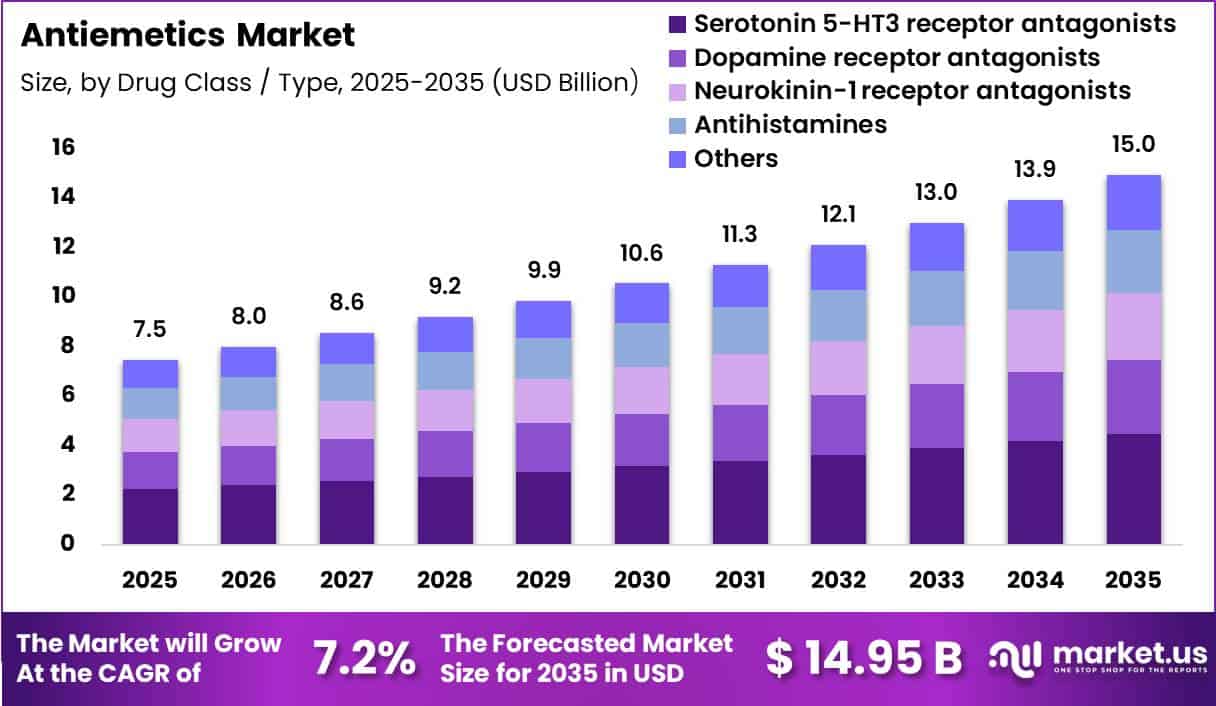
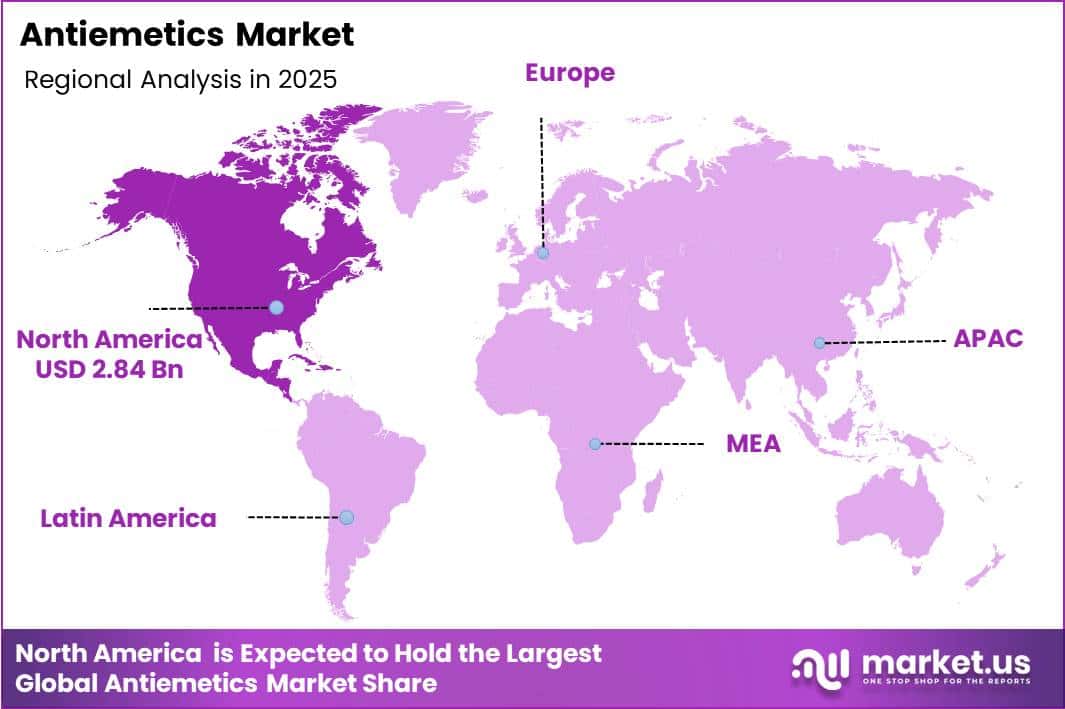
The Global Antiemetics Market size is expected to be worth around US$ 14.95 Billion by 2035 from US$ 7.46 Billion in 2025, growing at a CAGR of 7.2% during the forecast period from 2026 to 2035. In 2025, North America led the market, achieving over 38% share with a revenue of US$ 2.84 Billion.
The global antiemetics market is supported by the increasing clinical need for effective management of nausea and vomiting associated with cancer therapies, surgical procedures, gastrointestinal disorders, pregnancy-related conditions, and medication side effects.
Antiemetic therapies play a critical role in supportive care by improving treatment tolerance, maintaining nutritional intake, and enhancing quality of life among patients experiencing acute or chronic nausea symptoms. According to the National Cancer Institute, chemotherapy-induced nausea and vomiting (CINV) remains one of the most common adverse effects of cancer treatment, affecting a significant proportion of patients without appropriate preventive therapy.
Cancer treatment expansion continues to drive demand for antiemetic medications, particularly serotonin (5-HT3) receptor antagonists, neurokinin-1 (NK-1) receptor antagonists, corticosteroids, dopamine antagonists, and combination therapies. The U.S. Food and Drug Administration (FDA) has approved multiple antiemetic drugs and fixed-dose combinations designed to prevent nausea and vomiting associated with highly emetogenic chemotherapy regimens.
The burden of nausea and vomiting extends beyond oncology. The Centers for Disease Control and Prevention (CDC) reported millions of surgical procedures annually in the United States, where postoperative nausea and vomiting (PONV) remains a frequent complication requiring preventive and rescue treatment approaches.
Growing adoption of evidence-based supportive care protocols, rising cancer incidence, increasing surgical interventions, and advancements in targeted antiemetic formulations are expected to strengthen the role of antiemetics in modern healthcare.
According to the World Health Organization (WHO), cancer caused nearly 10 million deaths globally in 2022, highlighting the continued requirement for comprehensive supportive therapies alongside disease-directed treatments.
Key Takeaways
- Market Size: The Global Antiemetics Market size was US$ 7.46 billion in 2025. The market is estimated to grow to US$ 14.95 billion by 2035.
- Market Share: The Compound Annual Growth Rate (CAGR) of the market from 2026 to 2035 will be 7.2%.
- Drug Class/Type: Serotonin 5-HT3 Receptor Antagonists has the largest market share, accounting for 30% of total sales.
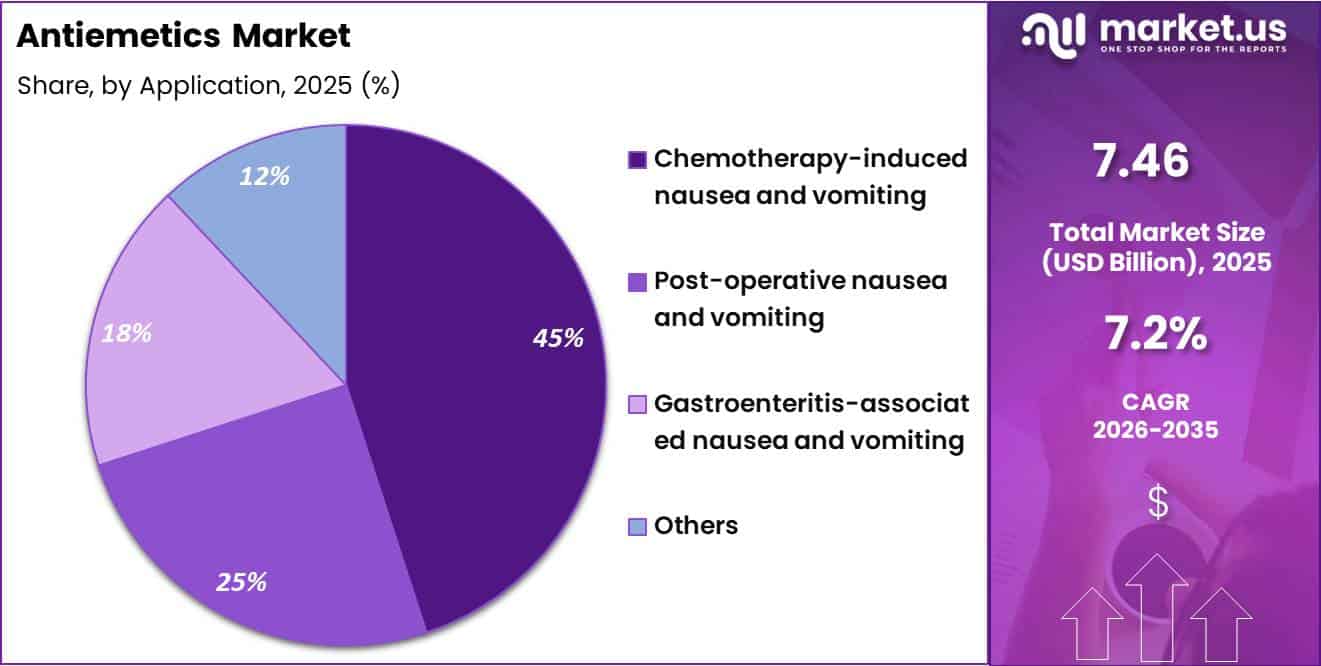
- Application: Chemotherapy-Induced Nausea and Vomiting (CINV) leads the segment, accounting for 45% of total revenue.
- End User: Hospitals dominate the segment, accounting for 35% of total revenue.
- Regional: North America is the dominant regional market, accounting for 38% of global sales, holding US$ 2.84 billion in revenue.
Drug Class / Type Analysis
The antiemetics market by drug class is primarily driven by the extensive adoption of serotonin 5-HT3 receptor antagonists, which account for a leading 30.0% market share in 2025. This dominance is attributed to their established clinical effectiveness, favourable safety profile, and widespread application in managing nausea and vomiting associated with chemotherapy, surgery, and other treatment-related conditions.
Serotonin 5-HT3 receptor antagonists remain a preferred therapeutic option due to their role in preventive antiemetic protocols, particularly in oncology supportive care. Dopamine receptor antagonists represent another significant segment, accounting for a 20.0% share, supported by their continued use in emergency care, gastrointestinal disorders, and treatment-related nausea management.
Neurokinin-1 (NK1) receptor antagonists capture 18.0% market share and are identified as the fastest-growing segment, driven by increasing adoption in combination regimens for controlling delayed chemotherapy-induced nausea and vomiting. Antihistamines (H1 histamine receptor antagonists) contribute a 17.0% share due to their application in motion sickness, vestibular disorders, and postoperative nausea management.
Other antiemetic categories, including corticosteroids, cannabinoids, and combination therapies, collectively account for a 15.0% share, supported by expanding therapeutic approaches and personalised supportive care strategies across diverse clinical settings.
Application Analysis
The antiemetics market by application is dominated by chemotherapy-induced nausea and vomiting (CINV), which accounts for 45.0% market share in 2025 and represents the fastest-growing application segment.
The increasing use of chemotherapy, immunotherapy, and combination cancer treatment protocols has strengthened demand for effective antiemetic interventions to improve treatment adherence and patient quality of life. Healthcare providers increasingly incorporate preventive antiemetic regimens as a standard component of oncology supportive care, particularly for patients receiving highly emetogenic chemotherapy agents.
Post-operative nausea and vomiting (PONV) represents the second-largest application segment with a 25.0% share, supported by the rising volume of surgical procedures and growing emphasis on improving postoperative recovery outcomes. Gastroenteritis-associated nausea and vomiting account for 18.0% share, driven by the continued need for symptomatic management of gastrointestinal infections and related digestive disorders.
Other applications contribute 12.0% share, including pregnancy-related nausea, motion sickness, migraine-associated vomiting, and medication-induced nausea. Expanding clinical awareness, improved treatment guidelines, and increasing adoption of combination therapies are supporting broader utilisation of antiemetics across multiple medical applications.
End User Analysis
The antiemetics market by end user is led by hospitals, which account for 35.0% market share in 2025, supported by extensive utilisation of antiemetic therapies across inpatient care, surgical procedures, emergency departments, and oncology treatment facilities.
Hospitals represent a major distribution channel due to the requirement for immediate symptom management, physician-supervised administration, and integration of antiemetics into complex treatment protocols.
Retail pharmacies represent a significant segment, supported by increasing outpatient treatment trends, prescription accessibility, and demand for antiemetic medications used in home-based symptom management.
Online pharmacies are identified as the fastest-growing segment due to rising digital healthcare adoption, expanding e-commerce infrastructure, improved prescription delivery services, and increasing consumer preference for convenient access to medications.
Other end users, including speciality clinics, ambulatory care centres, and long-term care facilities, contribute to market growth by increasing adoption of supportive therapies outside traditional hospital environments. The evolving healthcare delivery landscape, greater emphasis on patient convenience, and expansion of outpatient care models are expected to further influence antiemetic distribution patterns across end-user segments.
Key Market Segments
By Drug Class/Type
- Serotonin 5-HT3 Receptor Antagonists
- Dopamine Receptor Antagonists
- Neurokinin-1 (NK1) Receptor Antagonists
- Antihistamines (H1 Histamine Receptor Antagonists)
- Others
By Application
- Chemotherapy-Induced Nausea and Vomiting (CINV)
- Post-Operative Nausea and Vomiting (PONV)
- Gastroenteritis-Associated Nausea and Vomiting
- Others
By End User
- Hospitals
- Retail Pharmacies
- Online Pharmacies
- Others
Drivers
Expansion of ambulatory surgery and multimodal PONV prevention
The antiemetics market also benefits from broader perioperative prophylaxis as hospitals and ambulatory centres aim to reduce unplanned admissions, delayed discharge, and opioid linked postoperative nausea and vomiting.
Consensus perioperative guidance supports baseline risk reduction through lower opioid exposure, propofol use, adequate hydration, and multi-drug prophylaxis for at-risk adults, while current hospital protocols commonly place ondansetron in first-line rescue and recommend combining agents with different mechanisms when one drug fails. This is commercially important because same-day surgery converts antiemetics from a low-frequency anaesthesia adjunct into a throughput protection tool.
Every prevented episode of postoperative nausea and vomiting supports faster bed turnover, lower nursing burden, fewer readmissions, and better patient satisfaction, which increases formulary preference for reliable injectable and oral dissolving options even when the underlying molecules are generic.
| Driver | (~) % Impact on CAGR Forecast | Geographic Relevance | Impact Timeline |
|---|---|---|---|
| Guideline-led CINV prophylaxis intensification in oncology | +2.1% | North America core, EU, Japan, urban China, Gulf oncology centres | Short term |
| Expansion of ambulatory surgery and multimodal PONV prevention | +1.6% | North America core, EU, ANZ, South Korea, private APAC hospitals | Short term |
| Recurrent acute gastroenteritis and norovirus treatment demand | +1.2% | North America core, EU spill-over, APAC urban corridors, LATAM hospitals | Medium term |
| Pregnancy nausea protocols increasing second-line pharmacotherapy use | +0.9% | EU, North America, Middle East urban systems, upper-income APAC | Medium term |
| Outpatient reimbursement and protocol standardization improving antiemetic access | +1.0% | U.S. core, selected EU reimbursement markets, private payer-linked systems | Medium term |
| Essential-medicines listing and generic channel depth widening base consumption | +0.8% | LMIC public systems, Africa, South Asia, Southeast Asia, LATAM public tenders | Long term |
Challenges
Fragmented nausea epidemiology data in the antiemetics market
The antiemetics market operates within a structurally fragmented epidemiological data environment, where nausea and vomiting incidence is inconsistently tracked across chemotherapy-induced, postoperative, pregnancy-related, opioid induced, and functional gastrointestinal segments.
This leads to a 10 to 20 % point gap between reported prevalence and modelled demand, resulting in conservative forecasting and suboptimal supply planning. For example, nausea and vomiting of pregnancy affect approximately 70 % of pregnancies globally, though only a small subset progresses to severe hyperemesis.
Postoperative nausea and vomiting prevalence varies widely from under 10 % to over 70 % depending on procedure and risk profile, while population studies suggest more than 50 % of adults experience nausea annually, but only about 25 % seek medical care.
This inconsistency leads to underestimation of addressable patient pools by 15 to 30 % in some segments, contributing to stockouts, reactive ordering cycles, and 3- to 5-day delays in inventory rebalancing during demand surges such as seasonal infections or regional outbreaks.
It also increases working capital requirements by 2 to 4 % due to safety stock buffering. Overall, these inefficiencies are estimated to reduce realisable market CAGR by approximately 0.8 % points through lost dispensing opportunities and weaker launch confidence for newer therapies.
Addressing this requires standardised nausea severity definitions, integrated real-world evidence systems, and improved demand sensing using clinical workflow data such as surgical volumes and chemotherapy cycles.
| Challenge | (~) % CAGR Friction Drag | Geographic Relevance | Mitigation Horizon |
|---|---|---|---|
| Fragmented nausea epidemiology data | -0.8% | Global tertiary care hubs | Medium term (2-4 years) |
| Oncology & surgical demand volatility | -1.1% | North America core, EU, APAC metros | Medium term (2-4 years) |
| API & excipient supply chain fragility | -1.3% | EU manufacturing belts, APAC logistics corridors | Long-term (≥ 4 years) |
| Talent & protocol complexity in multi-setting use | -0.9% | North American hospital networks, EU regulatory hubs | Long-term (≥ 4 years) |
| Regulatory-pharmacovigilance data lag | -0.7% | Global, with higher impact in emerging markets | Medium term (2-4 years) |
| Economic access and formulary pressure | -1.0% | Latin America, Africa, South & Southeast Asia | Long-term (≥ 4 years) |
Restraints
Pricing controls and reimbursement pressure in the antiemetics market
Tightening payer controls on drug pricing and reimbursement are creating a structural drag on the antiemetics market, particularly for supportive care therapies often viewed as commoditised. These pressures compress net prices, extend access timelines, and encourage substitution toward older, lower-cost regimens. In the US, although list prices have grown modestly at approximately 2 to 3 % annually through 2024, net pricing dynamics have been shaped by rising discounts and payer negotiations.
The introduction of Medicare drug price negotiations beginning in 2026, with expected 25 to 38 % discounts on selected high-spend drugs, reinforces downward pressure on reimbursement expectations. While antiemetics may not be immediate targets, they are affected indirectly through broader formulary tightening and step therapy requirements favouring generic 5-HT3 antagonists and corticosteroids before newer agents.
In Europe, reference pricing, price volume agreements, and centralised procurement mechanisms continue to drive low single-digit annual price erosion for off-patent agents. In emerging APAC and Latin American markets, reimbursement listings often lag approvals by 12 to 24 months and are set at 20 to 40 % below OECD price levels, limiting early revenue realisation for newer therapies.
Overall, these dynamics cap average selling price growth near flat levels despite modest volume expansion and reduce incentives for rapid innovation uptake. Collectively, pricing controls and reimbursement pressure are estimated to remove approximately 1.1 % points from the theoretical long-term CAGR of the antiemetics market.
| Restraint | (~) % Impact on CAGR Forecast | Geographic Relevance | Impact Timeline |
|---|---|---|---|
| Sterile injectable and API shortages | -1.4% | North America core, EU, APAC corridors | Short–Medium term |
| Pricing controls and reimbursement pressure | -1.1% | US, EU5, select APAC payers | Medium–Long term |
| Generic erosion and low-margin economics | -0.8% | US, EU, emerging APAC | Medium term |
| Regulatory and quality-compliance drag | -0.7% | US, EU, China, India | Short–Medium term |
| Clinical guideline shifts and regimen complexity | -0.6% | Global oncology centres | Medium term |
| Supply-chain geopolitical and concentration risks | -0.5% | US, EU, APAC export hubs | Long term |
Opportunity
Oncology pathway linked bundled pricing for antiemetics
In most health systems, antiemetics are still reimbursed on a per-drug, per-dose basis, even though oncology care is increasingly shifting toward bundled chemotherapy payments and value-based contracts. This creates a mismatch between how cancer treatment is financed and how supportive care, despite being essential to regimen success, is monetised.
Chemotherapy-induced nausea and vomiting remain major drivers of quality of life decline, treatment delays, and unplanned healthcare utilisation. However, antiemetics are rarely included as explicit value-bearing components within oncology bundles, limiting the ability of manufacturers to capture the full economic value of improved outcomes such as reduced emergency visits or higher chemotherapy completion rates.
A potential shift toward episode-based antiemetic bundles, priced per chemotherapy cycle and linked to outcomes like reduced grade 3 to 4 nausea or 20 to 30 % fewer emergency visits, could better align incentives across payers, providers, and manufacturers. Such models could increase antiemetic revenue per cycle by 10 to 20 % while still lowering total system costs through avoided complications, with additional margin gains from more predictable contracting structures.
If adopted in 20 to 30 % of chemotherapy episodes in North America and Europe by 2032, bundled pricing could add 3 to 5 % incremental revenue growth for participating portfolios and contribute approximately 1 to 2 % points of upside to global CAGR. This represents a structural opportunity dependent on payer alignment, data infrastructure, and integration of antiemetics into oncology pathway design.
| Opportunity | (~) % Potential CAGR Upside | Geographic Relevance | Execution Window |
|---|---|---|---|
| Digital CINV & PONV adherence platforms | +2.0% | North America core, EU, APAC urban | Short term (≤ 2 years) |
| Long-acting depot and transdermal antiemetics | +1.8% | North America, EU, Japan, GCC | Medium term (2-4 years) |
| Primary care & OTC antiemetics expansion | +1.5% | APAC emerging, Latin America, Africa | Medium term (2-4 years) |
| Oncology pathway-linked bundled pricing | +1.2% | North America, EU | Short–Medium term (≤ 4 years) |
| Peri-operative/PONV risk-stratified protocols | +1.4% | Global tertiary and ambulatory centers | Medium term (2-4 years) |
| Pregnancy & metabolic disease nausea niches | +1.0% | Global, focus on APAC and MENA | Long-term (≥ 4 years) |
Regional Analysis
In 2025, North America led the market, achieving over 38% share with a revenue of US$ 2.84 billion. North America represents a significant region in the antiemetics market, supported by advanced healthcare infrastructure, high adoption of supportive care therapies, and strong utilisation of antiemetic medications in oncology and surgical settings.
The region benefits from established clinical guidelines for chemotherapy-induced nausea and vomiting (CINV) management, increasing cancer treatment volumes, and widespread availability of innovative antiemetic drug combinations. Growing emphasis on improving patient comfort and treatment adherence continues to support market expansion across hospitals, speciality clinics, and outpatient care facilities.
Europe demonstrates steady growth due to increasing cancer care requirements, rising surgical procedures, and the integration of evidence-based nausea and vomiting management protocols within healthcare systems. Government-supported healthcare programs and improved access to advanced oncology treatments are contributing to higher demand for serotonin 5-HT3 receptor antagonists and NK1 receptor antagonists.
Asia Pacific is projected to experience the fastest growth, driven by expanding healthcare access, increasing cancer burden, rising medical tourism, and improving availability of advanced therapies in emerging healthcare markets. Growth in hospital infrastructure and increasing awareness regarding supportive cancer care are accelerating antiemetic adoption across the region.
Latin America and the Middle East & Africa are witnessing gradual market development due to improving healthcare facilities, increasing investment in oncology services, and rising demand for effective symptom management therapies.
However, limited access to advanced medications and healthcare disparities remain key factors influencing regional adoption patterns. Overall, global demand for antiemetics continues to expand with growing focus on patient-centred care and improved treatment outcomes.
Key Regions and Countries
North America
- The US
- Canada
Europe
- Germany
- France
- The U.K.
- Italy
- Spain
- Russia & CIS
- Rest of Europe
Asia Pacific
- China
- India
- Japan
- South Korea
- ASEAN
- Australia & New Zealand
- Rest of Asia Pacific
Middle East & Africa
- GCC
- South Africa
- Rest of the Middle East & Africa
Latin America
- Brazil
- Mexico
- Rest of Latin America
Key Player Analysis
Competitive advantage in the global antiemetics market is achieved through broad drug class portfolio coverage spanning 5-HT3 receptor antagonists, dopamine receptor antagonists, and NK1 receptor antagonists, established hospital formulary relationships supporting institutional oncology and surgical antiemetic procurement, and continued investment in novel antiemetic pipeline development targeting chemotherapy-induced nausea and vomiting applications where clinical unmet need remains significant.
Major strategic priorities for leading manufacturers include expansion of branded and generic NK1 receptor antagonist formulations addressing the fastest-growing drug class segment, development of combination antiemetic regimens improving CINV prevention across highly emetogenic chemotherapy protocols, and growing investment in online pharmacy distribution channels serving chronic outpatient antiemetic prescription demand.
Strong hospital oncology department and surgical centre procurement relationships, combined with expanding retail and online pharmacy presence, represent a critical competitive differentiator for manufacturers serving the dominant CINV treatment segment globally.
Top Key Players
- GSK plc
- Pfizer Inc.
- Novartis AG
- Merck & Co., Inc.
- Sanofi
- Johnson & Johnson
- Astellas Pharma Inc.
- Teva Pharmaceutical Industries Ltd.
- Cipla Ltd.
- Viatris Inc.
- Baxter International Inc.
- Glenmark Pharmaceuticals Ltd.
- Eagle Pharmaceuticals, Inc.
- Hikma Pharmaceuticals PLC
- Torrent Pharmaceuticals Ltd.
Recent Developments
- In January 2026, GSK plc expanded its CINV prevention portfolio with a new extended-release NK1 receptor antagonist formulation, targeting hospital oncology departments seeking improved patient compliance across multi-day highly emetogenic chemotherapy regimens.
- In February 2026, Pfizer Inc. launched a new generic ondansetron injectable formulation targeting hospital and ambulatory surgical centre institutional buyers managing post-operative nausea and vomiting across general and speciality surgical procedures.
- In March 2026, Hikma Pharmaceuticals PLC expanded its generic antiemetic injectable portfolio with new dopamine receptor antagonist formulations, targeting hospital pharmacy institutional buyers across North American and European surgical and oncology treatment centres.
Report Scope
| Report Features | Description |
|---|---|
| Market Value (2025) | US$ 7.46 Billion |
| Forecast Revenue (2035) | US$ 14.95 Billion |
| CAGR (2026-2035) | 7.2% |
| Base Year for Estimation | 2025 |
| Historic Period | 2020-2024 |
| Forecast Period | 2026-2035 |
| Report Coverage | Revenue Forecast, Market Dynamics, Competitive Landscape, Recent Developments |
| Segments Covered | By Drug Class/Type (Serotonin 5-HT3 Receptor Antagonists, Dopamine Receptor Antagonists, Neurokinin-1 (NK1) Receptor Antagonists, Antihistamines (H1 Histamine Receptor Antagonists), Others), By Application (Chemotherapy-Induced Nausea and Vomiting (CINV), Post-Operative Nausea and Vomiting (PONV), Gastroenteritis-Associated Nausea and Vomiting, Others), By End User (Hospitals, Retail Pharmacies, Online Pharmacies, Others) |
| Regional Analysis | North America – The US, Canada; Europe – Germany, France, U.K., Italy, Spain, Russia & CIS, Rest of Europe; Asia Pacific – China, India, Japan, South Korea, ASEAN, Australia & New Zealand, Rest of Asia Pacific; Middle East & Africa – GCC, South Africa, Rest of Middle East & Africa; Latin America – Brazil, Mexico, Rest of Latin America |
| Competitive Landscape | GSK plc, Pfizer Inc., Novartis AG, Merck & Co., Inc., Sanofi, Johnson & Johnson, Astellas Pharma Inc., Teva Pharmaceutical Industries Ltd., Cipla Ltd., Viatris Inc., Baxter International Inc., Glenmark Pharmaceuticals Ltd., Eagle Pharmaceuticals, Inc., Hikma Pharmaceuticals PLC, Torrent Pharmaceuticals Ltd. |
| Customization Scope | Customization for segments, region/country-level will be provided. Moreover, additional customization can be done based on the requirements. |
| Purchase Options | We have three licenses to opt for: Single User License, Multi-User License (Up to 5 Users), Corporate Use License (Unlimited User and Printable PDF) |





































