


Global Animal Blood Bank Market By Product (Packed Red Blood Cells (pRBCs), Whole Blood, Plasma and Others), By Species (Canine, Feline and Others), By Type (Standalone Blood Banks and Institution-attached), By End-user (Hospitals & Clinics, Academic & Research Institutions and Others), Region and Companies – Industry Segment Outlook, Market Assessment, Competition Scenario, Trends and Forecast 2026-2035
- Published date: March 2026
- Report ID: 180194
- Number of Pages: 296
- Format:
-
keyboard_arrow_up
Quick Navigation
Report Overview
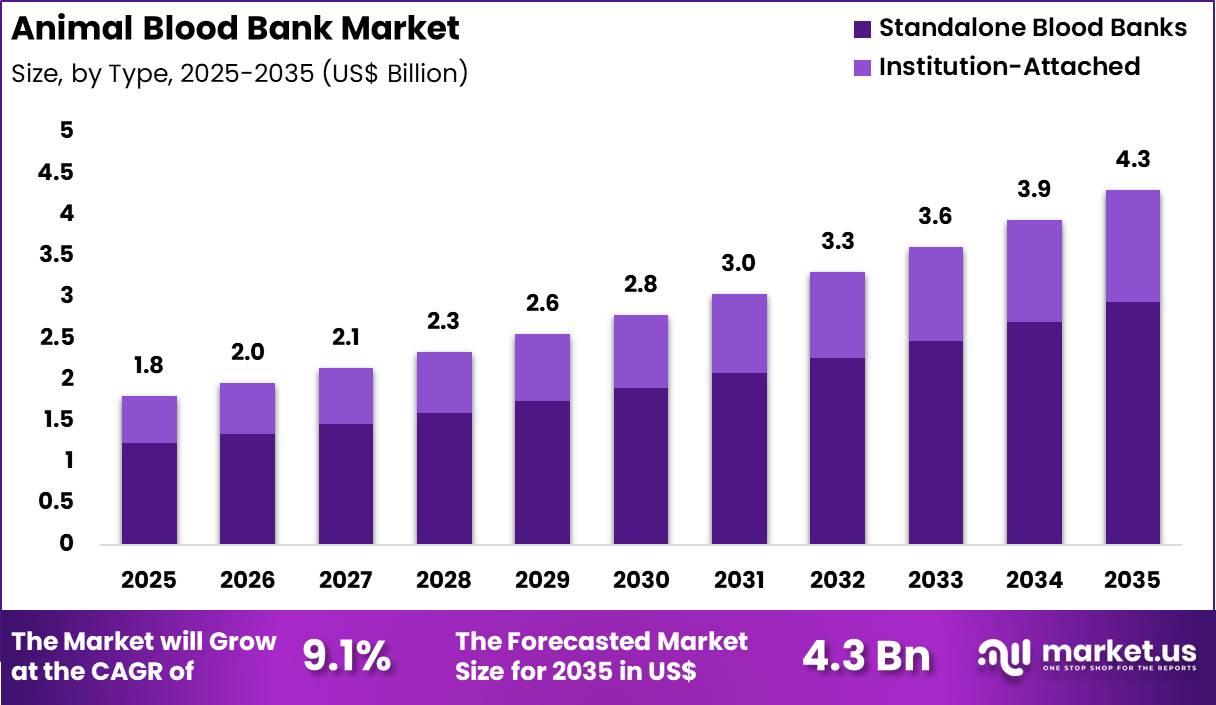
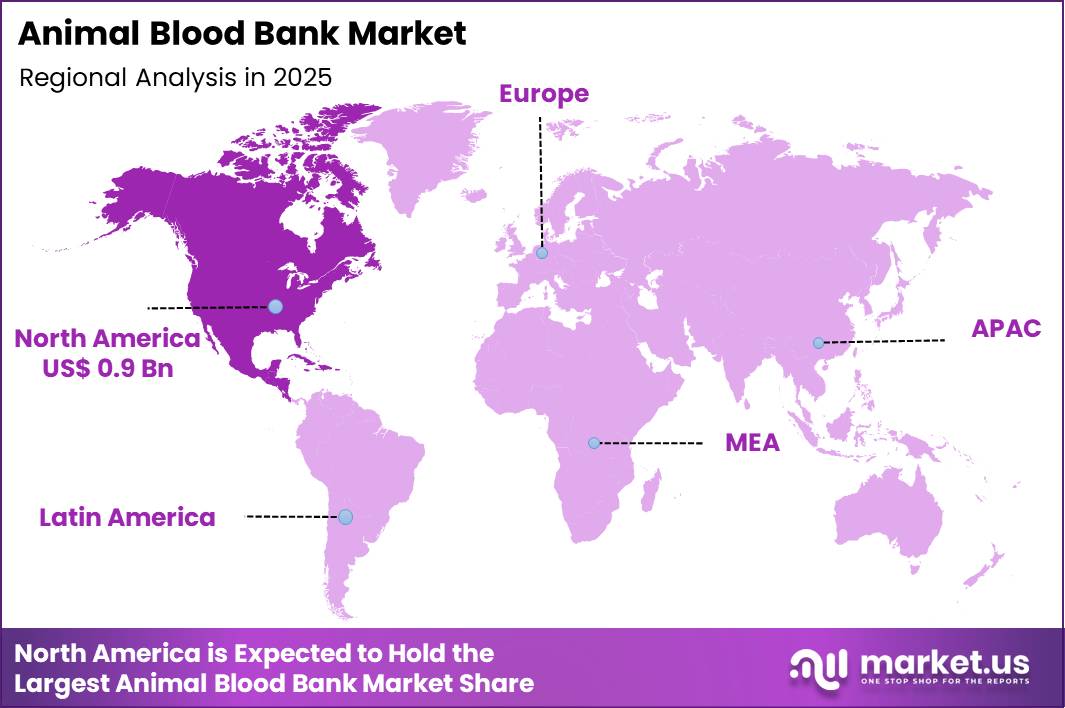
The Global Animal Blood Bank Market size is expected to be worth around US$ 4.3 Billion by 2035 from US$ 1.8 Billion in 2025, growing at a CAGR of 9.1% during the forecast period 2026-2035. In 2025, North America led the market, achieving over 51.2% share with a revenue of US$ 0.9 Billion.
Rising demand for advanced veterinary emergency and critical care drives the Animal Blood Bank market as veterinarians require reliable access to compatible blood products to treat life-threatening conditions in companion animals.
Emergency clinicians increasingly administer packed red blood cells from canine and feline donors to stabilize patients with acute blood loss from trauma, hemolytic anemia, or surgical complications, restoring oxygen-carrying capacity and preventing organ failure.
These banks supply fresh frozen plasma for coagulopathies in disseminated intravascular coagulation or rodenticide toxicity cases, providing essential clotting factors to control hemorrhage. Veterinary oncologists utilize cryoprecipitate and whole blood transfusions to manage chemotherapy-induced thrombocytopenia and anemia in dogs and cats undergoing treatment for lymphoma or mast cell tumors.
Specialized transfusion services support neonatal isoerythrolysis in kittens, where type-specific blood products from screened donors prevent severe hemolytic reactions. Blood banks also facilitate cross-matching and antibody screening to minimize transfusion reactions in previously transfused animals requiring repeated support.
Manufacturers and veterinary blood banks pursue opportunities to develop standardized collection and processing protocols that enhance product quality and shelf life, expanding applications in large-scale animal hospitals and referral centers managing polytrauma and immune-mediated diseases.
Developers advance point-of-care cross-matching kits and pathogen screening assays that improve safety for high-risk recipients. These innovations facilitate regional blood donor programs and mobile collection units, broadening access for rural veterinary practices. Opportunities emerge in autologous and directed donation models for elite performance animals and breeding stock.
Companies invest in cryopreservation technologies for extended storage of rare blood types. Recent trends emphasize donor health monitoring, ethical sourcing, and integration with electronic medical records for transfusion tracking, positioning animal blood banks as critical components in modern veterinary medicine focused on improved survival and welfare outcomes.
Key Takeaways
- In 2025, the market generated a revenue of US$ 1.8 Billion, with a CAGR of 9.1%, and is expected to reach US$ 4.3 Billion by the year 2035.
- The product segment is divided into packed red blood cells (pRBCs), whole blood, plasma and others, with packed red blood cells taking the lead with a market share of 45.8%.
- Considering species, the market is divided into canine, feline and others. Among these, canine held a significant share of 48.2%.
- Furthermore, concerning the type segment, the market is segregated into standalone blood banks and institution-attached. The standalone sector stands out as the dominant player, holding the largest revenue share of 68.4% in the market.
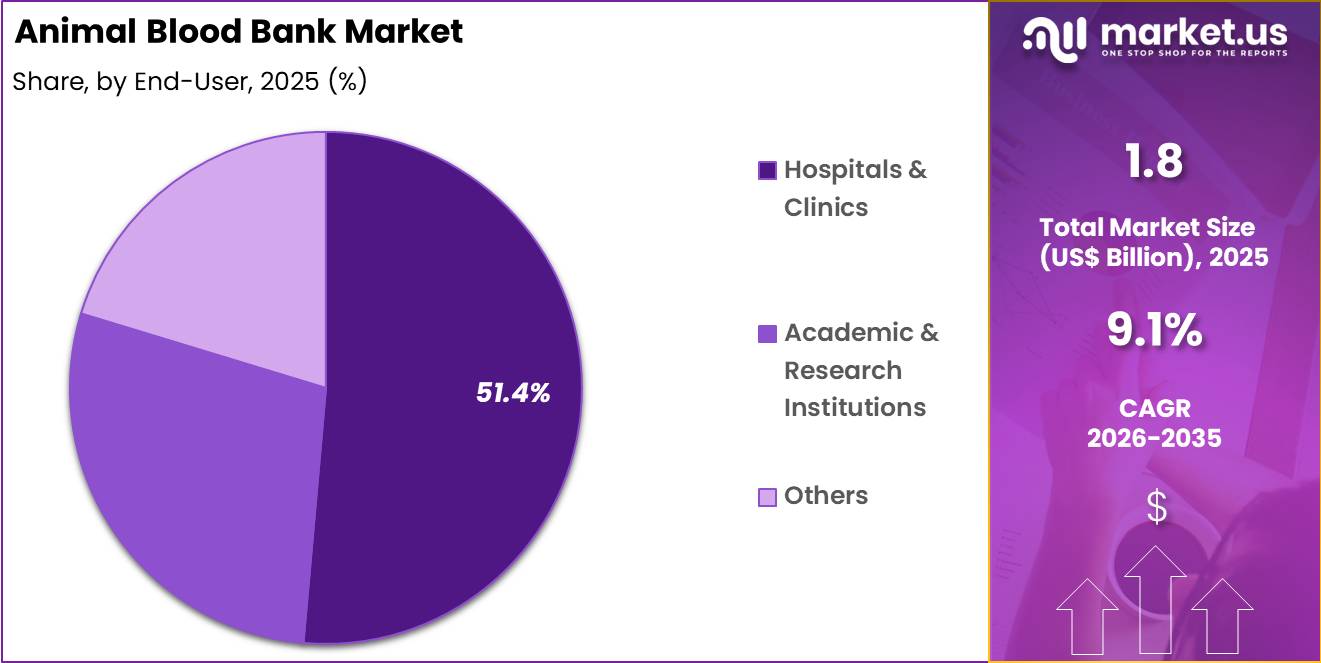
- The end-user segment is segregated into hospitals & clinics, academic & research institutions and others, with the hospitals & clinics segment leading the market, holding a revenue share of 51.4%.
- North America led the market by securing a market share of 51.2%.
Product Analysis
Packed red blood cells accounted for 45.8% of growth within product and dominate the animal blood bank market due to their critical role in managing anemia, trauma, and surgical blood loss in companion animals. Veterinarians increasingly request pRBCs for targeted transfusion therapy that restores oxygen-carrying capacity without excessive fluid overload.
Segment growth is projected to strengthen as advanced veterinary surgeries and emergency care services expand globally. Rising incidence of immune-mediated hemolytic anemia and trauma cases in pets drives consistent demand. Veterinary hospitals prioritize component therapy to improve transfusion precision and patient outcomes.
Increasing awareness of blood typing and cross-matching practices supports safe administration of pRBCs. Demand is anticipated to rise as pet ownership increases and access to specialty veterinary care improves. Expansion of emergency and critical care units in veterinary facilities further reinforces segment dominance.
Species Analysis
Canine accounted for 48.2% of growth within species and dominate due to the large global dog population and higher frequency of surgical and trauma-related interventions. Dogs commonly require transfusions for trauma, orthopedic surgeries, and chronic disease management.
Segment growth is expected to accelerate as advanced diagnostic and surgical procedures increase among companion animals. Veterinary professionals actively recruit canine blood donors to maintain adequate supply levels. Rising awareness among pet owners regarding blood donation programs supports donor pool expansion.
Dogs exhibit compatibility advantages that facilitate structured donor programs within blood banks. Demand is likely to increase as emergency veterinary services expand across urban and suburban areas. The segment benefits from well-established canine transfusion protocols and blood typing systems.
Type Analysis
Standalone blood banks accounted for 68.4% of growth within type and dominate due to their specialized infrastructure and ability to process, store, and distribute blood components efficiently. Independent facilities manage centralized donor programs and ensure standardized screening procedures.
Segment growth is projected to strengthen as demand for component separation and storage increases. Standalone centers maintain quality control and regulatory compliance more effectively than smaller institution-based units.
Growing collaboration between veterinary hospitals and independent blood banks enhances supply chain stability. Expansion of cold chain logistics supports wider geographic distribution. Adoption is anticipated to increase as veterinary transfusion medicine becomes more structured and standardized. Specialized facilities improve inventory management and reduce wastage of blood products.
End-User Analysis
Hospitals & clinics accounted for 51.4% of growth within end-users and dominate due to their direct involvement in emergency transfusions and surgical interventions. Veterinary hospitals increasingly integrate transfusion services into routine and critical care protocols. Segment growth is expected to expand as specialized surgical units and intensive care departments increase in number.
High patient volumes in companion animal hospitals drive consistent demand for blood components. Veterinary clinicians prioritize rapid access to screened and typed blood products for life-saving interventions.
Growing investment in advanced veterinary infrastructure strengthens transfusion adoption. Demand is likely to rise as awareness of blood component therapy increases among practitioners. Hospitals and clinics maintain strong partnerships with blood banks to ensure timely supply. Continuous expansion of pet healthcare services reinforces sustained growth within this segment.
Key Market Segments
By Product
- Packed Red Blood Cells (pRBCs)
- Whole Blood
- Plasma
- Others
By Species
- Canine
- Feline
- Others
By Type
- Standalone Blood Banks
- Institution-attached
By End-user
- Hospitals & Clinics
- Academic & Research Institutions
- Others
Drivers
Increasing demand for animal blood products in emergency and specialty veterinary care is driving the market.
The animal blood bank market experiences sustained expansion due to heightened requirements for transfusions in critical veterinary interventions. Emergency cases involving trauma, surgical procedures, and chronic conditions necessitate reliable access to compatible blood components.
Specialty practices increasingly incorporate transfusion medicine as a standard protocol for improved patient outcomes. Pet owners demonstrate greater willingness to pursue advanced treatments, thereby elevating the need for stored blood products. Regulatory advancements support safer collection and distribution practices, encouraging broader utilization.
The canine segment dominates due to higher prevalence of companion dogs requiring interventions. Packed red blood cells represent a primary product in demand for oxygen-carrying support. Whole blood and plasma components address diverse clinical scenarios effectively.
Infrastructure development in veterinary hospitals facilitates integration of blood banking services. This driver propels consistent investment in collection programs and storage technologies throughout the sector.
Restraints
Transition from closed-colony to community blood banks is restraining the market.
Regulatory shifts in certain jurisdictions impose limitations on traditional closed-colony operations, impacting immediate supply availability. The California Department of Food and Agriculture reported closed-colony blood banks supplied 1,270,995 ml total (whole blood 104,500 ml, red blood cells 629,375 ml, fresh-frozen plasma 537,120 ml) in 2024.
Community blood banks supplied only 38,740 ml total (whole blood 2,220 ml, red blood cells 29,120 ml, fresh-frozen plasma 7,400 ml) during the same period. This disparity highlights slower scaling of community-based models amid regulatory modernization efforts.
Closed-colony systems face phase-out pressures under laws like the California Pet Blood Bank Modernization Act effective January 1, 2022. Supply chain adjustments create temporary shortages during the transition phase.
Veterinary facilities encounter challenges in sourcing consistent volumes without established community donor networks. The restraint moderates overall market velocity as new models mature. Operational complexities in donor recruitment and screening further constrain rapid adaptation. This factor limits short-term expansion in regions undergoing structural changes.
Opportunities
Establishment of new veterinary teaching hospital blood banks is creating growth opportunities.
Academic institutions are expanding dedicated blood banking facilities to support clinical training and emergency services. Oklahoma State University Veterinary Medical Teaching Hospital launched its blood bank in fall 2024, recruiting 25 donors (22 dogs, 3 cats) by late 2025. This initiative enabled 25 life-saving transfusions within the initial three months of operation.
Such programs enhance local availability of blood products for regional veterinary needs. Opportunities emerge for collaboration between universities and private practices to build sustainable donor pools. Educational components promote donor participation and awareness among pet owners. The development fosters research into transfusion protocols and component storage.
Scalable models can extend to additional institutions facing similar demands. Enhanced access reduces reliance on distant suppliers and improves response times in critical cases. This opportunity strengthens infrastructure and contributes to long-term sector resilience.
Impact of Macroeconomic / Geopolitical Factors
Macroeconomic conditions influence the animal blood bank market through veterinary hospital budgets, pet owner affordability, and investment in transfusion services. Inflation raises costs for collection kits, testing reagents, storage equipment, and cold chain logistics, which increases operational expenses for blood banks. Higher interest rates limit capital spending on advanced screening systems and storage infrastructure.
Geopolitical tensions disrupt supplies of diagnostic consumables, refrigeration components, and transport materials, creating sourcing challenges. Current US tariffs on imported medical supplies and laboratory equipment increase procurement costs and tighten margins for service providers. These pressures can slow expansion plans and affect pricing flexibility in smaller veterinary centers.
At the same time, providers strengthen domestic supplier networks and improve inventory management to maintain supply reliability. Growing demand for emergency care, surgical procedures, and specialty veterinary services continues to support steady and confident market growth.
Latest Trends
Implementation of mobile canine blood donation units is driving the market.
Innovative approaches to donor collection accelerate accessibility and participation in blood programs. Konkuk University in South Korea introduced Asia’s first canine mobile blood donation unit in July 2024. The customized vehicle includes onboard laboratory and collection facilities to facilitate nationwide campaigns.
This advancement promotes convenience for owners and increases donor turnout across diverse locations. Mobile units address logistical barriers in urban and rural settings alike. The trend supports higher collection volumes through targeted outreach and awareness efforts.
Veterinary professionals benefit from expanded genetic diversity in donor pools. Enhanced mobility aligns with growing emphasis on community-based sourcing. The 2024 launch exemplifies technological integration in transfusion medicine. Overall, this development propels forward momentum in supply chain efficiency and market growth.
Regional Analysis
North America is leading the Animal Blood Bank Market
North America accounted for 51.2% of the Animal Blood Bank market in 2025, reflecting strong demand for advanced transfusion services across specialty veterinary hospitals. Rising surgical procedures, trauma cases, and immune mediated disorders in companion animals have increased the need for reliable blood component supply.
The American Pet Products Association reported in its 2023–2024 National Pet Owners Survey that 66% of US households owned a pet, which directly supports higher clinical visits and emergency interventions requiring transfusion support.
Veterinary teaching hospitals and private specialty centers continue to establish in house donor programs to secure steady blood inventories. Increased awareness about canine and feline blood typing has improved screening protocols. Expansion of 24 hour emergency clinics has further strengthened demand for packed red blood cells and plasma units.
Pet insurance penetration has enabled more owners to approve advanced critical care procedures. These combined factors have reinforced the expansion of organized veterinary transfusion services across the region.
The Asia Pacific region is expected to experience the highest CAGR during the forecast period
Asia Pacific is expected to witness steady expansion during the forecast period as urban pet adoption and advanced veterinary care infrastructure continue to rise. Countries such as China, Japan, South Korea, and Australia are strengthening referral hospital networks that require structured transfusion support.
The Australian Veterinary Association noted in 2022 that Australia had over 28 million pets, creating growing need for emergency and surgical services that rely on accessible donor programs. Veterinary professionals now promote voluntary donor enrollment to build structured supply chains.
Private hospital chains invest in refrigeration and blood processing equipment to enhance storage standards. Rising awareness of immune mediated anemia and trauma management increases clinical demand for transfusion readiness.
Training initiatives improve expertise in cross matching and safe transfusion practices. These developments are expected to drive stronger adoption of organized veterinary blood storage and distribution systems across the region.
Key Regions and Countries
North America
- US
- Canada
Europe
- Germany
- France
- The UK
- Spain
- Italy
- Russia
- Netherland
- Rest of Europe
Asia Pacific
- China
- Japan
- South Korea
- India
- Australia
- New Zealand
- Singapore
- Thailand
- Vietnam
- Rest of APAC
Latin America
- Brazil
- Mexico
- Rest of Latin America
Middle East & Africa
- South Africa
- Saudi Arabia
- UAE
- Rest of MEA
Key Players Analysis
Key players in the animal blood bank market pursue growth by building structured donor recruitment programs, strengthening laboratory screening standards, and expanding component separation capabilities to ensure a stable supply of pRBCs, plasma, and whole blood for veterinary hospitals. They deepen relationships with specialty clinics and emergency centers to secure long term supply agreements and improve demand forecasting across regions.
Companies invest in temperature controlled logistics, inventory management systems, and traceability protocols to maintain product integrity and reduce wastage. They also enhance value through clinician training, crossmatching support, and digital ordering platforms that streamline transfusion workflows.
For example, Hemopet, founded in 1986 and headquartered in Garden Grove, California, operates as a nonprofit organization that combines animal blood banking services with diagnostic and educational programs. Through disciplined quality management, strong veterinary partnerships, and operational efficiency, Hemopet and similar providers strengthen market positioning and support sustainable expansion.
Top Key Players
- NVABB, LLC (North American Veterinary Blood Bank)
- Pet Blood Bank UK
- HemoLife
- Animal Blood Resources International (ABRI)
- Canadian Animal Blood Bank
- VEG ER (Veterinary Emergency Group)
- GADVASU Blood Bank
- Mount Vets Veterinary Hospital
- DoveLewis Emergency Animal Hospital
- MAX PETZ HOSPITALS PRIVATE LIMITED
Recent Developments
- In 2025, the Department of Animal Husbandry & Dairying (DAHD) in India issued its first comprehensive national guidelines for animal blood transfusion and blood bank operations. As per the government notification, these standards mandate biosafety protocols, ethical donor practices, and standardized blood typing to ensure the safety of blood products across the country’s expanding veterinary hospital network.
- In 2026, Pet Blood Bank UK announced an expanded schedule of donor sessions in collaboration with Fitzpatrick Referrals to meet the rising demand for canine blood products. According to the organization’s update, these sessions utilize high-capacity mobile collection units to secure critical supplies of plasma and packed red blood cells for emergency and surgical care throughout the UK.
Report Scope
Report Features Description Market Value (2025) US$ 1.8 Billion Forecast Revenue (2035) US$ 4.3 Billion CAGR (2026-2035) 9.1% Base Year for Estimation 2025 Historic Period 2020-2024 Forecast Period 2026-2035 Report Coverage Revenue Forecast, Market Dynamics, COVID-19 Impact, Competitive Landscape, Recent Developments Segments Covered By Product (Packed Red Blood Cells (pRBCs), Whole Blood, Plasma and Others), By Species (Canine, Feline and Others), By Type (Standalone Blood Banks and Institution-attached), By End-user (Hospitals & Clinics, Academic & Research Institutions and Others) Regional Analysis North America – US, Canada; Europe – Germany, France, The UK, Spain, Italy, Russia, Netherlands, Rest of Europe; Asia Pacific – China, Japan, South Korea, India, Australia, New Zealand, Singapore, Thailand, Vietnam, Rest of APAC; Latin America – Brazil, Mexico, Rest of Latin America; Middle East & Africa – South Africa, Saudi Arabia, UAE, Rest of MEA Competitive Landscape NVABB, Pet Blood Bank UK, HemoLife, ABRI, Canadian Animal Blood Bank, VEG ER, GADVASU, Mount Vets, DoveLewis, MAX PETZ. Customization Scope Customization for segments, region/country-level will be provided. Moreover, additional customization can be done based on the requirements. Purchase Options We have three licenses to opt for: Single User License, Multi-User License (Up to 5 Users), Corporate Use License (Unlimited User and Printable PDF) 
-
-
- NVABB, LLC (North American Veterinary Blood Bank)
- Pet Blood Bank UK
- HemoLife
- Animal Blood Resources International (ABRI)
- Canadian Animal Blood Bank
- VEG ER (Veterinary Emergency Group)
- GADVASU Blood Bank
- Mount Vets Veterinary Hospital
- DoveLewis Emergency Animal Hospital
- MAX PETZ HOSPITALS PRIVATE LIMITED
Our Clients

- 180194
- March 2026






