


Market Overview
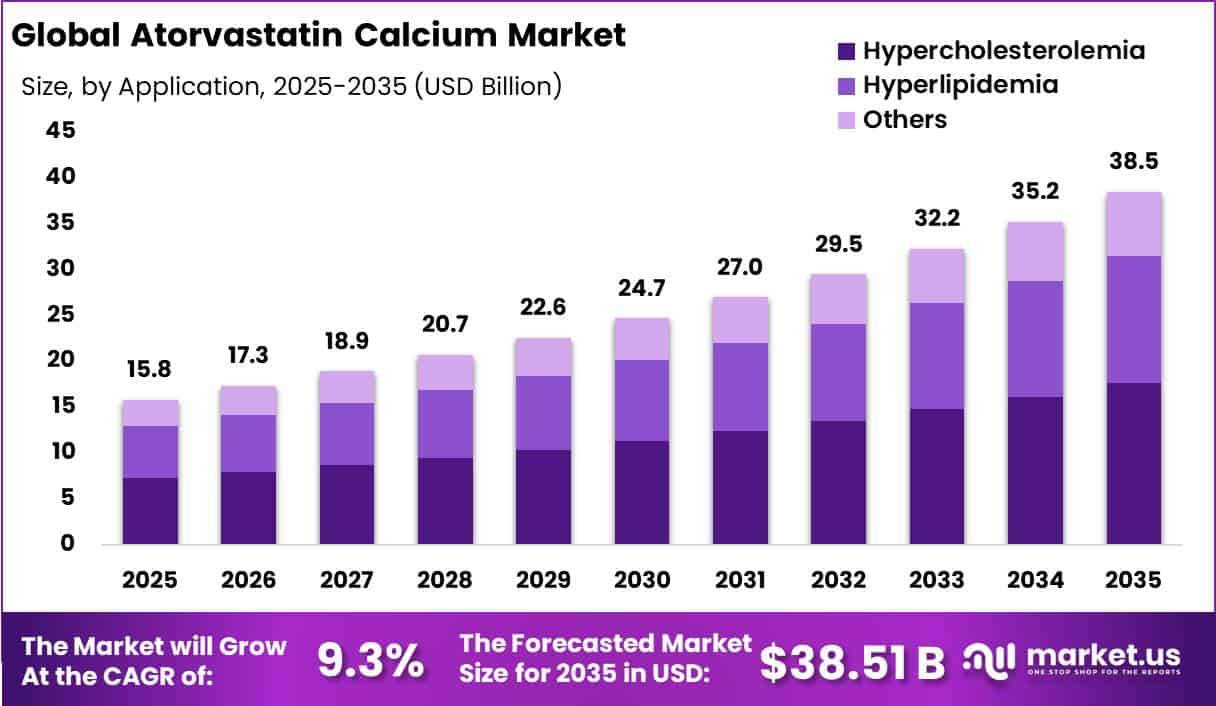
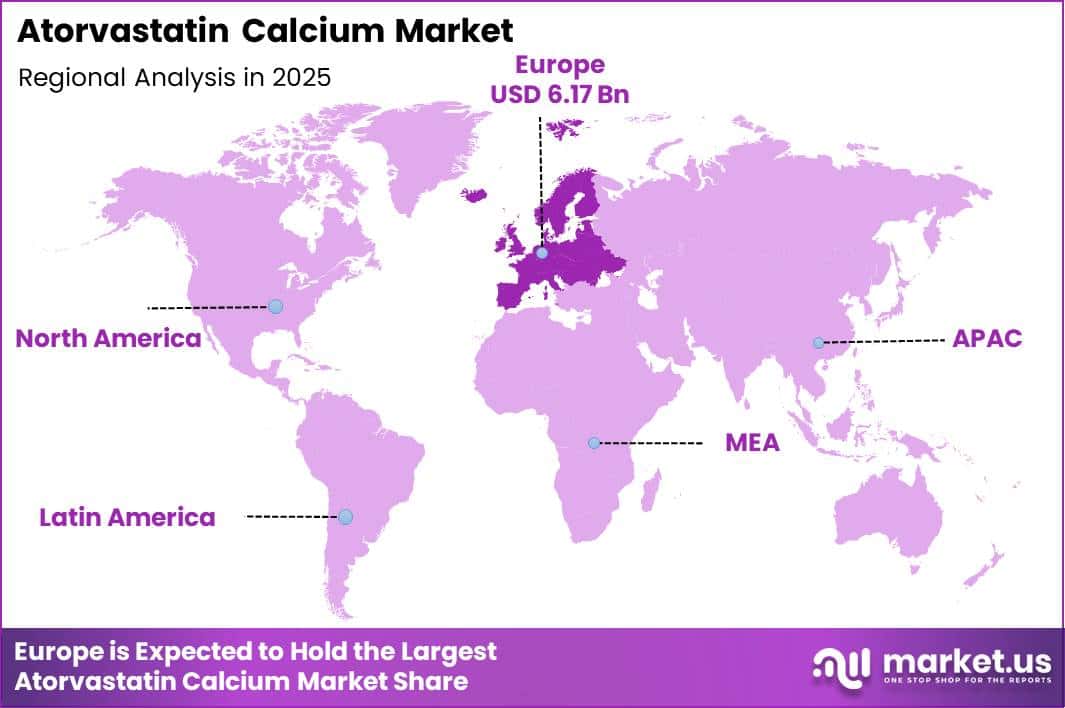
Global Atorvastatin Calcium Market size is expected to be worth around US$ 38.51 Billion by 2035 from US$ 15.83 Billion in 2025, growing at a CAGR of 9.3% during the forecast period from 2026 to 2035. In 2025, Europe led the market, achieving a share of over 39% and a revenue of US$ 6.17 Billion.
Atorvastatin calcium is a widely prescribed lipid-lowering medication belonging to the statin class of drugs. It is primarily used to reduce low-density lipoprotein (LDL) cholesterol and triglyceride levels while increasing high-density lipoprotein (HDL) cholesterol, thereby helping to lower the risk of cardiovascular diseases, such as heart attacks and strokes.
According to the World Health Organization (WHO), cardiovascular diseases remain the leading cause of death globally, accounting for approximately 20.5 million deaths each year, highlighting the growing need for effective cholesterol-lowering therapies.
The U.S. Centers for Disease Control and Prevention (CDC) also reports that nearly 94 million U.S. adults aged 20 years or older have total cholesterol levels of 200 mg/dL or higher, emphasizing the widespread burden of dyslipidemia.
Atorvastatin is recommended in numerous national and international clinical guidelines because of its proven effectiveness in reducing cardiovascular risk through long-term cholesterol management. The medicine is available in multiple strengths, including 10 mg, 20 mg, 40 mg, and 80 mg, allowing physicians to tailor treatment according to patient needs and cardiovascular risk profiles.
Additionally, atorvastatin is included in the WHO Model List of Essential Medicines, reflecting its importance in global healthcare systems. Increasing awareness of preventive cardiovascular care, aging populations, and the rising prevalence of obesity, diabetes, and hypertension continue to support the demand for atorvastatin calcium across hospitals, retail pharmacies, and online pharmacy channels worldwide.
Key Takeaways
- Market Size: The Atorvastatin Calcium Market size was US$ 15.83 Billion in 2025. The market is estimated to grow to US$38.51 billion by 2035.
- Market Share: The Compound Annual Growth Rate (CAGR) of the market from 2026 to 2035 will be 9.3%.
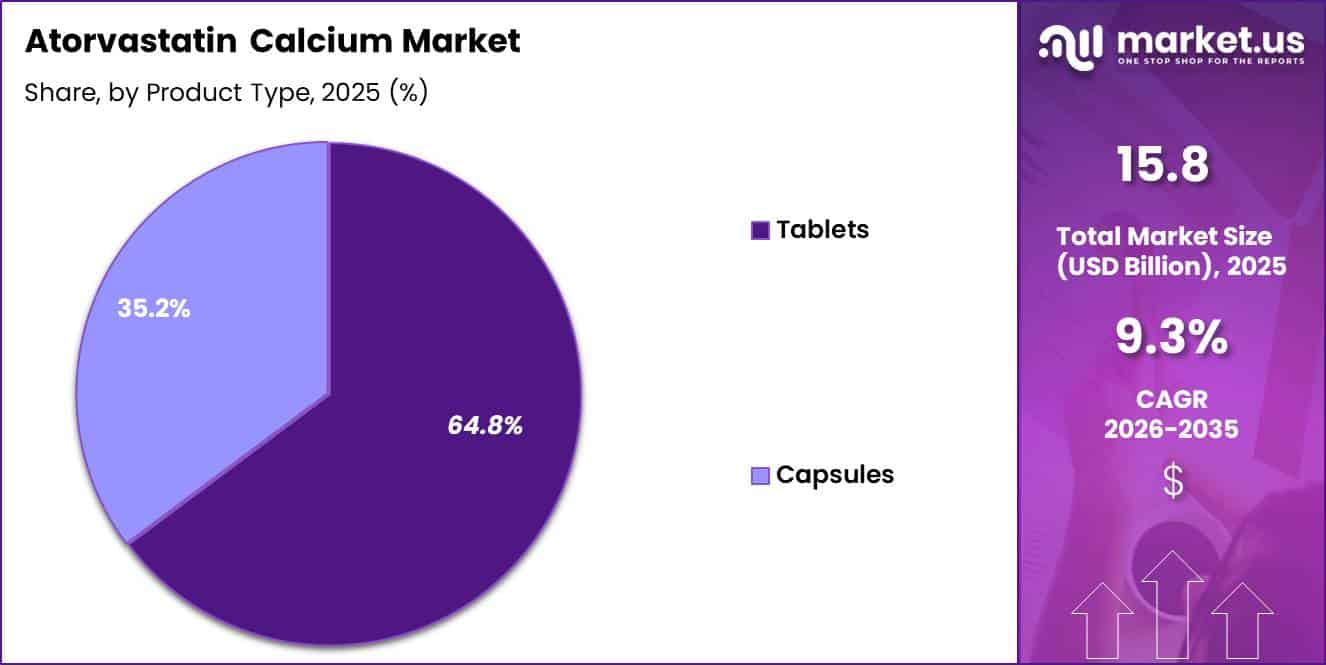
- By Product Type: Tablets have the largest market share, accounting for 64.8% of total sales.
- By Application: Hypercholesterolemia, accounting for 45.9% of total revenue.
- By Production Process: Biocatalysis leads the segment, accounting for 75.2% of total revenue.
- By Distribution Channel: Hospital Pharmacies lead the segment, accounting for 49.6% of total revenue.
- Regional: Europe is the dominant regional market, accounting for 39% of global sales.
Product Type Analysis
The tablets segment dominated the global Atorvastatin Calcium market in 2025, accounting for 64.8% of the total market share. Tablets remain the preferred dosage form due to their convenience, accurate dosing, long shelf life, and widespread acceptance among both healthcare providers and patients.
Their cost-effective manufacturing and ease of large-scale production further support their dominance in the market. Tablets are commonly prescribed for long-term cholesterol management, making them the standard formulation in hospitals, clinics, and retail pharmacies.
Pharmaceutical companies continue to introduce improved tablet formulations with enhanced stability and patient compliance, further strengthening this segment’s position. Additionally, the availability of generic tablet formulations has increased affordability, encouraging broader adoption across developed and emerging healthcare markets.
The capsules segment represented 35.2% of the market in 2025. Capsules are preferred by patients who experience difficulty swallowing conventional tablets or seek formulations with improved dissolution characteristics.
They also provide flexibility in formulation development and can enhance patient comfort in specific therapeutic settings. Although capsules occupy a smaller share than tablets, steady demand from specialized patient groups and continuous product innovation are expected to support their gradual market expansion during the forecast period.
Application Analysis
The hypercholesterolemia segment held the largest share of the global Atorvastatin Calcium market in 2025, capturing 45.9% of total revenue. The increasing prevalence of elevated cholesterol levels, driven by sedentary lifestyles, obesity, unhealthy dietary habits, and aging populations, has significantly contributed to the segment’s leadership.
Atorvastatin Calcium remains one of the most frequently prescribed statins for reducing low-density lipoprotein (LDL) cholesterol and lowering cardiovascular risk. Growing awareness regarding preventive cardiovascular healthcare, along with regular cholesterol screening programs, continues to strengthen demand within this application segment.
Favorable clinical guidelines recommending statin therapy for high-risk individuals further reinforce the dominant position of hypercholesterolemia treatment.
The hyperlipidemia segment accounted for 35.8% of the market in 2025. Rising cases of mixed lipid disorders and increasing emphasis on comprehensive lipid management continue to drive demand in this category.
Atorvastatin is widely utilized to manage abnormal lipid profiles and reduce associated cardiovascular complications. Meanwhile, the others segment represented 18.3% of the market, covering additional therapeutic uses such as cardiovascular risk reduction in patients with multiple metabolic conditions. Continued expansion of preventive healthcare initiatives is expected to support steady growth across all application segments.
Production Process Analysis
The biocatalysis segment dominated the global Atorvastatin Calcium market in 2025, accounting for 75.2% of the overall market share. Biocatalytic manufacturing has gained significant preference due to its ability to deliver high product purity, improved process efficiency, and greater environmental sustainability compared with conventional chemical synthesis methods.
The use of enzymes enables highly selective reactions while minimizing unwanted by-products and reducing energy consumption. As pharmaceutical manufacturers increasingly focus on green chemistry practices and regulatory compliance, biocatalysis has become an attractive production approach.
It also supports cost optimization through better reaction yields and simplified downstream purification, making it suitable for large-scale commercial manufacturing. Continuous technological advancements in enzyme engineering and process optimization are further enhancing production efficiency and scalability.
The chemical synthesis segment accounted for the remaining share of the market in 2025. This conventional manufacturing approach continues to be utilized due to its well-established industrial infrastructure, proven reliability, and broad manufacturing experience.
Chemical synthesis remains particularly important in facilities where existing production systems have already been optimized for commercial-scale operations.
Although it faces increasing competition from environmentally friendly alternatives, ongoing improvements in reaction efficiency and quality control continue to maintain its relevance. Both production methods play important roles in ensuring a stable global supply of Atorvastatin Calcium to meet growing pharmaceutical demand.
Distribution Channel Analysis
The hospital pharmacies segment led the global Atorvastatin Calcium market in 2025, capturing 49.6% of the total market share. Hospital pharmacies remain the primary distribution channel due to the high volume of cardiovascular patients receiving diagnosis, treatment initiation, and ongoing monitoring within hospital settings.
Physicians frequently prescribe Atorvastatin Calcium as part of comprehensive cardiovascular disease management programs, supporting strong procurement by hospital pharmacy networks. Hospitals also maintain reliable inventories of branded and generic formulations to ensure uninterrupted patient access.
The growing number of hospital admissions related to cardiovascular disorders and expanding healthcare infrastructure across emerging economies continue to strengthen this segment’s leadership.
Retail pharmacies represent another significant distribution channel, benefiting from increasing numbers of patients requiring long-term outpatient cholesterol management and routine prescription refills. Their extensive geographic presence and accessibility make them an important source for chronic medication dispensing.
Meanwhile, online pharmacies continue to gain traction as digital healthcare adoption expands. Home delivery services, competitive pricing, and convenient prescription management have encouraged greater consumer acceptance of online purchasing platforms.
As digital health ecosystems continue to evolve, all distribution channels are expected to contribute to sustained market growth, although hospital pharmacies are projected to maintain their leading position throughout the forecast period.
Market Segmentations
By Product Type
- Tablets
- Capsules
By Application
- Hypercholesterolemia
- Hyperlipidemia
- Others
By Production Process
- Biocatalysis
- Chemical Synthesis
By Distribution Channel
- Hospital Pharmacies
- Drug Store & Retail Pharmacies
- Online Providers
Driver
High-Intensity Statin Guidelines Strengthen Atorvastatin Market Demand
Guideline logic continues to support atorvastatin demand because NCBI’s 2025 StatPearls review notes that high-intensity statin therapy such as atorvastatin is recommended in major acute coronary syndrome settings and remains central to LDL-cholesterol reduction strategies.
This is strategically important because dose-intensity migration from 10 mg or 20 mg toward 40 mg and 80 mg lifts active-pharmaceutical-ingredient throughput and can improve manufacturer economics per patient even when tablet pricing remains highly competitive.
The resulting market effect is less about expanding the number of brands and more about deepening treatment intensity in secondary prevention, post-ACS discharge protocols, and high-risk primary-prevention cohorts, which supports faster prescription turns in hospital-linked and cardiology-linked channels over the next two years.
WHO’s 2025 essential medicines framework and CVD fact sheet both reinforce that affordable basic medicines, including generics and statins, should be available through public and private facilities, with the NCD target architecture previously aiming for 80% availability of affordable essential medicines and technologies.
That creates a durable procurement tailwind for atorvastatin because the molecule is already deeply genericized, available in standard 10 mg, 20 mg, 40 mg, and 80 mg strengths, and can be scaled through public tenders, pooled procurement, and insurance formularies more easily than premium lipid therapies.
In practice, this driver changes competitive dynamics from brand-promotion economics to manufacturing reliability, dossier breadth, tender pricing discipline, and distribution reach, favoring suppliers that can win institutional volumes at thin margins while maintaining regulatory compliance across multiple jurisdictions.
| Driver | (~) % Impact on CAGR Forecast | Geographic Relevance | Impact Timeline |
|---|---|---|---|
| CVD burden expansion and ageing-led lipid demand | +1.6% | Global, LMIC-heavy; North America and EU mature refill core; APAC volume corridors | Medium term (2-4 years) |
| Statin under-treatment gap converting into new starts | +1.3% | North America core, EU, urban APAC, Latin America spill-over | Short term (≤ 2 years) |
| Guideline intensity favoring high-intensity statin use | +1.0% | North America core, EU, selected APAC specialist centers | Short term (≤ 2 years) |
| Generic access and essential-medicine procurement depth | +1.4% | LMIC public channels, South Asia, Africa, ASEAN, Latin America | Medium term (2-4 years) |
| Diabetes-metabolic syndrome overlap enlarging maintenance therapy pool | +0.9% | North America, Gulf, India, China, Southeast Asia | Medium term (2-4 years) |
| Quality surveillance, recalls, and supplier rebalancing | +0.5% | U.S. generics channel, EU tenders, export-oriented Asian manufacturing hubs | Short term (≤ 2 years) |
Challenge
Critical Mineral Supply Constraints Challenge Solid-State Battery Scaling
Materials sourcing and critical minerals risk reflects the fact that many promising solid-state chemistries rely on supply chains for lithium, nickel, manganese, and specialized solid electrolytes that are still geographically concentrated and exposed to regulatory, environmental, and logistics disruptions.
As of 2026, lithium supply projections from mining and refining operations indicate tightness through at least 2028, with forecast demand in high-density cathodes and solid-state pilot lines growing at double-digit annual rates and inventory buffers at many gigafactories constrained to roughly 30–60 days of feedstock, leaving production vulnerable to multi-week port congestion episodes, environmental protests, or permitting delays.
Nickel and manganese sourcing adds further complexity, with high-nickel cathode pathways sensitive to ore quality and emissions regulations, and emerging lithium-rich manganese-based cathodes requiring new refining trains that have not yet reached stable yields above 90–92%, implying scrap rates of 8–10% and volatile cost structures.
Solid electrolytes themselves, including sulfides, oxides, and hybrids, depend on specialty chemicals and controlled processing environments; capacity at many suppliers is still in the low kiloton range, leaving little headroom for sudden OEM programme accelerations and causing price volatility in the 15–25% year-on-year band when procurement teams compete for limited slots.
Collectively, these factors impose an estimated 1.3 % point drag on achievable CAGR by limiting how quickly production can ramp without triggering cost spikes or stock-outs. Mitigation will hinge on geographic diversification of feedstock, such as multi-continent lithium sourcing strategies, longer-term offtake contracts spanning 8–10 years, and standardized chemistries that allow material substitution flexibility.
These measures realistically require 2–4 years to fully normalize across North America, Europe, and APAC logistics corridors.
| Challenge | (~) % CAGR Friction Drag | Geographic Relevance | Mitigation Horizon |
|---|---|---|---|
| High-cost scale-up economics | -2.0% | North America, EU, East Asia hubs | Long term (≥ 4 years) |
| Interface stability & safety validation | -1.6% | EU, Japan, Korea, China R&D belts | Long term (≥ 4 years) |
| Materials sourcing & critical minerals | -1.3% | North America core, EU, APAC corridors | Medium term (2-4 years) |
| Manufacturing yield & process maturity | -1.5% | China giga-clusters, EU, US pilot lines | Medium term (2-4 years) |
| Talent and IP concentration risk | -0.9% | US, Japan, Korea, China innovation hubs | Long term (≥ 4 years) |
| OEM integration & qualification cycles | -1.2% | Global EV OEMs, aviation, ESS integrators | Medium term (2-4 years) |
Restraints
Intensifying Generic Competition and Atorvastatin Margin Compression
Atorvastatin calcium is among the most commoditized high-volume statins globally, with multiple generic manufacturers across the U.S., EU, India, and broader APAC vying for formulary inclusion and tender wins, steadily eroding price and margin headroom.
The root driver is the proliferation of ANDA-approved products and region-specific generic launches, which push pack prices down through frequent rebidding and rebate cycles, while wholesalers and PBMs consolidate purchasing to extract larger discounts in exchange for volume commitments.
Operationally, the presence of 10–15 active generic suppliers in large markets can pull net realized prices down by 3–7% every contract cycle, with combined effects of rebates, chargebacks, and shelf-space fees reducing ex-factory revenue per tablet even when nominal list prices appear stable.
Manufacturers respond by scaling throughput to dilute fixed costs, but as capacity utilization approaches 80–90%, incremental efficiency gains flatten, leaving EBIT margins stuck in the single digits and prompting exit by marginal players.
Strategically, persistent margin compression disincentivizes investment in formulation improvements, such as better tolerability profiles and fixed-dose combinations, and in patient-support programs that could expand adherence, thereby reinforcing the perception of atorvastatin as a low-value commodity rather than a strategic cardiovascular backbone therapy.
Over the 2–4-year horizon, these competitive dynamics subtract around 1.3 % points from the baseline CAGR by limiting pricing power, shortening product life cycles on specific SKUs, and shifting corporate capital allocation away from the atorvastatin franchise toward newer, higher-margin cardiometabolic assets.
| Restraint | (~) % Impact on CAGR Forecast | Geographic Relevance | Impact Timeline |
|---|---|---|---|
| Post-2025 quality recall overhang | -1.8% | U.S., Canada core | Short term |
| Tightening quality & bioequivalence norms | -1.2% | North America, EU | Medium term |
| API cost volatility & China dependence | -1.5% | EU, APAC, LatAm | Medium term |
| Price controls & reimbursement pressure | -1.0% | EU, India, select APAC | Long term |
| Growing statin under-utilization and adherence gaps | -0.9% | Global, esp. LMICs | Long term |
| Intensifying generic competition & margin compression | -1.3% | Global | Medium term |
Opportunity
Ultra Low Cost Generic Penetration Expanding Untreated Market Access
The second opportunity involves deploying ultra-low-cost generic atorvastatin strategies in large, under-treated populations where regulatory moves, price ceilings, and generic competition have proved capable of expanding market share despite price erosion, as observed when Indian price ceilings increased atorvastatin’s average market share by over 3 % points and when generic entry drove more than 80% price declines within 90 days in mature markets.
Baseline forecasts assume steady, modest growth in low- and middle-income countries driven by gradual guideline adoption and economic development, but they often underestimate the impact of aggressive low-price, high-volume plays targeting the hundreds of millions of adults who will develop hypertension, dyslipidemia, or diabetes by 2050, with hypertension alone projected to reach over 60% prevalence in some adult populations.
If leading generic players and public health programs in South Asia, Sub-Saharan Africa, and Latin America push atorvastatin average monthly therapy costs down by an additional 40–60% versus current generics, they could realistically triple statin penetration in eligible high-risk cohorts from around 10–15% to 30–40% in many LMIC urban centers, creating an incremental atorvastatin TAM of USD 2–4 billion by 2035, even at low unit prices.
The upside CAGR contribution comes from unit volume expansion of 12–15% annually in these segments, coupled with supply-chain efficiencies and scale manufacturing that keep gross margins stable in the low-20% range despite lower ASPs.
Importantly, this is an opportunity rather than a driver because today’s baseline models assume slow, policy-driven uptake and do not factor in coordinated, commercial “statin-as-infrastructure” programs combining public tenders, NGO subsidies, and retail pharmacy outreach to systematically close treatment gaps documented in under-served regions.
| Opportunity | (~) % Potential CAGR Upside | Geographic Relevance | Execution Window |
|---|---|---|---|
| Integrated CVD–diabetes risk bundles | +2.0% | North America, EU, East Asia | Short term |
| Ultra-low-cost generic penetration in under-treated markets | +1.8% | South Asia, Sub-Saharan Africa, Latin America | Medium term |
| Fixed-dose combo products with metabolic agents | +1.5% | North America, EU, GCC, East Asia | Medium term |
| Digital adherence and outcomes-linked contracting | +1.3% | North America, EU, urban APAC | Short term |
| Hospital/health-system formulary consolidation plays | +1.1% | North America, EU, China, India | Medium term |
| Long-acting and alternate-delivery atorvastatin platforms | +1.0% | Global high-risk cohorts, high-income regions | Long term |
Regional Analysis
In 2025, Europe led the market, achieving over 39% share with a revenue of US$ 6.17 Billion.
Europe region’s leadership is supported by the high prevalence of cardiovascular diseases and hypercholesterolemia, particularly among the aging population. Strong public healthcare systems, widespread cholesterol screening programs, and favorable reimbursement policies have significantly increased the adoption of atorvastatin-based therapies.
The presence of established pharmaceutical manufacturers, extensive generic drug penetration, and well-developed distribution networks further contribute to consistent product availability across hospitals, retail pharmacies, and online channels.
Additionally, increasing emphasis on preventive cardiovascular care and adherence to clinical treatment guidelines continue to support sustained demand for atorvastatin calcium throughout the region.
North America represented another significant regional market, driven by high awareness of lipid management, advanced healthcare infrastructure, and continuous prescriptions for statin therapies among patients with cardiovascular risk factors.
The Asia-Pacific region is expected to witness the fastest growth during the forecast period due to rising healthcare expenditure, expanding access to affordable generic medicines, growing urbanization, and increasing incidences of obesity, diabetes, and dyslipidemia.
Countries such as China and India are contributing substantially to regional expansion through improving healthcare accessibility and a large patient population. Meanwhile, Latin America and the Middle East & Africa are experiencing steady market growth, supported by improving healthcare infrastructure, greater awareness of cardiovascular disease prevention, and expanding access to essential lipid-lowering medications through public and private healthcare initiatives.
Key Regions and Countries
North America
- The US
- Canada
Europe
- Germany
- France
- The U.K.
- Italy
- Spain
- Russia & CIS
- Rest of Europe
Asia Pacific
- China
- India
- Japan
- South Korea
- ASEAN
- Australia & New Zealand
- Rest of Asia Pacific
Middle East & Africa
- GCC
- South Africa
- Rest of Middle East & Africa
Latin America
- Brazil
- Mexico
- Rest of Latin America
Key Player Analysis
The global Atorvastatin Calcium market is characterized by a moderately consolidated competitive landscape, with leading pharmaceutical manufacturers focusing on product quality, manufacturing efficiency, regulatory compliance, and global distribution networks to strengthen their market positions.
Competition is driven by increasing demand for lipid-lowering therapies, the growing burden of cardiovascular diseases, and the expanding availability of generic formulations.
Companies are investing in advanced manufacturing technologies, formulation improvements, and supply chain optimization to maintain consistent product availability while meeting stringent regulatory standards across developed and emerging markets.
Innovation remains centered on enhancing drug stability, bioavailability, cost efficiency, and patient adherence through improved dosage forms and production processes.
Medtronic Plc, Johnson & Johnson (DePuy Synthes), Stryker Corporation, Integra LifeSciences Corporation, B. Braun SE (Aesculap), Zimmer Biomet Holdings, Inc., KLS Martin Group, Evonos GmbH & Co. KG, NEOS Surgery, Medicon eG, OsteoMed, Jeil Medical Corporation, Changzhou Huida Medical Instrument Co., Ltd, Acumed LLC, and Inion Oy continue to emphasize research and development, strategic partnerships, and product innovation to reinforce their competitive positions.
These companies are also integrating digital workflows, precision manufacturing technologies, and comprehensive healthcare ecosystems to improve operational efficiency and customer engagement. Collaborative initiatives with healthcare providers, distributors, and technology partners further support broader market reach and long-term competitiveness.
Continuous investment in R&D, regulatory approvals, portfolio expansion, and workflow integration enables these market participants to respond effectively to evolving clinical requirements, strengthen brand recognition, and sustain growth within an increasingly competitive global healthcare environment.
Top Key Players
- Medtronic Plc
- Johnson & Johnson (DePuy Synthes)
- Stryker Corporation
- Integra LifeSciences Corporation
- B. Braun SE (Aesculap)
- Zimmer Biomet Holdings, Inc.
- KLS Martin Group
- Evonos GmbH & Co. KG
- NEOS Surgery
- Medicon eG
- OsteoMed
- Jeil Medical Corporation
- Changzhou Huida Medical Instrument Co., Ltd
- Acumed LLC
- Inion Oy
Recent Developments
- In May 2026, Medtronic Plc announced its intent to acquire SPR Therapeutics for approximately US$650 million, strengthening its neuromodulation portfolio with temporary peripheral nerve stimulation technology for chronic pain treatment.
- In May 2026, Stryker Corporation completed the acquisition of Amplitude Vascular Systems, expanding its peripheral vascular portfolio with next-generation intravascular lithotripsy (IVL) technology for peripheral arterial disease.
- In May 2026, Johnson & Johnson (DePuy Synthes) announced an agreement to acquire selective rights to Gemtrack radiofrequency tracking technology from MinMaxMedical to enhance its VELYS™ enabling technology platform.
- In June 2026, Johnson & Johnson (DePuy Synthes) launched VELYS™ Hip Navigation with AI to improve intraoperative consistency and efficiency in total hip arthroplasty procedures.
Report Scope
| Report Features | Description |
|---|---|
| Market Value (2025) | US$ 15.8 Billion |
| Forecast Revenue (2035) | US$ 38.51 Billion |
| CAGR (2026-2035) | 9.3% |
| Base Year for Estimation | 2025 |
| Historic Period | 2020-2024 |
| Forecast Period | 2026-2035 |
| Report Coverage | Revenue Forecast, Market Dynamics, Competitive Landscape, Recent Developments |
| Segments Covered | By Product Type(Tablets ,Capsules)By Application(Hypercholesterolemia ,Hyperlipidemia ,Others) By Production Process (Biocatalysis ,Chemical Synthesis) By Distribution Channel (Hospital Pharmacies ,Drug Store & Retail Pharmacies ,Online Providers) |
| Regional Analysis | North America – The US, Canada; Europe – Germany, France, U.K., Italy, Spain, Russia & CIS, Rest of Europe; Asia Pacific – China, India, Japan, South Korea, ASEAN, Australia & New Zealand, Rest of Asia Pacific; Middle East & Africa – GCC, South Africa, Rest of Middle East & Africa; Latin America – Brazil, Mexico, Rest of Latin America |
| Competitive Landscape | Medtronic Plc ,Johnson & Johnson (DePuy Synthes) ,Stryker Corporation ,Integra LifeSciences Corporation ,B. Braun SE (Aesculap) ,Zimmer Biomet Holdings, Inc. ,KLS Martin Group ,Evonos GmbH & Co. KG ,NEOS Surgery ,Medicon eG, OsteoMed ,Jeil Medical Corporation ,Changzhou Huida Medical Instrument Co., Ltd ,Acumed LLC ,Inion Oy |
| Customization Scope | Customization for segments, region/country-level will be provided. Moreover, additional customization can be done based on the requirements. |
| Purchase Options | We have three licenses to opt for: Single User License, Multi-User License (Up to 5 Users), Corporate Use License (Unlimited User and Printable PDF) |





































