


Overview
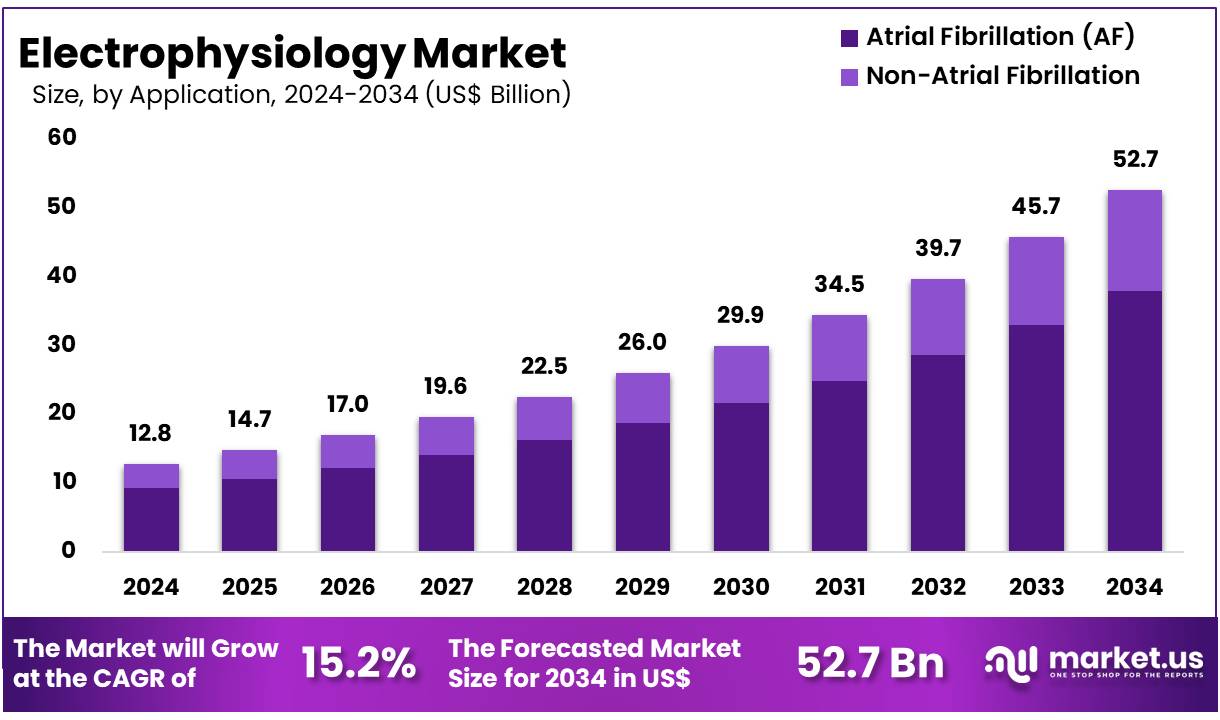
Global Electrophysiology Market size is expected to be worth around US$ 52.7 Billion by 2034 from US$ 12.8 Billion in 2024, growing at a CAGR of 15.2% during the forecast period 2025 to 2034. In 2024, North America led the market, achieving over 46.7% share with a revenue of US$ 6.0 Billion.
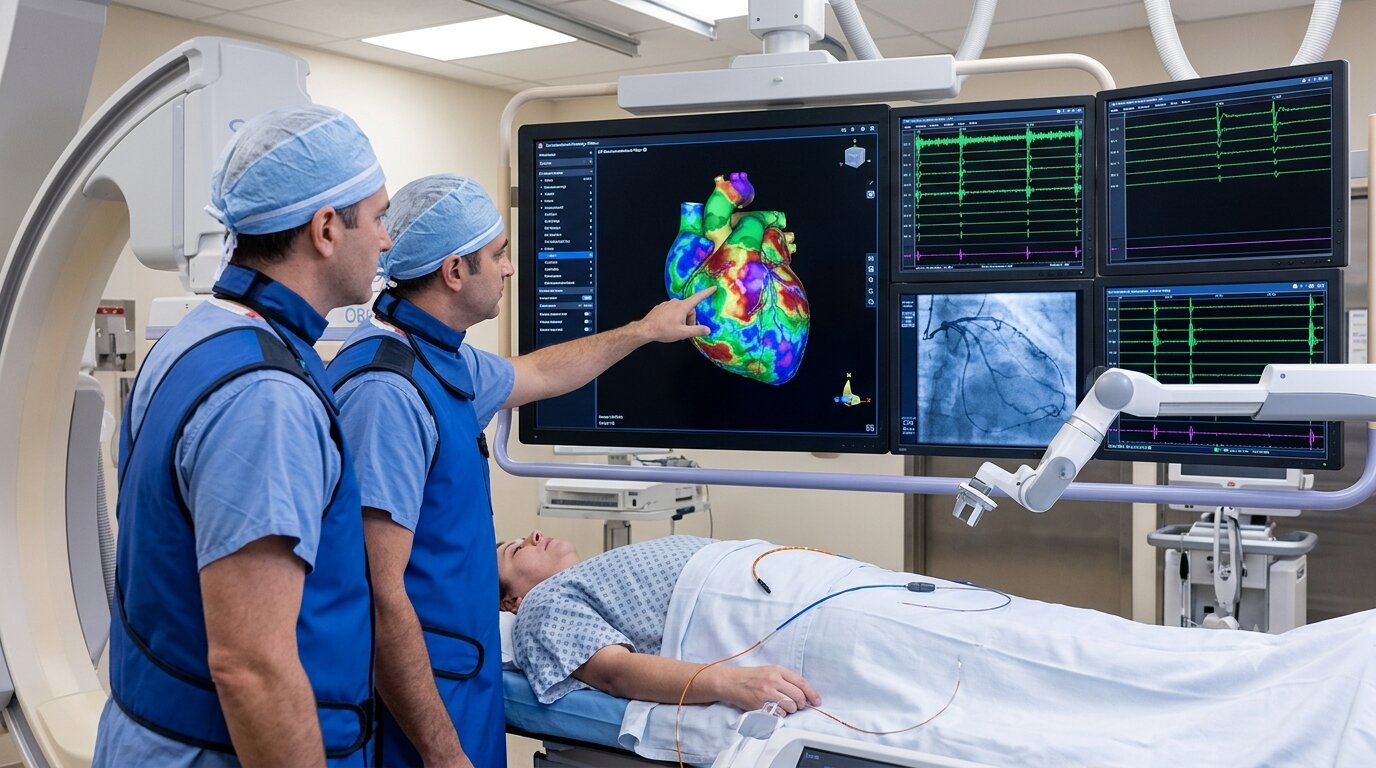
The global electrophysiology market is expanding as healthcare providers increase their focus on the accurate diagnosis and treatment of cardiac rhythm disorders. Electrophysiology (EP) is a specialized field of cardiology that evaluates the heart’s electrical activity to identify abnormal rhythms and determine the most effective treatment strategy.
Electrophysiology studies (EPS) and catheter-based procedures play an important role in diagnosing complex arrhythmias, while ablation therapies have become a preferred treatment option for many patients because they can restore normal heart rhythm with minimally invasive techniques. These procedures are increasingly being integrated into routine cardiovascular care as clinical evidence continues to support their safety and effectiveness.
Continuous technological progress is transforming electrophysiology practice. Modern EP laboratories now utilize high-density mapping systems, intracardiac echocardiography, advanced imaging integration, and pulsed field ablation to improve procedural precision, reduce radiation exposure, and enhance patient safety. Professional organizations have also updated clinical training standards to ensure physicians are proficient in these advanced technologies, reflecting their growing role in contemporary electrophysiology practice.
The market is also benefiting from ongoing research into innovative therapies, including non-invasive mapping techniques, artificial intelligence-assisted diagnostics, and next-generation treatment approaches for arrhythmias. Government-supported research programs continue to explore new medicines, genetic therapies, and improved intervention strategies aimed at enhancing patient outcomes and preventing complications associated with heart rhythm disorders.
As healthcare institutions continue investing in specialized electrophysiology laboratories and advanced cardiac technologies, the market is expected to witness sustained innovation and broader adoption across both developed and emerging healthcare systems.
Key Takeaways
- In 2024, the global Electrophysiology Market was valued at US$ 12.8 billion and is projected to reach US$ 52.7 billion by 2034, expanding at a CAGR of 15.2% during the forecast period.
- By product type, the market is categorized into ablation catheters, laboratory devices, diagnostic catheters, and access devices, with ablation catheters accounting for the largest share of 48.7%.
- Based on application, the market is segmented into atrial fibrillation (AF) and non-atrial fibrillation, with the AF segment contributing 72.1% of the total market.
- In terms of end users, the market includes inpatient facilities, outpatient facilities, and other healthcare settings, with inpatient facilities leading the segment by capturing 54.4% of the overall market share.
- North America remained the leading regional market in 2024, representing 46.7% of the global electrophysiology market.
Statistical Information
- The DISRUPT-AF registry included 1,576 patients treated across 20 U.S. centers by 77 operators between April 2024 and May 2025.
- Average procedure time decreased to 59.9 minutes for operators with experience of 11 or more procedures, compared with 75.3 minutes during their first 1–3 procedures.
- Median fluoroscopy time declined from 9.4 minutes for new operators to 4.4 minutes after completing 11 or more procedures, representing improved procedural efficiency.
- Procedure/device-related adverse events fell from 3.3% among operators performing 4–10 procedures to 0.9% after 11 or more procedures.
- Overall reported adverse events decreased from 3.8% during an operator’s 4–10 procedures to 1.0% after completing 11 or more procedures.
- 81.0% of procedures in the registry included pulmonary vein isolation (PVI+) as part of the treatment strategy.
- Johnson & Johnson completed more than 130 U.S. procedures across 14 hospitals involving 40 operators during the initial VARIPULSE™ external evaluation in early 2025.
- During the first 132 U.S. procedures, 4 patients (about 3%) experienced stroke or transient ischemic attack, prompting updated FDA use instructions.
- The VARIPURE substudy evaluated nearly 800 patients across 20 European centers and 62 operators, reporting a 0.6% primary adverse event rate and a 99.7% acute pulmonary vein isolation success rate.
Regional Analysis
North America accounted for the largest share of the electrophysiology market due to its high burden of cardiovascular diseases, widespread availability of advanced cardiac care, and strong adoption of electrophysiology procedures. According to the U.S. Centers for Disease Control and Prevention (CDC), atrial fibrillation (AFib) is the most common treated heart arrhythmia, and an estimated 12.1 million people in the United States are expected to have AFib by 2050. The CDC also reports that AFib contributes to more than 454,000 hospitalizations annually, supporting sustained demand for electrophysiology diagnostics and catheter-based therapies.
Asia-Pacific is projected to register the fastest growth during the forecast period, driven by the increasing prevalence of atrial fibrillation, expanding healthcare infrastructure, and greater adoption of catheter ablation procedures. National cardiovascular reports from China show that atrial fibrillation prevalence reached 1.6% among adults, while more than 210,000 catheter ablation procedures were reported in 2021, reflecting rapid expansion of electrophysiology services across the region.
Emerging Trends
- Pulsed field ablation is rapidly becoming a standard technology: At Heart Rhythm 2025, the Heart Rhythm Society reported that the FDA approved pulsed field ablation (PFA) systems from three different manufacturers within the previous year, significantly expanding technology choices for electrophysiology centers and accelerating adoption of non-thermal ablation techniques.
- More manufacturers are entering the electrophysiology device market: By the end of 2025, the FDA had approved PFA systems from Boston Scientific, Medtronic, Abbott, and Kardium, reflecting growing competition and faster innovation in electrophysiology technologies for atrial fibrillation treatment.
- Electrophysiology devices are supported by larger post-market studies: In 2025, the FDA required new post-approval studies such as NCT06578104 for Medtronic’s PulseSelect™ system, demonstrating increased emphasis on long-term clinical performance and real-world safety after commercial launch.
- Manufacturing capacity is expanding to meet growing demand: The FDA approved multiple manufacturing and process-change supplements for leading PFA systems during 2025–2026, including sterilization and production updates, showing that manufacturers are scaling production while maintaining regulatory compliance.
- Electrophysiology is shifting toward integrated treatment platforms: Abbott’s Volt™ PFA System, approved in 2025, integrates the catheter with the EnSite™ X EP System, allowing mapping and treatment within one workflow and reducing dependence on multiple standalone systems.
Use Cases
- Treatment of persistent atrial fibrillation is expanding: The Volt™ PFA System received FDA approval in 2025 for both paroxysmal and persistent atrial fibrillation (episodes under one year), extending electrophysiology treatment beyond traditional patient populations.
- Electrophysiology is increasingly used for integrated mapping and ablation: The Globe® Pulsed Field System combines 122 electrodes for simultaneous high-density mapping and ablation, enabling physicians to diagnose and treat arrhythmias using a single catheter platform.
- Hospitals are using PFA to reduce thermal injury risks: Clinical studies presented at Heart Rhythm 2025 showed that PFA maintains treatment effectiveness while reducing the risk of damage to nearby structures such as the esophagus, pulmonary veins, and phrenic nerve compared with thermal energy systems.
- Electrophysiology platforms are supporting personalized treatment planning: Modern FDA-approved systems now combine electro-anatomical mapping with pulsed field energy, allowing physicians to tailor lesion placement according to each patient’s heart anatomy and electrical signals during a single procedure.
- Electrophysiology is becoming more data-driven through post-market monitoring: New FDA approvals issued during 2025–2026 require structured post-approval follow-up studies, enabling manufacturers and healthcare providers to collect long-term safety and effectiveness data from routine clinical practice.
Conclusion
The global electrophysiology market is witnessing strong growth as healthcare systems increasingly adopt advanced technologies for the diagnosis and treatment of cardiac arrhythmias. Rising use of catheter ablation, electro-anatomical mapping, intracardiac imaging, and pulsed field ablation is improving procedural precision and patient outcomes. Continuous regulatory approvals, expanding clinical research, and updated physician training standards are accelerating innovation across the industry.
Growing investments in specialized electrophysiology laboratories and integrated treatment platforms are further strengthening market development. As the prevalence of heart rhythm disorders continues to increase, the demand for safe, minimally invasive, and technologically advanced electrophysiology solutions is expected to remain strong, supporting sustained market expansion and improved cardiovascular care worldwide.




















