


Quick Navigation
Market Overview
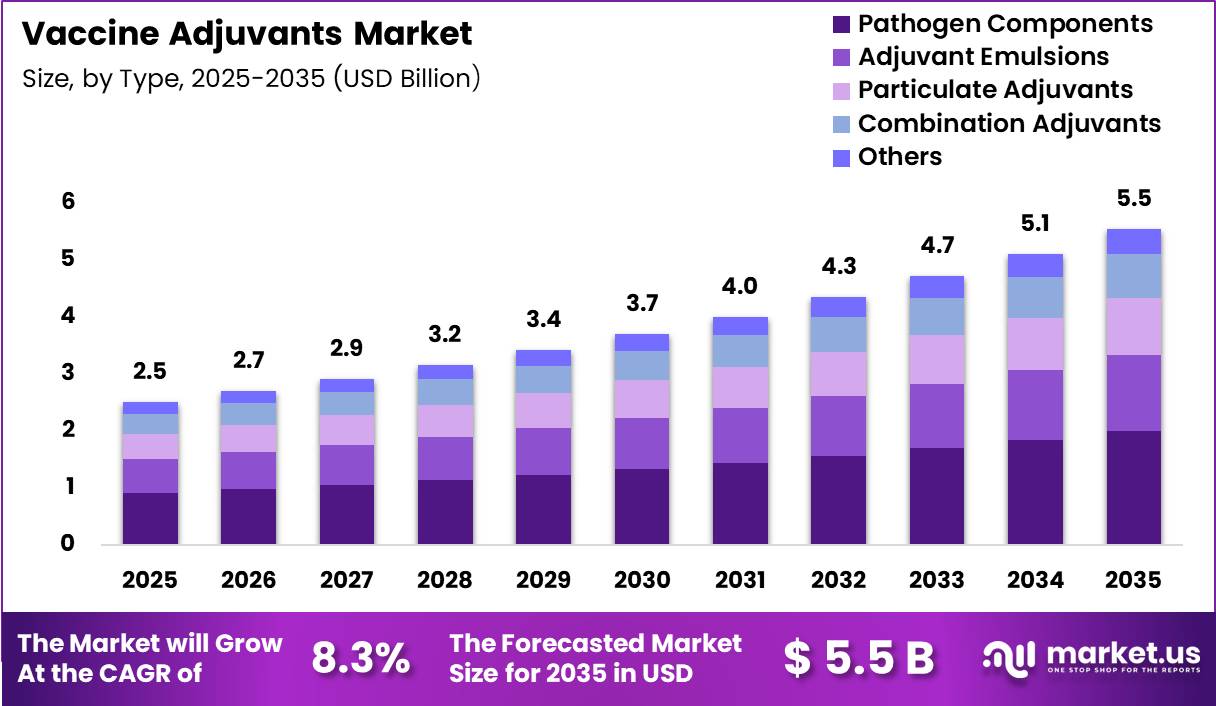
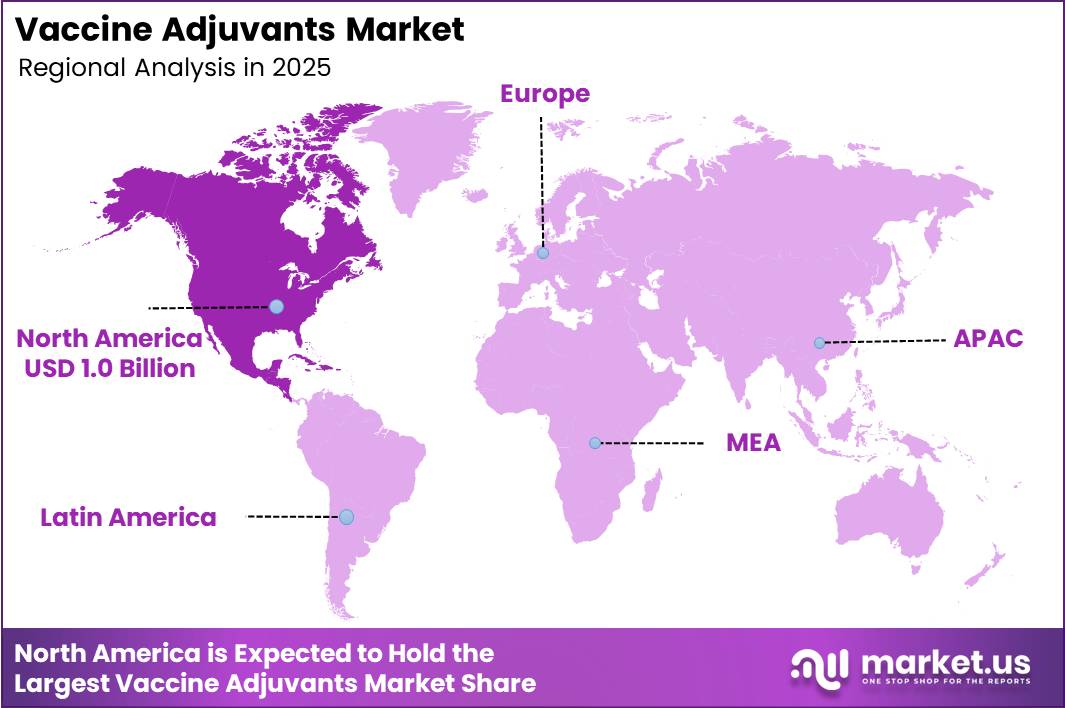
Global Vaccine Adjuvants Market size is expected to be worth around US$ 5.5 Billion by 2035 from US$ 2.5 Billion in 2025, growing at a CAGR of 8.3% during the forecast period from 2026 to 2035. In 2025, North America led the market, achieving over 41.0% share with a revenue of US$ 1.0 Billion.
The global vaccine adjuvants market is gaining momentum as healthcare systems place greater emphasis on improving vaccine effectiveness, extending immune protection, and supporting the development of next-generation vaccines.
Vaccine adjuvants are substances added to vaccines to strengthen the body’s immune response, allowing vaccines to provide stronger and longer-lasting protection while sometimes reducing the amount of antigen required per dose. According to the U.S. Centers for Disease Control and Prevention (CDC), adjuvants have been used safely in vaccines for decades and play an important role in enhancing immune responses in several licensed vaccines.
Growing global immunization efforts continue to create strong demand for advanced vaccine technologies, including innovative adjuvant systems. The World Health Organization (WHO) reported that approximately 109 million infants received the third dose of the diphtheria-tetanus-pertussis (DTP3) vaccine in 2024, representing 85% global coverage. However, 14.3 million children remained completely unvaccinated (“zero-dose” children), highlighting the continued need for more effective and accessible vaccination programs.
WHO also noted that 84% of children received the first dose of the measles vaccine, while global first-dose HPV vaccination coverage among girls increased from 27% in 2023 to 31% in 2024. These vaccination initiatives are expected to encourage continued investment in vaccine formulation technologies, including adjuvants, to improve immune protection across diverse populations.
Research institutions and vaccine manufacturers are increasingly developing novel adjuvant platforms for infectious diseases, cancer immunotherapy, and emerging pathogens. Advances in protein-based, recombinant, and mRNA vaccine technologies are also driving demand for specialized adjuvants capable of producing stronger and more targeted immune responses.
As governments, public health agencies, and biotechnology companies continue expanding immunization programs and pandemic preparedness strategies, vaccine adjuvants are expected to remain an essential component of future vaccine innovation and global disease prevention efforts.
Key Takeaways
- Market Size : Vaccine Adjuvants Market size is expected to be worth around US$ 5.5 Billion by 2035 from US$ 2.5 Billion in 2025.
- Market Share : The market is growing at a CAGR of 8.3% during the forecast period from 2026 to 2035.
- Type Analysis : The Pathogen Components segment dominated the vaccine adjuvants market in 2025, accounting for 36.00% of the total market share.
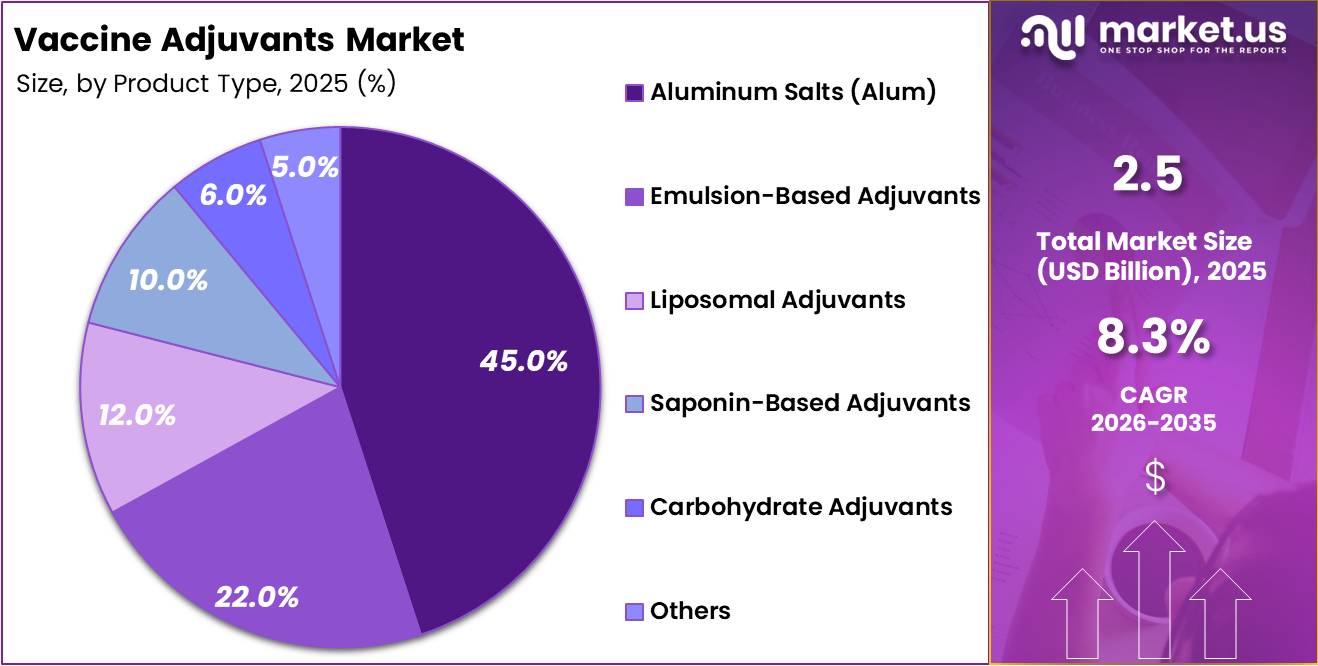
- Product Type Analysis : The Aluminum Salts (Alum) segment led the vaccine adjuvants market in 2025 with a 45.00% market share.
- Route of Administration Analysis : The Intramuscular segment dominated the vaccine adjuvants market in 2025, holding 67.00% of the market share.
- Application Analysis : The Infectious Diseases segment dominated the vaccine adjuvants market in 2025, accounting for 72.00% of the total market share.
- End User Analysis : The Pharmaceutical & Biotechnology Companies segment held the largest share of the vaccine adjuvants market in 2025, accounting for 54.00% of the total market.
- Regional Analysis : In 2025, North America led the market, achieving over 41.0% share with a revenue of US$ 1.0 Billion.
Type Analysis
The Pathogen Components segment dominated the vaccine adjuvants market in 2025, accounting for 36.00% of the total market share. This leadership is driven by the ability of pathogen-derived components, such as bacterial and viral molecules, to stimulate strong innate and adaptive immune responses. These adjuvants closely mimic natural infections, making them highly effective in enhancing vaccine efficacy against infectious diseases.
Growing research on recombinant vaccines and improved immune activation has further supported the adoption of pathogen component-based adjuvants. Their proven role in licensed vaccines and ongoing development for next-generation vaccines continues to strengthen demand.
The Adjuvant Emulsions segment held 24.00% of the market, supported by their use in influenza and pandemic preparedness vaccines due to their ability to enhance antibody production. Particulate Adjuvants captured 18.00% of the market as nanoparticles and virus-like particles gained popularity for targeted antigen delivery and improved immune responses.
Combination Adjuvants represented 14.00%, reflecting increasing efforts to combine multiple immune stimulators to achieve broader and longer-lasting protection. The Others category accounted for 8.00%, including experimental and emerging adjuvant technologies under clinical development. Continuous innovation in immunology and vaccine formulation is expected to support growth across all adjuvant types.
Product Type Analysis
The Aluminum Salts (Alum) segment led the vaccine adjuvants market in 2025 with a 45.00% market share. Aluminum-based adjuvants remain the most widely used because of their long history of safety, strong regulatory acceptance, and effectiveness in enhancing antibody responses.
They are extensively incorporated into routine vaccines for hepatitis, diphtheria, tetanus, and other infectious diseases. Their affordability, manufacturing simplicity, and established clinical performance continue to make alum the preferred choice for many vaccine developers worldwide.
Emulsion-Based Adjuvants accounted for 22.00% of the market, driven by their growing use in influenza and emerging infectious disease vaccines requiring enhanced immune responses. Liposomal Adjuvants held 12.00%, benefiting from advances in lipid-based delivery systems and improved antigen presentation.
Saponin-Based Adjuvants represented 10.00%, supported by increasing adoption in recombinant protein and cancer vaccine research because of their ability to stimulate both cellular and humoral immunity.
Carbohydrate Adjuvants captured 6.00% as interest in natural immune modulators continued to grow. The Others segment accounted for 5.00%, including novel synthetic and experimental adjuvant platforms being evaluated for future vaccine development.
Route of Administration Analysis
The Intramuscular segment dominated the vaccine adjuvants market in 2025, holding 67.00% of the market share. Intramuscular injection remains the preferred route because it enables efficient antigen delivery into muscle tissue, where strong immune activation can occur with minimal local reactions.
Most licensed vaccines, including influenza, hepatitis, and COVID-19 vaccines, are administered through this route, making it the standard approach for immunization programs worldwide. The availability of well-established clinical protocols and healthcare infrastructure further supports its widespread adoption.
The Subcutaneous segment maintained a notable market presence due to its use in selected vaccines that require slower antigen absorption and sustained immune responses. Intradermal administration is gaining attention as it targets the skin’s dense network of immune cells, allowing effective immunization with lower antigen doses and supporting dose-sparing strategies.
The Mucosal/Oral segment continues to expand through research focused on needle-free vaccination and improved protection against respiratory and gastrointestinal infections. Although these alternative routes currently represent a smaller share of the market, technological advancements and increasing interest in patient-friendly vaccine delivery methods are expected to create new opportunities for future growth.
Application Analysis
The Infectious Diseases segment dominated the vaccine adjuvants market in 2025, accounting for 72.00% of the total market share. This dominance is primarily attributed to the increasing prevalence of viral and bacterial infections, the expansion of global immunization initiatives, and the continuous development of vaccines targeting diseases such as influenza, COVID-19, respiratory syncytial virus (RSV), hepatitis, and other infectious conditions.
Vaccine adjuvants play a crucial role in enhancing immune responses, improving vaccine effectiveness, and reducing the antigen dose required per vaccination, thereby supporting large-scale preventive healthcare efforts. Meanwhile, the Cancer Vaccines segment is experiencing steady growth due to the increasing development of therapeutic vaccines designed to trigger targeted immune responses against cancer cells.
Advanced adjuvant technologies are enhancing the efficacy of cancer immunotherapies and personalized vaccine strategies, contributing to segment expansion. The Autoimmune Diseases segment is also gaining momentum as research advances in immune-modulating therapies aimed at restoring immune balance while minimizing inflammatory responses.
In addition, other applications, including vaccines for allergies, rare diseases, and emerging therapeutic indications, are benefiting from the evaluation of innovative adjuvant platforms. Continued investments in vaccine research and the growing emphasis on precision immunology are expected to expand the use of vaccine adjuvants across a broader range of therapeutic applications.
End User Analysis
The Pharmaceutical & Biotechnology Companies segment held the largest share of the vaccine adjuvants market in 2025, accounting for 54.00% of the total market. This dominance is driven by significant investments in vaccine research, clinical development, manufacturing, and commercialization.
Leading pharmaceutical companies continue to develop preventive and therapeutic vaccines for infectious diseases, cancer, and emerging pathogens, creating strong demand for advanced adjuvant technologies. Their extensive research capabilities, regulatory expertise, and global manufacturing networks further strengthen market leadership.
Research Institutes represent an important segment as academic organizations and public health institutions conduct studies on novel immune stimulators, next-generation vaccine platforms, and innovative adjuvant formulations.
Government-supported research programs and international collaborations continue to accelerate scientific discoveries in this field. Contract Research Organizations (CROs) are also experiencing steady growth due to increasing outsourcing of preclinical studies, formulation development, clinical trials, and regulatory support by pharmaceutical companies seeking to reduce development timelines and costs.
As vaccine innovation expands globally and public-private partnerships continue to increase, all end-user segments are expected to contribute to the continued advancement of the vaccine adjuvants market.
Market Segmentations
Type
- Pathogen Components
- Adjuvant Emulsions
- Particulate Adjuvants
- Combination Adjuvants
- Others
Product Type
- Aluminum Salts (Alum)
- Emulsion-Based Adjuvants
- Liposomal Adjuvants
- Saponin-Based Adjuvants
- Carbohydrate Adjuvants
- Others
Route of Administration
- Intramuscular
- Subcutaneous
- Intradermal
- Mucosal/Oral
Application
- Infectious Diseases
- Cancer Vaccines
- Autoimmune Diseases
- Other Applications
End User
- Pharmaceutical & Biotechnology Companies
- Research Institutes
- Contract Research Organizations (CROs)
Drivers
Adult immunization expansion lifts premium adjuvanted dose mix
Adult vaccination is becoming one of the strongest near term demand multipliers for adjuvants because the commercial mix is shifting toward higher value, reactogenicity managed products where immune enhancement matters more than in many basic pediatric schedules.
GSK reported that 2025 vaccine sales growth was driven by strong ex U.S. demand for Shingrix and Arexvy, both of which sit inside premium adult vaccination pathways rather than low price tender channels, indicating that value capture is concentrating in differentiated adult platforms rather than only in expanded dose count.
On the U.S. side, Novavax’s COVID vaccine obtained full FDA BLA approval in May 2025 for adults 65+ and at risk people aged 12–64, and the filing explicitly highlighted Matrix M’s role in broadening immune response, which matters because post pandemic COVID demand is no longer pure mass volume procurement but increasingly risk stratified booster demand where immunogenic performance and shelf ready commercial formats support sustained adjuvant attachment rates.
Strategically, this driver improves adjuvant market economics through richer product mix, higher gross profit per dose, and lower dependence on infant immunization tenders; it also supports recurring annual or seasonal revaccination models, which can convert adjuvants from an embedded formulation cost into a repeat revenue lever within adult respiratory, shingles, and geriatric prevention portfolios.
| Driver | (~) % Impact on CAGR Forecast | Geographic Relevance | Impact Timeline |
|---|---|---|---|
| Adult immunization expansion lifts premium adjuvanted dose mix | +1.4% | North America core, EU, Japan, Australia | Short term (≤ 2 years) |
| Malaria and next-wave endemic vaccines widen adjuvantable volume base | +1.1% | Africa core, India manufacturing hub, Gavi-supported markets | Short term (≤ 2 years) |
| Protein-subunit platform resilience supports adjuvant intensity | +0.9% | U.S., EU, India, select APAC | Medium term (2-4 years) |
| Pandemic preparedness funding de-risks adjuvant platform capacity | +1.0% | U.S., EU, India, global procurement corridors | Medium term (2-4 years) |
| Procurement visibility and zero-dose recovery stabilize long-cycle demand | +0.8% | Gavi markets, Africa, South Asia spill-over, LATAM public channels | Medium term (2-4 years) |
| Manufacturing localization and tech-transfer raise qualified supply options | +0.7% | India core, Africa emerging, Middle East selective, Southeast Asia | Long term (≥ 4 years) |
Challenges
QS-21 feedstock concentration
QS-21 remains one of the clearest examples of a non-binary market challenge, as commercial supply continues to depend heavily on Chile-sourced Quillaja biomass.
The leading 2026 scalability review identifies approximately 50 kg per year as the benchmark required to support one billion 50 µg doses and concludes that current alternatives, including plant cell culture, engineered microorganisms, and chemical synthesis, remain promising but are not yet economically or technically viable for large-scale pharmaceutical substitution.
As a result, while the market retains significant growth potential, developers utilizing saponin-based adjuvant platforms continue to face persistent exposure to harvest variability, purification losses, ecological management risks, inventory buffering costs, and supply concentration within a single country.
These constraints limit the pace at which product portfolios can be expanded, even when vaccine demand remains strong. In practice, these challenges translate into longer procurement and contracting cycles, higher safety stock requirements, and more conservative adjuvant selection during late-stage formulation development.
Consequently, manufacturers are increasingly adopting dual-sourcing strategies, investing in semi-synthetic analog development, and securing adjuvant supply earlier in the product lifecycle to minimize the risk of a 12- to 24-month delay between antigen readiness and the availability of commercial-scale adjuvant supply.
| Challenge | (~) % CAGR Friction Drag | Geographic Relevance | Mitigation Horizon |
|---|---|---|---|
| QS-21 feedstock concentration | -1.4% | North America innovators, EU adjuvant developers, Chile-linked global supply | Long term (≥ 4 years) |
| Assay standardization gap | -1.1% | US FDA pathways, EU regulatory hubs, Japan, WHO PQ markets | Medium term (2-4 years) |
| Formulation scale-up instability | -1.0% | North America core, EU biologics clusters, APAC fill-finish sites | Medium term (2-4 years) |
| GMP workforce scarcity | -0.9% | LMIC biomanufacturing hubs, US talent clusters, EU/Ireland, India, Brazil | Medium term (2-4 years) |
| Multi-component tech transfer drag | -0.8% | Global CDMOs, APAC manufacturing corridors, transatlantic launch programs | Medium term (2-4 years) |
| Raw material cold-chain complexity | -0.7% | APAC logistics corridors, LATAM export nodes, Africa import-dependent markets | Short term (≤ 2 years) |
Restraints
Regulatory drag on novel adjuvants
Novel vaccine adjuvants beyond traditional aluminum salts and a limited number of approved emulsions and immunostimulatory agents continue to face significant regulatory challenges. Regulatory authorities such as the FDA and EMA evaluate adjuvants as integral components of a specific vaccine rather than as independent excipients.
As a result, developers must generate extensive evidence on toxicology, biodistribution, immunogenicity, and manufacturing consistency, substantially increasing the complexity of clinical development. These requirements extend development timelines compared to vaccines formulated with established adjuvants.
While conventional vaccine reformulations may reach commercialization within approximately 7–8 years, vaccines incorporating novel adjuvants often require 9–12 years because of additional non-clinical studies, larger safety trials, and long-term post-marketing surveillance.
The extended timeline increases research and development costs, delays market entry, and reduces the effective patent-protected commercialization period. Consequently, manufacturers and investors frequently prioritize antigen optimization or delivery technologies compatible with established adjuvant systems, limiting investment in innovative immunostimulatory platforms and slowing the broader commercialization of advanced vaccine adjuvants.
| Restraint | (~) % Impact on CAGR Forecast | Geographic Relevance | Impact Timeline |
|---|---|---|---|
| Concentrated adjuvant supply base | -2.2% | North America core, EU, APAC export corridors | Medium term (2-4 years) |
| Regulatory drag on novel adjuvants | -1.9% | EU, North America, Japan | Long term (≥ 4 years) |
| Pharmacovigilance and safety perception risk | -1.4% | North America, EU, selective LATAM | Medium term (2-4 years) |
| Capital intensity and batch-scale economics | -1.6% | Global, with focus on EU, US, India, China | Medium term (2-4 years) |
| Demand cyclicality post-pandemic | -1.3% | Global, skewed to OECD markets | Short to medium term (≤ 4 years) |
| Technical and formulation complexity | -1.1% | Global innovator hubs (US, EU, Japan, Korea) | Long term (≥ 4 years) |
Opportunity
Malaria and TB scale-up platforms
The clearest structural white space is the conversion of high burden infectious disease programs into durable adjuvant platform annuities, especially malaria and tuberculosis, because the present baseline still reflects limited rollout and pipeline uncertainty rather than full endemic market capture.
RTS,S AS01 allocations reached 18 million doses across 12 African countries for 2023 to 2025, while by early 2026 malaria vaccines had reached 25 African countries and more than 10 million children per year were being targeted, proving that adjuvanted vaccine demand can scale rapidly once procurement and country introduction thresholds are crossed.
In parallel, the M72 AS01E TB vaccine candidate reached approximately 20,000 participants in Phase 3 enrollment ahead of schedule, creating a credible path for the first major adult TB vaccine demand wave rather than a speculative R&D theme.
This qualifies as opportunity, not driver, because the adjuvant market’s current run rate does not yet capitalize the potential conversion of endemic adult and pediatric disease burdens into routine multi dose vaccination schedules.
A synthesized commercialization model suggests malaria and TB together could open an additional 0.8 billion to 1.2 billion USD adjuvant linked annual revenue pool by the early 2030s, with Africa accounting for more than half of incremental volume, manufacturing utilization improving 10 to 15 points, and blended platform returns strengthened by procurement backed visibility, which supports roughly 2.8 percentage points of CAGR upside over baseline if execution stays on schedule.
| Opportunity | (~) % Potential CAGR Upside | Geographic Relevance | Execution Window |
|---|---|---|---|
| Adult lifecycle vaccines | +2.1% | North America core, EU, Japan, urban China | Short term (≤ 2 years) |
| Malaria/TB scale-up platforms | +2.8% | Africa core, India, Southeast Asia | Medium term (2-4 years) |
| LMIC regional adjuvant hubs | +1.9% | Africa, India, ASEAN, LATAM | Medium term (2-4 years) |
| Single-dose dose-sparing systems | +1.6% | Gavi markets, South Asia, Sub-Saharan Africa | Short term (≤ 2 years) |
| Pandemic platform licensing | +2.4% | U.S., EU, India, South Korea, Middle East | Medium term (2-4 years) |
| Oncology/immunotherapy adjacencies | +3.0% | U.S., EU, China | Long term (≥ 4 years) |
Regional Analysis
In 2025, North America accounted for more than 41.0% of the global vaccine adjuvants market, supported by its strong vaccine research ecosystem, advanced biotechnology industry, and substantial public investment in immunization and pandemic preparedness.
The United States continues to lead regional innovation through agencies such as the National Institutes of Health (NIH), the Biomedical Advanced Research and Development Authority (BARDA), and the Centers for Disease Control and Prevention (CDC), which fund research into next-generation vaccines and novel adjuvant technologies.
The region also benefits from the presence of major vaccine manufacturers and a robust regulatory framework established by the U.S. Food and Drug Administration (FDA). High routine immunization coverage and continued development of vaccines for influenza, RSV, COVID-19, cancer, and emerging infectious diseases further strengthen demand for advanced adjuvant systems.
WHO and UNICEF data indicate that immunization remains one of the world’s most successful public health interventions, with approximately 110 million infants receiving three doses of DTP vaccine globally in 2025, supporting sustained demand for effective vaccine formulations.
Europe remains the second-largest regional market, supported by extensive vaccine research, strong public immunization programs, and funding through regional health initiatives. Asia-Pacific is expected to witness the fastest growth due to expanding vaccine manufacturing capacity in countries such as China, India, South Korea, and Japan, along with increasing government immunization investments.
Latin America continues to strengthen vaccine access through national vaccination campaigns, while the Middle East & Africa are experiencing gradual growth as organizations including WHO, Gavi, and UNICEF expand immunization coverage and introduce new vaccines across underserved populations.
Key Regions and Countries
North America
- The US
- Canada
Europe
- Germany
- France
- The U.K.
- Italy
- Spain
- Russia & CIS
- Rest of Europe
Asia Pacific
- China
- India
- Japan
- South Korea
- ASEAN
- Australia & New Zealand
- Rest of Asia Pacific
Middle East & Africa
- GCC
- South Africa
- Rest of Middle East & Africa
Latin America
- Brazil
- Mexico
- Rest of Latin America
Key Player Analysis
The Vaccine Adjuvants market is characterized by the presence of established pharmaceutical companies and specialized biotechnology firms focused on developing advanced immune-enhancing technologies for preventive and therapeutic vaccines.
GSK plc remains a global leader with its proprietary AS01, AS03, and AS04 adjuvant platforms, which are used in licensed vaccines and continue to support research into next-generation infectious disease vaccines.
DynavaxTechnologies Corporation has strengthened its position through its CpG 1018 adjuvant technology, which is used in approved vaccines and is being evaluated for additional vaccine candidates. Novavax Inc. has expanded the use of its Matrix-M adjuvant platform, designed to improve broad and durable immune responses in protein-based vaccines.
Other companies are enhancing the industry’s manufacturing and innovation capabilities. CSL Limited continues to invest in vaccine research and global influenza vaccine production, while Croda International Plc supplies high-purity pharmaceutical excipients and lipid technologies used in vaccine formulations.
SEPPIC S.A., SPI Pharma Inc., and InvivoGen provide specialized adjuvant ingredients and research solutions that support vaccine developers worldwide. Agenus Inc. focuses on saponin-based adjuvant technologies for immunotherapy, Brenntag SE strengthens pharmaceutical ingredient distribution, and OZ Biosciences develops transfection and delivery technologies used in vaccine research.
Together, these companies are driving innovation, improving manufacturing capacity, and supporting the development of safer and more effective vaccines for global immunization programs.
Top Key Players
- GSK plc
- Croda International Plc
- Dynavax Technologies Corporation
- CSL Limited
- Agenus Inc.
- SEPPIC S.A.
- InvivoGen
- Novavax Inc.
- Brenntag SE
- SPI Pharma Inc.
- OZ Biosciences
- Sanofi S.A.
- Pfizer Inc.
- Merck & Co. Inc.
- BioNTech SE
Recent Developments
- In January 2026, Novavax Inc. signed a non-exclusive licensing agreement with Pfizer Inc. for the use of its Matrix-M adjuvant in up to two infectious disease programs. The agreement includes a US$30 million upfront payment, potential milestone payments of up to US$500 million, and tiered royalties on future product sales.
- In December 2025, Sanofi S.A. entered into an agreement to acquire Dynavax Technologies Corporation in an approximately US$2.2 billion all-cash transaction. The acquisition adds HEPLISAV-B and Dynavax’s CpG 1018 adjuvant expertise and shingles vaccine candidate to strengthen Sanofi’s adult vaccine portfolio.
- In September 2025, Novavax Inc. and Sanofi S.A. amended their collaboration and license agreement to expand Sanofi’s rights to use the Matrix-M adjuvant in its pandemic influenza vaccine candidate program. The agreement allows Novavax to receive up to US$200 million for the first four Matrix-M-based products, up to US$210 million for each additional product, plus royalties. Sanofi also received BARDA funding for early-stage development of the influenza vaccine candidate.
Report Scope
| Report Features | Description |
|---|---|
| Market Value (2025) | US$ 2.5 Billion |
| Forecast Revenue (2035) | US$ 5.5 Billion |
| CAGR (2026-2035) | 8.3% |
| Base Year for Estimation | 2025 |
| Historic Period | 2020-2024 |
| Forecast Period | 2026-2035 |
| Report Coverage | Revenue Forecast, Market Dynamics, Competitive Landscape, Recent Developments |
| Segments Covered | Type (Pathogen Components, Adjuvant Emulsions, Particulate Adjuvants, Combination Adjuvants, Others), Product Type (Aluminum Salts (Alum), Emulsion-Based Adjuvants, Liposomal Adjuvants, Saponin-Based Adjuvants, Carbohydrate Adjuvants, Others), Route of Administration (Intramuscular, Subcutaneous, Intradermal, Mucosal/Oral), Application (Infectious Diseases, Cancer Vaccines, Autoimmune Diseases, Other Applications), End User (Pharmaceutical & Biotechnology Companies, Research Institutes, Contract Research Organizations (CROs)) |
| Regional Analysis | North America – The US, Canada; Europe – Germany, France, U.K., Italy, Spain, Russia & CIS, Rest of Europe; Asia Pacific – China, India, Japan, South Korea, ASEAN, Australia & New Zealand, Rest of Asia Pacific; Middle East & Africa – GCC, South Africa, Rest of Middle East & Africa; Latin America – Brazil, Mexico, Rest of Latin America |
| Competitive Landscape | GSK plc, Croda International Plc, Dynavax Technologies Corporation, CSL Limited, Agenus Inc., SEPPIC S.A., InvivoGen, Novavax Inc., Brenntag SE, SPI Pharma Inc., OZ Biosciences, Sanofi S.A., Pfizer Inc., Merck & Co. Inc., BioNTech SE |
| Customization Scope | Customization for segments, region/country-level will be provided. Moreover, additional customization can be done based on the requirements. |
| Purchase Options | We have three licenses to opt for: Single User License, Multi-User License (Up to 5 Users), Corporate Use License (Unlimited User and Printable PDF) |





































