
Quick Navigation
- Introduction
- Editor’s Choice
- Live Streaming Statistics
- Market Size and Growth Statistics
- UK Online Game Streaming Statistics
- UK Online Game Streaming by Gender Statistics
- Online Game Streaming Statistics
- Global ESports Industry Statistics
- Global ESports Team Statistics
- Twitch Key Statistics
- Recent Developments
- Game Streaming Future Predictions
- Conclusion
Introduction
Game Streaming Statistics: The game streaming industry is experiencing significant growth, as demonstrated by the global live streaming market forecast for 2025, which estimates a value of approximately $100 billion, with projections indicating it could reach $345 billion by 2030. In 2024, audiences consumed more than 32.5 billion hours of live-streamed content, marking a 12% increase compared to 2023, with over 28.5% of internet users engaging with live streams on a weekly basis. Notable statistics include Twitch’s impressive 24.3 billion hours viewed in 2021 and a projected market volume of $15.32 billion for game-specific live streaming by 2025.
Editor’s Choice
- More than one-fourth of all internet users (approximately 28.5%) engage in live streaming at least once a week.
- The global revenue generated by the online gaming industry is anticipated to reach $27.97 billion by the year 2024.
- The global revenue generated by the online gaming industry is anticipated to reach $27.97 billion by the year 2024.
- Recent statistics on online gaming have shown that men constitute the largest segment of gamers in the UK, representing 52% of the gaming demographic, while women account for 48%.
- Fortnite is acknowledged as the most popular online game globally, accumulating 12,507,768 weekly viewer hours on the streaming service Twitch.
Live Streaming Statistics
- More than one-fourth of all internet users (approximately 28.5%) engage in live streaming at least once a week.
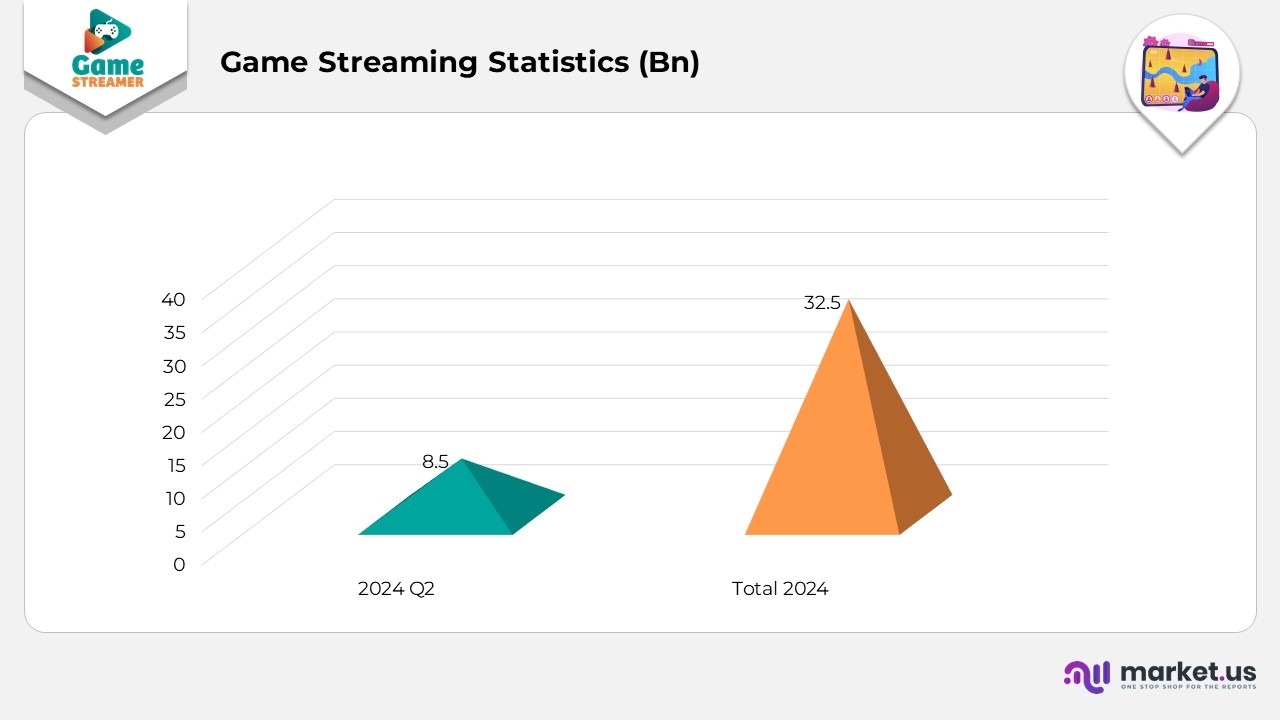
- In the second quarter of 2024, viewers across the globe consumed 8.5 billion hours of live-streamed content.
- The total viewing time reached 32.5 billion hours in 2024, reflecting a 12% increase from 2023 and doubling the figures from 2019.
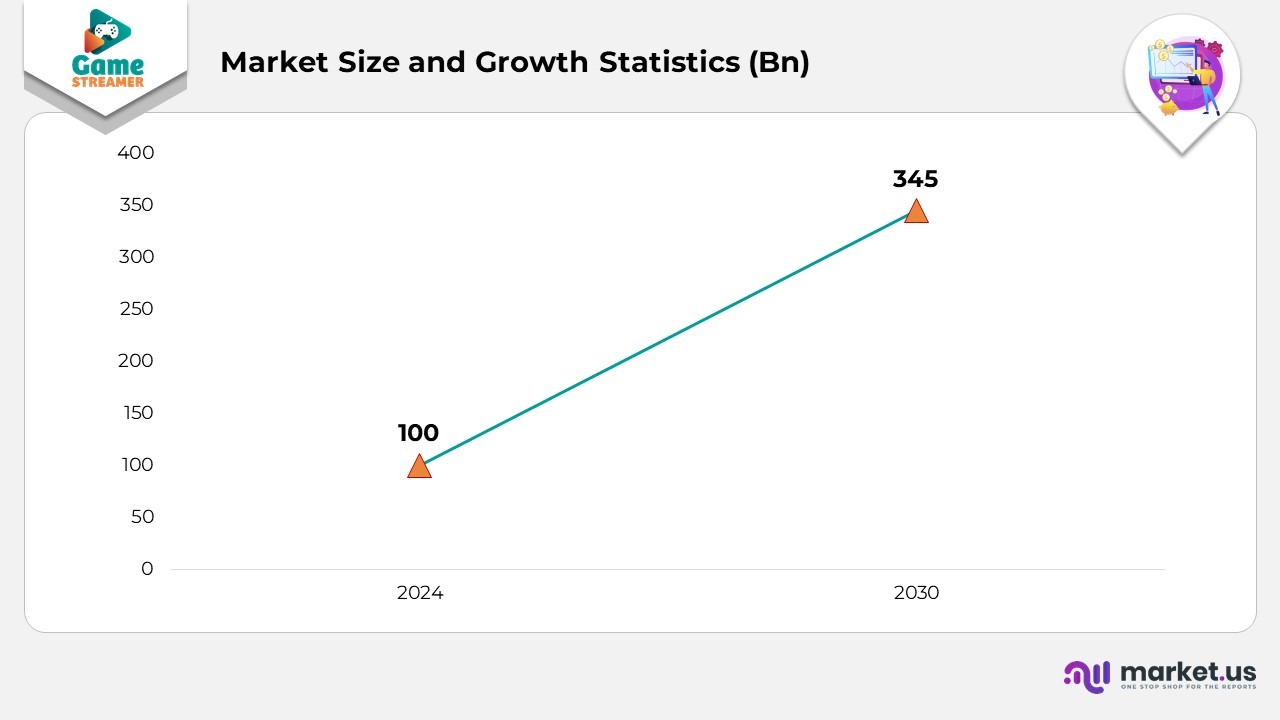
- The global market for live streaming is estimated to be valued at around $100 billion in 2024, with projections indicating it could grow to $345 billion by 2030, representing a compound annual growth rate (CAGR) of 23%.
- Live streaming has now become the third most favored format for video content (following music videos and viral clips), engaging approximately 27.7% of internet users on a weekly basis.
- Viewers dedicate eight times more time to watching live videos compared to on-demand videos, with an average live viewing session lasting about 25 minutes.
- Twitch continues to be the leading platform in terms of watch time, accounting for roughly 61% of all live-stream hours in 2024, while YouTube captures about 23%, and emerging platforms like Kick hold nearly 6% of the market share.
- In terms of user reach, YouTube stands as the global leader, with 52% of live stream viewers utilizing the platform, followed by Facebook at 42.6%, along with Instagram and TikTok.
Market Size and Growth Statistics
- The global live streaming sector is experiencing remarkable growth, having surged significantly since 2020.
- Industry experts project that the worldwide live streaming market will reach between $99 and $100 billion by 2024. To put this into perspective, this represents approximately a fourfold increase compared to five years prior.
- Looking forward, the outlook is exceptionally positive; one forecast anticipates the market will grow to $345 billion by 2030, maintaining an annual growth rate exceeding 23%.
- This expansion is driven by both a rising number of viewers and innovative monetization strategies, including advertising revenue, subscriptions, virtual gifts, and the integration of e-commerce.
- This surge was partly triggered by the COVID-19 pandemic, which necessitated the transition of numerous events and activities to online platforms.
- Even with the resurgence of in-person events, live streaming continues to thrive.
- In fact, 2024 has seen a rebound in viewership following a plateau in the post-pandemic period; total hours viewed in 2024 increased by 12% year-on-year, marking the first rise since 2021.
UK Online Game Streaming Statistics
- The global revenue generated by the online gaming industry is anticipated to reach $27.97 billion by the year 2024.
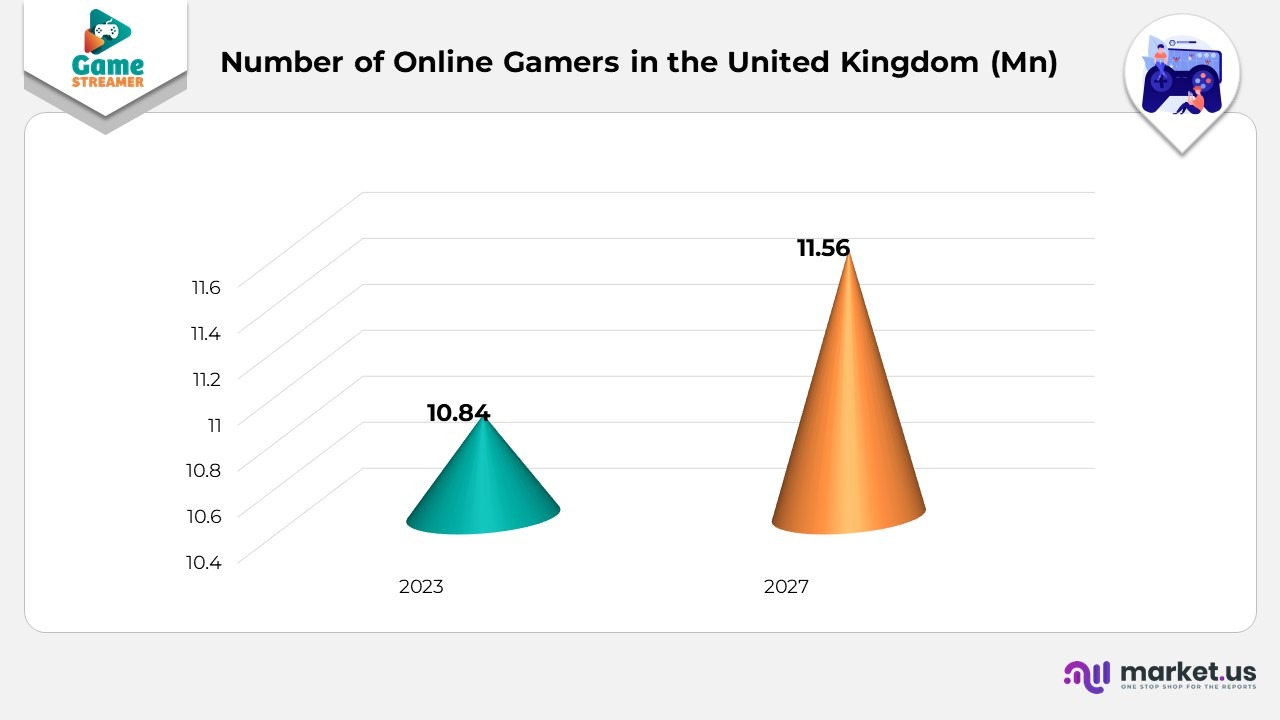
- The expected number of online gamers in the United Kingdom is projected to rise to 11.56 million by 2027, an increase from 10.84 million in 2023.
- In 2024, it is estimated that 80% of gamers aged 16 to 24 will participate in online gaming.
- Although this age group has the lowest online participation, nearly half (48%) of gamers aged 65 and above are engaged in online gaming.
- In the UK, 50% of women called themselves gamers, compared to 57% of men.
- Mobile devices are the preferred platform for gaming, with more than a third (34%) of users stating that this is their main method of access.
- Approximately 60% of gamers in the UK claim that playing games enhances their happiness.
- The global esports market is expected to reach a valuation of $10.91 billion by 2032.
- Dota 2 is recognized as the most popular esports game globally, featuring a total tournament prize pool of $6.84 million from January to June 2025.
- Esports competitors from China are the highest earners in the industry, collectively earning over $320 million.
UK Online Game Streaming by Gender Statistics
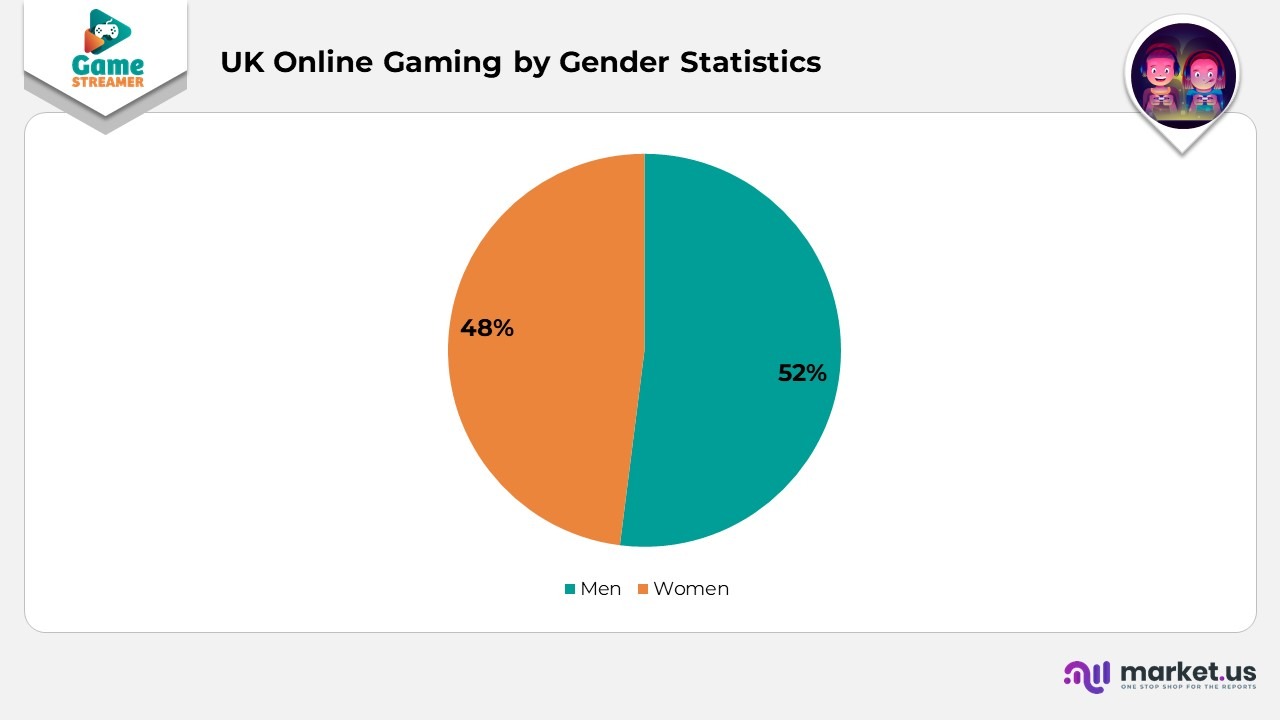
- Recent statistics on online gaming have shown that men constitute the largest segment of gamers in the UK, representing 52% of the gaming demographic, while women account for 48%.
- From 2013 to 2023, the proportion of male gamers in the UK has consistently been higher than that of female gamers.
- Nevertheless, both demographics exceeded three-fifths in the same year (2020), with women witnessing a significantly larger increase between 2019 and 2020 (31 percentage points compared to 15 percentage points for men).
- Notably, this year marked the first instance on record where the percentage of female video gamers surpassed that of their male counterparts (63% compared to 61%).
Online Game Streaming Statistics
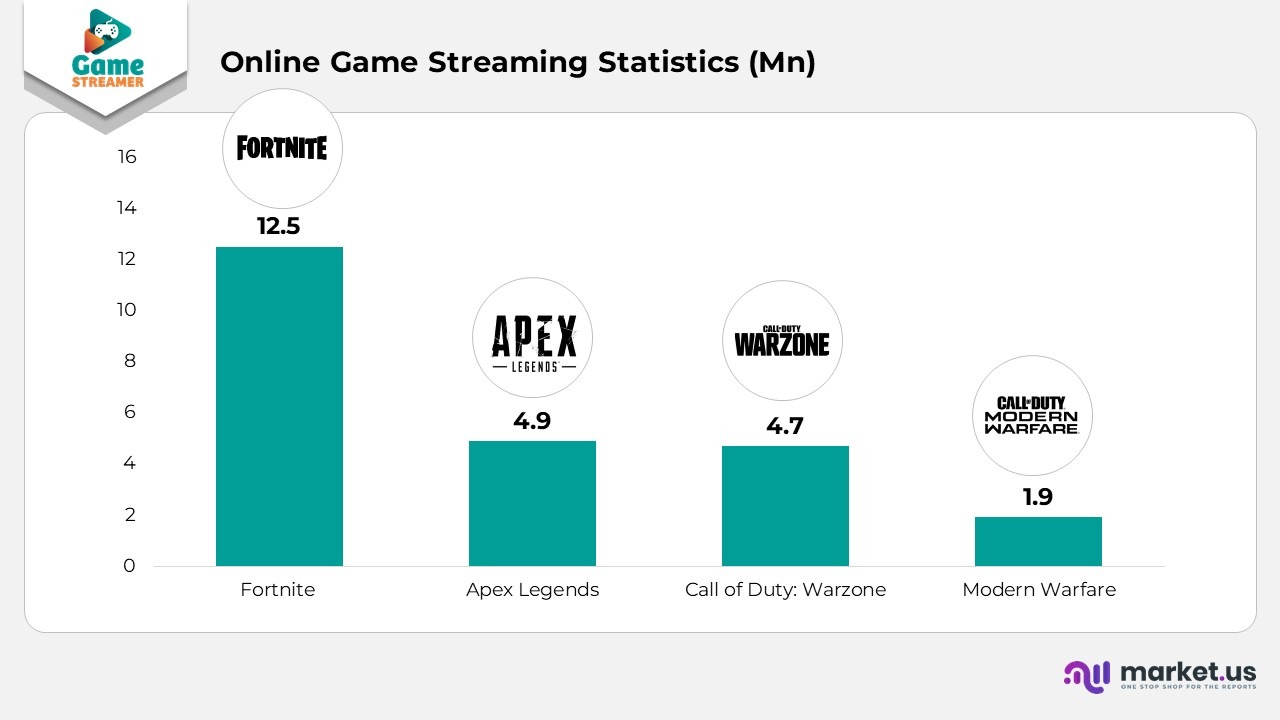
- Fortnite is acknowledged as the most popular online game globally, accumulating 12,507,768 weekly viewer hours on the streaming service Twitch.
- The second most popular game, Apex Legends, attracts less than half of Fortnite’s weekly viewer hours, amounting to over 4.9 million.
- The Call of Duty franchise stands out by having two titles listed among the top nine most popular battle royale games.
- The leading title in this category is Call of Duty: Warzone, which holds the third position with more than 4.7 million weekly viewer hours on Twitch.
- This number is more than double that of its counterpart, Modern Warfare, which is ranked fourth with just under 1.9 million weekly viewers.
- Recent data for 2024 reveals that 57% of men in the UK are involved in video gaming, showing an increase of four percentage points from the previous year, although it represents a decrease of six points from 2021. At the same time, exactly half of women in the UK engage in video gaming.
- This indicates a slight drop from 51% in 2023 and is six percentage points lower than the statistics recorded in 2021.
Global ESports Industry Statistics
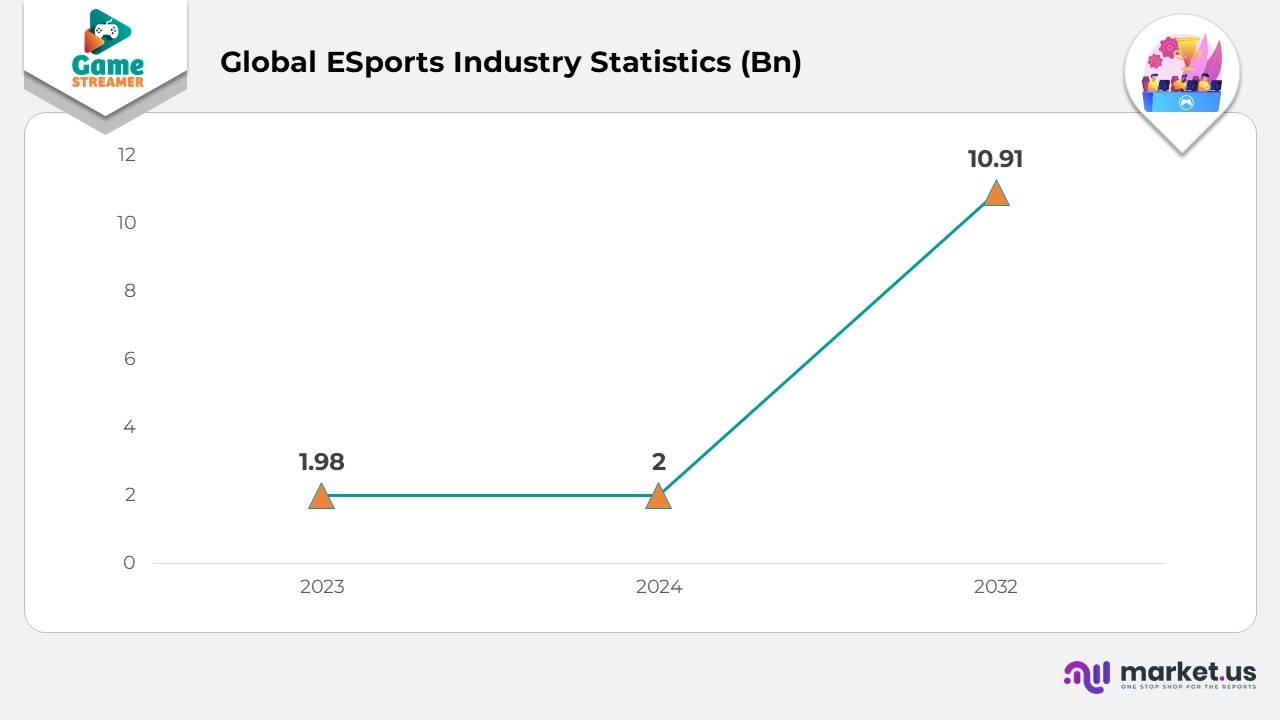
- In 2023, the global eSports market was valued at around $1.98 billion and is projected to exceed the $2 billion threshold in 2024.
- From 2022 to 2023, the market experienced a growth of 20.73% (+$340 million).
- By 2032, it is anticipated that the global eSports market will reach an estimated value of $10.91 billion, representing a 451% increase from 2023 ($1.98 billion).
Global ESports Team Statistics
- The esports team with the highest earnings globally is Team Liquid, a distinction it has maintained since 2017. As of June 2025, the cumulative earnings of this team amount to an astonishing $54,861,978, which translates to an average of $18,560 earned for each tournament participated in.
- In the second position is OG. Although it has earned approximately $16 million less than Team Liquid, totaling $38,740,932, OG has entered into fewer than one-tenth of the tournaments in comparison.
- OG has the lowest tournament participation among the top five highest-earning teams, resulting in average winnings of $19n0,842 per tournament, which is over ten times greater than the earnings per tournament of Team Liquid.
- Team Spirit is the only other international esports team that has surpassed $30 million in earnings. Over the course of 300 tournaments, the team has secured $33,926,603, averaging $113,209 per tournament.
Twitch Key Statistics
- In 2024, Twitch generated an estimated revenue of $1.8 billion.
- During the same year, Twitch recorded an average of 2.37 million concurrent viewers.
- Each month, 7.3 million users engage in streaming on the platform.
- A total of 20.8 billion hours of content were consumed on Twitch in 2024.
- Twitch emerged as the leading video streaming platform for video games, surpassing YouTube Gaming in hours watched by more than double.
- Ninja held the title of the most followed streamer on Twitch, with ibai and AuronPlay ranking second and third respectively.
- League of Legends remains the most streamed game on Twitch throughout its history, followed closely by Grand Theft Auto V.
Recent Developments
- Amazon introduced GameLift Streams in April 2025, enabling developers to stream directly to any device that supports WebRTC, thereby potentially lowering infrastructure expenses.
- In December 2024, Xbox Cloud Gaming was incorporated into LG’s webOS 24+ smart TVs, eliminating the necessity for external consoles for streaming.
Game Streaming Future Predictions
- In 2026, it is anticipated that game streaming will maintain its upward growth trend, propelled by advancements in infrastructure such as 5G and cloud technologies, resulting in enhanced quality and accessibility of gaming experiences across a wider range of devices.
- The worldwide cloud gaming market is forecasted to attain nearly $10.5 billion by 2027, with an estimated compound annual growth rate (CAGR) of about 29.1%.
Conclusion
The game streaming sector is witnessing substantial growth, anticipated to increase markedly in the forthcoming years owing to elements such as enhanced internet infrastructure, cloud gaming, and subscription-based models. Additionally, the market is influenced by heightened viewer engagement. The emergence of eSports, and changing gamer demographics, characterized by a larger audience and a more varied participant profile.