


Report Overview
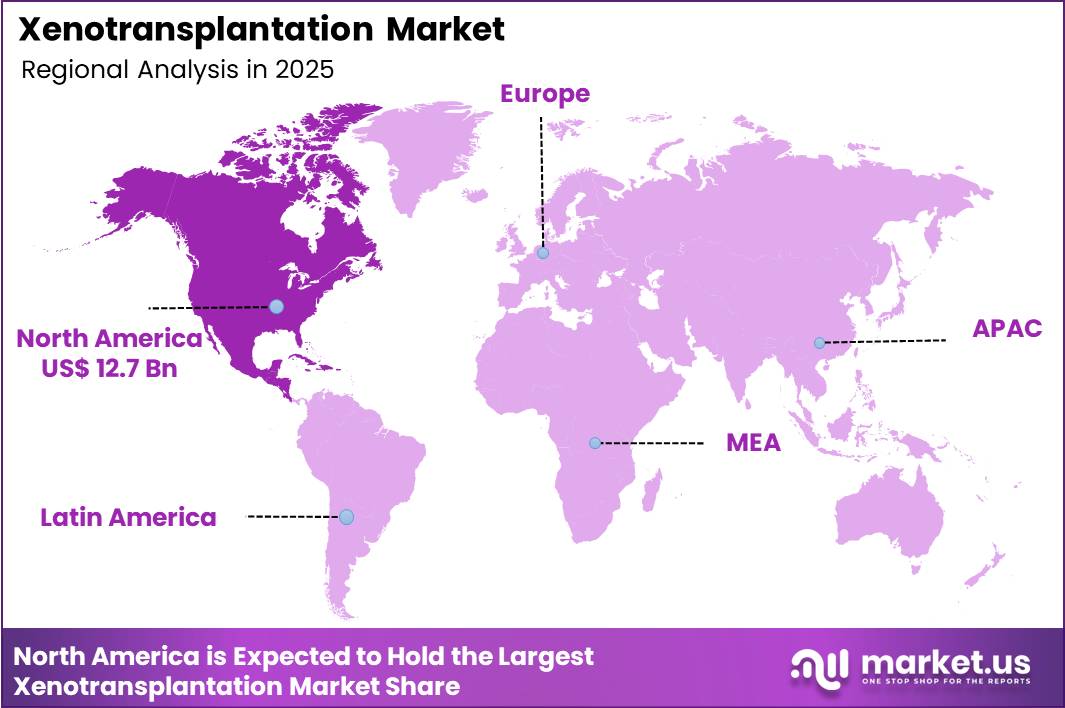
Global Xenotransplantation Market size is expected to be worth around US$ 66.5 Billion by 2035 from US$ 29.2 Billion in 2025, growing at a CAGR of 8.6% during the forecast period from 2026 to 2035. In 2025, North America led the market, achieving over 43.6% share with a revenue of US$ 12.7 Billion.
Xenotransplantation refers to the transplantation of living cells, tissues, or organs from one species to another, primarily from genetically modified animals such as pigs into humans. The technology is emerging as a potential solution to the severe global shortage of donor organs for transplantation. According to the World Health Organization, more than 150,000 organ transplants are performed globally each year however, this fulfills less than 10% of the total global transplantation requirement, leaving millions of patients on waiting lists for life-saving organs.

The growing burden of chronic diseases such as kidney failure, cardiovascular disorders, diabetes, and liver diseases has significantly increased the demand for organ transplantation worldwide. Conventional organ donation systems continue to face limitations due to insufficient donor availability, ethical concerns, and increasing transplantation waiting times. As a result, xenotransplantation has gained substantial scientific and governmental attention as an alternative therapeutic approach.
Recent advancements in gene-editing technologies, particularly CRISPR/Cas9, have accelerated the development of xenotransplantation by enabling precise genetic modification of pigs to reduce immune rejection and improve organ compatibility with humans.
Research supported by the National Institutes of Health demonstrated that genetically modified pig hearts transplanted into baboons survived for as long as 945 days, representing a major milestone in preclinical xenotransplantation research. Furthermore, in 2021, researchers successfully attached a genetically altered pig kidney to a human recipient without immediate immune rejection, highlighting the increasing clinical feasibility of xenotransplantation.
Government institutions and public healthcare organizations are increasingly supporting xenotransplantation research through funding initiatives and regulatory frameworks. The NIH allocated more than USD 100 million toward xenotransplantation-related research programs between 2018 and 2022, reflecting growing public-sector commitment to addressing organ shortages through advanced biotechnology. Additionally, ongoing innovations involving transgenic pigs, immune-suppression therapies, and genome engineering are expected to support future clinical applications.
Key Takeaways
- Market Size: Global Xenotransplantation Market size is expected to be worth around US$ 66.5 Billion by 2035 from US$ 29.2 Billion in 2025.
- Market Share: The market growing at a CAGR of 8.6% during the forecast period from 2026 to 2035.
- Cell Type Analysis: The genetically modified cells segment dominated the xenotransplantation market and accounted for 63.1% of the market share in 2025.
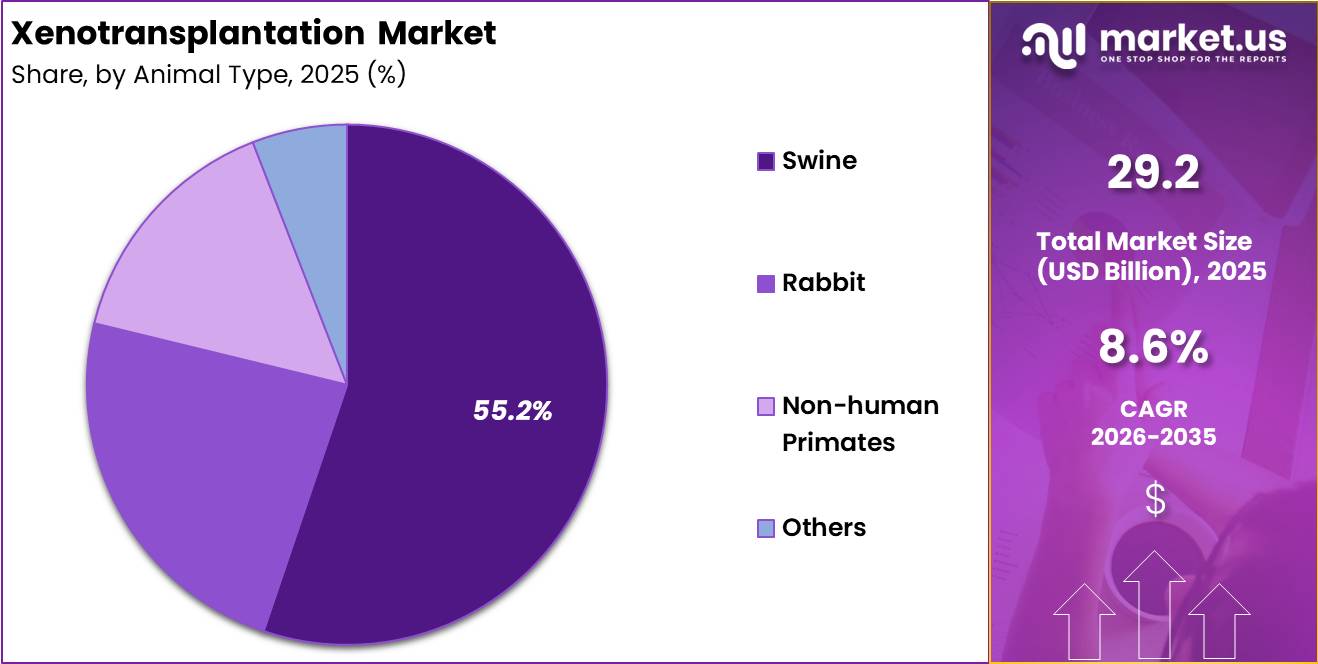
- Animal Type Analysis: The swine segment held the largest share of the xenotransplantation market, accounting for 55.2% in 2025.
- Application Analysis: The transplants segment dominated the xenotransplantation market with a 48.9% market share in 2025.
- End User Analysis: The hospitals segment accounted for the largest share of the xenotransplantation market, representing 39.4% in 2025.
- Regional Analysis: In 2025, North America led the market, achieving over 43.6% share with a revenue of US$ 12.7 Billion.
Cell Type Analysis
The genetically modified cells segment dominated the xenotransplantation market and accounted for 63.1% of the market share in 2025. The dominance of this segment is attributed to the increasing adoption of gene-editing technologies to reduce immunological rejection and improve compatibility between animal-derived tissues and human recipients.
Advances in CRISPR-based genome engineering and transgenic modification techniques have significantly enhanced the viability and safety profile of genetically modified cells in xenotransplantation procedures. The growing focus on minimizing the risk of zoonotic disease transmission and improving long-term graft survival has further accelerated segment growth. In addition, rising investments in regenerative medicine and organ replacement research continue to support demand for genetically engineered cellular products.
The live cells segment is also expected to witness notable growth during the forecast period. Increasing research activities involving viable animal-derived cells for tissue regeneration, pancreatic islet transplantation, and therapeutic applications are contributing to segment expansion. The rising prevalence of chronic diseases and organ failure cases globally is anticipated to create sustained demand for live-cell xenotransplantation therapies in the coming years.
Animal Type Analysis
The swine segment held the largest share of the xenotransplantation market, accounting for 55.2% in 2025. The segment growth is primarily driven by the physiological and anatomical similarities between pigs and humans, making swine-derived organs and tissues highly suitable for transplantation purposes. Swine are considered the most commercially viable donor animals due to their rapid breeding cycles, manageable size, and ease of genetic modification.
Increasing advancements in genetically engineered pigs designed to reduce immune rejection and improve transplant compatibility have further strengthened segment dominance. Moreover, the rising shortage of human donor organs has accelerated the adoption of porcine-derived tissues in clinical research and transplantation studies.
The rabbit segment is expected to experience moderate growth owing to its extensive use in experimental xenotransplantation studies and biomedical research applications. Non-human primates also represent a significant segment due to their close genetic relationship with humans, although ethical concerns and regulatory restrictions may limit widespread utilization. The others segment includes sheep, goats, and other animal species used in specialized transplantation research and preclinical investigations.
Application Analysis
The transplants segment dominated the xenotransplantation market with a 48.9% market share in 2025. The growth of this segment is driven by the increasing global burden of organ failure and the widening gap between organ demand and donor availability. Xenotransplantation-based transplant procedures are gaining significant attention as a potential long-term solution to address organ shortages in heart, kidney, liver, and pancreatic transplants.
Continuous advancements in immunosuppressive therapies, genetic engineering technologies, and organ preservation methods are further supporting the adoption of xenotransplantation in clinical transplantation applications. Moreover, increasing clinical trials and regulatory support for xenograft-based organ transplantation are expected to strengthen market growth during the forecast period.
The pharmaceutical segment is anticipated to register substantial growth due to the increasing use of xenotransplantation models in drug discovery, toxicity testing, and disease research. Pharmaceutical companies are utilizing animal-derived tissues and organs to enhance preclinical evaluation processes and improve therapeutic development efficiency. The others segment includes research-based applications, academic investigations, and experimental therapeutic procedures involving xenogeneic tissues and cellular products across emerging healthcare domains.
End User Analysis
The hospitals segment accounted for the largest share of the xenotransplantation market, representing 39.4% in 2025. The dominance of this segment is attributed to the increasing number of organ transplantation procedures performed in hospitals and the growing availability of advanced surgical infrastructure for xenotransplantation therapies.
Hospitals are increasingly adopting innovative transplantation technologies and collaborating with biotechnology firms and research institutions to improve patient outcomes. Rising incidences of end-stage organ failure, chronic kidney disease, and cardiovascular disorders are further contributing to the growing demand for xenotransplantation procedures within hospital settings. Additionally, favorable reimbursement frameworks and increasing healthcare expenditure in developed economies are supporting segment expansion.
Pharmaceutical and biotechnology companies are expected to witness considerable growth due to rising investments in xenotransplantation research, genetic engineering, and regenerative medicine development. Research organizations also play a critical role in advancing preclinical and clinical studies related to xenogeneic organ transplantation and immunological compatibility. The others segment includes specialty clinics, academic institutes, and contract research organizations involved in transplantation-related innovation and experimental therapeutic development.
Key Market Segments
By Cell Type
- Live Cells
- Genetically Modified Cells
By Animal Type
- Swine
- Rabbit
- Non-human Primates
- Others
By Application
- Pharmaceutical
- Transplants
- Others
By End User
- Hospitals
- Pharmaceutical & Biotechnology Companies
- Research Organizations
- Others
Driving Factors
The increasing shortage of human donor organs is a major driver for the xenotransplantation market. Globally, the gap between organ demand and supply continues to widen due to the rising prevalence of chronic kidney disease, cardiovascular disorders, diabetes, and liver failure. According to the U.S. Food and Drug Administration (FDA), nearly 10 patients die every day in the United States while waiting for organ transplants.
Additionally, the National Institutes of Health (NIH) reported that approximately 20 individuals die daily awaiting suitable donor organs. More than 100,000 patients remain on transplant waiting lists in the U.S., with kidney transplants accounting for the largest share of unmet demand. Xenotransplantation, particularly involving genetically modified pig organs, is being explored as a long-term solution to this shortage.
Scientific advancements in CRISPR gene-editing technology and immunosuppressive therapies have significantly improved graft compatibility and survival rates. The successful transplantation of genetically modified pig kidneys and hearts into human recipients during experimental procedures has strengthened confidence in commercial and clinical development. Growing public funding for transplantation research and increasing healthcare expenditure are further accelerating market expansion globally.
Trending Factors
A major trend shaping the xenotransplantation market is the increasing adoption of genetically engineered pig organs for clinical transplantation research. Biotechnology innovations such as CRISPR-Cas9 gene editing are enabling researchers to remove animal genes responsible for immune rejection and insert human-compatible genes into donor pigs.
In 2024, Massachusetts General Hospital performed the world’s first transplant of a genetically edited pig kidney into a living human recipient, involving 69 genomic edits designed to improve compatibility and reduce infection risk. This milestone demonstrated the growing feasibility of xenotransplantation in clinical settings. Furthermore, regulatory agencies such as the [FDA] are increasingly supporting investigational clinical trials through expanded access programs and guidance frameworks.
Another significant trend is the growing focus on long-term organ survival and reduction of immune rejection. Research institutions including the NIH Intramural Research Program are investing heavily in transplantation immunology studies. Additionally, artificial intelligence and genomic analytics are being integrated into donor organ screening and monitoring systems. Increasing collaboration between hospitals, biotechnology companies, and government-funded research institutes is accelerating technological progress and improving clinical outcomes in xenotransplantation research worldwide.
Restraining Factors
Concerns associated with immune rejection, cross-species infection, and ethical considerations remain major restraints for the xenotransplantation market. Despite advancements in genetic engineering, the human immune system can still recognize animal organs as foreign tissues, resulting in acute or chronic rejection. According to the FDA Public Health Service Guideline on Xenotransplantation, one of the primary concerns is the potential transmission of animal-derived infectious agents, including porcine endogenous retroviruses (PERVs), into humans.
These zoonotic risks could potentially create broader public health challenges if not effectively controlled. Furthermore, xenotransplantation procedures require highly specialized facilities, advanced genetic modification capabilities, and long-term patient monitoring, leading to extremely high treatment costs. Ethical debates regarding animal welfare and the genetic modification of pigs also continue to influence regulatory approvals and public acceptance.
Clinical procedures remain largely experimental, with limited long-term survival data available for transplanted animal organs in humans. Regulatory agencies globally maintain stringent approval requirements due to biosafety concerns. In addition, immunosuppressive therapies used after transplantation can increase susceptibility to infections and other complications. These scientific, ethical, and regulatory challenges collectively slow large-scale commercialization and limit widespread clinical adoption of xenotransplantation technologies.
Opportunity
The growing burden of organ failure diseases and increasing investment in regenerative medicine present significant opportunities for the xenotransplantation market. Chronic kidney disease alone affects hundreds of millions of individuals globally, creating substantial unmet demand for transplantable organs. According to the National Kidney Foundation, patients are increasingly supportive of xenotransplantation clinical trials due to the severe shortage of donor kidneys.
Advances in genome engineering technologies are enabling the development of safer and more compatible donor animals, particularly genetically modified pigs. Future opportunities are also emerging in pancreatic islet cell transplantation for diabetes treatment, heart transplantation, and liver support therapies.
Several healthcare institutions and biotechnology companies are actively expanding clinical research programs, while governments and public health agencies are increasing funding support for transplantation science. The expansion of clinical trials could accelerate regulatory approvals over the next decade.
In addition, the development of dedicated pathogen-free animal breeding facilities and advanced organ preservation technologies is expected to improve transplantation success rates. The ability of xenotransplantation to reduce long transplant waiting periods and lower dialysis dependency may significantly reduce long-term healthcare costs. As healthcare systems seek sustainable solutions for organ shortages, xenotransplantation is expected to create substantial opportunities for innovation, clinical adoption, and healthcare infrastructure development globally.
Regional Analysis
In 2025, North America dominated the Xenotransplantation Market, accounting for over 43.6% of the global market share and generating approximately US$ 12.7 Billion in revenue. The regional market growth is primarily driven by the strong presence of advanced healthcare infrastructure, increasing investments in biotechnology research, and rising organ transplant demand across the United States and Canada.
Favorable government support for regenerative medicine and xenotransplantation clinical studies has further accelerated market expansion in the region. In addition, the presence of leading biotechnology companies, research institutes, and academic collaborations has strengthened innovation in genetically modified animal organs and tissue transplantation technologies.
Europe represented the second-largest market share, supported by increasing research activities, favorable regulatory initiatives, and growing awareness regarding organ shortages. Countries such as Germany, the United Kingdom, and France are actively investing in advanced transplantation technologies and preclinical research programs.
The Asia Pacific region is expected to witness the fastest growth during the forecast period owing to expanding healthcare expenditure, rising prevalence of chronic diseases, and increasing focus on biotechnology advancements in countries including China, Japan, and South Korea. Meanwhile, Latin America and the Middle East & Africa are projected to experience gradual growth due to improving healthcare access and growing medical research investments.
Key Regions and Countries
North America
- The US
- Canada
Europe
- Germany
- France
- The U.K.
- Italy
- Spain
- Russia & CIS
- Rest of Europe
Asia Pacific
- China
- India
- Japan
- South Korea
- ASEAN
- Australia & New Zealand
- Rest of Asia Pacific
Middle East & Africa
- GCC
- South Africa
- Rest of Middle East & Africa
Latin America
- Brazil
- Mexico
- Rest of Latin America
Key Players Analysis
The Xenotransplantation Market is characterized by the presence of biotechnology companies, research institutions, and pharmaceutical organizations focused on developing genetically modified animal organs and advanced transplantation technologies.
Key market players are actively investing in research and development activities to improve organ compatibility, reduce immune rejection risks, and enhance transplantation success rates. Strategic collaborations with academic institutions and healthcare organizations have become a major growth strategy adopted by industry participants to accelerate clinical trials and commercialization activities.
Companies are increasingly focusing on gene-editing technologies, including CRISPR-based modifications, to develop safer and more effective xenotransplantation procedures. In addition, rising investments in regenerative medicine and organ preservation technologies are strengthening competitive positioning within the market.
Several players are also expanding their product pipelines through partnerships, mergers, and licensing agreements to gain technological expertise and broaden their global presence. The competitive landscape remains innovation-driven, with continuous advancements in immunosuppressive therapies and bioengineered organs expected to create significant growth opportunities during the forecast period.
Market Key Players
- eGenesis, Inc.
- Novartis AG
- United Therapeutics Corporation
- Revivicor, Inc.
- Xenotherapeutics
- Miromatrix Medical Inc.
- Makana Therapeutics
- Asterias Biotherapeutics
- UC Davis Health
- Lung Biotechnology PBC
- Harvard Bioscience
- CRISPR Therapeutics
- Editas Medicine
- Sangamo Therapeutics
- Recombinetics, Inc.
- Others
Recent Developments
- February 2025 — United Therapeutics Corporation received FDA clearance to begin a clinical trial for its genetically edited pig kidney transplant program, with an initial group of six patients and a possible expansion to 50 patients. This was a major commercial and clinical step for the xenotransplantation field because it moved the company closer to real-world patient use.
- February 2025 — eGenesis, Inc. also got FDA approval to start clinical studies of pig organ transplants for kidney patients, beginning with three patients. The move strengthened the competitive race between leading xenotransplantation developers and showed rising regulatory support for the category.
- April 2025 – Makana Therapeutics entered into a collaborative research agreement with Tonix Pharmaceuticals to evaluate TNX-1500, an anti-CD40L monoclonal antibody, in combination with genetically engineered pig organs. The partnership was aimed at supporting preclinical and clinical xenotransplantation programs involving kidney, heart, and islet cell therapies. The collaboration reflected increasing industry focus on reducing immune rejection risks associated with xenotransplant procedures.
- June 2025 – Miromatrix Medical Inc., a subsidiary of United Therapeutics Corporation, announced the first patient treatment using a bioengineered external liver support system known as miroliverELAP. The therapy utilized a decellularized porcine liver scaffold combined with human liver cells and represented a major advancement in bioengineered organ technology. The procedure was performed in collaboration with Intermountain Health and demonstrated the growing commercial and clinical momentum of xenogeneic organ engineering platforms.
Report Scope
| Report Features | Description |
|---|---|
| Market Value (2025) | US$ 29.2 Billion |
| Forecast Revenue (2035) | US$ 66.5 Billion |
| CAGR (2026-2035) | 8.6% |
| Base Year for Estimation | 2025 |
| Historic Period | 2020-2024 |
| Forecast Period | 2026-2035 |
| Report Coverage | Revenue Forecast, Market Dynamics, Competitive Landscape, Recent Developments |
| Segments Covered | By Cell Type (Live Cells, Genetically Modified Cells) By Animal Type (Swine, Rabbit, Non-human Primates, Others) By Application (Pharmaceutical, Transplants, Others) By End User (Hospitals, Pharmaceutical & Biotechnology Companies, Research Organizations, Others) |
| Regional Analysis | North America – The US, Canada; Europe – Germany, France, U.K., Italy, Spain, Russia & CIS, Rest of Europe; Asia Pacific – China, India, Japan, South Korea, ASEAN, Australia & New Zealand, Rest of Asia Pacific; Middle East & Africa – GCC, South Africa, Rest of Middle East & Africa; Latin America – Brazil, Mexico, Rest of Latin America |
| Competitive Landscape | eGenesis, Inc., Novartis AG, United Therapeutics Corporation, Revivicor, Inc., Xenotherapeutics, Miromatrix Medical Inc., Makana Therapeutics, Asterias Biotherapeutics, UC Davis Health, Lung Biotechnology PBC, Harvard Bioscience, CRISPR Therapeutics, Editas Medicine, Sangamo Therapeutics, Recombinetics, Inc., Others, |
| Customization Scope | Customization for segments, region/country-level will be provided. Moreover, additional customization can be done based on the requirements. |
| Purchase Options | We have three licenses to opt for: Single User License, Multi-User License (Up to 5 Users), Corporate Use License (Unlimited User and Printable PDF) |





































