Report Overview
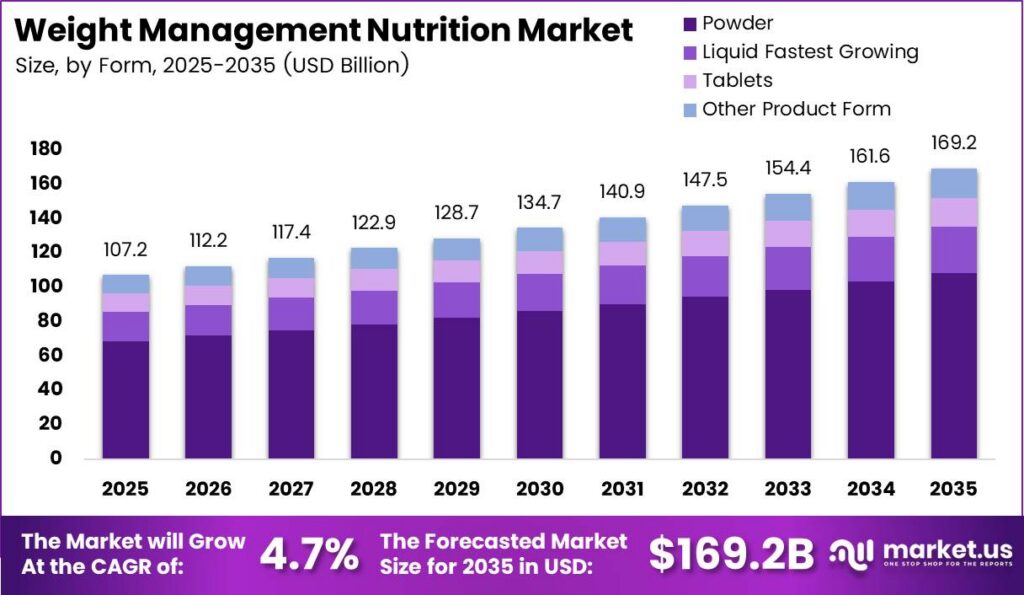
Global Weight Management Nutrition Market size is expected to be worth around USD 169.2 Billion by 2035 from USD 107.2 Billion in 2025, growing at a CAGR of 4.7% during the forecast period 2026 to 2035. Weight management nutrition products are scientifically formulated shakes, powders, bars, and clinical dietary supplements designed to regulate caloric intake, preserve lean muscle mass, and optimize human metabolic function during fat loss and weight maintenance.
The commercial industry connects dairy fractionators, botanical extractors, and contract manufacturers with hospital bariatric clinics, telehealth weight platforms, and mass retail pharmacies. According to World Health Organization (WHO), global obesity reached 1.1 billion people in 2024, while 2.6 billion adults aged 18 and older, or 45% of adults, were overweight, including 940 million obese adults. Consequently, healthcare providers and consumers must adopt structured medical nutrition regimens, creating recurring subscription revenue for specialized formulators.
Key Takeaways
- The global Weight Management Nutrition Market was valued at USD 107.2 Billion in 2025 and will reach USD 169.2 Billion by 2035.
- The global market will expand at a compound annual growth rate of 4.7% during the forecast period from 2026 to 2035.
- By Type, the Weight Loss / Fat Reduction sub-segment led the market with a 41.23% share in 2025, while Metabolic Health & Blood Sugar Support is the fastest-growing segment.
- By Form, the Powder sub-segment held the largest market share of 63.56% in 2025, whereas the Liquid segment will record the fastest growth through 2035.
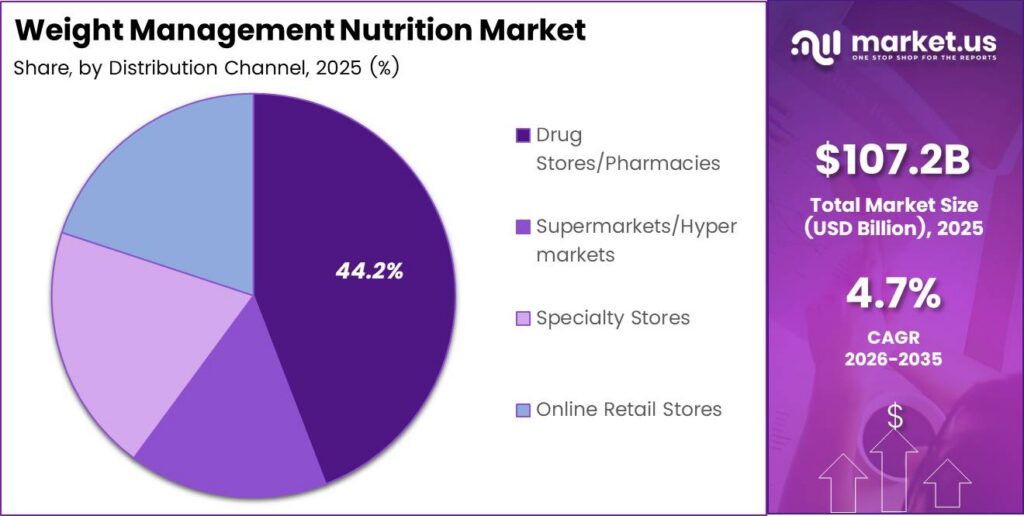
- By Distribution Channel, Drug Stores/Pharmacies captured a dominant 44.23% share in 2025, while Supermarkets/Hypermarkets represent the fastest-growing retail channel.
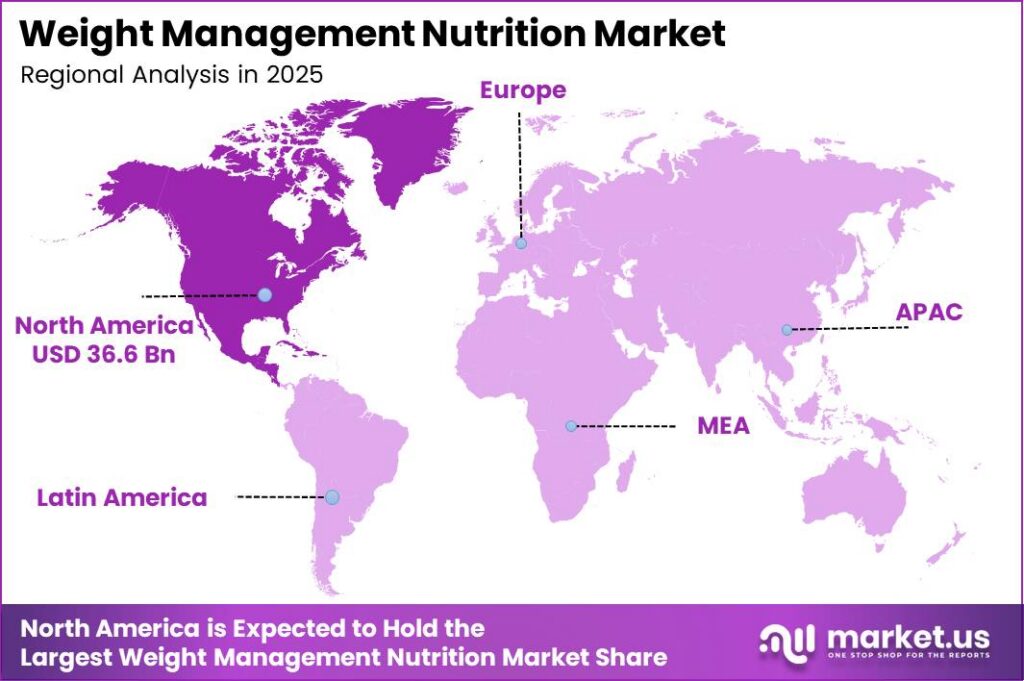
- North America dominated the global landscape with a 34.21% market share valued at USD 36.6 Billion in 2025, while Europe is the fastest-growing region.
National public health agencies and insurance systems actively fund preventative nutritional programs to curb sovereign healthcare deficits caused by metabolic disease. As reported by OECD, 54% of adults across member nations are overweight or obese, and obesity-related illnesses consume 8% of total health budgets and reduce GDP by 3.3%. Therefore, governments are tightening sugar regulations and subsidizing clinical meal replacements, which forces food manufacturers to reformulate legacy snacks into high-protein metabolic products.
Multinational food corporations are executing large acquisitions to capture high-margin functional meal replacement brands rather than building new product lines internally. In September 2026, Danone S.A. completed the acquisition of UK complete nutrition company Huel for EUR 1.0 billion, or USD 1.1 billion, adding over GBP 250 million in annual revenue across 25,000 retail stores. This signals that conglomerates will pay premium valuations for established direct-to-consumer brands with strong retail velocity.
North America leads global consumption with a 34.21% market share in 2025 because extensive telehealth prescription networks and gym chains drive high per-capita supplement spending. Data from World Health Organization (WHO) shows that global economic costs of overweight and obesity will reach USD 3 trillion annually by 2030 and exceed USD 18 trillion by 2060, while elevated BMI causes 3.7 million noncommunicable disease deaths yearly. As a result, North American employers and insurers heavily reimburse clinical nutrition protocols to lower corporate medical claims.
Major European nutrition groups are also consolidating ready-to-drink meal replacement specialists to defend shelf space in convenience and grocery channels. In July 2026, Nestle S.A. acquired the remaining 51% ownership stake in meal-replacement beverage maker yfood Labs GmbH to reach 100% control, integrating a business generating EUR 150 million in 2025 sales. This means independent functional beverage startups face intense pressure to scale distribution quickly or sell to global dairy and nutrition leaders.
Type Analysis
Weight Loss / Fat Reduction dominates with 41.23% share in 2025 due to widespread consumer demand for thermogenics.
In 2025, Weight Loss / Fat Reduction held a 41.23% share in the Type segment of the Weight Management Nutrition Market. National Institutes of Health (NIH) Office of Dietary Supplements found that 15% of U.S. adults, including 21% of women and 10% of men, have used a weight-loss supplement, ranking fat reduction among the top 20 usage reasons. Thermogenic compounds like green tea catechins and carnitine chemically accelerate lipid oxidation during caloric deficits. Therefore, supplement brands maintain high cash flow from core fat burners to fund clinical metabolic research.
Appetite Control & Satiety Management products serve consumers seeking non-stimulant hunger suppression between meals to prevent caloric overconsumption. Based on European Food Safety Authority (EFSA) data, scientific evaluations for novel satiety claims under Article 13(5) of Regulation (EC) No 1924/2006, including the October 20, 2026 Appethyl spinach thylakoid opinion, follow a strict 5-month review window. Viscous soluble fibers mechanically expand in gastric fluid and delay stomach emptying to trigger fullness hormones. Consequently, ingredient suppliers with patented clinical satiety data command premium B2B licensing fees from consumer brands.
Metabolic Health & Blood Sugar Support represents the fastest-growing product type as shoppers target insulin sensitivity rather than simple calorie counting. European Food Safety Authority (EFSA) indicates that its February 20, 2026 scientific opinion under Regulation (EC) No 1924/2006 requires 4 grams of oat or barley beta-glucans per 30 grams of available carbohydrates to claim postprandial glucose reduction. High-viscosity beta-glucans form an intestinal gel layer that slows enzymatic starch digestion and prevents insulin spikes. This means formulators must increase active fiber payloads per serving to secure authorized glycemic labels in Europe.
Form Analysis
Powder dominates with 63.56% share in 2025 due to low per-serving cost and versatility.
In 2025, Powder held a 63.56% share in the Form segment of the Weight Management Nutrition Market. Figures from U.S. Department of Agriculture (USDA) show that U.S. monthly dry whey production reached 75.1 million pounds in August 2026, up 8.2% year-over-year, alongside 39.76 million pounds of whey protein concentrate and 17.08 million pounds of whey protein isolate. Spray-dried protein and fiber powders eliminate water shipping weight and provide 24-month shelf stability without chemical preservatives. Therefore, bulk powder tubs remain the primary margin anchor for mass-market nutrition brands.
Liquid formulations represent the fastest-growing product form because busy commuters and pharmacological weight-loss patients prefer convenient, portion-controlled beverages. According to U.S. Securities and Exchange Commission (SEC) filings, BellRing Brands grew Premier Protein ready-to-drink shake net sales by 16.8% in fiscal 2025 and expanded penetration by 2.5 percentage points to 22% of U.S. households, before expanding distribution points by 20% and launching 42-gram Ultimate shakes with USD 10 million in 2026 capital expenditure. Aseptic ultrafiltration mechanically concentrates milk proteins into smooth liquids without chalky sediment. Consequently, beverage brands must lock in multi-year co-packing contracts to prevent retail out-of-stocks.
Tablets provide precise micro-dosing for concentrated botanical extracts, lipotropic compounds, and metabolic cofactors that taste bitter in powders or liquids. As reported by National Institutes of Health (NIH) Office of Dietary Supplements, U.S. consumers spend USD 2.1 billion annually on weight-loss dietary supplements in pill form, including tablets and capsules, within a market where 52% of adults take supplements regularly. Direct-compression tableting mechanically binds hydrophobic plant extracts with enteric coatings to ensure targeted intestinal release. This means contract manufacturers with bilayer tablet presses can capture steady high-volume orders from pharmacy brands.
Distribution Channel Analysis
Drug Stores/Pharmacies dominates with 44.23% share in 2025 due to clinical trust and pharmacist guidance.
In 2025, Drug Stores/Pharmacies held a 44.23% share in the Distribution Channel segment of the Weight Management Nutrition Market. Data from U.S. Census Bureau shows that U.S. Health and Personal Care Stores generated USD 340,615 million in retail sales during the first 9 months of 2026, with Pharmacies and Drug Stores capturing USD 34,759 million of the USD 39,535 million September 2026 total, or 87.9%. Patients collecting metabolic prescriptions at pharmacy counters purchase companion protein shakes during the same visit to prevent muscle loss. Therefore, nutrition brands must fund co-located pharmacy endcaps to capture clinical buyers.
Supermarkets/Hypermarkets represent the fastest-growing distribution channel as mainstream grocery shoppers integrate high-protein weight management products into weekly household food budgets. U.S. Census Bureau found that U.S. Food and Beverage Stores recorded USD 751,682 million in sales during the first 9 months of 2026, with Supermarkets and Grocery Stores generating USD 683,438 million, up 1.0% year-over-year, and USD 75,532 million in September 2026. High-turn grocery chilled aisles provide the refrigerated storage required for fresh ultrafiltered protein milkshakes. Consequently, manufacturers must offer promotional trade allowances to secure eye-level supermarket shelf facings.
Specialty Stores serve dedicated fitness consumers and body-composition buyers who demand high-potency thermogenic and metabolic formulations with trained staff guidance. In November 2025, Iovate Health Sciences partnered with TSI Group to launch the MuscleTech EFF’N effervescent beadlet series, featuring 200 mcg Chromax chromium picolinate and 225 mg caffeine with 200 mg Alpha-GPC, exclusively across GNC specialty stores alongside Hydroxycut capsules containing 200 mg paraxanthine. Exclusive specialty retail launches allow brands to test premium price points before scaling into mass grocery chains. This creates higher gross margins for ingredient innovators.
Key Market Segments
By Type
- Weight Loss / Fat Reduction
- Appetite Control & Satiety Management
- Metabolic Health & Blood Sugar Support
- Meal Replacement & Structured Nutrition
- GLP-1 Companion Nutrition
- Gut Health & Microbiome Support
- Others
By Form
- Powder
- Liquid
- Tablets
- Other Product Form
By Distribution Channel
- Drug Stores/Pharmacies
- Supermarkets/Hypermarkets
- Specialty Stores
- Online Retail Stores
Regional Analysis
North America Dominates the Weight Management Nutrition Market with a Market Share of 34.21% in 2025, Valued at USD 36.6 Billion
North America held the largest market share of 34.21% in 2025, valued at USD 36.6 Billion, supported by widespread clinical obesity treatment and retail pharmacy density. Based on Centers for Disease Control and Prevention (CDC) data, the age-adjusted prevalence of overweight and obesity among U.S. adults aged 20 and older reached 72.4%, including 40.3% with obesity, 9.7% with severe obesity, and 46.4% obesity among adults aged 40 to 59. High chronic metabolic disease rates directly drive medical referrals for structured low-glycemic shakes and protein powders. Therefore, global formulators prioritize U.S. clinical and retail distribution to capture high-margin recurring revenue.
Europe is the fastest-growing region as national health authorities enforce strict front-of-pack nutrition labeling and consumers shift toward clean-label meal replacements. Eurostat indicates that 51.7% of European Union adults aged 18 and over were overweight in 2025, comprising 16.3% classified as obese and 35.4% as pre-obese, with 59.3% overweight prevalence among men versus 44.6% among women. Rising adult pre-obesity rates across European urban centers compel consumers to replace high-calorie convenience meals with portion-controlled functional drinks. Consequently, European manufacturers investing in EFSA-compliant fiber and protein claims will capture rapid supermarket distribution growth.
Asia-Pacific and Latin America offer substantial expansion potential as rapid urbanization, sedentary office work, and westernized diets accelerate metabolic disorders across emerging middle-class populations. Figures from Food and Agriculture Organization (FAO) show that adult obesity prevalence surged structurally between 1990 and 2022, climbing from 12.7% to 30.2% in Australia, tripling from 8.6% to 28.1% in Brazil, rising from 19.4% to 44.3% in Egypt, and reaching 75.2% in American Samoa. Expanding urban diabetes and obesity clinics across these countries require affordable, shelf-stable powder premixes. As a result, multinational brands are acquiring local premix factories in India and Brazil to bypass import tariffs.
Key Regions and Countries
North America
- US
- Canada
Europe
- Germany
- France
- The UK
- Spain
- Italy
- Rest of Europe
Asia Pacific
- China
- Japan
- South Korea
- India
- Australia
- Rest of APAC
Latin America
- Brazil
- Mexico
- Rest of Latin America
Middle East and Africa
- GCC
- South Africa
- Rest of MEA
Market Dynamics
The global weight management nutrition sector faces a structural tug-of-war between surging clinical companion demand and severe upstream dairy ingredient shortages. According to U.S. Department of Agriculture (USDA), U.S. end-of-month whey protein inventories dropped by 50% between 2023 and June 2026, while April 2026 total U.S. whey protein concentrate production fell 11.0% year-over-year to 38.8 million pounds. Because liquid whey supply depends strictly on commercial cheese production volumes, nutrition formulators must hike retail prices or blend plant proteins to protect operating margins.
Drivers
Clinical adoption of glucagon-like peptide-1 receptor agonists between 2024 and 2026 has shifted weight management nutrition demand from calorie-deprivation products toward muscle-preserving companion shakes. Because pharmacological appetite suppression cuts daily caloric intake by 30% to 45% and causes lean muscle to represent 25% to 40% of weight shed, four medical societies issued guidelines in 2024 and 2025 recommending 1.2 to 1.5 grams of protein per kilogram of body weight daily alongside fiber and micronutrients.
Following May 2024 companion product rollouts and Medicare coverage expansion in 2025 and 2026, retail sales of shakes delivering 30 to 42 grams of protein per 11-ounce serving rose 28% year-over-year. Transitioning from seasonal retail dieting, which suffered 65% churn within 90 days, into telehealth subscription bundles cut customer acquisition costs by 18% to 24%, extended retention from 3.5 months to 9.2 months, and lifted gross margins by 340 to 480 basis points.
| Driver | (~) % Impact on CAGR Forecast | Geographic Relevance | Impact Timeline |
|---|---|---|---|
| Incretin Therapy Companion Nutrition Demand | +1.9% | North America, Western Europe | Short term (≤ 2 years) |
| Clinical Validation of Synbiotic Metabolic Formulations | +1.2% | North America, Asia-Pacific, Europe | Medium term (2–4 years) |
| Ready-to-Drink High-Density Format Migration | +1.0% | North America, Europe | Short term (≤ 2 years) |
| Corporate Wellness & Preventative Reimbursement Integration | +0.8% | North America, Western Europe | Medium term (2–4 years) |
| Urban Glycemic-Control Dietary Adoption | +0.6% | Asia-Pacific, Middle East | Long term (≥ 4 years) |
Restraints
Statutory age restrictions on over-the-counter weight loss supplements and federal enforcement against unsubstantiated metabolic claims are freezing checkout access and shrinking thermogenic unit sales. Between 2024 and 2026, state legislatures enacted strict point-of-sale bans, including New York General Business Law Section 391-oo in April 2024 carrying $500 civil penalties per violation, and California Assembly Bill 2030 on September 28, 2026, banning weight loss supplement sales to consumers under 18 years of age.
Meanwhile, Federal Trade Commission enforcement mandates double-blind human clinical trials to substantiate fat-loss claims, carrying civil penalties up to $51,744 per violation. To meet age-verification rules, mass retailers placed over 1,400 thermogenic stock-keeping units behind pharmacy counters or delisted them, cutting impulse unit sales by 14% to 19%. Combined with clinical trials costing $450,000 to $1,200,000 over 18 to 24 months, compliance compressed operating margins by 280 to 410 basis points and delayed 22% of new product capital expenditure.
| Restraint | (~) % Impact on CAGR Forecast | Geographic Relevance | Impact Timeline |
|---|---|---|---|
| Statutory Age Bans & Deceptive Claim Enforcement | -1.1% | North America, European Union | Short term (≤ 2 years) |
| Direct Consumer Spend Cannibalization by Out-of-Pocket Pharmaceuticals | -0.9% | North America, Western Europe | Short term (≤ 2 years) |
| Botanical Hepatotoxicity & Stimulant Ingredient Prohibitions | -0.7% | European Union, Australia, Asia-Pacific | Medium term (2–4 years) |
| Cross-Border E-Commerce Customs & Registration Freezes | -0.5% | Asia-Pacific, Latin America | Short term (≤ 2 years) |
| Working Capital Credit Tightening for Emerging Formulators | -0.4% | Global | Medium term (2–4 years) |
Challenges
An imbalance between high-protein demand and dairy fractionation capacity has created a raw material shortage for 80% whey protein concentrate and 90% whey protein isolate. Because cheese manufacturing requires 100 kilograms of milk to yield 1 kilogram of whey protein isolate, processors cannot expand whey streams independently. By mid-2026, wholesale 80% concentrate prices surged 250% year-over-year above $13.00 per pound in the U.S. and reached €26,450 per metric ton in Europe, while 90% isolate rose 150% above $14.00 per pound and U.S. exports to China fell 47%.
Because new filtration plants in New Mexico, Quebec, Nova Scotia, South Dakota, and Wisconsin will not open until 2027 through 2029, brands face 6-week to 26-week procurement lead times and 15% to 35% retail powder price hikes. Navigating this bottleneck requires formulators to lock in 18-month forward supply contracts and shift 3.5% to 5.0% of research budgets toward enzymatic hydrolysis of 80% pea protein isolate from North American plants running at 42% capacity utilization.
| Challenge | (~) % CAGR Friction Drag | Geographic Relevance | Mitigation Horizon |
|---|---|---|---|
| Whey Isolate Supply Deficit | -1.3% | Global | Medium term (2–4 years) |
| Alternative Protein Organoleptic Friction | -0.8% | North America, Europe | Medium term (2–4 years) |
| Aseptic Co-Manufacturing Capacity Bottlenecks | -0.7% | North America, Western Europe | Short term (≤ 2 years) |
| Post-Target Regain Consumer Churn | -0.6% | Global | Long term (≥ 4 years) |
| Food-Grade Biopolymer Packaging Inflation | -0.4% | European Union, North America | Medium term (2–4 years) |
Opportunities
Developing clinically validated nutritional regimens for patients discontinuing incretin medications represents an unexploited white space distinct from active companion nutrition. Clinical tracking through 2025 and 2026 shows that 50% to 65% of patients stop incretin therapy within 12 to 24 months due to cost, gastrointestinal side effects, or reaching goal weight, and subsequently regain 60% to 67% of lost weight within 52 weeks. Legacy meal replacements fail to address this cohort because they do not stimulate endogenous peptide YY and glucagon-like peptide-1 secretion.
Capturing this future upside requires formulating multi-phasic transition kits that combine resistant starches, viscous beta-glucan fibers, standardized berberine extracts, and bitter botanicals to modulate insulin and ghrelin kinetics naturally. Early movers that validate these off-ramp maintenance protocols can shift consumers into 12-month to 18-month subscription tiers, cutting raw ingredient costs per unit by 22% to 28% compared to dairy isolate shakes, lifting customer lifetime value by 45%, and expanding gross margins by 550 to 720 basis points.
| Opportunity | (~) % Potential CAGR Upside | Geographic Relevance | Execution Window |
|---|---|---|---|
| Post-Pharmacotherapy Weight Maintenance Regimens | +1.6% | North America, Europe, Asia-Pacific | Medium term (2–4 years) |
| Precision-Fermented Non-Animal Bioactive Proteins | +1.2% | North America, Western Europe, Asia-Pacific | Long term (≥ 4 years) |
| Continuous Glucose Monitor Personalized Subscriptions | +1.0% | North America, Western Europe | Medium term (2–4 years) |
| Menopausal & Sarcopenic Obesity Clinical Nutrition | +0.8% | Asia-Pacific, Europe, North America | Short term (≤ 2 years) |
| Pharmacy-Led Medical Nutrition Therapy Roll-Ups | +0.6% | European Union, Latin America | Medium term (2–4 years) |
Key Company Insights
Abbott Laboratories
Abbott Laboratories commands a leading global position in clinical weight management and metabolic nutrition through its Ensure, Glucerna, and PROTALITY product lines sold across more than 160 countries. As reported by Abbott Laboratories Annual Report disclosures, the company’s global Adult Nutrition segment generated USD 4.4 billion in annual sales, growing 9.0% organically and representing 10% of total corporate revenue, anchored by Ensure exceeding USD 3.0 billion in sales and 5.4% organic Adult Nutrition growth in Q3 2025. This hospital-to-home distribution model insulates Abbott from retail promotional price wars.
Abbott is aggressively expanding domestic powder manufacturing capacity to eliminate supply chain bottlenecks across its high-margin metabolic and specialized nutrition lines. Based on Corporate and State Development Disclosures from February 2026, Abbott Laboratories advanced construction toward 2026 operational completion on its USD 536 million specialty and metabolic nutritional powder manufacturing plant in Bowling Green, Ohio, creating 450 permanent jobs. Vertical integration of spray-drying and blending facilities allows Abbott to protect gross margins while competitors struggle with third-party co-packing delays.
Glanbia PLC
Glanbia PLC operates as a dominant global performance and weight-management nutrition supplier through its Optimum Nutrition, Isopure, and Nutritional Solutions premix businesses across North America, Europe, and Asia-Pacific. Data from Glanbia PLC Annual Report filings for full year 2025 shows total group revenue reached USD 3,946.4 million, up 2.8% reported, with Performance Nutrition generating USD 1,801.1 million, up 4.5% like-for-like, and Optimum Nutrition surpassing USD 1.3 billion to represent 75% of division revenue. Owning upstream dairy whey processing alongside consumer brands gives Glanbia a major cost advantage during protein shortages.
Glanbia is actively acquiring regional premix manufacturers in emerging markets to localize formulation and avoid cross-border finished supplement tariffs. Glanbia HY 2026 Financial Report filings found that the company completed the acquisition of 100% of the voting equity of India-based nutritional premix manufacturer Scicore Nutra Private Limited on January 30, 2026, incurring USD 1.2 million in transaction fees and assuming USD 0.9 million in trade receivables. Establishing domestic blending capacity in India positions Glanbia to supply fast-growing Asian metabolic nutrition brands at lower unit costs.
Key Players
- Abbott Laboratories
- Glanbia PLC
- Nestle SA
- Herbalife Nutrition Ltd
- Iovate Health Sciences International Inc.
- Woodbolt Distribution LLC
- The Kellogg Company
- Premier Nutrition Company LLC
- The Simply Good Foods Company
- Ultimate Nutrition Inc.
- Other Key Players
Recent Developments
2026
- September 2026: Nestle S.A. entered a definitive divestiture agreement to sell its mainstream Vitamins, Minerals, and Supplements business comprising 7 brands with USD 1.2 billion in 2025 sales to Yellow Wood Partners for USD 1.0 billion in cash according to Corporate Filing and Press Release disclosures.
- March 2026: Herbalife Nutrition Ltd. signed an acquisition agreement to purchase personalized nutritional supplement assets from UK-based Bioniq for up to USD 150 million, including USD 55 million upfront over 5 years and USD 95 million in contingent payments according to Herbalife Official Press Release data.
- February 2026: Herbalife Nutrition Ltd. secured a USD 7.5 million equity investment from global sports partner Cristiano Ronaldo in exchange for a 10% ownership stake in its Pro2col Software personalized digital wellness platform according to the Herbalife Q4 and FY2025 Earnings Release.
2025
- October 2025: Glanbia PLC completed the two-stage divestiture of its SlimFast weight-management brand following a USD 91.4 million impairment charge, selling SlimFast North America to Heartland Food Products Group and SlimFast UK and Europe to Supreme PLC for USD 27 million according to Glanbia RNS Filing disclosures.
- September 2025: Woodbolt Distribution LLC (Nutrabolt) completed a USD 160 million follow-on equity investment in greens and weight-management brand Bloom Nutrition, raising its cumulative investment above USD 210 million for a majority ownership stake exceeding 50% according to Nutrabolt Official Press Release data.
- September 2025: The Kellogg Company (WK Kellogg Co) completed its merger acquisition by The Ferrero Group for USD 23.00 per share in cash, representing a USD 3.1 billion enterprise value across 6 plants and brands generating USD 2.7 billion in annual sales according to SEC Form 8-K filings.
- August 2025: Glanbia PLC completed the acquisition of Brazil-based nutritional premix and ingredients manufacturer Sweetmix for an initial cash consideration of USD 41 million plus contingent earnout payments according to the Glanbia Half-Year 2025 Financial Report.
- April 2025: Herbalife Nutrition Ltd. completed the acquisition of 100% of the assets of Pro2col Health LLC and ketone supplement maker Pruvit Ventures for USD 19 million alongside a 51% stake in Link BioSciences Inc. involving a USD 6.5 million asset purchase for USD 25 million to USD 30 million total according to Herbalife Form 10-Q SEC Filings.
- March 2025: The Simply Good Foods Company launched Quest Protein Milkshakes nationwide, introducing an ultrafiltered ready-to-drink line delivering 45 grams of protein, 2 grams of sugar, and 4 grams or less of net carbs across 3 flavors according to Simply Good Foods Official Press Release disclosures.
2024
- June 2024: The Simply Good Foods Company completed the all-cash acquisition of plant-based ready-to-drink protein shake manufacturer Only What You Need (OWYN), free from the top 9 allergens, for an enterprise value of USD 280 million according to Simply Good Foods SEC Filings.
Geopolitical Impact Analysis
Global trade fragmentation, tariff escalations, and Middle East energy shocks are directly inflating raw material procurement costs for weight management nutrition manufacturers. According to World Trade Organization (WTO), world merchandise exports reached USD 26.26 trillion in 2025 with 4.6% volume growth, but 2026 merchandise trade volume growth slowed to a March baseline of 1.9% and a downside energy-shock projection of 1.4%, while global transport services reached USD 1.54 trillion.
Simultaneously, World Bank indicates that global commodity prices will jump 23% in 2026 as energy prices surge 32% with Brent crude averaging USD 91 per barrel, pushing food commodity prices up 18% cumulatively through 2027 and grain prices up 14% in 2026. Because spray-drying liquid whey into protein isolate and extracting oat beta-glucans are energy-intensive thermal processes, natural gas and grain inflation directly raises raw powder production costs. Therefore, supplement brands must hedge agricultural inputs or shift toward domestic pea protein sources to prevent gross margin compression.
Maritime chokepoint disruptions in the Red Sea and Panama Canal are extending lead times for imported botanical extracts, amino acids, and aseptic packaging. Figures from UNCTAD show that global seaborne trade volume growth decelerated from 2.2% in 2024 to 0.5% in 2025, with containerized volume rising 1.4% and ton-miles up 0.3%, before averaging 2.0% total seaborne growth and 2.3% containerized growth from 2026 to 2030.
As reported by UNCTAD and WTO port tracking, global container fleet capacity grew 6.7% in 2025 and 4.0% in 2026 amid vessel rerouting, while the RWI/ISL Global Container Throughput Index across 90 ports handling 65% of world traffic hit 144.7 in January 2026, up 6.1% year-over-year. Longer ocean transit routes delay shipments of Asian green tea catechins, chromium picolinate, and sucralose sweeteners into North American and European blending plants. Consequently, nutrition distributors must hold 60 to 90 days of buffer inventory and regionalize premix manufacturing to avoid retail stockouts.
Report Scope
| Report Features | Description |
|---|---|
| Market Value (2025) | USD 107.2 Billion |
| Forecast Revenue (2035) | USD 169.2 Billion |
| CAGR (2026-2035) | 4.7% |
| Base Year for Estimation | 2025 |
| Historic Period | 2021-2025 |
| Forecast Period | 2026-2035 |
| Report Coverage | Revenue Forecast, Market Dynamics, Market Opportunity Analysis, Technology and Innovation Landscape, Competitive Landscape, Recent Developments |
| Segments Covered | By Type (Weight Loss / Fat Reduction, Appetite Control & Satiety Management, Metabolic Health & Blood Sugar Support, Meal Replacement & Structured Nutrition, GLP-1 Companion Nutrition, Gut Health & Microbiome Support, Others), By Form (Powder, Liquid, Tablets, Other Product Form), By Distribution Channel (Drug Stores/Pharmacies, Supermarkets/Hypermarkets, Specialty Stores, Online Retail Stores) |
| Regional Analysis | North America (US and Canada), Europe (Germany, France, The UK, Spain, Italy, and Rest of Europe), Asia Pacific (China, Japan, South Korea, India, Australia, and Rest of APAC), Latin America (Brazil, Mexico, and Rest of Latin America), Middle East and Africa (GCC, South Africa, and Rest of MEA) |
| Competitive Landscape | Abbott Laboratories, Glanbia PLC, Nestle SA, Herbalife Nutrition Ltd, Iovate Health Sciences International Inc., Woodbolt Distribution LLC, The Kellogg Company, Premier Nutrition Company LLC, The Simply Good Foods Company, Ultimate Nutrition Inc., Other Key Players |
| Customization Scope | Customization for segments, region / country-level will be provided. Additional customization can be done based on requirements. |
| Purchase Options | We have three licenses to opt for: Single User License | Multi-User License (Up to 5 Users) | Corporate Use License (Unlimited User and Printable PDF) |