


Report Overview
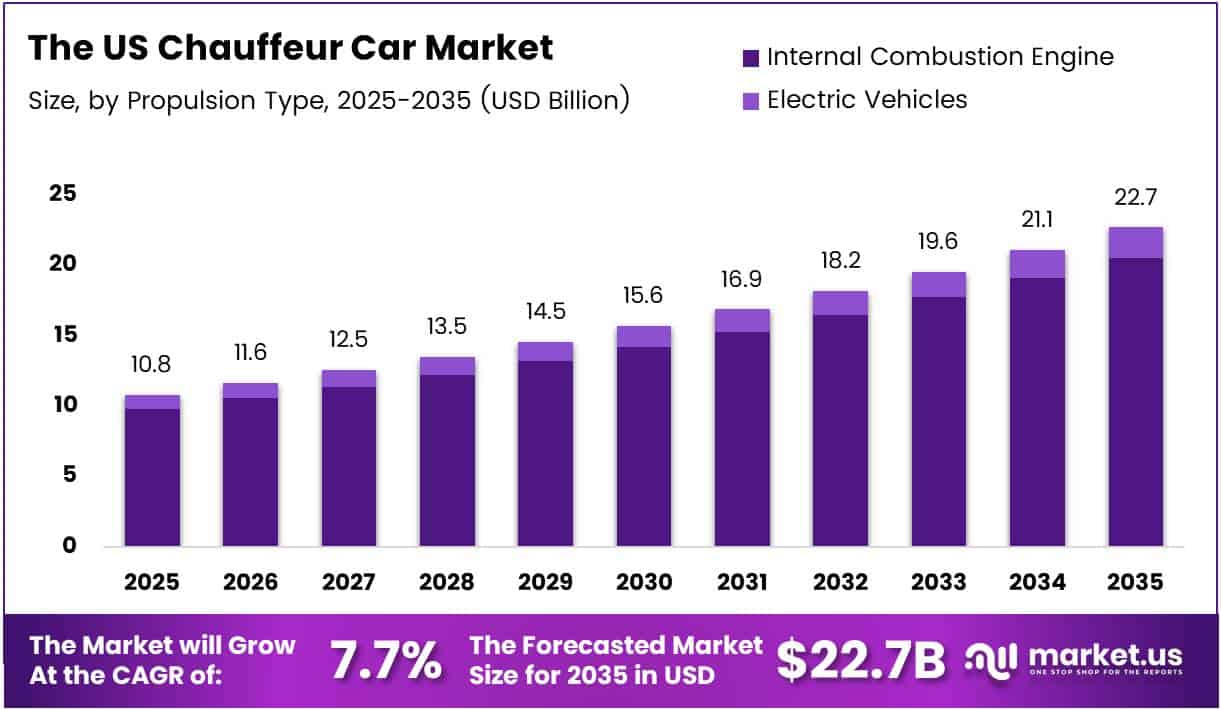
In 2025, the US Chauffeur Car Market was valued at US$10.8 billion, and between 2025 and 2035, this market is estimated to register a CAGR of 7.7%, reaching about US$22.7 billion by 2035.
The U.S. chauffeur car market operates as a premium mobility segment built around pre-booked, professional, and service-oriented ground transportation. It is closely linked with corporate travel, airport transfers, and high-end leisure mobility, with demand concentrated in major business hubs such as New York, Los Angeles, Chicago, and Washington D.C.
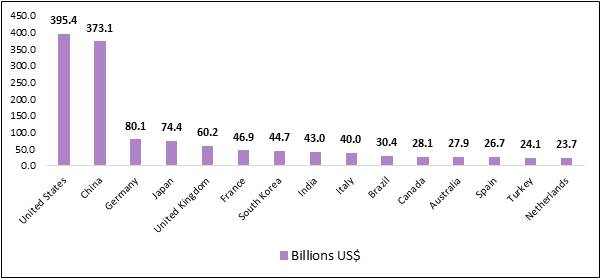
- Business travel remains a core demand anchor, with spending reaching nearly US$395.4 billion in 2025 and projected to rise to about US$396.4 billion by 2027, compared to pre-pandemic levels of US$313.1 billion. On a per-trip basis, U.S. business travelers spent an average of US$1,256 in 2023, highlighting the high-value nature of corporate mobility.
Fleet composition is dominated by sedans, accounting for 54.7% of vehicle usage, followed by SUVs at 17.0%, with internal combustion engine vehicles still holding 90.6% share despite gradual electrification trends.
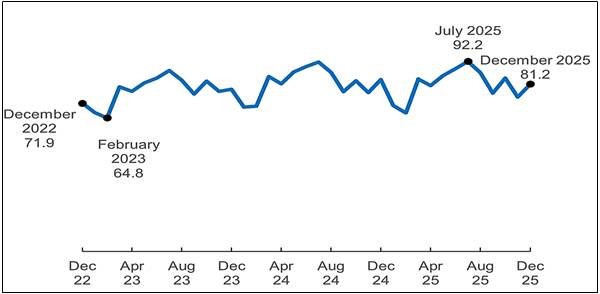
- Airport transfers represent a major usage category, supported by large passenger volumes, including 81.2 million airline passengers in December 2025 alone.
Short-term services account for the majority of usage, reflecting strong demand for point-to-point and time-sensitive travel. The market is shaped by business travel recovery, tourism growth, and gradual technological and fleet transformation.
- The sector is further influenced by rising tourism activity, with 72.4 million international visitors recorded in 2024, and expanding event-driven mobility demand from large-scale global events.
- U.S. business travel spending reached US$395.4 billion in 2025. Companies allocate about 0.76% of revenue to travel versus a 0.65% average. Firms with over 1,000 employees spend around US$2.4 million annually. A 1% workforce increase drives 1.1% higher travel spend, while sector costs reach US$8,600, US$6,800, and US$4,700 per employee.
Total International Arrivals (Millions):

Overseas Arrivals (Millions):

Key Takeaways
- The US chauffeur car market was valued at US$10.8 billion in 2025.
- The US chauffeur car market is projected to grow at a CAGR of 7.7% and is estimated to reach US$22.7 billion by 2035.
- On the basis of service type, business & corporate travel dominated the market, constituting 28.6% of the total market share.
- Based on the vehicle type, sedans led the chauffeur car market, comprising 54.7% of the total market.
- Among the propulsion types, internal combustion engine chauffeur cars held a major share of the market, accounting for around 90.6% of the revenue.
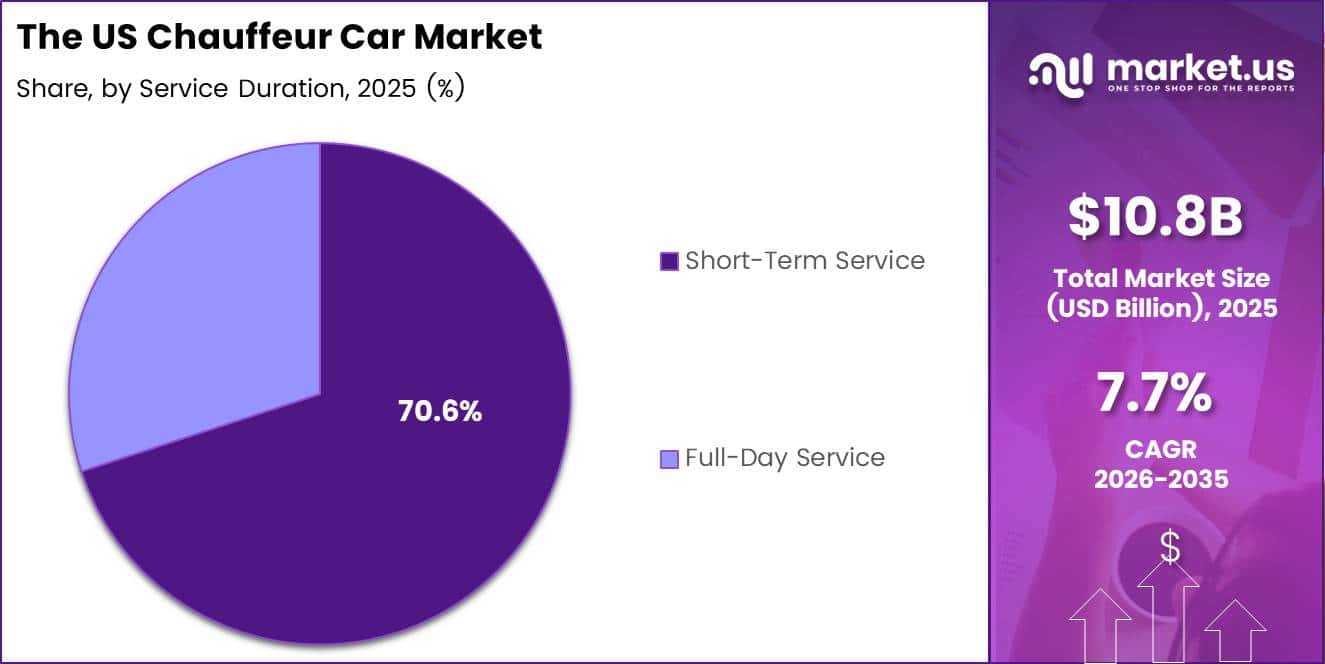
- Based on the service duration, short-term services withheld larger share in the market, with 70.6%.
Service Type Analysis
Business & Corporate Travel Services Are a Prominent Segment in the Market.
Business & corporate travel represents the most influential service category within the U.S. chauffeur car market, accounting for 28.6% of overall demand. This segment is closely tied to the mobility requirements of enterprises where punctuality, professional image, and structured travel coordination are critical. Frequent usage is observed among industries such as finance, consulting, law, and technology, where executives and client-facing teams rely on pre-arranged transportation for meetings, inter-city transfers, and structured itineraries.
Demand is further reinforced by corporate travel policies that prioritize reliability and duty-of-care standards over cost-sensitive alternatives. The segment also benefits from long-term contracts between fleet operators and corporate travel managers, ensuring predictable utilization. Increasing preference for premium SUVs and executive sedans, combined with demand for multi-stop and hourly bookings, continues to strengthen its position as a core revenue driver in the market.
Vehicle Type Analysis
Sedans Dominated the Chauffeur Car Market.
Sedan vehicles represent the most widely utilized category in the U.S. chauffeur car market, accounting for 54.7% of total demand. Their dominance is primarily driven by their suitability for airport transfers, corporate travel, and point-to-point mobility, where efficiency, comfort, and discretion are key requirements. Sedans are preferred for individual executives and small groups due to their balanced offering of luxury and operational cost-effectiveness compared to larger vehicle classes.
Fleet operators further favor sedans because of their higher utilization rates, ease of navigation in congested urban environments, and lower maintenance and fuel expenses. Premium and executive sedan variants further enhance their appeal in business travel segments, where professional image and ride quality are essential. This combination of practicality and prestige continues to position sedans as the backbone of chauffeur fleet composition across major metropolitan markets in the United States.
Propulsion Type Analysis
Internal Combustion Engine Chauffeur Cars Held Major Share of the Market.
Internal combustion engine (ICE) vehicles continue to dominate the U.S. chauffeur car market, accounting for 90.6% of the total fleet composition. This dominance is supported by well-established fueling infrastructure, long driving ranges, and operational flexibility, which are critical for high-utilization services such as airport transfers, corporate mobility, and intercity travel. ICE vehicles are particularly favored by fleet operators due to their lower upfront procurement complexity, widespread maintenance networks, and predictable performance across varying route conditions.
In addition, their ability to support continuous operations without charging downtime remains a key advantage in time-sensitive chauffeur applications. Despite growing interest in electrification, ICE vehicles maintain a strong foothold, especially in regions where EV charging infrastructure is still developing, ensuring their continued relevance in sustaining service reliability and fleet scalability across diverse urban and suburban markets.
Service Duration Analysis
Chauffeur Cars Are Mostly Utilized for Short-Term Services.
Short-term service accounts for 70.6% of the U.S. chauffeur car market, reflecting the strong prevalence of point-to-point and time-efficient mobility requirements. This segment is primarily driven by airport transfers, business meetings, hotel commutes, and short-distance intercity travel, where customers prioritize convenience, punctuality, and cost efficiency over extended vehicle availability. The structure of urban mobility demand, particularly in densely populated metropolitan areas, reinforces frequent but shorter-duration bookings.
Fleet operators benefit from higher vehicle turnover rates in this category, enabling improved asset utilization and daily trip density. Additionally, integration with corporate travel schedules and flight-based itineraries further strengthens demand consistency. The segment’s dominance highlights a market preference for flexible, transaction-based mobility solutions rather than prolonged chauffeur engagement, positioning short-duration usage as the operational core of premium ground transportation services.
Key Market Segments
By Service Type
- Airport Transfer
- City Tours & Leisure Travel
- Business & Corporate Travel
- Event Transportation
- Others
By Vehicle Type
- Sedan
- SUV
- Others
By Propulsion Type
- Internal Combustion Engine
- Electric Vehicles
By Service Duration
- Short-Term Service
- Full-Day Service
Drivers
Growth in Event, Tourism, and Leisure Segments Fuels the Demand for Chauffeur Cars
The expansion of event activity, tourism flows, and leisure travel continues to serve as a major demand catalyst for the U.S. chauffeur car market, with mobility requirements closely linked to the scale of the broader travel economy.
- The U.S. travel industry generates approximately US$1.3 trillion in travel spending and supports over 15 million jobs in 2024, reflecting the extensive transportation requirements embedded within tourism and business movement.
- Large-scale events such as the 2026 FIFA World Cup and the 2028 Olympics are expected to attract nearly 40 million visitors and generate close to US$100 billion in spending, reinforcing demand for structured, high-capacity transportation services.
Total Business Travel Spending (BTS) Top 15 Markets (2025)
Business travel further strengthens market requirements, with US$186 billion in transient business travel and US$126 billion from group meetings and events, supporting premium chauffeur usage among corporate and VIP segments.
- Domestic travel contributes US$1,490.5 billion in visitor spending, while international inbound travel remains 9% below 2019 levels, indicating additional recovery potential. The sector contributes US$2,558.4 billion to U.S. GDP in 2024, underscoring its economic weight.
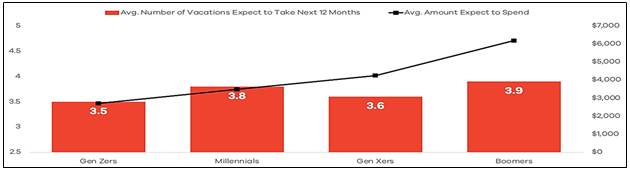
Travel behavior patterns further reinforce demand stability, with Millennials planning an average of 3.8 trips, Boomers 3.9 trips, Gen X around 3.6 trips, and Gen Z approximately 3.5 trips annually. Boomers spend over US$6,000 on average, while Millennials and Gen Z demonstrate comparatively lower spending, indicating a multi-generational demand base that sustains chauffeur-driven mobility across leisure and business applications.
- Leisure travel alone accounts for around US$1.0 trillion in spending, while international inbound travel contributes an additional US$181 billion, with 72.4 million international visitors recorded in 2024.
Restraints
Economic Uncertainty and Dependence on Business Travel Limiting Chauffeur Car Adoption
Economic uncertainty and the strong dependence on business travel function as key restraints on the U.S. chauffeur car market by directly influencing demand for premium mobility services. The segment remains heavily reliant on corporate clients, including executives, consultants, and business travelers who require reliable, comfortable, and private transportation for meetings, airport transfers, and events.
Chauffeur services provide advantages such as consistent vehicle quality, professional route planning, punctuality, and a controlled environment that supports productivity and confidentiality during transit. Smooth ride quality, comfortable seating, and privacy enable executives to work, conduct sensitive discussions, and maintain time efficiency throughout the day. However, demand for these services remains highly sensitive to macroeconomic conditions.
During periods of economic uncertainty, including inflationary pressures, slowing GDP growth, or global financial instability, businesses often reduce discretionary spending, with travel budgets typically among the first to be cut. Companies may limit in-person meetings, postpone corporate events, or shift toward virtual communication, reducing demand for executive transportation.
Even though chauffeur services enhance efficiency and reduce travel stress, organizations may shift toward lower-cost alternatives such as ride-hailing or standard taxis. Fluctuations in international business travel further reduce airport transfers and intercity mobility. Dependence on sectors such as finance, consulting, and technology, combined with a niche customer base, amplifies vulnerability to cyclical downturns in demand.
Growth Factors
Partnerships with Hotels & Airlines & Airport & First/Last-Mile Connectivity Expanding Market Reach
Strategic partnerships with hotels, airlines, airports, and first- and last-mile mobility providers are emerging as a key growth avenue within the U.S. chauffeur car market, enabling a more integrated and seamless passenger travel experience.
- The scale of air travel activity underscores this potential, with U.S. airlines transporting approximately 81.2 million passengers in December 2025, including 69.9 million domestic and 11.3 million international travelers.
This high passenger throughput creates a continuous demand stream for reliable ground transportation, particularly among business and premium travelers who prioritize comfort, punctuality, and convenience.
Collaborations with major carriers such as American Airlines, Delta Air Lines, United Airlines, and Southwest Airlines allow chauffeur service providers to access high-value customer segments through integrated booking and bundled mobility offerings. These arrangements support airport transfers, hotel pickups, and intercity travel services, enhancing overall travel efficiency. Partnerships with luxury hotels further strengthen service positioning by ensuring pre-arranged premium transportation for high-net-worth and corporate guests.
Airport integration initiatives, including dedicated chauffeur zones and flight-linked scheduling systems, improve coordination and reduce wait times. Additionally, alignment with airline and hotel platforms enables data sharing and demand forecasting, optimizing fleet utilization and operational efficiency. As demand for door-to-door mobility increases, such ecosystem-based collaborations are expected to expand market reach and improve service personalization across the sector.
Monthly Passengers on US Scheduled Airlines (Domestic + International):
Emerging Trends
Electrification and Sustainable Fleet Adoption
Electrification and sustainable fleet adoption are increasingly shaping developments within the U.S. chauffeur car market, supported by strong momentum in electric vehicle uptake and policy-driven incentives.
- The North American EV market recorded nearly 300,000 EVs sold in Q1 2023, reflecting a 45% year-over-year increase, driven by environmental awareness and supportive regulatory frameworks.
Operational economics further support this shift, as EVs offer lower maintenance requirements due to fewer mechanical components and reduced dependency on consumables such as oil. Electricity as a fuel source reduces per-mile energy costs compared to gasoline or diesel, lowering the total cost of ownership across fleet cycles. This cost advantage is particularly relevant for high-utilization chauffeur fleets.
Government initiatives such as the Bipartisan Infrastructure Law and the Inflation Reduction Act are reinforcing this transition by providing tax credits of up to US$7,500 per vehicle, along with US$7.5 billion allocated for charging infrastructure development, improving the financial feasibility of fleet electrification for chauffeur operators.
Regulatory direction toward zero-emission transportation, including mandates targeting fully electric fleets by 2035 in select regions, is accelerating adoption. In parallel, growing ESG commitments among corporate clients and high-net-worth customers are increasing the preference for sustainable mobility options. Expansion of charging infrastructure through public and private investment is further enabling operational feasibility, supporting the gradual integration of EVs into chauffeur service networks.
Geopolitical Impact Analysis
Geopolitical Volatility, Energy Pressures, and Supply Chain Realignment in U.S. Chauffeur Mobility Operations
A shift toward cost-efficient, technology-enabled, and partially electrified chauffeur fleets is emerging, accompanied by higher service prices and near-term supply constraints within the U.S. chauffeur car market. The intersection of geopolitical instability, energy market volatility, and evolving regulatory frameworks is creating a complex operating environment that is reshaping mobility preferences and accelerating structural adjustments in fleet operations.
Ongoing tensions affecting the Strait of Hormuz have reduced shipping flows and delayed the delivery of vehicles and critical components, leading to constrained fleet availability, slower replacement cycles, and extended procurement timelines, particularly for premium and luxury models. Simultaneously, geopolitical instability has triggered oil price volatility, increasing fuel costs and significantly raising per-trip operating expenses, which forces operators to either increase service pricing or absorb margin pressure.
Sustained high fuel prices are encouraging a gradual shift toward fuel-efficient and electric models such as the Tesla Model Y and Chevrolet Equinox, although high upfront investment requirements create financial strain for smaller operators. Policy uncertainty under Donald Trump, including potential rollback of EV incentives and emissions standards, is reducing regulatory clarity and slowing long-term electrification planning.
Rising energy costs are also increasing manufacturing expenses for steel, aluminum, semiconductors, and batteries, elevating vehicle acquisition costs across fleets. At the same time, inflationary pressures are influencing consumer behavior, shifting demand toward on-demand mobility services, including chauffeur-driven transport. Business travel volatility continues to affect corporate mobility demand, while logistics disruptions and delayed spare parts deliveries are reducing fleet utilization and operational efficiency.
Key Company Insights
Companies in the U.S. chauffeur car market focus on strengthening competitiveness through service differentiation, operational efficiency, and technology integration. A key emphasis is placed on building reliable fleet networks with a mix of premium sedans, SUVs, and emerging electric vehicles to meet diverse client requirements. Operators invest in digital booking platforms, real-time tracking systems, and automated dispatch tools to improve customer convenience and optimize fleet utilization.
Strong attention is given to corporate contract acquisition, particularly with sectors such as finance, technology, and hospitality, where recurring demand ensures stable revenue streams. Service personalization, including tailored itineraries, multilingual chauffeurs, and VIP handling, is used to enhance customer retention. Additionally, strategic partnerships with airports, hotels, and travel aggregators help expand distribution channels. Continuous driver training and strict service quality standards further support brand positioning and customer trust in a highly experience-driven mobility segment.
Recent Developments
- October 2025 — Rome2Rio partnered with Mozio to streamline ground transportation across the U.S., enabling travelers to search and book private cars, shuttles, taxis, luxury sedans, vans, minibuses, and accessible vehicles alongside trains, buses, and flights, with 24/7 multilingual support and flexible cancellations, improving last-mile connectivity nationwide.
- February 2026 — Carey International expanded its U.S. luxury chauffeur offerings by launching Carey Executive Protection, combining professional chauffeurs with trained close-protection personnel from law enforcement and military backgrounds. The service supports executives, VIPs, corporate teams, and high-net-worth families with secure transportation, route planning, risk assessment, and optional in-vehicle protection, reinforcing safety, discretion, and operational excellence across major U.S. cities.
Key Players
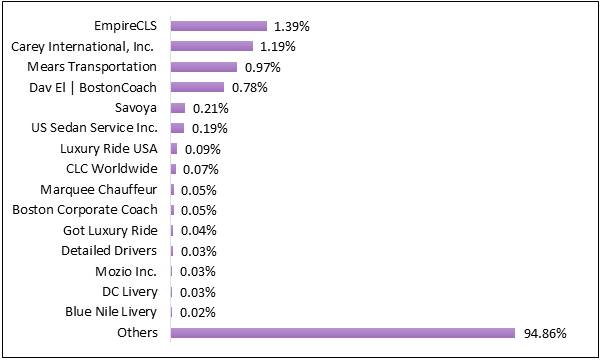
- EmpireCLS
- Carey International, Inc.
- Mears Transportation
- Dav El | BostonCoach
- Savoya
- US Sedan Service Inc.
- Luxury Ride USA
- CLC Worldwide
- Marquee Chauffeur
- Boston Corporate Coach
- Got Luxury Ride
- Detailed Drivers
- Mozio Inc.
- DC Livery
- Blue Nile Livery
- Other Key Players
Report Scope
| Report Features | Description |
|---|---|
| Market Value (2025) | US$10.8 Bn |
| Forecast Revenue (2035) | US$22.7 Bn |
| CAGR (2025-2035) | 7.7% |
| Base Year for Estimation | 2025 |
| Historic Period | 2021-2024 |
| Forecast Period | 2025-2035 |
| Report Coverage | Revenue Forecast, Market Dynamics, Competitive Landscape, Recent Developments |
| Segments Covered | By Service Type (Airport Transfer, City Tours & Leisure Travel, Business & Corporate Travel, Event Transportation, and Others), By Vehicle Type (Sedan, SUV, and Others), By Propulsion Type (Internal Combustion Engine and Electric Vehicles), By Service Duration (Short-Term Service and Full-Day Service) |
| Regional Analysis | North America – The US & Canada; Europe – Germany, France, The UK, Spain, Italy, Russia & CIS, Rest of Europe; APAC- China, Japan, South Korea, India, ASEAN & Rest of APAC; Latin America- Brazil, Mexico & Rest of Latin America; Middle East & Africa- GCC, South Africa, & Rest of MEA |
| Competitive Landscape | EmpireCLS, Carey International, Inc., Mears Transportation, Dav El | BostonCoach, Savoya, US Sedan Service Inc., Luxury Ride USA, CLC Worldwide, Marquee Chauffeur, Boston Corporate Coach, Got Luxury Ride, Detailed Drivers, Mozio Inc., DC Livery, Blue Nile Livery, and Other Players. |
| Customization Scope | Customization for segments, region/country-level will be provided. Moreover, additional customization can be done based on the requirements. |
| Purchase Options | We have three licenses to opt for: Single User License, Multi-User License (Up to 5 Users), Corporate Use License (Unlimited Users and Printable PDF) |





































