


Report Overview
Global Turn-Based Strategy Games Market size is expected to be worth around USD 12.9 Billion by 2035 from USD 5.2 Billion in 2025, growing at a CAGR of 9.5% during the forecast period 2026 to 2035.
The turn-based strategy games market encompasses digital interactive entertainment where players engage in tactical gameplay through sequential moves rather than real-time action. These games emphasize strategic planning, resource management, and decision-making across various platforms including mobile, PC, and consoles. Moreover, the genre appeals to audiences seeking intellectually stimulating experiences with deep gameplay mechanics.
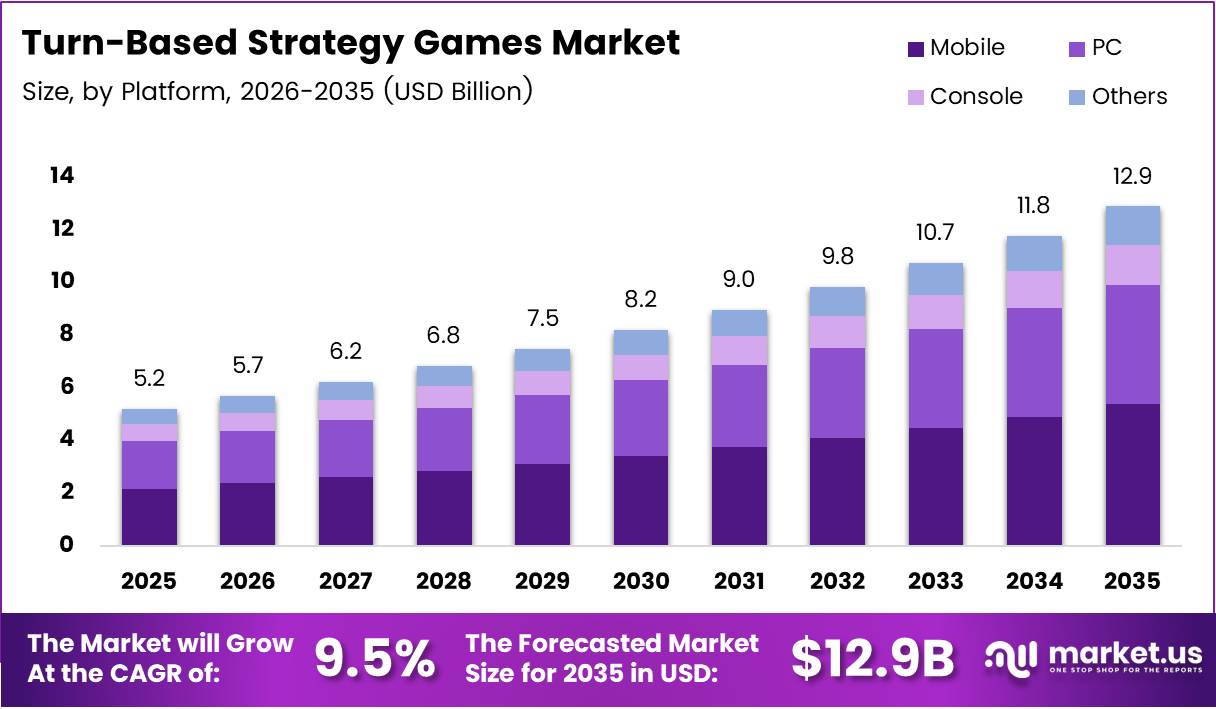
The market demonstrates strong growth momentum driven by rising player engagement and expanding platform ecosystems. Developers continue innovating with hybrid mechanics that blend traditional turn-based elements with modern features. Additionally, the indie development community plays a crucial role in revitalizing classic gameplay formulas while introducing fresh creative approaches.
Government support for digital entertainment industries and favorable regulations regarding online gaming content further accelerate market expansion. Investment in gaming infrastructure across emerging markets creates new opportunities for genre penetration. Consequently, the competitive landscape remains dynamic with both established publishers and independent studios contributing to market diversity.
Mobile platforms represent significant growth opportunities as optimization for asynchronous multiplayer enhances accessibility. Technology integration including AI-driven opponents and adaptive difficulty systems elevates player experiences. Furthermore, monetization strategies through downloadable content and seasonal expansions generate sustained revenue streams beyond initial game purchases.
According to GamesRadar+, Heroes of Might & Magic: Olden Era surpassed 1 million wishlists on Steam, demonstrating exceptional consumer interest in turn-based strategy titles. The same title’s demo reached over 24,000 concurrent players at peak, validating strong demand for tactical gameplay experiences. These indicators reflect the genre’s sustained appeal among dedicated gaming communities and its potential for continued market growth.
Key Takeaways
- Global Turn-Based Strategy Games Market valued at USD 5.2 Billion in 2025, projected to reach USD 12.9 Billion by 2035
- Market expected to grow at CAGR of 9.5% during forecast period 2026-2035
- Mobile platform segment dominates with 45.3% market share in 2025
- Single Player game type holds 59.8% share of the market
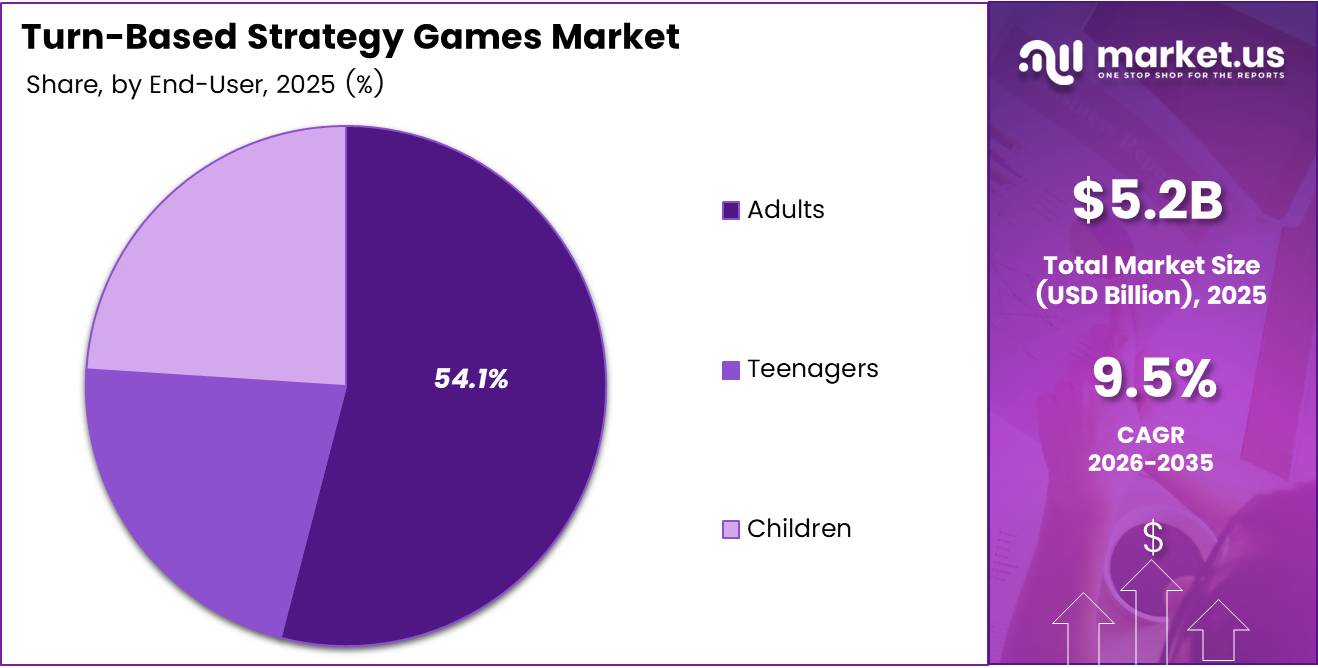
- Adults segment leads end-user category with 54.1% market share
- Online distribution channel accounts for 82.4% of total market
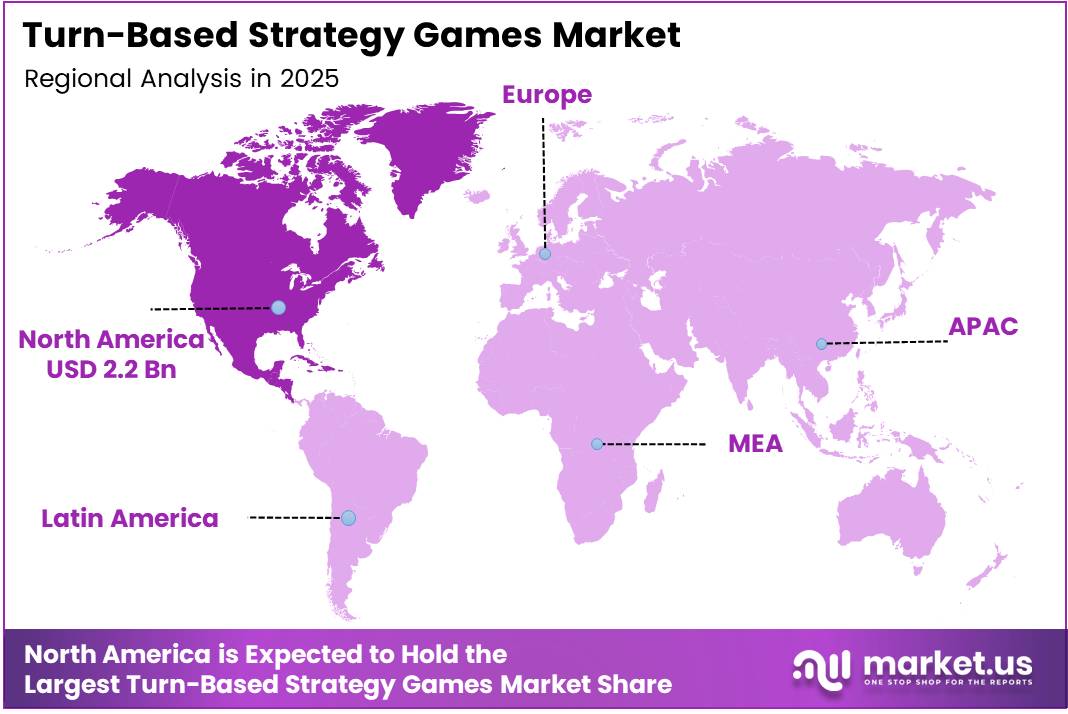
- North America dominates regional market with 43.8% share valued at USD 2.2 Billion
Platform Analysis
Mobile dominates with 45.3% due to accessibility and asynchronous gameplay capabilities.
In 2025, Mobile held a dominant market position in the By Platform segment of Turn-Based Strategy Games Market, with a 45.3% share. The platform benefits from widespread smartphone adoption and optimized touch-based controls that suit turn-based mechanics. Additionally, asynchronous multiplayer features enable players to engage at their convenience without real-time commitments.
PC platforms maintain strong presence through dedicated strategy gaming communities and superior processing capabilities for complex game mechanics. The ecosystem supports extensive modding capabilities and user-generated content that extends game longevity. Moreover, digital distribution platforms facilitate easy access to both AAA titles and independent releases.
Console gaming offers enhanced visual experiences and controller-optimized interfaces for living room entertainment. Cross-platform compatibility increasingly bridges console and PC player bases, expanding multiplayer communities. Furthermore, subscription services provide access to diverse strategy title libraries at accessible price points.
Game Type Analysis
Single Player dominates with 59.8% due to campaign depth and personalized tactical experiences.
In 2025, Single Player held a dominant market position in the By Game Type segment of Turn-Based Strategy Games Market, with a 59.8% share. Players value narrative-driven campaigns that offer rich storytelling combined with strategic gameplay progression. Additionally, solo experiences allow for thoughtful decision-making without time pressure from competitive opponents.
Multiplayer experiences attract competitive players seeking ranked modes and skill-based matchmaking systems. These games foster active communities through competitive leagues and seasonal tournaments. However, asynchronous turn-based multiplayer reduces scheduling constraints while maintaining strategic depth that defines the genre.
End-User Analysis
Adults dominates with 54.1% due to complex gameplay preferences and higher disposable income.
In 2025, Adults held a dominant market position in the By End-User segment of Turn-Based Strategy Games Market, with a 54.1% share. This demographic appreciates intellectually challenging gameplay that rewards strategic thinking and long-term planning. Moreover, adults possess greater purchasing power for premium titles and expansion content.
Teenagers represent growing engagement through mobile accessibility and social multiplayer features that align with connectivity preferences. Educational benefits of strategic thinking appeal to parents supporting gaming activities. Consequently, free-to-play models with optional purchases lower entry barriers for younger audiences.
Children segment shows potential through simplified mechanics and family-friendly themes adapted for younger cognitive abilities. Parental controls and age-appropriate content ensure safe gaming environments. Furthermore, educational elements integrated into gameplay provide developmental benefits alongside entertainment value.
Distribution Channel Analysis
Online dominates with 82.4% due to digital convenience and instant access capabilities.
In 2025, Online held a dominant market position in the By Distribution Channel segment of Turn-Based Strategy Games Market, with an 82.4% share. Digital storefronts eliminate physical production costs while enabling global reach and immediate content delivery. Additionally, online platforms support automatic updates, downloadable content, and community features that enhance player experiences.
Offline distribution persists through collector’s editions and regions with limited internet infrastructure. Physical media appeals to collectors seeking tangible ownership and special packaging. However, the channel faces declining relevance as broadband accessibility expands globally and digital-first purchasing behaviors dominate consumer preferences.
Key Market Segments
By Platform
- Mobile
- PC
- Console
- Others
By Game Type
- Single Player
- Multiplayer
By End-User
- Adults
- Teenagers
- Children
By Distribution Channel
- Online
- Offline
Drivers
Rising Demand for Deep Tactical Gameplay and Long-Session Player Engagement Drives Market Growth
Turn-based strategy games satisfy player preferences for intellectually stimulating experiences that reward careful planning over reflexes. The genre’s inherent depth creates sustained engagement through complex decision trees and long-term strategic consequences. Moreover, players invest substantial time mastering game systems, creating dedicated fan bases with high retention rates.
PC and console gaming ecosystems provide robust infrastructure supporting strategy genre development and distribution. Platform holders invest in diverse content libraries that include niche tactical titles alongside mainstream releases. Additionally, backward compatibility and digital archives preserve classic strategy games while introducing them to new audiences.
According to GamesRadar+, publisher Hooded Horse sold over 4.5 million game copies across strategy titles, demonstrating strong commercial viability for the genre. Competitive ranked modes encourage skill development and community building through leaderboards and tournaments. Furthermore, indie developers contribute innovative mechanics that push genre boundaries while honoring traditional turn-based fundamentals.
Restraints
Limited Appeal Among Casual and Fast-Paced Action-Oriented Gamers Limits Market Adoption
Turn-based strategy games face challenges attracting audiences preferring immediate gratification and continuous action gameplay. The genre’s deliberate pacing conflicts with mainstream trends favoring fast-paced competitive experiences. Consequently, market growth remains constrained by narrower demographic appeal compared to action-oriented titles.
Longer learning curves associated with complex mechanics create entry barriers for new players unfamiliar with strategic conventions. Tutorials must balance comprehensive instruction with engagement, risking player drop-off during extended onboarding. Moreover, intricate systems involving resource management and unit interactions demand cognitive investment that casual audiences often avoid.
Mass-market adoption suffers as complexity increases development and localization costs while limiting potential player bases. Publishers prioritize accessible genres with broader demographic reach for major marketing investments. Therefore, turn-based strategy titles often occupy niche positions despite dedicated communities, limiting overall market expansion potential.
Growth Factors
Technological Advancements and Mobile Optimization Accelerate Market Expansion
Mobile platforms revolutionize accessibility through asynchronous multiplayer enabling gameplay without simultaneous player presence. Touch-optimized interfaces and shorter session designs adapt traditional mechanics for on-the-go audiences. Additionally, cross-platform progression allows seamless transitions between mobile and desktop experiences, expanding engagement opportunities.
AI-driven opponent systems and adaptive difficulty create personalized challenges matching individual skill levels without human opponents. Procedural generation technologies enable infinite replayability through randomized maps and campaign structures. According to BCG, 40% of Baby Boomers and 50% of Gen X players spend over 5 hours weekly gaming, representing substantial audience potential for strategy titles.
Monetization through downloadable content and seasonal expansions generates recurring revenue beyond initial purchases. Live service models maintain player engagement through regular updates and community events. Furthermore, emerging markets demonstrate growing interest in strategy-focused esports, creating new competitive ecosystems and sponsorship opportunities.
Emerging Trends
Revival of Classic Franchises and Hybrid Gameplay Designs Reshape Market Landscape
Retro turn-based franchises experience renewed popularity through modern reimagining that preserves core mechanics while enhancing visuals and features. Nostalgia-driven audiences support remasters and spiritual successors to beloved classic titles. Moreover, successful revivals demonstrate sustained commercial potential for established intellectual properties within contemporary gaming markets.
Hybrid designs blending turn-based strategy with real-time elements attract broader audiences seeking varied gameplay experiences. Developers experiment with simultaneous turns and pause-and-play mechanics that maintain tactical depth while increasing pacing. According to SteamDB data, Heroes of Might & Magic: Olden Era demo achieved approximately 76% positive community ratings, indicating strong reception for franchise revivals.
Community-driven modding ecosystems extend game lifespans through user-generated content including custom campaigns and gameplay modifications. Developers increasingly support modding tools and workshop integration, fostering creative communities. Additionally, procedural map generation and replayable campaign structures enhance long-term engagement by ensuring fresh experiences across multiple playthroughs.
Regional Analysis
North America Dominates the Turn-Based Strategy Games Market with a Market Share of 43.8%, Valued at USD 2.2 Billion
North America leads the global market driven by established PC gaming culture and high disposable income supporting premium strategy title purchases. The region hosts major publishers and development studios specializing in tactical gameplay experiences. Moreover, strong digital infrastructure and broadband penetration facilitate online distribution and multiplayer engagement across 43.8% market share valued at USD 2.2 Billion.
Europe Turn-Based Strategy Games Market Trends
Europe demonstrates significant market presence through historical appreciation for strategic board games translating to digital preferences. The region supports diverse independent developers creating innovative turn-based experiences. Additionally, strong esports infrastructure and competitive gaming communities drive multiplayer engagement and tournament participation.
Asia Pacific Turn-Based Strategy Games Market Trends
Asia Pacific represents fastest-growing regional market fueled by mobile gaming adoption and expanding middle-class populations. Mobile-first strategies align with regional platform preferences and commuter gaming behaviors. Furthermore, growing investment in local game development creates region-specific content addressing cultural preferences.
Middle East & Africa Turn-Based Strategy Games Market Trends
Middle East and Africa show emerging potential as internet infrastructure improves and smartphone penetration increases. Young demographics exhibit growing interest in strategic gaming experiences. However, market development requires localized content and payment solutions addressing regional economic conditions.
Latin America Turn-Based Strategy Games Market Trends
Latin America experiences steady growth through mobile accessibility and free-to-play monetization models accommodating economic constraints. Regional publishers increasingly support Spanish and Portuguese localizations. Moreover, community-driven content creation fosters grassroots engagement despite infrastructure challenges.
Key Regions and Countries
North America
- US
- Canada
Europe
- Germany
- France
- The UK
- Spain
- Italy
- Rest of Europe
Asia Pacific
- China
- Japan
- South Korea
- India
- Australia
- Rest of APAC
Latin America
- Brazil
- Mexico
- Rest of Latin America
Middle East & Africa
- GCC
- South Africa
- Rest of MEA
Key Company Insights
Nintendo Co., Ltd. maintains significant market presence through iconic franchises that blend turn-based strategy with accessible gameplay mechanics appealing to broad audiences. The company leverages exclusive Nintendo Switch platform advantages to deliver portable strategic experiences. Their long-standing reputation for quality and innovation positions them as industry leaders in family-friendly strategy gaming with consistent franchise evolution.
Paradox Interactive specializes in deep grand strategy titles offering complex historical and political simulation experiences for dedicated enthusiasts. The publisher’s live service approach delivers continuous expansions and content updates maintaining long-term player engagement. Their business model emphasizes community feedback integration and modding support, creating loyal fan bases around flagship franchises that generate sustained revenue streams.
SEGA contributes diverse strategy portfolios spanning both classic franchises and modern tactical innovations across multiple platforms. The company balances nostalgia-driven revivals with contemporary design approaches attracting varied demographics. Their global distribution network and established intellectual properties provide competitive advantages in penetrating international markets while maintaining strong brand recognition among strategy gaming communities.
2K Games publishes premium strategy titles emphasizing high production values and cinematic presentation alongside tactical depth. The company’s marketing expertise positions strategy games within mainstream audiences beyond traditional niche markets. Their portfolio strategy balances established franchises with new intellectual property development, creating diversified revenue sources and reduced dependency on single title performance.
Key players
- Nintendo Co., Ltd.
- Paradox Interactive
- SEGA
- 2K Games
- Slitherine Ltd.
- Square Enix Holdings Co., Ltd.
- Wargaming.net
- Stardock Corporation
- Matrix Games
- Koei Tecmo Holdings Co., Ltd.
Recent Developments
- August 2024 – Heroes of Might & Magic: Olden Era was officially announced as a new turn-based strategy title by Ubisoft, Hooded Horse, and Unfrozen at Gamescom, generating significant industry attention and community excitement for the franchise revival.
- May 2025 – EA and Disney’s Lucasfilm Games revealed Star Wars: Zero Company, a single-player turn-based tactics game, with a first look scheduled at Star Wars Celebration Japan, expanding the turn-based genre into major entertainment franchises.
- May 2024 – Anomaly Collapse, a new turn-based strategy roguelite game, was released on Windows, introducing innovative hybrid mechanics combining traditional turn-based elements with procedural generation systems for enhanced replayability.
- March 2025 – Songs of Conquest expanded to Android and iOS platforms, bringing the turn-based strategy title to mobile audiences and demonstrating cross-platform expansion strategies within the genre.
- June 2025 – Songs of Conquest launched on Nintendo Switch consoles, broadening its cross-platform availability and enabling portable strategic gaming experiences for console audiences seeking tactical gameplay on the go.
Report Scope
| Report Features | Description |
|---|---|
| Market Value (2025) | USD 5.2 Billion |
| Forecast Revenue (2035) | USD 12.9 Billion |
| CAGR (2026-2035) | 9.5% |
| Base Year for Estimation | 2025 |
| Historic Period | 2020-2024 |
| Forecast Period | 2026-2035 |
| Report Coverage | Revenue Forecast, Market Dynamics, Competitive Landscape, Recent Developments |
| Segments Covered | By Platform (Mobile, PC, Console, Others), By Game Type (Single Player, Multiplayer), By End-User (Adults, Teenagers, Children), By Distribution Channel (Online, Offline) |
| Regional Analysis | North America (US and Canada), Europe (Germany, France, The UK, Spain, Italy, and Rest of Europe), Asia Pacific (China, Japan, South Korea, India, Australia, and Rest of APAC), Latin America (Brazil, Mexico, and Rest of Latin America), Middle East & Africa (GCC, South Africa, and Rest of MEA) |
| Competitive Landscape | Nintendo Co., Ltd., Paradox Interactive, SEGA, 2K Games, Slitherine Ltd., Square Enix Holdings Co., Ltd., Wargaming.net, Stardock Corporation, Matrix Games, Koei Tecmo Holdings Co., Ltd. |
| Customization Scope | Customization for segments, region/country-level will be provided. Moreover, additional customization can be done based on the requirements. |
| Purchase Options | We have three licenses to opt for: Single User License, Multi-User License (Up to 5 Users), Corporate Use License (Unlimited User and Printable PDF) |





































