


Global Pregnancy Tracking and Postpartum Care Apps Market By Component (Software/Solutions and Services), By Platform (iOS-based Apps, Android-based Apps and Web-based Platforms), By Application (Pregnancy Tracking and Milestones, Fetal Development Monitoring, Contraction Timer and Kick Counter, Nutrition and Diet Tracking, Exercise and Fitness Guidance, Symptom Tracking and Management, Medication and Supplement Reminders, Baby Name and Registry Tools, Community and Social Support, Postpartum Recovery Tracking and Others), By Pricing Model (Freemium, Subscription-based, One-time Purchase and Advertisement-based), By End User (Expecting Mothers, Postpartum Mothers, Partners and Family Members and Healthcare Providers), Region and Companies – Industry Segment Outlook, Market Assessment, Competition Scenario, Trends and Forecast 2026-2035
- Published date: April 2026
- Report ID: 183434
- Number of Pages: 300
- Format:
-
keyboard_arrow_up
Quick Navigation
Report Overview
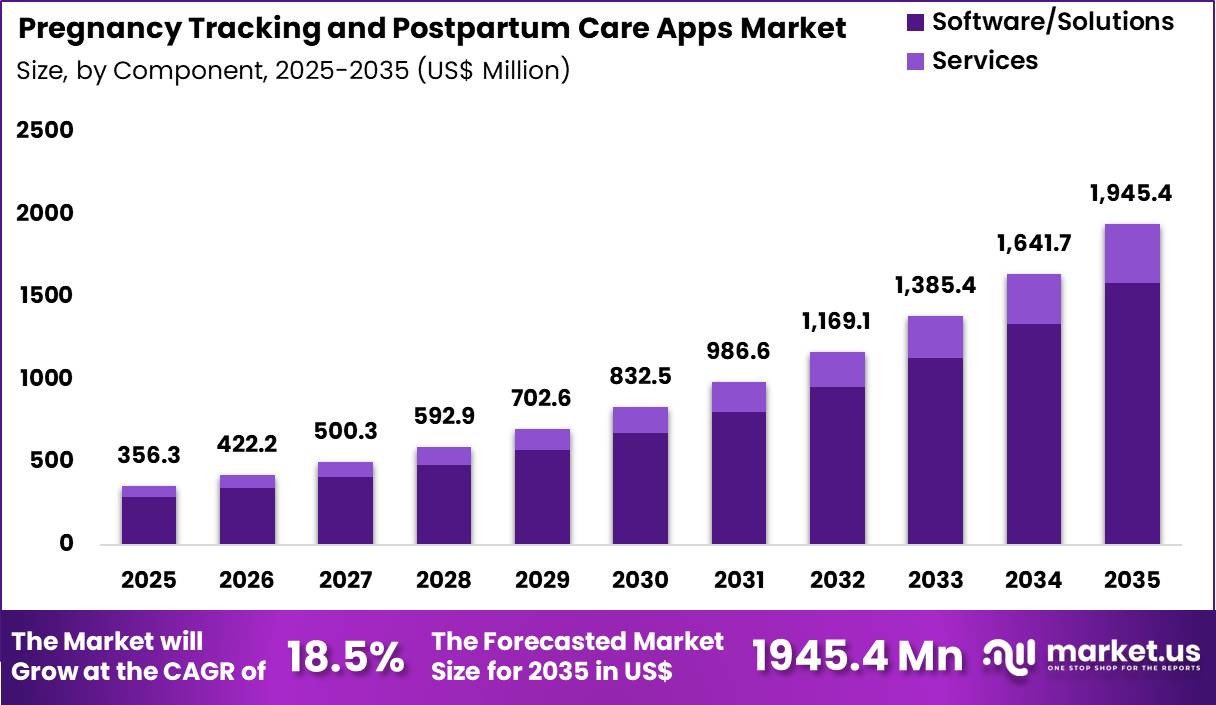
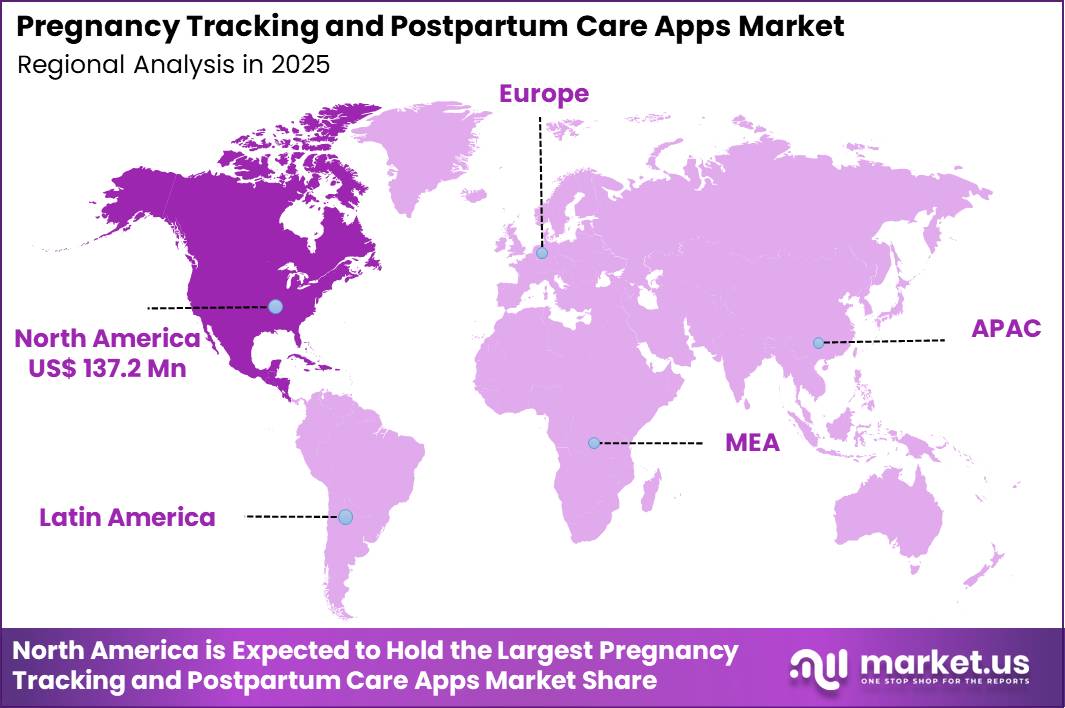
The Global Pregnancy Tracking and Postpartum Care Apps Market size is expected to be worth around US$ 1945.4 Million by 2035 from US$ 356.3 Million in 2025, growing at a CAGR of 18.5% during the forecast period 2026-2035. In 2025, North America led the market, achieving over 38.5% share with a revenue of US$ 137.2 Million.
Increasing awareness of maternal health and the desire for personalized, data-driven support during pregnancy and the postpartum period propel the Pregnancy Tracking & Postpartum Care Apps market as expectant and new mothers seek comprehensive digital tools that enhance monitoring, education, and emotional well-being.
Pregnant individuals increasingly utilize these apps to track fetal development milestones, monitor weight gain, nutrition intake, and contraction patterns, enabling timely recognition of warning signs such as reduced fetal movement or elevated blood pressure.
These platforms support gestational diabetes and hypertension management by logging blood glucose and blood pressure readings, facilitating remote sharing with obstetric providers for proactive adjustments in care plans.
Postpartum users rely on the apps for pelvic floor exercise guidance, mood tracking, and breastfeeding support, helping identify early signs of postpartum depression or lactation difficulties that require professional intervention.
The apps also provide educational content on newborn care, sleep patterns, and recovery milestones, empowering first-time parents with evidence-based information that reduces anxiety and improves confidence during the transition to parenthood.
In January 2026, Clue secured a strategic investment from Verdane to support further product development and research initiatives. The funding is directed toward enhancing its pregnancy and perimenopause tracking capabilities, with a focus on strengthening evidence-based digital health solutions in women’s health.
Developers pursue opportunities to integrate wearable sensor data and AI-driven predictive analytics, expanding applications in high-risk pregnancy monitoring where early detection of preterm labor or preeclampsia can significantly improve maternal and fetal outcomes.
These advancements support virtual prenatal visit integration, allowing seamless data sharing between patients and obstetric teams for remote consultations and reduced in-person visits. Opportunities emerge in culturally tailored content and multilingual interfaces that address diverse populations, improving engagement among underserved communities.
Companies invest in secure, HIPAA-compliant platforms that ensure privacy while enabling longitudinal tracking from preconception through the first year postpartum.
Recent trends emphasize holistic wellness features that combine physical health monitoring with mental health support and community forums, positioning pregnancy tracking and postpartum care apps as essential companions in modern maternal healthcare focused on empowerment, prevention, and continuity of care.
Key Takeaways
- In 2025, the market generated a revenue of US$ 356.3 Million, with a CAGR of 18.5%, and is expected to reach US$ 1945.4 Million by the year 2035.
- The component segment is divided into software/solutions and services, with software/solutions taking the lead with a market share of 81.6%.
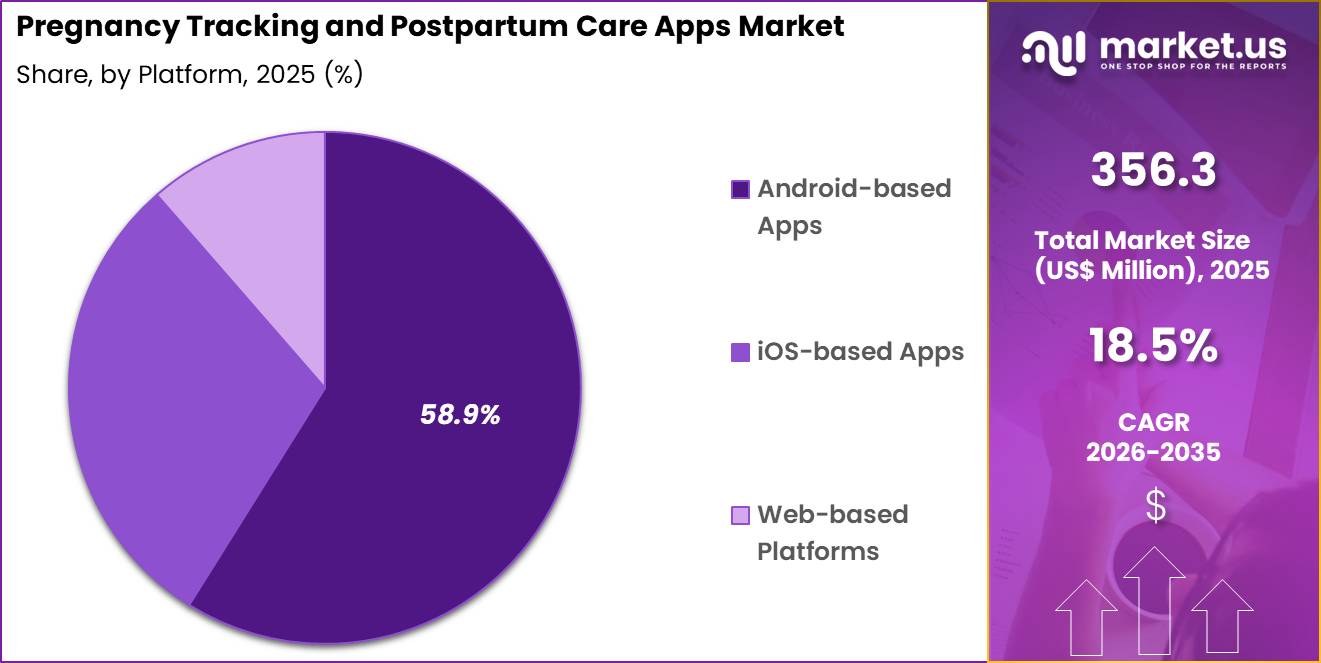
- Considering platform, the market is divided into iOS-based apps, android-based apps and web-based platforms. Among these, android-based apps held a significant share of 58.9%.
- Furthermore, concerning the application segment, the market is segregated into pregnancy tracking and milestones, fetal development monitoring, contraction timer and kick counter, nutrition and diet tracking, exercise and fitness guidance, symptom tracking and management, medication and supplement reminders, baby name and registry tools, community and social support, postpartum recovery tracking and others. The pregnancy tracking and milestones sector stands out as the dominant player, holding the largest revenue share of 42.7% in the market.
- The pricing model segment is segregated into freemium, subscription-based, one-time purchase and advertisement-based, with the freemium segment leading the market, holding a revenue share of 48.3%.
- Considering end user, the market is divided into expecting mothers, postpartum mothers, partners and family members and healthcare providers. Among these, expecting mothers held a significant share of 72.6%.
- North America led the market by securing a market share of 38.5%.
Component Analysis
Software and solutions accounted for 81.6% of growth within component and dominate the pregnancy tracking and postpartum care apps market due to their central role in delivering personalized digital health support throughout pregnancy and early motherhood.
These apps provide features such as week-by-week tracking, symptom monitoring, and real-time notifications, which make them highly valuable for daily use. The segment is expected to expand as smartphone penetration continues to rise globally, especially among women of reproductive age.
Health organizations report millions of pregnancies annually worldwide, which creates a large user base for digital tracking tools. Software platforms are likely to gain traction because they offer scalable, user-friendly interfaces without requiring physical infrastructure.
Continuous updates, AI-driven insights, and integration with wearable devices are projected to enhance user engagement. As digital health adoption increases and users seek convenient pregnancy management tools, software solutions are estimated to maintain their dominant position in this market.
Platform Analysis
Android-based apps accounted for 58.9% of growth within platform and dominate the pregnancy tracking and postpartum care apps market due to the widespread global use of Android smartphones. Android devices represent a majority share of mobile operating systems in emerging and developed markets, which increases accessibility for a broader user base.
The platform is expected to grow as affordable smartphones and internet access expand in regions with high birth rates. Developers prioritize Android deployment because it allows wider reach and faster adoption across diverse demographics.
The segment is likely to benefit from integration with low-cost wearable devices and health monitoring tools. Android apps also support flexible updates and localized content, which improves user engagement. As digital inclusion continues to improve globally, Android-based platforms are projected to retain their leadership in this market.
Application Analysis
Pregnancy tracking and milestones accounted for 42.7% of growth within application and dominate the pregnancy tracking and postpartum care apps market due to their ability to provide structured guidance throughout each stage of pregnancy. These features allow users to monitor fetal growth, track physical changes, and receive weekly updates, which improves awareness and preparedness.
Healthcare studies highlight that regular monitoring during pregnancy supports better maternal and fetal outcomes, which increases demand for digital tracking tools. The segment is expected to expand as expecting mothers seek personalized and accessible information at every stage.
Users are likely to prefer milestone tracking because it simplifies complex medical information into easy-to-understand insights. The segment benefits from high engagement rates, as users interact with apps daily. As awareness of prenatal care increases, this application is anticipated to remain the most widely used feature in this market.
Pricing Model Analysis
Freemium accounted for 48.3% of growth within pricing model and dominates the pregnancy tracking and postpartum care apps market due to its ability to attract a large user base while offering optional premium features.
Users often download free apps initially and later upgrade to access advanced tools such as personalized insights and expert consultations. The freemium model is expected to expand as app developers aim to maximize reach and engagement in competitive digital health markets.
This approach lowers entry barriers and increases adoption among price-sensitive users. The segment is likely to benefit from in-app upgrades, targeted content, and premium subscriptions. As mobile app ecosystems continue to evolve, freemium strategies are projected to remain highly effective in driving user acquisition and retention.
End-User Analysis
Expecting mothers accounted for 72.6% of growth within end user and dominate the pregnancy tracking and postpartum care apps market due to their direct need for continuous monitoring, guidance, and reassurance during pregnancy. This group actively uses digital tools to track symptoms, fetal development, and important milestones.
Global birth statistics indicate millions of pregnancies each year, which supports a large and recurring user base. Expecting mothers are expected to remain the primary users as awareness of prenatal health and digital solutions continues to grow.
They are likely to rely on apps for daily updates, reminders, and educational content. The segment benefits from high engagement levels, as users interact with apps frequently throughout pregnancy. As digital healthcare adoption rises and personalized care becomes more important, expecting mothers are estimated to maintain their dominant share in this market.
Key Market Segments
By Component
- Software/Solutions
- Services
By Platform
- iOS-based Apps
- Android-based Apps
- Web-based Platforms
By Application
- Pregnancy Tracking and Milestones
- Fetal Development Monitoring
- Contraction Timer and Kick Counter
- Nutrition and Diet Tracking
- Exercise and Fitness Guidance
- Symptom Tracking and Management
- Medication and Supplement Reminders
- Baby Name and Registry Tools
- Community and Social Support
- Postpartum Recovery Tracking
- Others
By Pricing Model
- Freemium
- Subscription-based
- One-time Purchase
- Advertisement-based
By End User
- Expecting Mothers
- Postpartum Mothers
- Partners and Family Members
- Healthcare Providers
Drivers
Rising number of pregnancies and births is driving the Pregnancy Tracking & Postpartum Care Apps market.
Global annual pregnancies total approximately 210 million, sustaining consistent demand for digital tools that support maternal monitoring and education. In the United States, the Centers for Disease Control and Prevention recorded 3,667,758 births in 2022, 3,596,017 births in 2023, and 3,628,934 births in 2024, reflecting ongoing population-level need for perinatal support.
These figures translate into millions of expectant and new mothers seeking accessible resources for tracking fetal development, symptoms, and postpartum recovery. Apps provide convenient features such as milestone reminders, nutritional guidance, and community forums that align with routine prenatal and postnatal care.
Increased health consciousness among women amplifies utilization of these platforms for proactive self-management. Digital literacy and widespread smartphone penetration further facilitate adoption across diverse socioeconomic groups.
The chronic nature of perinatal care requires longitudinal engagement, which mobile applications deliver effectively through personalized notifications. Public health priorities emphasizing maternal outcomes encourage integration of app-based solutions into standard care pathways.
Enhanced connectivity in both developed and emerging regions broadens reach to underserved populations. Consequently, these demographic realities establish a primary driver for sustained market expansion during the 2022–2025 period.
Restraints
Data privacy and security concerns are restraining the Pregnancy Tracking & Postpartum Care Apps market.
Handling sensitive health information, including pregnancy details and postpartum mental health data, subjects applications to stringent regulatory scrutiny and user skepticism. Compliance with frameworks such as data protection standards requires substantial investment in encryption, consent mechanisms, and breach prevention protocols.
Incidents of unauthorized access or data misuse erode consumer trust, leading to lower download and retention rates. Developers face elevated operational costs associated with ongoing security audits and legal expertise to navigate varying international requirements.
Potential liability from breaches discourages innovation in features involving shared or cloud-stored information. Users, particularly in regions with heightened awareness of digital risks, hesitate to input personal medical details. These apprehensions slow the pace of user acquisition and limit premium subscription uptake.
Smaller developers encounter disproportionate barriers in achieving compliance compared to larger entities. Persistent concerns regarding third-party data sharing further constrain partnerships with healthcare providers. As a result, such issues impose notable restraint on accelerated market growth throughout the 2022–2025 timeframe.
Opportunities
Integration with wearable devices and telehealth services is creating growth opportunities in the Pregnancy Tracking & Postpartum Care Apps market.
Compatibility with wearables enables continuous monitoring of vital signs, activity levels, and sleep patterns, enriching app datasets for more accurate insights. Opportunities arise for seamless data synchronization that supports remote clinician reviews and timely interventions.
Telehealth features within applications facilitate virtual consultations, reducing the need for frequent in-person visits while maintaining care continuity. This convergence appeals to health systems seeking cost efficiencies and improved patient engagement.
Potential exists for employer-sponsored programs that incorporate app-based maternity benefits to lower complication rates and associated expenses. Expansion into predictive analytics for conditions such as gestational hypertension or postpartum depression broadens clinical utility.
Partnerships between technology providers and healthcare organizations accelerate validation and reimbursement pathways. Scalability in low-resource settings through offline capabilities and basic device support unlocks additional geographic markets.
These synergies foster recurring revenue models via subscriptions and value-added services. Overall, device and service integration generates substantial prospects for differentiation and broader adoption across perinatal care ecosystems.
Impact of Macroeconomic / Geopolitical Factors
Macroeconomic conditions and geopolitical factors are shaping user adoption, monetization models, and platform expansion in the pregnancy tracking and postpartum care apps market.
Rising healthcare awareness and increasing smartphone penetration are supporting app usage, while inflation is tightening household budgets and reducing willingness to pay for premium subscriptions.
Healthcare systems are gradually integrating digital maternal care tools, yet reimbursement gaps and regulatory variation across regions create uneven growth. Geopolitical tensions influence data privacy laws and cross-border data flows, which complicates global platform operations and user trust.
Current US tariffs have limited direct impact on app-based services, but higher costs of imported smartphones and wearable devices can indirectly affect user access to digital health ecosystems. These cost pressures may slow adoption in price-sensitive segments, particularly among first-time users in emerging markets.
At the same time, app developers are focusing on localized features and partnerships with healthcare providers to strengthen engagement. Overall, despite affordability and regulatory challenges, growing demand for personalized maternal care and digital support is expected to sustain steady market expansion.
Latest Trends
Incorporation of artificial intelligence for personalized insights and predictive support represents a recent trend in the Pregnancy Tracking & Postpartum Care Apps market.
In 2024 and 2025, developers increasingly embedded artificial intelligence algorithms to deliver tailored recommendations based on individual user inputs, symptom logs, and historical data. This advancement enables predictive alerts for potential complications, such as preeclampsia risk assessment, enhancing proactive management.
Applications now utilize natural language processing to analyze journal entries or mood tracking for early postpartum depression screening. Integration of AI-driven chatbots provides instant educational responses and emotional support, improving user experience without constant human oversight.
The trend aligns with clinician endorsements that incorporate app-generated data into electronic health records for hybrid care models. Enhanced personalization through machine learning contributes to higher engagement and retention rates among users.
Publications and pilot implementations in 2025 highlight improved outcomes in areas such as adherence to prenatal guidelines and reduced readmission risks. This evolution prioritizes data-driven, patient-centered features over static tracking tools. Continued focus in 2024–2025 positions artificial intelligence as a transformative element redefining standards for digital maternal health solutions.
Regional Analysis
North America is leading the Pregnancy Tracking and Postpartum Care Apps Market
North America accounted for 38.5% of the pregnancy tracking and postpartum care apps market in 2025 as digital maternal health tools became a routine part of prenatal and postnatal care. Expecting mothers across the United States increasingly rely on mobile applications for week-by-week fetal development tracking, appointment reminders, nutrition guidance, and mental health support after childbirth.
According to the Centers for Disease Control and Prevention, about 3.66 million births were recorded in the United States in 2022, creating a large user base for digital tools that support pregnancy and postpartum care journeys. Healthcare providers are also recommending app-based monitoring to improve patient engagement and adherence to prenatal care schedules.
Integration with wearable devices and remote monitoring tools allows continuous tracking of vital parameters such as weight, activity levels, and sleep patterns. Postpartum care features including mood tracking and lactation support are gaining importance as awareness of maternal mental health increases.
Digital health companies are enhancing user experience through personalized insights powered by data analytics and artificial intelligence. Insurance programs and employer wellness initiatives are also beginning to include maternal health apps as part of care support services.
These developments collectively supported steady expansion of digital maternal care platforms across North America in 2025.
The Asia Pacific region is expected to experience the highest CAGR during the forecast period
Asia Pacific is expected to experience strong growth during the forecast period as smartphone penetration, digital health adoption, and maternal care awareness increase across the region. Countries such as India, China, Indonesia, and Vietnam are witnessing rising use of mobile health applications among younger populations, particularly among first-time mothers seeking accessible health information.
The World Health Organization reported that approximately 140 million births occur globally each year, with a large proportion taking place in Asia, creating significant demand for digital tools that support maternal and infant health. Governments across the region are promoting digital health initiatives that include maternal and child health tracking through mobile platforms.
Healthcare providers are encouraging the use of mobile applications to improve prenatal visit adherence and early detection of complications. App developers are introducing localized content, multilingual interfaces, and culturally relevant guidance to improve adoption.
Teleconsultation features are also enabling direct interaction between expectant mothers and healthcare professionals. Increasing awareness of postpartum mental health and infant care is further driving engagement with these platforms. These developments are expected to accelerate adoption of digital pregnancy and postpartum care solutions across Asia Pacific in the coming years.
Key Regions and Countries
North America
- The US
- Canada
Europe
- Germany
- France
- The U.K.
- Italy
- Spain
- Russia & CIS
- Rest of Europe
Asia Pacific
- China
- India
- Japan
- South Korea
- ASEAN
- Australia & New Zealand
- Rest of Asia Pacific
Middle East & Africa
- GCC
- South Africa
- Rest of Middle East & Africa
Latin America
- Brazil
- Mexico
- Rest of Latin America
Key Players Analysis
Key participants in the Pregnancy Tracking & Postpartum Care Apps Market expand growth by developing comprehensive maternal health platforms, integrating AI-driven insights, and enhancing personalized tracking features that support women throughout pregnancy and recovery.
Companies collaborate with healthcare providers and wellness experts to deliver medically guided content, remote monitoring tools, and teleconsultation services that improve maternal outcomes. They also invest in user engagement strategies, multilingual support, and subscription-based models that increase retention and global reach.
Flo Health represents a prominent participant in the Pregnancy Tracking & Postpartum Care Apps Market and operates as a digital health company that develops mobile applications focused on menstrual tracking, pregnancy monitoring, and women’s health insights for a global user base.
The company emphasizes data-driven personalization and privacy-focused design to enhance user experience and trust. Industry competitors continue to introduce advanced analytics, expand healthcare integrations, and strengthen digital ecosystems to support holistic maternal care and sustained market growth.
Top Key Players
- What to Expect (Everyday Health Group)
- The Bump (Meredith Corporation)
- BabyCenter LLC
- Ovia Health (Labcorp)
- Glow, Inc.
- Sprout, Inc.
- Flo Health Inc.
- Clue (BioWink GmbH)
- Premom (Easy Healthcare Corporation)
- WebMD Health Corp.
- Peanut App Limited
- Amila (Wellthy Therapeutics)
- Philips Healthcare
- Medtronic plc
- Bayer AG
Recent Developments
- In August 2025, Ovia Health underwent a rebranding aligned with Labcorp, reflecting deeper integration with the company’s diagnostic services. This connection enables the platform to incorporate laboratory data directly into its ecosystem, supporting a more continuous digital health experience spanning fertility, pregnancy, and menopause.
- In early 2025, Flo Health received recognition at the PICCASO Privacy and Security Awards for its information security practices. Moving into 2026, the company expanded privacy-focused features such as Anonymous Mode and partner-sharing tools, allowing users to track and share pregnancy progress while maintaining control over personal health data.
Report Scope
Report Features Description Market Value (2025) US$ 356.3 Million Forecast Revenue (2035) US$ 1945.4 Million CAGR (2026-2035) 18.5% Base Year for Estimation 2025 Historic Period 2020-2024 Forecast Period 2026-2035 Report Coverage Revenue Forecast, Market Dynamics, COVID-19 Impact, Competitive Landscape, Recent Developments Segments Covered By Component (Software/Solutions and Services), By Platform (iOS-based Apps, Android-based Apps and Web-based Platforms), By Application (Pregnancy Tracking and Milestones, Fetal Development Monitoring, Contraction Timer and Kick Counter, Nutrition and Diet Tracking, Exercise and Fitness Guidance, Symptom Tracking and Management, Medication and Supplement Reminders, Baby Name and Registry Tools, Community and Social Support, Postpartum Recovery Tracking and Others), By Pricing Model (Freemium, Subscription-based, One-time Purchase and Advertisement-based), By End User (Expecting Mothers, Postpartum Mothers, Partners and Family Members and Healthcare Providers) Regional Analysis North America – The US, Canada; Europe – Germany, France, The U.K., Italy, Spain, Russia & CIS, Rest of Europe; Asia Pacific – China, India, Japan, South Korea, ASEAN, Australia & New Zealand, Rest of Asia Pacific; Middle East & Africa – GCC, South Africa, Rest of Middle East & Africa; Latin America – Brazil, Mexico, Rest of Latin America Competitive Landscape What to Expect, The Bump, BabyCenter, Ovia Health, Glow, Sprout, Flo Health, Clue, Premom, WebMD, Peanut App, Amila, Philips Healthcare, Medtronic, Bayer. Customization Scope Customization for segments, region/country-level will be provided. Moreover, additional customization can be done based on the requirements. Purchase Options We have three licenses to opt for: Single User License, Multi-User License (Up to 5 Users), Corporate Use License (Unlimited User and Printable PDF)  Pregnancy Tracking and Postpartum Care Apps MarketPublished date: April 2026add_shopping_cartBuy Now get_appDownload Sample
 -
-
- What to Expect (Everyday Health Group)
- The Bump (Meredith Corporation)
- BabyCenter LLC
- Ovia Health (Labcorp)
- Glow, Inc.
- Sprout, Inc.
- Flo Health Inc.
- Clue (BioWink GmbH)
- Premom (Easy Healthcare Corporation)
- WebMD Health Corp.
- Peanut App Limited
- Amila (Wellthy Therapeutics)
- Philips Healthcare
- Medtronic plc
- Bayer AG
Our Clients

- 183434
- April 2026






