


Market Overview
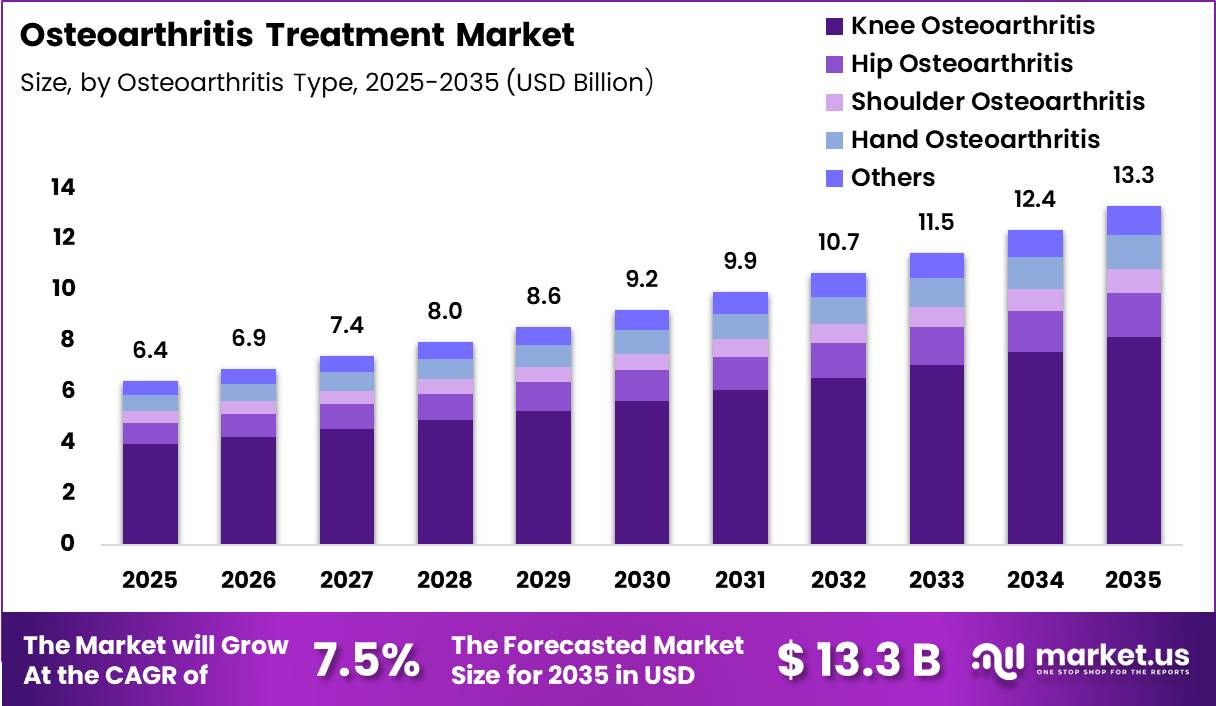
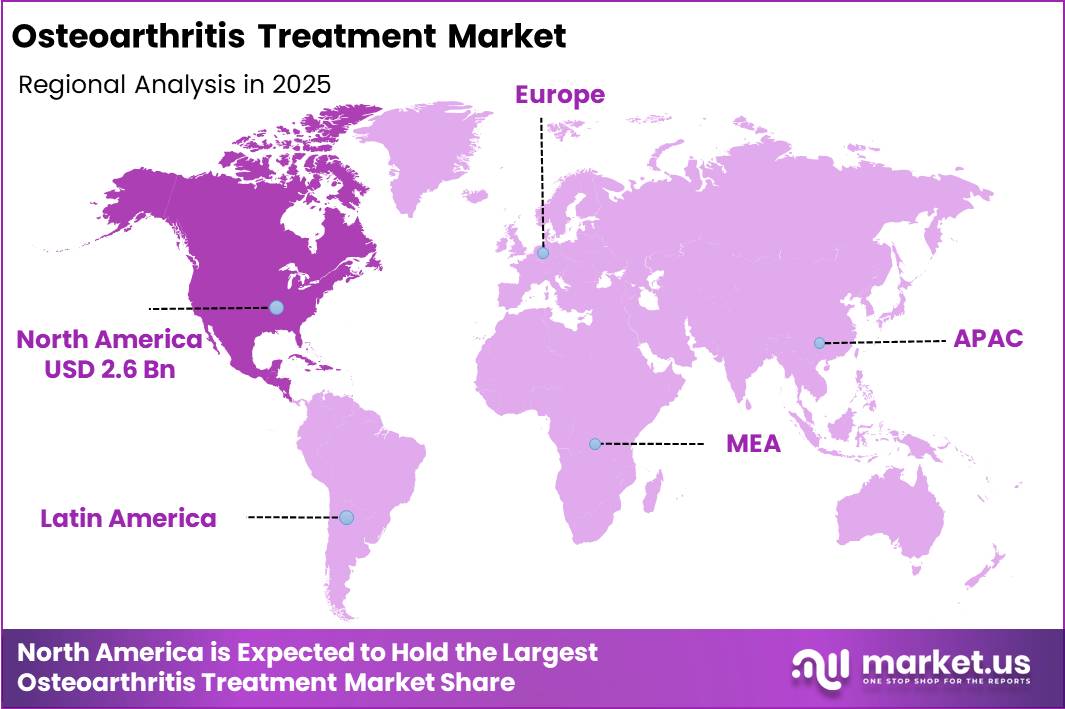
The Global Osteoarthritis Treatment Market size is expected to be worth around US$ 13.3 Billion by 2035 from US$ 6.4 Billion in 2025, growing at a CAGR of 7.5% during the forecast period from 2026 to 2035. In 2025, North America led the market, achieving over 40.5% share with a revenue of US$ 2.6 Billion.
Osteoarthritis is the most common form of arthritis and a major cause of pain and disability worldwide. It is a chronic degenerative joint disease characterised by the breakdown of cartilage, primarily affecting the knees, hips, hands, and spine. In 2019, an estimated 528 million people globally were living with osteoarthritis, which has more than doubled since 1990, representing a 113% increase over three decades.
The number of cases continues to rise due to ageing populations, as well as increasing rates of obesity and joint injuries. Approximately 73% of those affected are over the age of 55, and around 60% are women. While there is no definitive cure for osteoarthritis, a variety of established treatments aim to reduce pain, improve mobility, and maintain quality of life. First-line therapies include lifestyle and self-management strategies such as exercise, weight management, and physical therapy to strengthen muscles and protect the joints.
Symptom relief is often achieved with medications like non-steroidal anti-inflammatory drugs (NSAIDs), along with supportive measures such as braces or assistive devices. In moderate to severe cases, surgical interventions, particularly joint replacement for the knee and hip, are commonly performed when conservative care is insufficient.
Public health guidance emphasises early diagnosis and personalised care plans to slow the progression of disability. Treatment strategies are increasingly multidisciplinary, combining medical management, rehabilitation, and patient education to address both physical function and long-term well-being.
Key Takeaways
- Market Size: The Global Osteoarthritis Treatment Market size was US$ 6.4 billion in 2025. The market is estimated to grow to US$ 13.3 billion by 2035.
- Market Share: The Compound Annual Growth Rate (CAGR) of the market from 2026 to 2035 will be 7.5%.
- Product Type: Viscosupplements has the largest market share, accounting for 34.1% of total sales.
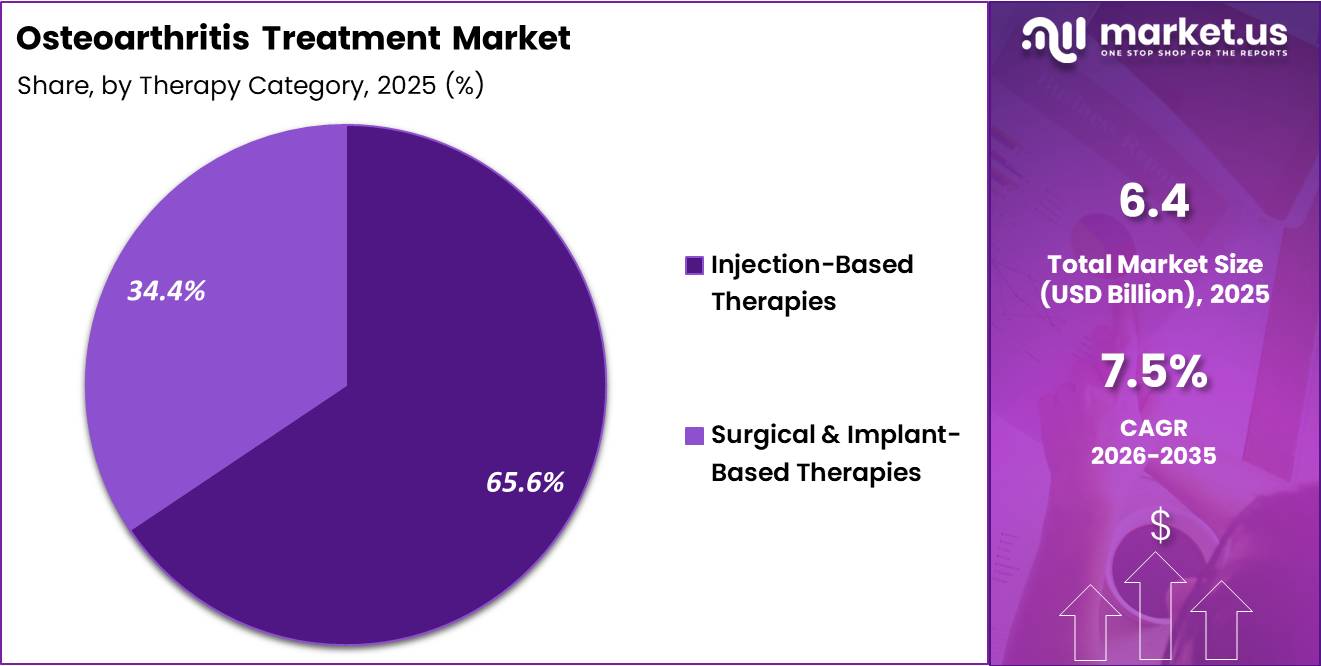
- Therapy Category: Injection-Based Therapies dominate the segment, accounting for 65.6% of total revenue.
- Osteoarthritis Type: Knee Osteoarthritis leads the segment, accounting for 61.4% of total revenue.
- End User: Hospitals dominate the segment, accounting for 43.6% of total revenue.
- Regional: North America is the dominant regional market, accounting for 40.5% of global sales.
Product Type Analysis
The osteoarthritis treatment market is segmented by product type into viscosupplements, platelet-rich plasma (PRP) therapy, bone graft substitutes, bone marrow aspirate concentrate (BMAC) therapy, stem cell therapy, cartilage resurfacing products, adipose tissue therapy, and others.
In 2025, viscosupplements dominated the market with a 34.1% share, reflecting their widespread clinical adoption for knee osteoarthritis management. Hyaluronic acid–based injections are favoured due to their established safety profile, ability to improve joint lubrication, and compatibility with outpatient care settings.
PRP therapy accounted for 22.3% of the market, driven by increasing acceptance of autologous biologics for pain reduction and functional improvement, particularly among younger and active patients.
Bone graft substitutes (12.3%) and BMAC therapy (9.0%) are gaining traction in regenerative and joint-preservation procedures, supported by advancements in biomaterials and minimally invasive techniques. Stem cell therapy represented 8.0%, reflecting growing clinical interest despite regulatory variability and cost considerations.
Cartilage resurfacing products (7.0%) address focal cartilage defects, while adipose tissue therapy (5.0%) benefits from its rich cellular content. The other segment (2.3%) includes emerging orthobiologic combinations and adjunctive solutions.
Therapy Category Analysis
Based on therapy category, the osteoarthritis treatment market is divided into injection-based therapies and surgical & implant-based therapies. In 2025, injection-based therapies accounted for a dominant 65.6% market share, underscoring the shift toward minimally invasive, outpatient-friendly interventions.
This category includes viscosupplements, corticosteroids, PRP, BMAC, stem cell injections, and adipose-derived therapies, all of which offer symptom relief with reduced recovery time compared to surgery.
The strong adoption of injection-based therapies is supported by increasing patient preference for non-surgical options, rising awareness of early-stage disease management, and broader availability across orthopaedic clinics and ambulatory care centres. These therapies are particularly effective in delaying disease progression and postponing surgical intervention, especially in mild to moderate osteoarthritis cases.
In contrast, surgical & implant-based therapies represented 34.4% of the market in 2025. This segment includes joint replacement, cartilage resurfacing, and reconstructive procedures, which remain critical for advanced osteoarthritis. While surgical volumes continue to grow due to ageing populations, higher costs, longer rehabilitation periods, and surgical risk profiles contribute to slower growth relative to injection-based approaches.
Osteoarthritis Type Analysis
The osteoarthritis treatment market is segmented by disease type into knee, hip, hand, shoulder, and other osteoarthritis forms. In 2025, knee osteoarthritis dominated the market with a 61.4% share, reflecting its high prevalence, significant impact on mobility, and strong demand for both conservative and interventional therapies. The knee joint is particularly vulnerable to age-related degeneration, obesity-related mechanical stress, and sports injuries, driving consistent utilisation of injections, biologics, and surgical solutions.
Hip osteoarthritis accounted for 13.0% of the market, supported by rising diagnosis rates and increased adoption of hip preservation and replacement procedures. Hand osteoarthritis represented 10.0%, commonly affecting older adults and women, with treatment focused on pain management and functional support. Shoulder osteoarthritis held a 7.0% share, benefiting from advances in arthroscopic techniques and biologic injections.
The other segment, comprising 8.6%, includes ankle, spine, and less common joint involvement. Overall, the dominance of knee osteoarthritis continues to shape product development, clinical research priorities, and healthcare resource allocation across the osteoarthritis treatment landscape.
End User Analysis
By end user, the osteoarthritis treatment market is segmented into hospitals, orthopaedic clinics, ambulatory surgical centres (ASCs), sports medicine centres, and others. In 2025, hospitals led the market with a 43.6% share, driven by their capacity to manage complex cases, perform joint replacement surgeries, and offer multidisciplinary care under one setting. Hospitals also play a central role in advanced diagnostics and post-operative rehabilitation.
Orthopaedic clinics represent a significant and growing segment, benefiting from increased patient preference for specialised, outpatient-focused musculoskeletal care. These facilities are major adopters of injection-based therapies such as viscosupplements and PRP. Ambulatory surgical centres (ASCs) continue to expand their role due to lower procedural costs, shorter hospital stays, and efficiency in minimally invasive orthopaedic surgeries.
Sports medicine centres contribute to demand through the treatment of younger, active populations seeking biologic and regenerative solutions. The other segment includes rehabilitation centres and speciality pain clinics. Overall, decentralisation of care toward outpatient and speciality settings is reshaping end-user dynamics in the osteoarthritis treatment market.
Key Market Segments
By Product Type
- Viscosupplements
- Platelet-Rich Plasma (PRP) Therapy
- Bone Graft Substitutes
- Bone Marrow Aspirate Concentrate (BMAC) Therapy
- Adipose Tissue Therapy
- Stem Cell Therapy
- Cartilage Resurfacing Products
- Others
By Therapy Category
- Injection-Based Therapies
- Viscosupplements
- PRP Therapy
- BMAC Therapy
- Adipose Tissue Therapy
- Stem Cell Therapy
- Surgical & Implant-Based Therapies
- ACI/MACI
- Bone Graft Substitutes
- Cartilage Resurfacing Products
- Others
By Osteoarthritis Type
- Knee Osteoarthritis
- Hip Osteoarthritis
- Shoulder Osteoarthritis
- Hand Osteoarthritis
- Others
By End User
- Hospitals
- Orthopedic Clinics
- Ambulatory Surgical Centres (ASCs)
- Sports Medicine Centres
- Others
Drivers
Earlier Clinical Diagnosis Expanding Treatment Access
Earlier clinical diagnoses that do not rely on imaging are facilitating increased access to osteoarthritis treatments by lowering diagnostic barriers and speeding up patient entry into care pathways. For adults over 45 years old who present with activity-related joint pain and limited morning stiffness, a clinical diagnosis can often be made without the need for routine imaging.
This allows primary care providers and frontline musculoskeletal specialists to begin management sooner, rather than waiting for radiological or specialist confirmation.
By enabling earlier intervention, this approach promotes a quicker adoption of exercise therapy, topical NSAIDs, weight management programs, and mobility aids. It reduces diagnostic delays and unnecessary imaging, while also expanding the number of effective prescribers. Consequently, treatment throughput improves, allowing more patients to access care at earlier stages of their disease progression.
| Driver | (~) % Impact on CAGR Forecast | Geographic Relevance | Impact Timeline |
|---|---|---|---|
| Ageing and obesity-linked patient expansion | +2.4% | North America core, EU, Japan, urban APAC | Long term |
| Guideline-led exercise and weight pathways | +1.6% | UK, EU, North America, Australia | Short term |
| Rising non-opioid injection innovation | +1.5% | North America, EU, Japan | Medium term |
| Earlier clinical diagnosis without imaging dependence | +1.2% | UK, EU, North America | Short term |
| Joint replacement referral normalisation | +1.4% | North America, EU, Canada, Australia | Medium term |
| Disability and productivity burden formalisation | +1.3% | North America, EU, Canada | Medium term |
Challenges
Fragmented Rehabilitation Pathways Limiting Care Continuity
Fragmented delivery of rehabilitation remains a significant challenge in managing osteoarthritis. Effective treatment relies on multiple care components, including education, counselling, exercise, weight management, and modifications to work tasks. These services are often provided across various settings such as primary care, physiotherapy, pain clinics, orthopaedic services, and community programs, but they lack adequate coordination.
Care pathways require ongoing follow-ups, self-management support, and symptom monitoring, which increases the number of transitions between providers. Each transition heightens the risk of missed reviews, poor adherence, duplicated assessments, and inconsistent treatment escalation. This fragmentation complicates tracking long-term outcomes and reduces patient retention within individual care networks.
Additionally, it raises coordination costs compared to more centralised treatment models. Consequently, the need for integrated care pathways, digital navigation platforms, and multidisciplinary coordination is becoming more crucial to ensure continuity of care.
| Challenge | (~) % CAGR Friction Drag | Geographic Relevance | Mitigation Horizon |
|---|---|---|---|
| Low long-term adherence | -1.6% | North America, EU, UK, Australia | Medium term |
| No disease-modifying standard | -1.8% | Global | Long term |
| Multimorbidity care complexity | -1.1% | North America, the EU, and Japan | Medium term |
| Orthopaedic capacity bottlenecks | -1.3% | UK, Canada, EU public systems, Australia | Medium term |
| Evidence gaps in injectables | -1.0% | North America, the EU, and Japan | Medium term |
| Fragmented rehab delivery | -1.2% | Global, strongest in mixed public-private systems | Medium term |
Restraints
Analgesic Safety Constraints Limiting Long-Term Pain Management
The safety trade-offs associated with analgesics pose a significant challenge in managing osteoarthritis, particularly because many patients are older and often have multiple health conditions that limit the long-term use of pain medications.
Clinical guidelines typically recommend using topical NSAIDs for knee osteoarthritis and advise the cautious use of oral NSAIDs, emphasising dose minimisation and appropriate safety monitoring. Treatment decisions should also consider underlying comorbidities and overall patient safety.
As a result, the severity of pain does not always lead to increased medication use, as some patients may discontinue therapy due to adverse effects or safety concerns. Additionally, there is limited support for long-term opioid use, which further restricts pharmacological options.
This situation often results in shorter treatment durations, more frequent changes in therapy, and a greater reliance on non-drug interventions. Consequently, medication-focused treatment models encounter significant limitations, despite the ongoing burden of symptoms experienced by patients.
| Restraint | (~) % Impact on CAGR Forecast | Geographic Relevance | Impact Timeline |
|---|---|---|---|
| No curative standard | -2.0% | Global | Long term |
| Conservative-care dropout | -1.5% | North America, EU, UK, Australia | Medium term |
| Surgical access constraints | -1.4% | UK, Canada, EU public systems, Australia | Medium term |
| Analgesic safety trade-offs | -1.1% | North America, the EU, and Japan | Short term |
| Weak injectable consensus | -1.0% | North America, the EU, and Japan | Medium term |
| Obesity-linked severity burden | -1.3% | North America, Gulf, urban APAC, EU | Long term |
Opportunity
Advanced Non Opioid Injectable Therapies Creating Future Opportunity
Advanced non-opioid joint injectables present a significant opportunity for the future, as there is currently no disease-modifying pharmacologic therapy available for osteoarthritis. This results in a major unmet need between short-term pain management and joint replacement surgery.
There is increasing regulatory momentum surrounding novel non-opioid intra-articular treatments, bolstered by recent fast-track pathways for therapies aimed at alleviating knee osteoarthritis pain.
The key opportunity lies in the development of longer-acting injectables that can provide meaningful pain relief for 26 weeks or longer, surpassing the benefits of traditional corticosteroid injections. These innovative therapies can help reduce reliance on opioids, delay the need for surgical intervention, and enhance the quality of life for patients.
Furthermore, they offer orthopaedic practices a higher-value treatment option within outpatient care settings. As the demand for minimally invasive and longer-lasting pain solutions continues to grow, advanced injectable therapies are well-positioned to play an increasingly important role in the management of osteoarthritis.
| Opportunity | (~) % Potential CAGR Upside | Geographic Relevance | Execution Window |
|---|---|---|---|
| Weight-loss drug pairing | +2.3% | North America, EU, Gulf, urban APAC | Short term |
| Digital-first OA pathways | +1.7% | North America, UK, EU, Australia | Short term |
| Early post-injury prevention | +1.5% | North America, EU, Japan, sports-medicine hubs | Medium term |
| Non-opioid injection platforms | +2.0% | North America, the EU, and Japan | Medium term |
| Orthopaedic service roll-ups | +1.4% | US, UK, Germany, Australia | Medium term |
| Emerging-market rehab models | +1.8% | India, SEA, LATAM, MENA | Long term |
Regional Analysis
In 2025, North America dominated the osteoarthritis treatment market, capturing over 40.5% of the market share with a revenue of US$ 2.6 billion. This market demonstrates clear regional variations influenced by demographic trends, healthcare infrastructure, and access to advanced therapies.
North America leads the global market due to a high prevalence of osteoarthritis, an ageing population, and strong adoption of injection-based and surgical interventions. The widespread availability of viscosupplements, biologic therapies, and joint replacement procedures, along with favourable reimbursement policies for orthopaedic care, continues to sustain high treatment volumes across the United States and Canada.
Europe holds a significant portion of the market, driven by an increasing elderly population and well-established public healthcare systems. Countries in Western Europe show strong use of conservative therapies and viscosupplement injections, while the demand for knee and hip replacement surgeries remains robust due to long disease durations and improved surgical outcomes.
The Asia-Pacific region is experiencing the fastest growth, propelled by rapid population ageing, rising obesity rates, and improving access to orthopaedic care. The expansion of private healthcare infrastructure and increased awareness of early osteoarthritis management are accelerating the adoption of injectable and regenerative therapies in major economies.
In Latin America, the market is steadily expanding, supported by increasing diagnosis rates and gradual improvements in the availability of orthopaedic services. Meanwhile, the Middle East and Africa market is smaller but growing, as healthcare investments rise and access to advanced osteoarthritis treatments improves, particularly in urban centres.
Key Regions and Countries
North America
- The US
- Canada
Europe
- Germany
- France
- The U.K.
- Italy
- Spain
- Russia & CIS
- Rest of Europe
Asia Pacific
- China
- India
- Japan
- South Korea
- ASEAN
- Australia & New Zealand
- Rest of Asia Pacific
Middle East & Africa
- GCC
- South Africa
- Rest of Middle East & Africa
Latin America
- Brazil
- Mexico
- Rest of Latin America
Key Player Analysis
Competitive advantage in the global osteoarthritis treatment market is achieved through a broad therapeutic portfolio coverage spanning injection-based and surgical implant-based treatment modalities, established clinical relationships with orthopaedic surgeons and sports medicine specialists, and continued investment in regenerative medicine technologies, including platelet-rich plasma, bone marrow aspirate concentrate, and stem cell therapy platforms.
Major strategic priorities for leading manufacturers include expansion of viscosupplementation product formulations, improving injection durability and patient comfort, development of next-generation cartilage resurfacing and bone graft substitute biomaterials, and growing investment in ambulatory surgical centre and sports medicine centre distribution channels, addressing the structural shift toward outpatient osteoarthritis treatment delivery.
Strong hospital and orthopaedic clinic procurement relationships, combined with expanding presence across sports medicine centres, represent a critical competitive differentiator for manufacturers serving the dominant knee osteoarthritis treatment segment globally.
Top Key Players
- Abbott Laboratories
- Anika Therapeutics Inc.
- Bayer AG
- Bioventus LLC
- Ferring Pharmaceuticals
- Flexion Therapeutics Inc.
- GlaxoSmithKline Plc
- Johnson & Johnson
- LG Chem
- Novartis AG
- Pfizer Inc.
- Sanofi SA
- Seikagaku Corporation
- Smith & Nephew
- Teva Pharmaceutical Industries Ltd.
- Viatris Inc.
- Zimmer Biomet
- Other Key Players
Recent Developments
- In January 2026, Bioventus LLC launched a new extended-duration viscosupplement formulation for treating knee osteoarthritis. This product is aimed at orthopaedic clinics and sports medicine centres that are looking for longer-lasting pain relief for patients while reducing the frequency of injections.
- In February 2026, Anika Therapeutics Inc. introduced a new cartilage resurfacing product designed for hip and shoulder osteoarthritis applications. This addition expands Anika’s orthobiologics portfolio, targeting buyers in ambulatory surgical centres and hospitals.
- In April 2026, Smith & Nephew secured a multi-year supply agreement with a major Asian hospital network. This agreement covers their PRP therapy and cartilage resurfacing product portfolio, enhancing their institutional presence in treatments for knee and hip osteoarthritis in the region.
Report Scope
| Report Features | Description |
|---|---|
| Market Value (2025) | US$ 6.4 Billion |
| Forecast Revenue (2035) | US$ 13.3 Billion |
| CAGR (2026-2035) | 7.5% |
| Base Year for Estimation | 2025 |
| Historic Period | 2020-2024 |
| Forecast Period | 2026-2035 |
| Report Coverage | Revenue Forecast, Market Dynamics, Competitive Landscape, Recent Developments |
| Segments Covered | By Product Type (Viscosupplements, Platelet-Rich Plasma (PRP) Therapy, Bone Graft Substitutes, Bone Marrow Aspirate Concentrate (BMAC) Therapy, Adipose Tissue Therapy, Stem Cell Therapy, Cartilage Resurfacing Products, Others), By Therapy Category (Injection-Based Therapies, Surgical & Implant-Based Therapies), By Osteoarthritis Type (Knee Osteoarthritis, Hip Osteoarthritis, Shoulder Osteoarthritis, Hand Osteoarthritis, Others), By End User (Hospitals, Orthopedic Clinics, Ambulatory Surgical Centers (ASCs), Sports Medicine Centers, Others) |
| Regional Analysis | North America – The US, Canada; Europe – Germany, France, U.K., Italy, Spain, Russia & CIS, Rest of Europe; Asia Pacific – China, India, Japan, South Korea, ASEAN, Australia & New Zealand, Rest of Asia Pacific; Middle East & Africa – GCC, South Africa, Rest of Middle East & Africa; Latin America – Brazil, Mexico, Rest of Latin America |
| Competitive Landscape | Abbott Laboratories, Anika Therapeutics Inc., Bayer AG, Bioventus LLC, Ferring Pharmaceuticals, Flexion Therapeutics Inc., GlaxoSmithKline Plc, Johnson & Johnson, LG Chem, Novartis AG, Pfizer Inc., Sanofi SA, Seikagaku Corporation, Smith & Nephew, Teva Pharmaceutical Industries Ltd., Viatris Inc., Zimmer Biomet, Other Key Players |
| Customization Scope | Customization for segments, region/country-level will be provided. Moreover, additional customization can be done based on the requirements. |
| Purchase Options | We have three licenses to opt for: Single User License, Multi-User License (Up to 5 Users), Corporate Use License (Unlimited Users and Printable PDF) |





































