


Market Overview
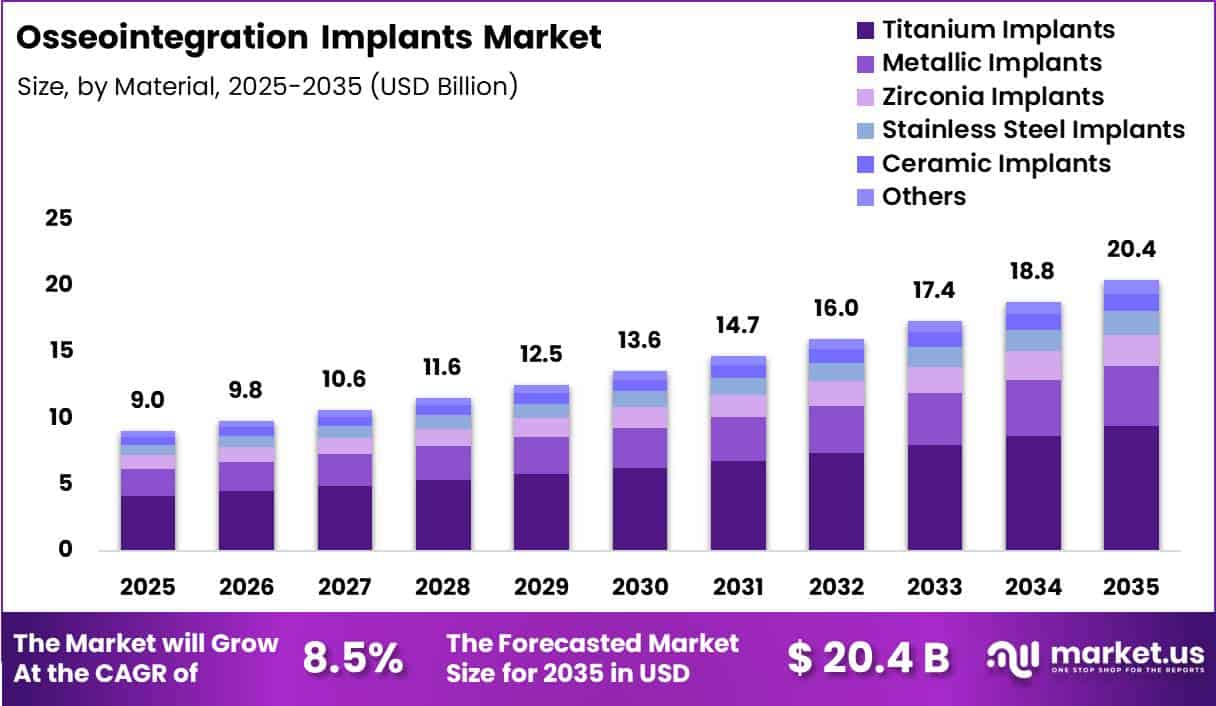
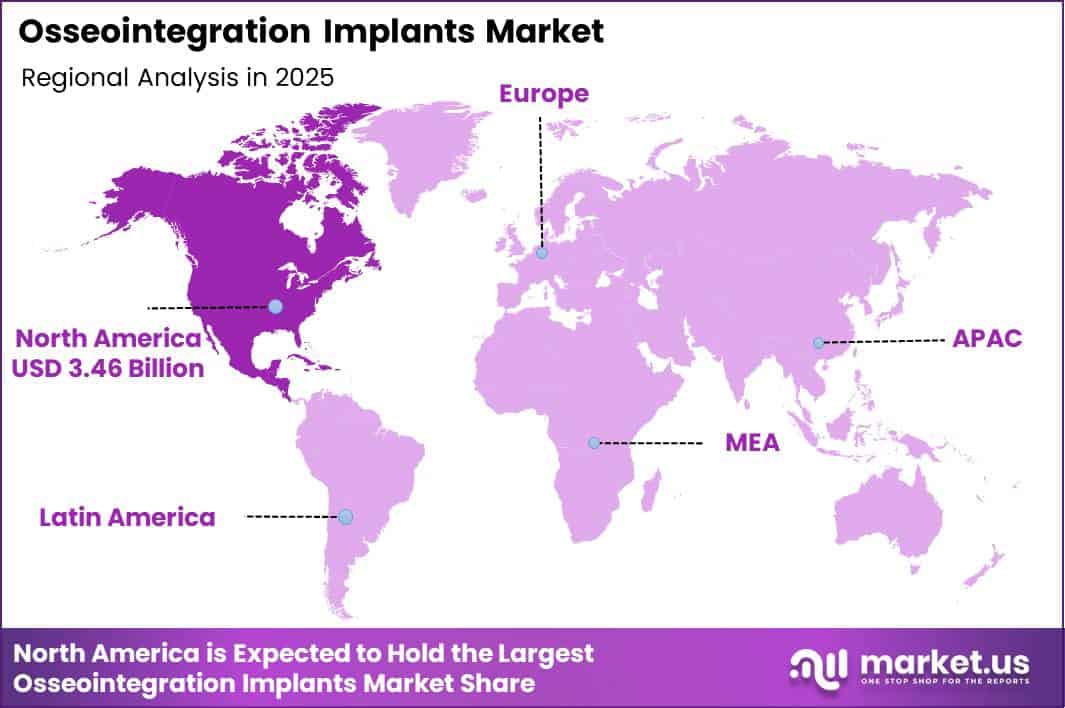
Global Osseointegration Implants Market size is expected to be worth around US$ 20.4 Billion by 2035 from US$ 9.0 Billion in 2025, growing at a CAGR of 8.5% during the forecast period from 2026 to 2035. In 2025, North America led the market, achieving over 38.2% share with a revenue of US$ 3.46 Billion.
Osseointegration implants are advanced medical devices designed to create a direct structural and functional connection between living bone and an implant surface. These implants are widely used in dental restoration procedures and limb prosthetic attachment systems, offering improved stability, comfort, and mobility compared to conventional socket-based prostheses.
Rising incidences of traumatic injuries, limb loss, degenerative bone disorders, and an aging population are supporting long-term demand for these technologies.
According to the U.S. Centers for Disease Control and Prevention (CDC), millions of Americans are living with limb loss or are at risk of amputation due to diabetes, vascular diseases, trauma, and cancer-related conditions.
The U.S. National Institutes of Health (NIH) also highlights that osseointegration technology has demonstrated significant benefits in enhancing prosthetic control, reducing skin complications, and improving patient quality of life.
Furthermore, the U.S. Food and Drug Administration (FDA) has authorized osseointegration-based prosthetic systems for selected patients with above-knee amputations, reflecting increasing clinical acceptance of the technology. Growing investments in orthopedic innovation, advancements in biomaterials such as titanium alloys, and expanding rehabilitation programs are expected to create additional opportunities for the industry.
Increasing numbers of dental implant procedures worldwide, combined with improvements in surgical techniques and implant surface technologies, are further contributing to market expansion. Continued research initiatives and supportive healthcare infrastructure are anticipated to strengthen adoption rates over the coming years.
Key Takeaways
- Market Size : Osseointegration Implants Market size is expected to be worth around US$ 20.4 Billion by 2035 from US$ 9.0 Billion in 2025.
- Market Share : The market is growing at a CAGR of 8.5% during the forecast period from 2026 to 2035.
- Material Analysis : The titanium implants segment dominated the osseointegration implants market in 2025, accounting for 46.2% of the total market share.
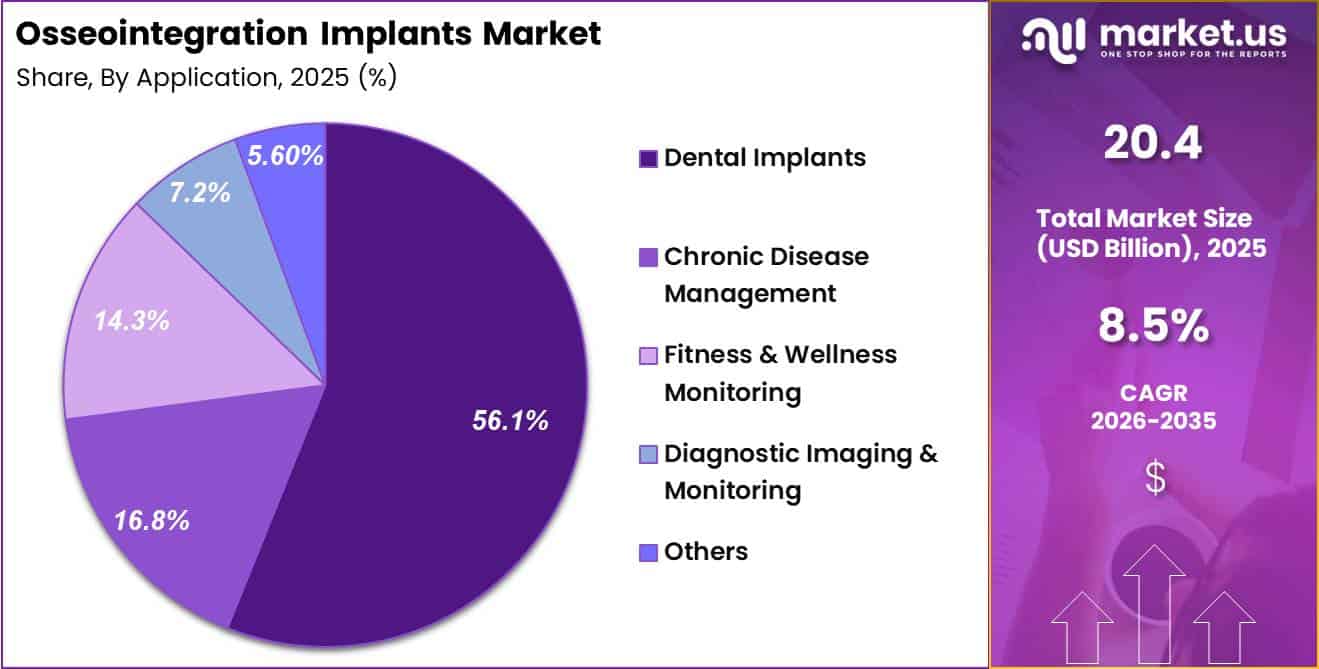
- Application Analysis : The dental implants segment dominated the osseointegration implants market in 2025, holding 56.1% of the global market share.
- End Use Analysis: Hospitals dominated the osseointegration implants market in 2025, accounting for 43.5% of the overall market share.
- Regional Analysis: In 2025, North America led the market, achieving over 38.2% share with a revenue of US$ 3.46 Billion.
Material Analysis
The titanium implants segment dominated the osseointegration implants market in 2025, accounting for 46.2% of the total market share. Titanium remains the preferred material because of its excellent biocompatibility, high corrosion resistance, and strong ability to form a direct bond with surrounding bone tissue.
It has long been considered the gold standard for dental and orthopedic implants due to its predictable long-term clinical performance. Continuous advancements in titanium surface treatments, coatings, and porous structures are further improving bone healing and implant stability.
Regulatory agencies such as the FDA recognize titanium and titanium alloys as widely used materials in implant systems. Metallic implants represented 22.3% of the market, benefiting from their mechanical strength and suitability for load-bearing orthopedic applications.
Zirconia implants captured 11.5% of market revenue and are gaining popularity due to their aesthetic appearance, favorable tissue response, and metal-free composition. Stainless steel implants accounted for 8.8%, supported by their cost-effectiveness and use in temporary fixation procedures.
Ceramic implants represented 6.3% of the market, driven by increasing demand for advanced biomaterials with improved biological performance. The remaining 4.9% consisted of other materials, including bioactive composites and novel alloys designed to enhance osseointegration outcomes and long-term implant success.
Application Analysis
The dental implants segment dominated the osseointegration implants market in 2025, holding 56.1% of the global market share. Growth in this segment is supported by rising cases of tooth loss, increasing awareness of restorative dentistry, and greater adoption of permanent implant-based solutions.
Dental implants provide improved chewing function, preserve jawbone structure, and enhance patient quality of life, making them a preferred treatment option. Technological advancements in implant design, digital dentistry, and guided surgical procedures continue to support segment expansion.
Hip implants accounted for 16.8% of the market due to increasing incidences of osteoarthritis, trauma-related injuries, and an aging population requiring joint replacement procedures. Knee implants represented 14.3% of total revenue, benefiting from rising demand for mobility restoration and advancements in cementless implant technologies that rely on osseointegration for long-term fixation.
Spinal implants captured 7.2% of the market, driven by increasing spinal disorder cases and growing use of fusion procedures. The remaining 5.6% was attributed to other applications, including craniofacial reconstruction, limb prosthetics, and specialized orthopedic procedures.
Increasing acceptance of bone-integrated technologies across multiple medical disciplines is expected to support continued market growth throughout the forecast period.
End Use Analysis
Hospitals dominated the osseointegration implants market in 2025, accounting for 43.5% of the overall market share. The segment benefits from access to advanced surgical infrastructure, specialized orthopedic and dental departments, and highly trained healthcare professionals capable of performing complex implant procedures.
Hospitals also manage a significant volume of trauma, reconstructive, and joint replacement surgeries, supporting demand for osseointegrated implant systems. Increased investments in robotic-assisted surgery and minimally invasive techniques further strengthen hospital adoption.
Dental clinics represent another important end-use segment, supported by the growing number of implant-based restorative procedures and increasing patient preference for permanent tooth replacement options. Orthopedic clinics are witnessing steady growth due to rising cases of musculoskeletal disorders, sports injuries, and limb reconstruction procedures requiring advanced implant technologies.
Research institutions also contribute to market expansion through ongoing studies focused on biomaterials, implant coatings, and surface modification technologies designed to improve bone integration. Collaboration between academic organizations, healthcare providers, and implant manufacturers is accelerating innovation in osseointegration technologies.
Increasing patient awareness, favorable clinical outcomes, and continued advancements in implant materials are expected to support demand across all end-use settings over the coming years.
Market Segmentations
By Material
- Titanium Implants
- Metallic Implants
- Zirconia Implants
- Stainless Steel Implants
- Ceramic Implants
- Others
By Application
- Dental Implants
- Hip Implants
- Knee Implants
- Spinal Implants
- Others
By End Use
- Hospitals
- Dental Clinics
- Orthopedic Clinics
- Research Institutions
Drivers
Rehabilitation Payment Uplift and Pathway Formalization
In the United States, reimbursement trends are increasingly supportive of higher intensity post surgical rehabilitation, which is critical for osseointegration OI adoption because functional outcomes depend heavily on structured rehab pathways rather than implantation alone.
CMS finalized a 2.6 % increase to FY 2026 Inpatient Rehabilitation Facility IRF payment rates, representing roughly USD 340 million in aggregate uplift, alongside updates to case mix and quality reporting requirements. While not OI specific, this improves the financial viability of multidisciplinary rehabilitation programs that OI patients require post implantation.
CMS has also proposed a further 2.8 % payment increase for FY 2027, along with clearer expectations around therapy initiation timing and interdisciplinary care team reviews. This signals gradual standardization of higher acuity rehabilitation workflows within the payment system.
From a commercialization standpoint, this reduces friction for hospitals adopting OI programs by improving reimbursement coverage for the prolonged rehab phase. It also reduces reliance on internal hospital cross subsidies that previously limited adoption of complex prosthetic and implant rehabilitation combinations.
Strategically, this shift benefits integrated providers and manufacturers that can bundle surgical training, patient selection tools, and structured rehabilitation protocols into a coordinated care offering rather than selling implants in isolation.
Overall, strengthening IRF payments and formalizing rehab pathways supports broader OI scalability and improves the economic case for end to end limb restoration programs.
| Driver | (~) % Impact on CAGR Forecast | Geographic Relevance | Impact Timeline |
|---|---|---|---|
| Amputee mobility upgrade from socket-to-bone anchoring | +2.2% | North America core, Western Europe core, Australia selective | Medium term (2-4 years) |
| Rehabilitation payment uplift and pathway formalization | +1.4% | U.S. core, Canada spill-over, EU selective | Short term (≤ 2 years) |
| Diabetes-linked limb loss and complex residual-limb burden | +1.7% | APAC corridors, North America, Latin America spill-over, Middle East | Medium term (2-4 years) |
| Implant design innovation in porous titanium and custom anatomy-fit systems | +1.5% | U.S., Germany, Nordics, Australia, Japan | Medium term (2-4 years) |
| Broader clinical evidence reducing surgeon and patient adoption friction | +1.3% | U.S. core, EU core, APAC tertiary centers | Short term (≤ 2 years) |
| Regulatory and hospital capability expansion for advanced bone-integration procedures | +1.1% | U.S. core, Western Europe, high-income APAC | Long term (≥ 4 years) |
Challenges
Regulatory Pathway Complexity in Osseointegration Devices
Advanced osseointegration devices are increasingly subject to more complex regulatory pathways compared with traditional dental and orthopedic implants. While many conventional implants still qualify for streamlined 510k type approvals, newer systems incorporating porous structures, novel biomaterials, sensors, or transcutaneous interfaces often require De Novo classification or PMA like review, adding uncertainty and extending development timelines. This creates an estimated 0.9 % point drag on market CAGR.
Regulators now demand broader preclinical evidence packages, including testing for chronic toxicity, genotoxicity, hemocompatibility, corrosion resistance, fatigue under simulated physiological loads, and material degradation. These expanded requirements increase both laboratory workload and computational modeling effort, often adding several months to regulatory preparation.
For endosseous implants, authorities also require detailed manufacturing tolerance validation and statistical analysis across multiple samples per design, sometimes involving dozens to hundreds of units per configuration.
This significantly increases cost and slows iteration cycles for product development. In the European Union, evolving medical device regulations 2024 to 2025 aim to improve safety oversight while introducing more digitalized submission systems.
However, limited notified body capacity and transitional interpretation of new rules create short term approval bottlenecks. Each additional 6 to 12 months of regulatory delay reduces effective revenue realization time and shortens patent protection value, encouraging incremental rather than disruptive innovation. Overall, regulatory complexity remains a meaningful but transitional constraint over a 2 to 4 year horizon as global frameworks stabilize.
| Challenge | (~) % CAGR Friction Drag | Geographic Relevance | Mitigation Horizon |
|---|---|---|---|
| Complex infection control burden | -1.3% | North America, EU, APAC hospitals | Medium term (2-4 years) |
| Surgical skill & training gap | -1.1% | North America, EU, APAC metros | Long term (≥ 4 years) |
| Regulatory pathway complexity | -0.9% | U.S. FDA, EU MDR hubs | Medium term (2-4 years) |
| Implant durability data gaps | -0.8% | Global early adopter centers | Long term (≥ 4 years) |
| Cost & reimbursement friction | -1.4% | North America payers, EU social systems | Long term (≥ 4 years) |
| Digital integration & data silos | -0.7% | Advanced orthopedic networks | Medium term (2-4 years) |
Restraints
Reimbursement and Out of Pocket Cost Friction in Dental Implants
Despite strong clinical evidence linking oral health to systemic outcomes, dental implant reimbursement remains fragmented across major healthcare systems.
In the United States, Original Medicare excludes routine dental implant coverage, while Medicare Advantage and commercial insurers typically offer only partial reimbursement. As a result, patients especially older adults often face out of pocket costs of USD 3,000 to 5,000 per implant case, creating a major affordability barrier.
Policy movement toward medical dental integration under CMS and HHS has improved preventive care coding and referral pathways, but these updates largely focus on screening and limited procedural adjustments rather than full implant coverage. This means structural cost burdens are likely to persist through at least 2026.
In Europe, public systems generally reimburse implants only in trauma or oncology related cases, while elective procedures remain partially or fully self funded. Similar mixed reimbursement models exist in Latin America and other emerging markets, reinforcing a global pattern of cost sensitivity. Even modest price increases of 10 to 15 % can reduce elective implant volumes by 5 to 8 %, particularly in mid income segments.
For manufacturers and providers, this environment shifts demand toward private clinics, dental tourism, and premium urban markets, while increasing reliance on financing solutions and patient acquisition spending.
Overall, reimbursement fragmentation and high patient cost sharing are estimated to reduce baseline market growth by approximately 1.9 % points of CAGR, as utilization remains constrained relative to underlying clinical need.
| Restraint | (~) % Impact on CAGR Forecast | Geographic Relevance | Impact Timeline |
|---|---|---|---|
| Tightening implant regulatory evidence requirements | -2.2% | North America core, EU, selective APAC | Medium term (2–4 years) |
| Reimbursement and out-of-pocket cost friction in dental implants | -1.9% | North America, EU, selected Latin America | Medium term (2–4 years) |
| Titanium and advanced biomaterial supply chain volatility | -1.6% | EU, North America, APAC corridors | Short to medium term (≤ 4 years) |
| Surgical capacity and workforce constraints | -1.4% | North America core, EU, aging APAC markets | Medium to long term (≥ 3–4 years) |
| Long clinical validation cycles for novel coatings and surfaces | -1.3% | North America, EU, Japan, Korea | Long term (≥ 4 years) |
| Post-implant monitoring and quality standards escalation | -1.1% | North America, EU, high-compliance APAC | Medium term (2–4 years) |
Opportunity
Smart Sensor Enabled Osseointegration Platforms
A key future opportunity in osseointegration lies in smart sensor enabled implant platforms that go beyond passive skeletal attachment to integrate embedded electronics, connectivity, and real time data feedback.
While smart orthopedic implants today grow at a modest 4 to 5 % CAGR, they are largely confined to joint replacements and have not yet been fully integrated into osseointegration workflows. These next generation systems could incorporate load sensing, temperature monitoring, and infection risk indicators, enabling early detection of complications such as loosening or local inflammation.
In advanced configurations, bidirectional interfaces could improve control of prosthetic limbs, supporting more intuitive movement and tighter human device integration, building on early upper limb osseointegration research.
Commercially, if manufacturers invest 8 to 10 % of revenue into R&D and successfully launch 2 to 3 smart platforms by 2030, pricing could rise by 20 to 30 % over conventional implants, for example USD 18,000 to 22,000 versus USD 14,000 to 16,000. If these systems capture 15 to 20 % of global procedures by 2035, they could generate an incremental USD 2 to 3 billion annual market opportunity.
Additional upside comes from software enabled revenue streams such as remote monitoring subscriptions, potentially priced at USD 50 to 100 per patient per month, improving margins by 400 to 600 basis points.
This is still an emerging opportunity due to evolving regulatory frameworks for implantable electronics, cybersecurity requirements, and limited reimbursement for digital services. However, over time, smart platforms could contribute an estimated 2 to 3 % points of CAGR upside by creating a differentiated, data driven subsegment within osseointegration.
| Opportunity | (~) % Potential CAGR Upside | Geographic Relevance | Execution Window |
|---|---|---|---|
| Diabetic limb salvage & post-amputation rehab pathways | +2.5% | North America, EU, LMIC urban APAC | Medium term (2-4 years) |
| Trauma & military amputee centers of excellence | +1.8% | North America, Western Europe, Middle East | Short term (≤ 2 years) |
| Smart, sensor-enabled osseointegration platforms | +2.2% | Global tier-1 hospitals, APAC tech hubs | Medium term (2-4 years) |
| Value-based reimbursement & bundled care models | +1.5% | U.S., EU-5, select LATAM | Medium term (2-4 years) |
| Upper-extremity and multi-level indications expansion | +2.0% | North America, EU, Asia-Pacific | Long term (≥ 4 years) |
| Emerging-market hub-and-spoke limb reconstruction networks | +1.7% | South Asia, Sub-Saharan Africa, MENA | Long term (≥ 4 years) |
Regional Analysis
North America dominated the osseointegration implants market in 2025, accounting for more than 38.2% of the global market and generating revenue of approximately US$ 3.46 billion. The region’s leadership is supported by a well-established healthcare infrastructure, high adoption of advanced orthopedic and dental technologies, and increasing demand for innovative implant solutions.
The presence of specialized orthopedic centers, rehabilitation facilities, and experienced surgeons has further accelerated the utilization of osseointegration procedures across the region.
The United States remains the primary contributor to regional growth due to rising incidences of limb amputations caused by diabetes, vascular disorders, trauma, and accidents. Increasing awareness regarding the long-term benefits of osseointegrated prosthetic systems, including enhanced mobility, improved comfort, and better quality of life, has encouraged greater patient acceptance.
In addition, favorable reimbursement frameworks and continuous investments in research and development activities support technological advancements in implant design and biomaterials.
Canada also contributes to regional expansion through growing healthcare expenditure and increasing access to advanced surgical treatments. Collaborations among healthcare institutions, medical device manufacturers, and research organizations are promoting innovation in implant technologies.
Furthermore, an aging population and a rising number of dental restoration procedures are expected to sustain demand for osseointegration implants across North America throughout the forecast period.
Key Regions and Countries
North America
- The US
- Canada
Europe
- Germany
- France
- The U.K.
- Italy
- Spain
- Russia & CIS
- Rest of Europe
Asia Pacific
- China
- India
- Japan
- South Korea
- ASEAN
- Australia & New Zealand
- Rest of Asia Pacific
Middle East & Africa
- GCC
- South Africa
- Rest of Middle East & Africa
Latin America
- Brazil
- Mexico
- Rest of Latin America
Key Player Analysis
The osseointegration implants market is characterized by the presence of companies specializing in orthopedic, dental, and bone-anchored implant technologies. Institut Straumann AG remains a leading participant in dental osseointegration through its implant systems, biomaterials, and digital treatment platforms.
The company continues to invest heavily in scientific evidence, supporting more than 180 ongoing clinical studies globally in 2025 and treating nearly 16 million implant patients annually. OSSTEM IMPLANT Co., Ltd. has strengthened its position in the value implant segment through extensive clinical education programs, manufacturing expansion, and broad adoption across Asia-Pacific markets.
Dentsply Sirona, KeystoneDentalGroup, and Ivoclar Vivadent are expanding their implant portfolios by integrating digital dentistry, guided surgery, and restorative solutions that improve treatment efficiency and long-term implant stability.
Integrum maintains a specialized focus on bone-anchored prosthetic systems for amputees, supporting advances in orthopedic osseointegration. Meanwhile, Stryker, Medtronic, and CONMED Corporation leverage their expertise in orthopedic implants, surgical technologies, and musculoskeletal innovation to support developments in osseointegrated implant procedures.
Continuous investments in implant surface engineering, titanium-based biomaterials, and digital workflows are expected to enhance competition and technological advancement within the market over the coming years.
Top Key Players
- Stryker
- Integrum Energy Pvt. Ltd.
- OSSTEM IMPLANT CO. LTD.
- Medtronic
- KeystoneDentalGroup
- Ivoclar Vivadent
- CONMED Corporation
- Institut Straumann AG
- Dentsply Sirona
- Smith+Nephew
- CAMLOG Biotechnologies GmbH
- BEGO GmbH & Co. KG
- 3M
- Zimmer Biomet
Recent Developments
- In July 2025, Osstem Implant Co., Ltd. and ZimVie signed an exclusive distribution agreement in China, under which Osstem became responsible for commercialization of ZimVie implant systems in the Chinese market, estimated at more than 10 million implant units annually.
- In July 2025, Zimmer Biomet entered into a definitive agreement to acquire Monogram Technologies for approximately US$ 177 million, adding semi-autonomous and fully autonomous orthopedic robotic technologies to its implant ecosystem, with commercialization targeted from 2027 onward.
- In January 2025, Zimmer Biomet announced the acquisition of Paragon 28 for approximately US$ 1.1 billion, expanding its orthopedic implant portfolio in foot and ankle reconstruction and strengthening its musculoskeletal business capabilities.
Report Scope
| Report Features | Description |
|---|---|
| Market Value (2025) | US$ 9.0 Billion |
| Forecast Revenue (2035) | US$ 20.4 Billion |
| CAGR (2026-2035) | 8.5% |
| Base Year for Estimation | 2025 |
| Historic Period | 2020-2024 |
| Forecast Period | 2026-2035 |
| Report Coverage | Revenue Forecast, Market Dynamics, Competitive Landscape, Recent Developments |
| Segments Covered | By Material (Titanium Implants, Metallic Implants, Zirconia Implants, Stainless Steel Implants, Ceramic Implants, Others), By Application (Dental Implants, Hip Implants, Knee Implants, Spinal Implants, Others), By End Use (Hospitals, Dental Clinics, Orthopedic Clinics, Research Institutions) |
| Regional Analysis | North America – The US, Canada; Europe – Germany, France, U.K., Italy, Spain, Russia & CIS, Rest of Europe; Asia Pacific – China, India, Japan, South Korea, ASEAN, Australia & New Zealand, Rest of Asia Pacific; Middle East & Africa – GCC, South Africa, Rest of Middle East & Africa; Latin America – Brazil, Mexico, Rest of Latin America |
| Competitive Landscape | Stryker, Integrum Energy Pvt. Ltd., OSSTEM IMPLANT CO. LTD., Medtronic, KeystoneDentalGroup, Ivoclar Vivadent, CONMED Corporation, Institut Straumann AG, Dentsply Sirona, Smith+Nephew, CAMLOG Biotechnologies GmbH, BEGO GmbH & Co. KG, 3M, Zimmer Biomet |
| Customization Scope | Customization for segments, region/country-level will be provided. Moreover, additional customization can be done based on the requirements. |
| Purchase Options | We have three licenses to opt for: Single User License, Multi-User License (Up to 5 Users), Corporate Use License (Unlimited User and Printable PDF) |





































