


Global Organic Honey Market By Type (Alfalfa, Buckwheat, Wildflower, Clover, Others), By Product Type (Clover Honey, Manuka Honey, Sourwood Honey, Buckwheat Honey, Rosemary Honey, Dandelion Honey, Others), By Packaging (Glass Jar, Bottle, Tub, Others), By Application (Food and Beverages, Personal Care, Pharmaceuticals, Households, Others), By End Use (Cosmetics And Personal Care Products, Food And Beverages, Pharmaceuticals and Nutraceuticals, Others), By Sales Channel (Wholesalers/Distributors, Modern Trade, Convenience Stores, Online Sales, Others), By Region And Companies - Industry Segment Outlook, Market Assessment, Competition Scenario, Trends, And Forecast 2024-2033
- Published date: November 2024
- Report ID: 133218
- Number of Pages: 381
- Format:
-
keyboard_arrow_up
Quick Navigation
- Report Overview
- Key Takeaways
- By Type Analysis
- By Product Type Analysis
- By Packaging Analysis
- By Application Analysis
- By End-Use Analysis
- By Sales Channel Analysis
- Key Market Segments
- Driving factors
- Restraining Factors
- Growth Opportunity
- Latest Trends
- Regional Analysis
- Key Players Analysis
- Recent Development
- Report Scope
Report Overview
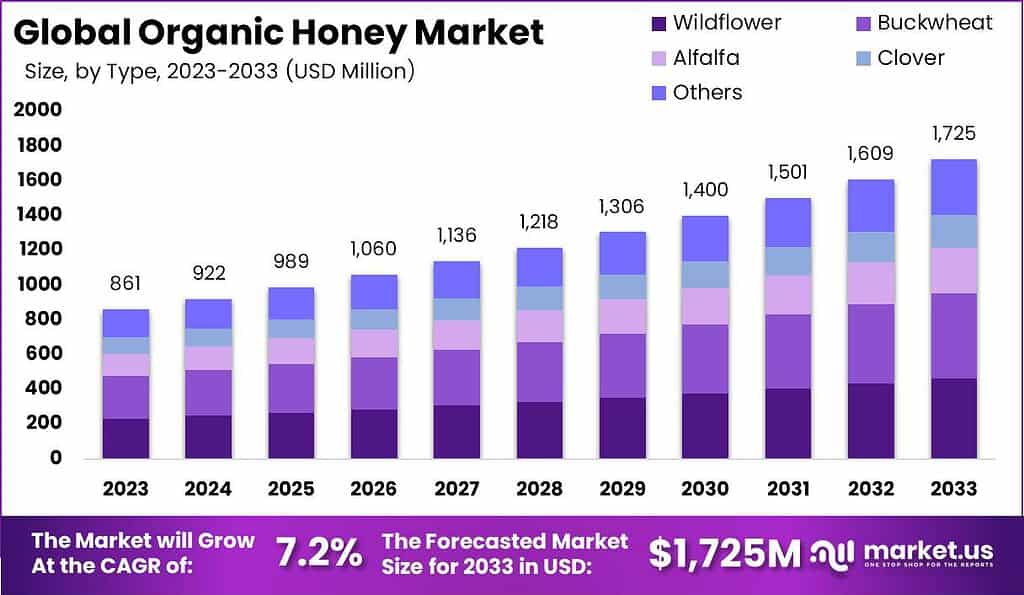
The Global Organic Honey Market size is expected to be worth around USD 1725.0 Million by 2033, from USD 860.5 Million in 2023, growing at a CAGR of 7.2% during the forecast period from 2024 to 2033.
The “Organic Honey Market” refers to the part of the honey industry that specifically deals with honey products that are certified organic. This means the honey comes from bees that have gathered nectar from plants that were not treated with chemical pesticides, and the processing of the honey follows strict organic standards, which avoid artificial additives or processes.
The market demand for organic honey is on the rise, driven by consumers increasing preference for natural and health-oriented products. More and more people around the world are choosing organic honey because they believe it’s safer and healthier, being produced without harmful chemicals and synthetic processes.
The U.S. Department of Agriculture (USDA) enforces several regulations that affect the honey industry, including organic certification standards and marketing regulations under the National Organic Program (NOP).
The government also supports the honey industry through the Agricultural Marketing Service (AMS), which facilitates various programs such as the National Honey Board. This board focuses on research and promotion programs to enhance the honey market, funded by an assessment rate of $0.015 per pound on domestic and imported honey.
Globally, governments are also investing heavily in beekeeping to enhance honey production. For example, India has allocated around USD 57.75 million under the Atma Nirbhar Abhiyan Scheme to boost beekeeping practices and improve honey production. Similar investments are observed in China, aiming to enhance production and ensure the supply of high-quality honey.
The organic honey market shows a growing trend with a significant consumer shift towards natural and organic products. This is driven by increasing health consciousness among consumers and a growing preference for products that are perceived as healthier and more natural.
The organic honey market is also supported by substantial growth in regions such as Europe and the Middle East & Africa, which collectively hold a significant share of the market due to high consumer demand for raw and organic honey.
In the United States, the USDA has allocated over $1 billion to support sustainable agricultural practices, benefiting local honey producers who align with these values. This funding aids in promoting sustainable agriculture which is a key component of the organic honey industry
Key Takeaways
- The Global Organic Honey Market size is expected to be worth around USD 1725.0 Million by 2033, from USD 860.5 Million in 2023, growing at a CAGR of 7.2% during the forecast period from 2024 to 2033.
- Wildflower dominated the Organic Honey Market “By Type” segment with a 27.6% share.
- Clover Honey led the Organic Honey Market “By Product Type” with a 37.5% share.
- Glass Jars dominated the Organic Honey Market’s packaging segment with a 43.3% share.
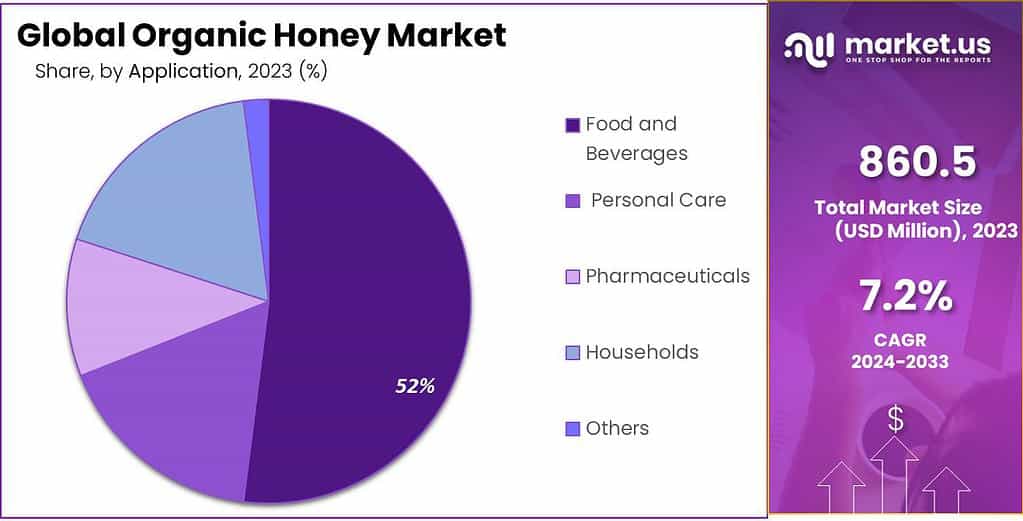
- The Food and Beverages segment dominated the Organic Honey Market by application with a 52.3% share.
- Food & Beverages led the Organic Honey Market “By End Use” segment with a 58.7% share.
- Wholesalers/Distributors dominated the Organic Honey Market with a 34.5% sales channel share.
- Asia Pacific dominates the global organic honey market with a 31.4% share, valued at $10.1 billion.
By Type Analysis
In 2023, Wildflower dominated the Organic Honey Market “By Type” segment with a 27.6% share.
In 2023, Wildflower held a dominant market position in the “By Type” segment of the Organic Honey Market, capturing more than a 27.6% share. Among the types of organic honey, Wildflower is prized for its diverse flavor profile, which varies based on the myriad of wild flora visited by the honeybees. This variety appeals broadly to consumers seeking natural and minimally processed food options, driving its substantial market share.
Alfalfa, another significant type, typically follows in market presence. Known for its mild flavor and purported health benefits, such as aiding in digestion and anti-inflammatory properties, Alfalfa honey is especially popular in health-conscious demographics. Buckwheat honey, with its robust and dark tones, is rich in antioxidants and traditionally used for its therapeutic properties, making it a staple in households looking for both taste and health benefits.
Clover honey, widely recognized for its light, floral taste, and uniform texture, remains a favorite among consumers who prefer sweet, mild honey. It is commonly used in various culinary applications, from baking to tea sweetening, enhancing its commercial appeal.
By Product Type Analysis
Clover Honey led the Organic Honey Market “By Product Type” with a 37.5% share.
In 2023, Clover Honey held a dominant market position in the “By Product Type” segment of the Organic Honey Market, capturing more than a 37.5% share. Its widespread appeal stems from its consistently mild, sweet flavor and versatility in both culinary and medicinal applications, making it a consumer favorite.
Manuka Honey is renowned for its unique health benefits, including antibacterial properties and a rich, distinctive flavor. This New Zealand native has gained international acclaim, driving premium pricing and a dedicated consumer following, especially among those prioritizing health supplements.
Sourwood Honey, with its strong, spicy, and buttery flavor profile, distinguishes itself in the market. Originating from the southeastern United States, this variety appeals to connoisseurs and those seeking rich-tasting honey, contributing to its niche but stable market share.
Buckwheat Honey is known for its dark, molasses-like flavor and considerable antioxidant content, making it popular for both its health benefits and robust taste. It’s often used as a natural remedy for coughs and colds, reinforcing its position in the health-oriented segments of the market.
Rosemary Honey, sourced mainly from the Mediterranean, offers a subtle, aromatic flavor influenced by the rosemary plant. Its light and slightly herbal taste makes it a preferred choice for culinary uses, particularly in meat glazes and baking, enhancing its market presence.
Dandelion Honey, characterized by its bright yellow color and intense floral sweetness, targets a niche market. It’s often appreciated by honey enthusiasts for its supposed liver health benefits and distinct taste, catering to an audience looking for specialty products.
By Packaging Analysis
Glass Jars dominated the Organic Honey Market’s packaging segment with a 43.3% share.
In 2023, The Glass Jar segment held a dominant market position in the By Packaging category of the Organic Honey Market, capturing more than 43.3% of the market share. This leadership is attributed to consumer preferences for sustainable and eco-friendly packaging options, which align with the overall ethos of organic products. Glass jars are perceived as purer and safer for storing organic honey due to their non-reactive nature, which preserves the honey’s natural flavors and properties.
The Bottle segment, primarily comprising plastic and occasionally glass, accounted for a significant portion of the market. This segment benefits from the convenience of use and cost-effectiveness, making it a popular choice among manufacturers aiming for broad market penetration, especially in emerging markets where price sensitivity is a key consumer trait.
The Tub segment, which includes larger packaging formats, is favored in institutional settings and by consumers who prefer bulk purchasing. This preference can be linked to the cost advantages associated with larger volume purchases and the reduced frequency of shopping trips, appealing particularly to price-conscious consumers.
By Application Analysis
The Food and Beverages segment dominated the Organic Honey Market with a 52.3% share.
In 2023, The Food and Beverages segment held a dominant position in the Organic Honey Market by application, capturing more than 52.3% of the market share. This significant portion underscores the growing consumer preference for organic ingredients in food products, driven by a heightened awareness of health benefits and environmental concerns. Organic honey is increasingly featured in natural and organic food products, ranging from baked goods to beverages, reflecting its appeal as a healthier sweetener alternative.
The Personal Care sector has also integrated organic honey into various products, leveraging its natural antibacterial and moisturizing properties. In skincare and haircare formulations, organic honey is prized for its ability to nourish and protect, making it a favored ingredient in eco-conscious cosmetic lines.
The Pharmaceuticals segment has tapped into organic honey’s medicinal properties, especially its effectiveness in cough syrups and wound healing treatments. The market has seen a rise in demand for organic honey in wellness products, highlighting its therapeutic benefits and the growing consumer preference for natural remedies.
Households represent another key application area, with consumers increasingly opting for organic honey for home use, appreciating its purity and health benefits over conventional honey. This trend is part of a broader shift towards organic and natural products in consumer purchases for everyday use.
By End-Use Analysis
Food & Beverages led the Organic Honey Market with a 58.7% share.
In 2023, The Food & Beverages segment held a dominant market position in the By End Use segment of the Organic Honey Market, capturing more than 58.7% share. This segment’s prominence is fueled by the rising consumer demand for organic and natural food products. The adoption of organic honey in this sector spans a variety of applications, from sweetening beverages to serving as a key ingredient in organic baked goods and sauces, reflecting its broad appeal as a versatile and healthier sweetener.
The Cosmetics & Personal Care Products segment also showcases significant use of organic honey, capitalizing on its natural properties such as moisturizing and anti-inflammatory benefits. Organic honey is incorporated into a range of products, including facial masks, shampoos, and skin creams, catering to a growing consumer base seeking organic personal care solutions.
Pharmaceuticals & Nutraceuticals represent another key area where organic honey is increasingly valued, particularly for its therapeutic properties. It is used in the formulation of products aimed at improving health and wellness, such as organic cough syrups and natural digestive aids, driven by consumer preferences shifting towards organic medicinal products.
By Sales Channel Analysis
Wholesalers/Distributors dominated the Organic Honey Market with a 34.5% sales channel share.
In 2023, Wholesalers/Distributors held a dominant market position in the By Sales Channel segment of the Organic Honey Market, capturing more than a 34.5% share. This channel’s success is attributed to its robust network and efficiency in distributing large volumes of organic honey to retailers and businesses. Wholesalers and distributors play a crucial role in ensuring the availability of organic honey across various retail points, facilitating the product’s reach to a broader consumer base.
Modern Trade outlets, encompassing supermarkets and hypermarkets, accounted for a significant portion of the market. These venues are favored by consumers seeking a variety of organic honey under one roof, combined with the convenience of other grocery and household items. The trust in these established retail formats and the increasing consumer preference for shopping at larger, more diverse stores support the growth in this segment.
Convenience Stores also carved out a notable market share, driven by their accessibility and the growing trend of quick shopping trips for essentials, including organic honey. These stores cater to immediate consumer needs and are typically located in densely populated areas, making them a go-to option for quick purchases.
Online Sales have shown remarkable growth, fueled by the digitalization of shopping and the increasing comfort of consumers with e-commerce. The convenience of home delivery and the ability to easily compare prices and products online have propelled this channel forward. During the year, online platforms have been instrumental in reaching tech-savvy consumers and offering a wider array of organic honey options than typically available in brick-and-mortar stores.
Key Market Segments
By Type
- Alfalfa
- Buckwheat
- Wildflower
- Clover
- Others
By Product Type
- Clover Honey
- Manuka Honey
- Sourwood Honey
- Buckwheat Honey
- Rosemary Honey
- Dandelion Honey
- Others
By Packaging
- Glass Jar
- Bottle
- Tub
- Others
By Application
- Food and Beverages
- Personal Care
- Pharmaceuticals
- Households
- Others
By End Use
- Cosmetics & Personal Care Products
- Food & Beverages
- Pharmaceuticals & Nutraceuticals
- Others
By Sales Channel
- Wholesalers/Distributors
- Modern Trade
- Convenience Stores
- Online Sales
- Others
Driving factors
Increasing Consumer Health Awareness
The increasing consumer health awareness significantly influences the growth of the organic honey market. As consumers become more conscious of the health implications of their dietary choices, there is a noticeable shift towards products perceived as natural and beneficial for health. This trend is supported by data indicating that a growing percentage of consumers are willing to pay a premium for organic products, believing them to be healthier.
For instance, surveys reveal that over 60% of consumers in several markets have expressed a preference for organic over non-organic products, due to concerns about additives and pesticides in conventional food production. This heightened health consciousness drives demand for organic honey, seen as a purer and more beneficial alternative to regular honey.
Rising Popularity of Organic Products
Closely linked to the surge in health consciousness is the rising popularity of organic products themselves. Organic honey benefits from the broader organic movement, which has seen consistent growth in market share over the past decade. Market analysts forecast that the organic food sector will continue to grow by 8-10% annually, with organic honey positioned as a key beneficiary of this trend.
The appeal of organic honey is enhanced by its association with environmental sustainability and ethical production practices, which resonate with today’s ethically-minded consumer. As the market for organic products expands, organic honey’s market share is expected to increase correspondingly, supported by robust marketing strategies and expanding retail distribution channels.
Influence of Fitness and Wellness Trends
The influence of fitness and wellness trends plays a crucial role in shaping consumer preferences and behaviors. As people increasingly adopt healthier lifestyles, which include regular physical exercise and a balanced diet, organic honey is often marketed as an ideal natural sweetener. It aligns with the nutritional profiles sought by fitness enthusiasts who prefer minimally processed foods with clear health benefits.
This alignment with fitness and wellness trends not only broadens the consumer base but also integrates organic honey into dietary regimens recommended by health professionals and influencers. The synergistic effect of these trends substantiates the growth in the organic honey market, making it a staple in health-conscious households.
Restraining Factors
Competition from Conventional Honey
The competition from conventional honey poses significant challenges to the growth of the organic honey market. Conventional honey often benefits from lower retail prices due to more cost-effective production methods, which do not adhere to strict organic standards. This price discrepancy can make conventional honey more attractive to a segment of consumers who prioritize cost over organic certification.
Furthermore, the market is saturated with various grades and types of conventional honey, some of which are marketed with health-oriented branding that blurs the distinction between conventional and organic products. This competitive landscape can confuse consumers and dilute the perceived value of genuine organic honey, impacting its market growth.
High Production Costs
High production costs are a critical restraining factor for the organic honey market. Organic beekeeping practices require adherence to strict guidelines, including the use of natural pest control methods and the maintenance of a pollution-free radius around the production sites. These requirements result in lower yields and higher labor costs compared to conventional honey production.
Additionally, the certification process for organic honey is rigorous and costly, adding another layer of expense that is often passed on to the consumer. These higher costs can make organic honey less competitive price-wise, especially in markets where consumers are sensitive to price fluctuations.
Vulnerability to Weather and Climate Change
The organic honey market is notably vulnerable to the impacts of weather and climate change. Organic beekeeping heavily relies on natural ecosystem services which can be drastically affected by climate variability. Extreme weather conditions, such as droughts or excessive rainfall, can affect the availability of flora that bees need for nectar and pollen, leading to reduced honey production and loss of bee colonies.
Climate change exacerbates these issues, posing long-term threats to the sustainability and productivity of organic honey operations. This environmental factor not only affects supply stability but also raises concerns about the long-term viability of organic honey production in certain regions.
Growth Opportunity
Innovative Product Offerings
Innovation remains a critical driver for growth in the organic honey sector. Companies that introduce unique flavors, blends, and enhanced purity levels are likely to capture consumer interest and increase market share.
By focusing on product differentiation such as raw or minimally processed honey, and varieties infused with herbs or spices brands can tap into the growing consumer demand for novel and health-centric food options.
Expansion into New Geographical Markets
There is a significant opportunity for organic honey brands to venture into new geographic markets, particularly in regions where awareness of health benefits associated with organic products is rising.
Developing markets in Asia and Latin America, where the demand for natural and organic products is growing rapidly, present lucrative opportunities. Tailoring marketing strategies to the cultural preferences and buying behaviors of these regions can lead to successful market penetration and brand loyalty.
Diversification into Organic Honey Derivatives
Expanding product lines to include derivatives of organic honey, such as honey-based spreads, sauces, and wellness products, offers another pathway to growth. These derivatives cater to a broader audience seeking convenience and innovative uses of honey in their daily diets.
Furthermore, positioning these products within the health and wellness sector could attract health-conscious consumers looking for natural alternatives to conventional products.
Latest Trends
Rising Vegan and Plant-based Diets
Despite honey’s animal-derived origins, there is a growing intersection with vegan and plant-based diets due to ethically harvested organic honey. Organic honey producers are increasingly adopting bee-friendly practices that align with the ethos of conservation and animal welfare, attracting a niche segment of plant-based consumers who prioritize ethical considerations.
In 2024, expect more brands to market their products towards environmentally conscious consumers, emphasizing transparency in sourcing and the support of local ecosystems.
Flavored and Infused Organic Honey
Flavored and infused honey is set to captivate the market in 2024, driven by consumer desire for novel and diverse flavors in natural products. Organic honey infused with ingredients like lavender, ginger, and cinnamon not only caters to the gourmet food lover but also appeals to health-conscious consumers looking for added benefits.
These innovations enhance the culinary application of honey, from drizzles over breakfast bowls to glazes in sophisticated dishes, broadening its appeal and usage.
Use in Organic Skincare
Organic honey’s role in skincare continues to expand, fueled by its natural anti-inflammatory and antibacterial properties. As consumers increasingly opt for clean beauty products, organic honey is being recognized not just as a food item but as a vital skincare ingredient.
In 2024, anticipate new skincare lines featuring organic honey as a key component, promoting hydration, clarity, and skin health. This trend is especially potent as more brands link dietary health with skin wellness, catering to holistic approaches to beauty.
Regional Analysis
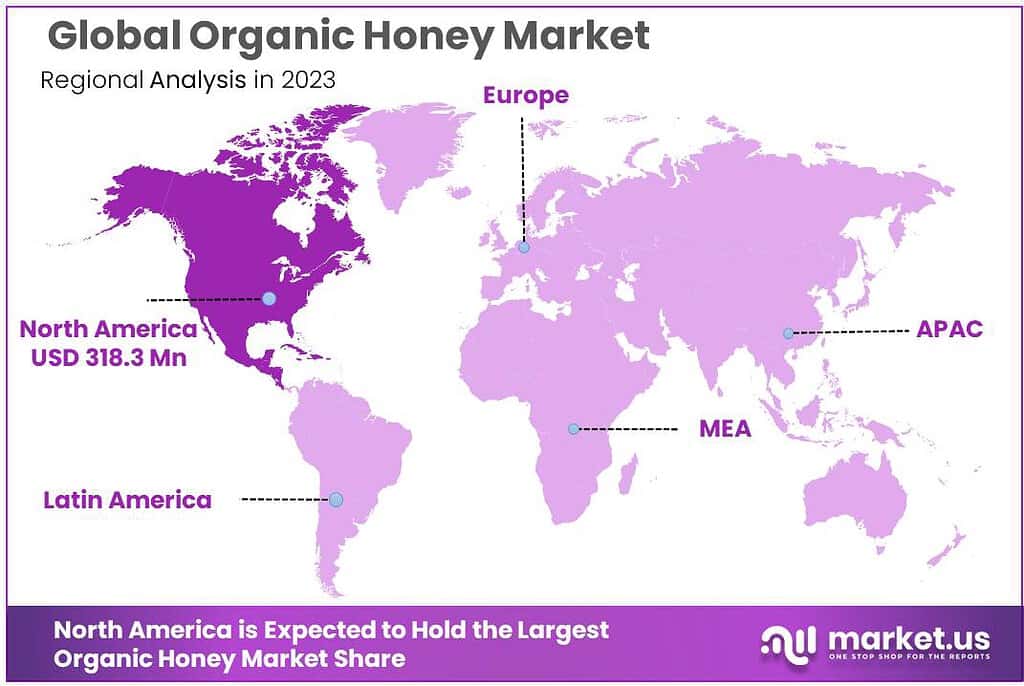
Asia Pacific dominates the global organic honey market with a 31.4% share, valued at $10.1 billion.
The organic honey market is segmented into five major regions: North America, Europe, Asia Pacific (APAC), Middle East & Africa, and Latin America, each displaying unique growth patterns and market dynamics.
North America has shown robust growth in the organic honey sector, primarily driven by increasing consumer awareness regarding health benefits and the rising popularity of organic food products. The United States leads the regional market due to the high demand for natural sweeteners and the presence of key players in the organic honey industry. Europe follows closely, with a significant consumer preference for organic products and stringent EU regulations supporting the authenticity and traceability of organic honey. Germany, the UK, and France are pivotal markets in this region, contributing substantially to its revenue.
Asia Pacific is the dominant region in the global organic honey market, accounting for 31.4% with a valuation of $10.1 billion. This region’s dominance is attributed to its vast agricultural landscape and traditional apiculture techniques, which are increasingly shifting towards organic practices. China and India are significant contributors, fueled by both traditional uses in food and medicine and growing exports.
The Middle East & Africa region, although smaller in comparison, is experiencing gradual growth. Factors such as the expansion of retail sectors and the rising awareness of health benefits associated with organic honey contribute to this growth. South Africa and the Gulf Cooperation Council (GCC) countries are key contributors within this region.
Latin America’s market is evolving, with countries like Brazil and Argentina spearheading growth due to their rich biodiversity and increasing adoption of sustainable farming practices. The region benefits from favorable climatic conditions for beekeeping, which supports the production of various types of organic honey.
Key Regions and Countries
North America
- The US
- Canada
- Rest of North America
Europe
- Germany
- France
- The UK
- Spain
- Netherlands
- Russia
- Italy
- Rest of Europe
Asia-Pacific
- China
- Japan
- Singapore
- Thailand
- South Korea
- Vietnam
- India
- New Zealand
- Rest of Asia Pacific
Latin America
- Mexico
- Brazil
- Rest of Latin America
Middle East & Africa
- Saudi Arabia
- South Africa
- UAE
- Rest of the Middle East & Africa
Key Players Analysis
In 2024, the global organic honey market sees a dynamic interplay among key industry players, each striving to expand their footprint and innovation capabilities. Companies such as BASF SE, Clariant, Sudarshan Chemical Industries Limited, and Tronox Holdings Plc exemplify strategies that could significantly impact market dynamics.
BASF SE continues to lead with its robust investment in sustainable practices and advanced research and development, aiming to enhance the quality and traceability of organic honey products. As a global chemical company, BASF’s expertise in supply chain efficiencies helps ensure the availability of high-quality organic honey, thereby strengthening consumer trust and market reach.
Clariant has made considerable advancements in the customization of organic honey products to meet diverse market needs, especially in cosmetics and pharmaceutical applications. Their focus on organic product innovation, coupled with a commitment to environmental sustainability, positions them well within niche markets that prioritize eco-friendly and multifunctional ingredients.
Sudarshan Chemical Industries Limited, primarily known for its pigments and agrochemicals, is leveraging its chemical expertise to introduce more refined and safe processing techniques in the honey sector. This approach not only enhances the purity and quality of the organic honey but also aligns with global regulatory standards, increasing its appeal in international markets.
Tronox Holdings Plc, as a leading producer of titanium dioxide, uses its chemical processing technologies to improve the shelf life and purity of organic honey. Their investment in technology to minimize contaminants and preserve natural properties gives them a competitive edge, especially in markets with stringent quality standards.
The strategic positioning and innovative breakthroughs of these companies are instrumental in driving the growth and sustainability of the organic honey market. Their efforts are crucial in addressing the evolving preferences of health-conscious consumers and in maintaining the integrity and appeal of organic honey on a global scale.
Market Key Players
- Amish Honey Inc.
- Barkman Honey
- Beeyond the Hive
- Billy Bee Honey Products
- Capilano Honey Ltd.
- Dabur India Ltd.
- Dutch Gold Honey, Inc.
- Glorybee Inc
- Heavenly Organics LLC
- Hilltop Honey Ltd.
- Lamex Food Group Ltd.
- Little Bee Impex
- Madhava Honey Ltd.
- Manuka Health New Zealand Limited
- Nature Nate’s Honey Co.
- New Zealand Honey Co.
- Oha Honey LP
- Rowse Honey Hilltop Honey
- Streamland Biological Technology Ltd.
- Under the Mango Tree Naturals and Organics Private Limited
- Wedderspoon Organic Inc.
- Wholesome Sweeteners Inc.
- Y.S. Eco Bee Farms
Recent Development
- In 2023, Wedderspoon Organic Inc. focused on innovating its production processes to enhance product quality and customer satisfaction. The company is emphasizing efficient production to ensure high-quality organic honey.
- In May 2023, GloryBee announced the introduction of its new charcuterie boards, which include a range of ethically sourced, natural, and organic honey products. This initiative is aimed at enhancing its product portfolio and appealing to consumers looking for gourmet and sustainable food options.
Report Scope
Report Features Description Market Value (2023) USD 680.5 Million Forecast Revenue (2033) USD 1725.0 Million CAGR (2024-2032) 7.2% Base Year for Estimation 2023 Historic Period 2016-2023 Forecast Period 2024-2033 Report Coverage Revenue Forecast, Market Dynamics, COVID-19 Impact, Competitive Landscape, Recent Developments Segments Covered By Type (Alfalfa, Buckwheat, Wildflower, Clover, Others), By Product Type (Clover Honey, Manuka Honey, Sourwood Honey, Buckwheat Honey, Rosemary Honey, Dandelion Honey, Others), By Packaging (Glass Jar, Bottle, Tub, Others), By Application (Food and Beverages, Personal Care, Pharmaceuticals, Households, Others), By End Use (Cosmetics & Personal Care Products, Food & Beverages, Pharmaceuticals & Nutraceuticals, Others), By Sales Channel (Wholesalers/Distributors, Modern Trade, Convenience Stores, Online Sales, Others) Regional Analysis North America – The US, Canada, Rest of North America, Europe – Germany, France, The UK, Spain, Italy, Russia, Netherlands, Rest of Europe, Asia-Pacific – China, Japan, South Korea, India, New Zealand, Singapore, Thailand, Vietnam, Rest of Asia Pacific, Latin America – Brazil, Mexico, Rest of Latin America, Middle East & Africa – South Africa, Saudi Arabia, UAE, Rest of Middle East & Africa Competitive Landscape ALTANA AG, BASF SE, CLARIANT, CPS Color AG, Cristal, Dainichiseika Color & Chemicals Mfg., Co., Ltd., DIC Corporation, Ferro Corporation, Gharda Chemicals Limited, Heubach Gmbh, Kronos Worldwide Inc., LANXESS, LB Group, Lonsen, Pidilite Industries Ltd., RIKA Technology Co., Ltd., Sudarshan Chemical Industries Limited, The Chemours Company, Toyo Ink Mfg. Co. Ltd., Tronox Holdings Plc, Venator Materials PLC. Customization Scope Customization for segments, region/country-level will be provided. Moreover, additional customization can be done based on the requirements. Purchase Options We have three licenses to opt for Single User License, Multi-User License (Up to 5 Users), Corporate Use License (Unlimited User and Printable PDF) 
-
-
- Amish Honey Inc.
- Barkman Honey
- Beeyond the Hive
- Billy Bee Honey Products
- Capilano Honey Ltd.
- Dabur India Ltd.
- Dutch Gold Honey, Inc.
- Glorybee Inc
- Heavenly Organics LLC
- Hilltop Honey Ltd.
- Lamex Food Group Ltd.
- Little Bee Impex
- Madhava Honey Ltd.
- Manuka Health New Zealand Limited
- Nature Nate's Honey Co.
- New Zealand Honey Co.
- Oha Honey LP
- Rowse Honey Hilltop Honey
- Streamland Biological Technology Ltd.
- Under the Mango Tree Naturals and Organics Private Limited
- Wedderspoon Organic Inc.
- Wholesome Sweeteners Inc.
- Y.S. Eco Bee Farms
Our Clients

- 133218
- November 2024






