


Market Overview
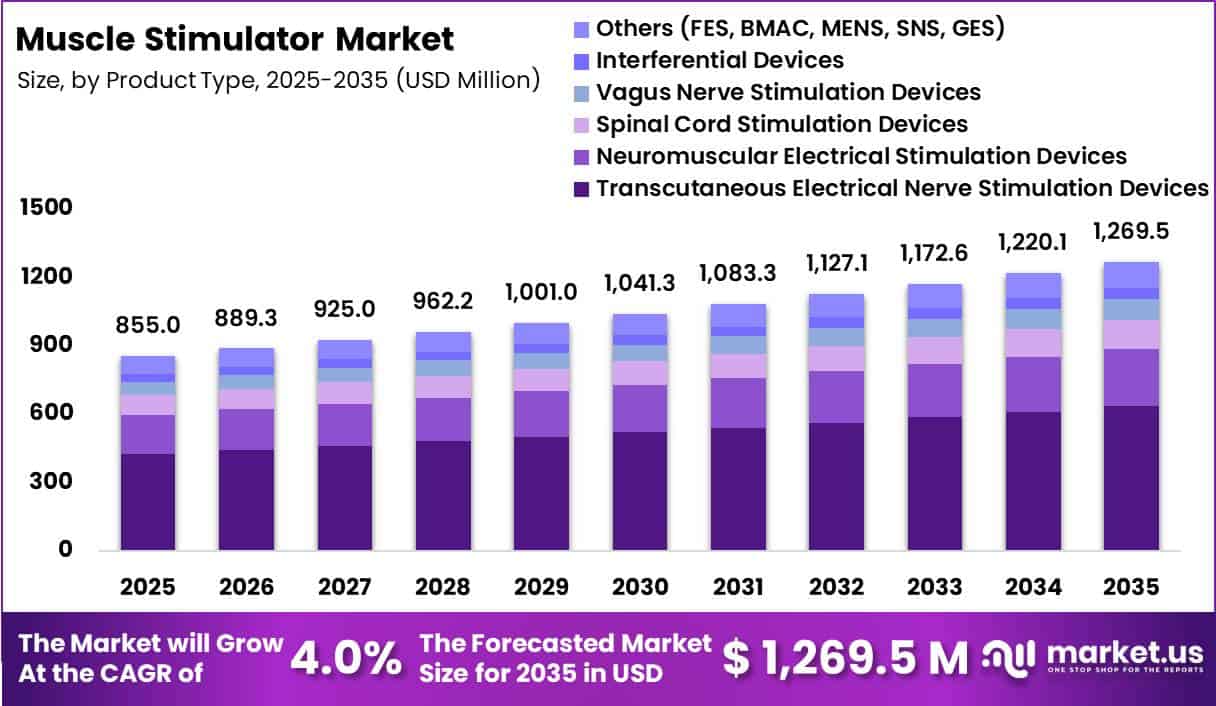
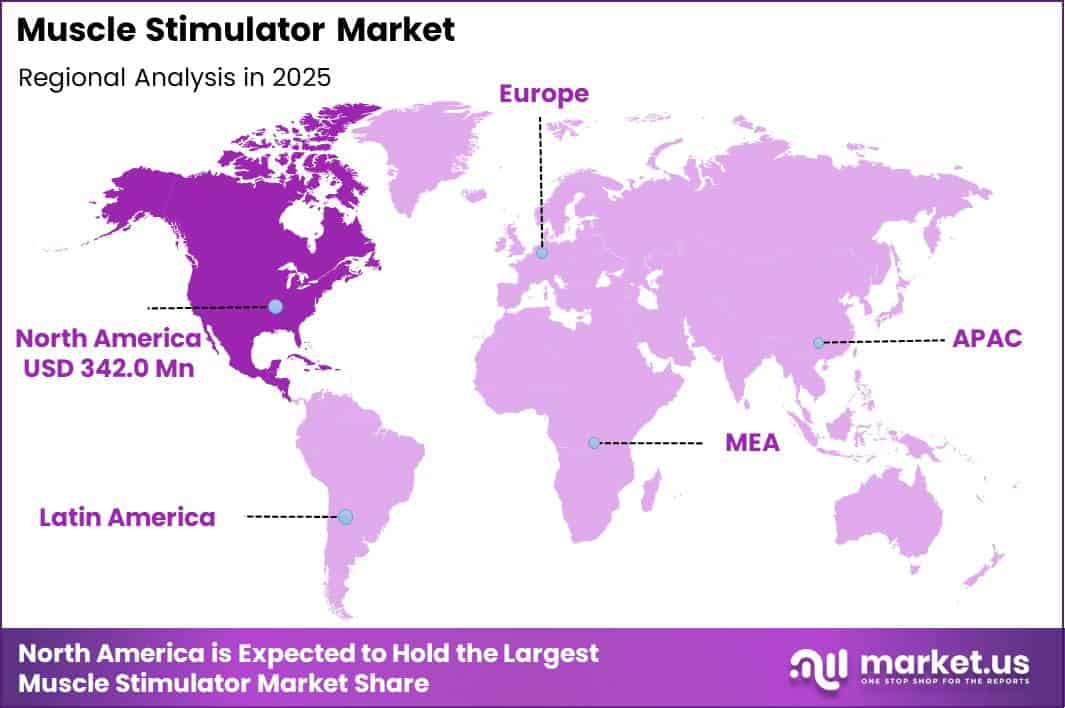
Global Muscle Stimulator Market size is expected to be worth around US$ 1,269.5 Million by 2035 from US$ 855.0 Million in 2025, growing at a CAGR of 4.0% during the forecast period from 2026 to 2035. In 2025, North America led the market, achieving over 40.0% share with a revenue of US$ 342.0 Million.
The global muscle stimulator market is expanding steadily as healthcare systems increasingly adopt electrical stimulation technologies for rehabilitation, pain management, neuromuscular re-education, and post-surgical recovery.
Muscle stimulators, including Neuromuscular Electrical Stimulation (NMES), Functional Electrical Stimulation (FES), and Electrical Muscle Stimulation (EMS) devices, are widely used in hospitals, physiotherapy clinics, rehabilitation centers, and home healthcare settings.
According to the U.S. Food and Drug Administration (FDA), powered muscle stimulators are regulated as Class II medical devices and are indicated for medical purposes such as relaxation of muscle spasms, prevention or retardation of disuse muscle atrophy, increasing local blood circulation, muscle re-education, maintaining or improving range of motion, and immediate post-surgical stimulation of calf muscles to help prevent venous thrombosis.
Technological innovation continues to improve portability, battery life, programmable stimulation modes, wireless connectivity, and digital therapy monitoring, enabling greater use in both clinical and home-based rehabilitation.
To ensure safety and performance, the FDA recognizes IEC 60601-2-10 Edition 2.2 (2023) as the current international standard for nerve and muscle stimulators. The agency will continue accepting declarations under the previous edition until July 2, 2028, supporting manufacturers during the regulatory transition.
The FDA also emphasizes that muscle stimulators are intended for approved rehabilitation and therapeutic applications. The agency states that no EMS devices have been cleared for weight loss, girth reduction, or achieving “six-pack” abdominal muscles, reinforcing the importance of evidence-based medical use under appropriate guidance.
Key Takeaways
- Market Size: Global Muscle Stimulator Market size is expected to be worth around US$ 1,269.5 Million by 2035 from US$ 855.0 Million in 2025.
- Market Share: The market is growing at a CAGR of 4.0% during the forecast period from 2026 to 2035.
- Product Type: The Transcutaneous Electrical Nerve Stimulation (TENS) Devices segment dominated the Muscle Stimulator Market in 2025, accounting for 50.0% of the total market share.
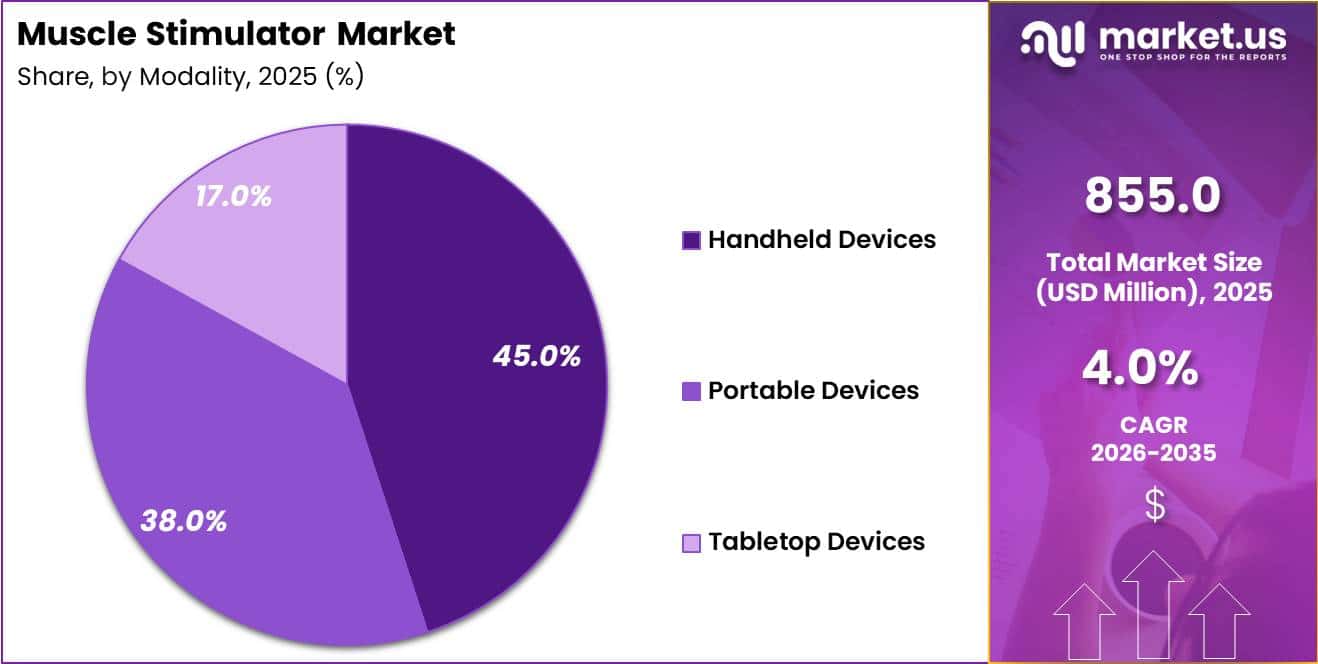
- Modality: The Handheld Devices segment led the Muscle Stimulator Market in 2025 with a 45.0% market share.
- Application: The Pain Management segment dominated the Muscle Stimulator Market in 2025, capturing 48.0% of total market share.
- End User: The Hospitals segment accounted for the largest share of the Muscle Stimulator Market in 2025, contributing 35.0% of total revenue.
- Technology: The Wired Muscle Stimulators segment dominated the Muscle Stimulator Market in 2025 with a 55.0% market share.
- Regional Analysis: In 2025, North America led the market, achieving over 40.0% share with a revenue of US$ 342.0 Million.
Product Type Analysis
Transcutaneous Electrical Nerve Stimulation (TENS) Devices segment dominated the Muscle Stimulator Market in 2025.
The Transcutaneous Electrical Nerve Stimulation (TENS) Devices segment dominated the Muscle Stimulator Market in 2025, accounting for 50.0% of the total market share. TENS devices maintain their leading position because they are widely used for non-invasive pain management across hospitals, physiotherapy centers, sports medicine clinics, and home care settings.
Their effectiveness in reducing acute and chronic pain, ease of operation, affordability, and availability in both prescription and consumer formats have significantly expanded adoption. Healthcare professionals frequently recommend TENS therapy as part of rehabilitation programs for musculoskeletal injuries and post-operative recovery.
Regulatory agencies such as the U.S. FDA recognize TENS and other powered muscle stimulators for approved rehabilitation indications including pain relief, muscle re-education, and prevention of disuse atrophy.
Neuromuscular Electrical Stimulation (NMES/EMS) Devices represented 20.0% of the market, driven by rehabilitation and muscle strengthening applications following orthopedic and neurological conditions. Spinal Cord Stimulation (SCS) Devices held 10.0%, supported by increasing use in chronic pain management.
Vagus Nerve Stimulation (VNS) Devices accounted for 7.0%, benefiting from expanding neurological treatment applications. Interferential (IF) Devices captured 4.0%, mainly utilized in physiotherapy clinics for deep tissue pain relief. The Others (FES, BMAC, MENS, SNS, GES) category contributed 9.0%, reflecting continued technological diversification and specialized therapeutic applications across rehabilitation and neuromodulation.
Modality Analysis
Handheld Devices segment led the Muscle Stimulator Market in 2025.
The Handheld Devices segment led the Muscle Stimulator Market in 2025 with a 45.0% market share. Their dominance is attributed to portability, ease of handling, affordability, and suitability for both professional and home-based therapy.
Handheld muscle stimulators enable patients to perform rehabilitation sessions independently while allowing healthcare providers to deliver targeted therapy in outpatient environments. Growing demand for home healthcare and self-managed pain relief has further accelerated adoption.
Improvements in ergonomic design, rechargeable batteries, and user-friendly interfaces continue to enhance consumer acceptance. Regulatory recognition of portable muscle stimulation devices for rehabilitation has also strengthened market confidence.
Portable Devices accounted for 38.0% of the market, supported by increasing demand for wearable rehabilitation technologies, athletic recovery, and mobile physiotherapy solutions. Their compact form factor allows convenient treatment during travel or daily activities while maintaining therapeutic effectiveness.
Meanwhile, Tabletop Devices represented 17.0% of the market and remained essential in hospitals, rehabilitation centers, and specialized physiotherapy clinics. These systems typically offer higher output capabilities, multiple treatment channels, and advanced programming features for intensive clinical rehabilitation.
Although portable solutions continue to gain momentum, tabletop equipment remains indispensable for complex therapeutic protocols requiring greater customization and continuous professional supervision.
Application Analysis
Pain Management segment dominated the Muscle Stimulator Market in 2025.
The Pain Management segment dominated the Muscle Stimulator Market in 2025, capturing 48.0% of total market share. Rising prevalence of chronic musculoskeletal disorders, arthritis, lower back pain, sports injuries, and post-surgical discomfort continues to drive demand for electrical stimulation therapies. Muscle stimulators provide non-invasive pain relief by delivering controlled electrical impulses that help modulate pain signals while supporting muscle relaxation and rehabilitation.
Healthcare providers increasingly incorporate these devices into multidisciplinary pain management programs because they reduce reliance on pharmacological treatments and complement physical therapy interventions. Their widespread clinical acceptance and expanding home-use applications further reinforce market leadership.
Sports Medicine & Athletic Training remains a significant application area as professional athletes and fitness enthusiasts utilize muscle stimulators to improve recovery, reduce fatigue, and enhance muscle conditioning.
Post-operative Recovery & Rehabilitation continues to expand due to increasing orthopedic and neurological surgical procedures requiring structured rehabilitation programs. Musculoskeletal Disorder Management benefits from the growing incidence of joint injuries, muscle weakness, and mobility disorders requiring long-term physiotherapy support.
The Others (Neurological, Urinary, Gastrointestinal) category is steadily expanding as electrical stimulation technologies demonstrate broader therapeutic potential across multiple medical specialties through continuous technological innovation and clinical research.
End User Analysis
Hospitals segment accounted for the largest share of the Muscle Stimulator Market in 2025.
The Hospitals segment accounted for the largest share of the Muscle Stimulator Market in 2025, contributing 35.0% of total revenue. Hospitals remain the primary end users due to their comprehensive rehabilitation services, multidisciplinary pain management programs, orthopedic care, neurological treatment capabilities, and access to advanced medical equipment.
Muscle stimulators are routinely integrated into post-surgical rehabilitation, stroke recovery, musculoskeletal therapy, and chronic pain treatment protocols under professional supervision. Increasing patient admissions requiring rehabilitation services continue to support sustained demand from hospital settings.
Physiotherapy & Rehabilitation Clinics represent another major end-user segment, benefiting from growing outpatient rehabilitation demand and expanding physical therapy services. Home Care Settings continue to experience rapid growth as portable and user-friendly muscle stimulators enable convenient self-administered therapy for chronic pain and long-term rehabilitation.
Sports Clinics & Fitness Centers increasingly utilize electrical stimulation technologies for athletic recovery, muscle conditioning, injury prevention, and performance support. The Others segment includes specialty clinics and research institutions that employ muscle stimulation technologies for various therapeutic applications.
Together, these end-user categories reflect the expanding integration of muscle stimulators across institutional healthcare, outpatient rehabilitation, sports medicine, and home-based care environments.
Technology Analysis
Wired Muscle Stimulators segment dominated the Muscle Stimulator Market in 2025.
The Wired Muscle Stimulators segment dominated the Muscle Stimulator Market in 2025 with a 55.0% market share. Wired systems remain the preferred choice across hospitals, rehabilitation centers, and physiotherapy clinics because they provide stable electrical output, reliable treatment delivery, and consistent therapeutic performance during prolonged rehabilitation sessions.
Healthcare professionals value wired devices for their precision, multiple-channel capability, and compatibility with advanced clinical treatment protocols. These systems continue to be extensively used for muscle re-education, prevention of muscle atrophy, pain management, and post-operative rehabilitation.
Regulatory guidance and clinical practice have established wired muscle stimulators as reliable therapeutic tools for medical rehabilitation. Wireless / Bluetooth-enabled Muscle Stimulators accounted for the remaining market share and continue to witness rapid growth due to technological advancements and increasing consumer preference for mobility.
Wireless systems eliminate cable restrictions, improve patient comfort, and enable seamless integration with smartphone applications for customized treatment programs and remote monitoring. Their popularity is particularly increasing among athletes, fitness enthusiasts, and home-care users seeking flexible rehabilitation solutions.
Continuous innovation in wearable electronics, battery efficiency, mobile connectivity, and digital health platforms is expected to further accelerate adoption of wireless muscle stimulation technologies across both consumer and professional healthcare settings.
Key Market Segments
By Product Type
- Transcutaneous Electrical Nerve Stimulation (TENS) Devices
- Neuromuscular Electrical Stimulation (NMES/EMS) Devices
- Spinal Cord Stimulation (SCS) Devices
- Vagus Nerve Stimulation (VNS) Devices
- Interferential (IF) Devices
- Others (FES, BMAC, MENS, SNS, GES)
By Modality
- Handheld Devices
- Portable Devices
- Tabletop Devices
By Application
- Pain Management
- Sports Medicine & Athletic Training
- Post-operative Recovery & Rehabilitation
- Musculoskeletal Disorder Management
- Others (Neurological, Urinary, Gastrointestinal)
By End User
- Hospitals
- Physiotherapy & Rehabilitation Clinics
- Home Care Settings
- Sports Clinics & Fitness Centers
- Others
By Technology
- Wired Muscle Stimulators
- Wireless / Bluetooth-enabled Muscle Stimulators
Drivers
Rehabilitation System Expansion and Functional Recovery Demand.
WHO’s Rehabilitation 2030 initiative emphasizes rehabilitation as an essential health service, noting that around one in three people globally could benefit from rehabilitation at some point in their lives. This positions rehabilitation not as an optional add on, but as a core component of health system strengthening across all levels of care.
For muscle stimulation devices, this shift expands use cases beyond pain management into structured functional recovery pathways. These include post stroke motor rehabilitation, spinal cord injury support, muscle re education after immobilization, and prevention of disuse atrophy. Increasingly, devices are also used for home based continuation therapy following supervised clinical rehabilitation.
This broader clinical integration improves utilization intensity, as muscle stimulators become embedded in standardized rehabilitation protocols rather than being used intermittently or as standalone consumer devices. It also increases adherence through clinician oversight and therapy linked prescription pathways.
Commercially, the market is shifting toward pathway based adoption models involving hospitals, outpatient rehabilitation centers, and therapist led home programs. This enables longer treatment cycles, higher repeat usage, and stronger alignment with outcomes based care delivery.
The strongest growth potential is expected in regions expanding rehabilitation infrastructure, particularly Europe, China, India, and Southeast Asia, where rehabilitation services are progressively extending from tertiary hospitals into community and home care settings.
| Driver | (~) % Impact on CAGR Forecast | Geographic Relevance | Impact Timeline |
|---|---|---|---|
| Rising chronic pain pool driving drug-free electrotherapy uptake | +1.6% | North America core, EU, Japan, urban APAC | Short term |
| Rehabilitation system expansion and functional recovery demand | +1.3% | EU, North America, China, India, Southeast Asia | Medium term |
| FDA-cleared home-use and wearable neurostimulation innovation | +1.1% | U.S. core, EU follow-on, developed APAC | Short term |
| CMS coverage, care-management billing, and selective reimbursement support | +0.9% | U.S. core, Canada spill-over, private-payer aligned markets | Medium term |
| Evidence-led adoption in fibromyalgia, musculoskeletal pain, and PT workflows | +1.0% | U.S., EU, Australia, South Korea | Short term |
| Connected care, remote monitoring, and consumerized home therapy models | +0.8% | U.S., Western Europe, Japan, South Korea, affluent APAC | Medium term |
Challenges
Fragmented Regulatory Compliance in Muscle Stimulators.
Regulatory fragmentation for muscle stimulators creates ongoing complexity because these devices are governed by different regional classifications and standards, including 21 CFR 890.5850 in the U.S. and IEC 60601-2-10 internationally.
Differences in evidence requirements, labeling rules, and post market surveillance obligations force manufacturers to maintain multiple compliance pathways for the same product family.
As a result, companies often manage 3–5 distinct regulatory configurations and up to 10–20 localized technical documentation variants per product line. This increases regulatory and clinical development costs, typically adding 8–12% to overall development expenses per SKU.It also slows time to market, extending multi region launch cycles by 6–12 months.
Expanding indications such as moving from basic muscle strengthening to pain relief, thrombosis prevention, or post surgical rehabilitation further increases submission complexity under FDA 510(k), CE MDR, and other regional frameworks due to added safety and performance evidence requirements.
Smaller manufacturers are disproportionately affected, as limited regulatory staffing makes it harder to track evolving guidance and global updates, leading to delayed launches across multiple geographies.
Overall, regulatory fragmentation reduces speed and efficiency in global commercialization, contributing to slower revenue realization and limiting near term growth potential until greater harmonization or internal regulatory maturity is achieved.
| Challenge | (~) % CAGR Friction Drag | Geographic Relevance | Mitigation Horizon |
|---|---|---|---|
| Fragmented regulatory compliance | -1.2% | North America, EU, APAC hubs | Medium term (2-4 years) |
| Clinical evidence and reimbursement gap | -1.4% | US, EU public payers | Long term (≥ 4 years) |
| Safety, misuse and adverse-event risk | -0.9% | Global consumer segment | Medium term (2-4 years) |
| Manufacturing quality and interoperability | -0.8% | Global OEM, EMS/TENS | Medium term (2-4 years) |
| Talent and clinical adoption bottlenecks | -0.7% | Hospital & rehab networks | Long term (≥ 4 years) |
| Data integration and digital UX lag | -0.6% | High-income, connected markets | Short term (≤ 2 years) |
Restraints
Tightening Electro Therapy Device Regulation.
Regulatory tightening around electrical muscle stimulation devices is becoming a structural constraint on market growth as authorities refine legacy frameworks and expand oversight into higher risk use cases. Agencies such as the FDA are increasingly scrutinizing both device safety profiles and intended use claims, particularly where stimulation devices intersect with behavioral modification or non traditional therapeutic indications.
Historically, powered muscle stimulators received frequent clearances in the U.S., but the regulatory environment is now shifting toward more cautious review standards, including stricter expectations for clinical justification, labeling accuracy, and post market surveillance. This has introduced greater uncertainty for manufacturers planning incremental product updates or new indication expansions.
As a result, regulatory timelines for new electro therapy indications are trending longer, with approval cycles extending from roughly 9–12 months toward 15–18 months in more complex cases. At the same time, development costs are rising due to increased requirements for human factors testing, risk controls, and documentation under modern quality system expectations.
These changes delay commercialization, increase upfront investment burden, and reduce the number of viable pipeline projects, particularly among smaller and mid sized manufacturers with limited compliance infrastructure.
Overall, tightening regulation is slowing product iteration cycles and adding cost pressure, creating a measurable drag on near term growth until regulatory expectations stabilize and manufacturers adapt to higher evidence and safety standards.
| Restraint | (~) % Impact on CAGR Forecast | Geographic Relevance | Impact Timeline |
|---|---|---|---|
| Tightening electro-therapy device regulation | -1.8% | North America core, EU, Japan | Medium term (2–4 years) |
| Reimbursement and cost-effectiveness drag | -1.5% | North America core, EU public, selective APAC | Long term (≥ 4 years) |
| Component and sterilization supply chain volatility | -1.4% | North America, EU, APAC corridors | Short–Medium term (≤ 4 years) |
| Safety perception and adverse-event scrutiny | -1.2% | North America, EU, urban LATAM | Medium term (2–4 years) |
| Price compression from low-cost consumer EMS | -1.0% | Global, strongest in APAC and online-centric markets | Long term (≥ 4 years) |
| Data, software, and cyber-compliance overhead | -0.8% | North America, EU, advanced APAC | Medium–Long term (≥ 3 years) |
Opportunity
Integrated Tele Rehab Neuromuscular Platforms.
This opportunity focuses on combining muscle stimulation devices NMES and TENS with tele rehabilitation platforms, remote monitoring tools, and clinician led digital workflows to shift the market from standalone hardware sales to continuous, outcome based care delivery.
While traditional muscle stimulator demand is driven by musculoskeletal rehab, chronic pain, and fitness use, growth remains moderate overall, with stronger expansion in hospital based NMES applications. However, these devices are still largely disconnected from structured digital rehabilitation ecosystems.
By integrating stimulators into tele rehab platforms, each patient episode can include a connected device, remote physiotherapy supervision, and automated progress tracking over 16–24 weeks. This enables a transition from one time device sales to subscription based care models with higher lifetime value per patient.
In this model, average revenue per user could increase significantly compared with current one off device purchases, supported by software enabled services, adherence monitoring, and AI guided therapy adjustments.
At the same time, automation and remote supervision can reduce operational support costs and improve scalability.The opportunity is further supported by broader telemedicine expansion and WHO’s Rehabilitation 2030 agenda, which emphasizes large unmet global rehabilitation needs and under penetration of structured therapy services.
Overall, integrating neuromuscular stimulation with tele rehab platforms represents a shift toward recurring, outcomes driven care delivery, with strong potential to expand market value and improve access, particularly in underserved and remote populations.
| Opportunity | (~) % Potential CAGR Upside | Geographic Relevance | Execution Window |
|---|---|---|---|
| Integrated tele-rehab neuromuscular platforms | +2.2% | North America, EU, APAC urban | Medium term (2–4 years) |
| Chronic disease home-rehab bundles | +1.9% | North America, EU, APAC emerging | Medium term (2–4 years) |
| Aging and workplace MSD prevention programs | +1.6% | North America core, EU, East Asia | Long term (≥ 4 years) |
| Sports/fitness EMS subscription ecosystems | +2.0% | North America, EU, APAC fitness hubs | Short term (≤ 2 years) |
| Data-driven reimbursement and clinical validation | +1.4% | North America, EU, selected LATAM | Medium term (2–4 years) |
| Low-cost digitized devices for LMIC rehab gaps | +1.8% | APAC emerging, Africa, LATAM | Long term (≥ 4 years) |
Regional Analysis
In 2025,North America dominated the Muscle Stimulator Market.
North America dominated the Muscle Stimulator Market in 2025, accounting for over 40.0% of global revenue, equivalent to US$ 342.0 million. The region’s leadership is supported by a well-established healthcare infrastructure, widespread adoption of advanced rehabilitation technologies, and a high prevalence of musculoskeletal disorders, chronic pain, sports injuries, and neurological conditions requiring electrical stimulation therapies.
Growing demand for non-invasive pain management solutions has encouraged hospitals, physiotherapy clinics, rehabilitation centers, and home healthcare providers to integrate muscle stimulators into routine treatment protocols.
In addition, favorable reimbursement policies for selected neuromuscular stimulation therapies and increasing awareness among healthcare professionals have accelerated product adoption across clinical settings.
The United States remains the primary contributor to regional growth due to significant healthcare expenditure, continuous technological innovation, and strong participation from leading medical device manufacturers.
Increasing use of Transcutaneous Electrical Nerve Stimulation (TENS), Neuromuscular Electrical Stimulation (NMES), and wearable stimulation devices for post-operative recovery, muscle strengthening, and chronic pain management continues to expand the addressable market. Canada also contributes steadily through rising investments in rehabilitation services and aging population care.
Furthermore, collaborations between healthcare providers, research institutions, and medical technology companies are driving the development of portable, connected, and app-enabled muscle stimulators that improve patient compliance and enable remote rehabilitation.
These factors, combined with robust regulatory standards and growing acceptance of home-based therapy, are expected to help North America maintain its leading position throughout the forecast period.
Key Regions and Countries
North America
- The US
- Canada
Europe
- Germany
- France
- The U.K.
- Italy
- Spain
- Russia & CIS
- Rest of Europe
Asia Pacific
- China
- India
- Japan
- South Korea
- ASEAN
- Australia & New Zealand
- Rest of Asia Pacific
Middle East & Africa
- GCC
- South Africa
- Rest of Middle East & Africa
Latin America
- Brazil
- Mexico
- Rest of Latin America
Key Player Analysis
The Muscle Stimulator Market is moderately fragmented, with manufacturers competing through continuous technological innovation, expanding clinical applications, and broader distribution networks. Companies are increasingly focusing on wearable rehabilitation devices, digital connectivity, and home-based therapy solutions to strengthen their competitive positions.
Among the leading participants, Omron Corporation, DJO Global Inc., Zynex, Inc., NeuroMetrix, Inc., and Beurer GmbH are recognized as key innovators, while other regional and specialized manufacturers continue to intensify market competition across rehabilitation, pain management, and sports recovery applications.
Leading companies are investing heavily in research and development to enhance stimulation precision, treatment personalization, and device portability. Strategic partnerships with healthcare providers, rehabilitation centers, distributors, and sports medicine organizations are helping expand market reach and improve clinical adoption.
Product innovation remains focused on compact, wireless, wearable, and app-enabled muscle stimulators with multiple therapy programs and improved patient comfort. Companies are also emphasizing workflow integration by incorporating digital monitoring, remote therapy management, and connected mobile platforms that enable clinicians to track treatment progress efficiently.
As competition evolves beyond standalone devices, manufacturers are building integrated rehabilitation ecosystems that combine hardware, software, mobile applications, and clinical support services.
This ecosystem-based approach enhances patient engagement, strengthens long-term customer relationships, and creates sustainable competitive advantages in both clinical and home healthcare settings, while regional players and Others continue to expand their presence through cost-effective and application-specific product offerings.
Top Key Players
- Omron Corporation
- DJO Global Inc.
- Zynex, Inc.
- NeuroMetrix, Inc.
- Beurer GmbH
- EMS Physio Ltd.
- RS Medical
- BioMedical Life Systems, Inc.
- Axiobionics
- Compex (DJO)
- Globus Corporation
- TensCare Ltd.
- ITO Co., Ltd.
- Eme s.r.l.
- OG Wellness Technologies Co., Ltd.
- Others
Recent Developments
- In February 2026, Zynex, Inc. announced a new in-network provider agreement with Humana, expanding reimbursement access for its non-invasive electrotherapy and pain management devices. The agreement is expected to improve patient accessibility while supporting wider adoption of neuromuscular stimulation therapies across the U.S. healthcare market.
- In June 2026, Omron Healthcare completed the acquisition of Life Log Technology, Inc., the developer of the Calomeal nutrition management app. The acquisition expands Omron’s connected healthcare ecosystem by integrating nutrition, lifestyle, and vital-sign monitoring, strengthening its long-term digital health platform that complements home-use therapeutic and monitoring devices.
Report Scope
| Report Features | Description |
|---|---|
| Market Value (2025) | US$ 855.0 Million |
| Forecast Revenue (2035) | US$ 1,269.5 Million |
| CAGR (2026-2035) | 4.0% |
| Base Year for Estimation | 2025 |
| Historic Period | 2020-2024 |
| Forecast Period | 2026-2035 |
| Report Coverage | Revenue Forecast, Market Dynamics, Competitive Landscape, Recent Developments |
| Segments Covered | By Product Type (Transcutaneous Electrical Nerve Stimulation (TENS) Devices, Neuromuscular Electrical Stimulation (NMES/EMS) Devices, Spinal Cord Stimulation (SCS) Devices, Vagus Nerve Stimulation (VNS) Devices, Interferential (IF) Devices, Others (FES, BMAC, MENS, SNS, GES)), By Modality (Handheld Devices, Portable Devices, Tabletop Devices), By Application (Pain Management, Sports Medicine & Athletic Training, Post-operative Recovery & Rehabilitation, Musculoskeletal Disorder Management, Others (Neurological, Urinary, Gastrointestinal)), By End User (Hospitals, Physiotherapy & Rehabilitation Clinics, Home Care Settings, Sports Clinics & Fitness Centers, Others), By Technology (Wired Muscle Stimulators, Wireless / Bluetooth-enabled Muscle Stimulators) |
| Regional Analysis | North America – The US, Canada; Europe – Germany, France, U.K., Italy, Spain, Russia & CIS, Rest of Europe; Asia Pacific – China, India, Japan, South Korea, ASEAN, Australia & New Zealand, Rest of Asia Pacific; Middle East & Africa – GCC, South Africa, Rest of Middle East & Africa; Latin America – Brazil, Mexico, Rest of Latin America |
| Competitive Landscape | Omron Corporation,DJO Global Inc.,Zynex, Inc.,NeuroMetrix, Inc.,Beurer GmbH,EMS Physio Ltd.,RS Medical,BioMedical Life Systems, Inc.,Axiobionics,Compex (DJO),Globus Corporation,TensCare Ltd.,ITO Co., Ltd.,Eme s.r.l.,OG Wellness Technologies Co., Ltd.,Others |
| Customization Scope | Customization for segments, region/country-level will be provided. Moreover, additional customization can be done based on the requirements. |
| Purchase Options | We have three licenses to opt for: Single User License, Multi-User License (Up to 5 Users), Corporate Use License (Unlimited User and Printable PDF) |





































