


Global Multivitamin Gummies Market Size, Share Analysis Report By Source (Gelatin, Plant-based Gelatin Substitute), By Application (General Health, Bone And Joint Health, Immunity, Cardiac Health, Diabetes, Skin/Hair/Nails, Prenatal Health, Others), By End-user (Adults, Geriatric, Pregnant Women, Children), By Sales Channel (OTC, Prescribed), By Distribution Channel (Hypermarkets/ Supermarkets, Pharmacies, Specialty Stores, Practioner, Online, Others), By Region and Companies - Industry Segment Outlook, Market Assessment, Competition Scenario, Trends and Forecast 2026-2035
- Published date: Mar 2026
- Report ID: 182352
- Number of Pages: 291
- Format:
-
keyboard_arrow_up
Quick Navigation
Report Overview
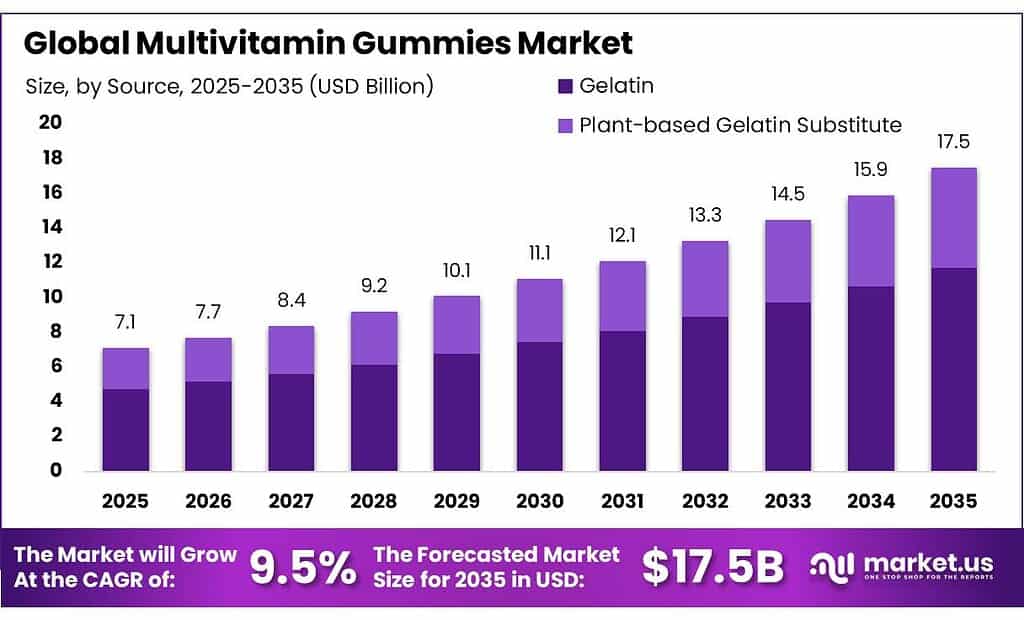
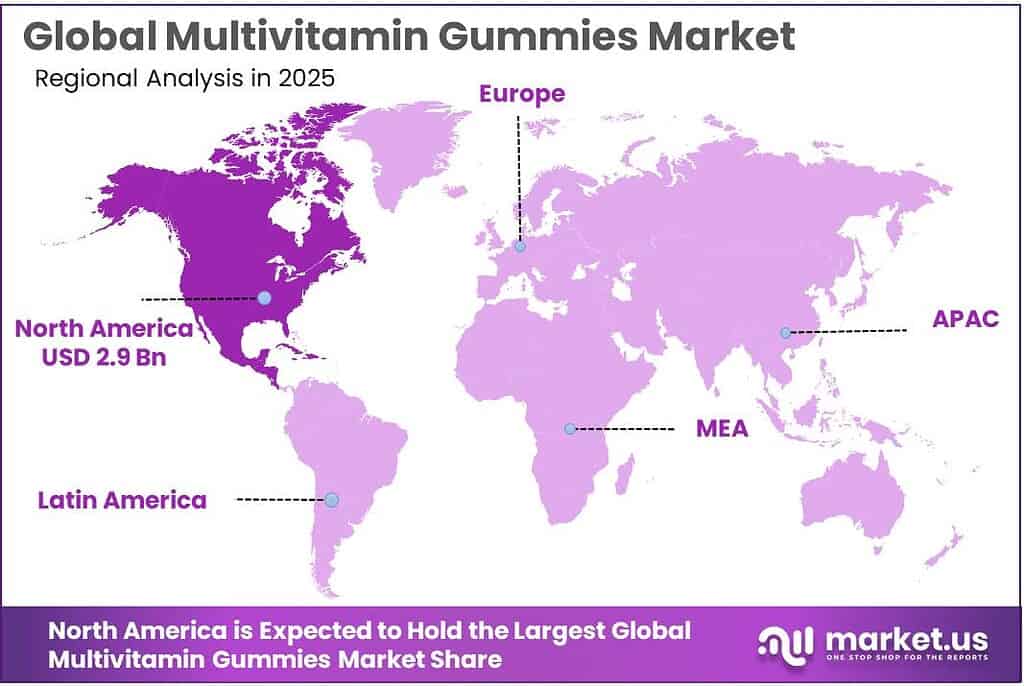
The Global Multivitamin Gummies Market size is expected to be worth around USD 17.5 Billion by 2035, from USD 7.1 Billion in 2025, growing at a CAGR of 9.5% during the forecast period from 2026 to 2035. In 2025, North America held a dominant market position, capturing more than a 41.7% share, holding USD 2.9 Billion revenue.
The multivitamin gummies industry is positioned within the broader dietary supplements category as a convenience-led, compliance-friendly format that addresses consumer demand for easy-to-consume nutrition support. In the United States, multivitamin/mineral supplements are used by an estimated one-third of adults and one-quarter of children and adolescents, while multivitamins/minerals represented 14% of all supplement purchases and 38% of vitamin-and-mineral supplement sales in 2019.
In the United States, the National Institutes of Health states that dietary supplements are used by more than one-half of adults and one-third of children, while NIH also notes that about 35% of adults take multivitamin supplements specifically.
The same NIH Office of Dietary Supplements source notes that U.S. dietary supplement sales reached about $55.7 billion in 2020, including $21.2 billion for supplements containing vitamins and minerals and $8.0 billion specifically for multivitamin/ multimineral products.
According to the Council for Responsible Nutrition’s 2024 consumer survey, 75% of Americans reported using dietary supplements, up from 74% in 2023, showing that supplements remain mainstream rather than niche. For multivitamin gummies, this matters because gummies tend to benefit from repeat use, taste acceptance, and family-oriented positioning across kids, adults, and prenatal segments.
Demand fundamentals are supported by persistent nutrition gaps. CDC data show that in 2019 only 12.3% of surveyed U.S. adults met fruit intake recommendations and only 10.0% met vegetable intake recommendations; among low-income adults, just 6.8% met vegetable intake recommendations. Globally, WHO states that more than 2 billion people are deficient in key vitamins and minerals, while 42% of children under age 5 and 40% of pregnant women are affected by anaemia.
Pharmavite LLC strengthened the industrial outlook materially. In May 2025, the company opened a $250 million, 225,000-square-foot production and R&D facility in New Albany, Ohio, creating 225 jobs and expanding capacity for Nature Made vitamin gummies through a dedicated Gummies Innovation Center of Excellence. In July 2025, Nature Made was also named a top vitamin brand in U.S. News & World Report’s 2025 survey, earning eight #1 rankings based on input from 357 pharmacists and 134 dermatologists.
Key Takeaways
- Multivitamin Gummies Market size is expected to be worth around USD 17.5 Billion by 2035, from USD 7.1 Billion in 2025, growing at a CAGR of 9.5%.
- Gelatin held a dominant market position, capturing more than a 67.8% share.
- General Health held a dominant market position, capturing more than a 29.5% share.
- Adults held a dominant market position, capturing more than a 52.1% share in the multivitamin gummies market.
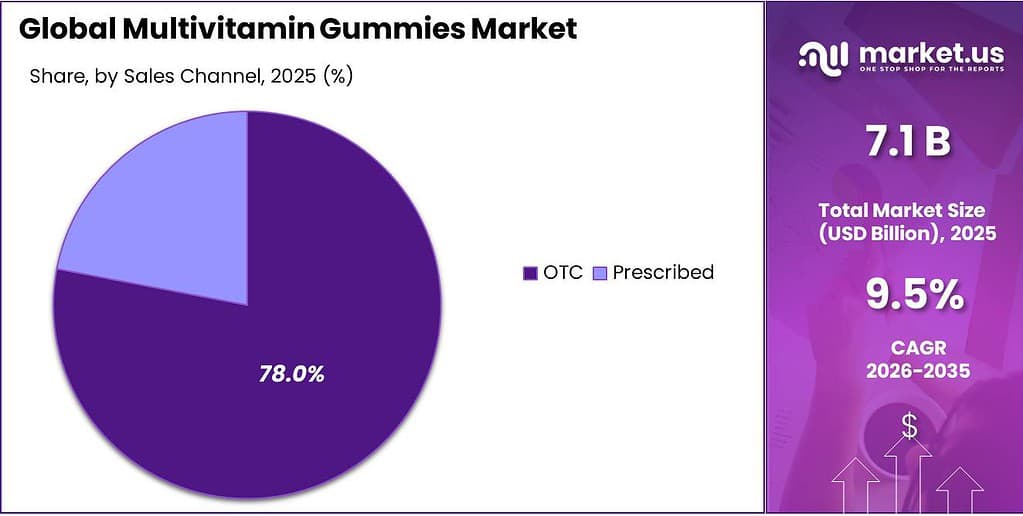
- OTC held a dominant market position, capturing more than a 78.4% share in the multivitamin gummies market.
- Hypermarkets/ Supermarkets held a dominant market position, capturing more than a 34.2% share.
By Source Analysis
Gelatin dominates with 67.8% driven by strong consumer acceptance and product stability
In 2025, Gelatin held a dominant market position, capturing more than a 67.8% share in the multivitamin gummies market by source of gelatin. This strong lead was mainly supported by its long-standing use in gummy formulations, where it delivers a familiar chewy texture that consumers prefer. Manufacturers continue to rely on gelatin because it offers better elasticity, clarity, and shelf stability compared to alternative sources. It also blends well with vitamins and minerals without affecting taste, making it a practical choice for large-scale production.
By Application Analysis
General Health leads with 29.5% as everyday wellness becomes a top priority
In 2025, General Health held a dominant market position, capturing more than a 29.5% share in the multivitamin gummies market by application. This segment grew steadily as more people started focusing on daily wellness rather than treating specific health issues. Consumers across different age groups preferred general health gummies because they offer a simple way to support immunity, energy levels, and overall body function. These products are widely seen as part of a regular routine, especially among busy individuals who want an easy and tasty supplement option.
By End-user Analysis
Adults lead with 52.1% as daily supplement habits become more common
In 2025, Adults held a dominant market position, capturing more than a 52.1% share in the multivitamin gummies market by end-user. This strong share was mainly driven by the growing focus on maintaining overall health, boosting immunity, and managing energy levels among working-age consumers. Many adults prefer gummies over traditional pills because they are easier to consume and more enjoyable, especially for those who dislike swallowing tablets. The convenience factor, along with appealing flavors, has made gummies a regular part of daily routines for a large number of users.
By Sales Channel Analysis
OTC dominates with 78.4% as easy access drives higher consumer purchases
In 2025, OTC held a dominant market position, capturing more than a 78.4% share in the multivitamin gummies market by sales channel. This large share was mainly due to the convenience and easy availability of these products without the need for a prescription. Consumers prefer buying gummies directly from pharmacies, supermarkets, and online stores, as it saves time and offers a wide range of options. OTC products are also seen as safe for regular use, which builds confidence among buyers and supports repeat purchases.
By Distribution Channel Analysis
Hypermarkets/Supermarkets lead with 34.2% as shoppers prefer one-stop buying convenience
In 2025, Hypermarkets/ Supermarkets held a dominant market position, capturing more than a 34.2% share in the multivitamin gummies market by distribution channel. This growth was largely driven by the convenience these stores offer, allowing consumers to purchase health supplements along with their regular groceries. The ability to physically check products, compare brands, and take advantage of in-store promotions encouraged more buyers to choose this channel.
Key Market Segments
By Source
- Gelatin
- Plant-based Gelatin Substitute
By Application
- General Health
- Bone & Joint Health
- Immunity
- Cardiac Health
- Diabetes
- Skin/Hair/Nails
- Prenatal Health
- Others
By End-user
- Adults
- Geriatric
- Pregnant Women
- Children
By Sales Channel
- OTC
- Prescribed
By Distribution Channel
- Hypermarkets/ Supermarkets
- Pharmacies
- Specialty Stores
- Practioner
- Online
- Others
Emerging Trends
Shift Toward Convenient and Easy-to-Consume Supplement Formats
One of the most noticeable trends in the multivitamin gummies market is the strong shift toward easy-to-consume supplement formats. Consumers today are moving away from traditional tablets and capsules, mainly because they are hard to swallow and less appealing. According to industry data, the global dietary supplements market reached USD 209.52 billion in 2025, showing how large and active this space has become.
In 2025 and 2026, this trend is becoming even stronger as people look for products that fit easily into their daily routine. Gummies are seen as more enjoyable and less like medicine, which improves consistency in usage. Health organizations also highlight that adherence to supplements improves when they are easier to consume. This is important because many people stop taking traditional supplements due to inconvenience.
Rising Popularity of Functional and Targeted Gummies
This trend is clearly visible across both developed and emerging markets. People are becoming more aware of preventive healthcare and want supplements that match their personal needs. Government and health bodies are also promoting better nutrition and awareness, which is pushing consumers to choose more targeted solutions.
Instead of taking one general supplement, users are now combining different gummies for specific benefits. This personalization trend is helping brands expand their product range and attract a wider audience. As a result, functional gummies are no longer a niche—they are quickly becoming a major part of the overall supplement market.
Drivers
Rising Micronutrient Deficiency is Driving Daily Supplement Use
One of the biggest reasons behind the growth of multivitamin gummies is the increasing gap in daily nutrition. According to the World Health Organization, more than 2 billion people worldwide are deficient in essential vitamins and minerals like iron, vitamin A, and iodine. This clearly shows that a large part of the population is not getting enough nutrients from regular diets. In addition, a 2024 global nutrition study found that more than half of the global population consumes inadequate levels of key micronutrients, including calcium, iron, and vitamins.
Government & Health Initiatives Supporting Supplement Adoption
Government and global food organizations are actively working to reduce nutrient deficiencies, which is indirectly boosting the demand for multivitamin products. The Food and Agriculture Organization highlights that micronutrient deficiencies affect over 2 billion people globally, often referred to as “hidden hunger.” This has led to several national and international programs focused on improving nutrition through supplementation and fortified foods.
For example, health initiatives supported by organizations like WHO and UNICEF promote vitamin supplementation, especially in vulnerable populations such as children and women. These programs have increased awareness about the importance of daily nutrient intake. In 2026, this awareness is no longer limited to developing regions; even urban populations are becoming more conscious about nutritional gaps. As people become more informed, they are choosing convenient solutions like multivitamin gummies as part of their daily routine.
Restraints
High Sugar Content is Limiting Health-Conscious Adoption
One of the major restraining factors for multivitamin gummies is their high sugar content, which raises concerns among health-conscious consumers. Most gummy vitamins contain around 2 to 8 grams of sugar per serving, which may seem small but can quickly add up when taken daily. The American Heart Association recommends limiting sugar intake to 25 grams per day for women and 36 grams for men, meaning just a few gummies can take up a noticeable portion of this daily limit.
In 2025 and 2026, this issue is becoming more visible as people are actively trying to reduce sugar in their diets. Excess sugar intake is linked to obesity, heart problems, and diabetes, which makes consumers more cautious about products that appear “healthy” but contain hidden sugars. Governments and health organizations are also running campaigns to cut down sugar consumption, which indirectly affects gummy vitamin demand.
Risk of Overconsumption and Nutrient Imbalance
Another key challenge for the multivitamin gummies market is the risk of overconsumption and inconsistent nutrient intake. Because these supplements taste like candy, there is a higher chance that consumers, especially children, may take more than the recommended dose. Health experts highlight that gummy vitamins can sometimes lead to excessive intake of certain nutrients, which may cause side effects or toxicity over time.
In addition, studies have shown that gummy formulations may not always provide accurate or consistent nutrient levels. In one analysis, 88% of tested gummy products did not match the labeled dosage within a close range, raising concerns about reliability. This becomes a serious issue for people who depend on supplements for daily nutrition. In 2026, as awareness grows around proper dosage and supplement quality, more consumers are carefully evaluating what they consume. Regulatory bodies and health organizations continue to stress proper labeling and safe consumption, but these concerns still act as a barrier.
Opportunity
Growing Demand for Fortified & Functional Nutrition Products
One of the biggest growth opportunities for multivitamin gummies is the rising demand for fortified and functional foods. Across the world, people are becoming more aware that their daily diet is not enough to meet nutritional needs. A recent global nutrition study shows that around 5 billion people do not consume enough essential micronutrients like calcium, iodine, and vitamins from food alone. This gap is pushing both consumers and governments to focus on fortified food and supplements.
In 2025 and 2026, this shift is clearly visible as people look for simple ways to improve their daily nutrition without changing their entire diet. Gummies fit well here because they are easy to consume and already seen as a lifestyle product rather than medicine. Food organizations like the FAO continue to promote food fortification and supplementation as practical solutions to reduce nutrient deficiencies globally. As awareness grows, consumers are not just buying supplements when they feel sick—they are using them daily.
Expansion of Preventive Healthcare and Public Nutrition Programs
Another major opportunity comes from the growing focus on preventive healthcare supported by governments and global health bodies. Micronutrient deficiency still affects a huge population, with estimates showing around 1.6 to 2 billion people globally suffer from such deficiencies. This has pushed governments to introduce nutrition programs, awareness campaigns, and supplementation initiatives, especially for children and women.
In 2026, these efforts are expanding beyond basic supplements to include consumer-friendly formats. While traditional tablets are still used in public programs, there is rising acceptance of alternative formats like gummies in private consumption. People are becoming more proactive about health, choosing supplements before problems arise rather than after. Government-backed awareness around immunity, balanced diets, and nutrient intake is indirectly supporting this behavior.
Regional Insights
North America leads with 41.7% share, supported by strong demand for daily wellness products
In 2025, North America held a dominant position in the multivitamin gummies market, capturing 41.7% share with a total value of USD 2.9 billion. This strong performance is mainly driven by high consumer awareness around preventive healthcare and a well-established supplement culture across the region.
The United States plays a key role, where a large portion of the population regularly consumes dietary supplements as part of daily health routines. Gummies, in particular, have gained strong popularity due to their taste, convenience, and ease of consumption compared to traditional tablets.
Key Regions and Countries Insights
- North America
- US
- Canada
- Europe
- Germany
- France
- The UK
- Spain
- Italy
- Rest of Europe
- Asia Pacific
- China
- Japan
- South Korea
- India
- Australia
- Rest of APAC
- Latin America
- Brazil
- Mexico
- Rest of Latin America
- Middle East & Africa
- GCC
- South Africa
- Rest of MEA
Key Players Analysis
SmartyPants Vitamins is a fast-growing player in the multivitamin gummies space, known for its premium and science-backed formulations. The company generates an estimated USD 40 million in annual revenue with a valuation of around USD 128 million, reflecting its strong niche positioning. It has also raised about USD 24.4 million in funding, supporting product innovation and expansion. The brand focuses heavily on family nutrition and has delivered over 30 million nutrient grants globally, strengthening its social impact presence.
Pharmavite LLC is a well-established supplement company founded in 1971 and operates under Otsuka Pharmaceutical. The company manages large-scale operations with multiple manufacturing facilities, including a dedicated gummy production center. It has made strategic investments such as a USD 425 million acquisition of Bonafide Health in 2023, expanding its health portfolio. Pharmavite’s strong infrastructure and long market presence allow it to maintain high production capacity and consistent product availability across North America.
Garden of Life is recognized for its focus on organic and clean-label supplements, targeting health-conscious consumers. The company operates within the global dietary supplements industry, which reached around USD 69.3 billion in 2024, highlighting the large market it serves.
Top Key Players Outlook
- SmartyPants Vitamins
- Pharmavite LLC
- Garden of Life
- OLLY Public Benefit Corporation
- Vitafusion (Church & Dwight Co., Inc.)
- Halcon Group
- Nature’s Way Brands, LLC
- MRO MARYRUTH, LLC
- Viteey
- Bayer AG
- GNC Holdings, LLC
Recent Industry Developments
In 2025, Garden of Life continued to build a strong presence in the multivitamin gummies sector by focusing on clean-label, organic, and plant-based nutrition. The company, founded in 2000 and now part of Nestlé Health Science since its USD 2.3 billion acquisition in 2017, operates as a premium supplement brand targeting health-conscious consumers.
By 2026, OLLY Public Benefit Corporation continues to benefit from Unilever’s broader €12.8 billion Beauty & Wellbeing division, which provides strong distribution, marketing, and R&D support.
Report Scope
Report Features Description Market Value (2025) USD 7.1 Bn Forecast Revenue (2035) USD 17.5 Bn CAGR (2026-2035) 9.5% Base Year for Estimation 2025 Historic Period 2020-2024 Forecast Period 2026-2035 Report Coverage Revenue Forecast, Market Dynamics, Competitive Landscape, Recent Developments Segments Covered By Source (Gelatin, Plant-based Gelatin Substitute), By Application (General Health, Bone And Joint Health, Immunity, Cardiac Health, Diabetes, Skin/Hair/Nails, Prenatal Health, Others), By End-user (Adults, Geriatric, Pregnant Women, Children), By Sales Channel (OTC, Prescribed), By Distribution Channel (Hypermarkets/ Supermarkets, Pharmacies, Specialty Stores, Practioner, Online, Others) Regional Analysis North America – US, Canada; Europe – Germany, France, The UK, Spain, Italy, Rest of Europe; Asia Pacific – China, Japan, South Korea, India, Australia, Singapore, Rest of APAC; Latin America – Brazil, Mexico, Rest of Latin America; Middle East & Africa – GCC, South Africa, Rest of MEA Competitive Landscape SmartyPants Vitamins, Pharmavite LLC, Garden of Life, OLLY Public Benefit Corporation, Vitafusion (Church & Dwight Co., Inc.), Halcon Group, Nature’s Way Brands, LLC, MRO MARYRUTH, LLC, Viteey, Bayer AG, GNC Holdings, LLC Customization Scope Customization for segments, region/country-level will be provided. Moreover, additional customization can be done based on the requirements. Purchase Options We have three licenses to opt for: Single User License, Multi-User License (Up to 5 Users), Corporate Use License (Unlimited User and Printable PDF)  Multivitamin Gummies MarketPublished date: Mar 2026add_shopping_cartBuy Now get_appDownload Sample
 -
-
- SmartyPants Vitamins
- Pharmavite LLC
- Garden of Life
- OLLY Public Benefit Corporation
- Vitafusion (Church & Dwight Co., Inc.)
- Halcon Group
- Nature’s Way Brands, LLC
- MRO MARYRUTH, LLC
- Viteey
- Bayer AG
- GNC Holdings, LLC
Our Clients

- 182352
- Mar 2026






