


Global Multiparameter Patient Monitoring Market By Product Type (Portable and Fixed) By Acuity Level (High-acuity Level and Mid to Low-acuity Level) By Age Group (Geriatric, Adult, and Pediatric) By End-user (Hospitals, Homecare Settings, and ASCs), Region and Companies – Industry Segment Outlook, Market Assessment, Competition Scenario, Trends and Forecast 2025-2034
- Published date: Aug 2025
- Report ID: 156377
- Number of Pages: 375
- Format:
-
keyboard_arrow_up
Quick Navigation
Report Overview
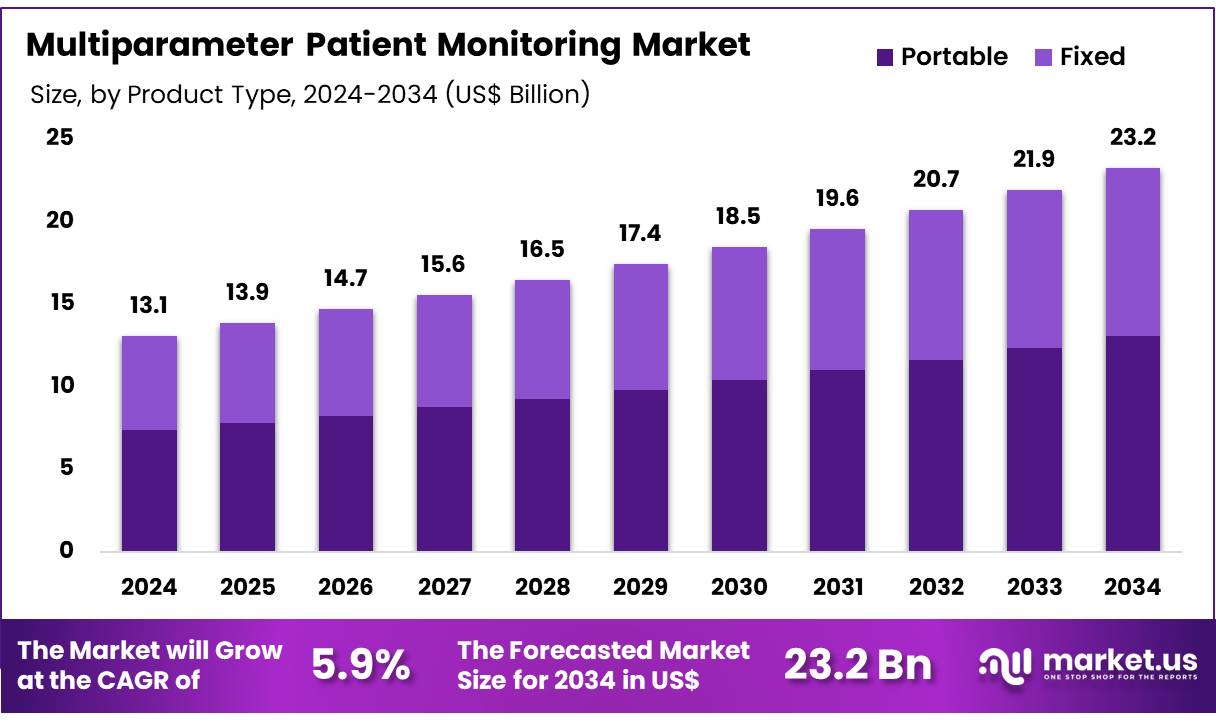
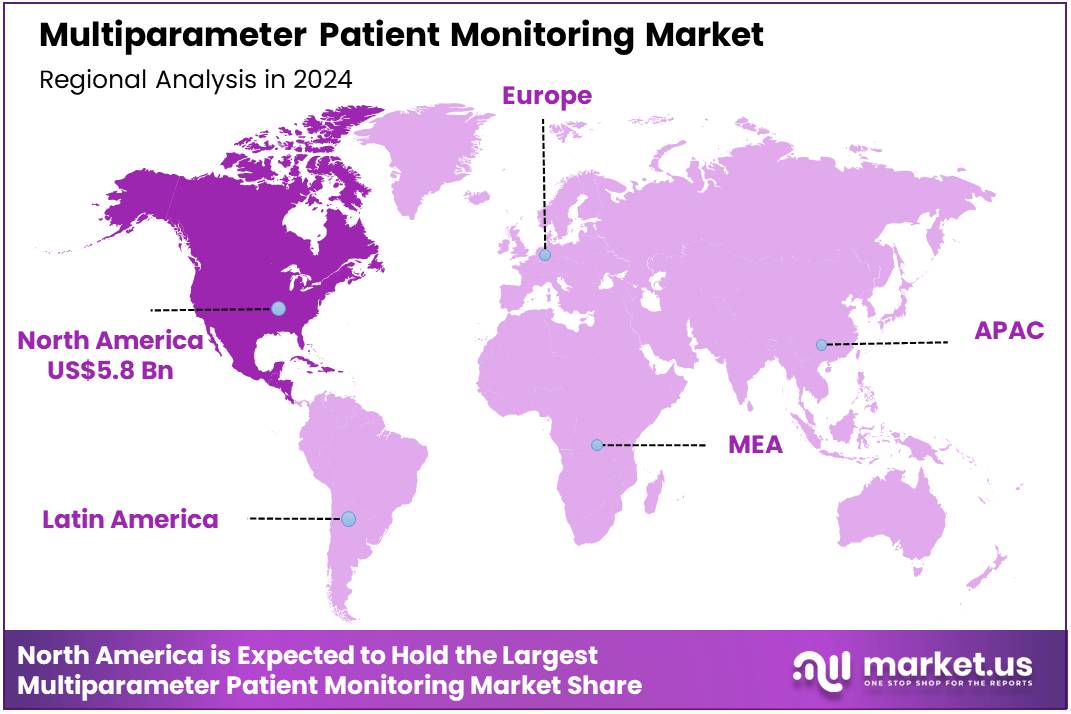
Global Multiparameter Patient Monitoring Market size is expected to be worth around US$ 23.2 Billion by 2034 from US$ 13.1 Billion in 2024, growing at a CAGR of 5.9% during the forecast period 2025 to 2034. In 2024, North America led the market, achieving over 44.1% share with a revenue of US$ 5.8 Billion.
The multiparameter patient monitoring market is expanding rapidly, driven by the escalating demand for early diagnosis and continuous patient care in various clinical settings. These advanced devices are crucial for monitoring critically ill patients, enabling healthcare providers to make timely, data-driven decisions that directly impact outcomes.
With a strong focus on improving patient quality of life, multiparameter monitors are essential in intensive care units (ICUs) and emergency departments. The Centers for Disease Control and Prevention (CDC) reports a significant number of emergency department visits in the US each year, with 3.1 million resulting in admission to a critical care unit, underscoring the vital role these monitors play in high-acuity environments where continuous, real-time data is paramount.
Growing technological sophistication and strategic integrations are key trends reshaping the market. The integration of wireless networks, such as Radio-Frequency Identification (RFID) and Medical Body Area Networks (MBAN), is revolutionizing diagnostics by providing comfortable, continuous monitoring without the constraints of traditional wired systems. This allows for the seamless measurement of vital signs like heart rate, blood pressure, and oxygen levels.
A prime example of this trend is the June 2023 FDA approval for the integration of Philips’ IntelliVue monitors with Masimo’s advanced monitoring technologies, which allows clinicians to assess brain function, regional oximetry, and CO2 measurements all within a single device. This development highlights the industry’s push toward consolidated, comprehensive monitoring solutions.
Increasing demand for home-based care and wearable technology is creating significant opportunities for market growth beyond traditional hospital settings. The Agency for Healthcare Research and Quality (AHRQ) has noted the rising prevalence of chronic conditions, with approximately 60% of US adults living with at least one chronic disease. This has fueled the adoption of remote patient monitoring systems that enable hospital-like care in a patient’s home.
Advancements in wearable devices and wireless communication facilitate the instant recording and transmission of data from a patient’s device to a healthcare professional, decreasing the time required for evaluation and treatment. Shenzhen Mindray Bio-Medical Electronics Co., Ltd.’s December 2022 launch of mWear, a device that monitors six vital signs for home-based care, exemplifies this trend toward decentralized, user-friendly monitoring solutions.
Key Takeaways
- In 2024, the market for multiparameter patient monitoring generated a revenue of US$ 13.1 Billion, with a CAGR of 5.9%, and is expected to reach US$ 23.2 Billion by the year 2034.
- The product type segment is divided into portable and fixed, with portable taking the lead in 2023 with a market share of 56.2%.
- Considering acuity level, the market is divided into high-acuity level and mid to low-acuity level. Among these, high-acuity level held a significant share of 60.4%.
- Furthermore, concerning the age group segment, the market is segregated into geriatric, adult, and pediatric. The geriatric sector stands out as the dominant player, holding the largest revenue share of 45.2% in the multiparameter patient monitoring market.
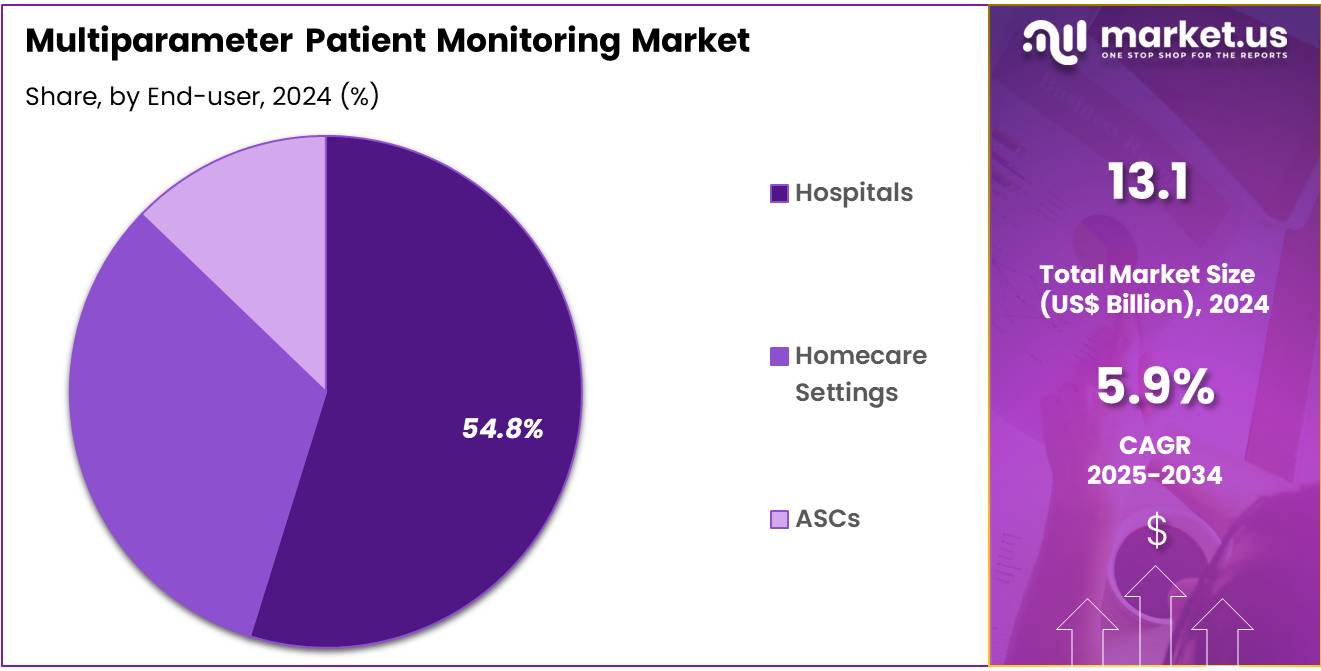
- The end-user segment is segregated into hospitals, homecare settings, and ASCs, with the hospitals segment leading the market, holding a revenue share of 54.8%.
- North America led the market by securing a market share of 44.1% in 2023.
Product Type Analysis
Portable multiparameter patient monitoring systems account for 56.2% of the product type segment in the market. This growth is expected to continue as portable monitoring devices offer the flexibility to be used in various healthcare settings, including emergency care, homecare, and outpatient clinics. The increasing need for remote patient monitoring, especially for chronic disease management, is likely to drive demand for portable systems.
Technological advancements, such as smaller, more lightweight designs and longer battery life, are expected to enhance the convenience and functionality of portable monitoring devices. Additionally, the growing trend toward telemedicine and remote patient monitoring services, particularly in the wake of the COVID-19 pandemic, is anticipated to significantly contribute to the adoption of portable patient monitoring solutions. The demand for portable devices will continue to rise as healthcare providers prioritize patient convenience and the ability to monitor vital signs outside of traditional hospital settings.
Acuity Level Analysis
High-acuity level monitoring accounts for 60.4% of the acuity level segment in the multiparameter patient monitoring market. This growth is expected to continue as high-acuity monitoring systems are essential for critically ill patients who require constant, real-time monitoring of vital signs. These systems are typically used in intensive care units (ICUs), operating rooms, and emergency departments, where accurate and continuous data is crucial for making quick and informed decisions.
The increasing number of patients with critical conditions, including cardiovascular diseases, respiratory disorders, and post-surgical recovery, is likely to drive the demand for high-acuity monitoring systems. Furthermore, advancements in sensor technologies and data analytics are anticipated to improve the accuracy and functionality of high-acuity devices, making them more effective in managing complex cases. As the global population ages and the prevalence of critical illnesses rises, the demand for high-acuity monitoring devices in hospitals is expected to grow.
Age Group Analysis
The geriatric age group accounts for 45.2% of the age group segment in the multiparameter patient monitoring market. This growth is expected to continue as the global geriatric population increases, bringing with it a rise in chronic diseases and age-related health conditions. Older adults often require continuous monitoring of vital signs due to a higher risk of cardiovascular diseases, diabetes, hypertension, and respiratory problems. The demand for patient monitoring systems that can track multiple parameters, such as heart rate, blood pressure, oxygen saturation, and body temperature, is anticipated to grow as healthcare providers aim to improve the management of chronic conditions in geriatric patients.
Additionally, the increasing adoption of homecare settings for elderly care is likely to drive demand for patient monitoring solutions that can be used in non-hospital environments. With a growing emphasis on improving the quality of life for elderly individuals, the demand for multiparameter monitoring systems tailored to the geriatric population is projected to rise.
Age Group Analysis
Hospitals represent 54.8% of the end-user segment in the multiparameter patient monitoring market. This growth is expected to continue as hospitals remain the primary setting for intensive patient care, especially for critically ill patients who require continuous monitoring. The increasing number of hospital admissions due to chronic diseases, surgical procedures, and aging populations is likely to drive the demand for multiparameter monitoring systems. Hospitals use these systems to monitor patients in real-time, track vital signs, and make quick clinical decisions.
The development of advanced hospital infrastructure, including smart hospital rooms and connected health technologies, is anticipated to further boost the adoption of patient monitoring systems in hospitals. Furthermore, hospitals are expected to prioritize devices that can help reduce readmission rates and improve patient outcomes, which will contribute to the continued demand for multiparameter patient monitoring systems in hospital settings.
Key Market Segments
By Product Type
- Portable
- Fixed
By Acuity Level
- High-acuity Level
- Mid to low-acuity Level
By Age Group
- Geriatric
- Adult
- Pediatric
By End-user
- Hospitals
- Homecare Settings
- ASCs
Drivers
The rising prevalence of chronic diseases and an aging population is driving the market.
The multiparameter patient monitoring market is experiencing significant growth, primarily driven by the escalating global burden of chronic diseases and the demographic shift towards an older population. Conditions such as cardiovascular diseases, diabetes, and respiratory disorders require continuous and accurate tracking of vital signs to prevent acute episodes and manage long-term health. These monitoring systems provide a comprehensive view of a patient’s physiological status, enabling healthcare providers to intervene proactively.
For instance, the American Heart Association’s 2024 Heart Disease and Stroke Statistics report highlighted that a significant number of US adults have cardiovascular disease, necessitating continuous monitoring in both hospital and outpatient settings. As the population ages, the number of individuals with multiple comorbidities will rise, creating a sustained demand for sophisticated monitoring equipment that can track a variety of parameters simultaneously, thereby enhancing the quality of care and improving patient outcomes in hospital intensive care units and beyond.
Restraints
The high cost of advanced monitoring systems and a shortage of skilled personnel are restraining the market.
A significant restraint on the market is the substantial capital investment required for state-of-the-art monitoring systems and the concurrent need for a highly skilled workforce to operate and interpret the data from them. Modern multiparameter monitors for intensive care units are expensive, with an average price tag that can reach tens of thousands of dollars, representing a major financial barrier for many hospitals and clinics, especially in resource-constrained environments.
Additionally, the increasing complexity of these systems necessitates specialized training for nurses and technicians to ensure proper usage and accurate data interpretation. This challenge is compounded by a persistent shortage of healthcare professionals. The US Bureau of Labor Statistics data for 2024 noted a critical need for nurses and medical technicians, with many institutions struggling to fill open positions. This shortfall limits the effective deployment of new technologies and can impact patient-to-staff ratios, which is a critical consideration for hospital administrators.
Opportunities
The increasing adoption of remote patient monitoring and home healthcare is creating growth opportunities.
The market is presented with significant opportunities from a broader shift towards remote patient monitoring (RPM) and home healthcare. This trend is driven by a desire to reduce hospital stays, lower healthcare costs, and empower patients to take a more active role in managing their own health. These technologies enable healthcare providers to continuously track vital signs remotely, allowing for proactive interventions and preventing costly re-admissions.
The Centers for Medicare & Medicaid Services (CMS) has facilitated this trend by expanding reimbursement for these services. A 2023 update to CMS codes established new billing codes for various RPM services, making it more financially viable for providers to offer remote care. The ability of these technologies to provide real-time data from a patient’s home environment is revolutionizing the management of chronic conditions and is projected to expand the market into a new paradigm of continuous care, moving beyond the traditional hospital setting.
Impact of Macroeconomic / Geopolitical Factors
The multiparameter patient monitoring market is navigating a challenging macroeconomic and geopolitical landscape, which impacts both production costs and supply chain stability. The US trade deficit in goods, which reached over US$1.2 trillion in 2024, reflects a broader reliance on imports for medical devices and components.
Geopolitical tensions have exacerbated this reliance, with a recent report indicating that the cost of shipping a 40-foot container from Asia to the U.S. West Coast exceeded US$5,000 in early 2025 due to logistical and political disruptions. These costs are often passed on to manufacturers and, eventually, to healthcare providers. Despite these challenges, the market is poised for significant growth, as global healthcare spending continues to expand.
The World Health Organization reported that global health expenditure accounts for around 10% of global GDP, ensuring sustained investment in life-saving equipment. Furthermore, with the average number of hospital beds in the European Union at 511 per 100,000 inhabitants, a high demand for patient monitoring devices in clinical settings remains, driving strong market fundamentals and ongoing innovation in the sector.
Latest Trends
The integration of artificial intelligence and machine learning for predictive analytics is a recent trend.
A significant trend in 2024 is the integration of artificial intelligence (AI) and machine learning (ML) capabilities into patient monitoring systems. These advanced algorithms analyze vast amounts of real-time patient data from multiple parameters to identify subtle patterns and trends that might be missed by human observation alone. The goal is to move from reactive monitoring to proactive, predictive care by alerting clinicians to a patient’s potential for deterioration before a critical event occurs.
For instance, an AI-powered system can analyze heart rate, blood pressure, and oxygen saturation data to predict the onset of sepsis or cardiac arrest hours in advance. According to a 2024 report on FDA-cleared AI-enabled medical devices, the number of these devices has grown exponentially, with a significant portion being in the cardiology and critical care fields. This shows clear regulatory and clinical acceptance of these advanced technologies and marks a new frontier in patient safety and clinical decision-making.
Regional Analysis
North America is leading the Multiparameter patient monitoring Market
The North American multiparameter patient monitoring market holds a substantial 44.1% share of the global revenue in 2024. This leadership position is directly attributable to a highly advanced healthcare infrastructure, robust public and private spending on health, and a high occurence of chronic diseases. For instance, the CDC reported in 2023 that approximately 6 in 10 adults in the US live with at least one chronic condition.
This widespread disease burden generates a consistent and significant need for continuous patient monitoring, both within clinical settings and at home. This demand is further supported by an accommodating regulatory and reimbursement environment. The Centers for Medicare & Medicaid Services (CMS) projects that US national health expenditures will have grown by 8.2% in 2024, reaching an estimated $5.3 trillion, which underscores the financial capacity to invest in sophisticated medical technologies.
The US market, in particular, is defined by its deep integration of artificial intelligence (AI) and Internet of Things (IoT) technologies. This is a result of a vibrant ecosystem of tech-heavy startups and established medical device manufacturers. A key example is the ongoing investment by companies in developing advanced platforms for remote patient monitoring (RPM), which is increasingly a part of routine clinical practice. The confluence of these factors a high prevalence of chronic illness, significant healthcare spending, and continuous technological innovation solidifies North America’s position as a market leader.
The Asia Pacific region is expected to experience the highest CAGR during the forecast period
The Asia Pacific market for multiparameter patient monitoring systems is anticipated to experience the fastest growth during the forecast period. This trajectory is a result of rapidly expanding healthcare infrastructure, a large and aging population, and a significant increase in both public and private sector investment in health technology.
A major driver is the substantial burden of chronic diseases in the region. The World Health Organization (WHO), in its 2024 World Health Statistics report, highlights that noncommunicable diseases remain a leading cause of death in the Western Pacific and South-East Asia regions. This high disease prevalence fuels a critical need for effective and accessible monitoring solutions.
The market’s expansion is further supported by proactive government health initiatives. In India, for example, the estimated expenditure of the Department of Health and Family Welfare for the 2024-2025 fiscal year was over US$11 billion, reflecting a commitment to strengthening the country’s medical infrastructure.
Similarly, China’s total expenditure on R&D reached 3.6 trillion yuan (approximately US$496 billion) in 2024, demonstrating its intent to become a leader in health technology. The growing adoption of digital health tools, often integrated with smartphones and wearable devices, along with rising health literacy, is also enhancing the demand for AI-integrated monitoring systems, positioning the region for a substantial period of market growth.
Key Regions and Countries
North America
- US
- Canada
Europe
- Germany
- France
- The UK
- Spain
- Italy
- Russia
- Netherland
- Rest of Europe
Asia Pacific
- China
- Japan
- South Korea
- India
- Australia
- New Zealand
- Singapore
- Thailand
- Vietnam
- Rest of APAC
Latin America
- Brazil
- Mexico
- Rest of Latin America
Middle East & Africa
- South Africa
- Saudi Arabia
- UAE
- Rest of MEA
Key Players Analysis
Leading players in the patient monitoring space execute multifaceted growth strategies to secure their market positions. Companies drive innovation by integrating artificial intelligence and advanced analytics into their devices, enabling predictive diagnostics and remote patient care. They actively pursue strategic partnerships and mergers to expand their product portfolios and geographical reach.
These firms also focus on developing portable and wearable devices, catering to the rising demand for home healthcare and continuous, non-invasive monitoring. Furthermore, they are investing in software and cloud-based platforms to improve data management and connectivity with electronic health records. These initiatives enhance their competitive advantage and drive market expansion.
Medtronic is a global leader in medical technology, services, and solutions, with a history spanning over 75 years. The company designs, manufactures, and markets medical devices, operating across four main segments: Cardiovascular, Medical-Surgical, Neuroscience, and Diabetes. Their Acute Care & Monitoring business unit focuses on non-invasive sensors and monitors for hospital and home settings.
Medtronic has a strong history of innovation, including the development of the first wearable and implantable pacemakers, and continues to invest significantly in research and development to maintain its leadership. Their strategy emphasizes technology-driven solutions and strategic acquisitions, allowing them to expand their presence in critical care and remote patient monitoring.
Top Key Players
- Drägerwerk AG & Co. KGaA
- GE Healthcare
- ICU Medical, Inc
- Koninklijke Philips N.V.
- MASIMO CORPORATION
- Medtronic
- Schiller
- Skanray Technologies
- Spacelabs Healthcare
- SternMed GmbH
- Validic
Recent Developments
- In May 2025, Niloufer Hospital in Hyderabad launched AmruthSwasthBharath, an innovative AI-powered tool for non-invasive blood testing. This technology quickly provides results in less than a minute by using Remote Photoplethysmography (PPG) to measure essential health indicators such as blood pressure, heart rate, SpO2, respiration rate, and hemoglobin A1c, all through a smartphone.
- In February 2025, Validic introduced a new AI-driven assistant for remote patient monitoring (RPM) within its Validic Impact platform. This solution utilizes generative AI to automatically detect changes in vital health metrics such as blood glucose, blood pressure, medication adherence, and lifestyle factors, providing clinicians with actionable insights between patient visits.
- In April 2023, Royal Philips and Northwell Health entered a seven-year collaboration to enhance and standardize patient monitoring systems across Northwell Health’s extensive network, which includes 21 hospitals and 850 outpatient centers, serving over two million patients each year.
Report Scope
Report Features Description Market Value (2024) US$ 13.1 Billion Forecast Revenue (2034) US$ 23.2 Billion CAGR (2025-2034) 5.9% Base Year for Estimation 2024 Historic Period 2020-2023 Forecast Period 2025-2034 Report Coverage Revenue Forecast, Market Dynamics, COVID-19 Impact, Competitive Landscape, Recent Developments Segments Covered By Product Type (Portable and Fixed) By Acuity Level (High-acuity Level and Mid to Low-acuity Level) By Age Group (Geriatric, Adult, and Pediatric) By End-user (Hospitals, Homecare Settings, and ASCs) Regional Analysis North America – US, Canada; Europe – Germany, France, The UK, Spain, Italy, Russia, Netherlands, Rest of Europe; Asia Pacific – China, Japan, South Korea, India, Australia, New Zealand, Singapore, Thailand, Vietnam, Rest of APAC; Latin America – Brazil, Mexico, Rest of Latin America; Middle East & Africa – South Africa, Saudi Arabia, UAE, Rest of MEA Competitive Landscape Drägerwerk AG & Co. KGaA, GE Healthcare, ICU Medical, Inc, Koninklijke Philips N.V., MASIMO CORPORATION, Medtronic, Schiller, Skanray Technologies, Spacelabs Healthcare, SternMed GmbH, Validic Customization Scope Customization for segments, region/country-level will be provided. Moreover, additional customization can be done based on the requirements. Purchase Options We have three licenses to opt for: Single User License, Multi-User License (Up to 5 Users), Corporate Use License (Unlimited User and Printable PDF)  Multiparameter Patient Monitoring MarketPublished date: Aug 2025add_shopping_cartBuy Now get_appDownload Sample
 -
-
- Drägerwerk AG & Co. KGaA
- GE Healthcare
- ICU Medical, Inc
- Koninklijke Philips N.V.
- MASIMO CORPORATION
- Medtronic
- Schiller
- Skanray Technologies
- Spacelabs Healthcare
- SternMed GmbH
- Validic
Our Clients

- 156377
- Aug 2025






