


Market Overview
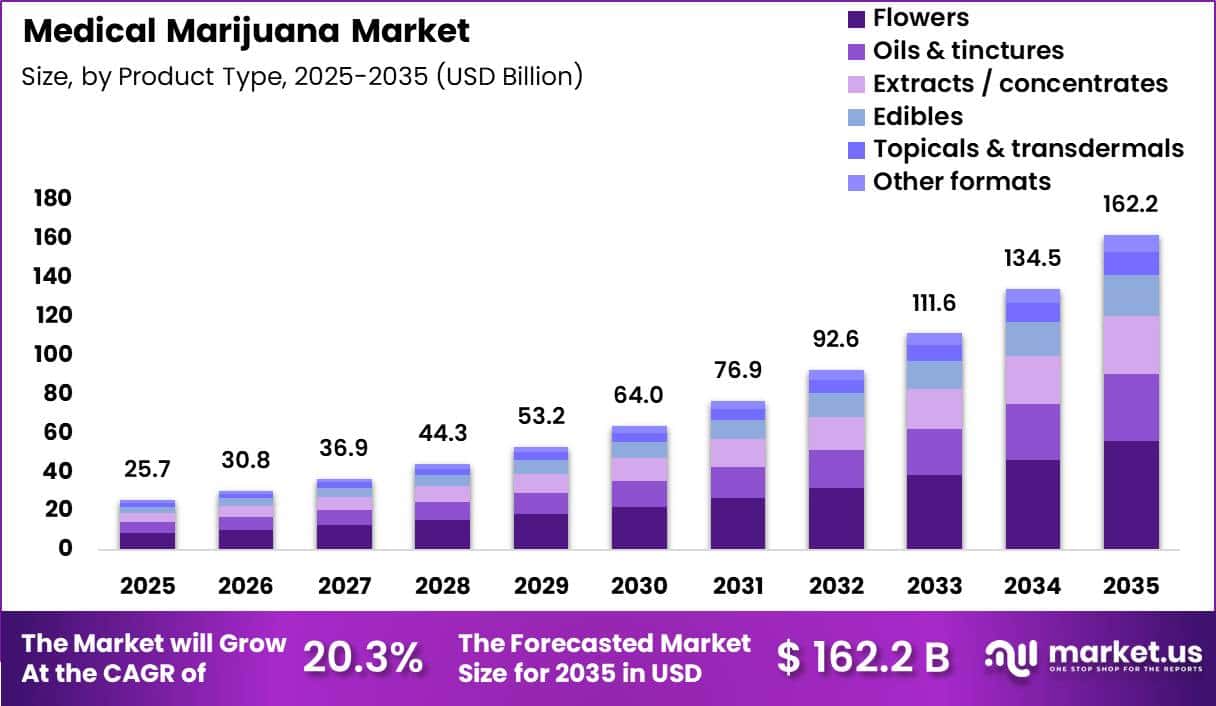
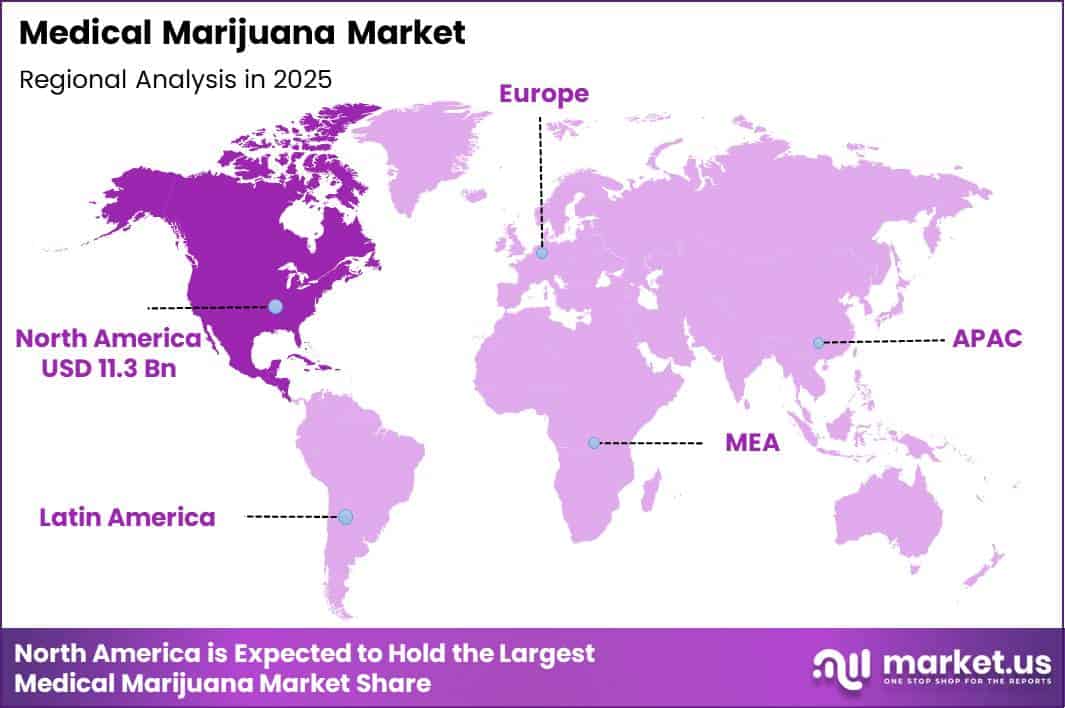
The Global Medical Marijuana Market size is expected to reach around US$ 162.2 Billion by 2035, up from US$ 25.7 Billion in 2025, growing at a CAGR of 20.3% during the forecast period from 2026 to 2035. In 2025, North America led the market, achieving over 44.1% market share with revenue of US$ 11.3 Billion.
Medical marijuana refers to the use of cannabis or cannabis-derived compounds under the supervision of healthcare professionals to help manage specific medical conditions such as chronic pain, chemotherapy-induced nausea and vomiting, multiple sclerosis-related spasticity, and certain forms of epilepsy.
While scientific research continues to expand, regulatory agencies emphasise that only a limited number of cannabis-derived medicines have received formal approval based on clinical evidence. For example, the U.S. Food and Drug Administration has approved Epidiolex for rare seizure disorders, along with synthetic cannabinoid medicines such as dronabinol and nabilone for chemotherapy-related nausea and appetite loss associated with AIDS.
The growing acceptance of medical marijuana is supported by evolving healthcare policies and increasing clinical research worldwide. According to the U.S. Centres for Disease Control and Prevention (CDC), 47 U.S. states, the District of Columbia, and three U.S. territories had authorised medical cannabis programs as of February 2024, reflecting broader access for eligible patients under regulated frameworks.
At the same time, cannabis remains federally regulated in the United States, highlighting the importance of ongoing research and evidence-based prescribing practices.
Healthcare organisations continue to evaluate both the therapeutic benefits and potential risks of medical marijuana. The CDC reports that approximately 52.5 million Americans (about 19%) used cannabis at least once in 2021, while research suggests that around 3 in 10 cannabis users may develop cannabis use disorder, emphasising the need for appropriate medical oversight.
Medical experts also advise caution for adolescents, pregnant women, and individuals with certain psychiatric or cardiovascular conditions. As governments, regulators, and researchers continue to study cannabinoids, the medical marijuana sector is expected to benefit from stronger clinical evidence, improved product standardisation, and expanded patient access through regulated healthcare systems.
Key Takeaways
- Market Size: The Global Medical Marijuana Market size was US$ 25.7 billion in 2025. The market is estimated to grow to US$ 162.2 billion by 2035.
- Market Share: The Compound Annual Growth Rate (CAGR) of the market from 2026 to 2035 will be 20.3%.
- Product Type: Flowers has the largest market share, accounting for 34.7% of total product type revenue.
- Application: Pain Management leads the segment, accounting for 48.9% of total application revenue.
- Distribution Channel: Retail & Speciality Dispensaries leads the segment, accounting for 58.2% of total distribution channel revenue.
- Route of Administration: Inhalation leads the segment, accounting for 46.2% of total route of administration revenue.
- Regional: North America is the dominant regional market, accounting for 44.1% of global revenue.
Product Type Analysis
The Flowers segment dominated the global medical marijuana market in 2025, accounting for 34.7% of the total market share. Dried cannabis flowers remain the preferred product type due to their widespread availability, rapid onset of therapeutic effects through inhalation, and broad acceptance among registered medical cannabis patients.
Healthcare providers in regulated markets continue to recommend flower products for patients requiring flexible dosing and immediate symptom relief, particularly for chronic pain and palliative care. Standardised cultivation methods and stringent quality testing have further enhanced product consistency and patient confidence.
The Oils & Tinctures segment held 21.1% of the market, supported by demand for precise dosing, ease of administration, and smoke-free consumption. Extracts / Concentrates represented 18.4%, driven by their higher cannabinoid potency and increasing use in specialised therapeutic applications.
Edibles accounted for 13.2%, benefiting from longer-lasting effects and improved patient compliance among individuals preferring oral formulations. Topicals & Transdermals captured 7.2%, reflecting growing use for localised pain and inflammatory conditions without significant systemic exposure.
The remaining Other Formats, including capsules, beverages, sprays, and suppositories, contributed 5.4% of the market, supported by continuous product innovation and expanding treatment options across regulated medical cannabis programs.
Application Analysis
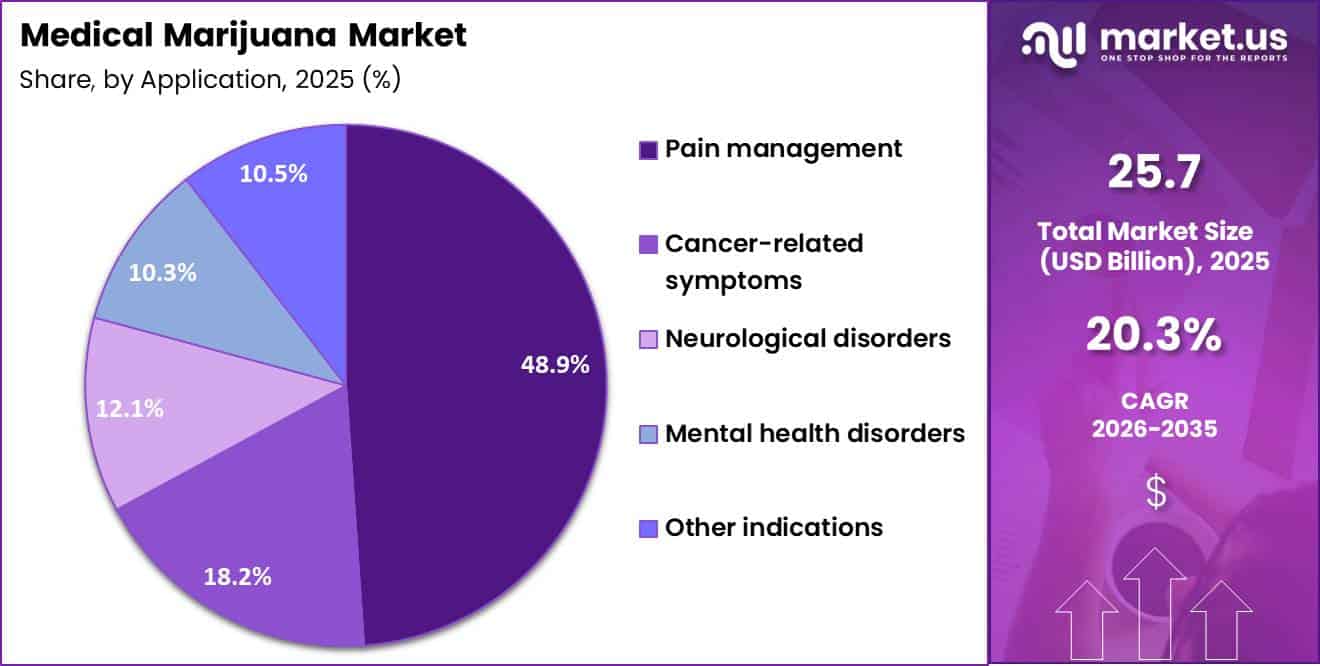
The Pain Management segment led the global medical marijuana market, capturing 48.9% of the total market share. Chronic pain remains the most common reason for medical cannabis prescriptions in many regulated healthcare systems, particularly for patients with neuropathic pain, arthritis, musculoskeletal disorders, and treatment-resistant pain conditions.
The increasing preference for alternative therapies to reduce opioid dependence has further strengthened demand for medical marijuana in pain management. Growing physician awareness and expanding clinical evidence continue to support its role as an adjunct therapy for selected patients.
The Cancer-related Symptoms segment accounted for 18.2% of the market, driven by the use of cannabinoid-based therapies to help manage chemotherapy-induced nausea, vomiting, appetite loss, and cancer-associated pain.
Neurological Disorders represented 12.1%, supported by applications in multiple sclerosis-related spasticity, epilepsy, and other neurological conditions. Mental Health Disorders held 10.3%, reflecting increasing research into cannabinoids for anxiety, post-traumatic stress disorder, and sleep-related disorders under medical supervision.
The Other Indications segment contributed 10.5%, encompassing glaucoma, inflammatory bowel disease, palliative care, HIV/AIDS-related symptoms, and other emerging therapeutic applications that continue to gain clinical attention.
Distribution Channel Analysis
The Retail & Speciality Dispensaries segment dominated the global medical marijuana market, accounting for 58.2% of the total market share. Licensed dispensaries remain the primary distribution channel due to their specialised product selection, trained staff, patient counselling services, and compliance with national and regional medical cannabis regulations.
These facilities provide access to a wide variety of standardised formulations, allowing physicians and patients to select products tailored to individual therapeutic needs. The continued expansion of regulated dispensary networks has significantly improved patient accessibility across established medical cannabis markets.
The Hospital & Clinic Channels segment represents an important share of the market, particularly in countries where medical cannabis is dispensed through healthcare institutions under physician supervision. Hospitals support the treatment of patients with complex medical conditions requiring carefully monitored cannabinoid therapies and standardised pharmaceutical-grade products.
Meanwhile, the Online / E-commerce segment continues to expand rapidly in jurisdictions permitting digital ordering and home delivery of prescription medical cannabis. Secure online platforms, electronic prescriptions, and telemedicine consultations have enhanced patient convenience while ensuring regulatory compliance.
Increasing digital healthcare adoption and improved logistics are expected to further strengthen online distribution throughout the forecast period.
Route of Administration Analysis
The Inhalation segment dominated the market, capturing 46.2% of the total market share. Inhalation remains the preferred route of administration due to its rapid onset of action, allowing patients to achieve faster symptom relief for chronic pain, nausea, muscle spasms, and breakthrough symptoms.
Medical cannabis flowers and vaporised products are widely utilized in regulated markets because they enable flexible dose adjustment based on patient response. Advances in medical-grade vaporisation devices have also improved safety, product consistency, and cannabinoid delivery.
The Oral segment represents the second-largest route of administration, supported by increasing demand for oils, tinctures, capsules, tablets, and edible formulations that provide longer-lasting therapeutic effects and precise dosing. Oral products are particularly favoured for chronic disease management requiring sustained symptom control.
The Topical segment continues to expand as creams, gels, lotions, and transdermal patches gain popularity for localised pain, arthritis, inflammatory disorders, and dermatological applications without producing significant psychoactive effects.
The Other Routes segment includes sublingual sprays, buccal formulations, rectal preparations, and emerging delivery technologies designed to improve cannabinoid bioavailability and patient adherence, contributing to ongoing innovation across medical cannabis therapies.
Key Market Segments
By Product Type
- Flowers
- Oils & Tinctures
- Extracts/Concentrates
- Edibles
- Topicals & Transdermals
- Other Formats
By Application
- Pain Management
- Cancer-Related Symptoms
- Neurological Disorders
- Mental Health Disorders
- Other Indications
By Distribution Channel
- Retail & Speciality Dispensaries
- Hospital & Clinic Channels
- Online/E-Commerce
By Route of Administration
- Inhalation
- Oral
- Topical
- Other Routes
Drivers
Chronic Pain Substitution from Opioids to Cannabinoid Care
Chronic pain is a major structural demand driver because it affects a large and persistent patient population and is increasingly managed through multimodal, opioid-sparing strategies. In the U.S., chronic pain impacts nearly 1 in 4 adults and over 1 in 3 seniors, creating sustained long-term demand for therapeutic alternatives beyond traditional opioids and non-opioid analgesics.
Medical cannabis and cannabinoid-based therapies are emerging as adjunct or second-line treatments rather than replacements for standard care. Evidence from population studies, including JAMA Network Open, shows that a meaningful proportion of chronic pain patients in medical cannabis states use cannabinoids specifically for pain relief, and many report reduced use of prescription opioids and other analgesics.
This substitution effect is commercially important even without full therapeutic replacement. Cannabinoids primarily grow by addressing patients with inadequate response to existing therapies, supporting structured, repeat-use care models.
Clinical dosing approaches typically begin with low-dose CBD and gradual titration, with selective THC addition, encouraging physician oversight, follow-up visits, and ongoing treatment cycles rather than episodic consumption.
From a market perspective, this shifts cannabinoid use from informal self-medication toward regulated, physician-managed chronic care pathways. It increases patient retention and supports recurring revenue models tied to symptom management.
Overall, cannabinoid-based therapies are emerging as a structured adjunct category in chronic pain management, gradually reshaping treatment patterns by reducing opioid reliance and expanding longitudinal care engagement.
| Driver | (~) % Impact on CAGR Forecast | Geographic Relevance | Impact Timeline |
|---|---|---|---|
| U.S. Schedule III pathway and federal research unlock | +2.4% | North America core; EU evidence spill-over | Short term (≤ 2 years) |
| Chronic pain substitution from opioids to cannabinoid care | +1.9% | North America core; Australia; selected EU | Medium term (2-4 years) |
| Physician-led prescribing normalisation and protocol standardisation | +1.5% | U.S., Australia, Germany, UK specialist channels | Short term (≤ 2 years) |
| Formulation shift toward non-inhaled, dose-controlled products | +1.3% | North America, EU, Australia | Medium term (2-4 years) |
| Senior and complex-care demand expansion | +1.1% | U.S., Canada, EU ageing markets, Australia | Medium term (2-4 years) |
| CBD labelling scrutiny and GMP-style quality migration | +0.9% | U.S., EU, Australia | Long-term (≥ 4 years) |
Challenges
Fragmented Clinical Evidence Base in Medical Cannabis
The fragmented clinical evidence base for medical marijuana remains a key structural constraint on market expansion, reflecting a gap between rapidly increasing patient access and the slower development of high-quality, indication-specific clinical data. This mismatch creates an estimated 1.3 % point drag on potential CAGR by limiting physician confidence, reimbursement coverage, and consistent treatment adoption across healthcare systems.
Most existing clinical studies in areas such as chronic pain, neuropathic disorders, and oncology-related symptom relief are relatively small in scale, often enrolling fewer than 200–300 patients, with short follow-up durations of 3–12 months. This falls below the evidence standards typically required for broad guideline inclusion or first-line therapeutic positioning in mainstream medicine.
As a result, medical cannabis is frequently categorised as a second- or third-line therapy in many clinical guidelines. This restricts integration into hospital formularies, pain management clinics, and oncology care pathways, even in jurisdictions where legal access exists.
Consequently, utilisation remains uneven and under-optimised relative to disease burden. From an industry perspective, this forces manufacturers to invest in costly clinical development programs, often ranging from USD 20–50 million per indication, while simultaneously complying with evolving botanical drug manufacturing and quality standards.
Closing the evidence gap requires large-scale pragmatic trials with 1,000–5,000 patients per indication, longer follow-up periods of 18–24 months, standardised dosing protocols, and stronger real-world evidence infrastructure. Coordinated efforts among regulators, payers, and industry will be essential to convert fragmented data into validated clinical guidelines and support broader therapeutic adoption.
| Challenge | (~) % CAGR Friction Drag | Geographic Relevance | Mitigation Horizon |
|---|---|---|---|
| Fragmented clinical evidence base | -1.3% | North America, EU, Asia-Pacific emerging | Long term (≥ 4 years) |
| Complex multi-layer compliance load | -1.1% | U.S. federal–state, EU national, LATAM pilots | Medium term (2-4 years) |
| Clinical-grade cultivation and GMP scaling | -0.9% | North America core, EU pharma hubs, Israel | Medium term (2-4 years) |
| Talent and clinical expertise deficit | -0.8% | Global research centres, hospital networks | Long-term (≥ 4 years) |
| Stigma-driven patient and prescriber hesitancy | -1.0% | North America, EU, Asia, Middle East | Long-term (≥ 4 years) |
| Pharmacovigilance and real-world data gaps | -0.7% | Global, especially new legal regimes | Medium term (2-4 years) |
Restraints
Federal–State Misalignment and Reimbursement Barriers in U.S. Medical Cannabis
Federal–state misalignment remains a key structural barrier in the U.S. medical cannabis market, limiting its full integration into mainstream healthcare despite widespread state legalisation.
As of 2025, medical cannabis is legal in more than 40 states and several territories, yet federal classification has historically remained restrictive, creating a fragmented regulatory environment that affects taxation, prescribing behaviour, and reimbursement pathways. This divergence has had meaningful commercial and clinical consequences.
Under prior federal Schedule I classification, operators were restricted by IRC Section 280E, preventing standard tax deductions on operating expenses such as payroll, rent, and marketing, which compressed margins and limited reinvestment capacity.
Even with the 2026 transition toward Schedule III, regulatory clarity remains incomplete, and reimbursement frameworks are still underdeveloped. Critically, Medicare and most commercial insurers do not broadly reimburse medical cannabis products. As a result, patients largely pay out of pocket, which significantly limits utilisation.
Estimates suggest that the absence of insurance coverage reduces adoption among eligible chronic pain patients by 25 to 35 %, with disproportionate impacts on rural and lower-income populations. Provider adoption is also constrained, as physicians remain cautious about integrating cannabis into formal care pathways due to legal ambiguity and limited reimbursement support, particularly in pain, oncology, and neurology.
Overall, these frictions delay healthcare system normalisation and reduce scalability, contributing an estimated 1.4 % point drag on global CAGR by limiting insured access, slowing physician uptake, and postponing institutional integration.
| Restraint | (~) % Impact on CAGR Forecast | Geographic Relevance | Impact Timeline |
|---|---|---|---|
| Fragmented scheduling & licensing regimes | -2.3% | US, EU, LATAM, Asia-Pacific | Medium term (2-4 years) |
| Clinical evidence and prescribing uncertainty | -1.6% | North America, EU, Australia | Long-term (≥ 4 years) |
| Federal–state misalignment & reimbursement barriers | -1.4% | US core | Medium term (2-4 years) |
| Supply chain & quality compliance bottlenecks | -1.2% | EU, North America, emerging APAC | Short–medium term (≤ 3 years) |
| Price inflation, tax load & margin compression | -1.0% | US, Canada, EU | Short term (≤ 2 years) |
| Capital access constraints & insurer risk aversion | -0.8% | Global, with US/EU focus | Long term (≥ 4 years) |
Opportunity
Integrated Chronic Care and Digital Therapeutics in Medical Cannabis
Medical cannabis use today is largely fragmented, with most patients self-managing conditions such as chronic pain, insomnia, and anxiety outside structured healthcare systems. This limits clinical oversight, reduces outcomes tracking, and prevents integration into formal chronic disease management pathways.
A key opportunity is integrating medical cannabis into digital chronic care models that combine cannabinoid therapies with telemedicine, remote monitoring, and digital therapeutics.
Instead of isolated dispensary purchases, patients could be enrolled in structured programs where THC/CBD regimens are personalised and adjusted using real-time inputs from wearables, sleep trackers, and symptom reporting apps.
Clinicians could receive automated alerts for adverse effects, non-adherence, or suboptimal response, enabling proactive intervention. Observational evidence suggests many patients report improved sleep and pain control and reduced reliance on conventional medications, but these outcomes are inconsistently captured due to a lack of system integration.
Commercially, this shifts cannabis from episodic retail consumption to subscription-based chronic care. Bundled models could generate US$ 40 to 80 per patient per month from products and US$ 10 to 20 from digital services, with longer engagement cycles of 24 to 36 months improving lifetime value.
If scaled in telehealth-enabled regions such as North America, Europe, and urban APAC, these integrated models could add approximately 2.4 % points of incremental CAGR, driven by better adherence, optimised dosing, and structured long-term care delivery.
| Opportunity | (~) % Potential CAGR Upside | Geographic Relevance | Execution Window |
|---|---|---|---|
| Prescription-grade cannabinoid therapeutics | +3.2% | US, EU-5, Japan, Canada | Medium term (2-4 years) |
| Integrated chronic care & digital therapeutics | +2.4% | North America core, EU, urban APAC | Medium term (2-4 years) |
| Senior-care & palliative medicine channels | +2.0% | US, Western Europe, Japan | Short term (≤ 2 years) |
| Employer-funded and payer-backed benefit models | +2.8% | US, Canada, selected EU | Medium term (2-4 years) |
| Regulated cross-border clinical export hubs | +3.5% | Canada, EU, Latin America, Israel | Long-term (≥ 4 years) |
| Low-THC / high-CBD functional wellness segment | +2.1% | North America, EU, APAC emerging markets | Short term (≤ 2 years) |
Regional Analysis
In 2025, North America led the market, achieving over 44.1% share with revenue of US$ 11.3 billion. North America dominated the global medical marijuana market in 2025, accounting for the largest revenue share due to its well-established regulatory framework, extensive patient access programs, and strong clinical research ecosystem.
The United States remains the leading contributor, supported by medical cannabis programs operating across most states, while Canada continues to benefit from a federally regulated medical cannabis system, advanced cultivation infrastructure, and ongoing product innovation. High healthcare spending, expanding physician awareness, and increasing acceptance of cannabinoid-based therapies further reinforce the region’s leadership.
Europe represented the second-largest regional market, driven by the gradual expansion of medical cannabis legalisation and reimbursement programs across countries such as Germany, the United Kingdom, Italy, and the Netherlands.
Rising investment in pharmaceutical-grade cannabis production, growing physician education, and evolving regulatory policies continue to strengthen regional demand. Governments are also supporting clinical research to evaluate cannabinoids for pain management, neurological disorders, and cancer-related symptoms.
The Asia-Pacific region is expected to register the fastest growth during the forecast period. Countries including Australia, New Zealand, Thailand, and South Korea are expanding regulated medical cannabis access through controlled prescribing frameworks and research initiatives. Increasing healthcare investment and growing awareness of cannabinoid therapeutics are supporting market development.
Latin America and the Middle East & Africa are emerging markets, with countries such as Brazil, Colombia, Israel, and South Africa progressively adopting medical cannabis regulations. Continued policy reforms, expanding domestic cultivation, and increasing clinical evidence are expected to improve patient access and create new growth opportunities across these regions.
Key Regions and Countries
North America
- The US
- Canada
Europe
- Germany
- France
- The U.K.
- Italy
- Spain
- Russia & CIS
- Rest of Europe
Asia Pacific
- China
- India
- Japan
- South Korea
- ASEAN
- Australia & New Zealand
- Rest of Asia Pacific
Middle East & Africa
- GCC
- South Africa
- Rest of the Middle East & Africa
Latin America
- Brazil
- Mexico
- Rest of Latin America
Key Player Analysis
Suppliers in the global medical marijuana market are strengthening their competitive position through standardised, pharmaceutical-grade cultivation and extraction platforms that ensure consistent cannabinoid potency, purity, quality, and batch-to-batch reproducibility. These capabilities are essential for meeting regulatory requirements and improving physician confidence in medical cannabis products.
Key strategic priorities include expanding whole-plant extract and cannabinoid isolate portfolios across CBD-dominant, THC-dominant, and balanced formulations designed for specific therapeutic applications and patient requirements.
Pharmaceutical partnerships are also being pursued to support clinical trials and regulatory approval programs, enabling cannabis-derived compounds to be developed into prescription medicines. International expansion remains a major focus, particularly across emerging medical cannabis markets in Europe, Latin America, and Asia Pacific.
Companies are further investing in Good Agricultural and Collection Practice (GACP) cultivation, Good Manufacturing Practice (GMP) facilities, and physician education programs. These initiatives are supporting wider clinical acceptance across oncology, neurology, and pain management.
Expanding legalisation and growing clinical evidence are expected to increase patient access, prescribing confidence, and medical cannabis market volumes through 2035.
Top Key Players
- Canopy Growth Corporation
- Aurora Cannabis Inc.
- Tilray Brands Inc.
- Cronos Group Inc.
- Curaleaf Holdings Inc.
- Green Thumb Industries Inc. (GTI)
- Trulieve Cannabis Corp.
- Cresco Labs Inc.
- Organigram Holdings Inc.
- Medical Marijuana Inc.
- GW Pharmaceuticals plc
- CanniMed Ltd.
- VIVO Cannabis Inc.
- MediPharm Labs Corp.
- Other Key Players
Recent Developments
- In January 2026, Curaleaf Holdings expanded its medical cannabis dispensary network across three new US state markets following regulatory approval, targeting chronic pain and cancer symptom management patient populations through retail dispensary and physician referral institutional procurement channels.
- In February 2026, Tilray Brands secured a medical cannabis supply agreement with a leading European pharmaceutical distributor covering standardised cannabis oil and flower products across German, Polish, and Portuguese licensed medical cannabis retail and clinic distribution channels.
- In March 2026, Aurora Cannabis launched a pharmaceutical-grade standardised cannabis extract range meeting European GMP certification requirements, targeting hospital and clinic channel institutional buyers in Germany and the UK seeking physician-prescribed medical cannabis formulations with verified potency and purity documentation.
- In May 2026, Canopy Growth Corporation expanded its medical cannabis e-commerce platform across Canadian and select European markets, targeting licensed patient populations seeking home delivery prescription fulfilment through digitally enabled medical cannabis procurement platforms integrated with physician authorisation workflows.
Report Scope
| Report Features | Description |
|---|---|
| Market Value (2025) | US$ 25.7 Billion |
| Forecast Revenue (2035) | US$ 162.2 Billion |
| CAGR (2026-2035) | 20.3% |
| Base Year for Estimation | 2025 |
| Historic Period | 2020-2024 |
| Forecast Period | 2026-2035 |
| Report Coverage | Revenue Forecast, Market Dynamics, Competitive Landscape, Recent Developments |
| Segments Covered | By Product Type (Flowers, Oils & Tinctures, Extracts/Concentrates, Edibles, Topicals & Transdermals, Other Formats), By Application (Pain Management, Cancer-Related Symptoms, Neurological Disorders, Mental Health Disorders, Other Indications), By Distribution Channel (Retail & Specialty Dispensaries, Hospital & Clinic Channels, Online/E-Commerce), By Route of Administration (Inhalation, Oral, Topical, Other Routes) |
| Regional Analysis | North America – The US, Canada; Europe – Germany, France, U.K., Italy, Spain, Russia & CIS, Rest of Europe; Asia Pacific – China, India, Japan, South Korea, ASEAN, Australia & New Zealand, Rest of Asia Pacific; Middle East & Africa – GCC, South Africa, Rest of Middle East & Africa; Latin America – Brazil, Mexico, Rest of Latin America |
| Competitive Landscape | Canopy Growth Corporation, Aurora Cannabis Inc., Tilray Brands Inc., Cronos Group Inc., Curaleaf Holdings Inc., Green Thumb Industries Inc. (GTI), Trulieve Cannabis Corp., Cresco Labs Inc., Organigram Holdings Inc., Medical Marijuana Inc., GW Pharmaceuticals plc, CanniMed Ltd., VIVO Cannabis Inc., MediPharm Labs Corp., Other Key Players |
| Customization Scope | Customization for segments, region/country-level will be provided. Moreover, additional customization can be done based on the requirements. |
| Purchase Options | We have three licenses to opt for: Single User License, Multi-User License (Up to 5 Users), Corporate Use License (Unlimited User and Printable PDF) |





































