Key Findings
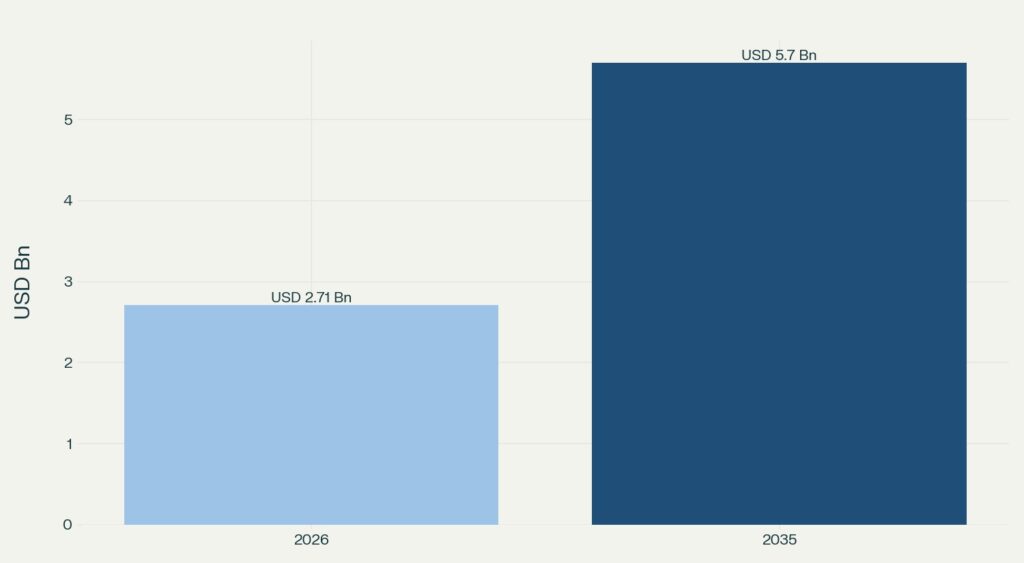
- The Japan HR Tech Market is worth USD 2.71 Billion in 2026 and is expected to reach USD 5.70 Billion by 2035, a CAGR of 8.6%.
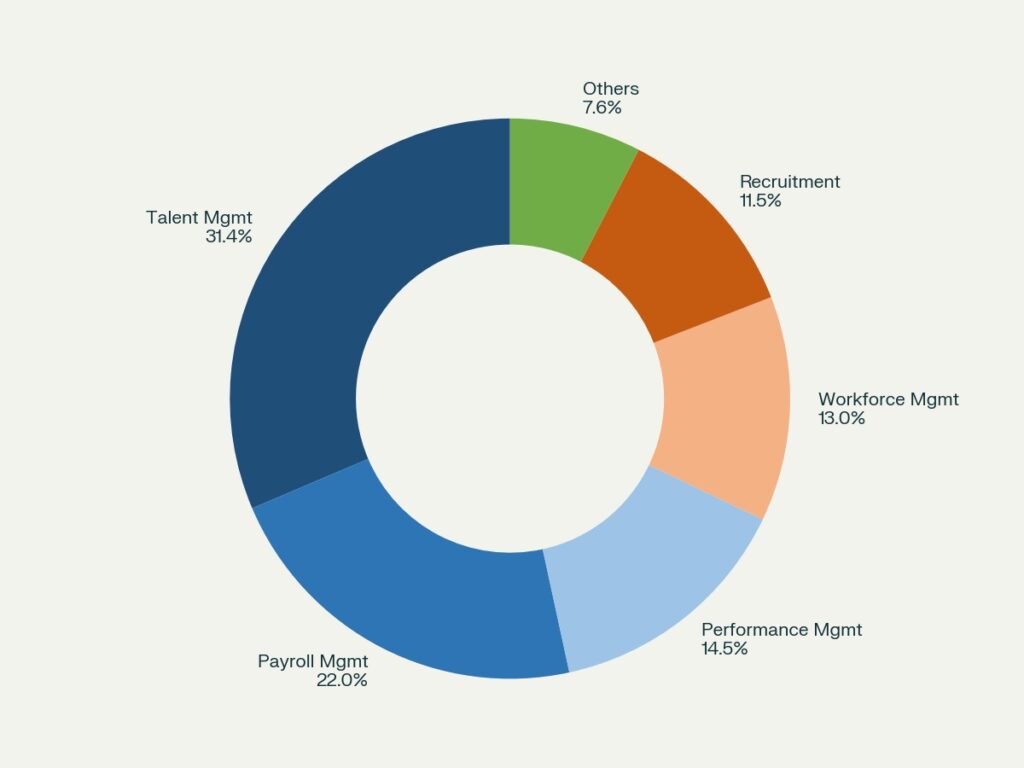
- Talent Management leads applications with a 31.4% share in 2026.
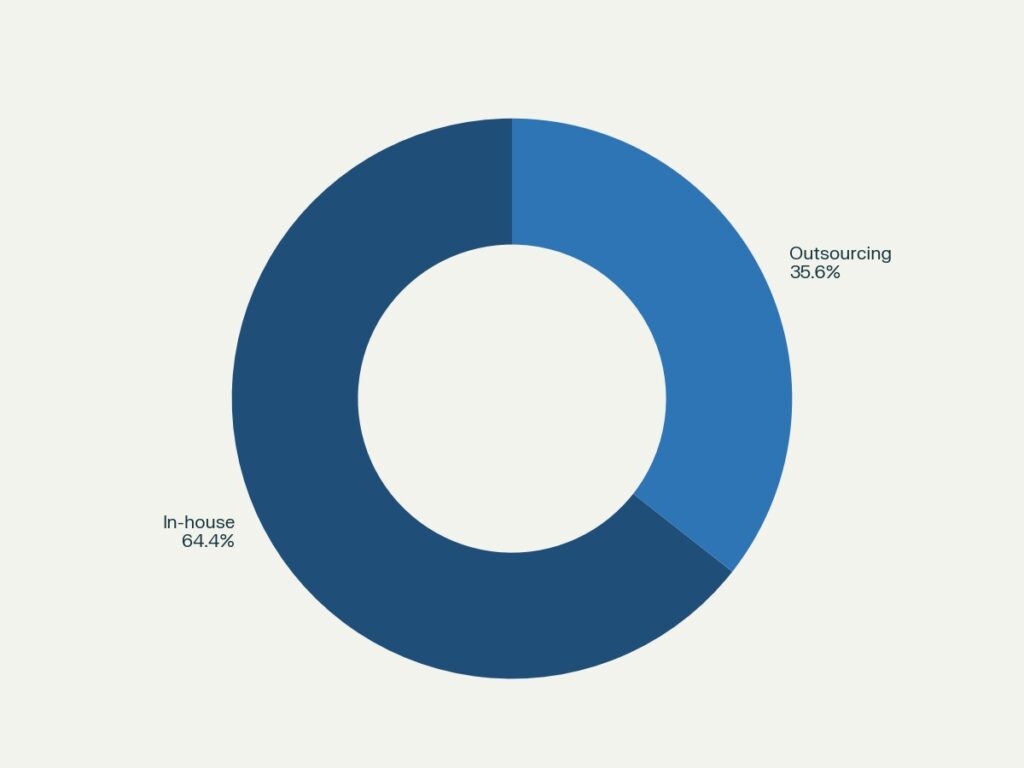
- In-house deployment leads Type with a 64.4% share in 2026.
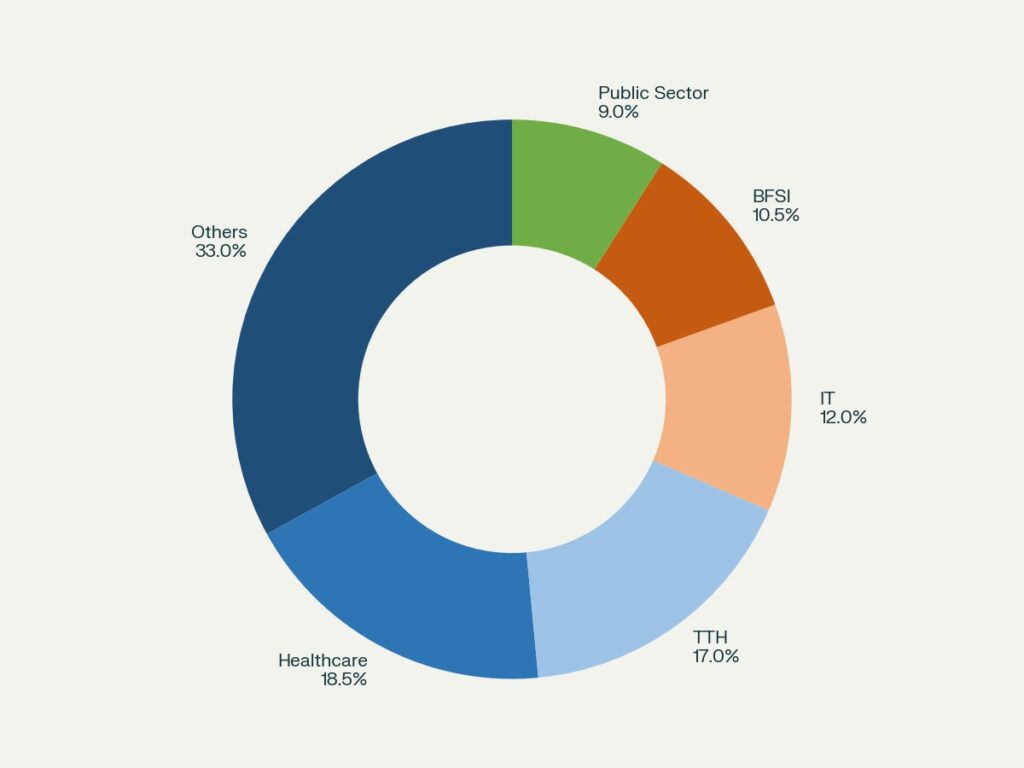
- Healthcare is the largest named end-use industry with an 18.5% share (estimate). The mixed “Others” group holds 33.0%.
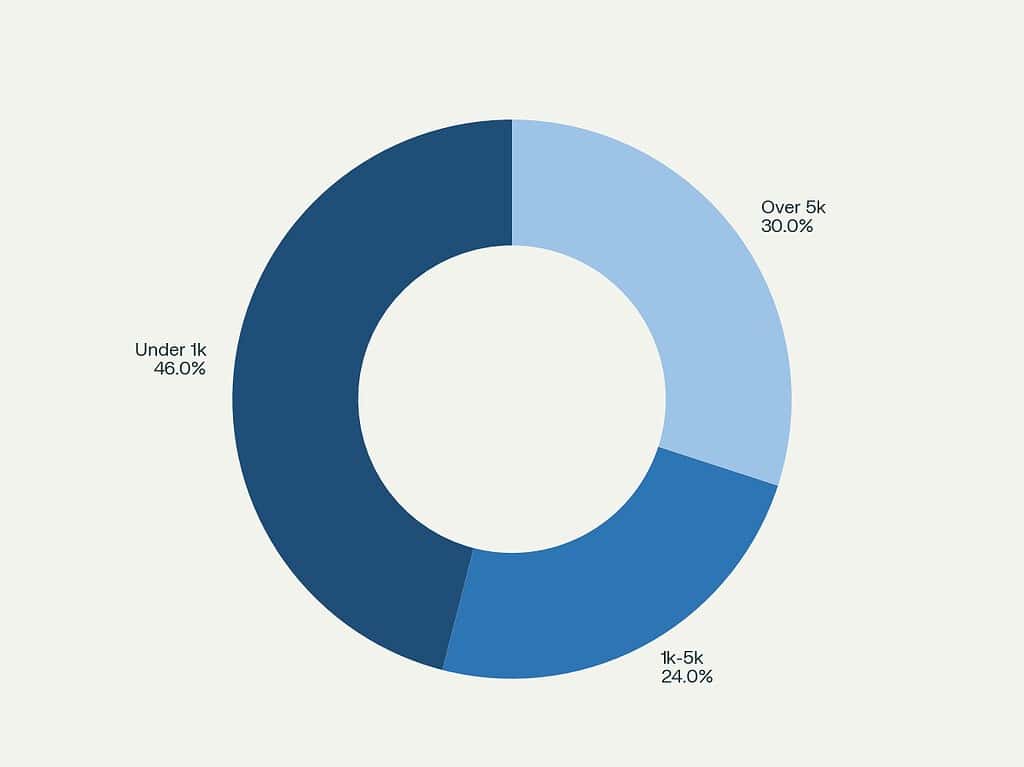
- Under 1k Employees leads Company Size with a 46.0% share (estimate).
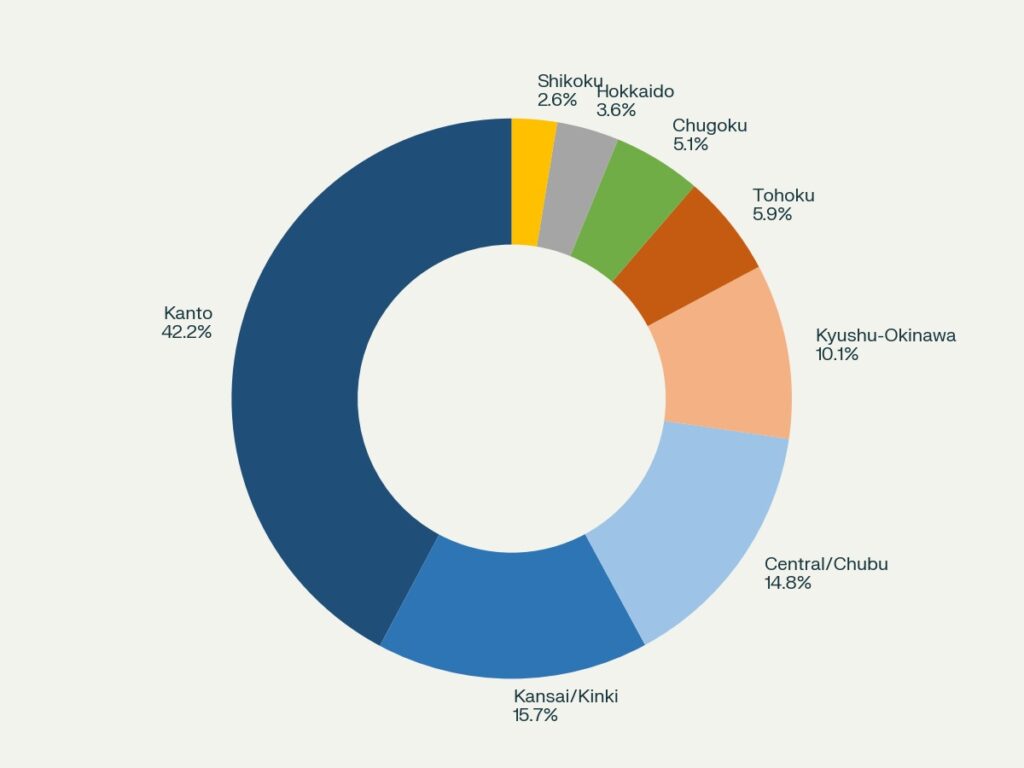
- Kanto Region leads with a 42.2% share in 2026.
- Recruitment is the fastest-growing application (estimated CAGR of 11.2%).
Market Overview
The Japan HR Tech Market is estimated at USD 2.71 Billion in 2026. It is projected to reach USD 5.70 Billion by 2035, a CAGR (compound annual growth rate) of 8.6% over the forecast period.
Japan’s labour market makes HR technology a necessity, not an optional purchase. Japan’s Ministry of Internal Affairs and Communications (MIC) reported a labour force of 70.04 million in 2025, up 470,000, as more women and older people joined the workforce. The population is shrinking, so higher productivity per worker is the main way to grow output.
The Linux Foundation’s 2025 Japan Tech Talent Report found that more than 70% of Japanese organizations were understaffed in key technology areas, a rate 52% higher than in other regions it surveyed. Employers cannot hire their way out of this, so they use technology to stretch the capacity of the staff they have.
Market Definition
HR tech is software that runs people processes, including hiring, payroll, attendance, performance, learning and workforce planning. It includes cloud and on-premise HR platforms, plus outsourced HR services delivered through a software platform. The market excludes general ERP (enterprise resource planning) modules not built for HR, and payroll bureau services that have no software platform.
The forecast assumes three things. First, companies will keep moving from older on-premise systems to cloud Human Capital Management platforms. Second, adoption of AI tools for recruitment and workforce planning will speed up. Third, more SMEs will adopt HR tech because of compliance pressure. AI recruitment tools are the fastest-scaling part of this shift, as companies replace manual CV screening with algorithm-based matching.
Key Market Statistics
| Metric | Value |
|---|---|
| Market size, 2026 | USD 2.71 Bn (¥429.6 Bn at 158.53 JPY/USD) |
| Market size, 2035 | USD 5.70 Bn (¥903.6 Bn at a constant rate) |
| CAGR, 2026-2035 | 8.6% (USD and constant-currency yen) |
| Leading application | Talent Management, 31.4% |
| Leading type | In-house, 64.4% |
| Leading named industry | Healthcare, 18.5% (estimate) |
| Leading company size | Under 1k Employees, 46.0% (estimate) |
| Leading region | Kanto, 42.2% |
Application Analysis
Talent Management accounted for 31.4% of application demand in 2026, the highest of any category.
Human Capital Management platforms, the core of Talent Management, lead because Japanese companies face pressure on hiring, retention and skills at the same time. Talent Management is broad. It covers applicant tracking, onboarding, succession planning and learning administration in one platform. Buyers combined separate point tools into single suites to cut integration costs and keep employee data in one place.
Payroll Management (estimated 22.0%) and Performance Management (estimated 14.5%) are the second and third largest applications. Both benefit from replacement cycles driven by labour law changes. Workforce Management (estimated 13.0%) is growing in high-turnover sectors such as retail and logistics, where automated shift scheduling and attendance cut costs. Recruitment (estimated 11.5%) is the fastest-growing application at an estimated CAGR of 11.2%, driven by AI candidate matching and automated sourcing.
“Recruitment rises from 11.5% of the market in 2026 to 14.2% in 2035, overtaking Workforce Management (13.9%). Talent Management slips from 31.4% to 30.4%, but it stays the largest category by a wide margin.”
Research Team, Market.us
Type Analysis
With a 64.4% share in 2026, In-house outpaced all other Type categories.
Large Japanese companies have long built or customized their own HR systems to handle Japan-specific labour law and internal approval steps. Replacing these systems is costly and needs heavy localization. To win replacement deals, vendors need deep configuration options, Japanese-language interfaces and links to existing ERP systems.
Outsourcing (35.6%) is the fastest-growing delivery model, at an estimated CAGR of 10.5%. SMEs without IT staff prefer managed services to running their own platforms. Cloud outsourced HR services make it affordable for employers with fewer than 500 staff to adopt HR tech. HR BPO (business process outsourcing) providers bundle payroll, compliance checks and benefits into one managed package.
“Outsourcing grows from 35.6% of the market in 2026 to 41.6% in 2035, a 6.0-point gain. In-house stays the majority, but the gap shrinks from 28.8 points to 16.8 points.”
Research Team, Market.us
End-Use Industry Analysis
Among named industries, Healthcare led End-Use Industry with an estimated 18.5% share in 2026 (USD 0.50 Bn). The mixed “Others” group, which includes manufacturing and retail, holds 33.0%.
Healthcare leads because of its workforce size and compliance load. Medical, healthcare and welfare employed 9.47 million people in 2025, or 13.9% of all workers. It also added more jobs than any other sector over the past decade. Credential tracking, shift compliance and nurse retention tools are now operating requirements, not optional upgrades. Healthcare grows at an estimated 9.6% CAGR to USD 1.14 Bn by 2035.
IT (estimated 12.0%) is the fastest-growing named industry, at an estimated CAGR of 9.8%. IT employers buy the most advanced talent analytics, skills mapping and performance tools to compete for scarce engineers. TTH (Travel, Transportation and Hospitality, estimated 17.0%) runs large, spread-out hourly workforces, where scheduling, attendance and overtime compliance are critical. BFSI (estimated 10.5%) focuses on performance management and regulatory audit trails. Public Sector adoption (estimated 9.0%) is rising under government digital mandates, though buying cycles are long. Within “Others,” factory digitization is bringing HR tech to non-desk workers.
Company Size Analysis
Under 1k Employees led the Company Size segment with an estimated 46.0% share in 2026.
Japan’s employer base is dominated by smaller firms. According to the 2025 White Paper on Small and Medium Enterprises, Japan has about 3.365 million SMEs, or 99.7% of all companies, and they employ about 70% of workers. Cloud payroll and compliance tools have made HR software affordable for employers that used to rely on spreadsheets. Government subsidies for SME digitization have lowered the barriers further.
The 1k–5k Employees tier (estimated 24.0%) is the fastest-growing spending group, at an estimated CAGR of 10.2%. Mid-sized companies are buying integrated HCM platforms to manage complexity without large IT teams. Over 5k Employees buyers (estimated 30.0%) buy full enterprise suites with global payroll, workforce analytics and AI talent tools. Vendors tailor pricing, localization and implementation support to each tier.
Key Market Segments
By Application
- Talent Management
- Payroll Management
- Performance Management
- Workforce Management
- Recruitment
- Others
By Type
- In-house
- Outsourcing
By End-Use Industry
- TTH (Travel, Transportation, Hospitality)
- Public Sector
- Healthcare
- IT
- BFSI (Banking, Financial Services, Insurance)
- Others
By Company Size
- Under 1k Employees
- 1k–5k Employees
- Over 5k Employees
Segment Share Table (all shares are model estimates, built from Deloitte Tomatsu MIC, labour force, SME and population data)
| Segment | Details |
|---|---|
| Talent Management | 31.4% | USD 0.85 Bn (2026) | USD 1.73 Bn (2035) | CAGR 8.2% |
| Payroll Management | 22.0% | USD 0.60 Bn (2026) | USD 1.15 Bn (2035) | CAGR 7.6% |
| Performance Management | 14.5% | USD 0.39 Bn (2026) | USD 0.84 Bn (2035) | CAGR 8.8% |
| Workforce Management | 13.0% | USD 0.35 Bn (2026) | USD 0.79 Bn (2035) | CAGR 9.4% |
| Recruitment | 11.5% | USD 0.31 Bn (2026) | USD 0.81 Bn (2035) | CAGR 11.2% |
| Others (application) | 7.6% | USD 0.21 Bn (2026) | USD 0.38 Bn (2035) | CAGR 7.0% |
| In-house | 64.4% | USD 1.75 Bn (2026) | USD 3.33 Bn (2035) | CAGR 7.4% |
| Outsourcing | 35.6% | USD 0.96 Bn (2026) | USD 2.37 Bn (2035) | CAGR 10.5% |
| Others (industry) | 33.0% | USD 0.90 Bn (2026) | USD 1.68 Bn (2035) | CAGR 7.2% |
| Healthcare | 18.5% | USD 0.50 Bn (2026) | USD 1.14 Bn (2035) | CAGR 9.6% |
| TTH | 17.0% | USD 0.46 Bn (2026) | USD 1.00 Bn (2035) | CAGR 9.0% |
| IT | 12.0% | USD 0.33 Bn (2026) | USD 0.75 Bn (2035) | CAGR 9.8% |
| BFSI | 10.5% | USD 0.28 Bn (2026) | USD 0.59 Bn (2035) | CAGR 8.4% |
| Public Sector | 9.0% | USD 0.24 Bn (2026) | USD 0.54 Bn (2035) | CAGR 9.2% |
| Under 1k Employees | 46.0% | USD 1.25 Bn (2026) | USD 2.51 Bn (2035) | CAGR 8.1% |
| 1k-5k Employees | 24.0% | USD 0.65 Bn (2026) | USD 1.56 Bn (2035) | CAGR 10.2% |
| Over 5k Employees | 30.0% | USD 0.81 Bn (2026) | USD 1.63 Bn (2035) | CAGR 8.0% |
Each segment adds up to USD 2.71 Bn in 2026 and USD 5.70 Bn in 2035.
Regional Analysis
| Region | Details |
|---|---|
| Kanto | 42.2% | USD 1.14 Bn (2026) | USD 2.37 Bn (2035) | CAGR 8.4% |
| Kansai/Kinki | 15.7% | USD 0.43 Bn (2026) | USD 0.91 Bn (2035) | CAGR 8.8% |
| Central/Chubu | 14.8% | USD 0.40 Bn (2026) | USD 0.85 Bn (2035) | CAGR 8.7% |
| Kyushu-Okinawa | 10.1% | USD 0.27 Bn (2026) | USD 0.62 Bn (2035) | CAGR 9.6% |
| Tohoku | 5.9% | USD 0.16 Bn (2026) | USD 0.32 Bn (2035) | CAGR 8.2% |
| Chugoku | 5.1% | USD 0.14 Bn (2026) | USD 0.28 Bn (2035) | CAGR 8.0% |
| Hokkaido | 3.6% | USD 0.10 Bn (2026) | USD 0.21 Bn (2035) | CAGR 8.9% |
| Shikoku | 2.6% | USD 0.07 Bn (2026) | USD 0.14 Bn (2035) | CAGR 7.8% |
| Total | 100.0% | USD 2.71 Bn (2026) | USD 5.70 Bn (2035) | CAGR 8.6% |
Shares outside Kanto are estimates. They split the remaining 57.8% by each region’s share of Japan’s population.
Kanto Region
Kanto led with a 42.2% share in 2026 (USD 1.14 Bn) as Japan’s main economic and corporate hub. Tokyo, Kanagawa and Saitama host most listed companies, the Japan offices of multinationals and the large financial institutions. HR tech purchases for the whole country are decided at Kanto headquarters, even when staff work across many prefectures. Foreign HR software vendors, including healthcare-focused HR providers, usually set up sales and implementation teams in Kanto before expanding to other regions.
Kansai/Kinki Region
Kansai is Japan’s second-largest economic zone, anchored by Osaka’s manufacturing, pharma and retail groups. Demand for workforce management and scheduling tools is stronger than in Kanto because more of the region’s industry runs on shifts. Vendors and system integrators with Osaka offices benefit from long-standing local relationships.
Central/Chubu Region
Demand centres on the automotive and advanced manufacturing supply chains around Nagoya and Toyota City. Workforce planning and skills-gap analytics are priorities because skilled technicians are retiring faster than replacements can be hired. Export-driven production targets add pressure to keep factories fully staffed.
Kyushu-Okinawa Region
Kyushu-Okinawa is the fastest-growing region, at an estimated CAGR of 9.6% (USD 0.27 Bn in 2026 to USD 0.62 Bn in 2035). Semiconductor investment in Kumamoto is the main driver. TSMC’s first Kumamoto fab, run by JASM, began commercial operation at the end of 2024, and a second fab is planned for 3-nanometer mass production in 2028. The two fabs total about ¥3 trillion in investment, backed by up to ¥1.208 trillion in government subsidies. The second fab alone is expected to create about 1,700 direct jobs, with indirect jobs reaching about 10,000. New suppliers and contractors need payroll, onboarding and compliance tools from their first day. Fukuoka’s startup ecosystem is also drawing cloud HR vendors that target SMEs.
Tohoku Region
Tohoku holds an estimated 5.9% share (USD 0.16 Bn in 2026) and grows at an 8.2% CAGR. Adoption is driven by public and infrastructure projects, which need workforce management tools in construction and logistics. Construction and logistics have been under overtime caps since 2024, so digital attendance records are now a requirement. New renewable energy and materials projects add demand for project-based staffing tools.
Chugoku Region
Chugoku holds an estimated 5.1% share (USD 0.14 Bn in 2026) and grows at an 8.0% CAGR. Demand comes from steel, shipbuilding-related and logistics employers around Hiroshima and Okayama. These are shift-based workforces with many older skilled workers, so compliance-focused payroll, attendance and succession tools lead adoption.
Hokkaido Region
Hokkaido holds an estimated 3.6% share (USD 0.10 Bn in 2026) and grows at an 8.9% CAGR, above the national rate. Hospitality and agriculture have large seasonal swings in staffing and have historically been slow to digitize HR. Tourism growth has pushed hotels and resorts to invest in scheduling, short-term hiring and labour compliance tools for the ski and summer peaks.
Shikoku Region
Shikoku is the smallest region, at an estimated 2.6% share (USD 0.07 Bn in 2026) and a 7.8% CAGR. Adoption centres on SME manufacturers, healthcare providers and public employers. Cloud payroll and basic attendance tools are the usual starting point, and SME digitization subsidies are lifting uptake.
Macroeconomic Impact
Japan’s 2025 economy supported HR tech spending. The ADB Key Indicators Database puts Japan’s nominal GDP at ¥663.76 trillion in 2025, with real growth of 1.2%. That pace kept corporate budgets intact without triggering freezes on technology spending. Consumer prices rose 3.1%, which pushed employers to seek productivity gains through automation instead of relying only on wage increases. The Cabinet Office reported business investment up 1.6% quarter on quarter in January–March 2025.
Market Dynamics
Driver: Shrinking Workforce Forces HR Automation
Japan’s demographics create demand that employers cannot avoid. The ADB reports Japan’s population at 123.37 million in 2025, down 0.5% from the year before. Unemployment averaged just 2.5% in 2025, and the number of employed people hit a record 68.28 million (MIC). In July 2026, there were 2.10 new job openings for every new jobseeker (JILPT). With almost no spare labour, workforce tools have become a basic cost of doing business.
The Bank of Japan’s Tankan survey reported an employment-conditions index of minus 35 for all industries in mid-2025, which signals shortages across most sectors. Business Process Management features inside HR suites automate approvals, scheduling and compliance reports that used to take up HR staff time. Vendors that can prove time saved per HR administrator win deals over rivals with similar features but no proof.
“At ¥429.6 billion across a labour force of 70.04 million, Japan spends about ¥6,134 (USD 38.7) on HR tech per worker in 2026. A tighter labour market raises the value of each worker’s time and supports higher spend per head.”
Research Team, Market.us
Restraint: SME Resistance and Localization Complexity
Many SMEs still use bureau or in-house payroll systems that have worked reliably for decades, so cloud adoption among small firms remains low. Switching requires change management that busy small businesses struggle to fund. Cost sensitivity adds to the delay.
Global vendors face Japan-specific barriers. Employment law requires exact handling of fixed-term contracts, social insurance and labour agreements, all in Japanese. In 2025, 94% of Japanese organizations rated upskilling as strategically important, yet many global platforms lack Japanese learning content, regulatory update processes and audit-trail formats. Vendors without Japan localization teams risk failed implementations that hurt their references.
Opportunity: SME Platforms and Senior-Workforce Tools
Japan’s employment rate rose to 62.3% in 2025, and the female employment rate reached 55.1%. Policies supporting women’s and older workers’ participation widened the active workforce. HR tools for flexible schedules, reskilling and DEI (diversity, equity and inclusion) analytics now serve a government policy agenda. Vendors aligned with these goals can win public and semi-public contracts.
The Linux Foundation found that hiring and onboarding a replacement takes much longer than upskilling an existing employee. This makes a clear ROI (return on investment) case for talent platforms with built-in learning. Learning Management System features inside HR suites are now a main reason to buy the platform, not an add-on. Vendors that prove faster time-to-productivity for reskilled staff will close deals faster.
Porter’s Five Forces
- Threat of new entrants (low to moderate): Vendors must handle Japan payroll rules, My Number processing, Japanese-language localization and enterprise references before winning major clients. Funding is not the barrier; compliance depth is.
- Supplier power (moderate): Cloud providers (AWS, Microsoft Azure, Google Cloud) and AI model providers have pricing leverage. Competition among global clouds limits how far they can push it.
- Buyer power (rising at enterprise level): Large employers are consolidating vendors and asking for discounts in return. Among SMEs, buyer power is low because switching costs are high compared with contract value.
- Threat of substitutes (meaningful in payroll): Outsourced bureau services and spreadsheets remain non-software options for price-sensitive SMEs. Japan has about 3.365 million SMEs, so this group is large.
- Competitive rivalry (high): Domestic vendors such as SmartHR (ARR over ¥30 Bn) compete hard with each other. Global HCM providers are investing in localization, and global consolidation is backing them: Paychex bought Paycor for about USD 4.1 Bn and Workday bought Sana for about USD 1.1 Bn.
AI and Gen AI Impact
AI adoption in Japan’s HR tech market faces a skills gap inside client companies. The Linux Foundation found that fewer than 40% of Japanese organizations had even the most common AI skills. Vendors cannot assume their clients are fluent in AI, so they must build training and support into their products. Vendors with ready-made models for Japanese HR use cases, such as candidate scoring and compliance alerts, have an edge over those offering complex toolkits that need data scientists.
Expectations are still high: 97% of Japanese organizations expected AI to create significant value in key areas in 2025. Generative AI is moving fastest in drafting job descriptions, writing interview questions and summarizing HR policies. HR staff can easily check the quality of these outputs. Vendors adding GenAI copilots (built-in AI assistants) to Japan-localized platforms are winning premium pricing.
Market Trends
Trend 1: Cloud HCM migration. Japanese organizations projected a 41% increase in cloud adoption (Linux Foundation, 2025). Vendors must capture this migration before competitors lock clients into multi-year contracts.
Trend 2: Predictive workforce analytics. Analytics is shifting from reports on the past to predictions of turnover and internal moves. With 2.10 job openings per jobseeker (July 2026), each resignation is expensive to replace. Buyers want early warnings on staff at risk of leaving and skills-gap maps for succession.
Trend 3: Employee-experience suites with AI assistants. Platforms are combining engagement, learning, performance and flexible-work tools into one suite. SmartHR’s employee portal, which includes an AI assistant, passed ¥1 billion in ARR in July 2026, showing that employee-facing AI is now a revenue line. Combined suites reduce the number of tools buyers manage and raise switching costs for the vendors that win first.
Market Competition Overview
Japan’s HR tech market has two tiers. Domestic specialists lead in payroll, compliance-heavy workforce management and SME cloud HR, where Japan-specific localization is hard for global vendors to copy. Global HCM vendors, including Workday, SAP SuccessFactors and Oracle HCM Cloud, compete for large enterprises with deep integration and AI analytics. Global healthcare HR software providers are a smaller group of entrants, targeting Japan’s healthcare employers with sector-specific credentialing and scheduling features.
Domestic players keep advantages in up-to-date regulatory compliance, local service and fit with Japanese buying habits. Neither group has achieved decisive consolidation, so the market stays fragmented.
“SmartHR’s ARR of more than ¥30 billion equals about 14.6% of our estimated 2026 cloud HR tech spend of ¥206.1 billion. One domestic vendor already holds a large share of the cloud layer.”
~ Research Team, Market.us
Competitive Benchmarking
| Company | Details |
|---|---|
| Recruit Holdings | Job platforms (Indeed) plus HR software | FY2025 HR Technology revenue ¥1,458.4 Bn (+6.3%) |
| SmartHR Inc. | Cloud HR and payroll for SMEs and mid-market; ARR over ¥30 Bn (July 2026) |
| Works Human Intelligence | Integrated HR system COMPANY for large firms; adopted by KDDI (August 2026) |
| PERSOL HOLDINGS | Staffing plus HR tech and BPO; FY2025 revenue about ¥1.558 T (+7.2%), operating income +15.8% |
| HRBrain Inc. | Talent management cloud for mid-sized firms; not disclosed |
| Microsoft | Microsoft 365, LinkedIn, Copilot | FY2026 revenue USD 331.8 Bn (+18%) |
Pricing Analysis
SME HR tech in Japan is usually priced per employee per month, with modules (payroll, attendance, evaluation) added on top. Enterprise contracts are priced by users, modules and implementation services. Japan compliance modules, Japanese-language support and on-site implementation carry premiums. Domestic vendors include these as standard, while global vendors must treat them as extra costs of sale.
Price pressure is rising in the SME tier, as cloud-native entrants compete on per-seat cost. Mid-tier vendors are squeezed between low-cost challengers and full enterprise suites. Outsourced HR models convert upfront implementation costs into monthly fees, which helps SMEs but lowers contract value for pure software vendors. Spending capacity is sound: non-manufacturer business investment rose 2.4% quarter on quarter in January–March 2025, and these service-sector employers are the core buyers of SaaS HR. Japanese vendors don’t publish consistent price lists, so this report does not model pricing per seat.
Company Profiles
Recruit Holdings Co., Ltd. combines job-board leadership (Indeed and Recruit platforms) with HR software. For FY2025 (year to March 2026), HR Technology revenue reached ¥1,458.4 billion, up 6.3%, or USD 9.67 billion, up 7.6%. This scale funds AI matching and SaaS investment. Its candidate data creates a data flywheel, where more users produce better matches and attract more users, which rivals cannot easily copy.
SmartHR Inc. is Japan’s leading cloud HR and payroll vendor. It reached ¥10 billion in ARR in February 2023 and ¥20 billion in April 2025. It targets ¥100 billion in sales by 2030. Its strength is fast product expansion across back-office HR tasks.
Works Human Intelligence Co., Ltd. sells COMPANY, an integrated HR system built for large Japanese enterprises. It is strong where in-house-style customization and Japan compliance depth matter most. In July 2026, it released an AI career-advice feature that gives advice tailored to each employee’s role.
PERSOL HOLDINGS CO., LTD. combines staffing, HR outsourcing and HR technology. For FY2025 (year to March 2026), revenue was about ¥1.558 trillion, up 7.2%, with operating income up 15.8%. Revenue and every level of profit hit records, and all business units grew. Its staffing and BPO client base gives it a ready channel to cross-sell HR tech.
HRBrain Inc. provides cloud talent management for mid-sized Japanese companies, covering evaluations, staffing plans and employee data. It competes in the 1k–5k employee tier, the fastest-growing company-size segment (estimated 10.2% CAGR). Mid-sized firms there want integrated talent data without a large IT team.
Microsoft Corporation competes through Microsoft 365, LinkedIn Talent Solutions and Copilot. In fiscal 2026 (year to June 2026), revenue reached USD 331.8 billion, up 18%. Microsoft Cloud revenue passed USD 214 billion, up 27%. Bundling AI into productivity tools gives Microsoft a reach that HR specialists cannot match.
Key Players
- Recruit Holdings Co., Ltd.
- SmartHR Inc.
- Works Human Intelligence Co., Ltd.
- PERSOL HOLDINGS CO., LTD.
- HRBrain Inc.
- Jinjer Co., Ltd.
- freee K.K.
- Workday, Inc.
- SAP SuccessFactors
- Oracle HCM Cloud
- ADP, LLC
- IBM Watson Talent
- Cornerstone OnDemand
- BambooHR
- Paycor HCM (part of Paychex since April 2025)
- Zenefits
- Gusto
- Namely
- Link and Motivation Inc.
- Microsoft Corporation
Supply Chain and Value Chain Analysis
The chain starts with cloud infrastructure from AWS, Microsoft Azure and Google Cloud. HR software vendors build on top of it, creating payroll engines, compliance modules, talent suites and analytics. Implementation partners and system integrators configure platforms for Japanese compliance, including My Number handling, social insurance and 36 Agreement overtime tracking. Employers then use the platforms through subscriptions, managed services or outsourced HR bureaus. Staffing groups such as PERSOL and Recruit sit across several layers at once, combining candidate supply, BPO and software.
Most value is created at the software and AI layer, where matching, turnover prediction and compliance automation set vendors apart. The biggest risk is keeping compliance updates current as labour laws change. Vendors without Japan legal teams build up product debt (accumulated fixes still to be made) with every amendment. This favours domestic vendors and well-funded global players with local teams.
Regulatory Landscape
Japan’s employment rules are among the most detailed in Asia. Key requirements include:
- Social insurance (Shakai Hoken) premium calculations.
- My Number (the national ID number) for payroll and tax filings.
- Limits on fixed-term contract renewals under the Labor Contract Act.
- Overtime caps under 36 Agreements (the labour-management agreement required for overtime).
Work Style Reform rules, phased in through 2024 for some sectors, made accurate digital attendance and overtime records essential. The Act on the Protection of Personal Information (APPI) sets strict data access and transfer rules, which adds compliance costs for foreign cloud vendors. Vendors with built-in My Number handling, overtime monitoring and social insurance engines shorten sales cycles because they remove compliance risk for the client.
Investment and White Space Analysis
The Cabinet Office reported corporate profits up 3.8% year on year in January–March 2025, giving buyers room for delayed system replacements. JETRO reports Japan’s inward FDI stock at ¥53.3 trillion at the end of 2024, up 4.5% and equal to 8.7% of GDP. Greenfield investment, meaning new facilities built from scratch, reached USD 31.6 billion in 2024, up 15.4%. Each new foreign entrant needs Japan-compliant payroll, onboarding and compliance tools from its first day.
White space is largest in three areas:
- Cloud payroll for employers with fewer than 100 staff.
- Senior-workforce tools for reskilling and flexible schedules for employees over 60.
- Predictive talent tools for mid-sized manufacturers facing waves of skilled-worker retirements.
Domestic vendors with deep regulatory knowledge and SME-friendly pricing are best placed to win these segments before global players finish localizing.
Research Methodology
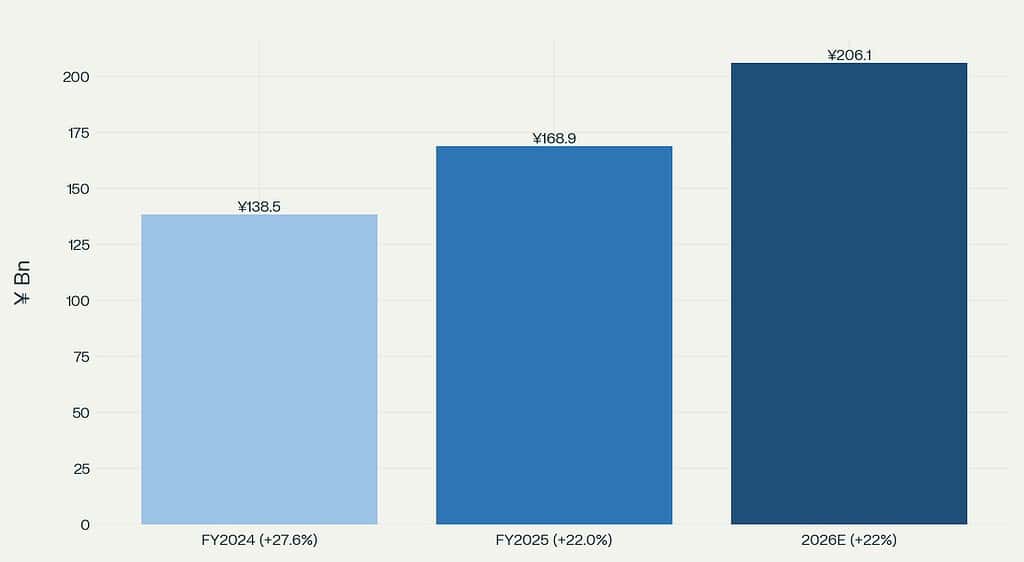
The market size combines an official-source anchor with estimates. The Deloitte Tomatsu MIC Research Institute puts Japan’s HR tech cloud market at ¥138.5 billion in FY2024, up 27.6%, and ¥168.9 billion in FY2025, up 22.0%. We added on-premise and packaged HR software, plus outsourced HR delivered through software platforms. Segment weights draw on labour force, SME, employment-by-industry and population data. Every modelled value is labelled as an estimate.
| Component (2026) | Values |
|---|---|
| HR tech cloud (FY2025 ¥168.9 Bn grown 22%, estimate) | ¥206.1 Bn | USD 1.30 Bn |
| On-premise, packaged and platform-based outsourcing (estimate) | ¥223.5 Bn | USD 1.41 Bn |
| Total market | ¥429.6 Bn | USD 2.71 Bn |
CAGR explained: The 8.6% USD CAGR assumes a constant 158.53 JPY/USD, so the constant-currency yen CAGR is also 8.6%. If the yen strengthens to 140, the yen CAGR needed falls to 7.1%. If it weakens to 170, it rises to 9.5%. The forecast assumes cloud keeps growing fast while on-premise spend shrinks.
“Cloud HR tech is about 48.0% of the market in 2026 (¥206.1 billion of ¥429.6 billion). If cloud keeps growing at about 22% in 2027, it will make up more than half the market that year. Cloud growth must then slow toward the market rate, as cloud becomes the main delivery model and replaces on-premise spend.”
Research Team, Market.us
Primary and expert validation: This edition is based on desk research. It was checked against government, research institute and company sources published between January 2025 and August 2026, including MIC, the SME Agency, JILPT, JETRO and the Deloitte Tomatsu MIC Research Institute. It also uses the disclosures of 6 profiled companies (Recruit Holdings, SmartHR, Works Human Intelligence, PERSOL HOLDINGS, HRBrain and Microsoft) and cites 6 market developments. No primary interviews or surveys were carried out for this edition.
How this report was produced: Analysts drafted this report using AI tools for research support, fact-checking and drafting. A human analyst reviewed it before publication. All modelled figures are labelled as estimates.
Recent Developments
- April 2025: Paychex completed its acquisition of Paycor HCM for an enterprise value of about USD 4.1 billion.
- November 2025: Workday completed its acquisition of Sana for about USD 1.1 billion, adding AI-native learning and agent tools to its HCM platform.
- March 2026: Deloitte Tomatsu MIC Research Institute forecast that Japan’s HR tech cloud market will keep growing 20–30% a year through FY2029.
- May 2026: Recruit Holdings guided FY2026 HR Technology revenue to USD 10.74 billion, up 11.0%.
- July 2026: SmartHR’s ARR passed ¥30 billion. Its employee portal, which includes an AI assistant, passed ¥1 billion in ARR.
- August 2026: KDDI adopted Works Human Intelligence’s integrated HR system COMPANY.
Report Scope
| Report Features | Description |
|---|---|
| Market Value (2026) | USD 2.71 Billion |
| Forecast Revenue (2035) | USD 5.70 Billion |
| CAGR (2026 to 2035) | 8.6% |
| Base Year for Estimation | 2025 |
| Historic Period | 2020 to 2024 |
| Forecast Period | 2026 to 2035 |
| Report Coverage | Revenue Forecast, Market Dynamics, Competitive Landscape, Recent Developments |
| Segments Covered | By Application (Talent Management, Payroll Management, Performance Management, Workforce Management, Recruitment, Others), By Type (In-house, Outsourcing), By End-Use Industry (TTH, Public Sector, Healthcare, IT, BFSI, Others), By Company Size (Under 1k Employees, 1k–5k Employees, Over 5k Employees) |
| Regions Covered | Kanto, Kansai/Kinki, Central/Chubu, Kyushu-Okinawa, Tohoku, Chugoku, Hokkaido, Shikoku |
| Competitive Landscape | Recruit Holdings Co., Ltd., SmartHR Inc., Works Human Intelligence Co., Ltd., PERSOL HOLDINGS CO., LTD., HRBrain Inc., Jinjer Co., Ltd., freee K.K., Workday, Inc., SAP SuccessFactors, Oracle HCM Cloud, ADP LLC, IBM Watson Talent, Cornerstone OnDemand, BambooHR, Paycor HCM (Paychex), Zenefits, Gusto, Namely, Link and Motivation Inc., Microsoft Corporation |
| Customization Scope | Customization for segments and prefecture level will be provided. Additional customization can be done based on requirements. |
| Purchase Options | Single User License, Multi-User License (Up to 5 Users), Corporate Use License (Unlimited Users and Printable PDF) |
Analyst View
- HR tech in Japan is driven by the labour shortage, not by optional IT budgets.
- Cloud is about half the market and growing much faster than the market overall.
- Outsourcing and Recruitment are the share gainers through 2035.
- Domestic vendors keep the edge on compliance, while global vendors win on AI and integration.
- The 8.6% CAGR assumes cloud growth of 20–30% a year will be largely offset by declining on-premise and packaged software spend.