


Global Incense Burner Market Market Size, Share, Growth Analysis By Type (Electric Incense Burners, Traditional Incense Burners, Ceramic Incense Burners, Metal Incense Burners, Others), By Material (Wood, Ceramic, Metal, Glass, Others), By Application (Residential, Commercial, Others), By Region and Companies - Industry Segment Outlook, Market Assessment, Competition Scenario, Statistics, Trends and Forecast 2025-2034
- Published date: Nov 2025
- Report ID: 168070
- Number of Pages: 242
- Format:
-
keyboard_arrow_up
Quick Navigation
Report Overview
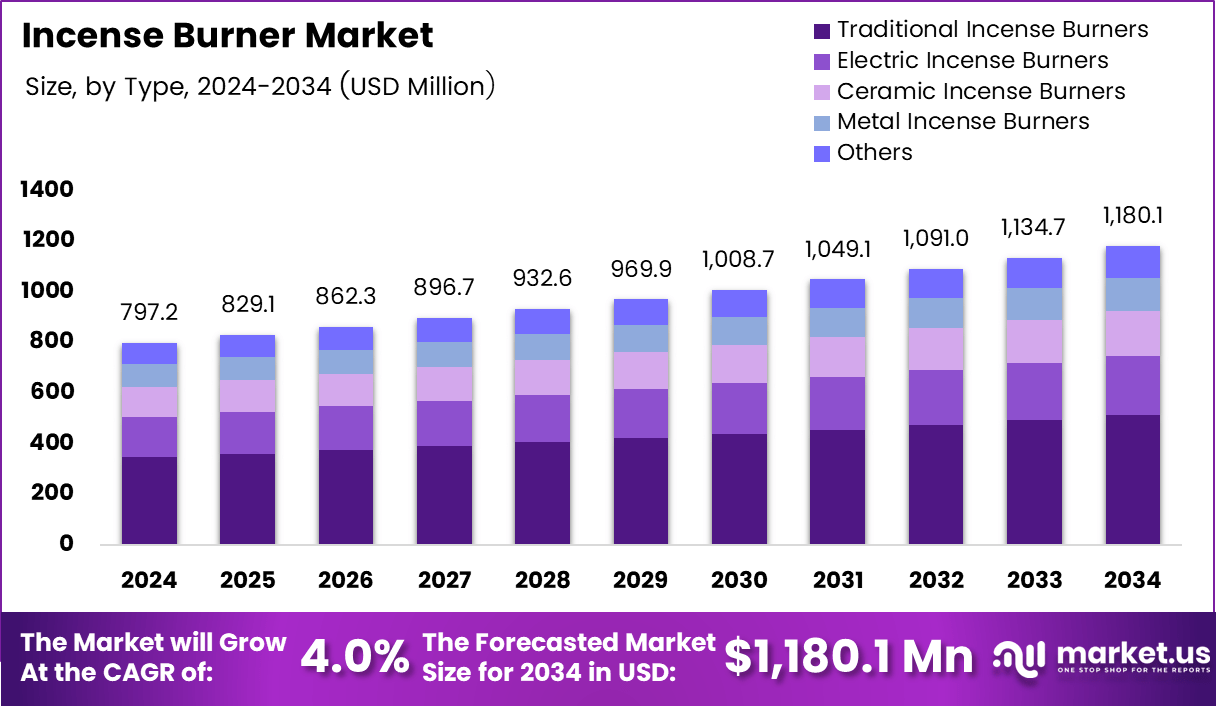
The Global Incense Burner Market size is expected to be worth around USD 1,180.1 million by 2034, from USD 797.2 million in 2024, growing at a CAGR of 4.0% during the forecast period from 2025 to 2034.
The Incense Burner Market represents a growing consumer-lifestyle category driven by rising demand for aromatherapy, spiritual rituals, home decor, and wellness-linked fragrance use. The market covers traditional, electric, ceramic, and metal incense burners adopted across households, yoga and meditation service centers, and small retail spaces, expanding its consumer engagement steadily.
Growing cultural interest in mindfulness practices continues to strengthen product adoption as consumers actively purchase burners that enhance ambience and reduce stress. This trend, supported by social-media-driven decor preferences, encourages premium-design innovation and heat-resistant material upgrades while enabling manufacturers to introduce safer, smoke-controlled burner options for urban homes.
Furthermore, government emphasis on indoor-air standards encourages the development of low-emission incense burners that restrict particulate release. Many regions promote cleaner-burning materials and regulated fragrance products, indirectly stimulating structural improvements in burner design. As sustainability becomes important, recyclable ceramics and metal-based burners gain preference in eco-aware households.
Additionally, rising opportunities emerge across the hospitality and wellness industries where hotels, spas, and boutique spaces increasingly integrate fragrance-based ambience settings. This adoption creates new B2B revenue channels while motivating producers to diversify fragrance-compatible burner formats. Growing export participation also strengthens demand for artisanal burners and handicraft product designs across global decor markets.
Transitioning to risk considerations, consumer inclination toward safer indoor-air environments pushes designers to include flame guards, ash-containment systems, and controlled-combustion trays. These innovations address household safety requirements and support compliance with regional fire-safety guidelines. Regulatory bodies also encourage product labeling on smoke emissions, driving transparency and user awareness.
According to a survey, burning incense can elevate indoor fine particulate levels to 826 µg/m³, highlighting potential respiratory concerns. Additionally, based on a survey, most incense users showed breathing issues, almost everyone experienced lung irritation, one-third showed chronic lung-disease signs, and overall lung strength dropped 25–75%. These statistics, according to the respective sources, underline the increasing need for safer burner designs and smoke-minimizing technologies within the global Incense Burner Market.
Key Takeaways
- The Global Incense Burner Market is projected to reach USD 1,180.1 million by 2034, rising from USD 797.2 million in 2024.
- The market expands at a steady CAGR of 4.0% during the forecast period from 2025 to 2034.
- Traditional Incense Burners dominate the By Type segment with a leading share of 43.4% in 2024.
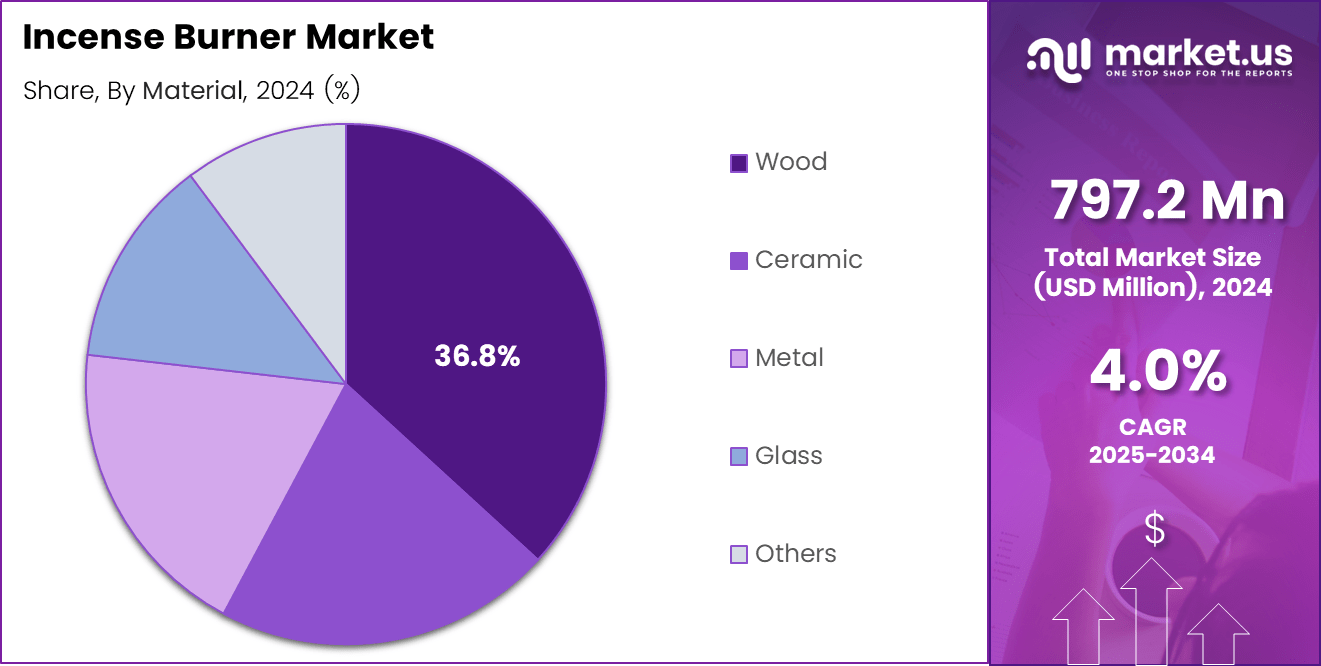
- Wood leads the By Material segment with a dominant market share of 36.8% in 2024.
- Residential applications account for the largest share of 76.8% in the By Application segment in 2024.
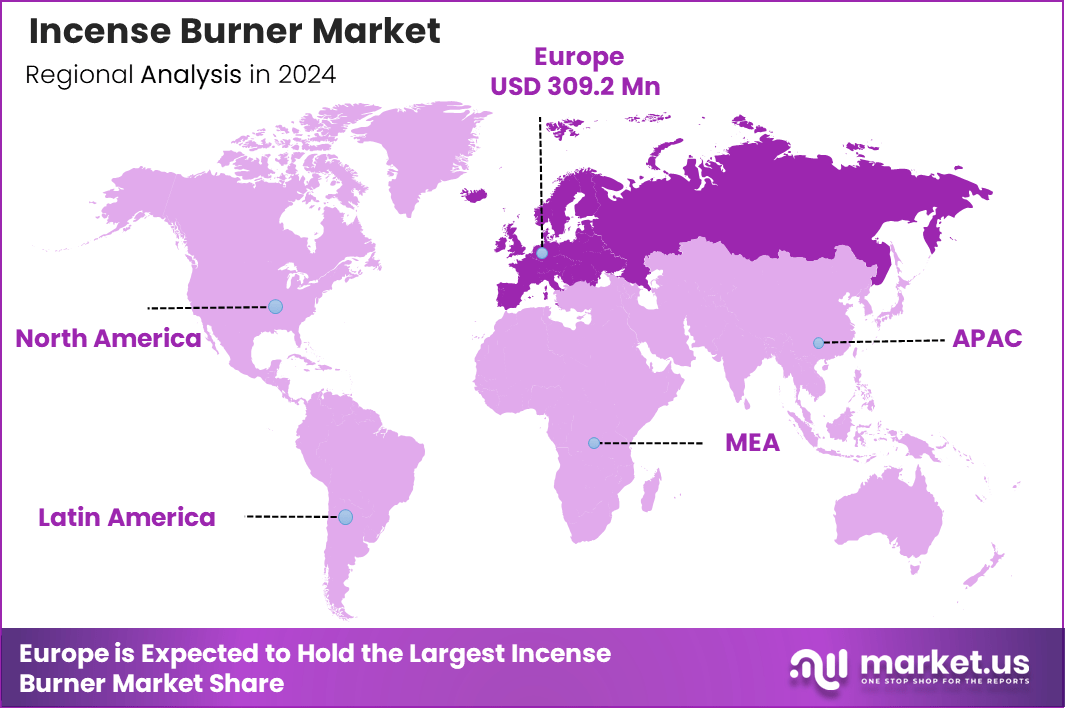
- Europe dominates the global market with a regional share of 38.8%, valued at USD 309.2 million in 2024.
By Type Analysis
Traditional Incense Burners dominate with 43.4% due to strong cultural usage and wide consumer acceptance.
In 2024, Traditional Incense Burners held a dominant market position in the By Type Analysis segment of the Incense Burner Market, with a 43.4% share. This segment grows steadily as households and spiritual practitioners continue preferring traditional designs. Rising cultural practices and gifting trends further strengthen adoption across major markets.
Electric Incense Burners expand gradually as modern consumers shift toward convenient, flameless options. This segment benefits from automatic timers, reduced smoke, and safety features. Growing adoption in urban homes and wellness centers supports demand as users seek cleaner and low-maintenance alternatives for routine aromatic applications and stress-relief routines.
Ceramic Incense Burners witness consistent interest because of their durability, heat resistance, and aesthetic appeal. Their handcrafted variations attract home decor buyers. Increasing online sales channels encourage artisan-made ceramic options, boosting segment visibility among consumers who prefer unique, intricate burner shapes for both aroma diffusion and interior enhancement.
Metal Incense Burners maintain a stable position due to their long lifespan and high heat tolerance. Their intricate carvings attract premium users and collectors. This segment benefits from rising demand in spiritual stores and luxury decor outlets, allowing manufacturers to introduce brass, copper, and steel variants, aligning with regional design preferences.
Others include glass, stone, and mixed-material burners, gaining niche popularity across decorative markets. These variants appeal to consumers seeking novelty and crafted designs. Growth remains slow but steady as boutique brands introduce customized incense holders that merge artistic elements with functionality, expanding product visibility among aesthetic-driven residential buyers.
By Material Analysis
Wood dominates with 36.8% due to natural appeal and cultural acceptance.
In 2024, Wood held a dominant market position in the By Material Analysis segment of the Incense Burner Market, with a 36.8% share. This segment expands as consumers prefer eco-friendly wooden holders. Their handcrafted appeal and affordability reinforce adoption across traditional households, meditation spaces, and small boutiques offering natural aromatic products.
Ceramic continues gaining traction because of its heat-resistant structure and decorative versatility. Consumers prefer ceramic burners for their handcrafted textures and vibrant glazing. Increasing penetration of artisan marketplaces strengthens this segment as global buyers choose ceramic variants for both aroma rituals and interior theme alignment in modern living spaces.
Metal remains a preferred choice among buyers seeking durability and intricate craftsmanship. Brass and copper burners remain popular in spiritual rituals. This segment grows steadily as manufacturers introduce engraved and antique-finish metal options that appeal to traditional and premium decor customers seeking long-lasting functional incense holders for everyday use.
Glass incense burners attract niche users focused on aesthetic ambiance. Transparent designs enhance visual appeal during aromatic sessions. Although fragile, their uniqueness drives gradual demand across home decor channels. Specialty brands continue introducing colored and patterned glass units that appeal to consumers seeking ornamental pieces for contemporary interior environments.
Others include resin, stone, and composite-material burners that offer unique shapes and premium customization. These variants gain attention across boutique decor stores, appealing to consumers seeking distinctive incense-holding solutions. Their artistic forms encourage niche interest, contributing to steady growth as lifestyle products evolve beyond functionality into expressive home decor items.
By Application Analysis
Residential dominates with 76.8% due to widespread household use.
In 2024, Residential held a dominant market position in the By Application Analysis segment of the Incense Burner Market, with a 76.8% share. This segment expands due to strong household adoption for relaxation, spirituality, and ambiance creation. Rising home decor trends and gifting preferences further reinforce residential demand across all cultural regions.
Commercial applications grow gradually as spas, wellness centers, meditation studios, and boutique stores integrate incense for customer experience enhancement. Hospitality settings increasingly adopt artistic burners to elevate ambiance. Demand strengthens as these establishments focus on sensory appeal, aroma therapy services, and traditional fragrance-oriented guest environments.
Others include ceremonial uses, community centers, and religious gatherings where incense burners support cultural rituals. Although smaller in share, this segment remains stable due to recurring ceremonial activities. Continuous participation in traditional events and spiritual functions ensures ongoing demand among organizations and groups maintaining long-standing incense-burning practices.
Key Market Segments
By Type
- Electric Incense Burners
- Traditional Incense Burners
- Ceramic Incense Burners
- Metal Incense Burners
- Others
By Material
- Wood
- Ceramic
- Metal
- Glass
- Others
By Application
- Residential
- Commercial
- Others
Drivers
Growing Shift Toward Home Aromatherapy and Stress-Relief Rituals Drives Market Growth
The Incense Burner Market is growing as more people use aromatherapy at home to improve relaxation and mood. This shift strengthens product demand across households that look for calming scents and soothing rituals. Consumers believe incense supports emotional balance, making burners an essential part of their daily routines.
The rising global interest in yoga and meditation is also helping the market expand. Wellness practitioners often incorporate incense during sessions to create a peaceful environment. This cultural movement drives continuous purchasing of incense burners that fit both traditional and modern spiritual settings.
Handcrafted and decorative home decor items further add momentum to market growth. Many consumers prefer artisanal burners made from ceramic, wood, or metal because they complement interior aesthetics. As personalization becomes important, demand rises for unique and visually appealing burner designs.
Lifestyle transitions, urban stress, and social-media influence also support market expansion. People increasingly choose incense burners as part of mindful living spaces, integrating them into bedrooms, living rooms, and work areas. This trend continues to fuel the market’s long-term growth prospects.
Restraints
Safety Concerns Related to Indoor Smoke and Fire Hazards Limit Market Expansion
The Incense Burner Market faces challenges due to rising safety concerns among users. Many households are cautious about open flames and ash-producing burners, especially in compact apartments. These fears slow frequent usage and influence buyers to choose safer fragrance alternatives.
Growing awareness about indoor air-quality issues also affects demand. Consumers understand that incense smoke may increase particulate levels, prompting careful or reduced usage. This awareness encourages some users to shift to low-smoke incense or avoid incense when ventilation is limited.
Competition from smokeless diffusers and electric fragrance devices also creates restraints. These modern products offer convenience and safety, appealing to tech-friendly households. As a result, incense burners must compete by offering better design value and improved safety features.
Parents and elderly users especially avoid traditional burners due to fire-risk worries. This behavior creates a clear market restraint, particularly in urban regions with strict building safety norms. These combined factors slow adoption and require manufacturers to innovate safer burner formats.
Growth Factors
Development of Smoke-Reducing and Heat-Controlled Burner Designs Creates Strong Growth Opportunities
The Incense Burner Market has promising opportunities driven by new designs that reduce smoke and control heat. These innovations help users enjoy fragrance without worrying about heavy smoke or irritation. Such features align well with modern indoor-air expectations.
Online marketplaces are opening large opportunities for artisanal and cultural incense accessories. Global shoppers now purchase handcrafted burners from small creators, supporting niche product expansion. E-commerce platforms enable cultural burners from India, Japan, and other regions to reach international buyers easily.
Designers are also exploring eco-friendly materials such as bamboo, ceramic, and recycled metals. These sustainable products attract consumers who prioritize natural lifestyle choices. This shift enhances opportunities within the premium decor segment of the market.
There is also increasing scope for multi-variant burner formats that work with sticks, cones, and coils. These versatile designs appeal to customers who prefer flexible fragrance options. As burner designs become more user-friendly, market demand continues to strengthen.
Emerging Trends
Increasing Popularity of Minimalist and Modern Burner Aesthetics Shapes Market Trends
The Incense Burner Market is experiencing design-driven trends as consumers prefer minimalist, modern shapes. Clean lines, matte finishes, and neutral tones now dominate decor choices, pushing manufacturers to create visually simple yet elegant burners.
There is a growing trend toward multi-functional burners that support incense sticks, cones, and resin burning. This versatility allows users to switch fragrance styles easily. These hybrid designs gain attention among consumers who enjoy multiple aroma formats.
Social media influence also plays a major role in shaping aesthetic preferences. Lifestyle creators promote visually appealing burners that match contemporary home decor. This drives steady interest in premium and artistic styles.
Younger consumers particularly prefer compact burners that suit small living spaces. This trend encourages portable, durable, and ash-containing designs. As aesthetics and functionality merge, the market continues adopting fresh design trends and consumer-centric improvements.
Regional Analysis
Europe Dominates the Incense Burner Market with a Market Share of 38.8%, Valued at USD 309.2 Million
Europe accounted for the largest share in the Incense Burner Market due to strong consumer interest in home fragrance products and a rising preference for artisanal decor items. The region’s cultural inclination toward aromatherapy practices further supports adoption across residential users. The market value of USD 309.2 million reflects growing demand for premium, design-centric incense burners. Additionally, wellness trends and expanding specialty retail channels reinforce Europe’s dominant position, contributing to its substantial 38.8% share.
North America Incense Burner Market Trends
North America shows steady growth driven by the rising adoption of stress-relief rituals and the increased popularity of meditation and yoga. Consumers in the region prefer aesthetically appealing and multifunctional incense burners that complement modern interior design. Expanding e-commerce penetration also boosts accessibility, encouraging broader product exploration across both urban and suburban households.
Asia Pacific Incense Burner Market Trends
Asia Pacific represents one of the most culturally rooted markets, where incense usage is integral across religious, spiritual, and household activities. Rising disposable incomes and urban lifestyle changes are encouraging demand for premium and electric incense burners. Rapid retail expansion and strong manufacturing bases across China and Japan strengthen regional momentum, making APAC a high-potential growth market.
Middle East & Africa Incense Burner Market Trends
The Middle East & Africa region benefits from deep cultural heritage associated with incense, particularly within traditional ceremonies and hospitality settings. Growing tourism and luxury retail developments are enhancing demand for high-quality decorative burners. Rising interest in aromatherapy among younger consumers also supports gradual market expansion across major Gulf countries.
Latin America Incense Burner Market Trends
Latin America experiences emerging demand driven by growing acceptance of wellness-oriented lifestyle products. The region is witnessing increased consumer spending on home fragrance and handmade decor items. Rising urbanization and expanding retail distribution channels further support market growth, especially in Brazil, Mexico, and Argentina.
U.S. Incense Burner Market Trends
The U.S. market demonstrates consistent traction due to the rising popularity of mindfulness routines and holistic wellness. Consumers increasingly favor eco-friendly and low-smoke burner options suited for indoor environments. Strong online marketplaces and evolving home decor preferences contribute to sustained demand across diverse consumer groups.
Key Regions and Countries
North America
- US
- Canada
Europe
- Germany
- France
- The UK
- Spain
- Italy
- Rest of Europe
Asia Pacific
- China
- Japan
- South Korea
- India
- Australia
- Rest of APAC
Latin America
- Brazil
- Mexico
- Rest of Latin America
Middle East & Africa
- GCC
- South Africa
- Rest of MEA
Key Incense Burner Market Company Insights
The global Incense Burner Market in 2024 reflects a blend of traditional craftsmanship and modern design appeal, shaped by innovation across leading brands. Rising consumer interest in wellness, aromatherapy, and aesthetic home decor continues to influence product development and portfolio expansion among key manufacturers.
Blackbird maintains strong market visibility through its minimalist and contemporary incense burner designs that resonate well with modern households. The brand’s focus on high-quality materials and handcrafted detailing supports its premium positioning and appeals to consumers seeking unique fragrance experiences.
Nippon Kodo benefits from a deep cultural heritage and craftsmanship, making it one of the most trusted names in incense-related products. Its incense burners reflect a balance of tradition and innovation, enabling the company to attract both long-time incense users and new lifestyle-focused consumers across international markets.
Wild Berry continues to strengthen its presence with vibrant fragrance offerings paired with functional and durable burner accessories. The company’s strong brand loyalty and wide distribution network help it remain a dominant choice, especially among younger consumers who prefer bold and expressive aromatic profiles.
Paddywax leverages design-led aesthetics, introducing incense burners that double as decorative pieces for modern interiors. The brand’s emphasis on craftsmanship and stylish ceramic finishes allows it to stand out in the premium product category and expand its influence within the lifestyle decor segment.
Overall, these companies shape competitive dynamics through design innovation, cultural heritage, and experiential fragrance offerings, collectively driving the market’s premiumization and broadening consumer adoption globally.
Top Key Players in the Market
- Blackbird
- Nippon Kodo
- Wild Berry
- Paddywax
- Stamford London
- Chaozhou Yuanwang Ceramic Co. Ltd.
- Shoyeido
- Baieido
- Yamadamatsu
- Koh Gen Do
Recent Developments
- In May 2024, Ross Common Capital acquired a majority stake in PITT Cooking, supporting accelerated global growth and brand expansion. The investment enables PITT Cooking to scale international distribution, strengthen product development, and expand its premium built in cooking solutions worldwide.
- In Aug 2025, GE announced the relocation of stove production from Mexico to the US, reinforcing its domestic manufacturing strategy. This move supports supply chain resilience, increases US based production capacity, and aligns with broader nearshoring and localization initiatives.
Report Scope
Report Features Description Market Value (2024) USD 797.2 million Forecast Revenue (2034) USD 1,180.1 million CAGR (2025-2034) 4.0% Base Year for Estimation 2024 Historic Period 2020-2023 Forecast Period 2025-2034 Report Coverage Revenue Forecast, Market Dynamics, Competitive Landscape, Recent Developments Segments Covered By Type (Electric Incense Burners, Traditional Incense Burners, Ceramic Incense Burners, Metal Incense Burners, Others), By Material (Wood, Ceramic, Metal, Glass, Others), By Application (Residential, Commercial, Others) Regional Analysis North America (US and Canada), Europe (Germany, France, The UK, Spain, Italy, and Rest of Europe), Asia Pacific (China, Japan, South Korea, India, Australia, and Rest of APAC), Latin America (Brazil, Mexico, and Rest of Latin America), Middle East & Africa (GCC, South Africa, and Rest of MEA) Competitive Landscape Blackbird, Nippon Kodo, Wild Berry, Paddywax, Stamford London, Chaozhou Yuanwang Ceramic Co. Ltd., Shoyeido, Baieido, Yamadamatsu, Koh Gen Do Customization Scope Customization for segments, region/country-level will be provided. Moreover, additional customization can be done based on the requirements. Purchase Options We have three licenses to opt for: Single User License, Multi-User License (Up to 5 Users), Corporate Use License (Unlimited User and Printable PDF) 
-
-
- Blackbird
- Nippon Kodo
- Wild Berry
- Paddywax
- Stamford London
- Chaozhou Yuanwang Ceramic Co. Ltd.
- Shoyeido
- Baieido
- Yamadamatsu
- Koh Gen Do
Our Clients

- 168070
- Nov 2025






