


Market Overview
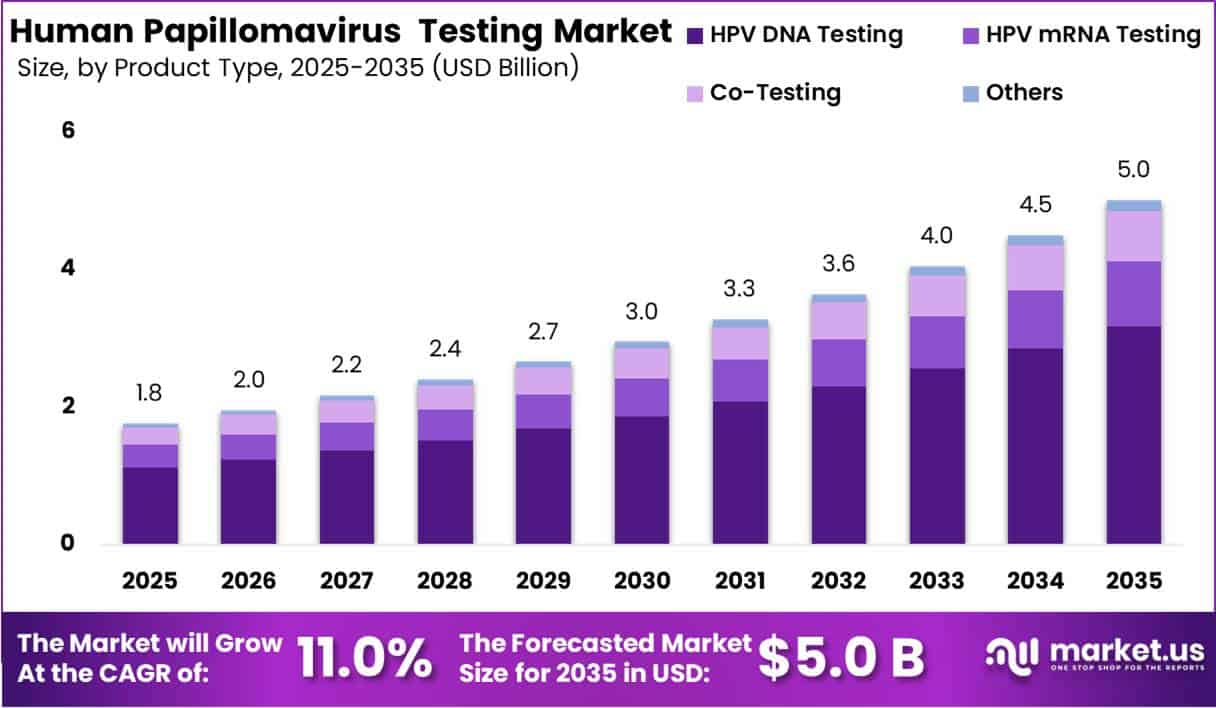
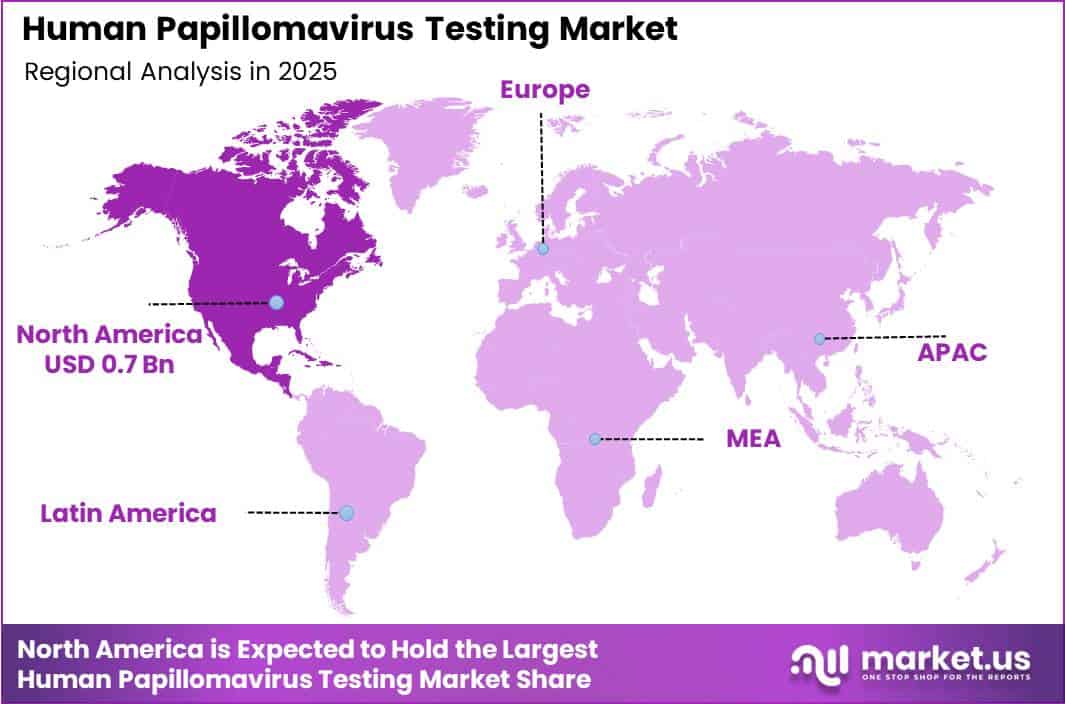
Global Human Papillomavirus (HPV) Testing Market size is expected to be worth around US$ 5.0 Billion by 2035 from US$ 1.8 Billion in 2025, growing at a CAGR of 11.0% during the forecast period from 2026 to 2035. In 2025, North America led the market, achieving over 37.3% share with a revenue of US$ 0.7 Billion.
Human papillomavirus (HPV) testing has become a cornerstone of cervical cancer prevention programs worldwide, driven by growing awareness, expanded screening initiatives, and advances in molecular diagnostics. HPV is recognized as the primary cause of nearly all cervical cancer cases, with persistent infection by high-risk HPV types significantly increasing the likelihood of developing precancerous cervical lesions.
According to the World Health Organization, cervical cancer remains the fourth most common cancer among women globally, with approximately 660,000 new cases and around 350,000 deaths reported in 2022.
The organization’s global strategy aims to eliminate cervical cancer through widespread HPV vaccination, high-performance HPV screening, and timely treatment of precancerous lesions. Government-backed screening policies are accelerating the adoption of HPV DNA testing as a preferred primary screening method because of its higher sensitivity compared with conventional cytology.
In the United States, the U.S. Food and Drug Administration has authorized multiple HPV molecular diagnostic tests for cervical cancer screening, while the Centers for Disease Control and Prevention continues to emphasize routine screening and HPV vaccination as key public health interventions.
The National Cancer Institute reports that persistent infection with high-risk HPV types causes virtually all cervical cancers, highlighting the clinical importance of accurate HPV detection. Increasing adoption of PCR-based assays, automated laboratory platforms, and self-collected sample approaches is improving screening accessibility and diagnostic efficiency.
These technological advancements, coupled with national cervical cancer elimination initiatives and expanding laboratory infrastructure, continue to strengthen the outlook for the global HPV testing market.
Key Takeaways
- Market Size: The Human Papillomavirus Testing Market size was US$ 1.8 Billion in 2025.The market is estimated to grow to US$ 5.0 Billion by 2035.
- Market Share: The Compound Annual Growth Rate (CAGR) of the market from 2026 to 2035 will be 11.0%.
- By Test Type: HPV DNA Testing has the largest market share, accounting for 63.4% of total sales.
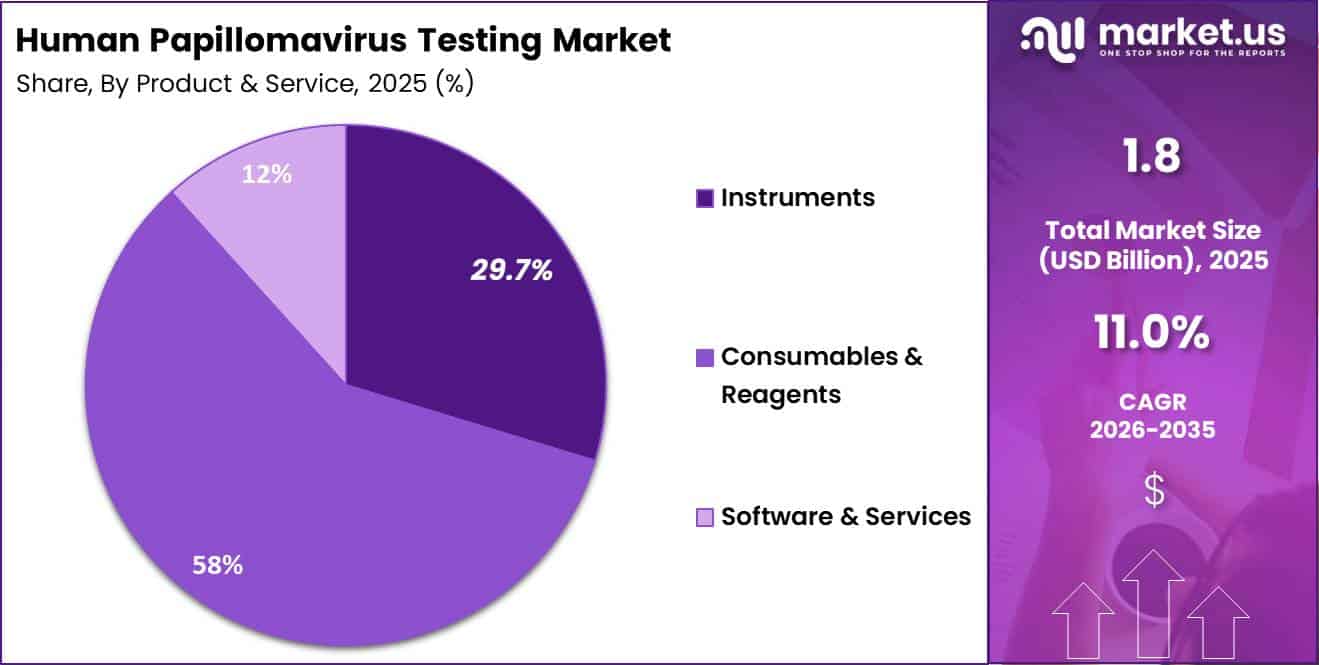
- By Product & Service: Instruments dominate the segment, accounting for 29.7% of total revenue.
- By Technology: Real-Time PCR (RT-PCR) leads the segment, accounting for 34.8% of total revenue.
- By Application: Cervical Cancer Screening leads the segment, accounting for 72.5% of total revenue.
- By End User: Diagnostic Laboratories leads the segment, accounting for 52.6% of total revenue.
- Regional: North America is the dominant regional market, accounting for 37.3% of global sales.
Test Type Analysis
The HPV DNA Testing segment dominates the Human Papillomavirus (HPV) Testing Market, accounting for 63.4% market share in 2025, driven by its widespread clinical acceptance, high sensitivity, and established role in primary cervical cancer screening programs worldwide.
HPV DNA testing enables direct detection of high-risk HPV genotypes, particularly HPV 16 and HPV 18, which are strongly associated with cervical cancer development. Its compatibility with automated molecular diagnostic platforms and integration into population-based screening initiatives has strengthened adoption across hospitals, diagnostic laboratories, and public health programs.
The HPV mRNA Testing segment holds 18.7% market share in 2025 and is gaining traction due to its ability to identify active viral oncogene expression, providing additional insights into the risk of disease progression. This testing approach offers improved specificity by detecting clinically relevant infections that may lead to cervical lesions.
The Co-Testing segment accounts for 14.6% market share in 2025, combining HPV testing with cytology methods such as Pap smears to enhance diagnostic accuracy, particularly among older screening populations. Other test types contribute 3.3% market share, supported by emerging molecular approaches and specialized diagnostic applications.
Product & Service Analysis
The Consumables & Reagents segment dominates the Human Papillomavirus (HPV) Testing Market with 58.6% market share in 2025, supported by the recurring demand for test kits, molecular reagents, sample collection materials, and assay components required for HPV screening procedures.
The increasing frequency of cervical cancer screening programs, expansion of HPV testing adoption, and growing laboratory testing volumes continue to drive demand for consumable products. The Instruments segment accounts for 29.7% market share in 2025, supported by increasing investments in automated molecular diagnostic systems, PCR platforms, and high-throughput testing equipment.
Diagnostic laboratories and healthcare institutions are adopting advanced instruments to improve testing efficiency, reduce turnaround time, and manage increasing screening workloads. Technological advancements such as automated sample processing and integrated diagnostic platforms are further supporting instrument demand.
The Software & Services segment holds 11.6% market share in 2025, driven by the growing importance of laboratory information management systems, digital reporting platforms, and data analytics solutions. These services support workflow optimization, quality management, and improved monitoring of HPV screening outcomes across healthcare netwo
Technology Analysis
The Real-Time PCR (RT-PCR) technology segment dominates the Human Papillomavirus (HPV) Testing Market, accounting for 34.8% market share in 2025, owing to its high sensitivity, accuracy, and widespread utilization in detecting high-risk HPV DNA.
RT-PCR has become a preferred molecular diagnostic approach because it enables rapid amplification and identification of specific HPV genetic sequences while supporting automated and high-throughput testing workflows.
The increasing adoption of RT-PCR platforms across diagnostic laboratories, hospitals, and screening centers is driven by their ability to deliver reliable results with shorter turnaround times compared with conventional methods. The technology also supports genotyping capabilities, allowing healthcare providers to differentiate between low-risk and high-risk HPV strains for improved clinical decision-making.
Other technologies, including hybrid capture assays, next-generation sequencing (NGS), and emerging molecular diagnostic platforms, continue to contribute to market growth by expanding testing capabilities and improving HPV detection accuracy.
Hybrid capture methods remain relevant in large-scale screening programs due to their established clinical utility, while NGS-based approaches are gaining interest for comprehensive viral profiling. Advances in automation and multiplex testing technologies are expected to further enhance HPV testing efficiency and accessibility.
Application Analysis
The Cervical Cancer Screening segment dominates the Human Papillomavirus (HPV) Testing Market with 72.5% market share in 2025, driven by the critical role of HPV testing in early detection and prevention of cervical cancer.
Persistent infection with high-risk HPV strains is recognized as the primary cause of cervical cancer, increasing the adoption of HPV-based screening programs globally. Healthcare organizations and national screening initiatives are increasingly shifting toward molecular HPV testing as a primary or co-testing approach due to its improved sensitivity compared with traditional cytology-based methods.
The growing emphasis on preventive healthcare, expansion of screening guidelines, and increasing awareness regarding HPV-associated diseases are accelerating demand for cervical cancer screening applications. HPV testing enables identification of women at elevated risk, allowing timely monitoring and intervention before progression to advanced disease stages.
Beyond cervical cancer screening, HPV testing is also utilized in applications such as monitoring HPV-related lesions, supporting research studies, and evaluating treatment outcomes. Emerging applications in oral and anogenital HPV detection are creating additional growth opportunities as awareness of broader HPV-associated health risks increases.
End User Analysis
The Diagnostic Laboratories segment dominates the Human Papillomavirus (HPV) Testing Market, accounting for 52.6% market share in 2025, due to their central role in conducting high-volume molecular testing and providing specialized diagnostic services.
Diagnostic laboratories benefit from advanced testing infrastructure, skilled technical personnel, and the ability to process large numbers of HPV screening samples efficiently. The increasing outsourcing of diagnostic procedures by hospitals and clinics is further strengthening laboratory-based HPV testing demand.
Hospitals represent another significant end-user segment, supported by their integration of HPV testing into gynecology departments, cancer screening programs, and preventive healthcare services. Hospitals increasingly utilize molecular HPV diagnostics for patient risk assessment and clinical management.
Other end users, including research institutes, public health organizations, and specialty clinics, contribute to market expansion through epidemiological studies, HPV surveillance programs, and targeted screening initiatives.
Growing government-supported cervical cancer prevention programs and increased focus on early disease detection are expected to support adoption across diverse healthcare settings, particularly in regions expanding access to diagnostic services.
Market Segmentations
By Test Type
- HPV DNA Testing
- High-Risk HPV DNA Testing
- Low-Risk HPV DNA Testing
- Genotyping Tests
- HPV mRNA Testing
- E6/E7 mRNA Testing
- High-Risk HPV mRNA Testing
- Co-Testing
- Others
By Product & Service
- Instruments
- PCR Systems
- Molecular Diagnostic Analyzers
- Automated Screening Systems
- Consumables & Reagents
- Assay Kits
- Reagents
- Sample Collection Kits
- Controls & Calibrators
- Software & Services
By Technology
- Polymerase Chain Reaction (PCR)
- Real-Time PCR (RT-PCR)
- Next-Generation Sequencing (NGS)
- Hybrid Capture Technology
- Transcription-Mediated Amplification (TMA)
- DNA Microarray
- Others
By Application
- Cervical Cancer Screening
- Vaginal Cancer Screening
- Anal Cancer Screening
- Oropharyngeal Cancer Screening
- Research Applications
- Epidemiological Studies
By End Users
- Hospitals
- Public Hospitals
- Private Hospitals
- Tertiary Care Hospitals
- Diagnostic Laboratories
- Independent Diagnostic Labs
- Hospital Based Labs
- Reference Laboratories
- Others
Drivers
National HPV Vaccination Scale-Up and Future Screening Cohorts
Large-scale HPV vaccination programs are creating a long-term structural driver for HPV testing demand, with effects that will materialize gradually as vaccinated cohorts enter screening age.
The WHO elimination strategy targets 90% HPV vaccination coverage among girls by age 15, and several countries are already operationalizing mass campaigns; for example, India has launched a nationwide initiative to vaccinate approximately 11.5 million 14-year-old girls through public health facilities beginning in 2026.
While widespread vaccination is expected to reduce cervical cancer incidence over time, it does not eliminate the need for screening. Current WHO and national guidelines still recommend that vaccinated women continue routine cervical screening, ensuring persistent demand for HPV DNA testing even in high-coverage settings.
In the medium term, vaccination scale-up may actually increase structured screening participation. As immunization programs mature, governments are building integrated registries and recall systems that improve tracking of vaccinated cohorts and strengthen adherence to life-course screening schedules.
This shift supports broader adoption of HPV DNA testing for surveillance, reassurance, and detection of non-vaccine HPV strains. Over the long term, these cohorts will generate a more organized and predictable screening population, with higher compliance rates and more systematic testing intervals.
While incidence of high-grade lesions is expected to decline, improved coverage and systematization are likely to sustain testing volumes.
Overall, vaccination-driven infrastructure and cohort tracking are expected to add approximately 1.5 % points of long-term CAGR uplift in HPV testing markets, particularly across APAC and Latin America, where large-scale public vaccination programs are rapidly expanding.
| Driver | (~) % Impact on CAGR Forecast | Geographic Relevance | Impact Timeline |
|---|---|---|---|
| WHO 90-70-90 cervical elimination targets and HPV-DNA first-line screening | +2.0% | Global, with strong pull in LMICs, EU, Americas | Medium term (2–4 years) |
| National HPV vaccination scale-up creating large follow-on screening cohorts | +1.5% | India core, broader APAC, Latin America spill-over | Long term (≥ 4 years) |
| Shift from cytology/Pap to high-performance HPV DNA and genotyping assays | +2.3% | North America, Europe core, high-income APAC | Short to medium term (≤ 4 years) |
| Expansion of self-sampling and primary care–integrated screening models | +1.6% | EU, North America, selected APAC & Latin America | Medium term (2–4 years) |
| Revisions to national screening guidelines and earlier/high-risk screening | +1.4% | U.S., Europe, high-burden LMICs | Short term (≤ 2 years) |
| Rising cervical cancer and HPV burden awareness and donor-backed funding | +1.2% | Sub-Saharan Africa, South Asia, Latin America | Medium to long term (≥ 3 years) |
Challenges
Limited Lab and Molecular Capacity in HPV Testing
Limited laboratory and molecular diagnostic capacity remains a key constraint on scaling HPV screening programs, particularly in middle-income and resource-limited health systems. Although HPV DNA testing is increasingly recommended as a primary screening method, many laboratories are still configured for HIV viral load or tuberculosis PCR, leaving limited excess capacity for high-volume HPV testing.
In many urban LMIC settings, HPV test turnaround times average 5–7 working days, compared with 48–72 hours in optimized high-income laboratory networks. These delays slow clinical follow-up, reduce patient retention across the screening-to-treatment pathway, and weaken confidence in scaling HPV testing as a population-level program.
Capacity pressure is further intensified by high baseline utilization of molecular platforms, typically 70–80%, with HPV integration pushing utilization above 90%. This increases batching requirements, extends reporting cycles, and raises the risk of operational disruption, including reagent shortages and equipment downtime. Infrastructure limitations are also structural.
Several national systems operate with only 1–2 validated HPV assay platforms, making screening programs vulnerable to supply chain interruptions that can pause testing for weeks.Addressing these gaps requires investment in additional instruments, multi-assay validation, and workflow redesign to sustain turnaround times under 72 hours.
However, these upgrades require phased capital deployment over 2–4 years, creating a lag between policy-driven screening expansion and real-world diagnostic readiness.Overall, this constraint is expected to impose an estimated 1.3 % point drag on HPV testing CAGR in the near term.
| Challenge | (~) % CAGR Friction Drag | Geographic Relevance | Mitigation Horizon |
|---|---|---|---|
| LMIC screening infrastructure gaps | -2.0% | Sub-Saharan Africa, South Asia, Central America | Long term (≥ 4 years) |
| Limited lab and molecular capacity | -1.3% | Latin America urban, Africa metros, ASEAN corridors | Medium term (2–4 years) |
| Workforce and skills shortages | -1.0% | Global tertiary care hubs, LMIC public systems | Medium term (2–4 years) |
| Fragmented reimbursement and coverage | -1.2% | North America mixed, EU periphery, APAC private | Long term (≥ 4 years) |
| Data integration and quality deficits | -0.8% | Global, especially LMIC registries | Long term (≥ 4 years) |
| Awareness and stigma barriers | -0.9% | Global, high in LMIC and conservative regions | Medium term (2–4 years) |
Restraints
Complex Reimbursement, Pricing Pressure & Payer Utilization Controls in HPV Testing
In high-income markets, HPV testing growth is increasingly shaped not by clinical guidelines alone but by reimbursement structures, coding rules, and payer-driven utilization controls that limit realized revenue expansion.
Although guidelines now support primary high-risk HPV testing every 5 years for women aged 30–65, and self-collection is expected to expand coverage from around 2027, payers often counterbalance this by tightening medical necessity criteria and introducing stricter utilization management.
Common payer responses include prior authorization requirements, frequency caps on repeat testing after negative results, and bundled payment models that shift HPV testing into broader preventive care packages. As a result, even with expanding eligible populations and a shift from cytology to HPV-first screening, growth in test volumes is partially offset by reimbursement compression.
Average allowed reimbursement per HPV test in the U.S. and EU is projected to decline by 15 to 25 % over a 3 to 4 year contracting cycle, while utilization controls can reduce ordering volumes by 8 to 12 % compared with guideline-aligned scenarios. This creates a dual squeeze on both price and volume realization.
Laboratories also face margin pressure, with estimated operating margin compression of 150 to 250 basis points due to rebates, quality reporting requirements, and increased digital reporting and connectivity costs.
In response, large reference labs prioritize high-volume contracts, while smaller independent labs may delay capital investment or exit HPV testing altogether.Overall, these dynamics are expected to reduce realized HPV testing CAGR by approximately 1.9 % points, even as clinical demand continues to expand.
| Restraint | (~) % Impact on CAGR Forecast | Geographic Relevance | Impact Timeline |
|---|---|---|---|
| Underfunded screening infrastructure & workforce gaps | -2.3% | Sub-Saharan Africa, South & Southeast Asia, LatAm periphery | Long term (≥ 4 years) |
| Complex reimbursement, pricing pressure & payer utilization controls | -1.9% | North America core, EU-5, advanced APAC corridors | Medium term (2–4 years) |
| Regulatory lag for self-collection & point-of-care HPV platforms | -1.6% | North America, EU, selected APAC, emerging markets | Medium term (2–4 years) |
| Supply chain fragility for reagents, consumables & instruments | -1.4% | Global, with higher impact in LMICs | Short–Medium term (≤ 4 years) |
| Vaccine-driven risk perception shifts and screening complacency | -1.2% | High-income markets with high HPV vaccine coverage | Long term (≥ 4 years) |
| Data interoperability, quality assurance & accreditation barriers | -1.0% | North America, EU, urban APAC hubs | Medium term (2–4 years) |
Opportunity
Integrated HPV Screening Vaccination Bundles
Integrated HPV screening vaccination bundles represent an emerging opportunity to align two currently separate prevention pathways HPV immunization and cervical cancer screening into a unified outcomes based commercial model.
While global targets aim for 90 % vaccination coverage of girls by age 15, many countries still remain below 60 % coverage, and screening programs continue to operate independently with limited coordination across the prevention lifecycle.
A bundled approach would combine adolescent or high risk adult vaccination series with scheduled screening episodes under a single payer or government contract. Such packages could be priced 10 to 20 % lower than purchasing services separately, while improving adherence and population coverage.
From a demand perspective, integrated programs could increase screening participation among vaccinated cohorts by 15 to 25 %, driven by improved tracking systems, coordinated reminders, and stronger health system engagement.
Over time, this could unlock an additional USD 0.4 to 0.7 billion in HPV testing revenue by 2035, particularly across middle income markets where vaccination scale up is accelerating. However, this remains a nascent opportunity because most health systems still separate vaccine procurement from screening reimbursement, and existing guidelines do not yet support bundled commercial contracting tied to long term outcomes.
Strategically, co developed bundles between diagnostics and vaccine manufacturers could reduce per person acquisition costs by 30 to 40 %, improve predictability of screening volumes, and enable multi year capitated agreements. This would shift HPV prevention from episodic interventions toward lifecycle based management, enhancing both efficiency and long term revenue stability.
| Opportunity | (~) % Potential CAGR Upside | Geographic Relevance | Execution Window |
|---|---|---|---|
| At-scale HPV self-sampling programs | +2.8% | Emerging APAC, LATAM, Africa urban | Short–Medium term |
| Point-of-care HPV test-and-treat hubs | +2.3% | Sub-Saharan Africa, South Asia | Medium term |
| Non-cervical HPV screening expansion | +1.9% | North America, Western Europe | Medium–Long term |
| Integrated HPV screening–vaccination bundles | +2.1% | Global middle-income, selective high-income | Medium term |
| Digital HPV risk stratification and triage SaaS | +1.7% | Multiregional health systems | Short–Medium term |
| Employer-funded HPV screening programs | +1.5% | North America core, EU corporates | Medium term |
Regional Analysis
In 2025, North America led the market, achieving over 37.3% share with a revenue of US$ 0.7 Billion.
North America region’s leadership is supported by strong cervical cancer screening programs, widespread adoption of molecular diagnostic technologies, favorable reimbursement frameworks, and increasing awareness regarding early detection of HPV infections.
The United States represents the major contributor due to established screening guidelines, high availability of advanced laboratory infrastructure, and growing utilization of HPV DNA and HPV mRNA testing methods. Increasing demand for precision diagnostics and risk-based cervical cancer screening approaches is further strengthening market expansion across the region.
Europe represents another significant market, driven by government-supported cervical cancer prevention initiatives, organized screening programs, and rising adoption of high-sensitivity HPV testing solutions. Countries across the region are transitioning toward primary HPV screening strategies, creating opportunities for diagnostic companies to expand their testing platforms.
The Asia-Pacific region is expected to witness notable growth during the forecast period due to increasing cervical cancer burden, improving healthcare infrastructure, expanding access to diagnostic services, and rising public health investments. Emerging economies are focusing on affordable HPV testing solutions and large-scale screening initiatives to improve early detection rates.
Latin America, the Middle East, and Africa are gradually adopting HPV testing technologies as awareness programs, healthcare modernization, and international screening initiatives improve access to preventive diagnostics. These regions offer long-term growth opportunities as governments strengthen cervical cancer elimination strategies and expand testing coverage.
Key Regions and Countries
North America
- The US
- Canada
Europe
- Germany
- France
- The U.K.
- Italy
- Spain
- Russia & CIS
- Rest of Europe
Asia Pacific
- China
- India
- Japan
- South Korea
- ASEAN
- Australia & New Zealand
- Rest of Asia Pacific
Middle East & Africa
- GCC
- South Africa
- Rest of Middle East & Africa
Latin America
- Brazil
- Mexico
- Rest of Latin America
Key Player Analysis
The Human Papillomavirus (HPV) Testing Market is moderately consolidated, with competition concentrated among established diagnostics companies and specialized molecular testing providers. The market is transitioning from conventional screening approaches toward advanced molecular diagnostics, high-risk HPV genotyping, automation, and integrated laboratory workflows.
Competitive positioning is increasingly influenced by innovation in biomarker detection, assay sensitivity, multiplex testing capabilities, and precision-based cervical cancer screening strategies.
Large multinational diagnostic companies such as Roche Diagnostics, Hologic Inc., Abbott Laboratories, Becton Dickinson (BD), and Danaher Corporation represent the leading tier, leveraging extensive global distribution networks, regulatory approvals, and integrated diagnostic platforms. These companies focus on expanding molecular testing portfolios, improving screening accuracy, and strengthening laboratory automation capabilities.
The second tier includes specialized molecular diagnostics and biotechnology firms such as QIAGEN N.V., Seegene Inc., SD Biosensor, Sansure Biotech, ACON Laboratories, Molbio Diagnostics, Tellgen Corporation, Daan Gene Co., Anatolia Geneworks, and CERTEST BIOTEC. These players compete through targeted assay development, cost-efficient testing solutions, regional market expansion, and adaptable diagnostic technologies.
Competitive strategies center on research and development investments, strategic collaborations with healthcare institutions, assay innovation, and integration of HPV testing into broader clinical workflows. Companies are increasingly focusing on high-throughput platforms, point-of-care diagnostics, and combined screening solutions to address diverse healthcare settings.
Ecosystem-based competition is also emerging through partnerships involving molecular biomarkers, laboratory automation, and personalized screening pathways, shaping long-term differentiation within the HPV testing landscape.
Top Key Players
- Roche Diagnostics
- Hologic Inc.
- QIAGEN N.V.
- Abbott Laboratories
- Becton Dickinson (BD)
- Danaher Corporation
- Seegene Inc.
- SD Biosensor
- Sansure Biotech
- ACON Laboratories
- Molbio Diagnostics
- Tellgen Corporation
- Daan Gene Co.
- Anatolia Geneworks
- CERTEST BIOTEC
Recent Developments
- In October 2025, Hologic entered into a definitive agreement to be acquired by Blackstone and TPG in a transaction valued up to US$18.3 billion, aimed at accelerating investment in women’s health technologies, including cervical cancer diagnostics.
- In 2025, QIAGEN continued expansion of its molecular diagnostics portfolio through enhancements in PCR-based testing platforms and laboratory automation solutions, supporting infectious disease and oncology-related molecular testing applications.
- In October 2025, BD launched a new HPV self-collection solution outside the United States, combining simplified patient sampling with automated laboratory processing through the BD COR™ System to improve cervical cancer screening accessibility
Report Scope
| Report Features | Description |
|---|---|
| Market Value (2025) | US$ 1.8 Billion |
| Forecast Revenue (2035) | US$ 5.0 Billion |
| CAGR (2026-2035) | 11.0 % |
| Base Year for Estimation | 2025 |
| Historic Period | 2020-2024 |
| Forecast Period | 2026-2035 |
| Report Coverage | Revenue Forecast, Market Dynamics, Competitive Landscape, Recent Developments |
| Segments Covered | By Test Type (HPV DNA Testing ,High-Risk HPV DNA Testing ,Low-Risk HPV DNA Testing ,Genotyping Tests, HPV mRNA Testing ,E6/E7 mRNA Testing ,High-Risk HPV mRNA Testing ,Co-Testing ,Others) By Product & Service (Instruments ,PCR Systems ,Molecular Diagnostic Analyzers ,Automated Screening Systems Consumables & Reagents ,Assay Kits ,Reagents ,Sample Collection Kits ,Controls & Calibrators ,Software & Services) By Technology(Polymerase Chain Reaction (PCR) ,Real-Time PCR (RT-PCR) ,Next-Generation Sequencing (NGS) ,Hybrid Capture Technology ,Transcription-Mediated Amplification (TMA) ,DNA Microarray, Others) By Application (Cervical Cancer Screening ,Vaginal Cancer Screening ,Anal Cancer Screening, Oropharyngeal Cancer Screening ,Research Applications ,Epidemiological Studies) By End Users(Hospitals, Public Hospitals ,Private Hospitals ,Tertiary Care Hospitals ,Diagnostic Laboratories ,Independent Diagnostic Labs ,Hospital Based Labs ,Reference Laboratories ,Others) |
| Regional Analysis | North America – The US, Canada; Europe – Germany, France, U.K., Italy, Spain, Russia & CIS, Rest of Europe; Asia Pacific – China, India, Japan, South Korea, ASEAN, Australia & New Zealand, Rest of Asia Pacific; Middle East & Africa – GCC, South Africa, Rest of Middle East & Africa; Latin America – Brazil, Mexico, Rest of Latin America |
| Competitive Landscape | Roche Diagnostics ,Hologic Inc. ,QIAGEN N.V. ,Abbott Laboratories ,Becton Dickinson (BD) ,Danaher Corporation ,Seegene Inc. ,SD Biosensor ,Sansure Biotech ,ACON Laboratories ,Molbio Diagnostics ,Tellgen Corporation ,Daan Gene Co. ,Anatolia Geneworks ,CERTEST BIOTEC |
| Customization Scope | Customization for segments, region/country-level will be provided. Moreover, additional customization can be done based on the requirements. |
| Purchase Options | We have three licenses to opt for: Single User License, Multi-User License (Up to 5 Users), Corporate Use License (Unlimited User and Printable PDF) |





































