


Market Overview
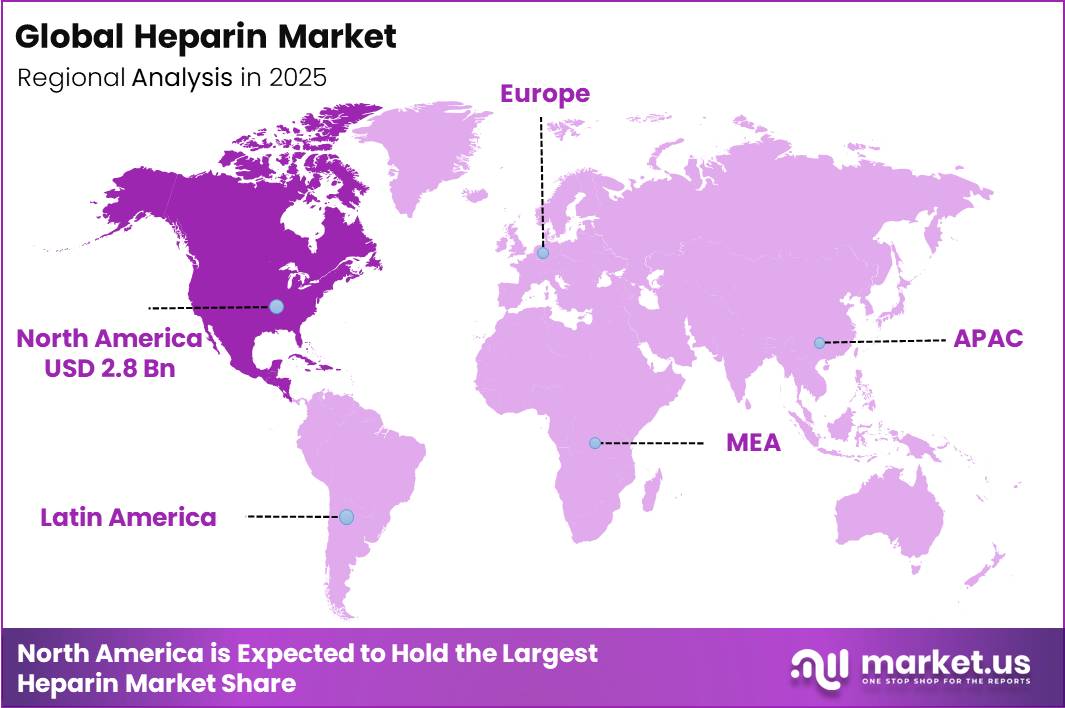
Global Heparin Market size is expected to be worth around US$ 10.9 Billion by 2035 from US$ 7.6 Billion in 2025, growing at a CAGR of 3.7% during the forecast period from 2026 to 2035. In 2025, North America led the market, achieving over 37.0% share with a revenue of US$ 2.8 Billion.
The Heparin Market continues to play a vital role in global healthcare due to the widespread clinical use of heparin as an anticoagulant for the prevention and treatment of venous thromboembolism (VTE), deep vein thrombosis (DVT), pulmonary embolism (PE), acute coronary syndromes, and during cardiovascular surgery, dialysis, and other invasive medical procedures.
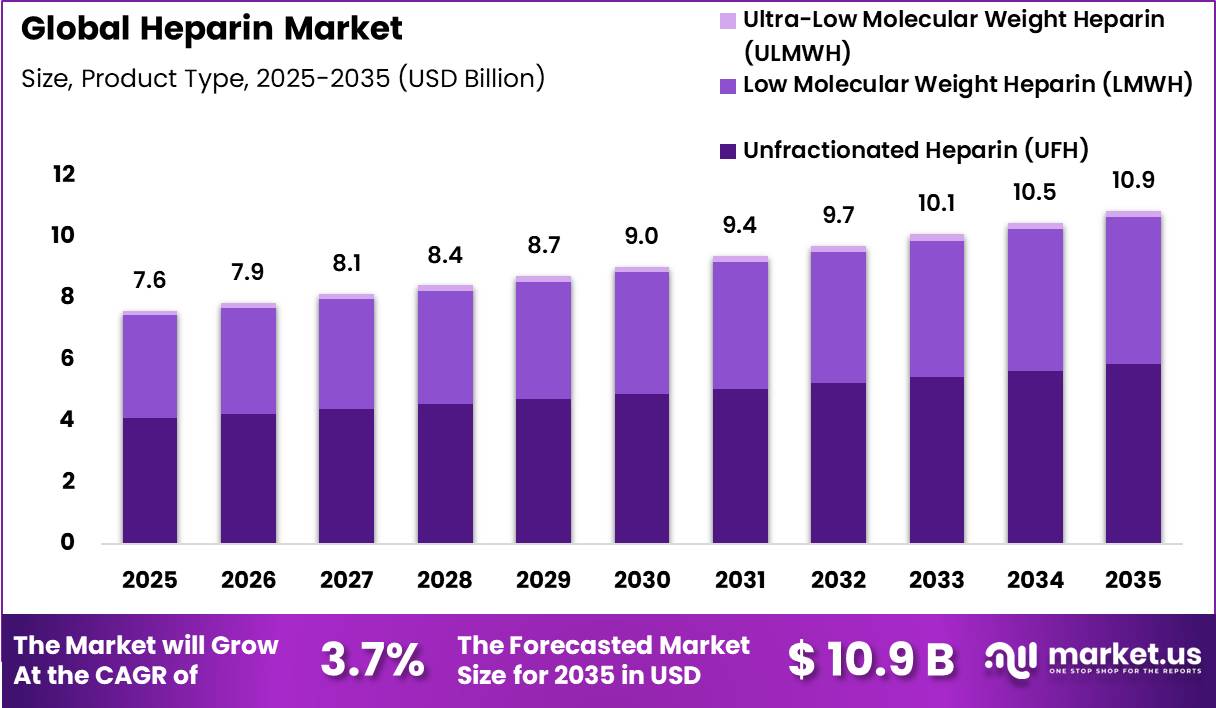
Heparin, including unfractionated heparin and low-molecular-weight heparin (LMWH), remains a standard therapy in hospitals because of its rapid anticoagulant action and established safety profile when appropriately monitored.
According to the U.S. Centers for Disease Control and Prevention (CDC), up to 900,000 people in the United States are affected by VTE each year, while 60,000–100,000 deaths are associated with VTE annually, underscoring the continued need for effective anticoagulant therapies. The CDC also reports that up to 70% of healthcare-associated VTE cases are preventable, highlighting the importance of thromboprophylaxis in hospitalized patients.
Heparin is recognized as an essential medicine for preventing and treating thrombotic disorders and is routinely used in perioperative care, intensive care units, and extracorporeal circulation procedures. Clinical guidance emphasizes careful coagulation monitoring to ensure optimal dosing and patient safety.
Increasing surgical volumes, aging populations, rising cardiovascular disease prevalence, expanding cancer treatment, and greater awareness of hospital-acquired thrombosis continue to support demand for heparin-based therapies. Furthermore, ongoing improvements in manufacturing quality, supply chain resilience, and anticoagulation management are strengthening product availability worldwide.
As healthcare systems continue prioritizing evidence-based thrombosis prevention and patient safety, the heparin market is expected to maintain stable long-term growth driven by sustained clinical demand and expanding access to advanced medical care.
Key Takeaways
- Market Size: Global Heparin Market size is expected to be worth around US$ 10.9 Billion by 2035 from US$ 7.6 Billion in 2025.
- Market Share: The market is growing at a CAGR of 3.7% during the forecast period from 2026 to 2035.
- Product Type: The Unfractionated Heparin (UFH) segment dominates the heparin market, accounting for 54.0% of the market share in 2025.
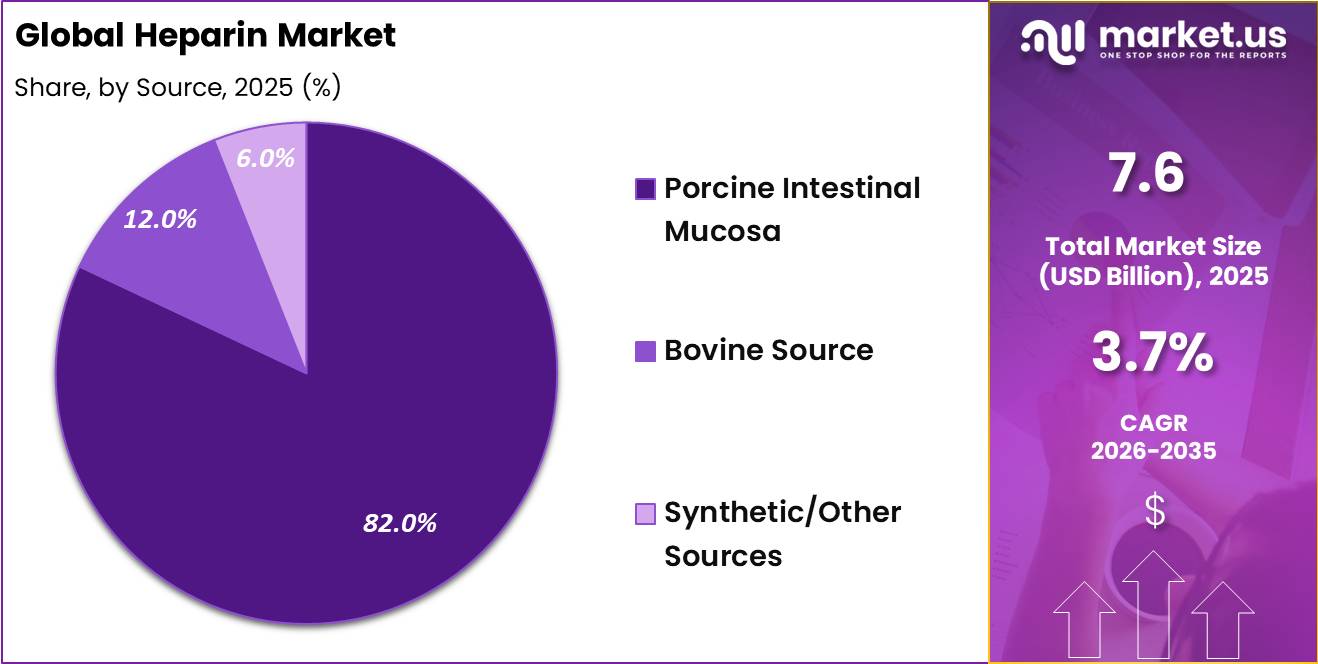
- Source: The Porcine Intestinal Mucosa segment dominates the heparin market, capturing 82.0% of the market share in 2025.
- Route of Administration: The Intravenous segment dominates the heparin market, accounting for 58.0% of the market share in 2025.
- Application: The Deep Vein Thrombosis (DVT) segment dominates the heparin market, holding 34.0% of the market share in 2025.
- End User: The Hospitals segment dominates the heparin market, accounting for 61.0% of the market share in 2025.
- Distribution Channel: The Hospital Pharmacies segment dominates the heparin market, capturing 66.0% of the market share in 2025.
- Regional Analysis: In 2025, North America dominated the global heparin market, accounting for more than 37.0% of total revenue, valued at approximately US$ 2.8 billion.
Product Type Analysis
Unfractionated Heparin (UFH) Leads the Product Type Segment in 2025.
The Unfractionated Heparin (UFH) segment dominates the heparin market, accounting for 54.0% of the market share in 2025. Its leadership is supported by its broad clinical applicability, rapid anticoagulant action, and widespread use in hospitals for critical care, cardiovascular procedures, and emergency anticoagulation.
UFH is preferred in patients requiring close monitoring because its anticoagulant effects can be rapidly adjusted or reversed when necessary. It remains the standard therapy during cardiac surgery, extracorporeal circulation, and renal replacement therapy, where immediate anticoagulation control is essential.
The product’s extensive clinical history, cost-effectiveness, and compatibility with established treatment protocols continue to strengthen its market position across developed and emerging healthcare systems. The Low Molecular Weight Heparin (LMWH) segment represents 44.0% of the market and continues to gain adoption due to its predictable pharmacokinetic profile, longer duration of action, and reduced requirement for laboratory monitoring.
LMWH is widely prescribed for thrombosis prevention and outpatient anticoagulation therapy. Meanwhile, Ultra-Low Molecular Weight Heparin (ULMWH) accounts for 2.0% of the market, supported by its highly targeted anticoagulant properties and specialized use in select therapeutic applications. Continued innovation in anticoagulant formulations and increasing demand for safer treatment options are expected to support growth across all product categories.
Source Analysis
Porcine Intestinal Mucosa Leads the Source Segment in 2025.
The Porcine Intestinal Mucosa segment dominates the heparin market, capturing 82.0% of the market share in 2025. This source remains the primary raw material for commercial heparin production because of its high yield, established extraction processes, and proven clinical effectiveness.
Global manufacturers rely heavily on porcine-derived heparin owing to its consistent quality, extensive regulatory acceptance, and compatibility with pharmaceutical manufacturing standards. Strong supply chain infrastructure, particularly in countries with large-scale pork production, further reinforces its dominance.
Continuous quality assurance programs and improvements in purification technologies have enhanced product safety, strengthening confidence among healthcare providers and regulatory agencies.
The Bovine Source segment accounts for 12.0% of the market and is witnessing renewed interest as manufacturers seek to diversify supply sources and reduce dependence on porcine raw materials. Regulatory approvals in selected regions and advancements in purification methods are supporting broader acceptance of bovine-derived heparin.
Meanwhile, Synthetic/Other Sources contribute 6.0% of the market, reflecting ongoing research into recombinant and synthetic anticoagulants that may improve supply security and reduce biological variability.
Although these alternatives currently serve niche applications, continued technological progress and investments in advanced biopharmaceutical manufacturing are expected to gradually expand their commercial potential.
Route of Administration Analysis
Intravenous Route Leads the Route of Administration Segment in 2025.
The Intravenous segment dominates the heparin market, accounting for 58.0% of the market share in 2025. Intravenous administration is widely preferred in hospitals because it provides an immediate anticoagulant effect, allowing physicians to rapidly manage acute thrombotic events and adjust dosage according to patient response.
This route is extensively utilized during cardiovascular surgeries, dialysis procedures, intensive care treatments, and emergency management of thromboembolic disorders. Continuous infusion enables precise anticoagulation control, making intravenous heparin indispensable for critically ill patients requiring close clinical monitoring. Its established role in inpatient settings and compatibility with advanced hospital treatment protocols continue to drive segment leadership.
The Subcutaneous segment represents a significant portion of the market due to its convenience, predictable absorption, and suitability for long-term thromboprophylaxis. It is commonly used for preventing venous thromboembolism after orthopedic and general surgeries, as well as for outpatient management using low molecular weight heparins.
Meanwhile, Other Routes occupy a comparatively smaller share and include specialized administration approaches adopted in selected clinical scenarios and research applications. Increasing emphasis on patient-centered care, expansion of outpatient anticoagulation services, and the development of improved drug delivery techniques are expected to support continued growth across all administration routes.
Application Analysis
Deep Vein Thrombosis (DVT) Leads the Application Segment in 2025.
The Deep Vein Thrombosis (DVT) segment dominates the heparin market, holding 34.0% of the market share in 2025. The high prevalence of venous thromboembolic disorders, increasing numbers of surgical procedures, prolonged hospitalization, and rising awareness of thrombosis prevention continue to drive substantial demand for heparin in DVT management.
Heparin remains a first-line anticoagulant for both treatment and prophylaxis because of its rapid onset of action and proven effectiveness in preventing clot progression and recurrence. Growing adoption of evidence-based thromboprophylaxis protocols across hospitals has further strengthened the segment’s leading position.
The Pulmonary Embolism (PE) segment also represents a significant share, supported by the urgent requirement for immediate anticoagulation in life-threatening embolic events. Atrial Fibrillation continues to contribute steadily as anticoagulant therapy remains essential for reducing stroke risk in patients with irregular heart rhythms.
The Dialysis & Surgery segment maintains stable demand due to routine heparin use in preventing clot formation during hemodialysis and various surgical procedures involving extracorporeal circulation. Rising cardiovascular disease prevalence, expanding dialysis populations, and increasing surgical volumes worldwide continue to support sustained growth across all application segments.
End User Analysis
Hospitals Lead the End User Segment in 2025.
The Hospitals segment dominates the heparin market, accounting for 61.0% of the market share in 2025. Hospitals remain the largest consumers of heparin because they perform a high volume of cardiovascular surgeries, orthopedic procedures, intensive care treatments, dialysis sessions, and emergency interventions requiring anticoagulation therapy.
Advanced diagnostic capabilities, specialized healthcare professionals, and comprehensive inpatient services enable effective administration and monitoring of heparin, particularly for critically ill patients. Increasing hospital admissions associated with cardiovascular diseases and thromboembolic disorders continue to reinforce the segment’s dominant position.
The Ambulatory Surgical Centers segment is expanding steadily as minimally invasive procedures become more common and outpatient surgical care continues to grow. These facilities increasingly utilize heparin for perioperative thrombosis prevention while benefiting from improved procedural efficiency and lower healthcare costs. Clinics also contribute to market demand through routine anticoagulation management, follow-up care, and chronic disease treatment.
Meanwhile, Homecare Settings are experiencing gradual growth, supported by rising use of low molecular weight heparin for self-administration, improved patient education, and expanding home-based healthcare services. The shift toward decentralized healthcare delivery and enhanced patient convenience is expected to strengthen demand across non-hospital end-user segments.
Distribution Channel Analysis
Hospital Pharmacies Lead the Distribution Channel Segment in 2025.
The Hospital Pharmacies segment dominates the heparin market, capturing 66.0% of the market share in 2025. Hospital pharmacies serve as the primary distribution channel because the majority of heparin therapies are administered in inpatient settings under physician supervision.
They ensure timely availability of anticoagulants for emergency care, intensive care units, operating rooms, dialysis centers, and cardiovascular departments. Strict inventory management, regulatory compliance, and integration with hospital treatment protocols further strengthen the importance of hospital pharmacies in maintaining uninterrupted supply of critical anticoagulant medications.
The Retail Pharmacies segment continues to expand as increasing numbers of patients receive prescriptions for low molecular weight heparin after hospital discharge for thrombosis prevention and long-term anticoagulation management. Improved accessibility and widespread pharmacy networks support greater patient convenience.
Meanwhile, Online Pharmacies are gradually gaining market presence, driven by digital healthcare adoption, expanding e-pharmacy services, home delivery options, and growing consumer preference for convenient medication purchasing.
Although hospital pharmacies remain the dominant distribution channel, continuous expansion of retail and online pharmaceutical services is expected to enhance patient access and contribute to broader market growth in the coming years.
Key Market Segments
By Product Type
- Unfractionated Heparin (UFH)
- Low Molecular Weight Heparin (LMWH)
- Ultra-Low Molecular Weight Heparin (ULMWH)
By Source
- Porcine Intestinal Mucosa
- Bovine Source
- Synthetic/Other Sources
By Route of Administration
- Intravenous
- Subcutaneous
- Other Routes
By Application
- Deep Vein Thrombosis (DVT)
- Pulmonary Embolism (PE)
- Atrial Fibrillation
- Acute Coronary Syndrome
- Dialysis & Surgery
By End User
- Hospitals
- Ambulatory Surgical Centers
- Clinics
- Homecare Settings
By Distribution Channel
- Hospital Pharmacies
- Retail Pharmacies
- Online Pharmacies
Drivers
Surgical, dialysis, and extracorporeal care demand resilience.
Heparin demand retains a strong structural floor because unfractionated heparin remains embedded in high-acuity care settings where substitution is limited, especially cardiac surgery, extracorporeal circulation, dialysis, catheter patency, and perioperative bridging in selected high-risk patients.
StatPearls’ 2025 clinical review still lists heparin for cardiac surgery, extracorporeal circulation, and dialysis, while perioperative guidance continues to position LMWH or UFH in bridging protocols with specific restart windows of 24 hours after minor procedures and 48–72 hours after major procedures, indicating that heparin remains operationally indispensable in procedure-linked care pathways rather than discretionary prescribing.
This matters commercially because these settings are volume-stable, protocol-driven, and concentrated in hospital formularies, which reduces elasticity even when procurement teams attempt therapeutic optimization.
As global aging, CKD burden, and procedure intensity rise, the market captures growth not only through finished-dose sales but through repeat institutional purchasing, higher ICU/pharmacy turns, and premium value in reliable supply contracts for infusion and flush presentations.
| Driver | (~) % Impact on CAGR Forecast | Geographic Relevance | Impact Timeline |
|---|---|---|---|
| Surgical, dialysis, and extracorporeal care demand resilience | +1.4% | North America core, EU, Japan, South Korea, GCC tertiary care | Short term (≤ 2 years) |
| Persistent heparin injection shortages and hospital stockpiling | +1.1% | U.S. core, EU spill-over, selected APAC import markets | Short term (≤ 2 years) |
| China-centered porcine raw material concentration and crude heparin risk | +1.8% | China origin base, U.S., EU, Brazil, India import chain | Medium term (2–4 years) |
| Supply diversification through bovine re-entry and multi-origin sourcing | +0.9% | U.S., Brazil, Latin America, EU strategic supply programs | Medium term (2–4 years) |
| EU and U.S. critical-medicines policy tightening supply security investments | +0.8% | EU core, U.S., partner sourcing corridors | Medium term (2–4 years) |
| LMWH-led protocol expansion sustaining upstream heparin intermediate demand | +1.3% | North America, EU, China, India, hospital-led APAC | Medium term (2–4 years) |
Challenges
Managing Persistent Porcine Concentration in Heparin Sourcing.
Heparin remains structurally exposed to a narrow biological and geographic sourcing model because commercial supply is still overwhelmingly tied to porcine intestinal mucosa, while regulators in 2026 are actively encouraging bovine re-entry precisely to reduce this dependence, signaling that diversification is incomplete rather than solved.
In practical market terms, this concentration creates recurring friction through procurement concentration premiums of roughly 6%–11% on crude heparin inputs during disruption windows, lead-time variability that can widen from a normal 4–6 weeks to 8–12 weeks for qualified lots, and elevated working-capital needs as manufacturers hold 30–60 additional days of safety stock to protect hospital contracts and LMWH conversion schedules.
The estimated -1.4 % point CAGR drag reflects not collapsed demand, but slower realization of full growth potential as producers are forced to dual-qualify suppliers, expand origin-testing protocols, invest in multi-country collection networks, and redesign long-cycle sourcing governance around resilience rather than lowest-cost purchasing.
A transition that realistically requires more than four years because new animal-source pathways need validation, pharmacopoeial alignment, and commercial-scale GMP consistency before they can absorb meaningful global volume.
| Challenge | (~) % CAGR Friction Drag | Geographic Relevance | Mitigation Horizon |
|---|---|---|---|
| Porcine source concentration | -1.4% | China sourcing base; North America buyers; EU regulatory hubs; APAC API corridors | Long term (≥ 4 years) |
| Animal disease volatility | -0.9% | Asia swine belts; global import-dependent markets | Medium term (2-4 years) |
| Quality traceability burden | -1.1% | U.S. compliance chains; EU pharmacopoeia markets; export manufacturers | Medium term (2-4 years) |
| Sterile fill-finish bottlenecks | -0.8% | North America hospital channels; Europe injectables sites; selected APAC CMOs | Medium term (2-4 years) |
| Alternative-source transition lag | -0.7% | U.S. innovation pipeline; EU standards markets; Latin America bovine-linked supply | Long term (≥ 4 years) |
| Trade and freight instability | -0.6% | APAC logistics corridors; trans-Atlantic pharma lanes; import-reliant emerging markets | Short term (≤ 2 years) |
Restraints
Injectable Shortages Disrupt Hospital Procurement Cycles.
A second acute restraint is finished-dose instability in injectable heparin, where the market is not constrained only by upstream mucosa extraction but also by SKU discontinuations, intermittent back orders, short-dated inventory, and manufacturing delays across hospital vial and syringe formats.
As of mid-2025, ASHP listed multiple discontinued lines from B. Braun, Mylan/Viatris, and Sandoz, while Pfizer reported shortage conditions linked to increased demand and manufacturing delays, with some presentations available only in limited supply or temporarily discontinued, demonstrating that commercial availability is fragmenting at the dosage-form level rather than failing uniformly across the category.
This creates an estimated 1.6% point drag on CAGR because every discontinued NDC forces hospital formulary substitutions, repackaging workarounds, procurement spot buys, and higher wastage from format mismatch, compressing gross margins for suppliers that remain active while also reducing realized demand conversion when providers ration buffer stock toward cardiac, dialysis, and surgical use instead of normal replenishment cycles.
| Restraint | (~) % Impact on CAGR Forecast | Geographic Relevance | Impact Timeline |
|---|---|---|---|
| Porcine source concentration | -1.9% | North America core, EU, China-linked APAC | Medium term |
| Injectable shortage and SKU exits | -1.6% | North America core, selected EU hospitals | Short term |
| Quality-control and monograph tightening | -1.2% | EU, US, export API corridors | Medium term |
| Trade-policy and tariff exposure | -1.0% | US core, China-linked supply chain, India fill-finish | Short term |
| Disease and livestock disruption risk | -0.9% | EU, China, APAC corridors | Medium term |
| Synthetic and bovine substitution lag | -0.8% | US, EU, LatAm, regulated global markets | Long term |
Opportunity
Outpatient heparin use in expanding anticoagulation pathways.
Heparin demand continues to be primarily driven by inpatient applications, including surgical procedures, dialysis, catheter line patency, and acute thrombosis management. However, significant growth opportunities exist by expanding heparin-supported care into underpenetrated outpatient settings such as ambulatory infusion centers, same-day oncology services, fertility treatments, high-risk maternal care, and post-discharge thromboprophylaxis programs.
The rising burden of cardiovascular disease further strengthens this opportunity, with 19.8 million deaths reported in 2022 and global cardiovascular prevalence projected to increase by 90.0% between 2025 and 2050. Companies that invest in patient-support programs, convenient smaller pack sizes, digital adherence solutions, and home-administration partnerships can broaden market reach.
These initiatives could expand the total addressable market by 10–15% in selected regions, reduce patient acquisition costs by approximately 8–12% through integrated provider networks, and increase category CAGR by around 1.3% points.
| Opportunity | (~) % Potential CAGR Upside | Geographic Relevance | Execution Window |
|---|---|---|---|
| Prefilled acute-care heparin shift | +1.6% | North America core, EU, Japan | Short term (≤ 2 years) |
| Outpatient anticoagulation expansion | +1.3% | North America, EU, urban APAC | Medium term (2-4 years) |
| Plasma-fractionation supply integration | +1.1% | U.S., China, EU, Latin America | Medium term (2-4 years) |
| China-plus-one API localization | +1.8% | U.S., EU, India, Brazil | Medium term (2-4 years) |
| LMWH-to-UFH bundled hospital contracting | +0.9% | U.S., EU, GCC, Southeast Asia | Short term (≤ 2 years) |
| Catheter and device lock solutions | +1.0% | North America, EU, APAC emerging | Long term (≥ 4 years) |
Regional Analysis
North America Leads the Heparin Market.
In 2025, North America dominated the global heparin market, accounting for more than 37.0% of total revenue, valued at approximately US$ 2.8 billion. The region’s leadership is supported by a high prevalence of cardiovascular diseases, venous thromboembolism, and other conditions requiring anticoagulant therapy.
The growing number of surgical procedures, increasing use of heparin in dialysis and critical care, and well-established hospital infrastructure continue to drive market demand. Strong regulatory oversight and widespread adoption of evidence-based clinical practices have also contributed to the consistent use of both unfractionated heparin (UFH) and low molecular weight heparin (LMWH) across healthcare settings.
Europe represents the second-largest regional market, supported by advanced healthcare systems, an aging population, and rising awareness of thrombosis prevention. Favorable reimbursement policies and continued emphasis on patient safety encourage the use of anticoagulants in surgical and long-term care.
Meanwhile, the Asia-Pacific region is expected to register the fastest growth during the forecast period. Rapid expansion of healthcare infrastructure, increasing healthcare expenditure, a large patient population, and growing access to advanced medical treatments are accelerating heparin adoption across countries such as China, India, and Japan.
Latin America and the Middle East & Africa are also experiencing gradual market expansion, driven by improving healthcare access, increasing diagnosis of cardiovascular disorders, and ongoing investments in hospital facilities and pharmaceutical supply chains.
Key Regions and Countries
North America
- The US
- Canada
Europe
- Germany
- France
- The U.K.
- Italy
- Spain
- Russia & CIS
- Rest of Europe
Asia Pacific
- China
- India
- Japan
- South Korea
- ASEAN
- Australia & New Zealand
- Rest of Asia Pacific
Middle East & Africa
- GCC
- South Africa
- Rest of Middle East & Africa
Latin America
- Brazil
- Mexico
- Rest of Latin America
Key Player Analysis
The global heparin market is moderately consolidated, with competition shaped by multinational pharmaceutical companies and established generic drug manufacturers. Market participants compete on manufacturing quality, regulatory compliance, supply reliability, and product availability.
Continuous investment in research and development, manufacturing modernization, and strategic collaborations is strengthening competitive positioning. Companies are also emphasizing ecosystem-based competition by integrating production, distribution, and hospital procurement networks to improve operational efficiency and ensure uninterrupted supply.
Among the leading participants, Pfizer Inc. focuses on expanding its pharmaceutical portfolio through continuous R&D, strategic partnerships, and robust global distribution capabilities. Sanofi S.A. emphasizes innovation, biologics expertise, and manufacturing excellence while strengthening collaborations across healthcare systems.
Baxter International Inc. leverages its strong hospital presence by integrating heparin products into critical care and infusion therapy workflows, supported by ongoing product development initiatives.
B. Braun Melsungen AG continues to invest in advanced manufacturing technologies, hospital-focused solutions, and workflow integration to enhance clinical efficiency. Fresenius Kabi AG strengthens its competitive position through high-quality injectable pharmaceuticals, expanded production capacity, and partnerships that improve healthcare delivery.
Other significant market participants include Dr. Reddy’s Laboratories, Teva Pharmaceutical Industries Ltd., Aspen Pharmacare Holdings, Sandoz (Novartis), Hikma Pharmaceuticals PLC, Mylan (Viatris Inc.), Abbott Laboratories, Luitpold Pharmaceuticals (CSL Vifor), Zydus Lifesciences Ltd., and Amneal Pharmaceuticals.
These companies continue to compete through generic product expansion, regulatory approvals, manufacturing investments, strategic alliances, and product innovation, collectively supporting the global availability and accessibility of heparin therapies.
Top Key Players
- Pfizer Inc.
- Sanofi S.A.
- Baxter International Inc.
- B. Braun Melsungen AG
- Fresenius Kabi AG
- Dr. Reddy’s Laboratories
- Teva Pharmaceutical Industries Ltd.
- Aspen Pharmacare Holdings
- Sandoz (Novartis)
- Hikma Pharmaceuticals PLC
- Mylan (Viatris Inc.)
- Abbott Laboratories
- Luitpold Pharmaceuticals (CSL Vifor)
- Zydus Lifesciences Ltd.
- Amneal Pharmaceuticals
Recent Developments
- In July 2025, B. Braun launched two new Heparin Sodium premixed injection products in the U.S. market (25,000 units in 0.45% sodium chloride, 50 units/mL and 100 units/mL), expanding its premixed hospital infusion portfolio and introducing enhanced 2D barcode tracking for improved medication safety and workflow accuracy.
- In December 2025, Baxter International presented real-world clinical data showing that integration of its Spectrum IQ infusion pump with hospital electronic medical records reduced infusion programming time, improved dosing safety compliance, and enhanced patient safety through smart pump–EMR connectivity across more than 1.3 million IV infusions analyzed across six hospitals.
- In March 2026, Fresenius Group disclosed that Fresenius Kabi’s 2025 capital investments formed part of a €1.39 billion total group investment program focused on expanding IV drug manufacturing and infusion system infrastructure supporting hospital therapies including anticoagulant treatments.
- In July 2025, Sanofi reported continued strong performance in its pharmaceutical portfolio, with sustained demand for established medicines including its cardiovascular and hospital-use anticoagulation therapies such as enoxaparin-based products (Clexane/Klexane), as part of its Q2 2025 results disclosure.
Report Scope
| Report Features | Description |
|---|---|
| Market Value (2025) | US$7.6 Billion |
| Forecast Revenue (2035) | US$10.9 Billion |
| CAGR (2026-2035) | 3.7% |
| Base Year for Estimation | 2025 |
| Historic Period | 2020-2024 |
| Forecast Period | 2026-2035 |
| Report Coverage | Revenue Forecast, Market Dynamics, Competitive Landscape, Recent Developments |
| Segments Covered | By Product Type (Unfractionated Heparin (UFH), Low Molecular Weight Heparin (LMWH), Ultra-Low Molecular Weight Heparin (ULMWH)), By Source (Porcine Intestinal Mucosa, Bovine Source, Synthetic/Other Sources), By Route of Administration (Intravenous, Subcutaneous, Other Routes), By Application (Deep Vein Thrombosis (DVT), Pulmonary Embolism (PE), Atrial Fibrillation, Acute Coronary Syndrome, Dialysis & Surgery), By End User (Hospitals, Ambulatory Surgical Centers, Clinics, Homecare Settings), By Distribution Channel (Hospital Pharmacies, Retail Pharmacies, Online Pharmacies) |
| Regional Analysis | North America – The US, Canada; Europe – Germany, France, U.K., Italy, Spain, Russia & CIS, Rest of Europe; Asia Pacific – China, India, Japan, South Korea, ASEAN, Australia & New Zealand, Rest of Asia Pacific; Middle East & Africa – GCC, South Africa, Rest of Middle East & Africa; Latin America – Brazil, Mexico, Rest of Latin America |
| Competitive Landscape | |
| Customization Scope | Customization for segments, region/country-level will be provided. Moreover, additional customization can be done based on the requirements. |
| Purchase Options | We have three licenses to opt for: Single User License, Multi-User License (Up to 5 Users), Corporate Use License (Unlimited User and Printable PDF) |





































