


Global Miticides Market Size, Share, And Enhanced Productivity By Product Type (Chemical Miticides (Organophosphates, Carbamates, Pyrethroids, Organosulfur, Organochlorine, Propargite, Amidines, Others), Biological/Natural Miticides (Botanical Oils, Microbial Based, Fatty Acid Salts, Others)), By Formulation (Liquid Concentrate, Emulsifiable Concentrate, Wettable Powder, Granules, Suspension Concentrate, Others), By Mode of Application (Follar Spray, Soll Application, Seed Treatment, Chemigation, Aerosol/Drone ULV), By Crop Type (Fruits and Vegetables, Cereals and Grains, Oilseeds and Pulses, Ornamental and Turf, Others), By Region and Companies - Industry Segment Outlook, Market Assessment, Competition Scenario, Trends, and Forecast 2026-2035
- Published date: March 2026
- Report ID: 180885
- Number of Pages: 262
- Format:
-
keyboard_arrow_up
Quick Navigation
Report Overview
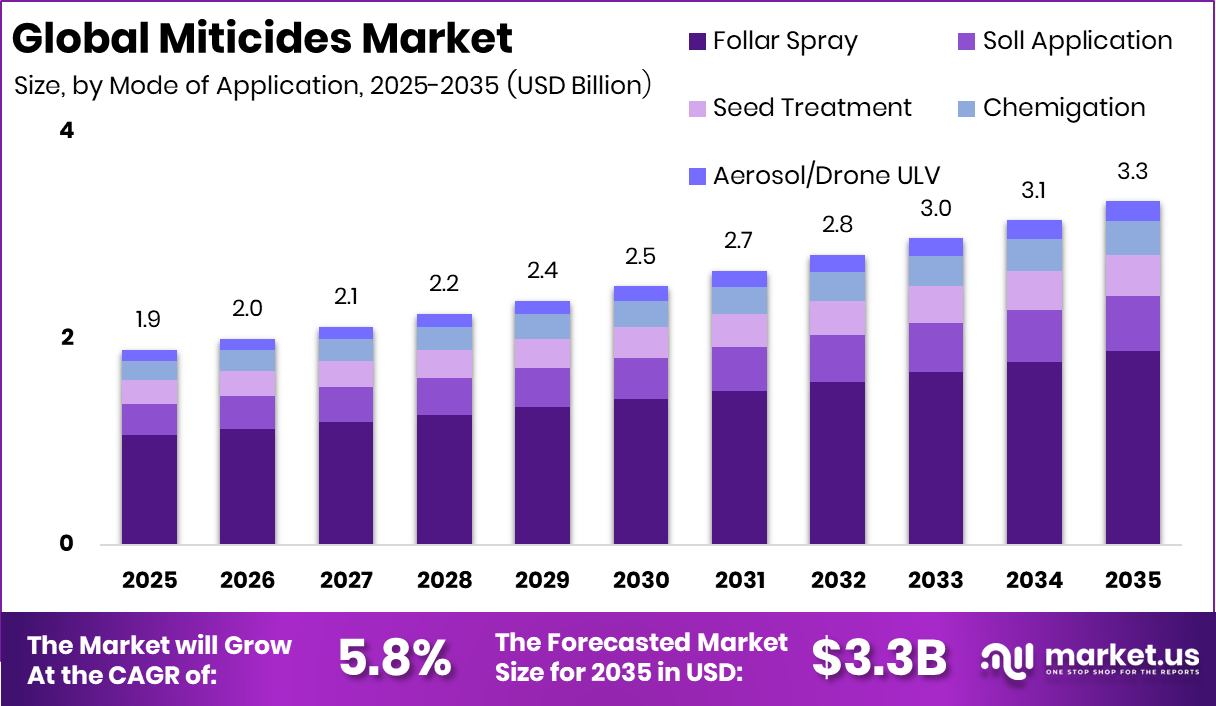
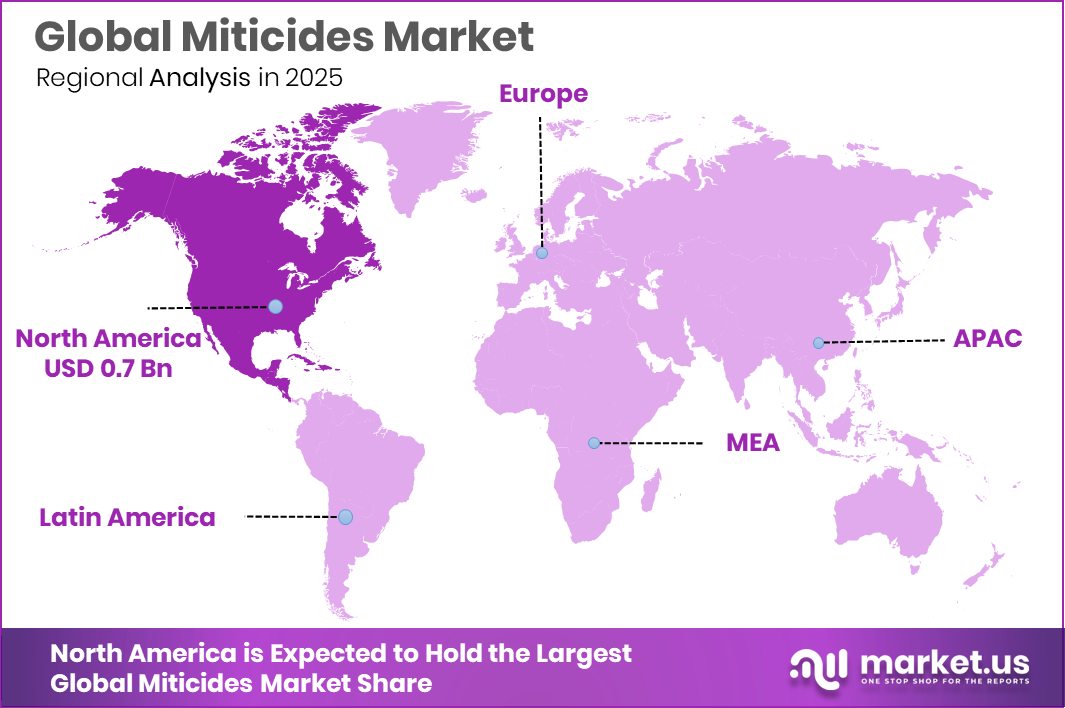
The Global Miticides Market is expected to be worth around USD 3.3 billion by 2035, up from USD 1.9 billion in 2025, and is projected to grow at a CAGR of 5.8% from 2026 to 2035. North America dominates the miticides market with 37.1% share, totaling USD 0.7 Bn.
Miticides are specialized pest control products used to manage and eliminate mites that attack crops. Mites are tiny pests that damage leaves, stems, and fruits by feeding on plant tissues, often reducing crop quality and yield. Miticides are available in chemical and biological forms and are applied through methods such as foliar spray, soil application, seed treatment, chemigation, and drone-based ultra-low-volume spraying. These products are widely used across fruits and vegetables, cereals and grains, oilseeds and pulses, ornamental plants, and turf crops.
The Miticides Market represents the commercial ecosystem involved in the development, formulation, and application of mite-control products used in agriculture. Growth of this market is closely linked with the increasing need to protect crop productivity and maintain consistent agricultural output. Supportive agricultural funding programs are also influencing the sector. For example, the USDA has funded packaging innovations supporting the $143B specialty crop export industry, while $72.9M has been made available through the Specialty Crop Block Grant Program, encouraging improvements in crop protection and supply chain efficiency.
A key growth factor for the market is the rising focus on improving crop health and reducing pest-related losses in high-value crops such as fruits and vegetables. Programs supporting growers, such as the proposal to renew a £40m fruit and vegetable fund, highlight increasing institutional interest in strengthening horticulture productivity. Such initiatives indirectly support the adoption of advanced crop protection tools, including miticides.
Demand for miticides is also supported by food security initiatives and agricultural assistance programs. For instance, Nevada may spend $7.3M to maintain women and infant food assistance during a shutdown, reflecting broader efforts to stabilize food supply systems. Maintaining crop yields through effective pest management becomes increasingly important under such circumstances.
The market also presents opportunities as governments and organizations focus on food availability and distribution. Even as food banks prepare for potential fallout from a USDA $1B funding cut, agricultural producers are under pressure to maintain consistent harvest volumes. This situation highlights the importance of reliable pest control solutions, creating opportunities for improved miticide formulations and application technologies that help farmers protect crops and sustain agricultural productivity.
Key Takeaways
- The Global Miticides Market is expected to be worth around USD 3.3 billion by 2035, up from USD 1.9 billion in 2025, and is projected to grow at a CAGR of 5.8% from 2026 to 2035.
- Chemical miticides dominate the Miticides Market, accounting for 69.2% due to strong pest control effectiveness.
- Liquid concentrate formulations hold 32.7% share in the Miticides Market because of easy dilution and application.
- Foliar spray leads application methods in the Miticides Market, capturing 56.4% share for efficient pest targeting.
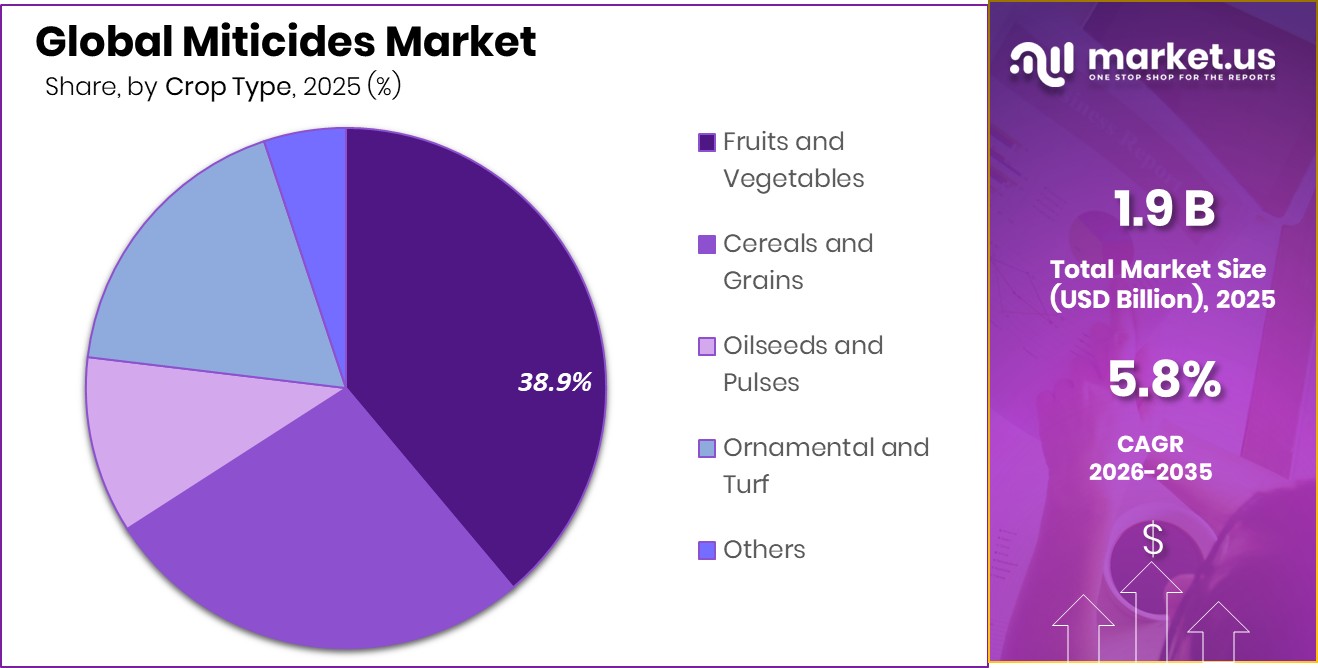
- Fruits and vegetables represent 38.9% of demand in the miticides market due to high susceptibility to mites.
- Miticides Market in North America reached a 37.1% share, accounting for USD 0.7 Bn.
By Product Type Analysis
Chemical miticides dominate the Miticides Market, accounting for 69.2% product type share.
In 2025, the Miticides Market shows a strong dominance of chemical miticides, accounting for 69.2% of the overall product type segment. Chemical miticides remain widely preferred due to their fast action, consistent effectiveness, and ability to control severe mite infestations across large-scale agricultural operations. Farmers often rely on these products because they provide immediate pest suppression, which is critical for protecting crop yield and quality. The demand is particularly high in regions with intensive farming practices where mite outbreaks occur frequently.
In addition, the availability of advanced chemical formulations and improved application technologies has strengthened the adoption of chemical miticides. As agricultural productivity continues to be a priority, chemical-based solutions are expected to remain a key component of integrated pest management strategies in the miticides market.
By Formulation Analysis
Liquid concentrate formulations hold a 32.7% share within the global Miticides Market segment.
In 2025, liquid concentrate formulations hold a significant share of 32.7% in the Miticides Market, making them one of the most widely used formulation types. Liquid concentrates are favored for their ease of mixing, uniform distribution, and efficient application across different crop varieties. Farmers prefer this formulation because it can be easily diluted with water and applied through various spraying systems, ensuring thorough coverage of plants. This flexibility allows growers to target mites effectively while optimizing the amount of product used.
Additionally, liquid concentrate formulations provide better stability and longer shelf life compared to some other formulations. Their compatibility with modern agricultural equipment further supports their growing adoption, particularly in commercial farming operations that require reliable and efficient pest control solutions.
By Mode of Application Analysis
Foliar spray application leads the miticides market usage with 56.4% adoption among growers.
In 2025, foliar spray emerges as the leading mode of application, accounting for 56.4% of the Miticides Market. This method is widely adopted because it enables direct application of miticides onto plant surfaces where mites typically reside and feed. Foliar spraying allows farmers to quickly address infestations by delivering the active ingredients precisely to affected areas of the crop.
The approach is also compatible with various types of agricultural sprayers, making it suitable for both small farms and large-scale plantations. Furthermore, foliar spray applications allow better monitoring and control of dosage, helping farmers minimize wastage while ensuring effective pest management. The efficiency and convenience associated with this method continue to drive its widespread use across diverse agricultural systems.
By Crop Type Analysis
Fruits and vegetables drive the miticides market demand, representing 38.9% crop type usage.
In 2025, fruits and vegetables represent the largest crop type segment, accounting for 38.9% of the Miticides Market. These crops are highly susceptible to mite infestations, which can significantly reduce both yield and quality if not managed properly. Mites often attack leaves and fruits, causing discoloration, reduced photosynthesis, and lower market value.
As a result, growers of fruits and vegetables frequently rely on miticides to protect their crops and maintain productivity. The rising global demand for fresh produce has further increased the need for effective pest management solutions in this segment. Additionally, commercial horticulture and greenhouse farming are expanding in many regions, contributing to the growing adoption of miticides in fruit and vegetable cultivation worldwide.
Key Market Segments
By Product Type
- Chemical Miticides
- Organophosphates
- Carbamates
- Pyrethroids
- Organosulfur
- Organochlorine
- Propargite
- Amidines
- Others
- Biological/Natural Miticides
- Botanical Oils
- Microbial Based
- Fatty Acid Salts
- Others
By Formulation
- Liquid Concentrate
- Emulsifiable Concentrate
- Wettable Powder
- Granules
- Suspension Concentrate
- Others
By Mode of Application
- Follar Spray
- Soll Application
- Seed Treatment
- Chemigation
- Aerosol/Drone ULV
By Crop Type
- Fruits and Vegetables
- Cereals and Grains
- Oilseeds and Pulses
- Ornamental and Turf
- Others
Driving Factors
Increasing mite infestations damaging high-value crops
Rising infestations of mites in high-value crops such as fruits, vegetables, and horticultural produce are strengthening the need for effective miticide solutions. Mites can quickly spread across crops and damage leaves and fruit surfaces, directly affecting yield and market quality. As growers focus on protecting premium agricultural produce, the use of targeted pest control tools has become increasingly important.
Initiatives supporting orchard productivity are also influencing crop protection practices. For example, BAPL secured £200k ADOPT funding to boost apple orchards, highlighting continued investments aimed at improving orchard management and crop performance. Such efforts encourage growers to adopt advanced pest control approaches, including miticides, to safeguard crop health and maintain stable production levels in commercial farming systems.
Restraining Factors
Strict regulations on chemical pesticide usage
Regulatory pressure on chemical pesticides remains a key challenge affecting the Miticides Market. Governments and agricultural authorities across several regions are implementing stricter approval processes and safety standards for crop protection chemicals. These regulations are designed to minimize environmental risks and protect soil and biodiversity, but they can also limit the availability of certain chemical miticides for growers.
At the same time, research initiatives are encouraging alternative pest management approaches. For instance, Ascribe Bioscience secured $2.5 million to develop soil “signaling molecules” that help crops defend against pests and crop loss. While such innovation promotes sustainable agriculture, it also pushes the industry to adapt to evolving regulatory frameworks and transition toward safer and environmentally responsible pest control strategies.
Growth Opportunity
Rising adoption of biological miticide solutions
The increasing shift toward sustainable agriculture is opening new growth opportunities within the Miticides Market, particularly through the adoption of biological pest control solutions. Farmers are showing growing interest in products that provide effective mite control while maintaining soil health and environmental balance. Biological miticides derived from natural organisms or plant-based compounds are gaining attention because they offer targeted pest control with lower ecological impact.
Investment activity is also encouraging innovation in crop protection technologies. For example, Plant Impact raised $5 million on the London Stock Exchange to support the launch of new chemical crop enhancers designed to improve crop performance. Developments such as these are creating opportunities for advanced pest management solutions that align with modern agricultural sustainability goals.
Latest Trends
Development of eco-friendly bio-based miticides
A key trend shaping the Miticides Market is the growing development of eco-friendly and plant-based pest control products. Agricultural producers and regulators are increasingly encouraging solutions that reduce chemical residues while maintaining effective pest management. Bio-based miticides derived from plant compounds, beneficial microorganisms, or natural extracts are gaining popularity as part of integrated pest management programs. These products are designed to protect crops while supporting environmental sustainability and soil health.
Research and startup investments are also accelerating innovation in plant-derived technologies. For instance, Cano-ela raised €1.6 million to develop innovative plant-based ingredients extracted from oilseeds, demonstrating rising interest in natural agricultural inputs that could support future bio-based pest control formulations
Regional Analysis
North America holds 37.1% share in the Miticides Market, valued at USD 0.7 Bn.
The Miticides Market demonstrates varied regional dynamics across North America, Europe, Asia Pacific, Middle East & Africa, and Latin America, reflecting differences in agricultural practices, crop cultivation patterns, and pest management requirements.
North America stands as the dominating region, accounting for 37.1% of the global market and valued at USD 0.7 Bn. The region’s leadership is supported by advanced agricultural systems, strong adoption of crop protection products, and extensive cultivation of fruits and vegetables that are vulnerable to mite infestations. In addition, well-established farming infrastructure and consistent demand for high-yield crop production contribute to steady miticide usage across the region.
Europe also represents a significant share of the market, supported by intensive horticulture and controlled environment agriculture that requires regular pest management. Asia Pacific shows growing adoption of miticides due to expanding agricultural activities and increasing focus on crop productivity across major farming economies.
Meanwhile, Latin America and the Middle East & Africa contribute steadily to market demand as agricultural production expands and growers seek effective solutions to control mite infestations and protect crop quality across diverse climatic conditions.
Key Regions and Countries
- North America
- US
- Canada
- Europe
- Germany
- France
- The UK
- Spain
- Italy
- Rest of Europe
- Asia Pacific
- China
- Japan
- South Korea
- India
- Australia
- Rest of APAC
- Latin America
- Brazil
- Mexico
- Rest of Latin America
- Middle East & Africa
- GCC
- South Africa
- Rest of MEA
Key Players Analysis
In 2025, BASF SE continues to play an important role in the global Miticides Market through its broad expertise in agricultural chemistry and crop protection solutions. The company’s strong research capabilities and extensive product development framework support the creation of advanced pest control formulations designed to address mite infestations in various crops. BASF SE maintains a strong industry presence through its integrated approach that combines chemistry, agronomy, and technology to improve agricultural productivity while ensuring effective pest management practices.
Bayer AG remains a significant participant in the global Miticides Market in 2025, supported by its long-standing involvement in agricultural science and crop protection technologies. The company focuses on developing innovative pest management products that help farmers protect crop health and maintain consistent yields. Bayer AG’s strategy emphasizes scientific innovation and practical farming solutions, enabling the company to provide miticide products that address evolving pest challenges and support sustainable crop protection practices across different agricultural environments.
Syngenta Group holds a notable position in the global Miticides Market in 2025, driven by its commitment to advancing agricultural productivity through specialized crop protection solutions. The company emphasizes research-driven product development to deliver effective solutions for controlling mite populations in diverse crop systems. Syngenta Group’s integrated approach combines agronomic knowledge with innovative chemical technologies, allowing the company to support farmers in managing pest pressure while maintaining crop quality and improving overall agricultural efficiency.
Top Key Players in the Market
- BASF SE
- Bayer AG
- Syngenta Group
- FMC Corporation
- UPL Ltd.
- Corteva Agriscience
- Nufarm
- Sumitomo Chemical Co., Ltd.
- Mitsui Chemicals Crop & Life Solutions, Inc.
- Gowan Company, LL.C.
- Osho Chemical Industries Ltd
- OAT Agrio Co., Ltd.
- BioWorks, Inc. (Biobest)
Recent Developments
- In April 2024, Bayer AG works in crop science and develops crop protection products for farmers. In April 2024, Bayer signed an agreement with AlphaBio Control to secure exclusive rights to market a new biological insecticide/acaricide technology for crop protection. The product aims to help control pests and mites in arable crops.
- In 2024, UPL also continued expanding its crop protection portfolio, including miticides and insecticide-acaricide products designed to control spider mites and other crop pests in fruits, vegetables, and field crops. These solutions help protect yield and crop quality across many farming systems.
Report Scope
Report Features Description Market Value (2025) USD 1.9 Billion Forecast Revenue (2035) USD 3.3 Billion CAGR (2026-2035) 5.8% Base Year for Estimation 2025 Historic Period 2020-2024 Forecast Period 2026-2035 Report Coverage Revenue Forecast, Market Dynamics, Competitive Landscape, Recent Developments Segments Covered By Product Type (Chemical Miticides (Organophosphates, Carbamates, Pyrethroids, Organosulfur, Organochlorine, Propargite, Amidines, Others), Biological/Natural Miticides (Botanical Oils, Microbial Based, Fatty Acid Salts, Others)), By Formulation (Liquid Concentrate, Emulsifiable Concentrate, Wettable Powder, Granules, Suspension Concentrate, Others), By Mode of Application (Follar Spray, Soll Application, Seed Treatment, Chemigation, Aerosol/Drone ULV), By Crop Type (Fruits and Vegetables, Cereals and Grains, Oilseeds and Pulses, Ornamental and Turf, Others) Regional Analysis North America – US, Canada; Europe – Germany, France, The UK, Spain, Italy, Rest of Europe; Asia Pacific – China, Japan, South Korea, India, Australia, Singapore, Rest of APAC; Latin America – Brazil, Mexico, Rest of Latin America; Middle East & Africa – GCC, South Africa, Rest of MEA Competitive Landscape BASF SE, Bayer AG, Syngenta Group, FMC Corporation, UPL Ltd., Corteva Agriscience, Nufarm, Sumitomo Chemical Co., Ltd., Mitsui Chemicals Crop & Life Solutions, Inc., Gowan Company, LL.C., Osho Chemical Industries Ltd, OAT Agrio Co., Ltd., BioWorks, Inc. (Biobest) Customization Scope Customization for segments, region/country-level will be provided. Moreover, additional customization can be done based on the requirements. Purchase Options We have three licenses to opt for: Single User License, Multi-User License (Up to 5 Users), Corporate Use License (Unlimited User and Printable PDF) 
-
-
- BASF SE
- Bayer AG
- Syngenta Group
- FMC Corporation
- UPL Ltd.
- Corteva Agriscience
- Nufarm
- Sumitomo Chemical Co., Ltd.
- Mitsui Chemicals Crop & Life Solutions, Inc.
- Gowan Company, LL.C.
- Osho Chemical Industries Ltd
- OAT Agrio Co., Ltd.
- BioWorks, Inc. (Biobest)
Our Clients

- 180885
- March 2026






