


Global Fluorine Gas Market Size, Share, And Enhanced Productivity By Type (Industrial, Commercial), By Application (Semiconductors, Pharmaceuticals, Chemicals, Uranium Enrichment, Others), By Region and Companies - Industry Segment Outlook, Market Assessment, Competition Scenario, Trends, and Forecast 2026-2035
- Published date: March 2026
- Report ID: 180302
- Number of Pages: 206
- Format:
-
keyboard_arrow_up
Quick Navigation
Report Overview
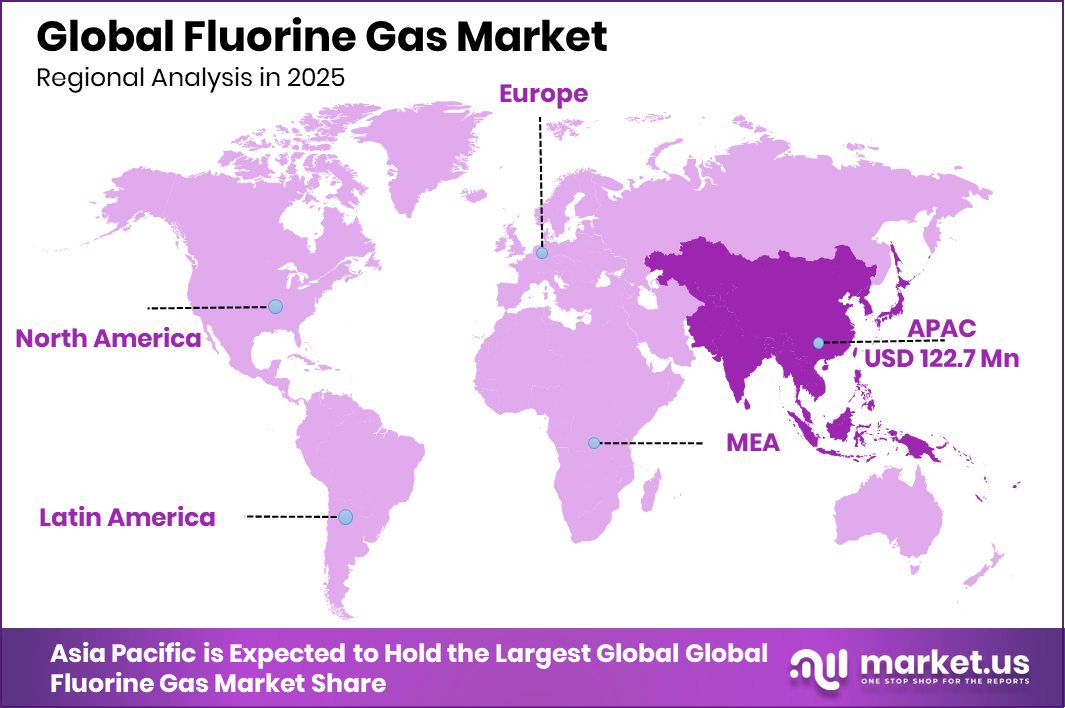
The Global Fluorine Gas Market is expected to be worth around USD 523.4 million by 2035, up from USD 295.0 million in 2025, and is projected to grow at a CAGR of 5.9% from 2026 to 2035. With 41.6% share Asia Pacific Fluorine Gas Market totaled USD 122.7 Mn overall.
Fluorine gas is a highly reactive chemical element that appears as a pale yellow gas at room temperature. It is widely used in specialized industrial processes because of its strong oxidizing properties and ability to react with many materials. Industries use fluorine gas in chemical synthesis, semiconductor manufacturing, pharmaceutical production, and uranium processing. Due to its high reactivity, fluorine gas must be handled with advanced containment systems and strict safety procedures, making it an important but carefully controlled industrial material.
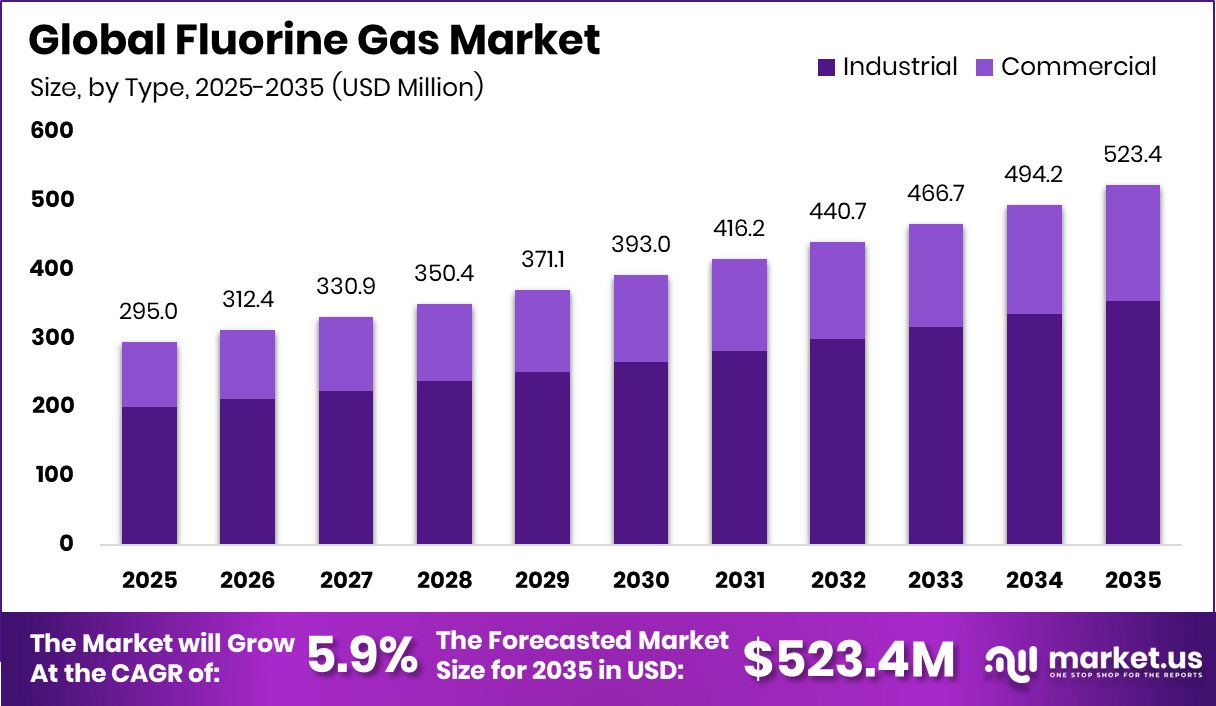
The Fluorine Gas Market refers to the global production, supply, and use of fluorine gas across different industries and applications. The market is commonly categorized by type, including industrial and commercial uses, while key applications include semiconductors, pharmaceuticals, chemicals, uranium enrichment, and other specialized industrial processes. Demand for fluorine gas continues to be linked closely to advanced manufacturing sectors where high-purity gases are essential for precision processing.
Market growth is largely supported by the expansion of semiconductor and electronics manufacturing, where fluorine gas plays a critical role in etching and chamber cleaning processes during chip fabrication. As modern electronics become smaller and more complex, manufacturers require highly controlled chemical processes, which increases the use of specialty gases like fluorine.
Demand is also influenced by increasing activity in uranium enrichment and nuclear energy supply chains. Significant investments highlight this trend, including Orano securing $900 million in U.S. funding for a uranium enrichment plant, while the U.S. government is investing $2.7 billion to rebuild domestic uranium enrichment capacity as electricity demand grows from artificial intelligence data centers.
Opportunities are emerging from new enrichment technologies and long-term energy infrastructure investments. For example, LIS Technologies plans to invest more than $1 billion in a laser uranium enrichment facility, which could increase the need for specialized fluorine-based processing chemicals. As industrial technology and energy systems expand, fluorine gas is expected to remain an essential material supporting these advanced applications.
Key Takeaways
- The Global Fluorine Gas Market is expected to be worth around USD 523.4 million by 2035, up from USD 295.0 million in 2025, and is projected to grow at a CAGR of 5.9% from 2026 to 2035.
- The Fluorine Gas Market is dominated by industrial applications, accounting for 67.8% of total demand globally.
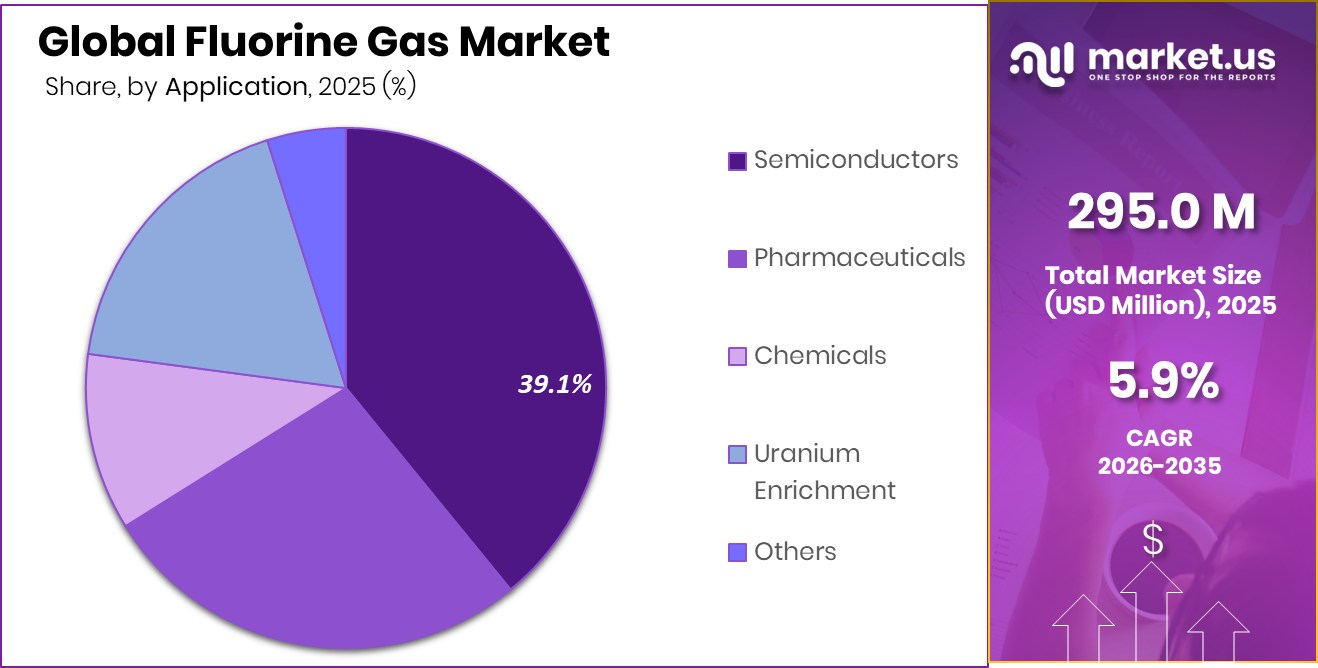
- In the Fluorine Gas Market, semiconductor manufacturing represents 39.1% share, driven by electronics industry growth.
- Asia Pacific Fluorine Gas Market recorded USD 122.7 Mn, accounting for 41.6% share.
By Type Analysis
Industrial usage dominates the Fluorine Gas Market, accounting for 67.8% of demand.
In 2025, the industrial segment accounted for 67.8% of the Fluorine Gas Market, reflecting its crucial role across multiple manufacturing and processing industries. Fluorine gas is widely used in the production of specialty chemicals, uranium processing, glass treatment, and metal surface cleaning, making it an essential component in advanced industrial operations.
Its strong oxidizing properties allow manufacturers to achieve high precision in chemical reactions and material modifications. Increasing investments in chemical manufacturing and materials engineering are further driving demand for fluorine gas in industrial settings.
Additionally, the expansion of high-performance materials and fluorinated compounds used in electronics, pharmaceuticals, and refrigeration systems is strengthening the segment’s growth. As industries continue to modernize production processes and adopt advanced chemical technologies, the industrial application of fluorine gas is expected to remain a dominant contributor to overall market demand.
By Application Analysis
Semiconductors represent 39.1% of the fluorine gas market by application segment.
In 2025, the semiconductor application segment held 39.1% of the Fluorine Gas Market, supported by the growing demand for advanced electronic components and integrated circuits. Fluorine gas plays a critical role in semiconductor fabrication, particularly in plasma etching and chamber cleaning processes used during wafer manufacturing.
Its effectiveness in removing silicon dioxide and other materials with high precision makes it indispensable in the production of microchips and memory devices. The global expansion of semiconductor manufacturing facilities and the increasing need for high-performance computing, artificial intelligence hardware, and consumer electronics are fueling demand for fluorine gas.
Furthermore, the shift toward smaller and more complex chip architectures requires highly controlled etching processes, further strengthening the use of fluorine gas in semiconductor production. As semiconductor technologies continue to evolve, this application segment is expected to maintain strong and steady market growth.
Key Market Segments
By Type
- Industrial
- Commercial
By Application
- Semiconductors
- Pharmaceuticals
- Chemicals
- Uranium Enrichment
- Others
Driving Factors
Rising semiconductor manufacturing demand globally
The Fluorine Gas Market is strongly supported by the rapid expansion of global semiconductor manufacturing. Fluorine gas plays an important role in wafer processing, plasma etching, and chamber cleaning used in advanced chip production. As electronics, data processing systems, and artificial intelligence technologies expand, semiconductor manufacturers continue to increase fabrication capacity to meet global demand. Research and innovation in materials science are also supporting industry growth.
For example, an OSU chemistry professor recently received a $1.8 million NIH grant to advance chemical research, reflecting continued investment in scientific development related to advanced materials and chemical processes. Such initiatives strengthen the technological base that supports semiconductor manufacturing and related chemical applications, indirectly contributing to the broader demand for fluorine gas used in precision electronics production.
Restraining Factors
High toxicity and handling risks
Despite its industrial importance, fluorine gas presents significant safety and handling challenges due to its extreme reactivity and toxicity. The gas requires specialized storage systems, corrosion-resistant equipment, and strict safety protocols throughout production, transportation, and usage. These requirements increase operational complexity for manufacturers and end users. Regulatory frameworks also emphasize worker safety and environmental protection, which may slow the adoption of highly reactive gases in certain processes.
At the same time, research institutions are exploring safer chemical alternatives and cleaner technologies. For instance, research on fluorine-free fuel cells received $2.2 million from the Department of Energy, supporting innovation aimed at reducing reliance on fluorine-based materials in energy technologies. Such developments may influence future material choices in certain sectors while encouraging safer chemical process designs.
Growth Opportunity
Increasing investments in nuclear energy
Growing global interest in nuclear energy development is creating long-term opportunities for the Fluorine Gas Market, particularly through uranium enrichment processes where fluorine-based compounds play a crucial role. As countries seek reliable and low-carbon energy sources, investments in nuclear fuel supply chains and enrichment technologies are increasing. These developments support demand for specialized industrial chemicals and gases required in uranium processing operations.
Industrial infrastructure expansion and technology development in the energy and chemical processing sectors are also creating opportunities for fluorine-related materials. For example, INNOVX secured $110 million for Fluoralpha’s strategic industrial project in Jorf Lasfar, highlighting ongoing investments in fluorine-related chemical production capabilities. Such projects strengthen industrial supply chains and provide additional capacity for producing fluorine-based materials used across multiple high-value applications.
Latest Trends
Expansion of semiconductor fabrication facilities
One of the key trends shaping the Fluorine Gas Market is the continued expansion of semiconductor fabrication facilities worldwide. As electronics manufacturing grows and advanced computing systems require more sophisticated microchips, semiconductor companies are increasing production capacity and upgrading fabrication technologies. These developments directly increase demand for high-purity specialty gases used in wafer processing and equipment cleaning. At the same time, chemical manufacturers are expanding fluorinated product capacity to support industrial demand.
A notable example is Navin Fluorine approving R32 capacity expansion and MPP debottlenecking, reflecting ongoing efforts to strengthen fluorochemical production infrastructure. Such capacity expansions indicate broader industry movement toward improving supply reliability and meeting the requirements of advanced manufacturing sectors that rely on fluorine-based gases and chemical intermediates.
Regional Analysis
Asia Pacific dominated the Fluorine Gas Market with 41.6% share, reaching USD 122.7 Mn.
The Fluorine Gas Market demonstrates varied regional demand patterns across North America, Europe, Asia Pacific, the Middle East & Africa, and Latin America, driven primarily by industrial processing and semiconductor manufacturing requirements. North America represents a stable market supported by advanced semiconductor fabrication facilities and well-established chemical processing industries that utilize fluorine gas in precision applications.
Europe follows with consistent demand stemming from specialty chemicals production and high-technology manufacturing sectors. Asia Pacific stands as the dominating region, accounting for 41.6% of the Fluorine Gas Market with a value of USD 122.7 Mn, supported by strong semiconductor manufacturing ecosystems, expanding electronics production, and large-scale chemical processing operations across major industrial economies in the region.
The region’s concentration of wafer fabrication facilities and advanced electronics manufacturing continues to sustain high consumption levels of fluorine gas. Meanwhile, the Middle East & Africa market is gradually developing, driven by growing industrial diversification and chemical production capabilities.
Latin America shows moderate growth potential as regional industries adopt more advanced manufacturing processes requiring specialty gases. Overall, regional demand trends reflect industrial expansion, semiconductor production activity, and the increasing role of high-purity gases in precision.
Key Regions and Countries
- North America
- US
- Canada
- Europe
- Germany
- France
- The UK
- Spain
- Italy
- Rest of Europe
- Asia Pacific
- China
- Japan
- South Korea
- India
- Australia
- Rest of APAC
- Latin America
- Brazil
- Mexico
- Rest of Latin America
- Middle East & Africa
- GCC
- South Africa
- Rest of MEA
Key Players Analysis
In 2025, Linde continues to maintain a strong strategic position in the global Fluorine Gas Market through its extensive experience in industrial gases and advanced supply infrastructure. The company’s operational strength lies in its large-scale gas production capabilities, global distribution network, and ability to support high-purity gas requirements across multiple industries. Its focus on specialized gas handling systems and reliable supply solutions enables consistent delivery of fluorine gas to demanding industrial and electronics manufacturing environments.
Air Products remains a prominent participant in the fluorine gas landscape, supported by its strong expertise in specialty gases and integrated gas solutions. The company’s capabilities in managing high-purity gases and complex gas delivery systems make it well-positioned to support sectors that require precise chemical processing conditions. Its operational model emphasizes reliability, safety, and consistent product quality, which are essential in fluorine gas applications. By leveraging its engineering and gas processing expertise, the company continues to strengthen its role in supplying critical industrial gases across advanced manufacturing sectors.
Meanwhile, Kanto Denka plays a significant role in the fluorine gas market through its specialization in high-purity chemical materials and electronic industry gases. The company’s expertise in producing fluorine-based gases designed for precision industrial processes supports applications requiring strict quality standards. Its focus on specialty chemical production and close alignment with electronics manufacturing needs allows it to maintain a focused and technically advanced presence within the fluorine gas industry.
Top Key Players in the Market
- Linde
- Air Products
- Kanto Denka
- Hyosung Chemical
- Zhuoxi Gas
- Central Glass
- Solvay
Recent Developments
- In August 2025, Kanto Denka, a Japanese company producing fluorine-based specialty gases used in semiconductor manufacturing, reported a fire at its Shibukawa plant affecting a nitrogen trifluoride (NF₃) production line. The company later restarted the unaffected production line and continued the supply of semiconductor cleaning gases after safety inspections and operational checks.
- In June 2024, Air Products formed a joint venture with AES to develop low-carbon nitrogen trifluoride and fluorine-based industrial gases. The initiative focuses on producing cleaner specialty gases used in semiconductor and solar manufacturing, helping reduce emissions while supporting advanced electronics production.
Report Scope
Report Features Description Market Value (2025) USD 295.0 Million Forecast Revenue (2035) USD 523.4 Million CAGR (2026-2035) 5.9% Base Year for Estimation 2025 Historic Period 2020-2024 Forecast Period 2026-2035 Report Coverage Revenue Forecast, Market Dynamics, Competitive Landscape, Recent Developments Segments Covered By Type (Industrial, Commercial), By Application (Semiconductors, Pharmaceuticals, Chemicals, Uranium Enrichment, Others) Regional Analysis North America – US, Canada; Europe – Germany, France, The UK, Spain, Italy, Rest of Europe; Asia Pacific – China, Japan, South Korea, India, Australia, Singapore, Rest of APAC; Latin America – Brazil, Mexico, Rest of Latin America; Middle East & Africa – GCC, South Africa, Rest of MEA Competitive Landscape Linde, Air Products, Kanto Denka, Hyosung Chemical, Zhuoxi Gas, Central Glass, Solvay Customization Scope Customization for segments, region/country-level will be provided. Moreover, additional customization can be done based on the requirements. Purchase Options We have three licenses to opt for: Single User License, Multi-User License (Up to 5 Users), Corporate Use License (Unlimited User and Printable PDF) 
-
-
- Linde
- Air Products
- Kanto Denka
- Hyosung Chemical
- Zhuoxi Gas
- Central Glass
- Solvay
Our Clients

- 180302
- March 2026






