


Global Edible Flowers Market Size, Share, And Enhanced Productivity By Flower Type (Rose, Hibiscus, Lavender, Marigold, Pansy and Viola, Nasturtium, Others), By Form(Fresh, Dried, Powders), By Distribution Channel (On-Trade, Off Trade), By Region and Companies - Industry Segment Outlook, Market Assessment, Competition Scenario, Trends, and Forecast 2026-2035
- Published date: March 2026
- Report ID: 180940
- Number of Pages: 247
- Format:
-
keyboard_arrow_up
Quick Navigation
Report Overview
The Global Edible Flowers Market is expected to be worth around USD 707.8 million by 2035, up from USD 410.9 million in 2025, and is projected to grow at a CAGR of 5.6% from 2026 to 2035.
Edible flowers are flowers that are safe for human consumption and used in food preparation for flavor, aroma, color, and decoration. Varieties such as rose, hibiscus, lavender, marigold, pansy, viola, nasturtium, and other floral types are commonly incorporated into culinary applications. These flowers can be consumed in different forms, including fresh petals, dried flowers, or powdered ingredients used in beverages, desserts, salads, and specialty dishes. Edible flowers have been traditionally used in many cultures and are valued for their natural taste, visual appeal, and botanical properties.
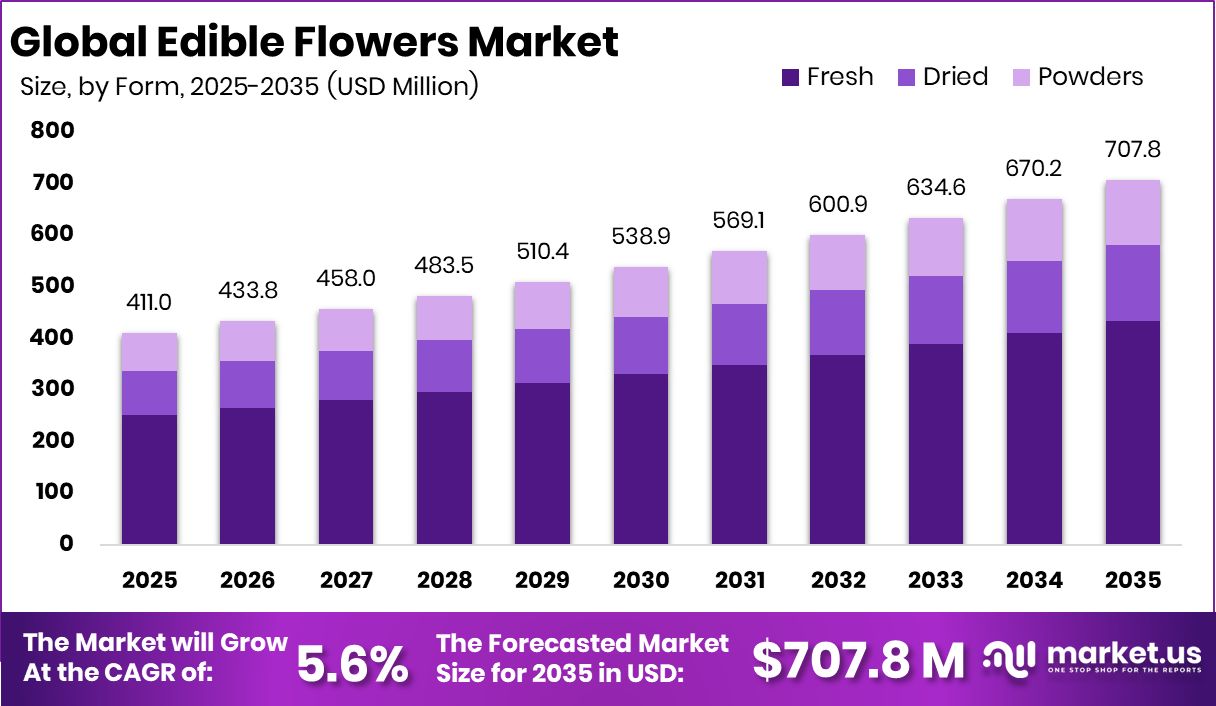
The Edible Flowers Market refers to the commercial production, processing, and distribution of edible flower varieties across food service and retail channels. The market includes products sold through on-trade outlets such as restaurants and hotels as well as off-trade channels like supermarkets and specialty stores. Different flower types, including rose, hibiscus, lavender, marigold, pansy, viola, nasturtium, and others, are cultivated and supplied in fresh, dried, and powdered forms to meet culinary demand.
Growth in the market is largely supported by the increasing use of edible flowers in modern cuisine and premium dining experiences. Chefs and food creators are incorporating floral ingredients to enhance the presentation, flavor, and uniqueness of dishes. The development of advanced indoor and high-tech farming systems is also supporting production. For instance, Lusso Leaf has been working to introduce high-tech farming systems to supply fresh ingredients to restaurants in London, demonstrating how controlled cultivation methods can improve availability and quality.
Demand for edible flowers continues to expand as consumers show growing interest in visually appealing and naturally sourced food ingredients. Flowers such as hibiscus are widely used in beverages and culinary preparations, contributing to rising trade activity. Nigeria has also targeted around $600 million in exports of hibiscus flowers to Mexico, reflecting increasing international demand for edible floral ingredients used in drinks, teas, and food products.
The market also presents new opportunities as investment flows into agricultural technology and specialty crop production. In 2025, proptech funding reached about $16.7 billion, supporting innovation in cultivation systems, supply chains, and urban farming infrastructure that can benefit edible flower production.
Additionally, awareness and cultural appreciation of floral varieties continues to grow, illustrated by initiatives such as the RHS Chelsea Dame Deborah James Rose raising £45,000 for the Bowelbabe Fund for Cancer Research UK, highlighting the wider recognition and value associated with flower varieties used in food and horticulture.
Key Takeaways
- The Global Edible Flowers Market is expected to be worth around USD 707.8 million by 2035, up from USD 410.9 million in 2025, and is projected to grow at a CAGR of 5.6% from 2026 to 2035
- The Edible Flowers Market shows rose varieties leading with 27.9% share due to culinary popularity.
- In the Edible Flowers Market, the fresh form dominates with 61.3% demand across restaurants, bakeries, and beverages.
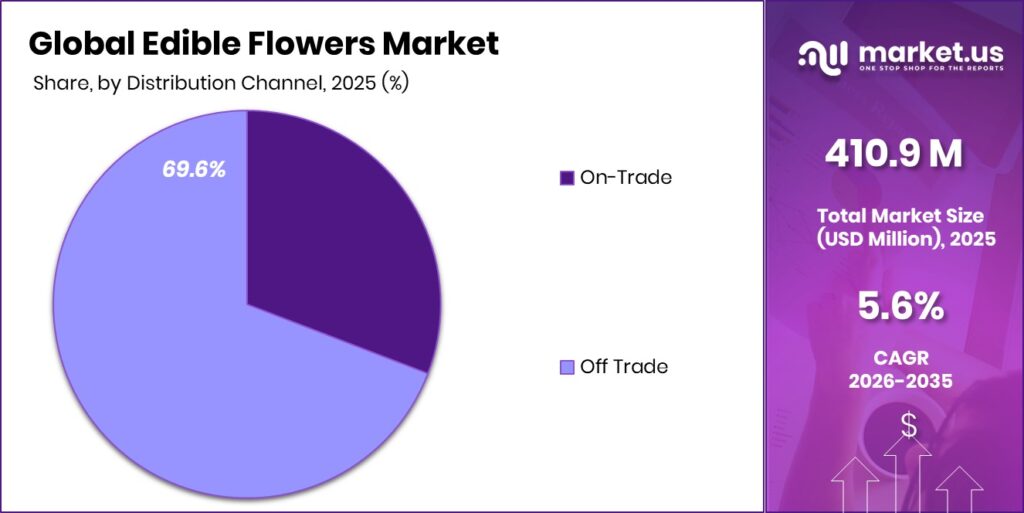
- Within the Edible Flowers Market, off-trade channels hold 69.6% share through retail stores globally.
By Flower Type Analysis
Rose flowers hold a 27.9% share in the global Edible Flowers Market segment.
In 2025, rose-based edible flowers held a dominant share of about 27.9% in the edible flowers market, reflecting their widespread culinary and commercial appeal. Roses are highly valued for their pleasant fragrance, vibrant color, and subtle flavor, making them a popular ingredient in gourmet dishes, desserts, beverages, and confectionery products. Chefs and food manufacturers increasingly incorporate rose petals in salads, jams, syrups, and decorative toppings to enhance both taste and visual presentation.
Additionally, roses contain antioxidants and vitamins that support their use in functional foods and wellness-focused products. The rising popularity of premium dining experiences, along with consumer interest in natural and aesthetically appealing ingredients, continues to drive the demand for rose-based edible flowers across restaurants, bakeries, and specialty food brands globally.
By Form Analysis
Fresh form dominates the Edible Flowers Market with 61.3% overall product share.
In 2025, fresh edible flowers accounted for approximately 61.3% of the edible flowers market by form, indicating strong consumer preference for natural, minimally processed ingredients. Fresh flowers are widely used in salads, desserts, beverages, and gourmet plating because they maintain their original color, texture, and aroma. Restaurants, cafes, and luxury hotels particularly favor fresh varieties to enhance the visual appeal of dishes and create premium dining experiences.
Moreover, the farm-to-table movement and growing awareness of natural food ingredients have encouraged consumers to choose fresh edible flowers over dried or processed alternatives. Local growers and specialty farms are increasingly supplying fresh flowers directly to food service providers and specialty stores, supporting the expansion of this segment in both developed and emerging culinary markets.
By Distribution Channel Analysis
Off-trade channels account for 69.6% distribution in the Edible Flowers Market.
In 2025, the off-trade distribution channel represented around 69.6% of the edible flowers market, highlighting the growing role of retail sales in driving product accessibility. Off-trade channels include supermarkets, hypermarkets, specialty food stores, and online grocery platforms where consumers purchase edible flowers for home cooking and food decoration. The increasing popularity of home baking, gourmet meal preparation, and social media-inspired food presentation has significantly boosted retail demand for edible flowers.
Packaged edible flower products are becoming more widely available in premium grocery stores and e-commerce platforms, allowing consumers to experiment with floral ingredients in everyday cooking. This shift toward retail purchasing is further supported by improved packaging, extended shelf-life solutions, and rising consumer awareness about edible flower varieties.
Key Market Segments
By Flower Type
- Rose
- Hibiscus
- Lavender
- Marigold
- Pansy and Viola
- Nasturtium
- Others
By Form
- Fresh
- Dried
- Powders
By Distribution Channel
- On-Trade
- Off Trade
Driving Factors
Rising demand for decorative gourmet cuisine
The Edible Flowers Market is experiencing steady momentum due to the increasing demand for decorative gourmet cuisine across restaurants, bakeries, and specialty food preparation. Chefs and culinary professionals frequently incorporate flowers such as roses, pansies, and nasturtium to enhance visual presentation and add subtle flavors to dishes and beverages. Social media influence and modern food plating styles are also encouraging greater experimentation with colorful floral ingredients. At the same time, technological innovation in agriculture is supporting this trend.
For example, crop technology startup Hudson River Biotechnology secured $5.9 million in Series A funding to advance CRISPR-based crop development. Such innovation in plant science and cultivation techniques may help improve flower varieties, strengthen agricultural productivity, and support the broader supply of edible flowers used in culinary applications.
Restraining Factors
Limited consumer awareness about edible varieties
Despite growing culinary interest, the Edible Flowers Market still faces limitations due to relatively low consumer awareness regarding safe and edible flower varieties. Many consumers remain uncertain about which flowers can be consumed and how they should be used in cooking or beverages. This knowledge gap restricts widespread household adoption, particularly in regions where edible flowers are not traditionally part of everyday cuisine.
In addition, supply chains and retail visibility for edible flowers remain limited in several markets. However, broader investment activity in the floral and plant-based industry indicates ongoing expansion. For instance, Arab flower company Floward raised $156 million in its latest funding round, highlighting increasing investor confidence in the wider floral sector and the growing commercial potential associated with flower-based products and services.
Growth Opportunity
Expansion of urban indoor farming systems
Urban agriculture and indoor cultivation technologies are opening new opportunities within the Edible Flowers Market. Controlled environment farming allows delicate flowers to be grown close to urban consumption centers, reducing transportation time while improving freshness and product quality. Such systems are particularly valuable for flowers used in gourmet cuisine, where appearance and freshness are essential. Additionally, small-scale farming and horticulture businesses are increasingly diversifying into tourism and experiential activities linked to flower cultivation.
A notable example includes a Lockerbie-based flower business that expanded into the tourism sector with support from a £20,000 loan, demonstrating how local flower production can create additional economic opportunities. These developments highlight the potential for urban agriculture and specialty horticulture to strengthen local edible flower supply networks.
Latest Trends
Use of flowers in beverages
One of the most noticeable trends in the Edible Flowers Market is the growing use of flowers in beverages. Floral ingredients such as hibiscus, lavender, and rose are increasingly incorporated into teas, cocktails, flavored waters, and specialty drinks due to their appealing aroma and natural color. Beverage producers and cafes are experimenting with flower infusions to create distinctive drink experiences that attract consumers seeking unique flavors. This trend is supported by increasing innovation and business expansion across the broader plant and beverage ecosystem.
For example, a Flower Mound-based firm recently raised $16.2 million in funding, reflecting continued investment in companies working with plant-based ingredients and specialty products that may support emerging applications of flowers in modern beverages.
Regional Analysis
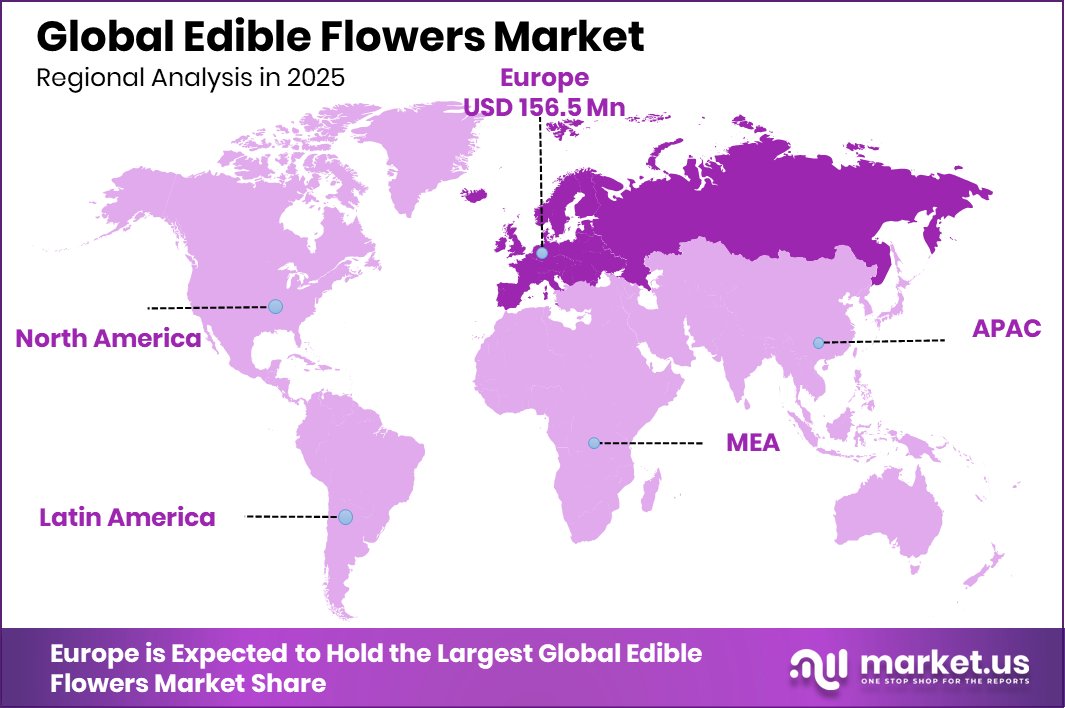
The Edible Flowers Market demonstrates varied growth patterns across regions, including North America, Europe, Asia Pacific, Middle East & Africa, and Latin America, supported by evolving culinary trends and expanding specialty agriculture. Asia Pacific dominates the global market, accounting for 48.5% share with a market value of USD 320.8 Mn, reflecting the region’s strong agricultural base and longstanding use of edible flowers in traditional cuisines. Countries across the region widely incorporate floral ingredients in beverages, desserts, and herbal preparations, supporting high consumption and production levels.
Europe represents another established regional market, driven by demand from gourmet food service sectors and increasing interest in natural decorative ingredients used in culinary presentations. North America continues to witness the steady adoption of edible flowers, particularly within premium restaurants, bakeries, and specialty food retailers emphasizing aesthetic plating and natural ingredients.
Meanwhile, Latin America shows gradual market expansion supported by favorable climatic conditions for specialty flower cultivation. The Middle East & Africa region is also emerging, where niche culinary applications and growing hospitality industries are contributing to increasing market awareness and product availability.
Key Regions and Countries
- North America
- US
- Canada
- Europe
- Germany
- France
- The UK
- Spain
- Italy
- Rest of Europe
- Asia Pacific
- China
- Japan
- South Korea
- India
- Australia
- Rest of APAC
- Latin America
- Brazil
- Mexico
- Rest of Latin America
- Middle East & Africa
- GCC
- South Africa
- Rest of MEA
Key Players Analysis
In 2025, Fresh Origins, LLC continues to maintain a strong presence in the edible flowers industry through its focus on high-quality specialty produce and consistent supply to culinary professionals. The company is widely recognized for cultivating a broad range of edible flowers designed specifically for gourmet presentation and premium food applications. Its emphasis on controlled cultivation practices, product freshness, and visual quality enables Fresh Origins to serve restaurants, chefs, and specialty distributors that require reliable and aesthetically refined ingredients. By prioritizing product consistency and variety, the company strengthens its position among professional culinary markets that rely on distinctive edible flower offerings.
Koppert Cress B.V. plays an influential role in the edible flowers segment through its emphasis on innovative specialty cress and floral products developed for culinary use. The company is known for introducing unique edible flower varieties that combine flavor, aroma, and visual appeal, supporting creative gastronomy and modern food presentation. Its product portfolio focuses on enhancing the sensory experience of dishes while maintaining high cultivation standards. Through continuous product innovation and close collaboration with chefs and culinary professionals, Koppert Cress B.V. reinforces its reputation as a provider of distinctive edible plant ingredients within high-end food service environments.
Farm.One Holdings, Inc. contributes to the edible flowers landscape by focusing on urban agriculture and controlled environment farming systems that enable year-round cultivation of specialty crops. The company’s approach allows edible flowers to be produced close to major urban culinary hubs, ensuring freshness and efficient supply for restaurants and food service operators. By leveraging advanced indoor growing techniques, Farm.One can cultivate delicate edible flower varieties with consistent quality. This localized production model supports quick distribution cycles and helps meet the demand for premium edible flowers used in modern gastronomy and innovative culinary applications.
Top Key Players in the Market
- Fresh Origins, LLC
- Koppert Cress B.V.
- Farm.One Holdings, Inc.
- Selecta Cut Flowers S.A.U.
- Chef’s Garden, Inc.
- Specialty Produce LLC
- Bonduelle S.A.
- Bloom Culinary Flowers Ltd.
- Fragrant Isle Farms LLC
- Sakura Farms S.A. de C.V.
- Gourmet Edible Flowers Ltd.
- Richters Herbs Ltd.
- Fleurizon LLC
- Living Colors Farms LLC (Costa Farms Group)
- Bright Fresh Microgreens LLC (Schmidt Family Farms, Inc.)
Recent Developments
- In June 2025, Koppert Cress B.V., a horticultural company producing edible plants and flowers for chefs and gastronomy, launched a new edible flower called Fivola Blossom. The flower offers floral aroma, mild spicy notes, and strong visual appeal for dishes, desserts, and beverages, helping chefs enhance presentation and flavor in culinary creations.
- In January 2024, Fresh Origins, LLC, introduced a new sustainable peel-and-reseal packaging system for its specialty produce, including edible flowers and microgreens used by chefs. The packaging automation program was designed to improve freshness, extend shelf life by several days, and be more sustainable.
Report Scope
Report Features Description Market Value (2025) USD 410.9 Million Forecast Revenue (2035) USD 707.8 Million CAGR (2026-2035) 5.6% Base Year for Estimation 2025 Historic Period 2020-2024 Forecast Period 2026-2035 Report Coverage Revenue Forecast, Market Dynamics, Competitive Landscape, Recent Developments Segments Covered By Flower Type (Rose, Hibiscus, Lavender, Marigold, Pansy and Viola, Nasturtium, Others), By Form(Fresh, Dried, Powders), By Distribution Channel (On-Trade, Off-Trade) Regional Analysis North America – US, Canada; Europe – Germany, France, The UK, Spain, Italy, Rest of Europe; Asia Pacific – China, Japan, South Korea, India, Australia, Singapore, Rest of APAC; Latin America – Brazil, Mexico, Rest of Latin America; Middle East & Africa – GCC, South Africa, Rest of MEA Competitive Landscape Fresh Origins, LLC, Koppert Cress B.V., Farm.One Holdings, Inc., Selecta Cut Flowers S.A.U., Chef’s Garden, Inc., Specialty Produce LLC, Bonduelle S.A., Bloom Culinary Flowers Ltd., Fragrant Isle Farms LLC, Sakura Farms S.A. de C.V., Gourmet Edible Flowers Ltd., Richters Herbs Ltd., Fleurizon LLC, Living Colors Farms LLC (Costa Farms Group), Bright Fresh Microgreens LLC (Schmidt Family Farms, Inc.) Customization Scope Customization for segments, region/country-level will be provided. Moreover, additional customization can be done based on the requirements. Purchase Options We have three licenses to opt for: Single User License, Multi-User License (Up to 5 Users), Corporate Use License (Unlimited User and Printable PDF) 
-
-
- Fresh Origins, LLC
- Koppert Cress B.V.
- Farm.One Holdings, Inc.
- Selecta Cut Flowers S.A.U.
- Chef's Garden, Inc.
- Specialty Produce LLC
- Bonduelle S.A.
- Bloom Culinary Flowers Ltd.
- Fragrant Isle Farms LLC
- Sakura Farms S.A. de C.V.
- Gourmet Edible Flowers Ltd.
- Richters Herbs Ltd.
- Fleurizon LLC
- Living Colors Farms LLC (Costa Farms Group)
- Bright Fresh Microgreens LLC (Schmidt Family Farms, Inc.)
Our Clients

- 180940
- March 2026






