


Market Overview
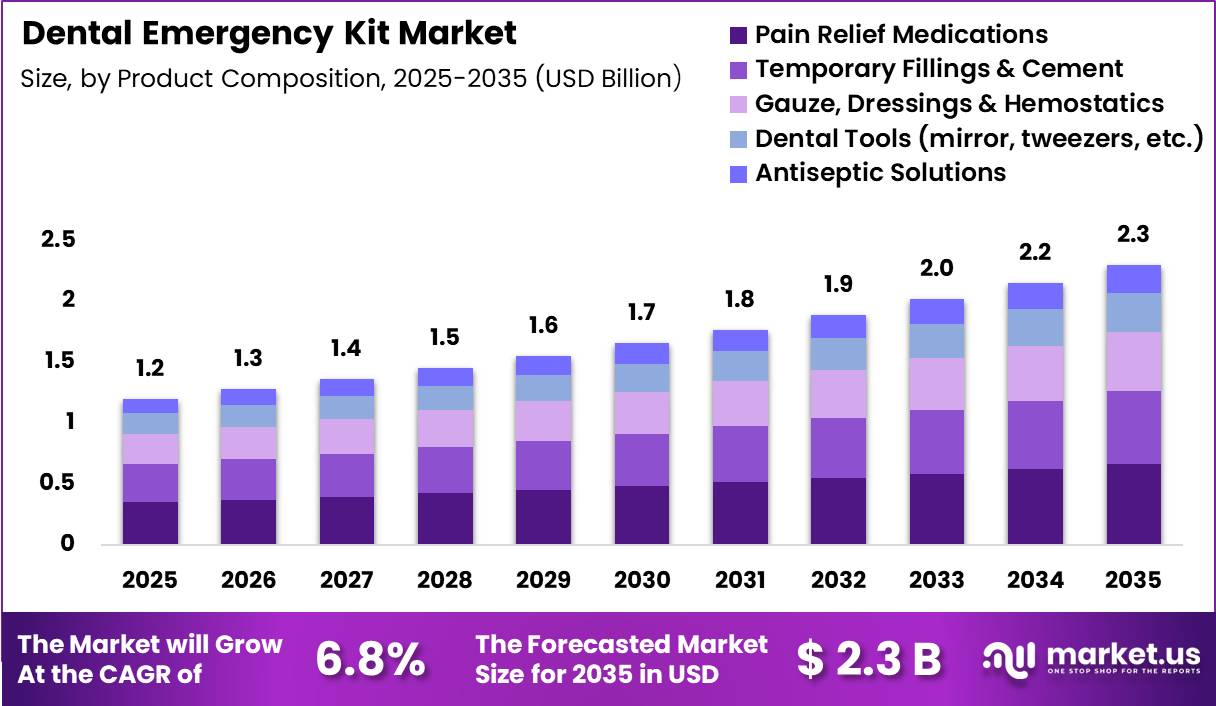
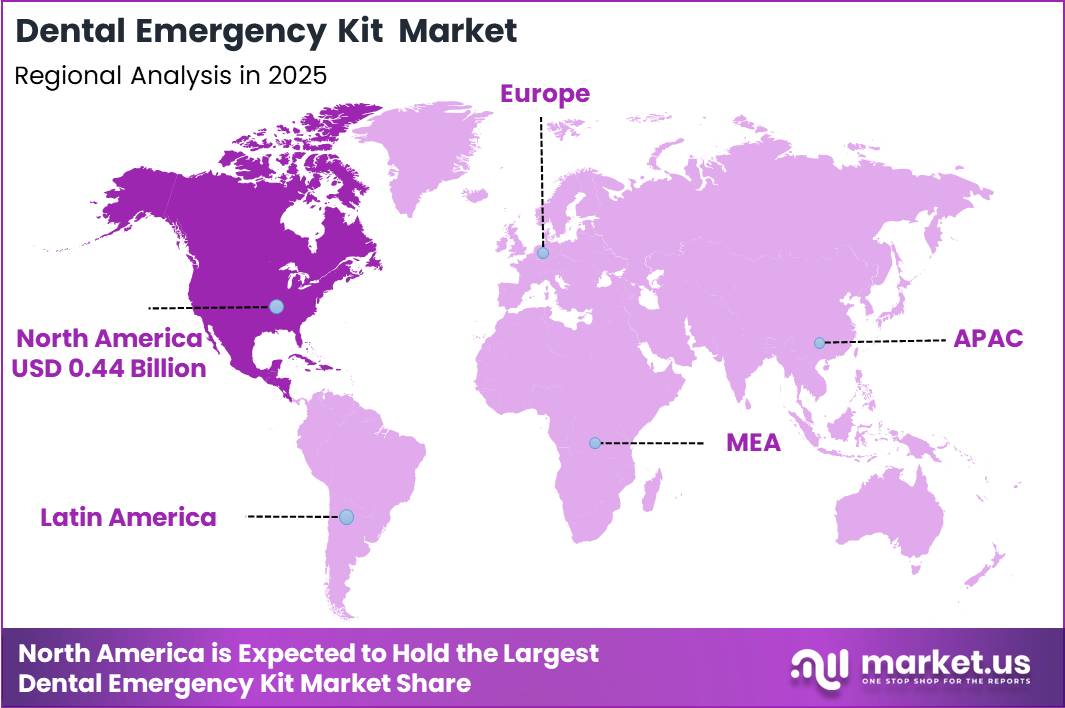
Global Dental Emergency Kit Market size is expected to be worth around US$ 2.3 Billion by 2035 from US$ 1.2 Billion in 2025, growing at a CAGR of 6.8% during the forecast period from 2026 to 2035. In 2025, North America led the market, achieving over 36.5% share with a revenue of US$ 0.44 Billion.
The Dental Emergency Kit Market is gaining importance as oral health emergencies continue to place a significant burden on healthcare systems worldwide. Dental emergency kits are designed to provide immediate, temporary management of common dental issues such as toothaches, broken teeth, lost fillings, crown dislodgement, oral bleeding, and minor trauma before professional treatment is available. These kits are increasingly used in homes, schools, workplaces, sports facilities, military settings, and remote healthcare environments.
The growing need for rapid dental first-aid solutions is supported by the high incidence of emergency dental conditions. According to the U.S. Centers for Disease Control and Prevention (CDC), approximately 21% of adults aged 20–64 have at least one untreated cavity, a major contributor to dental pain and emergency interventions. The CDC also reports that more than 34 million school hours are lost annually due to unplanned emergency dental care, highlighting the widespread impact of oral health issues.
Recent data from the National Center for Health Statistics (NCHS) show that tooth disorders accounted for an average of 1.94 million emergency department visits annually in the United States during 2020–2022, equivalent to 59.4 visits per 10,000 population. Adults aged 25–34 represented 29.2% of these visits.
Additionally, the American Dental Association estimates that more than 2 million hospital emergency department visits occur each year for dental pain, with treatment costs often exceeding those of routine dental care. These trends are encouraging greater adoption of dental emergency preparedness products, supporting demand for comprehensive and easy-to-use dental emergency kits.
Key Takeaways
- Market Size : Global Dental Emergency Kit Market size is expected to be worth around US$ 2.3 Billion by 2035 from US$ 1.2 Billion in 2025.
- Market Share : The market is growing at a CAGR of 6.8% during the forecast period from 2026 to 2035.
- Kit Type Analysis : The Professional Dental Emergency Kits segment dominated the Dental Emergency Kit Market in 2025, accounting for 46% of the total market share.
- Application Analysis : In 2025, The Toothache & Pain Management segment held the largest share of the Dental Emergency Kit Market accounting for 31% of total revenue.
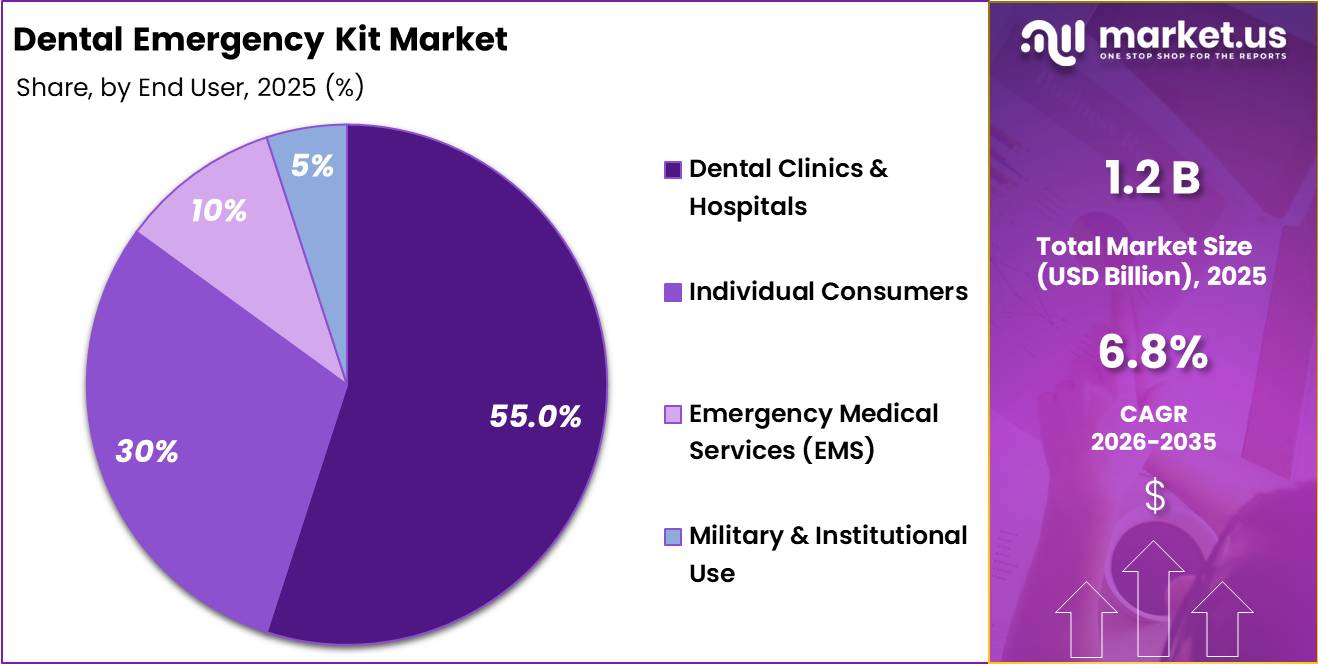
- End User Analysis : Dental Clinics & Hospitals emerged as the leading end-user segment in the Dental Emergency Kit Market, holding 55% of the total market share in 2025.
- Product Composition Analysis : In 2025, Pain Relief Medications dominated the Dental Emergency Kit Market by product composition capturing 29% of the market share.
- Distribution Channel Analysis : Hospital & Dental Supply Stores dominated the Dental Emergency Kit Market in 2025, accounting for 41% of total market share.
- Regional Analysis : In 2025, North America led the market, achieving over 36.5% share with a revenue of US$ 0.44 Billion.
Kit Type Analysis
The Professional Dental Emergency Kits segment dominated the Dental Emergency Kit Market in 2025, accounting for 46% of the total market share. This leadership is primarily attributed to the widespread adoption of comprehensive emergency kits by dental clinics, hospitals, orthodontic centers, and oral surgery practices.
These kits typically contain temporary filling materials, hemostatic agents, dental instruments, antiseptic solutions, and pain management products, enabling dental professionals to address a broad range of urgent dental conditions. Increasing patient visits for dental trauma, acute infections, and post-procedure complications continue to support demand for professional-grade kits.
The Personal/Home Use Kits segment captured 34% of the market in 2025. Growing consumer awareness regarding oral health preparedness and the rising availability of easy-to-use emergency dental products have encouraged households to maintain dental first-aid kits. These kits are particularly popular among families with children, elderly individuals, and patients undergoing ongoing dental treatments.
Meanwhile, Travel & Portable Kits represented 20% of the market share. Demand for compact and lightweight emergency dental kits has increased due to expanding business travel, tourism, outdoor recreation, and remote work activities. Consumers increasingly prefer portable kits that provide immediate relief from toothaches, temporary crown loss, or minor dental injuries while away from professional dental care facilities.
Application Analysis
The Toothache & Pain Management segment held the largest share of the Dental Emergency Kit Market in 2025, accounting for 31% of total revenue. The segment’s dominance is driven by the high prevalence of sudden tooth pain caused by cavities, infections, gum inflammation, cracked teeth, and sensitivity issues. Emergency kits designed for pain relief commonly include analgesics, temporary filling compounds, cold compresses, and oral pain gels, making them the most frequently utilized products in urgent dental situations.
Dental Trauma (fractures, avulsions) accounted for 28% of the market in 2025. Increasing participation in sports activities, road accidents, workplace injuries, and falls has contributed significantly to the need for emergency solutions that preserve damaged or dislodged teeth until professional treatment is available. Specialized kits often include tooth preservation containers, splinting materials, and protective dressings.
Post-Procedure Emergency Care represented 22% of the market. Growing volumes of dental surgeries, implants, extractions, and orthodontic procedures have increased demand for products that manage discomfort and recovery-related complications. Infection & Bleeding Control captured the remaining 19% share, supported by rising awareness regarding oral wound management and infection prevention following dental emergencies or surgical interventions.
End User Analysis
Dental Clinics & Hospitals emerged as the leading end-user segment in the Dental Emergency Kit Market, holding 55% of the total market share in 2025. The segment benefits from the growing number of emergency dental consultations, oral surgeries, implant procedures, and trauma-related treatments. Clinics and hospitals require comprehensive emergency kits to ensure immediate patient care, making them the primary purchasers of professional-grade dental emergency products.
Individual Consumers accounted for 30% of the market share in 2025. Rising awareness of preventive oral healthcare, increasing self-care practices, and easy access to emergency dental products through retail and online channels have encouraged consumers to maintain dental emergency kits at home. This trend is particularly evident among families, travelers, and individuals with recurring dental issues.
Emergency Medical Services (EMS) represented 10% of the market. Ambulance providers and emergency response teams increasingly include dental emergency supplies to manage oral injuries during accidents, sports incidents, and disaster situations before patients reach specialized dental facilities.
Military & Institutional Use contributed 5% of the market share. Military organizations, correctional facilities, educational institutions, and industrial workplaces maintain emergency dental kits to support personnel in remote or high-risk environments where immediate access to dental professionals may be limited.
Product Composition Analysis
Pain Relief Medications dominated the Dental Emergency Kit Market by product composition, capturing 29% of the market share in 2025. The segment’s leadership reflects the immediate need for pain management during dental emergencies, including toothaches, abscesses, fractured teeth, and gum inflammation. Products such as oral analgesics, topical anesthetic gels, and anti-inflammatory medications are among the most frequently utilized components within emergency dental kits.
Temporary Fillings & Cement followed closely with 26% market share. These materials provide short-term restoration for lost fillings, damaged crowns, and minor cavities until professional dental treatment can be obtained. Their practical utility makes them essential components of both professional and consumer-focused kits.
Gauze, Dressings & Hemostatics accounted for 21% of the market, driven by the need to control bleeding following extractions, oral injuries, and surgical procedures. Dental Tools, including mirrors, tweezers, probes, and applicators, represented 14% of the segment and are crucial for examination and temporary intervention.
Antiseptic Solutions held 10% market share, supported by increasing emphasis on infection prevention and oral wound disinfection. Together, these components create comprehensive emergency care solutions for diverse dental situations.
Distribution Channel Analysis
Hospital & Dental Supply Stores dominated the Dental Emergency Kit Market in 2025, accounting for 41% of total market share. These specialized distribution channels remain the preferred procurement source for dental clinics, hospitals, oral surgery centers, and institutional buyers due to their ability to provide professional-grade products, regulatory compliance, and bulk purchasing options. Strong relationships between healthcare providers and specialized suppliers continue to reinforce the segment’s leading position.
Retail Pharmacies captured 28% of the market share in 2025. Consumers frequently purchase dental emergency products from pharmacies because of their accessibility, professional guidance, and immediate product availability. The increasing presence of over-the-counter dental pain relief and temporary repair products has further strengthened this segment.
Online/E-commerce channels accounted for 24% of the market. Rapid digitalization, expanding product variety, competitive pricing, and home delivery convenience have encouraged both consumers and small healthcare practices to procure dental emergency kits through online platforms. Product reviews and subscription-based purchasing models have also contributed to channel growth.
Supermarkets represented the remaining 7% share. Although smaller in comparison, this segment benefits from impulse purchases and growing consumer interest in maintaining basic healthcare preparedness products alongside routine household essentials.
Market Segmentations
Kit Type
- Professional Dental Emergency Kits
- Personal/Home Use Kits
- Travel & Portable Kits
Application
- Toothache & Pain Management
- Dental Trauma (fractures, avulsions)
- Post-Procedure Emergency Care
- Infection & Bleeding Control
End User
- Dental Clinics & Hospitals
- Individual Consumers
- Emergency Medical Services (EMS)
- Military & Institutional Use
Product Composition
- Pain Relief Medications
- Temporary Fillings & Cement
- Gauze, Dressings & Hemostatics
- Dental Tools (mirror, tweezers, etc.)
- Antiseptic Solutions
Distribution Channel
- Hospital & Dental Supply Stores
- Retail Pharmacies
- Online/E-commerce
- Supermarkets
Opportunity
Hospital-ED dental bridge kits represent a promising long-term opportunity because many dental emergencies are initially managed in hospital emergency departments rather than dental clinics. According to CDC data, emergency departments record approximately 59.4 visits per 10,000 population for tooth-disorder-related conditions, highlighting a substantial urgent-care burden.
Clinical guidance for pediatric dental trauma shows that emergency teams can improve outcomes through structured interventions such as pressure control, temporary stabilization, local-anesthetic-assisted tooth replantation, tetanus assessment, chlorhexidine-gel discharge support, and urgent dental referral. Despite this need, most emergency dental products are still designed primarily for dental practices rather than hospital settings.
This creates an opportunity for specialized ED-focused dental bridge kits containing trauma-management tools, tooth-storage media, temporary splinting materials, and discharge-support resources. Such solutions can help medical teams manage the critical first 30–60 minutes following dental trauma before specialist treatment is available. The opportunity is particularly relevant for hospital systems seeking standardized emergency-care pathways and improved dental-trauma preparedness.
| Opportunity | Geographic Relevance | Execution Window |
|---|---|---|
| Subscription replenishment kits | North America core, EU, ANZ, advanced APAC | Short term (≤ 2 years) |
| Sports trauma response kits | North America, EU, GCC, school sports markets | Short term (≤ 2 years) |
| School and community kits | India, SEA, LATAM, Africa, rural West | Medium term (2-4 years) |
| Tele-guided emergency kits | North America, EU, urban APAC | Medium term (2-4 years) |
| Pediatric dental emergency packs | Global pediatric and family-care channels | Medium term (2-4 years) |
| Hospital-ED dental bridge kits | North America, EU, tertiary APAC | Long term (≥ 4 years) |
Drivers
High urgent oral-case volume is a key driver for the dental emergency care market because a substantial number of patients continue to seek immediate treatment for acute dental conditions. CDC data show that tooth disorders accounted for an annual average of 1,944,000 emergency-department visits in the United States during 2020–2022, equivalent to 59.4 visits per 10,000 people.
The highest proportion of these visits occurred among adults aged 18–44 years. These cases include severe dental pain, infections, fractures, tooth avulsions, and restoration failures that often require immediate stabilization before definitive dental treatment.
The volume of emergency visits highlights ongoing gaps in timely access to routine dental care. As a result, demand extends beyond dental clinics to emergency departments, urgent-care centers, and community healthcare settings. This creates opportunities for broader deployment of emergency dental kits, triage tools, and stabilization products across healthcare systems.
| Opportunity | Geographic Relevance | Execution Window |
|---|---|---|
| Subscription replenishment kits | North America core, EU, ANZ, advanced APAC | Short term (≤ 2 years) |
| Sports trauma response kits | North America, EU, GCC, school sports markets | Short term (≤ 2 years) |
| School and community kits | India, SEA, LATAM, Africa, rural West | Medium term (2-4 years) |
| Tele-guided emergency kits | North America, EU, urban APAC | Medium term (2-4 years) |
| Pediatric dental emergency packs | Global pediatric and family-care channels | Medium term (2-4 years) |
| Hospital-ED dental bridge kits | North America, EU, tertiary APAC | Long term (≥ 4 years) |
Challenges
Complex avulsion management protocols remain a major challenge because successful tooth preservation depends on rapid and precise intervention. Clinical guidance recommends handling an avulsed tooth only by the crown, rinsing it for no more than 10 seconds if contaminated, and either immediately replanting it or storing it in an appropriate medium such as milk.
Protocols indicate that failure to replant or properly store the tooth within the first hour can make it non-viable for further treatment. Clinical literature also notes that periodontal ligament cells can suffer irreversible damage after approximately 30–60 minutes of extraoral dry time.
Recommended storage media include milk, saline, or saliva, while advanced treatment protocols may involve doxycycline and dexamethasone therapies. Because outcomes are highly dependent on timing, knowledge, and coordination, even well-equipped emergency kits may not guarantee successful results. This creates an ongoing need for responder training, simplified protocols, and tele-guided support systems to improve treatment consistency and clinical outcomes.
| Challenge | (~) % CAGR Friction Drag | Geographic Relevance | Mitigation Horizon |
|---|---|---|---|
| Fragmented ownership of emergencies | -1.7% | North America core, EU regulatory hubs, urban APAC | Medium term (2-4 years) |
| Inconsistent kit maintenance discipline | -1.5% | Global dental-practice markets | Short term (≤ 2 years) |
| Limited non-dentist trauma training | -1.4% | Schools, sports venues, EDs globally | Long term (≥ 4 years) |
| Unequal access to urgent dental care | -1.3% | North America, LATAM, Africa, South Asia | Long term (≥ 4 years) |
| Complex avulsion management protocols | -1.2% | Global trauma and emergency corridors | Medium term (2-4 years) |
| Regulatory variation in kit standards | -1.0% | UK, EU, North America, ANZ | Medium term (2-4 years) |
Restraints
Maintenance and expiry management is a significant restraint for the emergency medical kit market because ownership requires ongoing monitoring and replacement activities regardless of whether emergencies occur. Clinical practice guidance recommends that emergency medicines, equipment expiry dates, and oxygen supplies be checked at least weekly to ensure readiness.
A standard CD oxygen cylinder contains approximately 460 litres of oxygen and can provide only about 30 minutes of flow at 15 litres per minute, requiring regular stock verification. Storage requirements add further complexity; for example, GlucaGen HypoKit has a shelf life of 36 months when refrigerated at 2–8°C but only 18 months when stored below 25°C outside refrigeration.
These requirements create recurring burdens related to inspections, documentation, stock rotation, and cold-chain compliance. Healthcare providers must invest staff time and operational resources to maintain kit validity and regulatory compliance. As a result, some organizations may delay replacements, limit kit upgrades, or adopt only minimum compliance measures rather than investing in more comprehensive emergency preparedness solutions.
| Restraint | Geographic Relevance | Impact Timeline |
|---|---|---|
| Compliance-cost concentration | UK, EU, ANZ, regulated clinic markets | Medium term (2-4 years) |
| Maintenance and expiry burden | Global dental-practice markets | Short term (≤ 2 years) |
| Fragmented procurement ownership | North America, EU, mixed care settings | Medium term (2-4 years) |
| Uneven emergency-use frequency | Small practices, rural clinics, community sites | Long term (≥ 4 years) |
| Protocol complexity outside dentistry | EDs, schools, sports venues globally | Medium term (2-4 years) |
| Low product differentiation ceiling | Global private-label and tender channels | Long term (≥ 4 years) |
Regional Analysis
North America dominated the Dental Emergency Kit Market in 2025, accounting for over 36.5% of the global market and generating approximately US$ 0.44 billion in revenue. The region’s leadership is supported by high awareness of oral health, strong consumer spending on personal healthcare products, and widespread availability of dental emergency kits through pharmacies, supermarkets, and online retail channels.
The United States represents the largest contributor within the region due to its well-established dental care infrastructure and growing demand for over-the-counter solutions that provide temporary relief from dental emergencies such as lost fillings, broken crowns, toothaches, and orthodontic issues.
The presence of major oral care and consumer healthcare companies, including Colgate-Palmolive, Haleon, Johnson & Johnson, and Dentek Oral Care, further strengthens market growth through continuous product innovation and broad distribution networks. Additionally, increasing dental treatment costs have encouraged many consumers to use temporary dental repair products before seeking professional care, supporting demand for emergency kits.
Canada also contributes significantly to regional growth, driven by rising awareness of preventive oral care and easy access to self-care products. Furthermore, the growing popularity of e-commerce platforms has improved product accessibility across urban and rural areas. As consumers increasingly prioritize convenience and immediate dental pain management, North America is expected to maintain its leading position in the Dental Emergency Kit Market over the coming years.
Key Regions and Countries
North America
- The US
- Canada
Europe
- Germany
- France
- The U.K.
- Italy
- Spain
- Russia & CIS
- Rest of Europe
Asia Pacific
- China
- India
- Japan
- South Korea
- ASEAN
- Australia & New Zealand
- Rest of Asia Pacific
Middle East & Africa
- GCC
- South Africa
- Rest of Middle East & Africa
Latin America
- Brazil
- Mexico
- Rest of Latin America
Key Player Analysis
The Dental Emergency Kit Market is supported by a group of well-established oral care and healthcare companies that compete through strong brand recognition, product innovation, and extensive distribution networks.
Dentek Oral Care is one of the leading participants in this segment, offering temporary filling materials, dental repair kits, and first-aid solutions designed to provide immediate relief before professional dental treatment. 3M Health Care contributes through its expertise in dental materials and restorative products, supporting both professional and consumer dental care applications.
Colgate-Palmolive and Johnson & Johnson (OTC Oral Care) benefit from their global presence, trusted oral health brands, and wide retail reach, enabling them to expand access to emergency dental care products. Their focus on preventive oral health and consumer education further strengthens their market position.
Meanwhile, Haleon plays an important role through its portfolio of oral health products that help manage dental pain, sensitivity, and other common oral care concerns. These key players continue to invest in product development, consumer convenience, and broader distribution strategies, helping increase awareness and adoption of dental emergency kits across both developed and emerging markets.
Top Key Players
- Dentek Oral Care
- 3M Health Care
- Colgate-Palmolive
- Johnson & Johnson (OTC oral care)
- Haleon
- Prestige Consumer Healthcare
- First Aid Only (Acme United Corporation)
- Safetec of America
- Curad (Medline Industries)
- Beiersdorf (Hansaplast dental care kits)
- Oral-B (Procter & Gamble)
- Septodont
- Ivoclar Vivadent
- Prime Dental Products
- Emergency Dental Kits Ltd.
Recent Developments
- July 2025 – Haleon broke ground on a new £130 million Global Oral Health Innovation Centre in Weybridge, United Kingdom. The facility will serve as a major research and development hub for oral health products, accelerating innovation across brands such as Sensodyne, Parodontax, and Polident.
- August 2025 – Prestige Consumer Healthcare announced an agreement to acquire Pillar5 Pharma, strengthening its manufacturing capabilities and supply-chain control. The transaction supports the company’s long-term strategy of expanding its consumer healthcare portfolio and operational footprint.
- March 2026 – Prestige Consumer Healthcare signed an agreement to acquire the Breathe Right brand and related assets in a transaction valued at approximately US$1.045 billion. The acquisition expands the company’s consumer health portfolio and strengthens its presence in over-the-counter healthcare products.
Report Scope
| Report Features | Description |
|---|---|
| Market Value (2025) | US$ 1.2 Billion |
| Forecast Revenue (2035) | US$ 2.3 Billion |
| CAGR (2026-2035) | 6.8% |
| Base Year for Estimation | 2025 |
| Historic Period | 2020-2024 |
| Forecast Period | 2026-2035 |
| Report Coverage | Revenue Forecast, Market Dynamics, Competitive Landscape, Recent Developments |
| Segments Covered | Kit Type (Professional Dental Emergency Kits, Personal/Home Use Kits, Travel & Portable Kits), Application (Toothache & Pain Management, Dental Trauma (fractures, avulsions), Post-Procedure Emergency Care, Infection & Bleeding Control), End User (Dental Clinics & Hospitals, Individual Consumers, Emergency Medical Services (EMS), Military & Institutional Use), Product Composition (Pain Relief Medications, Temporary Fillings & Cement, Gauze, Dressings & Hemostatics, Dental Tools (mirror, tweezers, etc.), Antiseptic Solutions), Distribution Channel (Hospital & Dental Supply Stores, Retail Pharmacies, Online/E-commerce, Supermarkets) |
| Regional Analysis | North America – The US, Canada; Europe – Germany, France, U.K., Italy, Spain, Russia & CIS, Rest of Europe; Asia Pacific – China, India, Japan, South Korea, ASEAN, Australia & New Zealand, Rest of Asia Pacific; Middle East & Africa – GCC, South Africa, Rest of Middle East & Africa; Latin America – Brazil, Mexico, Rest of Latin America |
| Competitive Landscape | Dentek Oral Care, 3M Health Care, Colgate-Palmolive, Johnson & Johnson (OTC oral care), Haleon, Prestige Consumer Healthcare, First Aid Only (Acme United Corporation), Safetec of America, Curad (Medline Industries), Beiersdorf (Hansaplast dental care kits), Oral-B(Procter & Gamble), Septodont, Ivoclar Vivadent, Prime Dental Products, Emergency Dental Kits Ltd. |
| Customization Scope | Customization for segments, region/country-level will be provided. Moreover, additional customization can be done based on the requirements. |
| Purchase Options | We have three licenses to opt for: Single User License, Multi-User License (Up to 5 Users), Corporate Use License (Unlimited User and Printable PDF) |





































