


Global Coastal and Maritime Tourism Market Size, Share, Growth Analysis By Product (Passenger Ticket Services, Onboard & Other Services), By Travel Type (Family Travel, Solo Travel, Couples Travel, Group Tours), By Application (Cruise Tourism, Yacht & Sailing Tourism, Water Sports & Water Activities, Others), By Region and Companies - Industry Segment Outlook, Market Assessment, Competition Scenario, Statistics, Trends and Forecast 2026-2035
- Published date: Jan 2026
- Report ID: 176133
- Number of Pages: 360
- Format:
-
keyboard_arrow_up
Quick Navigation
Report Overview
Global Coastal and Maritime Tourism Market size is expected to be worth around USD 5.9 Billion by 2035 from USD 3.3 Billion in 2025, growing at a CAGR of 6.0% during the forecast period 2026 to 2035.
Coastal and maritime tourism encompasses leisure activities centered around oceanic destinations, shorelines, and waterborne experiences. This sector includes cruise vacations, yacht charters, water sports, beach resorts, and coastal cultural exploration. Travelers seek marine environments for relaxation, adventure, and cultural engagement.
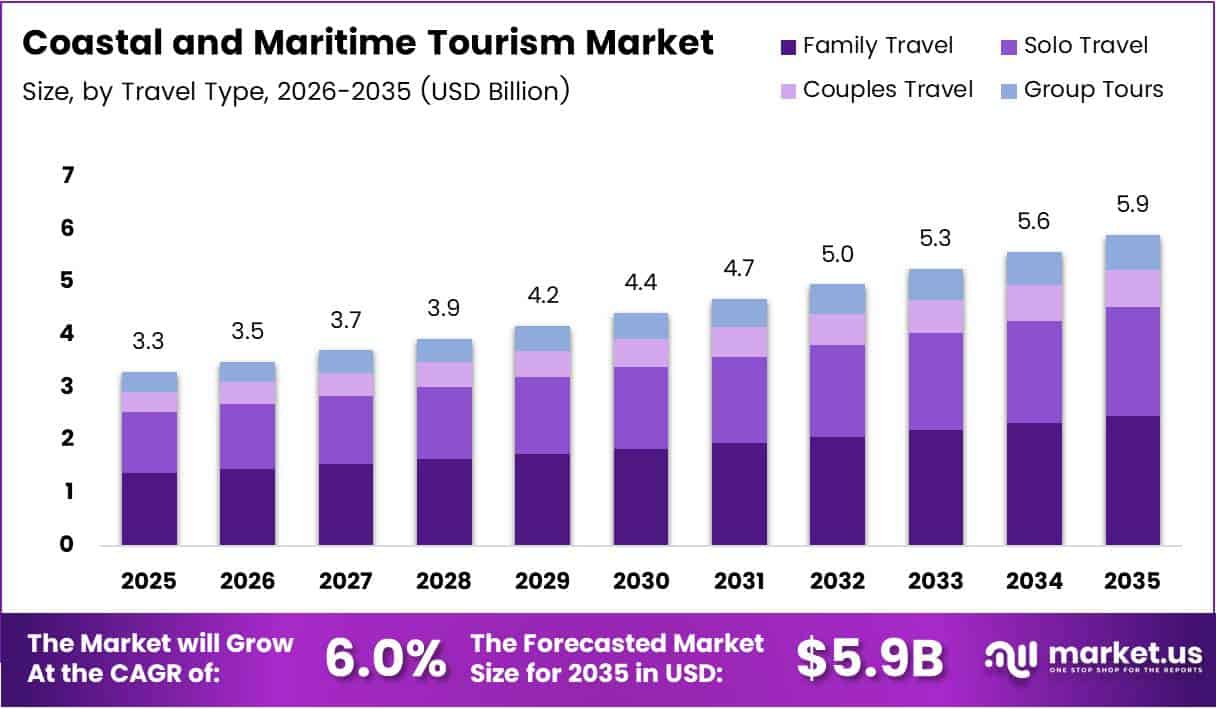
The market experiences robust expansion driven by rising consumer spending on premium travel experiences. Cruise operators expand fleets while coastal cities enhance port infrastructure to accommodate growing visitor volumes. Moreover, governments invest in waterfront development projects that attract international tourists seeking unique maritime destinations.
Sustainability initiatives reshape industry operations as environmental regulations tighten globally. Cruise lines adopt cleaner technologies while coastal regions implement protection measures for marine ecosystems. Additionally, digital transformation enhances booking platforms and onboard services, improving customer experiences and operational efficiency.
According to the State of the Cruise Industry Report 2025, 34.6 million ocean-going cruise passengers were recorded globally in 2024, reflecting substantial demand and operational scale. This volume demonstrates the sector’s recovery momentum and capacity to attract diverse traveler demographics across multiple regions.
Furthermore, according to CruiseandFerry.net report on CLIA data, 31% of cruise passengers over the past two years were first-time cruisers. This statistic highlights successful market penetration strategies that convert traditional resort travelers into cruise enthusiasts, expanding the customer base significantly.
In December 2025, Flight Centre Travel Group agreed to acquire UK online cruise agency Iglu, expanding its global cruise business footprint and digital capabilities. This strategic consolidation demonstrates industry confidence in sustained growth prospects despite operational challenges.
The market benefits from improved coastal connectivity and modernized marina facilities supporting yacht tourism growth. International arrivals to island destinations increase as travelers prioritize experiential and nature-based leisure activities. Therefore, industry stakeholders position themselves strategically to capture emerging opportunities in secondary coastal markets.
Key Takeaways
- Global Coastal and Maritime Tourism Market projected to reach USD 5.9 Billion by 2035 from USD 3.3 Billion in 2025
- Market expected to grow at 6.0% CAGR during forecast period 2026-2035
- Passenger Ticket Services segment dominates with 67.2% market share in 2025
- Family Travel holds 37.7% share in travel type segmentation
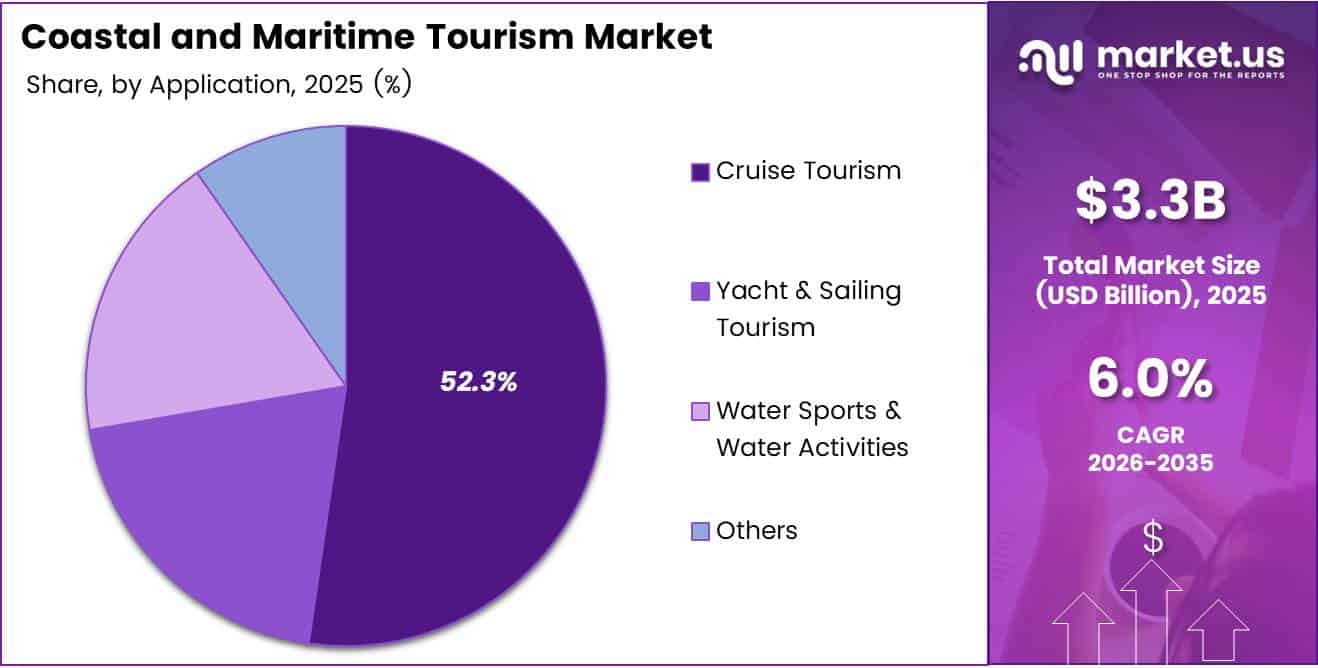
- Cruise Tourism application segment leads with 52.3% market share
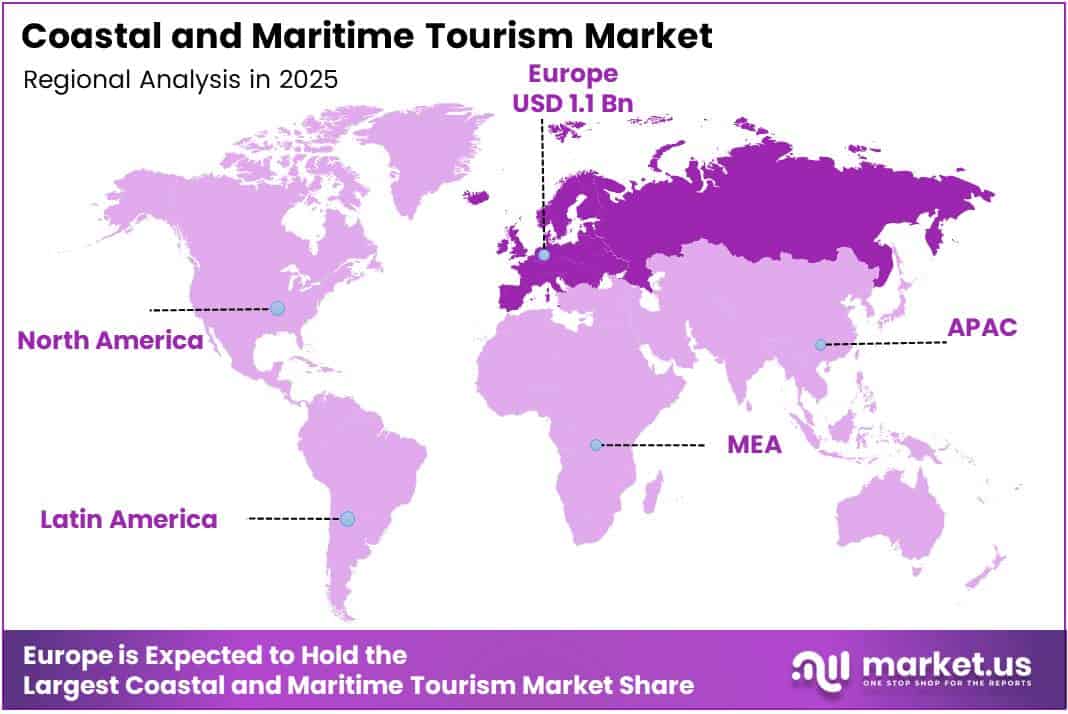
- Europe dominates regional market with 34.90% share, valued at USD 1.1 Billion
Product Analysis
Passenger Ticket Services dominates with 67.2% due to core revenue generation from cruise bookings and sailing packages.
In 2025, Passenger Ticket Services held a dominant market position in the By Product segment of Coastal and Maritime Tourism Market, with a 67.2% share. This segment encompasses cruise bookings, ferry tickets, and yacht charter fees that form the primary revenue stream for maritime tourism operators. Consequently, ticket sales represent the essential transaction enabling travelers to access waterborne experiences and coastal destinations.
Onboard & Other Services complement ticket revenues by providing additional income opportunities throughout maritime journeys. These services include dining packages, spa treatments, shore excursions, beverage programs, and entertainment options available during voyages. Moreover, operators enhance profitability through bundled service offerings that encourage passengers to spend beyond basic transportation costs.
Travel Type Analysis
Family Travel dominates with 37.7% due to multi-generational appeal of coastal vacations and cruise amenities.
In 2025, Family Travel held a dominant market position in the By Travel Type segment of Coastal and Maritime Tourism Market, with a 37.7% share. Family-oriented cruise packages offer age-appropriate activities, child-friendly facilities, and entertainment programs that appeal to parents seeking convenient vacation options. Therefore, cruise operators design vessels with dedicated children’s areas and family suites to capture this demographic effectively.
Solo Travel gains momentum as independent travelers seek coastal exploration and maritime adventures without group constraints. Single-occupancy cabins and solo-friendly excursions attract this growing segment seeking personal enrichment through waterborne journeys. Additionally, cruise lines reduce single supplement fees to encourage solo bookings and expand market reach.
Couples Travel represents romantic getaways and anniversary celebrations aboard cruise ships and private yacht charters. Intimate dining experiences, couples’ spa packages, and secluded coastal destinations appeal to partners seeking relaxation and quality time. Furthermore, premium service levels and adult-only areas enhance the appeal for this discerning traveler segment.
Group Tours facilitate corporate events, destination weddings, and organized excursions that leverage bulk booking advantages. Group coordinators secure favorable rates while offering curated itineraries that simplify planning for participants. Moreover, shared experiences and social interactions attract friends and organizations seeking coordinated coastal tourism activities.
Application Analysis
Cruise Tourism dominates with 52.3% due to comprehensive vacation experiences and established industry infrastructure.
In 2025, Cruise Tourism held a dominant market position in the By Application segment of Coastal and Maritime Tourism Market, with a 52.3% share. Large-scale cruise operations provide all-inclusive packages featuring multiple destinations, onboard amenities, and organized entertainment that attract diverse traveler demographics. Consequently, major cruise lines invest heavily in fleet expansion and port partnerships to maintain competitive advantages.
Yacht & Sailing Tourism appeals to affluent travelers seeking exclusive maritime experiences and personalized service levels. Private charters and small-vessel cruises offer flexibility, privacy, and access to secluded coastal locations unavailable to larger ships. Additionally, sailing enthusiasts value hands-on navigation opportunities and intimate group settings during their voyages.
Water Sports & Water Activities attract adventure-focused tourists engaging in diving, surfing, kayaking, and other oceanic pursuits. Coastal destinations develop specialized facilities and equipment rental services to support these active tourism segments. Moreover, instruction programs and guided tours enhance safety while broadening participation among novice enthusiasts.
Others encompass beach resorts, coastal heritage tours, marine wildlife observation, and fishing expeditions that complement primary tourism applications. These diverse offerings enable destinations to attract varied visitor interests and extend seasonal tourism beyond traditional peak periods. Furthermore, cultural and educational components add depth to coastal tourism experiences.
Key Market Segments
By Product
- Passenger Ticket Services
- Onboard & Other Services
By Travel Type
- Family Travel
- Solo Travel
- Couples Travel
- Group Tours
By Application
- Cruise Tourism
- Yacht & Sailing Tourism
- Water Sports & Water Activities
- Others
Drivers
Rising Disposable Income Fueling Premium Beach and Cruise Travel Demand
Global household incomes increase across emerging and developed economies, enabling greater discretionary spending on luxury travel experiences. Coastal tourism providers target middle-class expansion in Asia Pacific and Latin America with tailored cruise packages and resort offerings. Consequently, premium cabin bookings and exclusive coastal destinations experience heightened demand from affluent consumer segments.
According to CruiseandFerry.net report on CLIA data, 82% of cruise passengers indicated they plan to cruise again in 2025. This strong repeat intention reflects customer satisfaction with maritime tourism experiences and demonstrates sustained demand potential. Therefore, operators benefit from loyal customer bases that generate predictable revenue streams and positive word-of-mouth marketing.
Infrastructure investments expand cruise port capacity and improve coastal connectivity across major tourism regions. Governments recognize economic benefits from maritime visitor spending and prioritize waterfront development projects. Additionally, modernized terminal facilities enhance passenger processing efficiency while supporting larger vessel operations and increased tourist volumes.
Restraints
Environmental Degradation and Coastal Ecosystem Protection Regulations
Marine pollution concerns prompt stricter environmental regulations that increase operational compliance costs for coastal tourism operators. Protected area designations limit access to sensitive ecosystems while requiring specialized permits for commercial activities. Moreover, coral reef damage from anchoring and overtourism forces destinations to implement visitor caps that constrain revenue growth potential.
Regulatory frameworks mandate emission reductions, waste management systems, and marine life protection protocols that require substantial capital investments. Cruise operators retrofit vessels with advanced wastewater treatment facilities and alternative fuel systems to meet evolving standards. Additionally, coastal destinations balance economic development with conservation priorities, creating operational uncertainties for tourism stakeholders.
Community opposition to overtourism intensifies in popular coastal cities experiencing infrastructure strain and cultural displacement. Local governments respond with tourist taxes, seasonal restrictions, and development moratoria that affect industry expansion plans. Furthermore, climate change impacts including sea-level rise and extreme weather events threaten coastal tourism infrastructure and destination attractiveness long-term.
Growth Factors
Technological Advancements Accelerate Market Expansion
Digital booking platforms streamline reservation processes while artificial intelligence enhances personalized travel recommendations for coastal destinations. Mobile applications provide real-time itinerary updates, onboard service requests, and contactless payment options that improve passenger convenience. Consequently, technology adoption reduces operational costs while elevating customer satisfaction across maritime tourism experiences.
According to CruiseandFerry.net article, 68% of international travelers were considering their first cruise in 2025, signifying broader tourism appeal beyond traditional cruise demographics. This conversion potential demonstrates effective marketing strategies and product diversification attracting skeptical travelers. Therefore, operators invest in introductory offers and educational campaigns to capture first-time cruisers successfully.
According to Reuters sustainability article, advanced routing software providing real-time weather and routing data reduced fuel use by approximately 5.5% per voyage in 2024. These efficiency gains lower operational expenses while supporting environmental sustainability commitments. Moreover, optimized navigation reduces voyage times and improves schedule reliability for passengers.
In September 2025, the Disney Adventure cruise ship commenced its first set of sea trials from Wismar, Germany, progressing toward final delivery and debut. Fleet expansion by major operators increases market capacity and introduces innovative ship designs that attract new customer segments through enhanced amenities.
Emerging Trends
Sustainability Initiatives Reshape Industry Operations
Eco-friendly cruise vessels incorporating low-emission engines and alternative fuels gain prominence as environmental awareness influences consumer preferences. Maritime operators invest in liquefied natural gas propulsion systems and shore power connectivity that reduce carbon footprints significantly. Consequently, sustainability certifications become competitive differentiators attracting environmentally conscious travelers to specific cruise lines.
According to Reuters sustainability article, as of January 2025, approximately 50 commercial vessels have installed wind-assisted propulsion systems. This technology improves fuel efficiency and lowers emissions through innovative sail designs compatible with modern ship operations. Therefore, maritime tourism operators explore renewable energy integration to achieve decarbonization targets.
According to arxiv.org study, Energy Management Systems in smart ports can reduce annual energy consumption by approximately 7-8%. These digital infrastructure improvements enhance operational efficiency while supporting broader sustainability objectives across coastal tourism ecosystems. Additionally, smart port technologies streamline vessel turnaround processes and optimize resource allocation.
Yacht tourism and private charter experiences grow rapidly among high-net-worth individuals seeking personalized maritime adventures. Luxury yacht providers expand fleets while developing exclusive itineraries to remote coastal destinations unavailable through traditional cruise operations. Furthermore, contactless services and AI-driven travel management systems enhance safety and convenience for discerning travelers.
Regional Analysis
Europe Dominates the Coastal and Maritime Tourism Market with a Market Share of 34.90%, Valued at USD 1.1 Billion
Europe leads global coastal and maritime tourism with a 34.90% market share, valued at USD 1.1 Billion, driven by Mediterranean cruise routes and rich maritime heritage. Established port infrastructure across Spain, Italy, Greece, and France supports high visitor volumes while cultural attractions enhance destination appeal. Moreover, proximity to diverse coastal regions enables multi-destination itineraries that attract international travelers.
North America Coastal and Maritime Tourism Market Trends
North America benefits from Caribbean cruise popularity and extensive coastlines along Atlantic and Pacific regions. Major cruise operators headquartered in the United States drive fleet expansion and technological innovation across the sector. Additionally, Alaska cruise routes attract nature-focused travelers seeking glacier viewing and wildlife experiences.
Asia Pacific Coastal and Maritime Tourism Market Trends
Asia Pacific experiences rapid growth through rising middle-class incomes and expanding cruise port networks across Southeast Asian nations. Island destinations including Thailand, Indonesia, and the Philippines attract regional and international visitors seeking tropical coastal experiences. Furthermore, China’s cruise market development represents significant long-term potential despite recent operational challenges.
Latin America Coastal and Maritime Tourism Market Trends
Latin America leverages biodiversity hotspots and pristine beaches to attract eco-tourism and adventure-focused travelers. Caribbean islands and Brazilian coastlines develop tourism infrastructure to capture growing demand for beach resorts and cruise stopovers. Moreover, cultural heritage sites along coastal regions provide unique selling propositions for destination marketing.
Middle East & Africa Coastal and Maritime Tourism Market Trends
Middle East and Africa develop luxury coastal resorts and Red Sea cruise routes targeting affluent international visitors. Significant investments in marina facilities and waterfront entertainment districts support tourism diversification strategies. Additionally, coastal heritage preservation initiatives attract culturally motivated travelers seeking authentic experiences.
Key Regions and Countries
North America
- US
- Canada
Europe
- Germany
- France
- The UK
- Spain
- Italy
- Rest of Europe
Asia Pacific
- China
- Japan
- South Korea
- India
- Australia
- Rest of APAC
Latin America
- Brazil
- Mexico
- Rest of Latin America
Middle East & Africa
- GCC
- South Africa
- Rest of MEA
Key Company Insights
Carnival Corporation & plc operates the world’s largest cruise fleet across multiple brands including Carnival Cruise Line, Princess Cruises, and Holland America Line. The company serves diverse market segments through differentiated brand positioning while leveraging operational scale advantages. Moreover, Carnival invests in sustainability initiatives and fleet modernization to maintain industry leadership positions globally.
Royal Caribbean Group delivers innovative cruise experiences through technological integration and distinctive ship designs featuring entertainment complexes and adventure activities. The company targets premium and contemporary market segments with brands including Royal Caribbean International and Celebrity Cruises. Additionally, Royal Caribbean expands private island destinations that provide exclusive experiences for passengers throughout Caribbean itineraries.
Norwegian Cruise Line Holdings Ltd. pioneered freestyle cruising concepts that offer flexible dining and entertainment options appealing to independent-minded travelers. The company operates Norwegian Cruise Line, Oceania Cruises, and Regent Seven Seas Cruises brands across different luxury tiers. Furthermore, Norwegian emphasizes destination-focused itineraries and extended port stays that enhance cultural immersion for passengers.
MSC Cruises S.A. represents Europe’s largest privately-owned cruise operator with rapid fleet expansion targeting Mediterranean and international markets. The company combines European hospitality traditions with modern ship amenities to attract diverse international demographics. Moreover, MSC develops comprehensive sustainability programs including next-generation environmental technologies and marine conservation partnerships.
Key players
- Carnival Corporation & plc
- Royal Caribbean Group
- Norwegian Cruise Line Holdings Ltd.
- MSC Cruises S.A.
- Disney
- Dream Yacht Charter
- Wynn Resorts, Limited
Recent Developments
- December 2025 – Flight Centre Travel Group agreed to acquire UK online cruise agency Iglu, expanding its global cruise business footprint and digital capabilities through strategic consolidation of online distribution channels and customer databases.
- June 2025 – The Orient Express Corinthian, the world’s largest sailing yacht cruise ship, was floated out at Chantiers de l’Atlantique, marking its transition from structural build to outfitting phase with completion expected in 2026.
- January 2025 – Orient Express and Chantiers de l’Atlantique held a double ceremony marking keel laying for Orient Express Corinthian and steel cutting for its sister ship Orient Express Olympian, demonstrating luxury sailing yacht segment expansion.
Report Scope
Report Features Description Market Value (2025) USD 3.3 Billion Forecast Revenue (2035) USD 5.9 Billion CAGR (2026-2035) 6.0% Base Year for Estimation 2025 Historic Period 2020-2024 Forecast Period 2026-2035 Report Coverage Revenue Forecast, Market Dynamics, Competitive Landscape, Recent Developments Segments Covered By Product (Passenger Ticket Services, Onboard & Other Services), By Travel Type (Family Travel, Solo Travel, Couples Travel, Group Tours), By Application (Cruise Tourism, Yacht & Sailing Tourism, Water Sports & Water Activities, Others) Regional Analysis North America (US and Canada), Europe (Germany, France, The UK, Spain, Italy, and Rest of Europe), Asia Pacific (China, Japan, South Korea, India, Australia, and Rest of APAC), Latin America (Brazil, Mexico, and Rest of Latin America), Middle East & Africa (GCC, South Africa, and Rest of MEA) Competitive Landscape Carnival Corporation & plc, Royal Caribbean Group, Norwegian Cruise Line Holdings Ltd., MSC Cruises S.A., Disney, Dream Yacht Charter, Wynn Resorts, Limited Customization Scope Customization for segments, region/country-level will be provided. Moreover, additional customization can be done based on the requirements. Purchase Options We have three licenses to opt for: Single User License, Multi-User License (Up to 5 Users), Corporate Use License (Unlimited User and Printable PDF)  Coastal and Maritime Tourism MarketPublished date: Jan 2026add_shopping_cartBuy Now get_appDownload Sample
 -
-
- Carnival Corporation & plc
- Royal Caribbean Group
- Norwegian Cruise Line Holdings Ltd.
- MSC Cruises S.A.
- Disney
- Dream Yacht Charter
- Wynn Resorts, Limited
Our Clients

- 176133
- Jan 2026






