


Report Overview
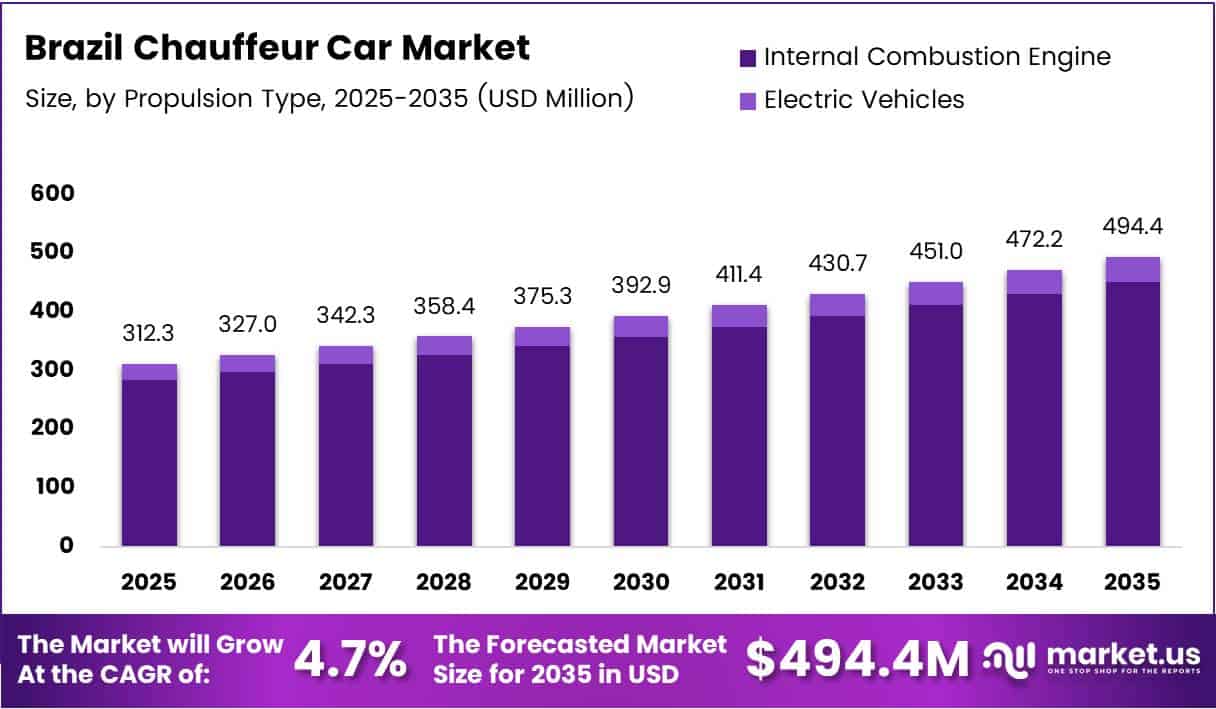
In 2025, Brazil Chauffeur Car Market was valued at US$312.3 million, and between 2025 and 2035, this market is estimated to register a CAGR of 4.7%, reaching about US$494.4 million by 2035.
Brazil’s chauffeur car market is shaped by strong demand from tourism, corporate mobility, and high-end urban transportation needs, particularly in major cities such as São Paulo and Rio de Janeiro. These metropolitan hubs function as primary centers for business travel, international arrivals, and event-driven mobility, supporting consistent uptake of professional chauffeur services.
- The country offers over 800,000 square meters of exhibition space and hosted 612 business events in the first half of 2025, marking a 19% increase in events and a 14% rise in attendance, with more than 3.2 million visitors.
This influx, combined with large-scale cultural events such as Carnival, Festa Junina, and the Parintins Folklore Festival, generates periodic spikes in demand for organized, premium transportation.
- Additionally, Brazil’s business travel expenditure reached US$30.4 billion in 2025, reinforcing the importance of reliable chauffeur services for executives, diplomats, and corporate delegations requiring secure and efficient mobility.
Vehicle preferences are evolving, with SUVs accounting for more than 50% of total registrations by 2025, reflecting demand for comfort-oriented and multi-purpose transport solutions. Operators are increasingly integrating hybrid and electric vehicles into fleets, aligning with sustainability expectations and corporate ESG priorities. Digitalization further supports market efficiency, with mobile platforms, real-time tracking, and automated dispatch systems enhancing service responsiveness and operational optimization.
- According to the Brazilian Hotel Operator Forum, more than 150 hotel projects were under development in 2025, reflecting an 8% increase over the previous year, with nearly 40% focused on luxury and upscale segments.
Furthermore, Brazil’s MICE industry shows strong growth and scale. The market is characterized by rising premium travel demand, infrastructure-driven mobility needs, and gradual fleet modernization, positioning chauffeur services as an essential component of Brazil’s evolving urban and tourism transport ecosystem.
- Business events contribute 25% of global tourism and nearly half of international arrivals. Between 2022 and 2024, international events increased by 112% across 42 cities. And, science-related events account for over 26% of congresses, while nearly 60% host 100-500 participants.
the global chauffeur car market reflects similar growth trends, driven by rising corporate travel demand, expanding luxury tourism, and increasing fleet electrification across key economies. Brazil’s strong performance aligns with this global momentum, reinforcing the country’s position as a significant contributor to the overall market expansion.
Key Takeaways
- The Brazil chauffeur car market was valued at US$312.3 million in 2025.
- The Brazil chauffeur car market is projected to grow at a CAGR of 4.7% and is estimated to reach US$494.4 million by 2035.
- On the basis of service type, airport transfer dominated the market, constituting 27.6% of the total market share.
- Based on the vehicle type, sedans led the chauffeur car market, comprising 54.7% of the total market.
- Among the propulsion type, internal combustion engine chauffeur cars held a major share of the market, accounting for around 91.2% of the revenue.
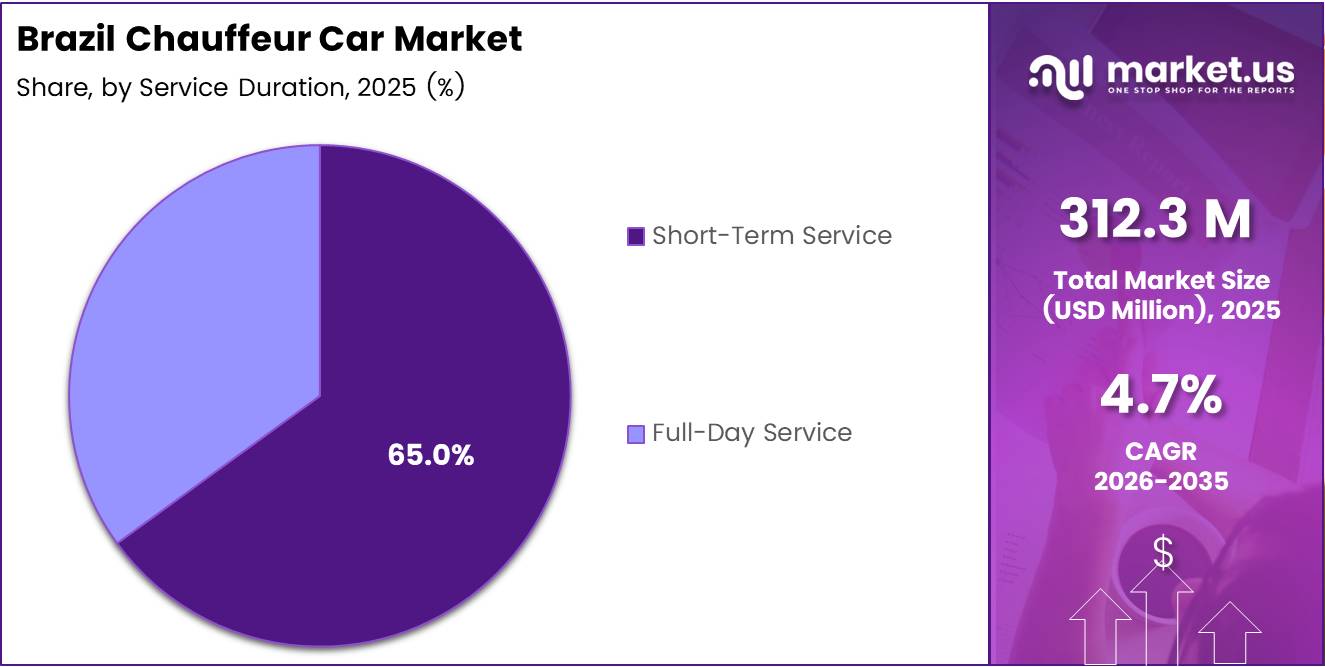
- Based on the service duration, short-term services withheld larger share in the market, with 65.0%.
Service Type Analysis
Airport Transfer Services Are a Prominent Segment in the Market.
Airport Transfer emerges as the dominant segment in Brazil’s chauffeur car market, accounting for 27.6% share due to its consistent and high-frequency demand from both international and domestic travelers. The segment is strongly supported by Brazil’s role as a key travel hub, particularly through major gateways such as São Paulo and Rio de Janeiro, where passenger traffic is concentrated.
Travelers increasingly prefer chauffeur-driven airport transfers for their punctuality, safety, and convenience compared to conventional mobility options. Corporate clients also rely on this segment to ensure seamless executive movement, while tourism growth and expanding airline connectivity continue to sustain steady demand, making airport transfers a core revenue driver for service providers.
Vehicle Type Analysis
Sedans Dominated the Chauffeur Car Market.
Sedans represent the dominant vehicle type in Brazil’s chauffeur car market, accounting for 54.7% of the total fleet composition. Their leadership is driven by strong demand for executive mobility, airport transfers, and corporate travel services, where comfort, efficiency, and professional presentation are key requirements. In major urban centers, sedans are widely preferred due to their ability to navigate dense traffic conditions while maintaining passenger comfort and punctuality.
Additionally, their relatively lower operating costs compared to larger vehicles support fleet scalability for service providers. Additionally, sedans align well with corporate expectations for discreet, professional transportation, making them the preferred choice for business executives, diplomats, and high-profile clients. Despite rising SUV adoption, sedans continue to anchor fleet strategies, sustaining their position as the backbone of premium chauffeur-driven mobility services in Brazil.
- By 2025, SUVs accounted for an unprecedented 55% of total car registrations, marking a critical turning point in the Brazilian automotive landscape.
Propulsion Type Analysis
Internal Combustion Engine Chauffeur Cars Held Major Share of the Market.
Internal Combustion Engine (ICE) vehicles dominate Brazil’s chauffeur car market, accounting for 91.2% of the total fleet. This dominance is supported by well-established fueling infrastructure, widespread availability of flex-fuel technology, and lower upfront acquisition costs compared to electrified alternatives. In major urban centers, ICE vehicles remain the operational backbone for airport transfers, corporate travel, and event transportation due to their reliability and ease of maintenance.
Flex-fuel capability, enabling the use of ethanol blends, further strengthens their relevance in Brazil’s energy ecosystem. Service providers also prefer ICE fleets because of longer driving range, faster refueling, and reduced dependency on charging infrastructure, which is still developing. Despite gradual EV adoption in premium segments, ICE vehicles continue to underpin fleet strategies, ensuring operational continuity and cost efficiency across the chauffeur-driven mobility landscape.
- Electrification is further gaining traction, with 223,912 light electrified vehicles sold in 2025, marking a 26% increase over 2024, significantly outpacing the broader automotive market’s 2.6% growth.
Service Duration Analysis
Chauffeur Cars Are Mostly Utilized for Short-Term Services.
Short-Term Service dominates Brazil’s chauffeur car market, accounting for 65.0% of total demand, driven by high-frequency, point-to-point mobility requirements. This segment is strongly supported by airport transfers, intercity pickups, and business-related short trips, particularly in high-traffic urban centers. Travelers increasingly prefer short-duration chauffeur services due to their convenience, time efficiency, and cost optimization compared to extended bookings.
The segment benefits significantly from Brazil’s growing international arrivals, as well as rising corporate travel activity requiring quick and reliable transportation between meetings, hotels, and airports. Additionally, the expansion of digital booking platforms has made on-demand short-term services more accessible and responsive. As a result, short-term engagements continue to form the operational core of chauffeur service providers, ensuring steady utilization and consistent revenue flow across fleets.
Key Market Segments
By Service Type
- Airport Transfer
- City Tours & Leisure Travel
- Business & Corporate Travel
- Event Transportation
- Others
By Vehicle Type
- Sedan
- SUV
- Others
By Propulsion Type
- Internal Combustion Engine
- Electric Vehicles
By Service Duration
- Short-Term Service
- Full-Day Service
Drivers
Rapid Growth in Brazilian Tourism Fuels the Demand for Chauffeur Car
Brazil’s expanding tourism sector is playing a pivotal role in shaping demand for chauffeur-driven car services, particularly across key destinations such as Rio de Janeiro and São Paulo. São Paulo serves as the primary international gateway, while Rio de Janeiro continues to attract visitors through its beaches and cultural festivals, driving demand for premium ground transportation.
- In 2025, Brazil recorded 9.3 million international visitors, the highest in its history, reflecting a 37% increase over 2024 and surpassing the 6.9 million target under the Plano Nacional de Turismo 2024-2027.
- Investments exceed R$2.8 billion, and upcoming events aim to attract nearly 50,000 participants, with 2.5 million visitors recorded in 2025.
The recovery in international arrivals, coupled with strong domestic travel, has increased preference for reliable, pre-arranged mobility solutions emphasizing comfort and consistency. Continued infrastructure investment and improved connectivity are further expanding demand across both primary and emerging destinations.
- The international tourist spending reached US$7.9 billion, supporting multiple sectors. Long-term projections from the World Travel & Tourism Council estimate the tourism economy could reach nearly US$199 billion by 2035.
Restraints
Lack of Skilled Workforce Limiting Chauffeur Car Adoption
A shortage of skilled workforce continues to constrain the growth of Brazil’s chauffeur car market, particularly across premium, corporate, and electric vehicle segments. High-quality chauffeur services require drivers with advanced capabilities beyond standard licensing, including client handling, professional etiquette, navigation in complex urban environments, and strict compliance with safety standards. However, the availability of such trained personnel remains limited, creating challenges for operators striving to maintain consistent service quality while scaling operations.
The gradual introduction of electric and hybrid vehicles has further intensified the need for technical expertise. Efficient operation of these vehicles demands knowledge of battery management, charging infrastructure, and energy-optimized driving practices, skills that remain scarce due to the relatively early stage of electrification in the country.
Rising corporate travel and MICE-related demand has further exposed workforce gaps, as high-value clients expect multilingual communication and seamless service delivery. While cities such as São Paulo and Rio de Janeiro have relatively better talent availability, shortages in secondary markets continue to limit expansion and service reliability.
Growth Factors
Expansion of Luxury and Upscale Hospitality Expanding Market Reach
Expansion in Brazil’s luxury and upscale hospitality sector is creating a strong opportunity for the chauffeur car market. Growth remains concentrated in key cities such as São Paulo and Rio de Janeiro, while emerging destinations are further attracting high-end investments. This expansion is driving demand for premium transportation solutions integrated with hospitality services.
Chauffeur operators are well-positioned to benefit by offering tailored services, including personalized airport transfers, flexible itineraries, and multilingual drivers aligned with luxury guest expectations. Partnerships with global hospitality brands such as Hilton further strengthen this opportunity.
Hilton operates nearly 30 hotels in Brazil and plans to double its presence across ten brands by 2030, with upcoming openings in 2028 and 2029. These developments, combined with rising luxury tourism demand, create sustained avenues for revenue growth, enhanced service integration, and stronger positioning within Brazil’s premium travel ecosystem.
Emerging Trends
Rising Focus on Green Mobility
A shift toward green mobility is shaping the market, reflecting rising environmental awareness among corporate clients and individual consumers. Service providers are increasingly integrating ethanol-blended fuels alongside electric and hybrid vehicles to align with sustainability expectations while maintaining service quality and comfort. Ethanol continues to play a central role in this transition, recognized globally for its low carbon footprint and produced domestically from sugarcane and corn. Its adoption enables reductions in CO₂ emissions of up to 90% compared to gasoline, while contributing to improved air quality and broader environmental goals.
Mandatory Blending and New Fuels:
| Fuel | Current Blend | Future Blend (Target) |
|---|---|---|
| Green Diesel | 0% | Up to 3% |
| Ethanol in Gasoline | 18% – 27.5% | 22% – 35% |
| Biodiesel in Diesel | 12% | 20% by 2030 |
Emissions Avoided Per Year Millions Of Tons by Ethanol Blending:
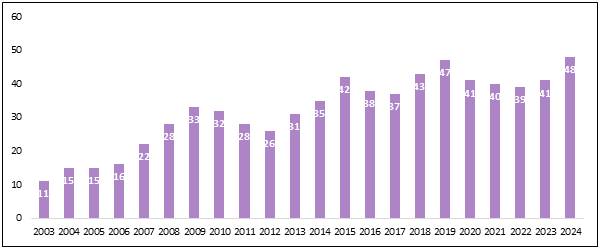
Policy support remains a key enabler of this transformation. Programs such as RenovaBio promote renewable fuel adoption and enforce zero deforestation practices, strengthening sustainability across the bioenergy value chain. Parallel initiatives such as the Mover Program further encourage innovation and fleet decarbonization.
- Legislative developments, including the Fuel of the Future Bill introduced under Luiz Inácio Lula da Silva, aim to attract at least R$260 billion in private investment and potentially avoid 705 million tons of CO₂ emissions by 2037.
Geopolitical Impact Analysis
Geopolitical Pressures and Trade Policy Shifts Reshaping Brazil’s Chauffeur Car Market Dynamics
The evolving geopolitical environment continues to influence Brazil’s chauffeur car market, shaping both operational practices and long-term strategic decisions. Global supply chain disruptions and shifting trade dynamics have affected the import of high-end and electric vehicles, increasing fleet acquisition costs. Rising tariffs and uncertainties in trade policies have compelled service providers to revise pricing strategies and enhance fleet utilization to maintain profitability.
The strong presence of Chinese electric vehicle manufacturers in Brazil, alongside government-led import tax adjustments, highlights the interaction between domestic policy and international trade. These measures aim to encourage domestic production while increasing costs for imported vehicles.
- Current tax rates stand at 30% for conventional hybrids, 28% for plug-in hybrids, and 25% for fully electric vehicles, with all categories expected to reach 35% by July 2026.
Currency fluctuations further impact expenses related to vehicle imports, spare parts, and fuel. At the same time, geopolitical tensions influence international tourism and business travel, including MICE activities. As Brazil strengthens its role as a regional business hub, chauffeur service providers are required to adopt flexible, scalable, and resilient operating models to manage demand variability and sustain service standards.
Key Company Insights
Companies in Brazil’s chauffeur car market focus on strengthening service differentiation through premium customer experience, fleet modernization, and operational reliability. A key priority is upgrading vehicles to include SUVs, luxury sedans, and increasingly hybrid and electric models to meet evolving client expectations around comfort and sustainability. Firms further invest in trained chauffeurs with strong navigation skills, multilingual capabilities, and corporate etiquette to serve high-value business and tourism segments effectively.
Digital transformation is another central activity, with operators deploying mobile booking platforms, real-time tracking, and automated dispatch systems to improve efficiency and transparency. Strategic partnerships with hotels, airlines, and corporate travel managers help secure recurring contracts and stable demand streams. Companies further optimize route planning and dynamic pricing models to improve fleet utilization. In addition, focus on safety protocols, including enhanced screening and vehicle security features, helps build trust among executive and high-profile clients.
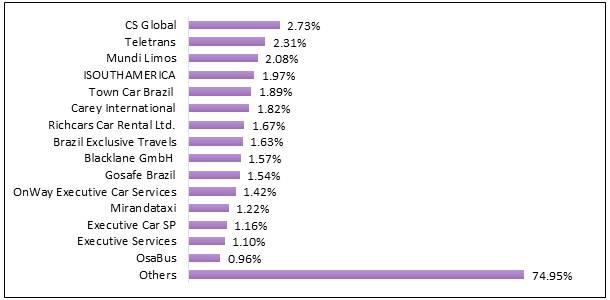
Key Players
- CS Global
- Teletrans
- Mundi Limos
- ISOUTHAMERICA
- TownCar Brazil
- Carey International
- Richcars Car Rental Ltd.
- Brazil Exclusive Travels
- Blacklane GmbH
- Gosafe Brazil
- OnWay Executive Car Services
- Mirandataxi
- Executive Car SP
- Executive Services
- OsaBus
- Other Key Players
Report Scope
| Report Features | Description |
|---|---|
| Market Value (2025) | US$312.3 Mn |
| Forecast Revenue (2035) | US$494.4 Mn |
| CAGR (2025-2035) | 4.7% |
| Base Year for Estimation | 2025 |
| Historic Period | 2021-2024 |
| Forecast Period | 2025-2035 |
| Report Coverage | Revenue Forecast, Market Dynamics, Competitive Landscape, Recent Developments |
| Segments Covered | By Service Type (Airport Transfer, City Tours & Leisure Travel, Business & Corporate Travel, Event Transportation, and Others), By Vehicle Type (Sedan, SUV, and Others), By Propulsion Type (Internal Combustion Engine and Electric Vehicles), By Service Duration (Short-Term Service and Full-Day Service) |
| Competitive Landscape | EmpireCLS, Carey International, Inc., Mears Transportation, Dav El | BostonCoach, Savoya, US Sedan Service Inc., Luxury Ride USA, CLC Worldwide, Marquee Chauffeur, Boston Corporate Coach, Got Luxury Ride, Detailed Drivers, Mozio Inc., DC Livery, Blue Nile Livery, and Other Players. |
| Customization Scope | Customization for segments, region/country-level will be provided. Moreover, additional customization can be done based on the requirements. |
| Purchase Options | We have three licenses to opt for: Single User License, Multi-User License (Up to 5 Users), Corporate Use License (Unlimited Users and Printable PDF) |





































