Market Overview
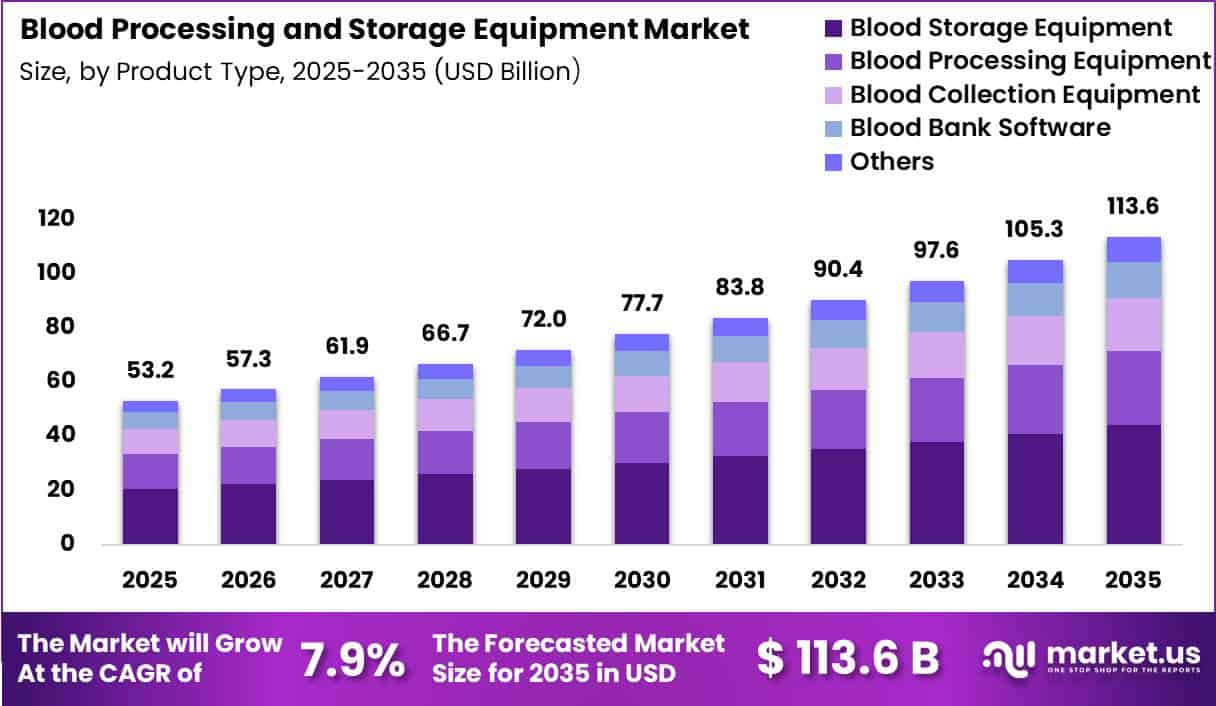
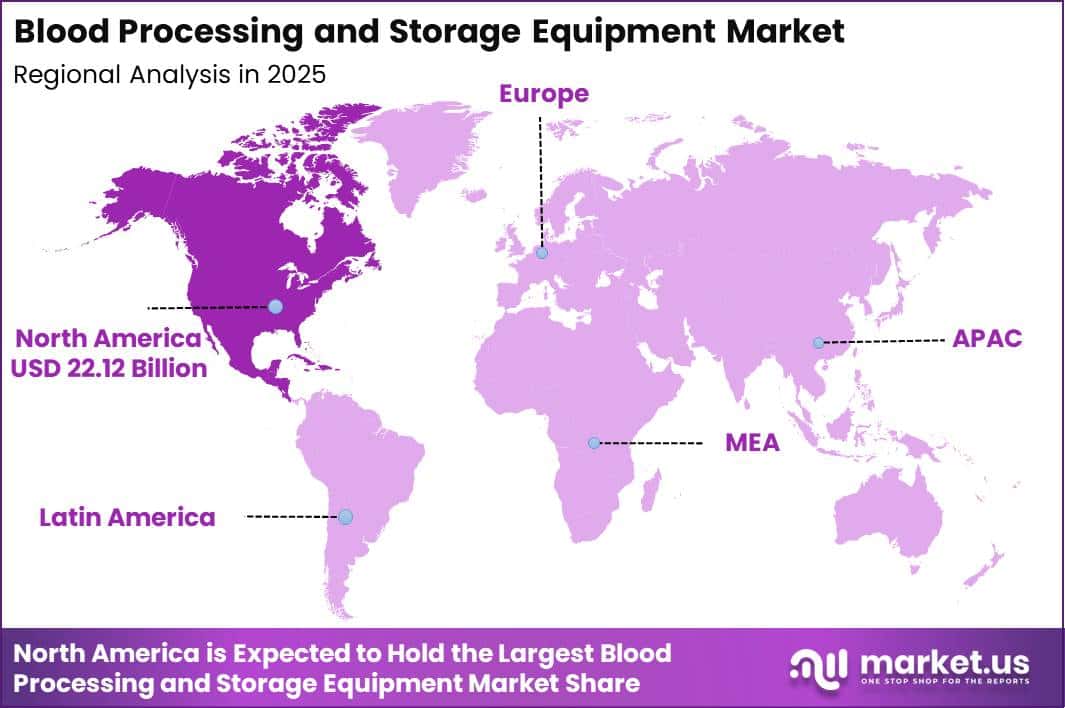
Global Blood Processing and Storage Equipment Market size is expected to be worth around US$ 113.6 Billion by 2035 from US$ 53.2 Billion in 2025, growing at a CAGR of 7.9% during the forecast period from 2026 to 2035. In 2025, North America led the market, achieving over 41.62% share with a revenue of US$ 22.12 Billion.
Blood processing and storage equipment plays a critical role in maintaining the safety, quality, and availability of blood and blood components used in modern healthcare. Rising demand for blood transfusions, expanding surgical procedures, trauma care, cancer treatment, and chronic disease management continue to drive investments in advanced blood banking infrastructure worldwide.
Government agencies and healthcare organizations are strengthening regulations for blood collection, processing, storage, and traceability, encouraging healthcare facilities to adopt technologically advanced equipment that improves efficiency while reducing the risk of contamination and wastage.
According to the World Health Organization (WHO), approximately 120.4 million blood donations are collected globally each year. However, blood demand continues to exceed supply in many regions, highlighting the need for efficient processing and storage systems.
WHO also reports that 36% of global blood donations are collected in high-income countries, despite these countries accounting for only 15% of the world’s population, demonstrating significant disparities in blood availability.
Blood component separation has become increasingly important for maximizing the clinical value of every donated unit. WHO indicates that 98% of blood collected in high-income countries is separated into components, compared with 52% in low-income countries, emphasizing the growing importance of automated blood processing equipment and reliable cold-chain storage technologies.
Additionally, 133 of 168 reporting countries (79%) have established national blood policies, while 120 countries (71%) have legislation governing blood safety and quality, reflecting increasing regulatory oversight worldwide.
The U.S. Food and Drug Administration (FDA) continues to strengthen guidance for manufacturers of blood collection, processing, and storage systems, supporting innovations that improve component manufacturing, quality assurance, and operational efficiency.
Furthermore, U.S. federal regulations require equipment used for blood collection, processing, compatibility testing, storage, and distribution to undergo regular calibration, maintenance, and performance verification to ensure product safety and regulatory compliance.
These evolving standards are expected to accelerate adoption of advanced refrigeration systems, automated blood processing instruments, blood bank freezers, centrifuges, plasma storage solutions, and digital monitoring technologies across hospitals and blood centers.
Key Takeaways
- Market Size : Blood Processing and Storage Equipment Market size is expected to be worth around US$ 113.6 Billion by 2035 from US$ 53.2 Billion in 2025.
- Market Share : The market is growing at a CAGR of 7.9% during the forecast period from 2026 to 2035.
- Product Type Analysis : Blood Storage Equipment accounted for the largest share with 38.9% market share in 2025.
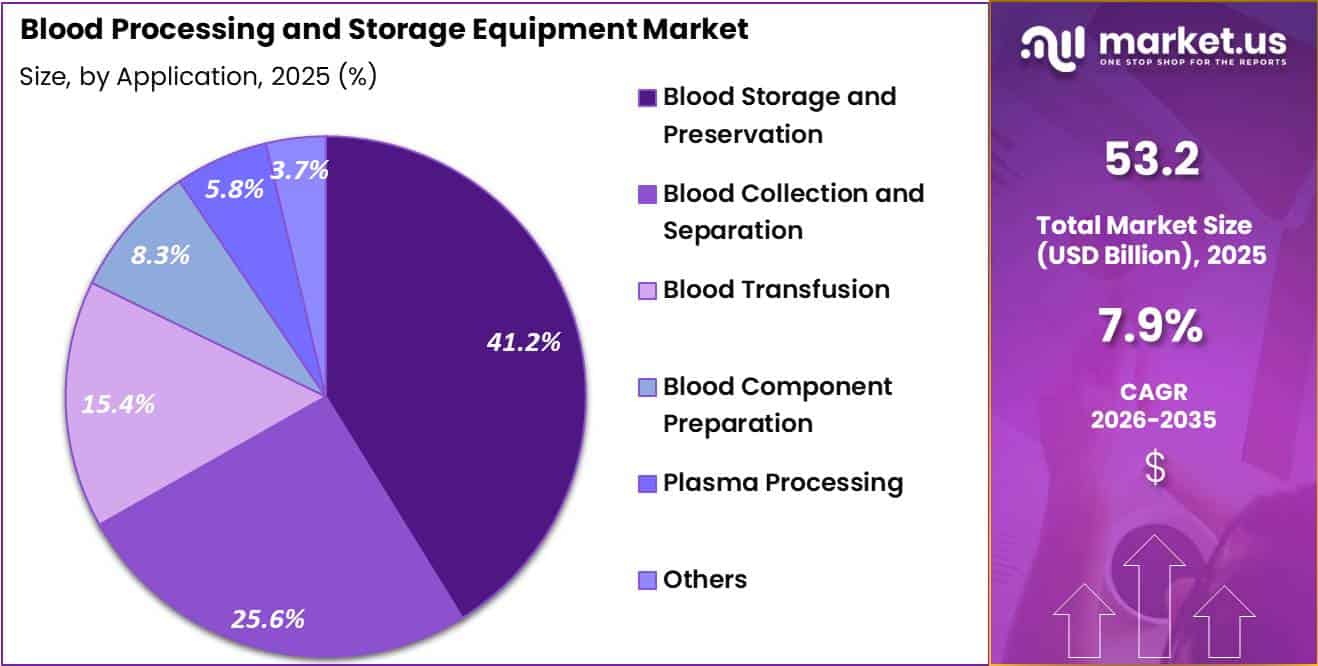
- Application Analysis : The Blood Storage and Preservation segment dominated with a 41.2% market share in 2025.
- End User Analysis : Hospitals accounted for the largest share with 49.8% market share in 2025.
- Regional Analysis : In 2025, North America led the market, achieving over 41.62% share with a revenue of US$ 22.12 Billion.
Product Type Analysis
The Blood Processing and Storage Equipment Market is segmented by product type into Blood Processing Equipment, Blood Storage Equipment, Blood Collection Equipment, Blood Bank Software, and Others. Among these segments, Blood Storage Equipment accounted for the largest share with 38.9% market share in 2025, supported by the essential role of temperature-controlled storage systems in maintaining the safety, quality, and usability of blood components.
Blood refrigerators, plasma freezers, platelet storage systems, and monitoring devices are widely used across blood centers and hospitals to preserve different blood products under controlled conditions. The World Health Organization (WHO) emphasizes that safe blood systems require coordinated processes covering blood collection, testing, processing, storage, and distribution.
Blood Processing Equipment is gaining importance due to the increasing adoption of component separation technologies that allow whole blood to be converted into red cell concentrates, platelet concentrates, plasma, and other components for different patient needs.
WHO highlights that component processing improves blood utilization by allowing one donation to support multiple patients. Blood Collection Equipment continues to support voluntary donation programs through advanced collection bags, apheresis systems, and safety-focused devices.
Meanwhile, Blood Bank Software is becoming increasingly important for inventory tracking, traceability, documentation, and quality management within modern transfusion services.
Application Analysis
Based on application, the market is categorized into Blood Collection and Separation, Blood Transfusion, Blood Component Preparation, Plasma Processing, and Others. The Blood Storage and Preservation segment dominated with a 41.2% market share in 2025, driven by the critical requirement for maintaining blood components under regulated storage conditions.
Blood products have limited shelf life and require specialized refrigeration, freezing, and monitoring systems to maintain quality before clinical use. WHO recommends that national blood systems implement quality-controlled processes covering storage and distribution to ensure safe access to blood products.
The Blood Collection and Separation segment is supported by growing adoption of automated collection technologies and apheresis systems that enable efficient separation of specific blood components. Blood Component Preparation is expanding as healthcare systems increasingly rely on component-based transfusion practices instead of whole blood transfusion.
WHO notes that processing donated blood into components such as red cells, plasma, platelets, and cryoprecipitate helps meet different clinical requirements. Plasma Processing is also gaining attention due to the growing need for plasma-derived therapies and improved plasma collection infrastructure.
These applications collectively support the demand for advanced processing and preservation technologies across healthcare facilities.
End User Analysis
Based on end users, the market is divided into Hospitals, Blood Banks, Diagnostic Laboratories, Research Institutes, Ambulatory Surgical Centers, and Others. Among these, Hospitals accounted for the largest share with 49.8% market share in 2025, due to their continuous requirement for blood storage, transfusion services, emergency care support, and surgical procedures.
Hospitals depend on reliable blood management infrastructure to ensure timely availability of safe blood components for trauma care, oncology treatments, surgeries, and critical care applications. WHO identifies hospitals and healthcare systems as essential components of national blood safety networks.
Blood Banks represent another major end-user segment as they perform blood collection, testing, processing, storage, and distribution activities. National blood services increasingly focus on strengthening centralized blood systems, quality management practices, and inventory control processes.
Diagnostic Laboratories utilize blood processing technologies for testing, screening, and quality assessment, while Research Institutes apply specialized equipment for hematology, cell biology, and transfusion-related research. Ambulatory Surgical Centers are also adopting efficient blood management solutions as outpatient procedures and advanced surgical services continue to expand.
Market Segmentations
By Product Type
- Blood Collection Equipment
- Blood Processing Equipment
- Blood Storage Equipment
- Blood Bank Software
- Others
By Application
- Blood Collection and Separation
- Blood Storage and Preservation
- Blood Transfusion
- Blood Component Preparation
- Plasma Processing
- Others
By End User
- Hospitals
- Blood Banks
- Diagnostic Laboratories
- Research Institutes
- Ambulatory Surgical Centers
Driver
Mandatory screening, quality systems, and traceability upgrades
Regulatory compliance remains one of the strongest near-term catalysts because blood cannot enter routine clinical use without documented screening, controlled workflows, and audit-ready records. WHO states that all donations should be screened for HIV, hepatitis B, hepatitis C, and syphilis, yet 10 reporting countries still cannot screen all donated blood for one or more of these infections.
While only 63% of blood-screening laboratories participate in external quality assessment schemes globally; these gaps pull demand not only for testing platforms but also for associated storage, sample handling, backup power, monitored refrigeration, and labeled traceability infrastructure.
The equipment implication is that safety regulation converts optional modernization into required spend, especially where ministries or hospital systems are standardizing documentation, GMP-style workflows, and deviation control.
On the U.S. side, FDA’s blood-establishment computer system validation guidance reinforces that regulated blood operations must maintain validation records, change controls, hardware/software maintenance logs, user training records, SOPs, backup media information, and revalidation processes after system changes, which directly supports investment in integrated storage-management systems, barcode-linked refrigerators, alarmed freezers, and software-connected processing equipment.
This changes business models for vendors by shifting procurement from standalone hardware toward compliance-ready platforms with validation support, service documentation, cybersecurity controls, and lifetime software updates.
For 2026 baselining, this driver merits high short-term weight because compliance deadlines and inspection readiness accelerate replacement of legacy analog storage assets faster than underlying transfusion demand grows.
| Driver | (~) % Impact on CAGR Forecast | Geographic Relevance | Impact Timeline |
|---|---|---|---|
| Donor-base expansion and blood system formalization | +1.9% | APAC, Africa, Middle East, Latin America; selective EU public systems | Medium term (2-4 years) |
| Mandatory screening, quality systems, and traceability upgrades | +1.6% | North America core, EU, Gulf states, India, Southeast Asia | Short term (≤ 2 years) |
| Componentization shift raises cold-chain and processing intensity | +1.8% | APAC corridors, Africa catch-up, Latin America, Eastern Europe | Medium term (2-4 years) |
| Hemovigilance digitization and validated blood-establishment software integration | +1.2% | North America core, EU, advanced APAC, large urban hospital networks globally | Short term (≤ 2 years) |
| Plasma fractionation dependence and specialized storage build-out | +1.4% | North America, EU, China, Japan, Australia, import-dependent LMIC hubs | Long term (≥ 4 years) |
| Higher transfusion acuity in trauma, oncology, surgery, and emergency care networks | +1.5% | U.S., EU5, China, India, GCC, tertiary-care clusters in LATAM | Medium term (2-4 years) |
Challenge
Cold Chain Gaps Restricting Blood Storage Equipment Adoption
Cold chain reliability gaps remain a structurally persistent drag because the blood cold chain must maintain narrow thermal windows 2–6 °C for red cells, 20–24 °C for platelets with continuous agitation, and ≤ –18 °C for plasma across multi-step logistics in environments where grid instability can still exceed 6–10 outage hours per week in many low- and lower-middle-income regions.
Deviations from these ranges not only force discard rates that can climb 5–10% above high-income benchmarks but also increase the risk of bacterial proliferation and septic reactions, making transfusion services and hospital purchasing departments more conservative about deploying advanced storage technologies beyond core tertiary centers.
For equipment vendors, this manifests as a 0.9 % point friction on potential CAGR, as up to 20–30% of secondary and peripheral facilities in LMICs defer adoption of high-value refrigerated centrifuges, plasma freezers, and transport coolers due to the combined cost of redundancy (backup power, data loggers) and perceived operational complexity.
To navigate this, suppliers need to engineer devices with 8–12 hour holdover times, integrated battery packs sized for at least 2–4 grid cycles per day, and robust temperature-logging capabilities with tolerance for ambient temperatures above 35 °C, while structuring service contracts that include quarterly validation and remote performance analytics to reduce unplanned downtime by 20–30% over baseline.
Strategically, companies that can lower per-unit lifecycle cost of compliance (including maintenance, calibration, and energy) by 10–15% through modular designs and shared service hubs in regional clusters will be better positioned to unlock deferred demand in LMIC transfusion networks where cold-chain infrastructure remains a prerequisite for scale.
| Challenge | (~) % CAGR Friction Drag | Geographic Relevance | Mitigation Horizon |
|---|---|---|---|
| Cold chain reliability gaps | -0.9% | LMIC transfusion networks | Medium term (2–4 years) |
| Uneven component processing | -0.7% | Africa, SE Asia, LatAm | Long term (≥ 4 years) |
| Donor volatility & demand swings | -0.6% | Global urban–rural mix | Medium term (2–4 years) |
| Skilled technologist shortage | -0.8% | High- and middle-income | Long term (≥ 4 years) |
| Quality, screening & compliance load | -0.7% | Emerging regulatory systems | Medium term (2–4 years) |
| Data interoperability deficits | -0.5% | Cross-hospital networks | Short term (≤ 2 years) |
Restraints
Capital Budget Constraints Slowing Blood Equipment Modernization
Hospital and blood bank capital expenditure constraints, especially in public systems and cost-pressured private chains, are a direct restraint on replacement and upgrade cycles for blood processing and storage equipment, reducing the forecast CAGR by roughly 1.9 % points in 2026–2030.
Post‑pandemic, many health systems are experiencing operating margin compression in the range of 200–400 basis points driven by wage inflation, higher consumables costs, and backlog-clearing surgical programs, leaving capital budgets effectively flat or growing at only 1–2% annually against an estimated 4–5% need for modernization of transfusion services and cold rooms.
Practically, this results in deferral of planned replacement of 10–15% of aging blood storage fleets per year, with facilities keeping 12–15‑year‑old refrigerators and freezers in service beyond recommended 8–10‑year lifespans, accepting 5–10% higher energy consumption and 2–3× maintenance interventions annually rather than committing to USD 0.8–1.5 million modernization programs at network level.
Procurement teams increasingly prioritize compliance minimums and lowest upfront price over lifecycle reliability, which leads to increased incidence of unplanned downtime and product loss estimates in large developing markets suggest 5–10% of collected blood components may be compromised due to inadequate storage, equating to millions of units lost yearly and adding waste cost but not necessarily triggering immediate capital investment due to budget rigidity.
Strategically, this underinvestment traps OEMs in a replacement‑only market with limited upselling of advanced monitoring, automation, and integrated traceability solutions, compresses their ability to push premium features, and shifts business models toward prolonged service and retrofit contracts with lower revenue growth and margin per site, thereby flattening the overall market growth curve.
| Restraint | (~) % Impact on CAGR Forecast | Geographic Relevance | Impact Timeline |
|---|---|---|---|
| Intensifying regulatory compliance burden | -2.2% | North America core, EU, selected APAC | Medium term (2–4 years) |
| Capital budget squeeze in hospitals | -1.9% | North America, EU, LATAM urban | Short–medium term (≤ 4 years) |
| Cold-chain infrastructure gaps | -2.0% | South Asia, Sub-Saharan Africa, SEA | Long term (≥ 4 years) |
| Electronics and component supply volatility | -1.5% | Global OEM hubs (NA, EU, China) | Short term (≤ 2 years) |
| Skilled workforce and accreditation bottlenecks | -1.3% | Emerging APAC, Africa, LATAM | Medium–long term (≥ 3 years) |
| Fragmented procurement and tendering cycles | -1.6% | Public health systems, LMICs | Medium term (2–4 years) |
Opportunity
Decentralized Micro-Blood Banks Expanding Storage Infrastructure Access
Decentralized micro-blood banks and point-of-care storage solutions open a future adjacency beyond current centralized hospital and regional blood center infrastructure by enabling safe, compliant component storage in ambulatory surgery centers, oncology clinics, rural trauma hubs, and military or disaster response settings that today rely on ad hoc or limited access to blood products.
As outpatient care volumes continue to rise and surgical, oncology, and renal procedures increasingly shift outside major hospital campuses, the share of transfusion-relevant episodes occurring in non‑acute settings could reach 15–25% in some regions by 2035, yet today fewer than 5–10% of such sites maintain dedicated, regulated blood storage capabilities.
Micro‑banks based on compact class‑B medical grade refrigerators, modular platelet incubators, and integrated monitoring could add a new equipment layer, with 30–50 thousand potential sites across APAC emerging markets, Latin America, and urban centers in Africa, even if only 20–30% adopt full solutions, representing 6–15 thousand incremental installations over a decade.
With average micro‑bank hardware packages in the USD 40–80 thousand range and annual service and consumables revenues of USD 8–12 thousand per site, this adjacency can unlock USD 0.5–1.0 billion of incremental annual revenue globally by 2035 and support 1.8 % points CAGR uplift, assuming the base market grows around high single digits.
Critically, this is not yet a mainstream driver because reimbursement frameworks, licensure processes, and cold chain regulations still predominantly assume centralized storage, and many countries have only begun tightening medical‑grade cold chain requirements, creating a near‑term window for vendors to work with regulators and health ministries to define micro‑bank standards and secure co‑funding that effectively expands the addressable installed base beyond today’s large hospital footprint.
| Opportunity | (~) % Potential CAGR Upside | Geographic Relevance | Execution Window |
|---|---|---|---|
| AI-led blood inventory optimization platforms | +2.0% | North America, EU, APAC tier-1 | Medium term (2-4 years) |
| Decentralized micro-blood banks & point-of-care storage | +1.8% | APAC emerging, LatAm, Africa urban | Medium term (2-4 years) |
| Integrated plasma fractionation-ready cold chain | +1.5% | North America core, EU, GCC | Long term (≥ 4 years) |
| Ultra-long shelf-life and pathogen-reduced components | +2.2% | Global tertiary hospitals | Long term (≥ 4 years) |
| Outcome-based equipment-as-a-service for blood centers | +1.7% | North America, EU, APAC | Short term (≤ 2 years) |
| Data and compliance monetization for regulated cold chain | +1.3% | OECD markets, large hospital networks | Short term (≤ 2 years) |
Regional Analysis
In 2025, North America dominated the Blood Processing and Storage Equipment Market, accounting for 41.62% of the global market with revenue of US$ 22.12 billion. The region’s leadership is supported by its advanced healthcare infrastructure, well-established blood banking networks, and widespread adoption of automated blood processing and storage technologies.
Strong regulatory oversight from agencies such as the U.S. Food and Drug Administration (FDA) and the presence of leading medical device manufacturers continue to encourage technological innovation and the adoption of high-performance blood refrigerators, plasma freezers, centrifuges, and automated blood component separators.
In addition, national initiatives promoting quality management, haemovigilance, and standardized blood transfusion practices further strengthen market growth across the United States and Canada. WHO also recommends that countries establish nationally coordinated blood systems with effective policies, quality management systems, and integrated blood supply networks to ensure safe and sufficient blood availability.
Europe held the second-largest share of the market, supported by mature healthcare systems, comprehensive blood safety regulations, and extensive adoption of component-based transfusion practices across public health services.
Asia-Pacific is anticipated to witness the fastest growth during the forecast period owing to expanding healthcare infrastructure, rising investments in blood bank modernization, increasing hospital capacity, and growing awareness of voluntary blood donation.
Meanwhile, Latin America and the Middle East & Africa are experiencing steady market expansion as governments continue strengthening national blood transfusion services, improving cold-chain infrastructure, and implementing WHO-recommended quality standards for blood collection, processing, storage, and distribution.
These ongoing healthcare investments are expected to create significant opportunities for manufacturers of blood processing and storage equipment across emerging economies.
Key Regions and Countries
North America
- The US
- Canada
Europe
- Germany
- France
- The U.K.
- Italy
- Spain
- Russia & CIS
- Rest of Europe
Asia Pacific
- China
- India
- Japan
- South Korea
- ASEAN
- Australia & New Zealand
- Rest of Asia Pacific
Middle East & Africa
- GCC
- South Africa
- Rest of Middle East & Africa
Latin America
- Brazil
- Mexico
- Rest of Latin America
Key Player Analysis
The Blood Processing and Storage Equipment Market is highly competitive, with leading companies focusing on automation, product innovation, and reliable cold-chain technologies to improve blood safety and laboratory efficiency.
Market participants continue to expand their portfolios through advanced blood collection systems, component processing equipment, storage solutions, and digital monitoring technologies while strengthening partnerships with hospitals and blood banks worldwide.
Terumo Corporation provides automated blood collection, processing, and cell therapy technologies for blood centers globally. Becton, Dickinson and Company develops blood collection, diagnostic, and laboratory solutions that improve workflow and patient safety.
Fresenius SE & Co. KGaA offers transfusion medicine and therapeutic technologies through its healthcare businesses. Thermo Fisher Scientific Inc. supplies laboratory instruments and cold-storage equipment for clinical laboratories. Haemonetics Corporation specializes in blood and plasma collection systems, apheresis technologies, and blood management software.
Panasonic Healthcare Co., Ltd. manufactures medical-grade refrigeration and freezer systems for blood storage. Helmer Scientific, Inc. provides blood bank refrigerators, plasma freezers, and temperature monitoring solutions.
Bio-Rad Laboratories, Inc. develops blood screening, diagnostic, and quality control products. Grifols S.A. is a global provider of plasma collection and blood processing technologies. Lmb Technologies GmbH delivers laboratory automation and blood storage systems, helping healthcare facilities improve operational efficiency and product quality.
Top Key Players
- Terumo Corporation
- Becton, Dickinson and Company
- Fresenius SE & Co. KGaA
- Thermo Fisher Scientific Inc.
- Haemonetics Corporation
- Panasonic Healthcare Co., Ltd.
- Helmer Scientific, Inc.
- Bio-Rad Laboratories, Inc.
- Grifols S.A.
- Lmb Technologies GmbH
- Baxter International Inc.
- Macopharma SA
- Kawasumi Laboratories, Inc.
- Mallinckrodt Pharmaceuticals
- SARSTEDT AG & Co. KG
- Others
Recent Developments
- June 2026 – Grifols announced a next-generation automated system for transfusion medicine laboratories, designed to improve efficiency and flexibility in laboratory workflows. The development highlights the company’s continued focus on automation and advanced solutions for blood and plasma-related healthcare services
- January 2026 – Haemonetics completed the acquisition of Vivasure Medical Limited, expanding its medical technology portfolio beyond blood management into minimally invasive vascular solutions. The acquisition supports broader healthcare innovation and strengthens Haemonetics’ long-term growth strategy.
- February 2025 – Thermo Fisher announced the acquisition of Solventum’s Purification & Filtration business for US$4.1 billion, expanding its bioprocessing capabilities. The transaction strengthens its ability to support pharmaceutical manufacturing, laboratory operations, and advanced healthcare production workflows.
Report Scope
| Report Features | Description |
|---|---|
| Market Value (2025) | US$ 53.2 Billion |
| Forecast Revenue (2035) | US$ 113.6 Billion |
| CAGR (2026-2035) | 7.9% |
| Base Year for Estimation | 2025 |
| Historic Period | 2020-2024 |
| Forecast Period | 2026-2035 |
| Report Coverage | Revenue Forecast, Market Dynamics, Competitive Landscape, Recent Developments |
| Segments Covered | By Product Type (Blood Collection Equipment, Blood Processing Equipment, Blood Storage Equipment, Blood Bank Software, Others), By Application (Blood Collection and Separation, Blood Storage and Preservation, Blood Transfusion, Blood Component Preparation, Plasma Processing, Others), By End User (Hospitals, Blood Banks, Diagnostic Laboratories, Research Institutes, Ambulatory Surgical Centers) |
| Regional Analysis | North America – The US, Canada; Europe – Germany, France, U.K., Italy, Spain, Russia & CIS, Rest of Europe; Asia Pacific – China, India, Japan, South Korea, ASEAN, Australia & New Zealand, Rest of Asia Pacific; Middle East & Africa – GCC, South Africa, Rest of Middle East & Africa; Latin America – Brazil, Mexico, Rest of Latin America |
| Competitive Landscape | Terumo Corporation, Becton, Dickinson and Company, Fresenius SE & Co. KGaA, Thermo Fisher Scientific Inc., Haemonetics Corporation, Panasonic Healthcare Co., Ltd., Helmer Scientific, Inc., Bio-Rad Laboratories, Inc., Grifols S.A., Lmb Technologies GmbH, Baxter International Inc., Macopharma SA, Kawasumi Laboratories, Inc., Mallinckrodt Pharmaceuticals, SARSTEDT AG & Co. KG, Others |
| Customization Scope | Customization for segments, region/country-level will be provided. Moreover, additional customization can be done based on the requirements. |
| Purchase Options | We have three licenses to opt for: Single User License, Multi-User License (Up to 5 Users), Corporate Use License (Unlimited User and Printable PDF) |