


Market Overview
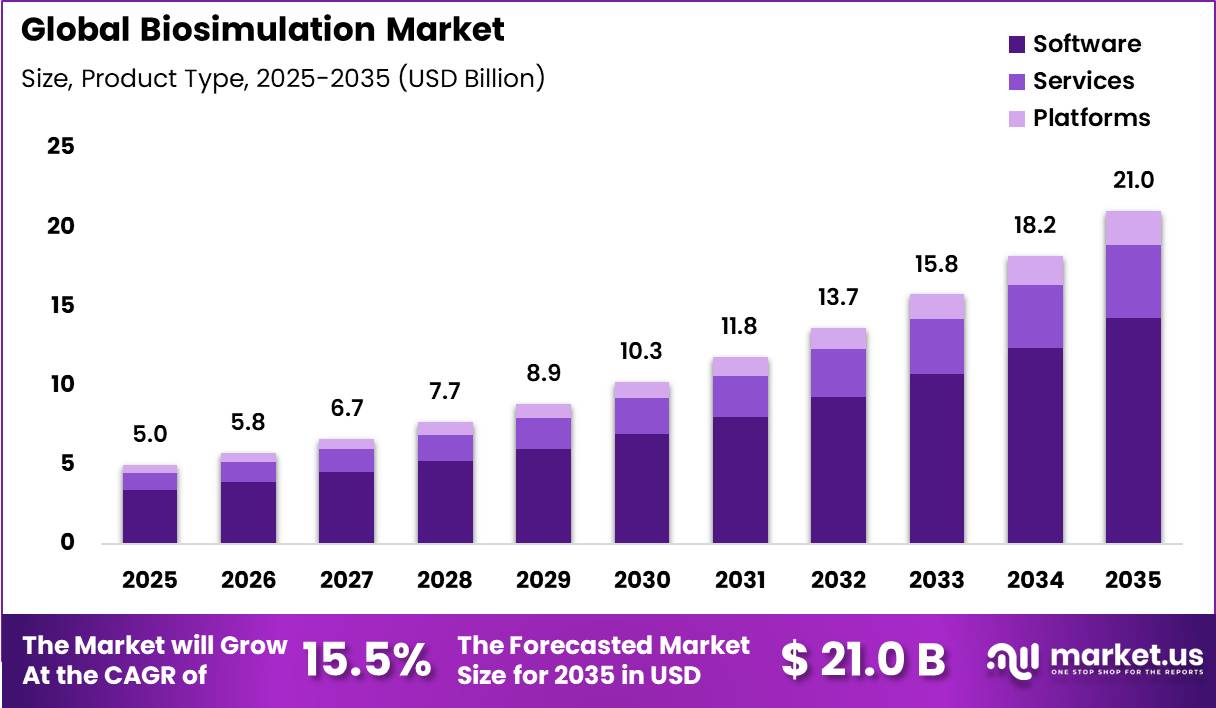
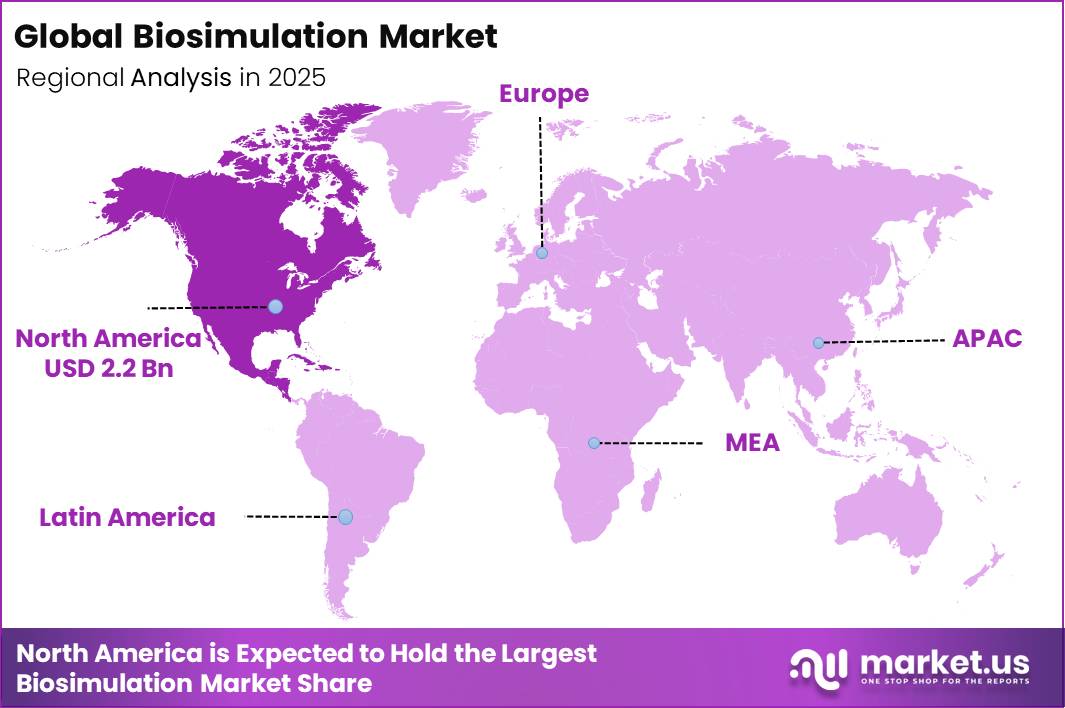
Global Biosimulation Market size is expected to be worth around US$ 21.0 Billion by 2035 from US$ 5.0 Billion in 2025, growing at a CAGR of 15.5% during the forecast period from 2026 to 2035. In 2025, North America led the market, achieving over 43.0% share with a revenue of US$ 2.2 Billion.
Biosimulation is becoming an important technology in modern drug development by using advanced computer models to predict how medicines behave in the human body before large-scale clinical testing. It combines biological data, pharmacokinetics, pharmacodynamics, and disease modeling to support safer and faster research.
The technology is widely used by pharmaceutical companies, biotechnology firms, contract research organizations (CROs), and academic research institutions to improve decision-making throughout the drug development process.
The U.S. Food and Drug Administration (FDA) recognizes biosimulation as a core component of Model-Informed Drug Development (MIDD), which integrates computational models with clinical and non-clinical evidence to optimize dose selection, trial design, and regulatory submissions.
In June 2026, the FDA finalized the ICH M15 guideline, establishing internationally harmonized principles for planning, evaluating, and documenting model-informed drug development evidence, further strengthening confidence in biosimulation-based regulatory decisions.
The growing adoption of biosimulation is supported by increasing investments in precision medicine, biologics, gene therapies, and artificial intelligence-enabled drug discovery. According to the FDA, computational modeling helps reduce uncertainty, lower development failure rates, improve clinical trial efficiency, optimize dosing strategies, and generate evidence that may not be feasible through experimental studies alone.
Biosimulation also contributes to reducing unnecessary animal studies by supporting validated New Approach Methodologies (NAMs). Regulatory agencies continue to expand the use of modeling and simulation across pharmaceuticals and medical devices, reflecting the industry’s transition toward more data-driven and predictive development processes. These advancements are expected to improve research productivity, accelerate the delivery of innovative therapies, and enhance patient safety while reducing development costs.
Key Takeaways
- Market Size: Global Biosimulation Market size is expected to be worth around US$ 21.0 Billion by 2035 from US$ 5.0 Billion in 2025.
- Market Share: The market is growing at a CAGR of 15.5% during the forecast period from 2026 to 2035.
- Product Type: The Software segment dominated the Biosimulation Market in 2025, accounting for 68.0% of the total market share.
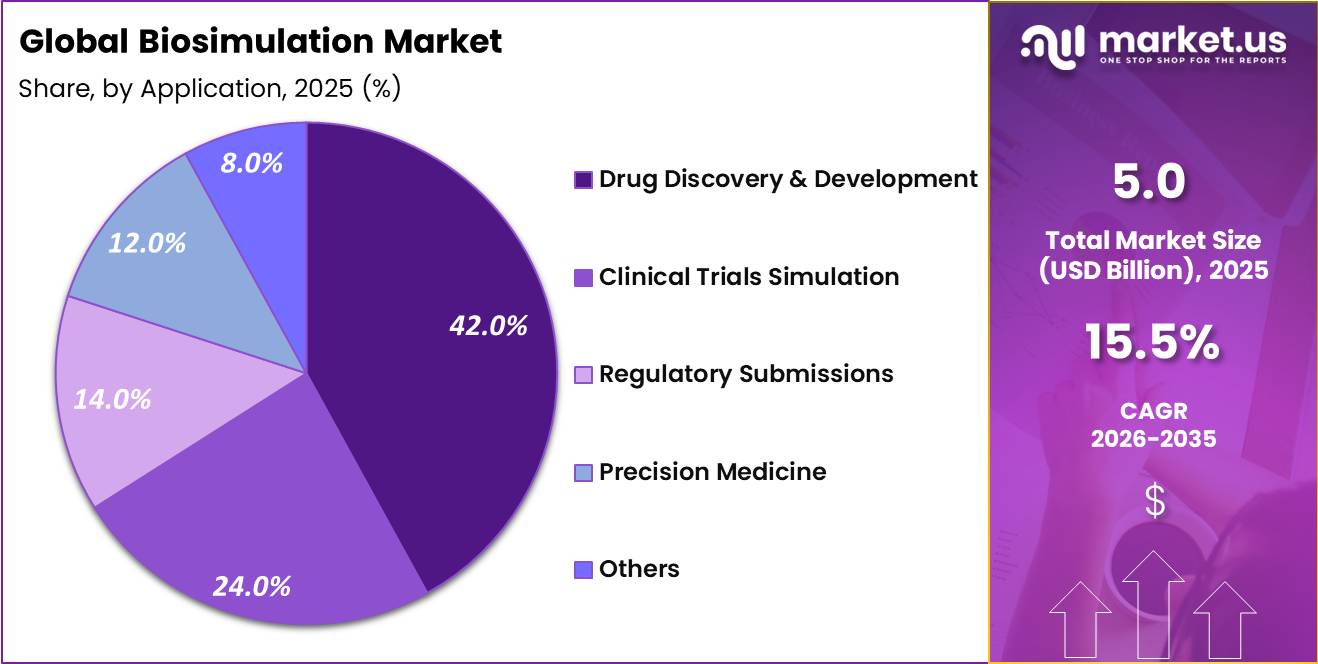
- Application: The Drug Discovery & Development segment held the largest share of the Biosimulation Market in 2025, accounting for 42.0% of the total market.
- Technology: The Physiologically Based Pharmacokinetic (PBPK) Modeling segment dominated the Biosimulation Market in 2025 with a 31.0% market share.
- End User: The Pharmaceutical & Biotechnology Companies segment dominated the Biosimulation Market in 2025, accounting for 61.0% of the total market share.
- Deployment Mode: The On-Premise segment held the largest share of the Biosimulation Market in 2025, accounting for 54.0% of the total market.
- Therapeutic Area: The Oncology segment dominated the Biosimulation Market in 2025, accounting for 33.0% of the total market share.
- Regional Analysis: In 2025, North America led the market, achieving over 43.0% share with a revenue of US$ 2.2 Billion.
Product Type Analysis
Software segment dominated the Biosimulation Market.
The Software segment dominated the Biosimulation Market in 2025, accounting for 68.0% of the total market share. This leadership is driven by the growing adoption of advanced simulation software that supports drug discovery, pharmacokinetic modeling, toxicity prediction, and clinical trial optimization.
Pharmaceutical and biotechnology companies increasingly rely on biosimulation software to reduce research costs, improve development timelines, and enhance decision-making throughout the drug development process.
The integration of artificial intelligence, cloud computing, and machine learning has further improved the accuracy and scalability of biosimulation platforms, making software the preferred product category. These solutions also help organizations comply with evolving regulatory requirements by generating reliable computational evidence during product development.
The Services segment accounted for 22.0% of the market, supported by rising demand for consulting, model development, validation, implementation, training, and technical support. Many organizations outsource biosimulation expertise to specialized providers to accelerate research projects.
Meanwhile, the Platforms segment represented 10.0% of the market, driven by the increasing use of integrated digital environments that combine multiple modeling tools, collaborative workflows, and centralized data management for complex pharmaceutical research and development activities.
Application Analysis
Drug Discovery & Development segment held the largest share of the Biosimulation Market.
The Drug Discovery & Development segment held the largest share of the Biosimulation Market in 2025, accounting for 42.0% of the total market. The segment’s dominance is attributed to the increasing use of biosimulation tools for identifying promising drug candidates, predicting pharmacokinetic and pharmacodynamic behavior, evaluating safety profiles, and optimizing dosage selection before laboratory and clinical testing.
Pharmaceutical companies are increasingly incorporating computational modeling into early-stage research to reduce development costs, shorten timelines, and improve the probability of successful drug approvals. Biosimulation also enables researchers to evaluate multiple drug scenarios virtually, minimizing the need for extensive laboratory experiments.
The Clinical Trials Simulation segment accounted for 24.0% of the market, supported by the growing need to improve trial design, patient recruitment strategies, and treatment outcome predictions while reducing development risks. Regulatory Submissions represented 14.0%, as regulatory agencies increasingly recognize simulation-based evidence during drug evaluation processes.
Precision Medicine captured 12.0%, driven by the development of personalized therapies using patient-specific biological data. The Others segment accounted for 8.0%, including applications in medical device evaluation, toxicology studies, and translational research.
Technology Analysis
Physiologically Based Pharmacokinetic (PBPK) Modeling segment dominated the Biosimulation Market.
The Physiologically Based Pharmacokinetic (PBPK) Modeling segment dominated the Biosimulation Market in 2025 with a 31.0% market share. PBPK modeling has become an essential technology for predicting drug absorption, distribution, metabolism, and excretion using mathematical representations of human physiology. It enables researchers to evaluate drug behavior across different patient populations, optimize dosing strategies, and reduce uncertainties during clinical development.
Regulatory agencies increasingly accept PBPK models as supporting evidence for drug submissions, further strengthening adoption across pharmaceutical and biotechnology companies. Continuous improvements in computational capabilities and biological data integration have also enhanced the accuracy and reliability of PBPK simulations.
The Quantitative Systems Pharmacology (QSP) segment continues to expand as researchers combine biological pathway analysis with pharmacological modeling to understand complex disease mechanisms and therapeutic responses. Molecular Modeling & Simulation remains important for predicting molecular interactions and accelerating lead optimization during early-stage drug discovery.
Cellular Simulation supports the study of cellular responses and disease progression, enabling more precise therapeutic development. The Other Computational Methods segment includes emerging simulation technologies, artificial intelligence-driven models, and hybrid computational approaches that are increasingly being integrated into pharmaceutical research to improve efficiency and decision-making.
End User Analysis
Pharmaceutical & Biotechnology Companies segment dominated the Biosimulation Market.
The Pharmaceutical & Biotechnology Companies segment dominated the Biosimulation Market in 2025, accounting for 61.0% of the total market share. These organizations are the largest adopters of biosimulation technologies because they continuously invest in accelerating drug development, reducing research costs, improving clinical success rates, and meeting evolving regulatory expectations.
Biosimulation enables pharmaceutical companies to optimize candidate selection, predict treatment outcomes, minimize laboratory testing, and support evidence-based regulatory submissions. Increasing investments in precision medicine, biologics, and advanced therapeutics have further strengthened the demand for biosimulation solutions across the pharmaceutical industry.
The Contract Research Organizations (CROs) segment continues to experience strong growth as pharmaceutical companies increasingly outsource biosimulation services to improve operational efficiency and access specialized expertise. Academic & Research Institutes also represent an important market segment, utilizing biosimulation platforms for biomedical research, disease modeling, pharmacological studies, and educational purposes.
Meanwhile, Regulatory Authorities are gradually expanding the use of biosimulation technologies to evaluate drug safety, efficacy, dosage recommendations, and clinical evidence during regulatory review processes, supporting more informed and science-based decision-making throughout pharmaceutical product approvals.
Deployment Mode Analysis
On-Premise segment held the largest share of the Biosimulation Market in 2025.
The On-Premise segment held the largest share of the Biosimulation Market in 2025, accounting for 54.0% of the total market. Many pharmaceutical companies, biotechnology firms, and research organizations continue to prefer on-premise deployment because it offers greater control over sensitive research data, intellectual property, regulatory compliance, and cybersecurity.
Large organizations managing confidential clinical, genomic, and drug development information often rely on internally managed infrastructure to maintain data privacy and integrate biosimulation software with existing enterprise systems. On-premise solutions also provide greater customization, high-performance computing capabilities, and operational flexibility for handling complex computational modeling tasks.
The Cloud-Based segment is expanding steadily as organizations increasingly seek scalable, cost-effective, and collaborative biosimulation environments. Cloud deployment enables researchers across multiple locations to access shared computational resources, accelerate model development, and improve collaboration throughout global drug development projects.
The growing adoption of cloud computing, artificial intelligence, and advanced data analytics is encouraging pharmaceutical companies to migrate selected biosimulation workloads to cloud platforms. Improvements in cloud security, regulatory compliance, and infrastructure reliability are further supporting the increasing acceptance of cloud-based biosimulation solutions across the healthcare and life sciences industries.
Therapeutic Area Analysis
Oncology segment dominated the Biosimulation Market.
The Oncology segment dominated the Biosimulation Market in 2025, accounting for 33.0% of the total market share. The high prevalence of cancer, increasing investment in oncology drug development, and growing focus on precision medicine have significantly increased the use of biosimulation technologies in cancer research.
Biosimulation enables researchers to predict drug responses, optimize dosing regimens, identify suitable patient populations, and improve clinical trial design for targeted cancer therapies. The complexity of oncology drug development and the growing number of immunotherapies and personalized treatments continue to strengthen demand for advanced computational modeling.
The Cardiovascular Diseases segment represents another significant application area, supported by increasing research into heart disease therapies and personalized treatment strategies. CNS Disorders continue to drive biosimulation adoption due to the complexity of neurological diseases and the need for improved predictive models.
Infectious Diseases benefit from biosimulation for antiviral, antibacterial, and vaccine development, particularly in response to emerging pathogens. Metabolic Disorders, including diabetes and obesity, are also adopting biosimulation to optimize therapeutic development. The Others segment includes respiratory, autoimmune, rare diseases, and additional therapeutic areas where computational modeling supports drug research and development.
Key Market Segments
Product Type
- Software
- Services
- Platforms
Application
- Drug Discovery & Development
- Clinical Trials Simulation
- Regulatory Submissions
- Precision Medicine
- Others
Technology
- PBPK Modeling
- Quantitative Systems Pharmacology (QSP)
- Molecular Modeling & Simulation
- Cellular Simulation
- Other Computational Methods
End User
- Pharmaceutical & Biotechnology Companies
- Contract Research Organizations (CROs)
- Academic & Research Institutes
- Regulatory Authorities
Deployment Mode
- On-Premise
- Cloud-Based
Therapeutic Area
- Oncology
- Cardiovascular Diseases
- CNS Disorders
- Infectious Diseases
- Metabolic Disorders
- Others
Drivers
Aging CAD burden and riskfactor intensity.
Cardiovascular disease (CVD) continues to be the primary long-term growth driver for the interventional cardiology market, as the number of patients requiring advanced cardiac care continues to increase. According to the World Health Organization (WHO), CVD causes approximately 17.9 million deaths globally each year.
In the United States, the Centers for Disease Control and Prevention (CDC) reported 919,032 cardiovascular-related deaths in 2023, with coronary heart disease remaining the most common subtype. The CDC also estimated U.S. healthcare and medication costs associated with heart disease at more than $168 billion during 2021–2022.
The growing prevalence of hypertension, diabetes, high cholesterol, obesity, and age-related coronary artery disease is increasing the number of patients requiring angiography, percutaneous coronary intervention (PCI), repeat revascularization, and intravascular imaging.
This trend supports higher catheterization laboratory utilization and greater demand for advanced devices, including drug-eluting stents, guidewires, balloons, atherectomy, and intravascular lithotripsy systems, particularly across North America, Europe, Japan, and rapidly urbanizing Asian markets.
| Driver | (~) % Impact on CAGR Forecast | Geographic Relevance | Impact Timeline |
|---|---|---|---|
| Aging CAD burden and risk-factor intensity | +1.9% | North America core, EU, Japan, urban China, Gulf | Medium term (2-4 years) |
| Imaging-guided and calcium-management PCI upgrade | +1.6% | North America core, EU, Japan, China tertiary centers | Short term (≤ 2 years) |
| Complex PCI coding and case-recognition expansion | +1.1% | U.S. core, private-pay spill-over in select APAC | Short term (≤ 2 years) |
| Guideline shift toward physiology, radial access, and lesion-specific optimization | +1.3% | EU core, North America, developed APAC | Medium term (2-4 years) |
| Small-vessel and high-complexity device innovation | +1.0% | U.S., EU, Japan, South Korea, urban APAC | Medium term (2-4 years) |
| Tertiary-capacity build-out in emerging cardiac corridors | +1.5% | India, China, Southeast Asia, LATAM metros, Middle East | Long term (≥ 4 years) |
Challenges
Data interoperability gaps limiting evidencedriven adoption.
A less visible but increasingly material challenge is fragmented data architecture across device registries, hospital IT stacks, UDI systems, postmarket surveillance files, and realworld evidence workflows, which raises the cost of proving clinical value and slows both regulatory and commercial execution.
Europe’s move toward mandatory EUDAMED usage for key modules from May 2026 improves traceability but also exposes how uneven manufacturer and provider data readiness still is, especially for firms trying to synchronize certificate data, device registration, surveillance records, field actions, and countrylevel compliance requirements across multiple jurisdictions.
This creates about 0.7% points of growth drag through duplicate data entry, slower recall response loops, delayed evidence generation, and weaker installedbase visibility, and it demands longhorizon investment in interoperable quality systems, UDIconnected commercial analytics, and registry connected outcomes infrastructure that will likely take more than four years to harmonize meaningfully across the global interventional cardiology landscape.
| Challenge | (~) % CAGR Friction Drag | Geographic Relevance | Mitigation Horizon |
|---|---|---|---|
| Cath Lab Workforce Gaps | -1.4% | North America core, EU hospital systems, Japan | Long term (≥ 4 years) |
| Regulatory Evidence Burden | -1.1% | EU regulatory hubs, UK follow-on markets | Medium term (2-4 years) |
| Device Recall Remediation Cycles | -0.9% | North America core, EU5, advanced APAC | Medium term (2-4 years) |
| Procedure Input Volatility | -0.8% | U.S. networks, EU import corridors, APAC assemblers | Medium term (2-4 years) |
| Hospital Capital Allocation Strain | -1.0% | U.S. provider systems, Western Europe, urban China | Medium term (2-4 years) |
| Data Interoperability Fragmentation | -0.7% | EU compliance markets, U.S. IDNs, Gulf tertiary centers | Long term (≥ 4 years) |
Restraints
EU MDR transition extensions and cardiology device squeeze.
The European cardiovascular device market continues to face supply constraints because the Medical Device Regulation (MDR) certification system remains focused on maintaining regulatory compliance rather than accelerating approvals. The European Commission’s decision to extend transition deadlines for legacy devices into 2027-2028 indicates that notified-body capacity and certification processes remain under structural pressure.
Although many interventional cardiology devices have established clinical performance, manufacturers are still required to complete documentation updates, renewed clinical evidence generation, sterilization and packaging validation, and comprehensive notified-body assessments. These activities typically require approximately 13-18 months, delaying approvals for product extensions, SKU renewals, and specialized low-volume catheter portfolios.
Such delays increase regulatory costs and reduce the commercial viability of niche products. The European Society of Cardiology’s 2025 warning regarding “disappearing devices” highlights the growing risk of reduced procedural choice, higher substitution costs, increased hospital inventory requirements, slower product adoption, and constrained market expansion, ultimately lowering the region’s expected market growth trajectory.
| Restraint | (~) % Impact on CAGR Forecast | Geographic Relevance | Impact Timeline |
|---|---|---|---|
| EU MDR recertification drag | -1.4% | EU core, UK-linked supply, CEE distributors | Short term (≤ 2 years) |
| Hospital budget and reimbursement squeeze | -1.2% | North America core, Western Europe, Japan | Medium term (2-4 years) |
| Recall and quality-compliance disruption | -1.0% | North America core, EU, APAC export hubs | Short term (≤ 2 years) |
| Input-cost and manufacturing inflation | -0.9% | U.S., EU, APAC corridors | Medium term (2-4 years) |
| Cath lab staffing and throughput bottlenecks | -0.8% | U.S., UK, Germany, Japan, urban China | Medium term (2-4 years) |
| Portfolio access and tender pricing pressure | -0.7% | Southern Europe, LATAM, public APAC markets | Long term (≥ 4 years) |
Opportunity
Structural Heart Expansion Beyond Mature TAVR Platforms.
Adjacent structural heart interventions represent a significant future growth opportunity rather than a current market driver, as transcatheter aortic valve replacement (TAVR) has already become a mature and well-established segment. The next phase of expansion is expected to come from transcatheter tricuspid repair and replacement, pulmonary valve replacement, congenital heart interventions, and other right-heart therapies, which remain commercially underpenetrated despite substantial clinical demand.
Market potential is supported by aging populations and the increasing prevalence of ischemic heart disease and heart failure. However, these segments are still constrained by limited procedural capacity, evolving clinical evidence, and restricted geographic availability.
As additional devices receive regulatory approvals and broader commercialization, manufacturers can address a multibillion-dollar adjacent market by leveraging existing TAVR infrastructure, including structural heart sales teams, imaging platforms, referral networks, and physician relationships. This portfolio adjacency reduces customer acquisition costs while enabling cross-selling opportunities and supporting higher-margin procedural growth through 2035.
| Opportunity | (~) % Potential CAGR Upside | Geographic Relevance | Execution Window |
|---|---|---|---|
| Coronary DCB expansion beyond ISR | +1.6% | EU core, Japan, U.S., select APAC | Short term (≤ 2 years) |
| Calcium platform bundling in complex PCI | +1.3% | North America core, EU, China, Gulf | Short term (≤ 2 years) |
| Structural heart adjacencies beyond TAVR | +2.1% | U.S., EU, Japan, urban APAC | Medium term (2-4 years) |
| Outpatient cath-lab migration | +1.4% | U.S., Western Europe, Australia | Medium term (2-4 years) |
| Emerging-Asia tier-2 cath lab buildout | +1.8% | India, ASEAN, Indonesia, Vietnam | Medium term (2-4 years) |
| Roll-up of imaging and disposable ecosystems | +1.2% | Global, led by U.S. and EU | Long term (≥ 4 years) |
Regional Analysis
North America dominated the global Biosimulation Market.
North America dominated the global Biosimulation Market in 2025, accounting for more than 43.0% of the total market and generating approximately US$ 2.2 billion in revenue.
The region maintained its leadership due to the strong presence of global pharmaceutical and biotechnology companies, advanced healthcare infrastructure, and significant investments in biomedical research. The growing use of biosimulation technologies has enabled organizations to improve drug development efficiency, optimize clinical trial design, and reduce research costs while accelerating the introduction of new therapies.
The region has also benefited from increasing adoption of artificial intelligence, cloud-based computing, and advanced modeling platforms that support physiologically based pharmacokinetic (PBPK), pharmacokinetic/pharmacodynamic (PK/PD), and quantitative systems pharmacology (QSP) modeling.
Pharmaceutical companies, contract research organizations, and academic institutions are increasingly integrating biosimulation into research workflows to enhance decision-making and predict clinical outcomes with greater accuracy.
Supportive regulatory initiatives from the U.S. Food and Drug Administration, which encourages the use of modeling and simulation in drug development and regulatory submissions, have further strengthened market adoption.
In addition, rising investments in precision medicine, biologics, and rare disease research continue to expand the application of biosimulation across the pharmaceutical sector. Strong collaborations between technology providers, life sciences companies, and research organizations have accelerated innovation and software development.
The presence of established industry leaders, continuous technological advancements, favorable funding for life sciences research, and increasing demand for faster, more efficient drug development processes are expected to help North America maintain its leading position in the global biosimulation market throughout the forecast period.
Key Regions and Countries
North America
- The US
- Canada
Europe
- Germany
- France
- The U.K.
- Italy
- Spain
- Russia & CIS
- Rest of Europe
Asia Pacific
- China
- India
- Japan
- South Korea
- ASEAN
- Australia & New Zealand
- Rest of Asia Pacific
Middle East & Africa
- GCC
- South Africa
- Rest of Middle East & Africa
Latin America
- Brazil
- Mexico
- Rest of Latin America
Key Player Analysis
The Biosimulation Market is moderately consolidated, with a handful of established technology providers accounting for a significant share of global deployments while emerging innovators strengthen competition through artificial intelligence and advanced computational modeling.
The market is driven by continuous innovation, expanding software capabilities, and increasing demand for integrated simulation platforms that support pharmaceutical research from drug discovery to regulatory submissions.
Among the leading participants, Certara Inc., Schrödinger Inc., Dassault Systèmes BIOVIA, Simulations Plus Inc., and Thermo Fisher Scientific Inc. play a prominent role in shaping industry competition through their broad product portfolios and strong collaborations with pharmaceutical and biotechnology companies.
Competition is primarily focused on research and development, strategic partnerships, and continuous product innovation. Leading companies are investing in advanced physiologically based pharmacokinetic (PBPK), pharmacokinetic/pharmacodynamic (PK/PD), and molecular modeling technologies to improve predictive accuracy and accelerate drug development.
They are also expanding cloud-based platforms and incorporating artificial intelligence and machine learning to enhance simulation performance and decision-making. Workflow integration has become a major competitive strategy, enabling biosimulation solutions to connect seamlessly with laboratory information management systems, data analytics platforms, and drug discovery software.
In addition, vendors are building broader digital ecosystems that combine modeling, simulation, data management, and computational chemistry into unified environments, allowing pharmaceutical organizations to streamline research processes, improve collaboration, and reduce development timelines while meeting evolving regulatory expectations.
Top Key Players
- Certara Inc.
- Schrödinger Inc.
- Dassault Systèmes BIOVIA
- Simulations Plus Inc.
- ANSYS Inc.
- Thermo Fisher Scientific Inc.
- Schrödinger Solutions (Platform)
- Physiome Sciences (BIOVIA ecosystem)
- Exscientia plc
- GNS Healthcare
- Insilico Medicine
- Numerate Inc.
- Optibrium Ltd.
- BIOVIA (Dassault Systèmes)
- Cresset Group
Recent Developments
- In January 2025, Schrödinger Inc. expanded its research collaboration agreement with Otsuka Pharmaceutical to accelerate the discovery of new drug candidates using its computational drug discovery platform. The agreement strengthened Schrödinger’s software-driven discovery strategy and reinforced the growing role of biosimulation in pharmaceutical R&D.
- In March 2025, Certara Inc. entered a strategic partnership with Biowaived to combine advanced biosimulation capabilities with laboratory-based biopharmaceutics expertise. The collaboration is designed to improve formulation development, bioequivalence studies, and model-informed drug development workflows.
- In February 2025, ANSYS Inc. launched Ansys 2025 R1, introducing AI-enabled simulation, expanded cloud functionality, and enhanced digital engineering tools. The release improves simulation workflows, supports faster model development, and strengthens engineering collaboration across life sciences and other industries.
Report Scope
| Report Features | Description |
|---|---|
| Market Value (2025) | US$ 5.0 Billion |
| Forecast Revenue (2035) | US$ 21.0 Billion |
| CAGR (2026-2035) | 15.5% |
| Base Year for Estimation | 2025 |
| Historic Period | 2020-2024 |
| Forecast Period | 2026-2035 |
| Report Coverage | Revenue Forecast, Market Dynamics, Competitive Landscape, Recent Developments |
| Segments Covered | By Product Type (Software, Services, Platforms), By Application (Drug Discovery & Development, Clinical Trials Simulation, Regulatory Submissions, Precision Medicine, Others), By Technology (PBPK Modeling, Quantitative Systems Pharmacology (QSP), Molecular Modeling & Simulation, Cellular Simulation, Other Computational Methods), By End User (Pharmaceutical & Biotechnology Companies, Contract Research Organizations (CROs), Academic & Research Institutes, Regulatory Authorities), By Deployment Mode (On-Premise, Cloud-Based), By Therapeutic Area (Oncology, Cardiovascular Diseases, CNS Disorders, Infectious Diseases, Metabolic Disorders, Others) |
| Regional Analysis | North America – The US, Canada; Europe – Germany, France, U.K., Italy, Spain, Russia & CIS, Rest of Europe; Asia Pacific – China, India, Japan, South Korea, ASEAN, Australia & New Zealand, Rest of Asia Pacific; Middle East & Africa – GCC, South Africa, Rest of Middle East & Africa; Latin America – Brazil, Mexico, Rest of Latin America |
| Competitive Landscape | Certara Inc., Schrödinger Inc., Dassault Systèmes BIOVIA, Simulations Plus Inc., ANSYS Inc., Thermo Fisher Scientific Inc., Schrödinger Solutions (Platform), Physiome Sciences (BIOVIA ecosystem), Exscientia plc, GNS Healthcare, Insilico Medicine, Numerate Inc., Optibrium Ltd., BIOVIA (Dassault Systèmes), Cresset Group |
| Customization Scope | Customization for segments, region/country-level will be provided. Moreover, additional customization can be done based on the requirements. |
| Purchase Options | We have three licenses to opt for: Single User License, Multi-User License (Up to 5 Users), Corporate Use License (Unlimited User and Printable PDF) |





































