


Market Overview
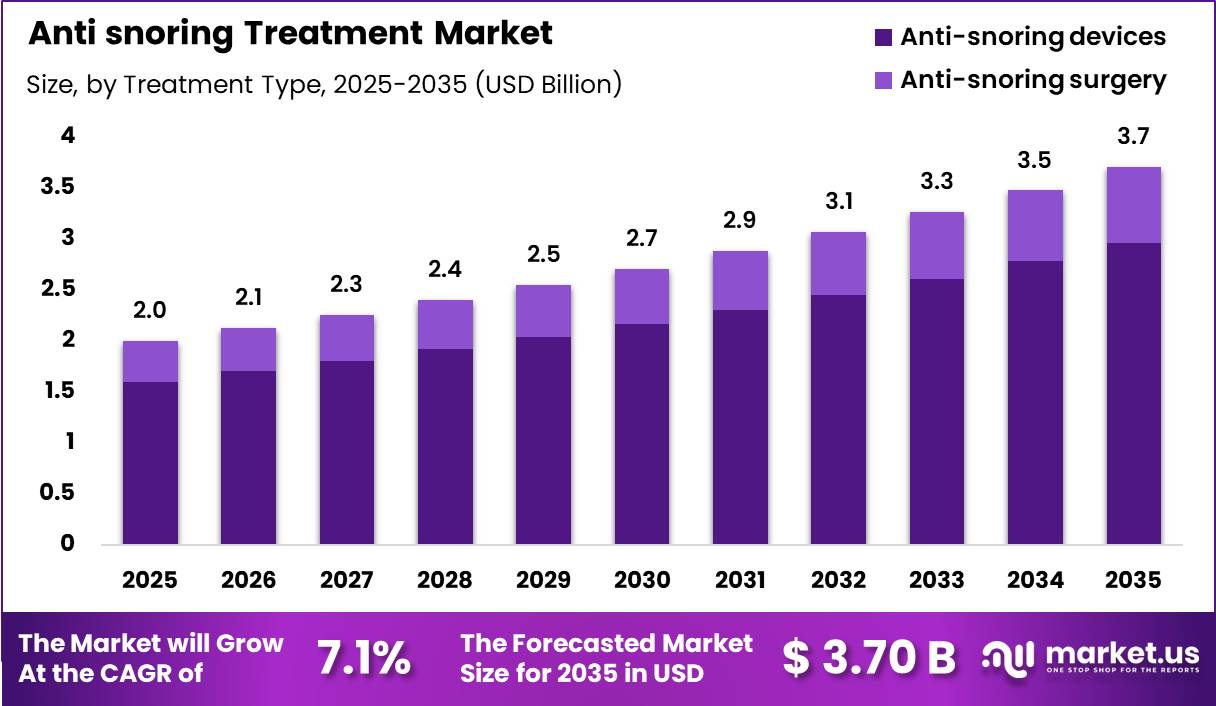
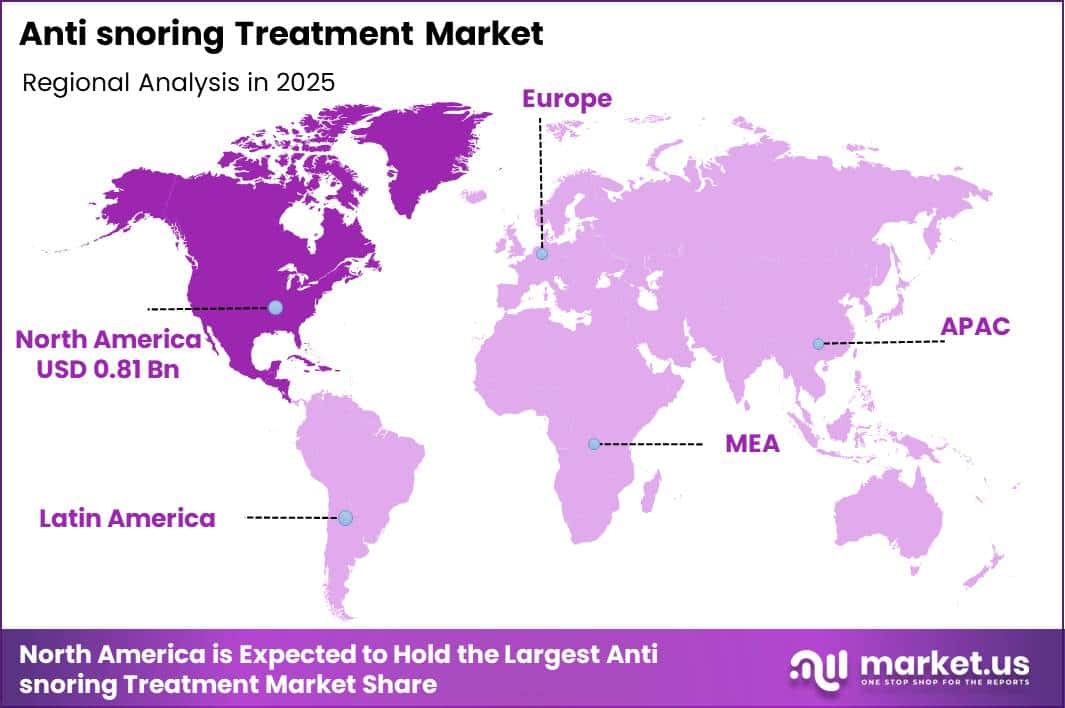
The Global Anti-Snoring Treatment Market size is expected to be worth around US$ 3.70 Billion by 2035 from US$ 2.00 Billion in 2025, growing at a CAGR of 7.1% during the forecast period from 2026 to 2035. In 2025, North America led the market, achieving over 41% share with a revenue of US$ 0.82 Billion.
Snoring is a common issue that affects a significant portion of the adult population worldwide, making it an important topic in both clinical and consumer health. According to trusted healthcare sources, snoring occurs when breathing is partially blocked during sleep, typically due to relaxed tissues in the upper airway.
The frequency of snoring can vary from occasional to habitual episodes. Approximately 45% of adults snore occasionally, while around 25% snore regularly, with men snoring more frequently than women.
While snoring can be a social nuisance, it may also indicate underlying sleep disorders, such as obstructive sleep apnea (OSA). In OSA, breathing pauses can occur 30 times or more per hour, with loud snoring being a common symptom. A systematic review of Indian adults found an overall OSA prevalence of about 11% to 13% in males and 5% in females, highlighting the clinical impact of this condition in specific populations.
Treatments for snoring range from lifestyle changes, such as weight management, altering sleep positions, and reducing alcohol intake, to medical interventions. These may include oral appliances, continuous positive airway pressure (CPAP) therapy, and certain surgical options designed to widen the airway.
Oral devices are popular noninvasive treatments that work by repositioning the jaw or tongue to keep the airways open, while CPAP therapy remains a key treatment when snoring is associated with diagnosed sleep apnea. Growing awareness of sleep health, along with clinical advancements and the increasing prevalence of sleep-related breathing disorders, is driving the broader adoption of anti-snoring treatments worldwide.
Key Takeaways
- Market Size: The Global Anti-Snoring Treatment Market size was US$ 2.00 billion in 2025. The market is estimated to grow to US$ 3.70 billion by 2035.
- Market Share: The market’s Compound Annual Growth Rate (CAGR) from 2026 to 2035 will be 7.1%.
- Treatment Type: Anti-Snoring Devices has the largest market share, accounting for 80% of total treatment type revenue.
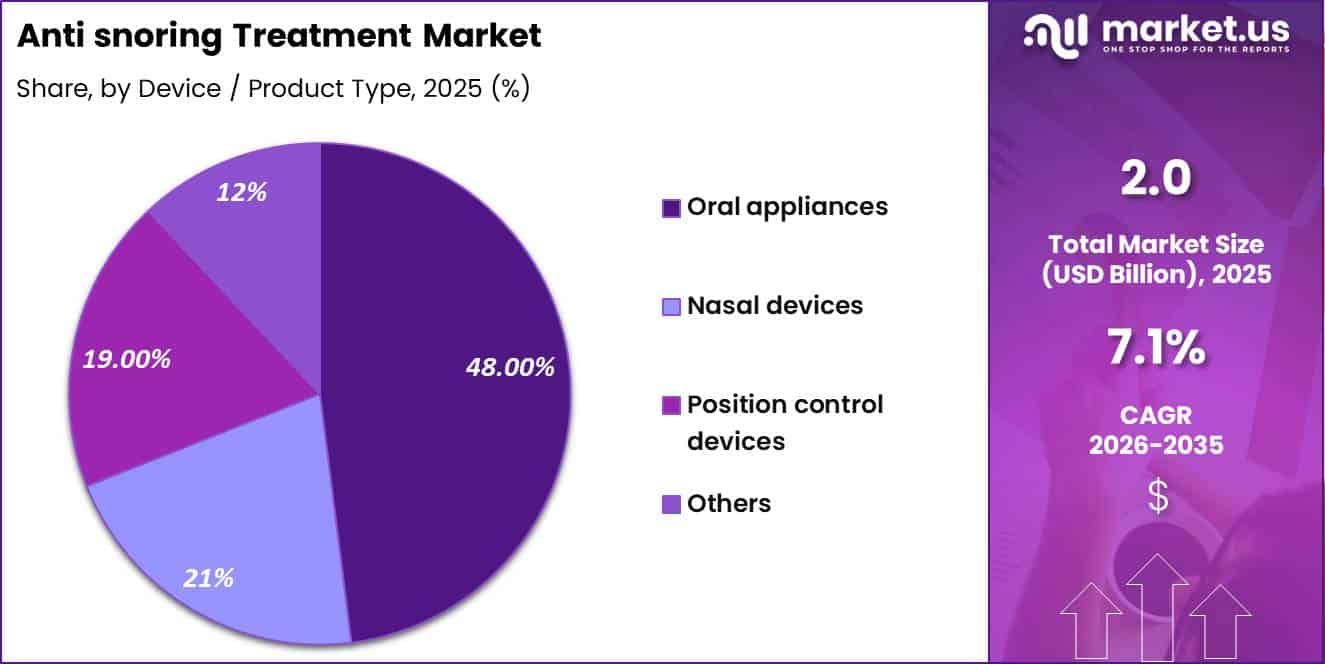
- Device/Product Type: Oral Appliances leads the segment, accounting for 48% of total device/product type revenue.
- Age Group: 40–60 Years leads the segment, accounting for 50% of total age group revenue.
- Gender: Male dominates the segment, accounting for 65% of total gender segment revenue.
- Distribution Channel: Retail Pharmacies leads the segment, accounting for 50% of total distribution channel revenue.
- End User: Homecare Settings leads the segment, accounting for 65% of total end-user revenue.
- Regional: North America is the dominant regional market, accounting for 41% of global revenue.
Treatment Type Analysis
The anti-snoring treatment market by treatment type is primarily dominated by anti-snoring devices, which account for approximately 80.0% of the market share in 2025, reflecting strong consumer preference for non-invasive, convenient, and home-based management solutions for snoring and sleep-related breathing disorders.
The widespread adoption of devices is supported by increasing awareness of obstructive sleep apnea (OSA) risks, growing demand for over-the-counter sleep aids, and advancements in portable and customizable oral and nasal support technologies. These devices are widely favoured due to their ease of use, cost-effectiveness compared to surgical interventions, and suitability for long-term management without hospitalisation.
Anti-snoring surgery holds around 20.0% share of the market, primarily utilised in severe or anatomically driven cases where non-invasive therapies are ineffective. Surgical procedures, including uvulopalatopharyngoplasty and nasal corrective surgeries, are generally recommended after clinical diagnosis and failure of conservative treatments.
However, their adoption remains limited due to higher costs, post-operative risks, and recovery time. Overall, the treatment landscape reflects a clear shift toward minimally invasive and patient-friendly approaches, with device-based solutions continuing to expand their dominance in both developed and emerging healthcare markets.
Device / Product Type Analysis
Within the anti-snoring treatment market, device or product segmentation is led by oral appliances, which account for approximately 48.0% of the market share in 2025. Their dominance is driven by strong clinical acceptance, proven efficacy in managing mild-to-moderate snoring, and widespread use in dental and sleep medicine practices. Mandibular advancement devices and tongue-retaining devices are particularly favoured due to their ability to maintain airway patency during sleep.
Nasal devices hold around 21.0% share, supported by increasing adoption of nasal dilators and strips that improve airflow and reduce airway resistance, especially in patients with nasal congestion-related snoring. Position control devices represent approximately 19.0% of the market, gaining traction due to their effectiveness in preventing supine sleeping positions that exacerbate airway obstruction.
The remaining 12.0% is attributed to other solutions, including combination devices and emerging smart wearable technologies designed for sleep monitoring and snoring reduction. The market is witnessing continuous innovation, with digital health integration and sensor-based devices enhancing treatment personalisation.
Overall, product diversification and growing consumer awareness are significantly contributing to the expansion of device-based anti-snoring solutions globally.
Age Group Analysis
The anti-snoring treatment market by age group is primarily led by the 40–60 years segment, accounting for approximately 50% of the total market share in 2025. This dominance is attributed to the higher prevalence of sleep-related breathing disorders in middle-aged populations, driven by lifestyle factors such as obesity, sedentary behaviour, stress, and increased incidence of upper airway muscle relaxation.
Individuals in this age group are also more likely to seek medical diagnosis and adopt both device-based and clinical interventions, supported by greater health awareness and regular interaction with healthcare systems.
The below-40-year segment represents a significant portion of the market, driven by rising obesity rates, irregular sleep patterns, alcohol consumption, and increasing awareness of sleep health among younger adults. Although snoring is often underdiagnosed in this group, growing adoption of wearable sleep monitors and over-the-counter anti-snoring devices is expanding treatment uptake.
The above 60-year segment also holds a considerable share, supported by age-related anatomical changes, reduced airway muscle tone, and higher prevalence of comorbid conditions such as obstructive sleep apnea. However, treatment adoption in this group may be moderated by device tolerance issues and multiple chronic health conditions. Overall, the segmentation highlights a strong midlife concentration of demand, with steady growth emerging across both younger and elderly populations.
Distribution Channel Analysis
The anti-snoring treatment market by distribution channel is primarily led by retail pharmacies, which account for approximately 50% of the total market share in 2025. This dominance is supported by strong consumer preference for easy access to over-the-counter anti-snoring devices, including nasal strips, oral appliances, and sleep aids, which are widely available without prescription requirements.
Retail pharmacies also benefit from high footfall, immediate product availability, and pharmacist-guided recommendations, making them a key entry point for first-time users seeking quick relief from snoring symptoms.
Hospital pharmacies represent a significant share of the market, driven by prescription-based distribution following clinical diagnosis of sleep-related breathing disorders such as obstructive sleep apnea. These channels are essential for supplying medically recommended oral appliances, CPAP accessories, and post-diagnostic treatment solutions, particularly for moderate to severe cases requiring specialist supervision.
Meanwhile, online and e-commerce platforms are experiencing rapid growth, fueled by increasing digital adoption, convenience of home delivery, wider product variety, and competitive pricing. The expansion of telemedicine consultations and growing consumer comfort with discreet purchasing of sleep-related products are further accelerating online channel penetration.
Overall, the distribution landscape is evolving toward a more omnichannel structure, with retail pharmacies maintaining dominance while digital platforms gain strong momentum in consumer-driven markets.
Gender Analysis
In the anti-snoring treatment market, the male segment dominates with approximately 65.0% market share in 2025, primarily due to higher anatomical and physiological susceptibility to snoring and obstructive sleep-related disorders.
Factors such as greater neck circumference, higher prevalence of upper airway collapsibility, lifestyle habits, alcohol consumption, and obesity contribute significantly to increased incidence among men. Additionally, men are more frequently diagnosed with obstructive sleep apnea, which is strongly associated with chronic snoring and requires clinical intervention.
The female segment accounts for approximately 35.0% of the market, with demand rising steadily due to increasing awareness of sleep health, hormonal changes during menopause, and growing healthcare-seeking behaviour among women.
Although historically underdiagnosed, female patients are increasingly being identified through improved screening practices and awareness campaigns. The gender gap is gradually narrowing as diagnostic rates improve and social stigma around sleep disorders decreases.
Moreover, product innovation focusing on comfort and customisation is enhancing adoption among female users. Overall, while male patients continue to represent the dominant consumer base, the female segment is expected to grow steadily, supported by improved awareness and expanding access to diagnostic and therapeutic solutions.
End User Analysis
The anti-snoring treatment market by end user is primarily dominated by homecare settings, which account for approximately 65% of the total market share in 2025. This dominance is driven by the increasing preference for self-managed treatment solutions, supported by growing awareness of sleep health and the widespread availability of easy-to-use anti-snoring devices such as oral appliances, nasal strips, and wearable monitoring tools.
Homecare adoption is further strengthened by the convenience of non-clinical usage, cost-effectiveness compared to hospital-based care, and the rising trend of remote health management enabled by telemedicine and digital sleep tracking technologies. Consumers are increasingly opting for at-home interventions for mild-to-moderate snoring, reducing dependency on clinical visits and encouraging long-term compliance with treatment solutions.
Hospitals and sleep clinics/ENT speciality centres represent the remaining market share and play a critical role in diagnosing and managing moderate to severe cases of snoring, particularly those associated with obstructive sleep apnea.
These clinical settings provide comprehensive sleep studies, professional evaluation, and prescription-based therapies such as CPAP devices and advanced oral appliances. They are also essential for surgical interventions in cases where non-invasive treatments are ineffective.
While hospital-based care remains vital for complex cases, the overall market continues to shift toward decentralised, patient-centric treatment models. This transition highlights the growing influence of home-based care in driving overall market expansion.
Key Market Segments
By Treatment Type
- Anti-Snoring Devices
- Anti-Snoring Surgery
By Device/Product Type
- Oral Appliances
- Mandibular Advancement Devices (MADs)
- Tongue Retaining Devices (TRDs)
- Tongue Stabilising Devices (TSDs)
- Vestibular Shields
- Nasal Devices
- External Nasal Dilators
- Internal Nasal Dilators
- Position Control Devices
- Others
By Age Group
- Below 40 Years
- 40–60 Years
- Above 60 Years
By Gender
- Female
By Distribution Channel
- Retail Pharmacies
- Hospital Pharmacies
- Online/E-Commerce Platforms
By End User
- Homecare Settings (Direct Consumer Use)
- Hospitals & Sleep Clinics/ENT Clinics
Drivers
Diagnosis funnel widening through OSA screening
The second major growth driver is better conversion of “snoring” from a dismissed lifestyle complaint into a medically evaluated sleep-disordered breathing condition. Care pathways increasingly treat loud snoring, witnessed apneas, daytime sleepiness, hypertension, and cardiometabolic risk as triggers for formal sleep assessment, and clinical guidance continues to frame snoring as an important symptom cluster within broader obstructive sleep apnea workup rather than an isolated nuisance issue.
This matters commercially because untreated patients historically sat outside the billable market; once routed through home sleep testing or lab-based diagnosis, they enter reimbursable treatment categories, specialist referrals, and device replacement cycles.
The demand elasticity is meaningful: many patients with obstructive sleep apnea remain undiagnosed, while common prevalence references still place diagnosed addressable OSA at only a fraction of the true symptomatic pool, so even modest screening gains can create disproportionate market expansion in oral appliances, positive airway pressure alternatives, and adjunct therapies.
| Driver | (~) % Impact on CAGR Forecast | Geographic Relevance | Impact Timeline |
|---|---|---|---|
| Obesity-linked airway risk expansion | +1.9% | North America core, EU, GCC, urban APAC | Medium term (2-4 years) |
| Diagnosis funnel widening through OSA screening | +1.6% | North America core, EU, APAC metros, Latin America private care | Short term (≤ 2 years) |
| Reimbursed oral appliance adoption | +1.4% | U.S. core, Canada, Western Europe, Australia | Short term (≤ 2 years) |
| Non-CPAP alternative innovation, including stimulation implants | +1.2% | U.S., Germany, France, UK, Japan | Medium term (2-4 years) |
| Comfort-led adherence shift to personalised devices | +1.1% | North America, EU, developed APAC | Short term (≤ 2 years) |
| Weight-management therapeutics and integrated sleep care | +0.9% | U.S. core, EU, Gulf states, premium APAC | Medium term (2-4 years) |
Challenges
Underdiagnosed OSA and low care pathway throughput
The anti-snoring treatment market sits on a structurally underdiagnosed obstructive sleep apnea population. Global estimates suggest nearly 1 billion adults may have clinically relevant OSA, with prevalence ranging from approximately 9% to 38% depending on diagnostic criteria. However, only a small fraction enters formal diagnostic and treatment pathways each year, creating a persistent gap between disease burden and realised treatment uptake.
In many high-income healthcare systems, only about 25 to 35% of moderate to severe OSA cases are diagnosed annually, and just 50 to 70% of diagnosed patients proceed to device-based or procedural therapy within 12 months. This effectively reduces true demand capture to roughly 15 to 25% of the underlying patient pool, constraining market growth and reducing potential CAGR by approximately 1.3% points.
Key bottlenecks include low primary care referral rates, long sleep study wait times, often 60 to 120 days, and significant patient drop-off between screening, testing, and treatment initiation. To address this, stakeholders are increasingly focusing on home sleep testing, integrated risk screening in primary care, and digital triage tools to compress diagnostic timelines and improve conversion rates along the care pathway.
| Challenge | (~) % CAGR Friction Drag | Geographic Relevance | Mitigation Horizon |
|---|---|---|---|
| Underdiagnosed OSA & low care pathway throughput | -1.3% | North America, Europe, urban APAC | Long-term (≥ 4 years) |
| Fragmented multi-modality treatment adherence | -1.1% | North America core, EU clinical hubs, APAC metros | Medium term (2-4 years) |
| CPAP & device supply volatility post-recalls | -0.9% | U.S. focus, Europe spillover, select LATAM | Medium term (2-4 years) |
| Limited specialist & sleep lab capacity | -1.0% | North America, Europe, high-income APAC | Long-term (≥ 4 years) |
| Uneven digital & home-based therapy integration | -0.8% | Global, strongest in urban markets | Medium term (2-4 years) |
| Consumer price sensitivity & insurance complexity | -1.0% | U.S. and mixed-coverage markets globally | Long-term (≥ 4 years) |
Restraints
Regulatory and clinical evidence barriers for new devices
Anti-snoring and obstructive sleep apnea devices face increasingly stringent regulatory requirements focused on patient safety, long-term outcomes, and post-market surveillance. Agencies such as the FDA require strong clinical evidence packages for novel oral appliances, implantable stimulators, and digital therapeutics, often including extended follow-up and comparative studies against standard therapies such as positive airway pressure devices.
Recent device recalls and enforcement actions have further tightened oversight, leading to stricter quality system requirements and more comprehensive post-market obligations. This raises development costs, extends time to market by 2 to 4 years, and increases reliance on real-world evidence and comparative effectiveness data.
While these measures improve safety and clinical confidence over time, they also slow innovation cycles, discourage smaller entrants, and reduce the pace of product launches. Overall, this regulatory and evidence burden is estimated to reduce long-term market CAGR by approximately 0.6% points across major regulated regions, including the US, EU, and Japan.
| Restraint | (~) % Impact on CAGR Forecast | Geographic Relevance | Impact Timeline |
|---|---|---|---|
| Post-recall CPAP & device supply shocks | -1.0% | North America core, EU, APAC metros | Short term |
| Fragmented reimbursement & coding for OSA therapies | -0.8% | North America, EU, selected APAC | Medium term |
| High out-of-pocket costs for oral and surgical options | -0.7% | North America, EU, urban APAC | Medium term |
| Regulatory and clinical evidence hurdles for new devices | -0.6% | US, EU, Japan | Long term |
| Low diagnosis and adherence rates in snorers/OSA | -0.9% | Global, especially emerging APAC & LatAm | Long term |
| Hospital and clinic capital constraints for sleep labs | -0.5% | Emerging APAC, LatAm, CEE | Medium term |
Opportunity
Outcome-based and subscription models in anti-snoring care
Current anti-snoring treatment revenues are largely transactional, driven by one-time device purchases, procedures, or consultations. However, conditions such as snoring and obstructive sleep apnea are chronic, requiring long-term adherence, titration, and behavioural support, meaning value is not fully captured in single-sale models.
Shifting toward subscription and outcome-based models, such as monthly programs bundling diagnostics, device leasing, telehealth support, adherence tracking, and periodic upgrades, can align revenue with clinical outcomes like improved apnea hypopnea index and sustained symptom reduction. If 15 to 20 % of patients in high-income markets adopt such programs by 2030, and lifetime value per patient increases by 30 to 50 %, this could significantly enhance recurring revenue streams.
Combined with improved adherence and reduced churn, this model could add approximately 1.5 % points to market CAGR. However, adoption remains in an early stage due to limited reimbursement alignment, immature digital care ecosystems, and the need for payers and providers to fully embrace value-based, longitudinal care models.
| Opportunity | (~) % Potential CAGR Upside | Geographic Relevance | Execution Window |
|---|---|---|---|
| Integrated cardiometabolic sleep clinics | +2.0% | North America, Western Europe | Medium term |
| AI-driven at-home snoring diagnostics | +1.8% | North America, EU, APAC urban | Short term |
| Outcome-based and subscription models | +1.5% | US, EU, high-income APAC | Medium term |
| Emerging-market low-cost device platforms | +1.7% | APAC emerging, LatAm, MEA | Long term |
| Digital therapeutics and CBT add-ons | +1.2% | US, Europe, East Asia | Medium term |
| Perioperative and occupational screening bundles | +1.0% | US, EU, Middle East | Short term |
Regional Analysis
In 2025, North America led the market, achieving over 41% share with a revenue of US$ 0.89 billion. The regional landscape of the anti-snoring treatment market demonstrates clear variation in adoption patterns, healthcare access, and awareness levels across major geographies.
North America remains the dominant region, driven by high diagnosis rates of sleep-related breathing disorders, widespread awareness of snoring as a clinical concern, and strong penetration of non-invasive treatment options such as oral appliances and home-use devices. The region benefits from advanced healthcare infrastructure, routine sleep screening practices, and higher consumer spending on sleep health solutions.
Europe represents a well-established market, supported by structured healthcare systems, an ageing population, and increasing emphasis on preventive care and sleep disorder management. Adoption in Europe is balanced between home care solutions and clinically guided treatments, particularly in Western European countries.
Asia Pacific is the fastest-growing regional market, fueled by rapid urbanisation, rising obesity prevalence, changing lifestyles, and improving access to sleep diagnostics and affordable treatment devices. Growing middle-class populations and increased awareness of sleep health are accelerating demand, particularly for cost-effective, over-the-counter solutions.
Latin America is experiencing steady growth as healthcare access improves and awareness of sleep disorders gradually increases, although market penetration remains moderate. The Middle East & Africa region shows emerging potential, supported by expanding healthcare infrastructure and rising focus on lifestyle-related disorders, but growth is constrained by limited diagnostic reach and uneven access to specialised sleep care.
Key Regions and Countries
North America
- The US
- Canada
Europe
- Germany
- France
- The U.K.
- Italy
- Spain
- Russia & CIS
- Rest of Europe
Asia Pacific
- China
- India
- Japan
- South Korea
- ASEAN
- Australia & New Zealand
- Rest of Asia Pacific
Middle East & Africa
- GCC
- South Africa
- Rest of the Middle East & Africa
Latin America
- Brazil
- Mexico
- Rest of Latin America
Key Player Analysis
Suppliers in the global anti-snoring treatment market seek competitive advantage through clinically validated oral appliance design innovation, optimising mandibular advancement device titration mechanisms, material biocompatibility, and patient comfort profiles that drive long-term compliance among the snoring and mild-to-moderate obstructive sleep apnea patient populations representing the primary addressable market.
Key strategic focus areas include direct-to-consumer e-commerce channel development enabling over-the-counter oral appliance and nasal dilator product sales without prescription requirements, telehealth-enabled sleep assessment and remote mandibular advancement device fitting programs expanding access beyond traditional sleep clinic and ENT physician referral pathways, and connected smart device development integrating snoring detection sensors with smartphone application feedback enabling patient self-monitoring and treatment efficacy tracking.
Companies continue investing in clinical evidence generation supporting oral appliance efficacy in mild-to-moderate obstructive sleep apnea, retail pharmacy shelf placement optimisation, and consumer digital marketing programs targeting self-identified snorers through social media and search advertising channels.
The progressive shift toward homecare self-management, where consumers self-diagnose snoring and self-select over-the-counter treatment devices through retail pharmacy and e-commerce channels without physician referral, is structurally expanding the addressable market beyond traditional sleep clinic and prescription device procurement pathways through the forecast period to 2035.
Top Key Players
- ResMed Inc.
- Koninklijke Philips N.V. (Philips Healthcare)
- Fisher & Paykel Healthcare Limited
- SomnoMed Ltd.
- Medtronic plc
- Inspire Medical Systems Inc.
- Natus Medical Inc.
- Apnea Sciences Corporation
- Airway Management Inc.
- Tomed Dr. Toussaint GmbH
- Theravent Inc.
- Sleeping Well LLC
- Pure Sleep Company
- GlaxoSmithKline plc
- Zephyr Sleep Technologies / Braebon / Aegean Medical Inc.
Recent Developments
- In January 2026, ResMed Inc. launched a next-generation connected mandibular advancement device integrating snoring frequency and intensity monitoring through a companion smartphone application, targeting homecare consumer buyers seeking self-managed snoring treatment with objective outcome tracking.
- In February 2026, SomnoMed Ltd. expanded its telehealth-enabled remote oral appliance fitting program across North American and European sleep clinic networks, reducing in-person dentist visit requirements for mandibular advancement device prescription and titration programs.
- In March 2026, Inspire Medical Systems secured expanded insurance reimbursement authorisation for its hypoglossal nerve stimulation implant across five additional European national health service frameworks, targeting hospital ENT and sleep medicine institutional buyers managing severe snoring and obstructive sleep apnea patients.
Report Scope
| Report Features | Description |
|---|---|
| Market Value (2025) | US$ 2.00 Billion |
| Forecast Revenue (2035) | US$ 3.70 Billion |
| CAGR (2026-2035) | 7.1% |
| Base Year for Estimation | 2025 |
| Historic Period | 2020-2024 |
| Forecast Period | 2026-2035 |
| Report Coverage | Revenue Forecast, Market Dynamics, Competitive Landscape, Recent Developments |
| Segments Covered | By Treatment Type (Anti-Snoring Devices, Anti-Snoring Surgery), By Device/Product Type (Oral Appliances, Nasal Devices, Position Control Devices, Others), By Age Group (Below 40 Years, 40–60 Years, Above 60 Years), By Gender (Male, Female), By Distribution Channel (Retail Pharmacies, Hospital Pharmacies, Online/E-Commerce Platforms), By End User (Homecare Settings, Hospitals & Sleep Clinics/ENT Clinics) |
| Regional Analysis | North America – The US, Canada; Europe – Germany, France, U.K., Italy, Spain, Russia & CIS, Rest of Europe; Asia Pacific – China, India, Japan, South Korea, ASEAN, Australia & New Zealand, Rest of Asia Pacific; Middle East & Africa – GCC, South Africa, Rest of Middle East & Africa; Latin America – Brazil, Mexico, Rest of Latin America |
| Competitive Landscape | ResMed Inc., Koninklijke Philips N.V. (Philips Healthcare), Fisher & Paykel Healthcare Limited, SomnoMed Ltd., Medtronic plc, Inspire Medical Systems Inc., Natus Medical Inc., Apnea Sciences Corporation, Airway Management Inc., Tomed Dr. Toussaint GmbH, Theravent Inc., Sleeping Well LLC, Pure Sleep Company, GlaxoSmithKline plc, Zephyr Sleep Technologies / Braebon / Aegean Medical Inc. |
| Customization Scope | Customization for segments, region/country-level will be provided. Moreover, additional customization can be done based on the requirements. |
| Purchase Options | We have three licenses to opt for: Single User License, Multi-User License (Up to 5 Users), Corporate Use License (Unlimited User and Printable PDF) |





































