


Market Overview
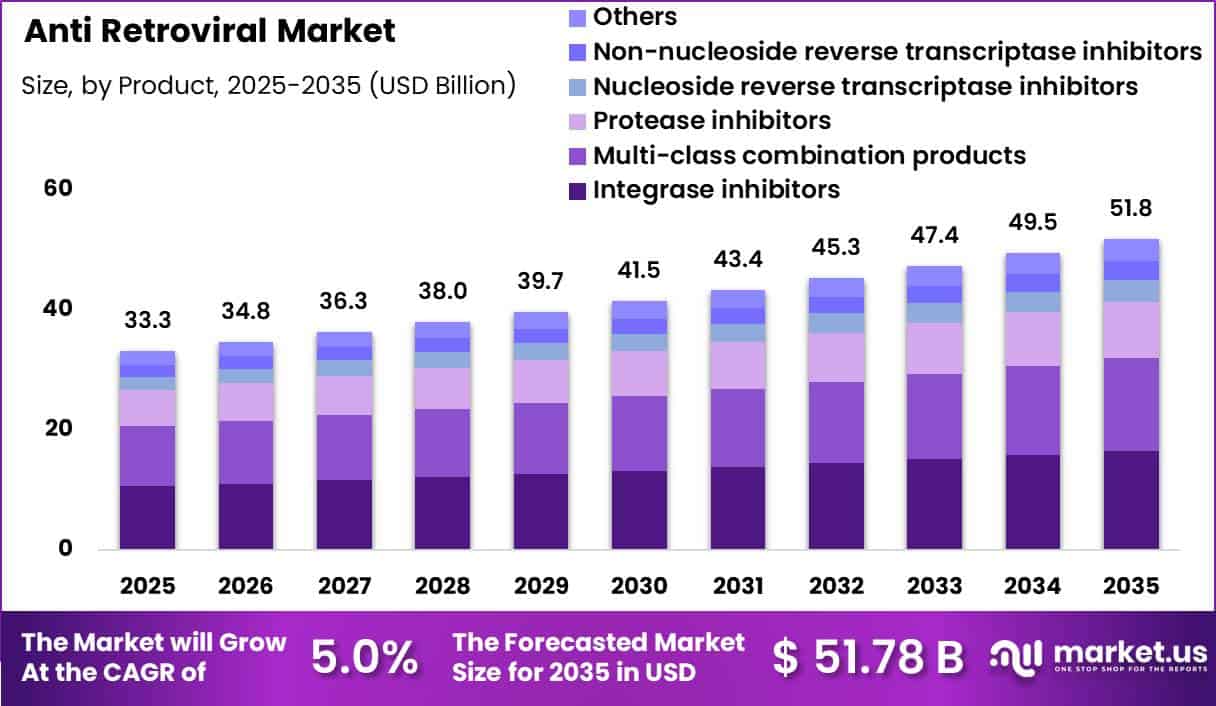
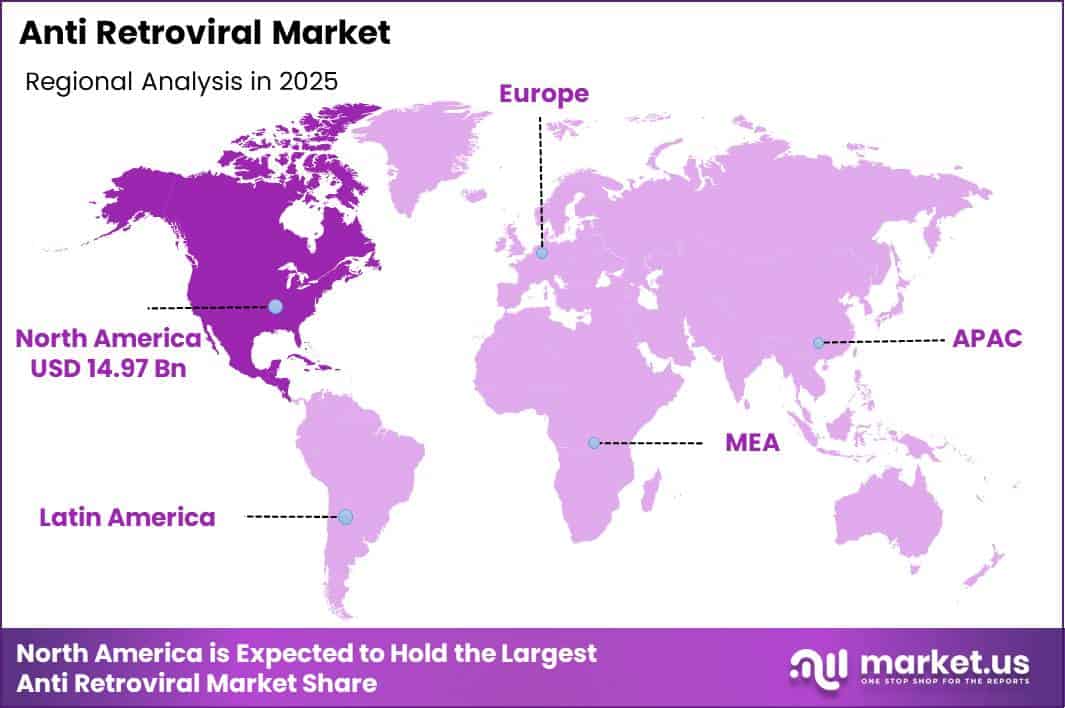
The Global Anti-Retroviral Market size is expected to be worth around US$ 51.78 Billion by 2035 from US$ 33.28 Billion in 2025, growing at a CAGR of 5.0% during the forecast period from 2026 to 2035. In 2025, North America led the market, achieving over 45% share with a revenue of US$ 14.97 Billion.
The global Anti-Retroviral market underpins the public-health response to HIV by ensuring continuous access to medicines that suppress viral replication and prevent disease progression. ARVs are used in combination as antiretroviral therapy, which enables people living with HIV to achieve near-normal life expectancy and reduces transmission to effectively zero when viral suppression is sustained.
According to UNAIDS, an estimated 39–41 million people were living with HIV worldwide in recent years. By 2023–2024, approximately 30–32 million people were receiving ART globally, representing a dramatic expansion from fewer than 8 million people in 2010. This scale-up reflects sustained procurement of ARV medicines through national HIV programs, donor-supported initiatives, and generic manufacturing in low- and middle-income countries.
The World Health Organisation reports that effective ART can reduce HIV-related mortality by more than 60% and is central to achieving the global 95-95-95 targets: 95% of people living with HIV are diagnosed, 95% of those diagnosed are on treatment, and 95% of those treated achieve viral suppression. Despite progress, about 1.3 million new HIV infections and over 600,000 AIDS-related deaths are still reported annually, underscoring continued demand for ARVs.
In the United States, HIV.gov notes that over 1.2 million people live with HIV and rely on lifelong ARV therapy. Ongoing adoption of fixed-dose combinations and long-acting injectable regimens is expected to further strengthen adherence, treatment outcomes, and sustained demand across global healthcare systems.
Key Takeaways
- Market Size: The Global Anti-Retroviral Market size was US$ 33.28 billion in 2025. The market is estimated to grow to US$ 51.78 billion by 2035.
- Market Share: The market’s Compound Annual Growth Rate (CAGR) from 2026 to 2035 will be 5.0%.
- Product: Integrase inhibitors have the largest market share, accounting for 32% of total product segment revenue.
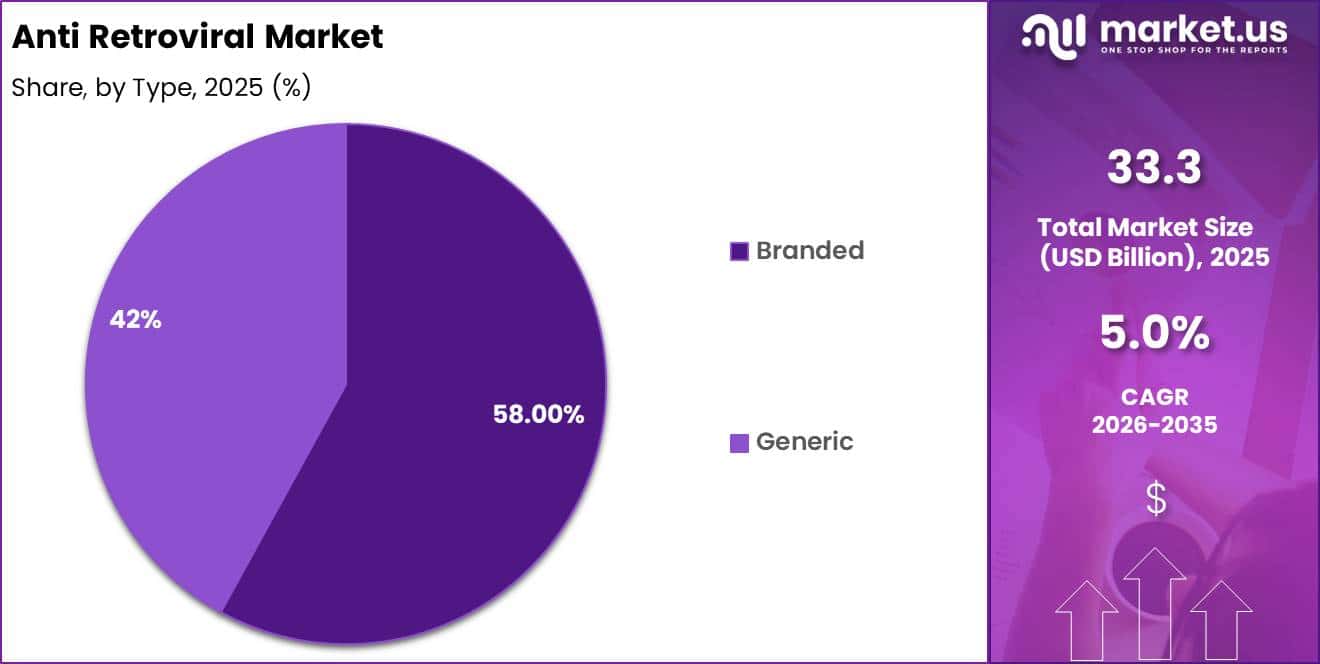
- Type: Branded drugs lead the segment, accounting for 58% of total type segment revenue.
- Age Group: Adult leads the segment, accounting for 35.16% of total age group revenue.
- Distribution Channel: Hospital Pharmacy dominates the segment, accounting for 88% of total distribution channel revenue.
- Regional: North America is the dominant regional market, accounting for 45% of global revenue.
Product Analysis
The Anti-Retroviral market is segmented by product class, reflecting differences in clinical efficacy, resistance barriers, safety profiles, and guideline preference. Integrase inhibitors account for 32.0% of total market share, representing the largest product category due to their rapid viral suppression, high genetic barrier to resistance, and favourable tolerability compared with earlier drug classes. Their positioning as first-line therapy across major HIV treatment guidelines has reinforced sustained demand growth.
Multi-class combination products follow closely with a 30.0% share, supported by strong uptake of fixed-dose regimens that simplify therapy, improve adherence, and reduce pill burden in long-term treatment settings.
Protease inhibitors contribute 18.0% of the market, primarily used in treatment-experienced patients and in cases requiring robust resistance management, although their growth is moderated by metabolic side-effect profiles.
Nucleoside reverse transcriptase inhibitors (NRTIs) account for 7.0%, reflecting their foundational role within combination regimens despite declining standalone use. Non-nucleoside reverse transcriptase inhibitors (NNRTIs) represent 6.0%, constrained by resistance concerns and evolving clinical preferences. The remaining 7.0% comprises other emerging or supportive therapies, highlighting ongoing diversification within ARV treatment strategies.
Type Analysis
By type, the Anti-Retroviral market remains dominated by branded drugs, which account for 58.0% of total market share, reflecting continued reliance on patented therapies and innovation-led treatment protocols.
Branded ARVs benefit from strong clinical differentiation, lifecycle management strategies, and preferential positioning in treatment guidelines, particularly for newer drug classes and fixed-dose combinations. These products are widely adopted in high-income markets and within donor-funded programs prioritising long-acting, low-toxicity, and resistance-resilient therapies.
Generic drugs represent 42.0% of the market, supported by expanding access initiatives, compulsory licensing frameworks, and cost-containment strategies in low- and middle-income countries. Generics play a critical role in scaling ART coverage by enabling large-volume procurement at reduced unit costs, particularly for mature molecules and backbone therapies.
The coexistence of branded and generic segments reflects a dual-market structure, where innovation-driven demand and affordability-driven access operate in parallel. Ongoing policy emphasis on universal treatment access, combined with selective uptake of premium therapies, is expected to sustain balanced growth across both segments.
Age Group Analysis
The Anti-Retroviral market segmented by age group highlights distinct treatment dynamics across patient populations. Adult patients account for 35.16% of the total market share, representing the primary treatment population across global HIV programs due to higher diagnosis rates, longer treatment duration, and sustained therapy adherence requirements. Adults typically drive demand for advanced combination therapies, long-acting formulations, and regimen switches linked to resistance management and comorbidities.
The pediatric segment, while smaller in share, remains strategically important, with demand shaped by weight-based dosing, palatable formulations, and long-term safety considerations. Ongoing efforts to reduce mother-to-child transmission and improve early diagnosis continue to support steady pediatric ARV utilisation.
The geriatric population is an emerging segment, reflecting increased life expectancy among people living with HIV and rising prevalence of age-related comorbidities. This group requires carefully tailored regimens with low toxicity and minimal drug interactions. Collectively, age-specific treatment needs are driving formulation innovation and differentiated prescribing practices across the ARV market.
Distribution Channel Analysis
Distribution channel dynamics in the Anti-Retroviral market are heavily weighted toward institutional supply models. Hospital pharmacies dominate with an 88% market share, reflecting centralised procurement systems, supervised treatment initiation, and integration with national HIV programs and speciality care centres.
Hospitals play a critical role in diagnosis confirmation, regimen selection, and early treatment monitoring, particularly for newly diagnosed and complex patients. This centralised structure also supports large-scale public procurement, inventory control, and adherence monitoring, reinforcing hospital pharmacies as the primary distribution hub.
Retail pharmacies contribute a smaller but growing share, particularly in urban and high-income settings where stable patients transition to community-based refills for chronic therapy maintenance. Online pharmacies represent an emerging channel, supporting decentralised access, discreet purchasing, and long-term refill convenience, although their adoption remains regulated due to prescription control requirements.
Overall, the dominance of hospital pharmacies underscores the clinical complexity and public-health governance surrounding ARV distribution, while alternative channels gradually expand to support long-term treatment continuity.
Key Market Segments
By Product
- Integrase Inhibitors
- Multi-Class Combination Products
- Protease Inhibitors
- Nucleoside Reverse Transcriptase Inhibitors (NRTIs)
- Non-Nucleoside Reverse Transcriptase Inhibitors (NNRTIs)
- Others
By Type
- Branded
- Generic
By Age Group
- Adult
- Pediatric
- Geriatric
By Distribution Channel
- Hospital Pharmacy
- Retail Pharmacy
- Online Pharmacy
Drivers
Long-acting regimen adoption and lifecycle extension
Long-acting modalities are changing the revenue mix from commodity-like daily oral refill patterns toward higher-value differentiated administration models tied to clinic visits, adherence support, and lifecycle management.
National Institutes of Health notes that antiretroviral therapy is now delivered not only through daily pills but also through monthly or every two-month injections. At the same time, the World Health Organisation has highlighted long-acting injectable options such as lenacapavir in prevention and newer injectable formulations as part of the evolving HIV care model.
This matters strategically because pharmaceutical valwinnerue shifts from molecule volume alone to persistence economics: fewer annual administrations can still support attractive revenue per patient when paired with branded depot formulations, cold chain handling, provider administration, and reduced discontinuation risk.
The immediate impact is concentrated in North America and Europe, where reimbursement systems can absorb speciality drug economics first, but over 2026 to 2030, these platforms also strengthen lifecycle defences against generic erosion, justifying roughly 1.7 % points of CAGR support.
| Driver | (~) % Impact on CAGR Forecast | Geographic Relevance | Impact Timeline |
|---|---|---|---|
| ART coverage expansion toward 95-95-95 targets | +2.1% | Sub-Saharan Africa core, South Asia, EU public systems, North America retention markets | Medium term (2-4 years) |
| Long-acting regimen adoption and lifecycle extension | +1.7% | North America core, EU, urban APAC, selected Latin America | Medium term (2-4 years) |
| Donor-funded procurement and public tender continuity | +1.9% | Africa core, donor-dependent LMICs, South Asia spill-over | Short term (≤ 2 years) |
| Guideline-led transition to integrase-based first-line therapy | +1.4% | Global, especially Africa, Asia, and public reimbursement markets in Europe | Short term (≤ 2 years) |
| Drug-resistance surveillance and switch-to-second-line demand | +1.2% | Africa core, Caribbean, selected Asian LMICs | Medium term (2-4 years) |
| Prevention-treatment convergence through PrEP and diagnosis expansion | +0.9% | North America, EU, Southern Africa, high-incidence urban APAC corridors | Long-term (≥ 4 years) |
Challenges
Donor Funding Volatility in Antiretroviral (ARV) Markets
Dependence on external funding creates a structurally fragile revenue base for antiretroviral manufacturers and distributors, with global HIV financing falling in several regions and remaining below levels required to meet 2030 targets.
In some cases, external programme funding has declined significantly from earlier peaks, contributing to instability in procurement planning. This volatility leads to stop-go purchasing cycles, with tender delays of 3 to 9 months, year-on-year order variability of 10 to 15% for key first-line regimens, and shortened contracting horizons, from 3 to 5 years to 1 to 2 years.
As a result, suppliers incorporate higher risk premiums into pricing and face reduced incentives for long-term capacity expansion, especially for investments requiring 7- to 10-year payback periods. To manage uncertainty, countries and manufacturers often rely on buffer stocks, staggered procurement, and blended financing approaches that combine domestic funding, insurance mechanisms, and donor support.
Risk-sharing contracts and improved multi-year demand visibility are increasingly being explored to stabilise supply. Overall, this funding volatility can suppress market growth, contributing an estimated 1.2 % point drag on ARV market CAGR, while increasing the importance of financing diversification and pooled procurement mechanisms.
| Challenge | (~) % CAGR Friction Drag | Geographic Relevance | Mitigation Horizon |
|---|---|---|---|
| Donor funding volatility | -1.2% | Sub-Saharan Africa, low-income LMICs | Long-term (≥ 4 years) |
| Fragile ARV supply chains | -0.9% | Africa corridors, South Asia, LATAM | Medium term (2-4 years) |
| API & input cost volatility | -0.8% | India generics hub, global export lanes | Medium term (2-4 years) |
| Regimen evolution complexity | -0.7% | Global treatment hubs, BRICS | Medium term (2-4 years) |
| Workforce & clinic capacity strain | -0.6% | High-burden public systems | Long-term (≥ 4 years) |
| Regulatory & IP navigation drag | -0.5% | MICs, emerging long-acting markets | Long-term (≥ 4 years) |
Restraints
Structural access gaps in key populations and pediatric ARV coverage
Structural access gaps in antiretroviral coverage among key populations, children, and adolescents remain a key restraint on market expansion, even as global ART coverage reaches approximately 77 to 78 %.
Coverage among marginalised groups such as men who have sex with men, sex workers, people who inject drugs, migrants, and paediatric patients remains significantly lower in many regions due to stigma, criminalisation, weak service delivery models, and limited paediatric and adolescent-friendly formulations.
These gaps lead to treatment interruptions and prevent full realisation of the 90 % ART target by 2030, with millions of missed patient years of therapy and reduced demand for both standard regimens and newer long-acting options.
From a supply perspective, underpenetration of these segments weakens incentives for manufacturers to invest in specialised paediatric formulations and community-based delivery systems, which often carry higher costs and lower margins. Overall, these structural barriers are estimated to reduce global ARV market CAGR by approximately 1.0 % point over the medium term, despite continued progress in overall treatment scale-up.
| Restraint | (~) % Impact on CAGR Forecast | Geographic Relevance | Impact Timeline |
|---|---|---|---|
| Donor funding compression & fragile domestic financing | -2.0% | Sub-Saharan Africa core, low-income APAC, select LATAM | Medium term (2–4 years) |
| High ARV pricing, slow generic penetration, and cost-intensive long-acting regimens | -1.5% | North America core, EU, upper-middle-income APAC | Medium term (2–4 years) |
| ARV API and formulation manufacturing concentration & supply chain disruptions | -1.2% | Global, with outsized impact on Africa and small island states | Short–Medium term (≤ 4 years) |
| Regulatory complexity and uneven market authorisation for innovative ARVs & PrEP | -0.8% | Emerging markets in Asia, Africa, and MENA | Medium–Long term (≥ 3 years) |
| Structural access gaps among key populations and pediatric segments | -1.0% | Sub-Saharan Africa, parts of South & Southeast Asia, Eastern Europe | Long term (≥ 4 years) |
Opportunity
Long-Acting ARV Platformization as a Growth Opportunity
Long-acting antiretroviral ARV platformization is an emerging growth opportunity, as current uptake of long-acting injectables and extended duration regimens remains limited to niche populations in high-income settings and specific adherence-challenged groups.
At present, only a small share of the approximately 32 million people on ART use long-acting therapies, despite clinical evidence showing viral suppression rates of around 96% with twice-yearly injectable regimens and generally favourable safety and adherence profiles.
If developed as a scalable platform across treatment, prevention, and switch therapies, long-acting ARVs could expand access to an additional 6 to 8 million patients by 2035, particularly in high-income and urban middle-income markets. These therapies typically command 20 to 35 % higher per-patient revenues than oral generics, supported by administration services and premium pricing, while also improving margins through reduced dispensing and better adherence outcomes.
In a more mature adoption scenario, penetration could reach 20 to 25 % of treated patients in North America, Western Europe, and select urban regions in Latin America by 2035. This could contribute an estimated 2.2% points of incremental CAGR to the global ARV market, assuming continued investment in depot technologies, delivery infrastructure, and integrated care networks.
| Opportunity | (~) % Potential CAGR Upside | Geographic Relevance | Execution Window |
|---|---|---|---|
| Long-acting ARV platformization | +2.2% | North America, EU, urban LATAM | Medium term (2-4 years) |
| Community-led differentiated service delivery | +1.6% | Sub-Saharan Africa, South & Southeast Asia | Short term (≤ 2 years) |
| Value-based ARV contracting with payers | +1.4% | North America core, EU-5 | Medium term (2-4 years) |
| Integrated HIV–TB–comorbidity bundles | +1.8% | High-burden LMICs, APAC emerging | Long-term (≥ 4 years) |
| Digital adherence and micro-insurance layers | +1.3% | Africa mobile-first, India, ASEAN | Short to medium term (≤ 3 years) |
| Tiered regional manufacturing and IP partnerships | +1.7% | Africa, India, MENA, LATAM | Long term (≥ 4 years) |
Regional Analysis
In 2025, North America led the market, achieving over 45% share with a revenue of US$ 14.97 billion. The Anti-Retroviral market demonstrates pronounced regional variation shaped by disease prevalence, healthcare infrastructure, funding mechanisms, and policy frameworks. Sub-Saharan Africa represents the largest treatment base globally, accounting for the majority of people living with HIV.
Market demand in this region is volume-driven and supported by large-scale public procurement programs, international donor funding, and widespread adoption of cost-effective generic therapies to expand treatment coverage.
North America holds a leading share in value terms, driven by high diagnosis rates, near-universal treatment coverage, and strong uptake of branded, integrase-based and long-acting regimens within advanced healthcare systems. The region benefits from innovation-led prescribing and sustained investment in HIV care infrastructure.
Europe follows a similar pattern, characterised by comprehensive reimbursement frameworks and guideline-driven use of combination therapies, with Western Europe contributing the majority of regional revenue. Asia-Pacific represents a high-growth region, supported by expanding screening programs, improving access initiatives, and increasing domestic production of generic ARVs in countries with large patient populations.
Meanwhile, Latin America and the Middle East & Africa exhibit steady growth, supported by gradual improvements in healthcare access and national HIV strategies. Overall, regional market dynamics reflect a dual structure of high-volume access-driven demand and high-value innovation-led consumption.
Key Regions and Countries
North America
- The US
- Canada
Europe
- Germany
- France
- The U.K.
- Italy
- Spain
- Russia & CIS
- Rest of Europe
Asia Pacific
- China
- India
- Japan
- South Korea
- ASEAN
- Australia & New Zealand
- Rest of Asia Pacific
Middle East & Africa
- GCC
- South Africa
- Rest of the Middle East & Africa
Latin America
- Brazil
- Mexico
- Rest of Latin America
Key Player Analysis
Suppliers in the global antiretroviral market seek competitive advantage through long-acting injectable formulation development, enabling monthly or bimonthly dosing intervals that substantially improve patient adherence compared to daily oral regimens, alongside single tablet regimen innovation combining multiple antiretroviral classes into once daily fixed dose combinations that simplify treatment protocols and reduce pill burden for HIV positive patients requiring lifelong therapy.
Key strategic focus areas include integrase inhibitor-based regimen optimisation representing the current standard of care backbone, generic antiretroviral portfolio expansion targeting PEPFAR and Global Fund-funded developing nation procurement programs, and pre-exposure prophylaxis market development targeting HIV prevention indication growth beyond traditional treatment-focused revenue streams.
Companies continue investing in pediatric formulation development, addressing unmet needs in HIV positive children requiring age-appropriate dosing formats, regulatory approval expansion across sub-Saharan African and Asian markets with the highest HIV prevalence burden, and government and multilateral procurement relationship development with PEPFAR, UNITAID, and national AIDS program institutional buyers globally.
The progressive transition from twice daily and once daily oral regimens toward long-acting injectable antiretroviral therapy delivering sustained drug plasma concentrations through bimonthly or quarterly injection schedules represents the most transformative clinical and commercial trend reshaping competitive positioning across the antiretroviral market through the forecast period to 2035.
Top Key Players
- Gilead Sciences Inc.
- ViiV Healthcare (GSK/Pfizer/Shionogi JV)
- Johnson & Johnson — Janssen Pharmaceuticals
- Merck & Co., Inc. (MSD)
- Bristol-Myers Squibb Company
- AbbVie Inc.
- F. Hoffmann-La Roche Ltd.
- Boehringer Ingelheim International GmbH
- Teva Pharmaceutical Industries Ltd.
- Cipla Ltd.
- Hetero Drugs Ltd.
- Emcure Pharmaceuticals Ltd.
- Viatris Inc. (incl. Legacy Mylan)
- Daiichi Sankyo Company Limited
- Aspen Pharmacare Holdings Ltd.
Recent Developments
- In February 2026, ViiV Healthcare received regulatory approval for its extended cabotegravir and rilpivirine long-acting injectable regimen across three additional Asian markets, targeting hospital pharmacy institutional procurement programs for HIV-positive patients seeking monthly injection-based treatment alternatives.
- In March 2026, Cipla Ltd. secured a multi-year generic antiretroviral supply agreement with a leading African national AIDS program, covering fixed-dose combination tenofovir, lamivudine, and dolutegravir tablet procurement across public hospital pharmacy institutional distribution networks.
- In May 2026, Merck & Co. launched its islatravir-based long-acting oral antiretroviral combination program across North American and European HIV treatment center institutional buyers, targeting treatment-experienced patients requiring novel mechanism antiretroviral options following resistance to existing regimen classes.
Report Scope
| Report Features | Description |
|---|---|
| Market Value (2025) | US$ 33.28 Billion |
| Forecast Revenue (2035) | US$ 51.78 Billion |
| CAGR (2026-2035) | 5.0%. |
| Base Year for Estimation | 2025 |
| Historic Period | 2020-2024 |
| Forecast Period | 2026-2035 |
| Report Coverage | Revenue Forecast, Market Dynamics, Competitive Landscape, Recent Developments |
| Segments Covered | By Product (Integrase Inhibitors, Multi-Class Combination Products, Protease Inhibitors, Nucleoside Reverse Transcriptase Inhibitors (NRTIs), Non-Nucleoside Reverse Transcriptase Inhibitors (NNRTIs), Others), By Type (Branded, Generic), By Age Group (Adult, Pediatric, Geriatric), By Distribution Channel (Hospital Pharmacy, Retail Pharmacy, Online Pharmacy) |
| Regional Analysis | North America – The US, Canada; Europe – Germany, France, U.K., Italy, Spain, Russia & CIS, Rest of Europe; Asia Pacific – China, India, Japan, South Korea, ASEAN, Australia & New Zealand, Rest of Asia Pacific; Middle East & Africa – GCC, South Africa, Rest of Middle East & Africa; Latin America – Brazil, Mexico, Rest of Latin America |
| Competitive Landscape | Gilead Sciences Inc., ViiV Healthcare (GSK/Pfizer/Shionogi JV), Johnson & Johnson — Janssen Pharmaceuticals, Merck & Co., Inc. (MSD), Bristol-Myers Squibb Company, AbbVie Inc., F. Hoffmann-La Roche Ltd., Boehringer Ingelheim International GmbH, Teva Pharmaceutical Industries Ltd., Cipla Ltd., Hetero Drugs Ltd., Emcure Pharmaceuticals Ltd., Viatris Inc. (incl. Legacy Mylan), Daiichi Sankyo Company Limited, Aspen Pharmacare Holdings Ltd. |
| Customization Scope | Customization for segments, region/country-level will be provided. Moreover, additional customization can be done based on the requirements. |
| Purchase Options | We have three licenses to opt for: Single User License, Multi-User License (Up to 5 Users), Corporate Use License (Unlimited User and Printable PDF) |





































