


Global Anti-fatigue Cosmetics Market Size, Share, Growth Analysis By Product (Cream, Oil, Lotion, Serum, Gel, Others), By End Use (Women, Men, Unisex), By Distribution Channel (Offline, Online), By Region and Companies - Industry Segment Outlook, Market Assessment, Competition Scenario, Statistics, Trends and Forecast 2026-2035
- Published date: Feb 2026
- Report ID: 180099
- Number of Pages: 301
- Format:
-
keyboard_arrow_up
Quick Navigation
Report Overview
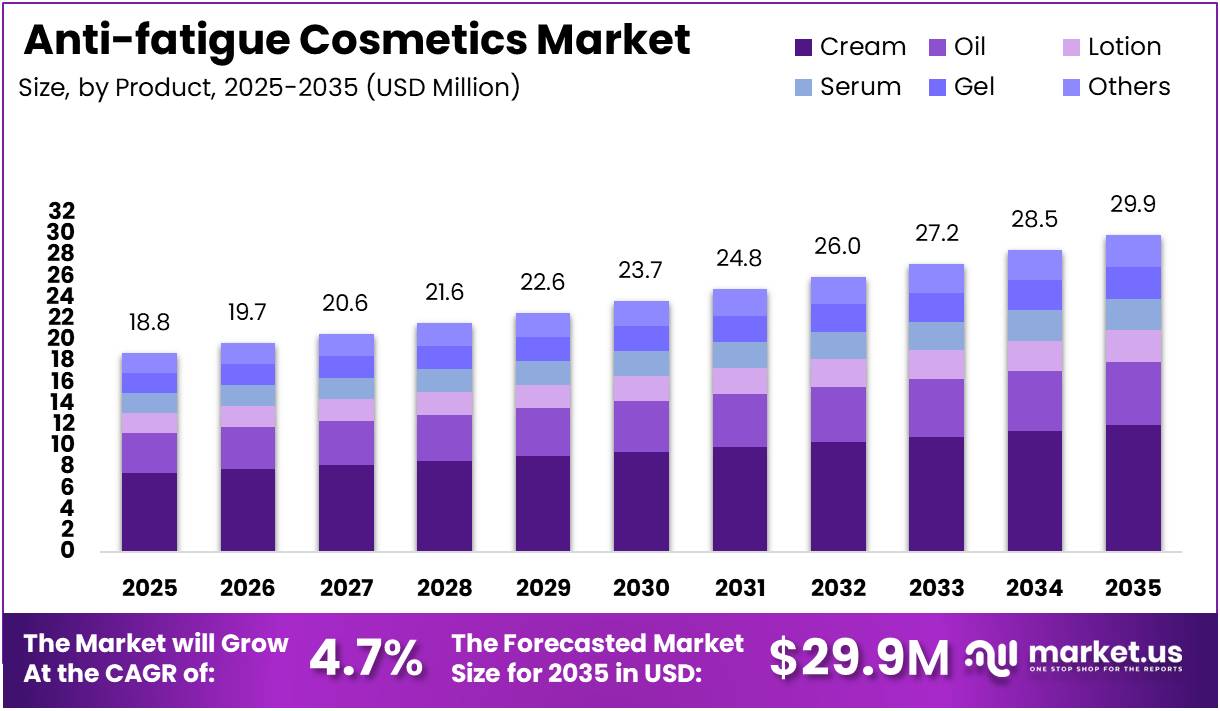
The Global Anti-fatigue Cosmetics Market size is expected to be worth around USD 29.9 Million by 2035 from USD 18.8 Million in 2025, growing at a CAGR of 4.7% during the forecast period 2026 to 2035.
Anti-fatigue cosmetics are skincare products specifically formulated to reduce visible signs of tiredness, dullness, and skin exhaustion. These include creams, serums, oils, and gels containing energizing active ingredients such as caffeine, vitamins, and bio-active compounds. Additionally, they target puffiness, dark circles, and uneven skin tone caused by modern lifestyle pressures.
The market is primarily driven by rising urban lifestyle stress, irregular sleep habits, and increasing digital screen exposure. Consumers are actively seeking revitalizing skincare solutions that deliver visible results. Moreover, growing awareness of pollution-related skin damage has encouraged brands to innovate with protective and energizing formulations that go beyond traditional moisturizers.
Significant growth opportunities exist in the development of hybrid skincare-makeup products that provide immediate radiance. The expansion of gender-neutral and men’s grooming lines is also unlocking new market segments. Consequently, brands are investing in advanced bio-active ingredients that target cellular energy restoration at a deeper level of the skin.
Regulatory bodies across key markets continue to encourage greater transparency in cosmetic ingredient labeling and efficacy substantiation. This has prompted manufacturers to support anti-fatigue products with clinical testing and dermatological validation. Therefore, compliance with evolving standards across North America and Europe is shaping product development strategies industry-wide.
According to a study published by PMC (NCBI), 73% of female skincare consumers associate repair and lightening product descriptions with products that can improve skin condition. This reinforces the critical role of benefit-driven messaging for anti-fatigue cosmetic brands targeting the women’s segment globally.
According to Clean Skin Club, 71% of consumers globally say they discover new skincare products through social media, underlining digital marketing as a core growth channel. Additionally, clinical data referenced by BuyCosmetics.cy indicates that advanced biotech anti-fatigue eye gels can deliver up to 78% reduction in perceived eye fatigue within just 14 days.
Key Takeaways
- The global Anti-fatigue Cosmetics Market was valued at USD 18.8 Million in 2025 and is projected to reach USD 29.9 Million by 2035.
- The market is expected to grow at a CAGR of 4.7% during the forecast period 2026 to 2035.
- By Product, Cream holds the dominant position with a market share of 32.1% in 2025.
- By End Use, Women account for the largest share at 65.2% of the market in 2025.
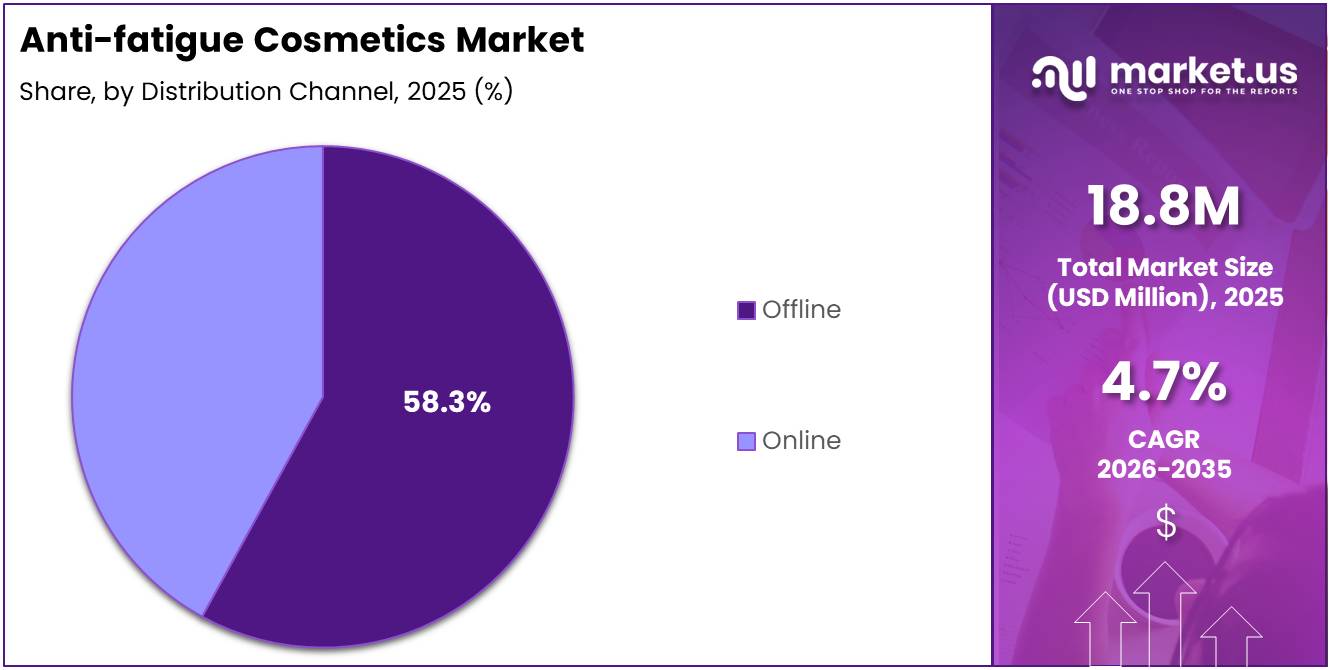
- By Distribution Channel, Offline leads with a share of 58.3% in 2025.
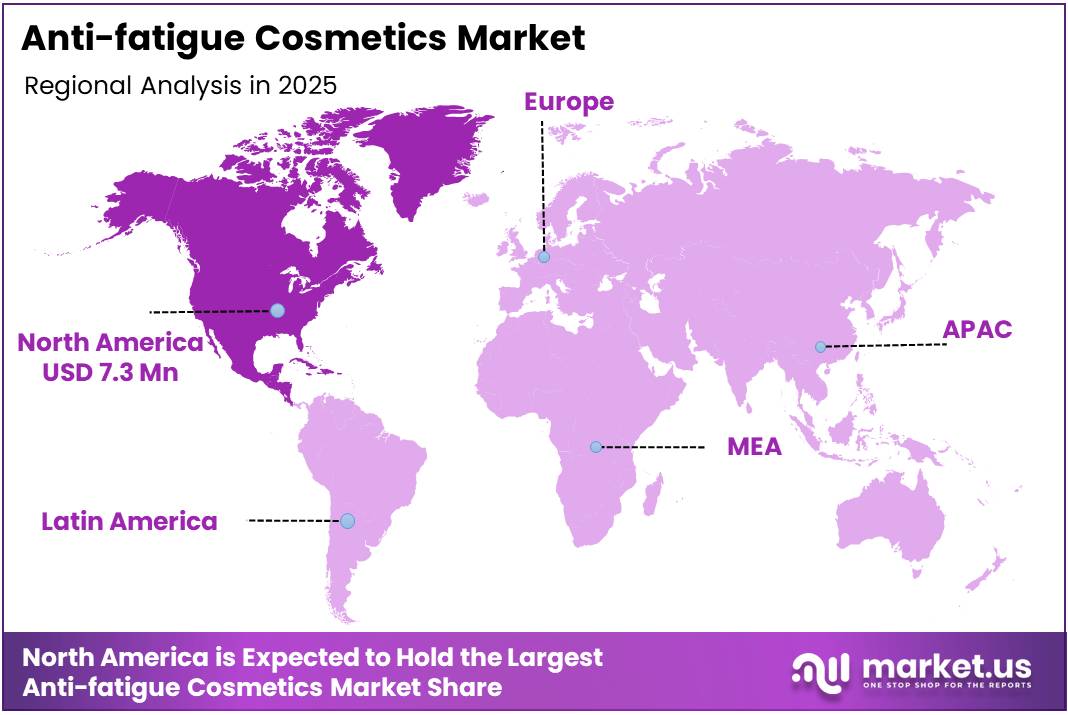
- North America dominates the regional landscape with a 39.10% market share, valued at USD 7.3 Million in 2025.
By Product Analysis
Cream dominates with 32.1% due to its wide consumer acceptance and versatile formulation capabilities.
In 2025, Cream held a dominant market position in the By Product segment of the Anti-fatigue Cosmetics Market, with a 32.1% share. Creams are widely preferred for their rich texture and ability to deliver sustained hydration alongside energizing active ingredients. They remain the most trusted format for addressing visible skin fatigue and dullness in daily skincare routines.
Oil-based anti-fatigue formulations are gaining popularity among consumers seeking intensive nourishment and rapid skin absorption. These products are enriched with essential fatty acids and botanical extracts that help restore overnight skin vitality. Moreover, facial oils are increasingly positioned as premium skincare solutions in global beauty markets.
Lotion formats appeal to consumers who prefer lightweight, non-greasy anti-fatigue products suited for daily use. They offer balanced hydration while delivering active ingredients that combat skin tiredness effectively. Consequently, lotions are especially popular in humid climates and among younger consumers seeking fast-absorbing skincare routines.
Serum formulations are valued for their high concentration of active ingredients targeting fatigue-related skin concerns such as dark circles and uneven skin tone. Their lightweight consistency makes them ideal for layering under moisturizers. Additionally, serums are a rapidly growing sub-segment driven by increasing demand for clinically effective skincare.
Gel-based anti-fatigue cosmetics are particularly popular for eye care and cooling applications. Their refreshing texture provides an immediate de-puffing effect well-suited for warm climates and tired-looking eyes. Therefore, gels are frequently marketed in roll-on and cooling formats targeting urban consumers with active, high-stress daily routines.
Others category encompasses masks, patches, and emerging delivery formats designed to address fatigue-related skin issues in a targeted manner. These products cater to consumers seeking occasional treatment-style care. However, this sub-segment holds a comparatively smaller share, as consumers generally gravitate toward daily-use formats such as creams and serums.
By End Use Analysis
Women dominates with 65.2% due to higher skincare engagement and established product adoption habits.
In 2025, Women held a dominant market position in the By End Use segment of the Anti-fatigue Cosmetics Market, with a 65.2% share. Female consumers represent the largest user base, driven by well-established skincare routines and strong awareness of anti-fatigue product benefits. Moreover, targeted marketing and diverse product portfolios have further reinforced women’s leading position in this segment.
Men segment is witnessing growing interest as male grooming awareness increases across global markets. More men are incorporating anti-fatigue skincare products into daily routines to address stress-related dullness and puffiness. Consequently, brands are launching dedicated lines with streamlined routines and masculine branding to capture this expanding consumer group.
Unisex anti-fatigue cosmetics are gaining traction as consumers increasingly move away from gender-specific beauty categories. These products are formulated to address universal skin fatigue concerns, making them commercially appealing across broad demographics. Additionally, the rise of gender-neutral beauty aligns well with evolving social attitudes and inclusive brand positioning strategies globally.
By Distribution Channel Analysis
Offline dominates with 58.3% due to strong retail infrastructure and consumer preference for in-store product trials.
In 2025, Offline held a dominant market position in the By Distribution Channel segment of the Anti-fatigue Cosmetics Market, with a 58.3% share. Physical retail channels, including specialty beauty stores, department stores, and pharmacies, remain the preferred shopping destination for skincare consumers. The ability to test and experience products in-store significantly supports purchase confidence and brand loyalty.
The Online distribution channel is growing rapidly, driven by the expansion of e-commerce platforms and direct-to-consumer brand strategies. Social media discovery and influencer marketing are key drivers of online skincare sales globally. Moreover, the convenience of home delivery and subscription models is encouraging more consumers to purchase anti-fatigue products through digital channels.
Key Market Segments
By Product
- Cream
- Oil
- Lotion
- Serum
- Gel
- Others
By End Use
- Women
- Men
- Unisex
By Distribution Channel
- Offline
- Online
Drivers
Rising Urban Lifestyle Stress and Sleep Deprivation Increasing Demand for Revitalizing Skincare Solutions
Modern urban lifestyles are marked by high stress levels, irregular sleep patterns, and long working hours. These factors contribute directly to visible skin fatigue, including dullness, puffiness, and dark circles. Consequently, consumers are actively seeking revitalizing skincare solutions that address the measurable physical effects of chronic stress and poor rest on skin appearance.
Growing consumer awareness of digital screen exposure and environmental pollution as key contributors to skin fatigue is reshaping purchasing behavior. More consumers now understand the link between blue light damage, oxidative stress, and accelerated skin aging. Therefore, anti-fatigue cosmetics offering both protective and energizing benefits are gaining strong and sustained market traction.
Additionally, the increasing preference for multi-functional skincare products is further driving demand for anti-fatigue formulations. Consumers seek products that simultaneously energize, brighten, and protect skin within a single streamlined routine. This efficiency-focused approach to skincare supports continued growth in the anti-fatigue cosmetics market across all major consumer demographics and regions.
Restraints
Consumer Skepticism Regarding Efficacy Claims Limits Broader Market Adoption
Consumer skepticism remains one of the most significant challenges facing the anti-fatigue cosmetics market today. Many buyers question whether specialized products truly deliver the claimed revitalizing and energizing benefits. This doubt is frequently reinforced by inconsistent product results and a lack of standardized clinical evidence openly supporting efficacy claims across the category.
The high substitution threat from traditional skincare products and affordable home remedies further limits market growth potential. Consumers can replicate many anti-fatigue benefits using basic moisturizers or simple cold compresses. Consequently, convincing buyers to invest in specialized formulations requires clear differentiation and transparent communication of measurable, proven product benefits.
Additionally, price sensitivity among mainstream consumers poses a notable restraint, as anti-fatigue cosmetics are often positioned at premium price points. Many consumers opt for familiar, lower-cost alternatives rather than investing in specialized products. Therefore, brands must carefully balance premium positioning with more accessible pricing strategies to effectively broaden their addressable consumer base.
Growth Factors
Innovation in Hybrid Products and Advanced Bio-Active Ingredients Accelerates Market Expansion
The development of hybrid skincare-makeup products delivering immediate radiance effects represents a major growth opportunity for the anti-fatigue cosmetics market. These dual-function products address growing consumer demand for simplified beauty routines. Moreover, they allow brands to attract both skincare and cosmetics buyers simultaneously, expanding market reach without requiring separate product category investments.
Integration of advanced bio-active ingredients targeting cellular energy restoration is accelerating product innovation across the market. Ingredients such as mitochondria-activating compounds, peptides, and adaptogenic plant extracts are increasingly incorporated into new formulations. Consequently, these scientifically supported ingredients enhance brand credibility and attract health-conscious consumers seeking genuinely effective, results-driven skincare solutions.
The expansion of gender-neutral and men’s anti-fatigue grooming product lines is opening significant new revenue streams for the industry. Brands are strategically broadening their audience beyond traditional female consumers. Additionally, inclusive marketing and inclusive product design are helping manufacturers reach underserved demographics and diversify their commercial footprint across key global regions.
Emerging Trends
Caffeine-Infused Formulations and Blue-Light Protection Claims Reshape the Anti-Fatigue Cosmetics Landscape
Caffeine-infused and vitamin-enriched skincare formulations are among the fastest-growing trends in the anti-fatigue cosmetics segment. Caffeine is widely recognized for its de-puffing and circulation-boosting properties in topical applications. Moreover, vitamin complexes including B3, B5, and C are increasingly featured as core active ingredients within energizing and brightening anti-fatigue product lines.
Adoption of blue-light protection and anti-pollution skincare claims is reshaping product positioning across the entire beauty industry. With digital screen usage at historic levels globally, consumers are actively seeking cosmetics that shield skin from environmental aggressors. Consequently, brands are incorporating antioxidant-rich formulations and pollution-barrier technologies to directly address this growing and well-documented consumer concern.
The growing demand for cooling, roll-on, and de-puffing eye care products is emerging as a distinct and commercially important sub-trend within the anti-fatigue cosmetics market. These formats provide immediate sensory refreshment alongside visible skin improvement benefits. Additionally, their portable and convenient design aligns well with the on-the-go routines of urban consumers worldwide.
Regional Analysis
North America Dominates the Anti-fatigue Cosmetics Market with a Market Share of 39.10%, Valued at USD 7.3 Million
North America holds the leading position in the global anti-fatigue cosmetics market, accounting for 39.10% of total market revenue, valued at USD 7.3 Million in 2025. The region benefits from high consumer spending on personal care, a strong retail infrastructure, and deep awareness of stress-driven skincare needs. Moreover, well-established beauty brands and advanced distribution networks continue to support sustained regional market growth.
Europe Anti-fatigue Cosmetics Market Trends
Europe represents a mature and innovation-driven market for anti-fatigue cosmetics, supported by a strong cultural emphasis on premium skincare. Consumers across Germany, France, and the UK demonstrate consistently high demand for scientifically substantiated beauty products. Additionally, stringent ingredient regulations in the region encourage brands to invest in clinically validated anti-fatigue formulations that meet high consumer expectations.
Asia Pacific Anti-fatigue Cosmetics Market Trends
Asia Pacific is emerging as a high-growth region for anti-fatigue cosmetics, driven by expanding middle-class populations and rising beauty consciousness. Countries such as China, Japan, and South Korea have deeply established skincare cultures and high rates of product adoption. Consequently, the region presents significant and growing opportunities for both global and regional anti-fatigue beauty brands.
Latin America Anti-fatigue Cosmetics Market Trends
Latin America is experiencing gradual growth in the anti-fatigue cosmetics segment, driven by rising urbanization and increasing consumer awareness of advanced skincare solutions. Brazil and Mexico are the primary contributing markets in the region. However, economic volatility and persistent price sensitivity among consumers may moderate the overall pace of market expansion in the near term.
Middle East and Africa Anti-fatigue Cosmetics Market Trends
The Middle East and Africa represent an emerging market for anti-fatigue cosmetics, with growth driven by rising disposable incomes and expanding beauty retail infrastructure across GCC countries. Growing urban populations and increased exposure to global beauty trends are gradually strengthening demand. Additionally, the region’s young demographic profile supports long-term potential for revitalizing skincare product adoption.
Key Regions and Countries
North America
- US
- Canada
Europe
- Germany
- France
- The UK
- Spain
- Italy
- Rest of Europe
Asia Pacific
- China
- Japan
- South Korea
- India
- Australia
- Rest of APAC
Latin America
- Brazil
- Mexico
- Rest of Latin America
Middle East & Africa
- GCC
- South Africa
- Rest of MEA
Key Company Insights
L’Oréal Paris is one of the most prominent players in the anti-fatigue cosmetics market, offering a broad portfolio of energizing and revitalizing skincare products across global markets. The company consistently invests in research and development to advance formulation science and active ingredient delivery systems. Its extensive presence across both offline and online retail channels reinforces a strong and well-sustained competitive market position.
Unilever operates a diverse portfolio of personal care and skincare brands that effectively address fatigue-related skin concerns for a broad consumer base worldwide. The company leverages its global supply chain and deep distribution network to reach consumers in both developed and emerging markets efficiently. Additionally, Unilever’s ongoing investment in sustainable ingredient sourcing aligns with growing consumer preferences for responsible and ethical beauty products.
Shiseido Company, Limited brings a distinguished heritage of advanced skincare science to the anti-fatigue cosmetics space. The Japanese brand is widely recognized for integrating traditional botanical ingredients with cutting-edge biotechnology throughout its product development process. Consequently, Shiseido’s formulations are trusted for their efficacy in visibly addressing fatigue-related skin concerns, positioning it as a preferred choice among discerning global skincare consumers.
The Estée Lauder Companies Inc. is a key driver of innovation in the premium anti-fatigue skincare segment worldwide. The company’s portfolio includes highly regarded eye care and overnight repair products that directly target visible signs of skin fatigue. Moreover, its commitment to clinical validation and luxury brand positioning enables it to maintain premium pricing and strong consumer loyalty across key global markets.
Key Players
- L’Oréal Paris
- Unilever
- Shiseido Company, Limited
- The Estée Lauder Companies Inc.
- Biotique
- Christian Dior SE
- Nuxe
- Groupe Clarins
- DECIEM Beauty Group Inc.
Recent Developments
- July 2025 – The Estée Lauder Companies launched the Advanced Night Repair Eye Lift + Sculpt Eye Cream, a targeted addition to its renowned anti-aging and anti-fatigue eye care range. This product reinforces the company’s commitment to clinically advanced skincare solutions addressing visible eye fatigue and skin laxity.
- June 2025 – L’Oréal agreed to acquire a majority stake in British skincare brand Medik8, strengthening its position in the fast-growing dermatological skincare segment. This strategic acquisition expands L’Oréal’s access to science-backed formulations and broadens its reach in the premium skincare and anti-fatigue cosmetics space.
- February 2025 – Gattefossé unveiled Noxifense at PCHi China, a new ingredient designed to support skin protection against environmental stressors. This launch reflects growing industry focus on bio-active solutions targeting pollution-induced skin fatigue and cellular damage in advanced cosmetic formulations.
Report Scope
Report Features Description Market Value (2025) USD 18.8 Million Forecast Revenue (2035) USD 29.9 Million CAGR (2026-2035) 4.7% Base Year for Estimation 2025 Historic Period 2020-2024 Forecast Period 2026-2035 Report Coverage Revenue Forecast, Market Dynamics, Competitive Landscape, Recent Developments Segments Covered By Product (Cream, Oil, Lotion, Serum, Gel, Others), By End Use (Women, Men, Unisex), By Distribution Channel (Offline, Online) Regional Analysis North America (US and Canada), Europe (Germany, France, The UK, Spain, Italy, and Rest of Europe), Asia Pacific (China, Japan, South Korea, India, Australia, and Rest of APAC), Latin America (Brazil, Mexico, and Rest of Latin America), Middle East & Africa (GCC, South Africa, and Rest of MEA) Competitive Landscape L’Oréal Paris, Unilever, Shiseido Company, Limited, The Estée Lauder Companies Inc., Biotique, Christian Dior SE, Nuxe, Groupe Clarins, DECIEM Beauty Group Inc. Customization Scope Customization for segments, region/country-level will be provided. Moreover, additional customization can be done based on the requirements. Purchase Options We have three licenses to opt for: Single User License, Multi-User License (Up to 5 Users), Corporate Use License (Unlimited User and Printable PDF)  Anti-fatigue Cosmetics MarketPublished date: Feb 2026add_shopping_cartBuy Now get_appDownload Sample
 -
-
- L'Oréal Paris
- Unilever
- Shiseido Company, Limited
- The Estée Lauder Companies Inc.
- Biotique
- Christian Dior SE
- Nuxe
- Groupe Clarins
- DECIEM Beauty Group Inc.
Our Clients

- 180099
- Feb 2026






