


Market Overview
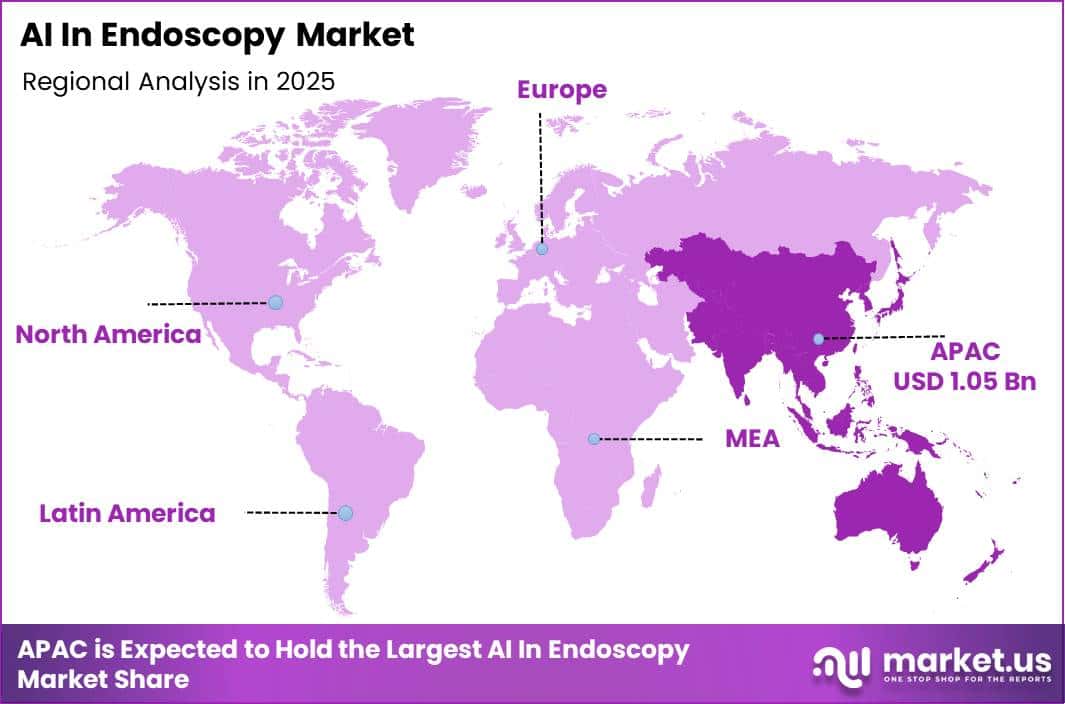
The Global AI in Endoscopy Market size is expected to reach around US$ 31.2 Billion by 2035, up from US$ 2.8 Billion in 2025, growing at a CAGR of 24.3% during the forecast period from 2026 to 2035. In 2025, Asia Pacific led the market, achieving over 37.45% market share with revenue of US$1.05 Billion.
The Global AI in Endoscopy Market is witnessing rapid transformation as artificial intelligence technologies become increasingly integrated into gastrointestinal, colorectal, and diagnostic endoscopic procedures. AI-powered endoscopy solutions use deep learning, computer vision, and real-time image analysis to assist physicians in detecting abnormalities, improving diagnostic accuracy, and supporting clinical decision-making.
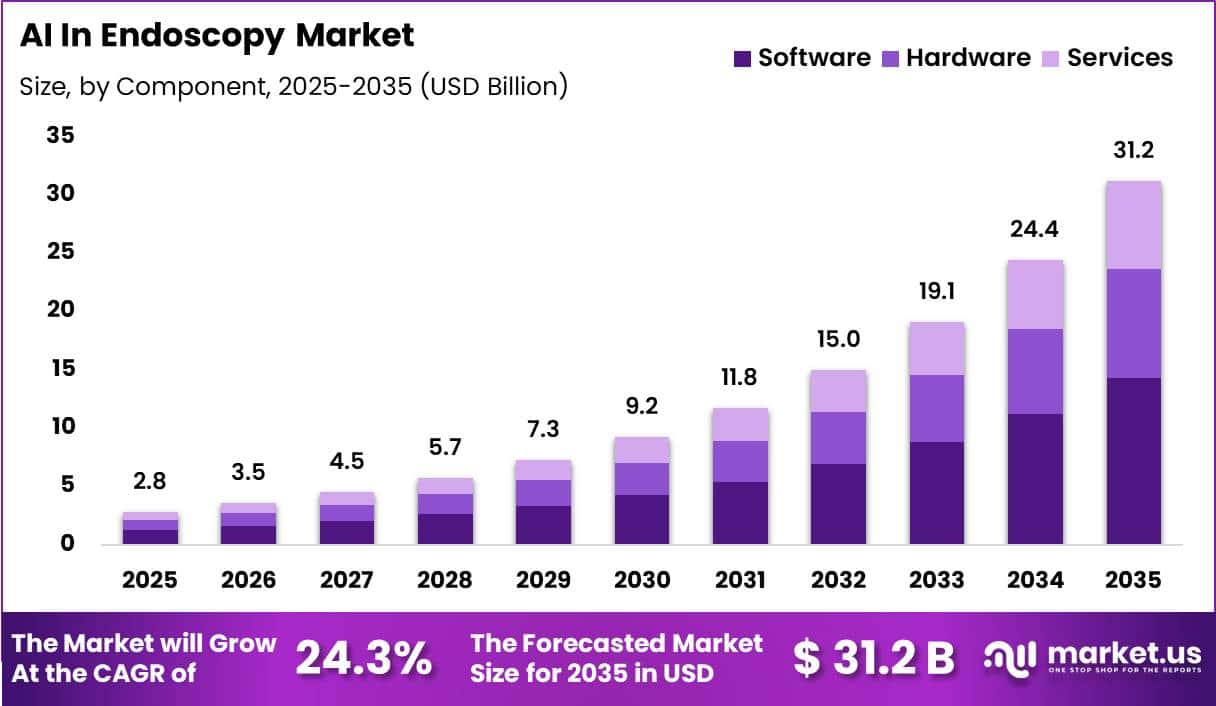
The growing burden of gastrointestinal diseases, including colorectal cancer, inflammatory bowel disease, and gastrointestinal lesions, is accelerating demand for advanced AI-assisted diagnostic tools. AI-powered endoscopy solutions use deep learning, computer vision, and real-time image analysis to assist physicians in detecting abnormalities, improving diagnostic accuracy, and supporting clinical decision-making.
The increasing adoption of advanced diagnostic technologies, rising demand for minimally invasive procedures, and the need for faster and more accurate detection methods are driving the integration of artificial intelligence into endoscopic workflows worldwide. AI-enabled endoscopy systems are increasingly being adopted for applications such as polyp detection, lesion characterization, capsule endoscopy analysis, and procedure quality improvement.
The U.S. Food and Drug Administration has recognized AI-enabled medical devices as an emerging healthcare technology category, maintaining a dedicated database of authorized AI-based medical devices that meet safety and effectiveness requirements. Recent regulatory advancements demonstrate growing acceptance of AI-assisted endoscopic solutions.
FDA-cleared AI systems, including computer-assisted colonoscopy technologies, are designed to analyze endoscopic images and highlight potential colorectal lesions during procedures, supporting clinicians without replacing medical judgment.
Additionally, FDA classifications include AI-based gastrointestinal capsule endoscopy analysis software that uses algorithms such as convolutional neural networks to identify areas of clinical interest from recorded images.
Increasing investments in digital healthcare infrastructure, rising endoscopy procedure volumes, and demand for precision diagnostics are expected to strengthen the adoption of AI technologies across hospitals, ambulatory surgical centers, and specialty gastroenterology clinics worldwide.
Key Takeaways
- Market Size: The Global AI in Endoscopy Market size was US$ 2.8 billion in 2025. The market is estimated to grow to US$ 31.2 billion by 2035.
- Market Share: The Compound Annual Growth Rate (CAGR) of the market from 2026 to 2035 will be 24.3%.
- Component: Software leads the segment, accounting for 46% of total component revenue.
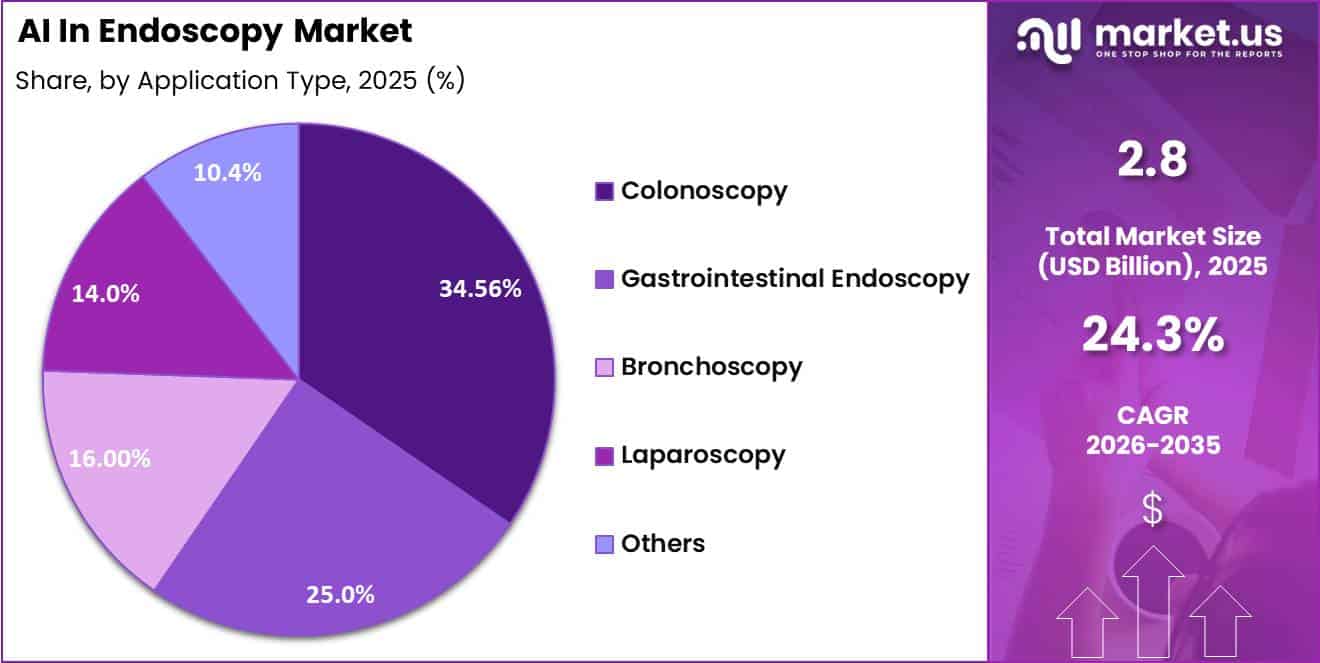
- Application: Colonoscopy leads the segment, accounting for 34.56% of total application revenue.
- End User: Hospitals lead the segment, accounting for 61.80% of total end-user revenue.
- Region: Asia Pacific is the fastest-growing regional market, accounting for 37.45% of global revenue, holding US$ 1.05 billion in revenue in 2025.
Component Analysis
The software segment dominates the Global AI in Endoscopy Market, accounting for 46.0% market share in 2025, driven by the increasing adoption of AI-based image analysis platforms, computer-aided detection (CAD) solutions, and deep learning algorithms that enhance diagnostic accuracy during endoscopic procedures.
AI software enables real-time identification of polyps, lesions, bleeding areas, and other abnormalities by analyzing high-resolution endoscopic images and videos. Growing demand for precision diagnostics, workflow optimization, and clinical decision support is encouraging healthcare providers to integrate AI software into existing endoscopy systems.
The hardware segment holds 30.0% market share in 2025, supported by the rising demand for advanced endoscopic imaging systems, AI-compatible processors, high-definition cameras, and upgraded visualization technologies.
Hardware advancements improve image quality and provide the foundation required for accurate AI-assisted analysis. The services segment accounts for 24.0% market share in 2025, supported by increasing requirements for software integration, maintenance, technical support, training, and system upgrades.
As healthcare facilities adopt AI-enabled endoscopy solutions, service providers play an important role in ensuring smooth implementation, regulatory compliance, and long-term operational efficiency. The combined growth of software, hardware, and services reflects the expanding adoption of AI-driven technologies across diagnostic and therapeutic endoscopic procedures.
Application Analysis
The colonoscopy segment dominates the Global AI in Endoscopy Market, representing 34.56% market share in 2025, due to the widespread adoption of AI-assisted colonoscopy systems for improving polyp detection, adenoma recognition, and colorectal screening accuracy. AI technologies help endoscopists identify subtle abnormalities that may be missed during conventional procedures, supporting earlier diagnosis and improved patient outcomes.
The gastrointestinal endoscopy segment holds 25.0% market share in 2025, driven by increasing use of AI solutions for detecting gastrointestinal lesions, analyzing mucosal patterns, and assisting in upper GI diagnostic procedures. AI-based tools are increasingly used to enhance visualization and provide real-time clinical insights during examinations.
The bronchoscopy segment accounts for 16.0% market share in 2025, supported by AI applications in pulmonary diagnostics, airway analysis, and detection of abnormalities in lung-related procedures. The laparoscopy segment contributes 14.0% market share, benefiting from AI integration in surgical guidance, image enhancement, and procedural assistance.
The others segment represents 10.4% market share, including applications such as capsule endoscopy and specialized minimally invasive procedures. Increasing clinical adoption of AI across multiple endoscopic applications is strengthening market expansion globally.
End User Analysis
The hospital segment dominates the Global AI in Endoscopy Market, accounting for 61.8% market share in 2025, as hospitals perform a significant volume of diagnostic and therapeutic endoscopic procedures requiring advanced imaging, clinical expertise, and integrated healthcare technologies.
Large hospitals are increasingly investing in AI-enabled endoscopy platforms to improve diagnostic efficiency, enhance workflow management, and support specialists in complex procedures.
The availability of advanced infrastructure, trained healthcare professionals, and higher patient volumes further strengthens hospital adoption. Ambulatory Surgical Centers (ASCs) represent a growing segment due to the increasing shift toward outpatient minimally invasive procedures and cost-effective healthcare delivery models.
AI-enabled endoscopy solutions help ASCs improve procedure efficiency, maintain diagnostic accuracy, and provide advanced services without requiring hospital admission.
The others segment, including specialty clinics, diagnostic centers, and research institutions, is expanding as smaller healthcare facilities increasingly adopt AI-based diagnostic technologies. These users are focusing on improving screening capabilities, reducing interpretation time, and enhancing patient care quality.
Overall, rising demand for early disease detection, workflow automation, and personalized diagnostic support is driving AI endoscopy adoption across hospitals, ASCs, and specialized healthcare settings worldwide.
Key Market Segments
By Component
- Software
- Hardware
- Services
By Application
- Colonoscopy
- Gastrointestinal Endoscopy
- Bronchoscopy
- Laparoscopy
- Others
By End User
- Hospitals
- Ambulatory Surgical Centers
- Others
Drivers
Colorectal screening volume and missed lesion reduction economics
Colorectal cancer remains the third most common cancer globally and the second leading cause of cancer death, with about 1.9 million new cases and more than 900,000 deaths in 2022, which keeps colonoscopy capacity expansion and lesion detection yield central to provider investment cases in 2026. On the demand side, AI adoption is helped by the fact that missed lesion reduction has a direct operational narrative.
A published NIH review notes tandem colonoscopy evidence showing adenoma miss rate reductions from 37% to 14% with AI assistance, while FDA-cleared GI Genius evidence showed lesion detection in 55.1% of patients versus 42.0% under standard colonoscopy in the referenced trial.
That combination matters commercially because hospital buyers can frame AI not as speculative software, but as a yield enhancement layer on an already reimbursed procedure, especially in screening populations aged 50+ and increasingly 45+ in practice.
The business model effect is that vendors can price around procedure throughput or installed base subscriptions, while providers justify spend through avoided miss risk, stronger quality positioning, and better utilization of existing endoscopy rooms rather than building new procedural capacity.
| Driver | (~) % Impact on CAGR Forecast | Geographic Relevance | Impact Timeline |
|---|---|---|---|
| Colorectal screening volume + missed-lesion reduction economics | +2.4% | North America core, EU, Japan, South Korea, urban China | Short term |
| FDA-cleared product expansion from colonoscopy into capsule and upper-GI workflows | +1.9% | U.S. core, EU early-adopter hospitals, APAC innovation hubs | Medium term |
| Endoscopy labor productivity and reading-time compression | +1.6% | U.S. outpatient centers, EU public hospitals, APAC high-volume networks | Short term |
| Quality-based care and measurable ADR/QC uplift | +1.4% | U.S. core, Western Europe, Gulf tertiary centers | Medium term |
| HHS/ONC transparency and risk-governance rules legitimizing procurement | +1.1% | U.S. core with spill-over into OECD digital-health buyers | Short term |
| Rising global GI cancer burden and earlier-detection pathways | +2.0% | Global, strongest in aging OECD and high-incidence East Asia | Long term |
Challenges
Fragmented data pipelines limiting AI endoscopy scale and performance
AI in endoscopy is constrained by fragmented and inconsistent data pipelines across hospitals. Variations in EHR structures, endoscopy video formats ranging from 1080p/30fps to 4K/60fps, and non-standardised annotation practices result in highly heterogeneous datasets that are difficult to combine for robust model training.
In many institutions, fully labeled procedure datasets may remain below 20,000 cases, while high-performing AI systems typically require significantly larger and more diverse datasets to reliably capture rare or subtle findings such as flat adenomas or early inflammatory changes. This forces developers to build complex integration layers and multiple hospital-specific data connectors, increasing deployment complexity and slowing onboarding.
Incomplete metadata such as missing pathology links, inconsistent bowel preparation scores, or poor timestamp alignment further degrades real-world performance compared to controlled trial settings. As a result, sensitivity and detection metrics can vary noticeably between curated datasets and live clinical environments, reducing confidence in consistent performance gains.
From a commercial perspective, these data issues increase integration costs, extend deployment timelines, and slow iterative model improvement. Addressing them requires standardized reporting frameworks, better cross-site data harmonisation, and stronger governance of data quality metrics, which are essential to unlocking scalable and reliable AI performance in endoscopy workflows.
| Challenge | (~) % CAGR Friction Drag | Geographic Relevance | Mitigation Horizon |
|---|---|---|---|
| Fragmented data pipelines | -1.4% | North America core, EU hospital networks | Medium term (2–4 years) |
| Real-world clinical validation load | -1.6% | US, EU, Japan tertiary centers | Long-term (≥ 4 years) |
| AI skills and workflow gap | -1.2% | Global teaching hospitals, APAC metros | Medium term (2–4 years) |
| Algorithm bias and liability risk | -1.0% | US litigious markets, EU high-risk cohorts | Long-term (≥ 4 years) |
| Interoperability with legacy scopes | -0.9% | EU mixed fleets, emerging Asia public systems | Medium term (2–4 years) |
| Behavioral deskilling and trust erosion | -0.8% | High-volume GI centers worldwide | Long-term (≥ 4 years) |
Restraints
Adaptive AI regulatory drag slowing cardiology software scale-up
Adaptive AI systems in cardiology face increasing regulatory friction because existing medical device frameworks were designed for static software, not continuously evolving models that retrain on a monthly or quarterly basis. As a result, every significant model update can trigger new documentation, validation, and sometimes regulatory review requirements, creating a recurring approval cycle that slows deployment.
Under FDA’s 2024–2025 AI-enabled device guidance, manufacturers are expected to implement continuous performance monitoring, update impact assessments, and provide detailed risk documentation for model changes.
Similarly, the EU AI Act classifies most cardiology AI tools as high-risk systems, requiring extensive transparency, human oversight, and risk management controls, which collectively increase compliance effort and extend rollout timelines. These requirements add substantial pre-commercial overhead, including expanded validation testing and governance processes, and force vendors to maintain larger regulatory and quality teams.
Hospitals, in turn, often delay large-scale deployment until regulatory expectations stabilize, especially for high-risk applications such as imaging interpretation or arrhythmia prediction. Overall, adaptive AI regulation shifts cardiology AI away from rapid software-like scaling toward slower, device-like adoption cycles, increasing time to market, raising compliance costs, and moderating the pace of commercial expansion.
| Restraint | (~) % Impact on CAGR Forecast | Geographic Relevance | Impact Timeline |
|---|---|---|---|
| Adaptive AI regulatory drag | -2.4% | US, EU core, UK | Long-term (≥ 4 years) |
| Fragmented reimbursement for AI cardiology | -1.9% | US, EU, selected APAC | Medium term (2–4 years) |
| Data privacy & cross-border governance load | -1.5% | EU, US, APAC hubs | Long-term (≥ 4 years) |
| Hospital IT integration & workflow inertia | -2.1% | North America, EU, GCC, APAC metros | Medium term (2–4 years) |
| Clinical trust, liability, and evidence gaps | -1.3% | Global tertiary & secondary care | Short–Medium (≤ 4 years) |
| Talent, infra, and operating-cost burden | -0.9% | Global, strongest in EMs | Medium term (2–4 years) |
Opportunity
AI-powered endoscopy-as-a-service model expansion
AI-powered endoscopy-as-a-service shifts the market from one-time software or device sales toward bundled, subscription-based offerings that combine endoscopy hardware, AI detection software, analytics, and uptime guarantees into a per-procedure pricing model. This structure allows vendors to monetize performance improvements rather than just software deployment.
Current AI endoscopy systems are mostly sold as licenses or maintenance add-ons, despite strong clinical evidence that AI-assisted colonoscopy can significantly improve adenoma detection rates. Higher detection performance also has downstream economic value, including reduced interval colorectal cancer risk and improved quality metrics, which are not fully reflected in current pricing models.
Under an endoscopy as a service model, hospitals could pay a small incremental fee per procedure, aligned with usage volume and outcomes. This creates a scalable revenue stream across millions of annual endoscopic procedures in high-income markets while shifting vendor revenue toward recurring, usage-linked contracts. It also enables integration of real-time performance monitoring and analytics as part of the service offering.
This opportunity remains emerging because it requires new reimbursement frameworks, risk-sharing agreements, and tighter integration of AI systems with endoscopy hardware and hospital IT infrastructure. However, if adopted at scale, it could significantly increase revenue per procedure, improve vendor margin stability, and support a broader transition toward service-based AI healthcare delivery models.
| Opportunity | (~) % Potential CAGR Upside | Geographic Relevance | Execution Window |
|---|---|---|---|
| AI-powered endoscopy-as-a-service | +2.5% | North America, EU, APAC tier-1 | Medium term (2-4 years) |
| Cross-GI multimodal AI platforms | +2.1% | EU, APAC emerging, Latin America | Medium term (2-4 years) |
| Value-based, risk-sharing CRC screening bundles | +1.9% | North America core | Short term (≤ 2 years) |
| AI-guided training and credentialing marketplaces | +1.6% | Global teaching hospitals, Middle East | Long-term (≥ 4 years) |
| Cloud-native, multi-site AI orchestration for networks | +1.8% | EU, APAC emerging, GCC | Medium term (2-4 years) |
| Low-cost AI endoscopy for underserved markets | +2.3% | APAC emerging, Africa, LatAm | Long-term (≥ 4 years) |
Regional Analysis
In 2025, Asia Pacific led the market, achieving over 37.45% market share with revenue of US$ 1.05 billion, driven by expanding healthcare infrastructure, increasing adoption of advanced diagnostic technologies, and rising demand for minimally invasive procedures.
Countries such as Japan, China, and South Korea are accelerating the adoption of AI-assisted endoscopy solutions through investments in digital healthcare transformation, advanced medical imaging systems, and technology-enabled diagnostic platforms. Increasing patient volumes, growing awareness of early disease detection, and government initiatives supporting healthcare modernization are further strengthening regional growth.
North America is expected to maintain a strong market position, supported by well-established healthcare infrastructure, high adoption of artificial intelligence-based medical technologies, and favorable regulatory frameworks for AI-enabled medical devices.
The presence of leading hospitals, specialty gastroenterology centers, and advanced endoscopy facilities is encouraging the integration of AI tools for real-time image analysis, polyp detection, and improved procedural accuracy.
Europe represents a significant market, driven by increasing investments in healthcare digitalization, rising adoption of AI-supported diagnostic workflows, and growing emphasis on improving clinical outcomes. Western European countries are increasingly implementing AI technologies to enhance endoscopy efficiency and support physicians in complex procedures.
Latin America, the Middle East & Africa are emerging markets, supported by improving healthcare access, rising investments in medical infrastructure, and gradual adoption of advanced diagnostic solutions.
However, limited technological infrastructure and availability of trained professionals may impact adoption. Overall, global demand for precision diagnostics, workflow optimization, and AI-driven clinical support continues to accelerate market expansion.
Key Regions and Countries
North America
- The US
- Canada
Europe
- Germany
- France
- The U.K.
- Italy
- Spain
- Russia & CIS
- Rest of Europe
Asia Pacific
- China
- India
- Japan
- South Korea
- ASEAN
- Australia & New Zealand
- Rest of Asia Pacific
Middle East & Africa
- GCC
- South Africa
- Rest of Middle East & Africa
Latin America
- Brazil
- Mexico
- Rest of Latin America
Key Player Analysis
Suppliers in the global AI in endoscopy market seek competitive advantage through real-time deep learning detection algorithm development trained on large-scale annotated endoscopy video datasets encompassing polyp, adenoma, early gastric cancer, and Barrett’s esophagus lesion categories, enabling automated lesion detection, characterization, and quality indicator monitoring that reduces endoscopist miss rate and improves adenoma detection rate outcomes across colonoscopy and upper GI endoscopy procedures.
Key strategic focus areas include computer-aided detection and computer-aided diagnosis software platform development, achieving FDA De Novo clearance and CE Mark approval as AI-powered software as a medical device, enabling advanced diagnostic support and clinical decision-making during endoscopic procedures while meeting regulatory requirements for safety and effectiveness.
These platforms are increasingly focused on improving lesion detection, classification capabilities, and workflow efficiency through AI-driven analysis integrated into routine endoscopy practices.
Companies continue investing in multicenter prospective clinical trial evidence generation demonstrating adenoma detection rate improvement and interval cancer reduction outcomes, endoscopy society clinical guideline engagement supporting AI-assisted colonoscopy adoption recommendations, and hospital gastroenterology department and ambulatory surgical center endoscopy unit institutional procurement relationship development.
The expanding global colorectal cancer screening program mandate with multiple countries progressively lowering colonoscopy screening age thresholds and increasing screening program participation targets is creating structurally expanding endoscopy procedure volumes that amplify the clinical and commercial value of AI-assisted quality improvement tools through the forecast period to 2035.
Top Key Players
- Medtronic
- Wision AI
- Olympus Corporation
- Fujifilm Corporation
- Pentax Corporation
- NEC Corporation
- Odin Vision
- Magentiq Eye Ltd.
- Wuhan EndoAngel Medical Technology
- Iterative Scopes
- Other Key Players
Recent Developments
- In January 2026, Olympus Corporation launched its next-generation AI-powered colonoscopy computer-aided detection platform integrating real-time polyp detection and size estimation, securing institutional adoption across leading European and North American hospital gastroenterology department and ambulatory endoscopy center buyers.
- In February 2026, Medtronic expanded its GI Genius AI colonoscopy detection module distribution across Asia Pacific hospital endoscopy unit institutional buyers, targeting growing colorectal cancer screening program expansion across China, Japan, and South Korea driving adenoma detection quality improvement investment.
- In March 2026, Fujifilm Corporation secured a multi-year AI endoscopy software platform supply agreement with a leading European hospital gastroenterology network, covering real-time colonoscopy and upper GI endoscopy AI-assisted detection deployment across its regional endoscopy unit institutional buyer facilities.
- In May 2026, Iterative Scopes received FDA clearance for its SKOUT AI colonoscopy detection system and secured institutional deployment agreements with leading North American academic medical center gastroenterology programs targeting adenoma detection rate improvement and endoscopy quality metrics reporting program requirements.
Report Scope
| Report Features | Description |
|---|---|
| Market Value (2025) | US$ 2.8 Billion |
| Forecast Revenue (2035) | US$ 31.2 Billion |
| CAGR (2026-2035) | 24.3% |
| Base Year for Estimation | 2025 |
| Historic Period | 2020-2024 |
| Forecast Period | 2026-2035 |
| Report Coverage | Revenue Forecast, Market Dynamics, Competitive Landscape, Recent Developments |
| Segments Covered | By Component (Software, Hardware, Services), By Application (Colonoscopy, Gastrointestinal Endoscopy, Bronchoscopy, Laparoscopy, Others), By End User (Hospitals, Ambulatory Surgical Centers, Others) |
| Regional Analysis | North America – The US, Canada; Europe – Germany, France, U.K., Italy, Spain, Russia & CIS, Rest of Europe; Asia Pacific – China, India, Japan, South Korea, ASEAN, Australia & New Zealand, Rest of Asia Pacific; Middle East & Africa – GCC, South Africa, Rest of Middle East & Africa; Latin America – Brazil, Mexico, Rest of Latin America |
| Competitive Landscape | Medtronic, Wision AI, Olympus Corporation, Fujifilm Corporation, Pentax Corporation, NEC Corporation, Odin Vision, Magentiq Eye Ltd., Wuhan EndoAngel Medical Technology, Iterative Scopes, Other Key Players |
| Customization Scope | Customization for segments, region/country-level will be provided. Moreover, additional customization can be done based on the requirements. |
| Purchase Options | We have three licenses to opt for: Single User License, Multi-User License (Up to 5 Users), Corporate Use License (Unlimited User and Printable PDF) |





































