Market Overview
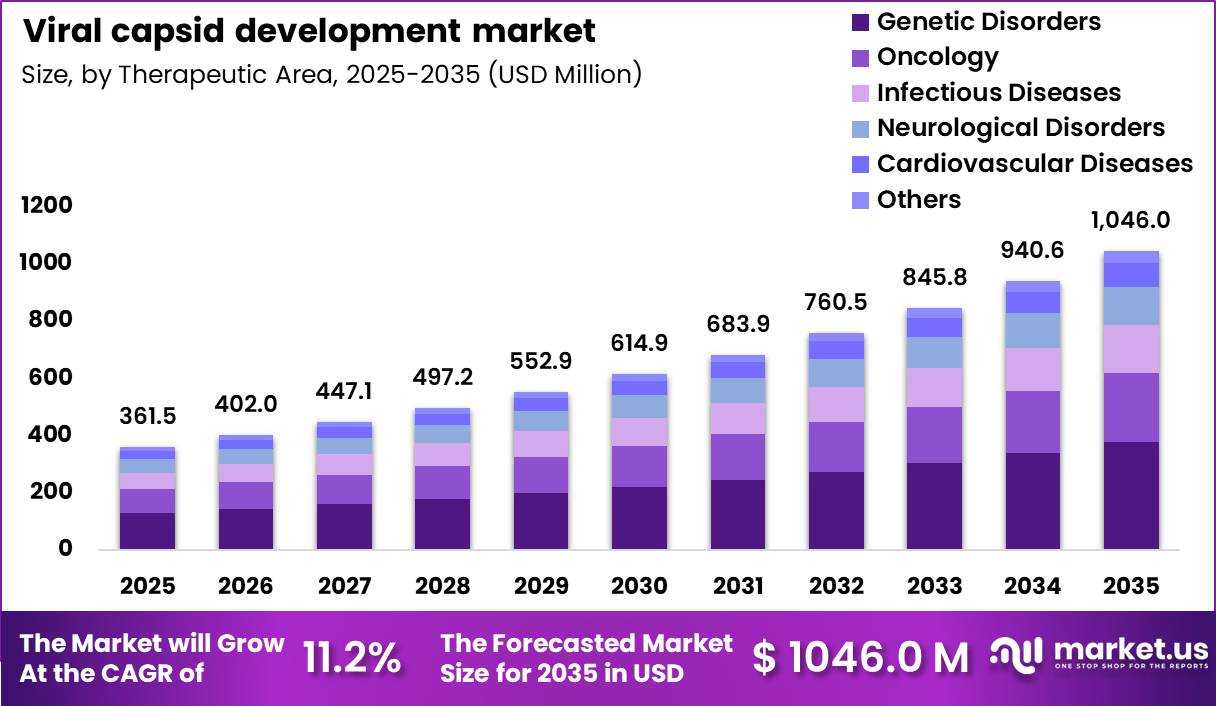
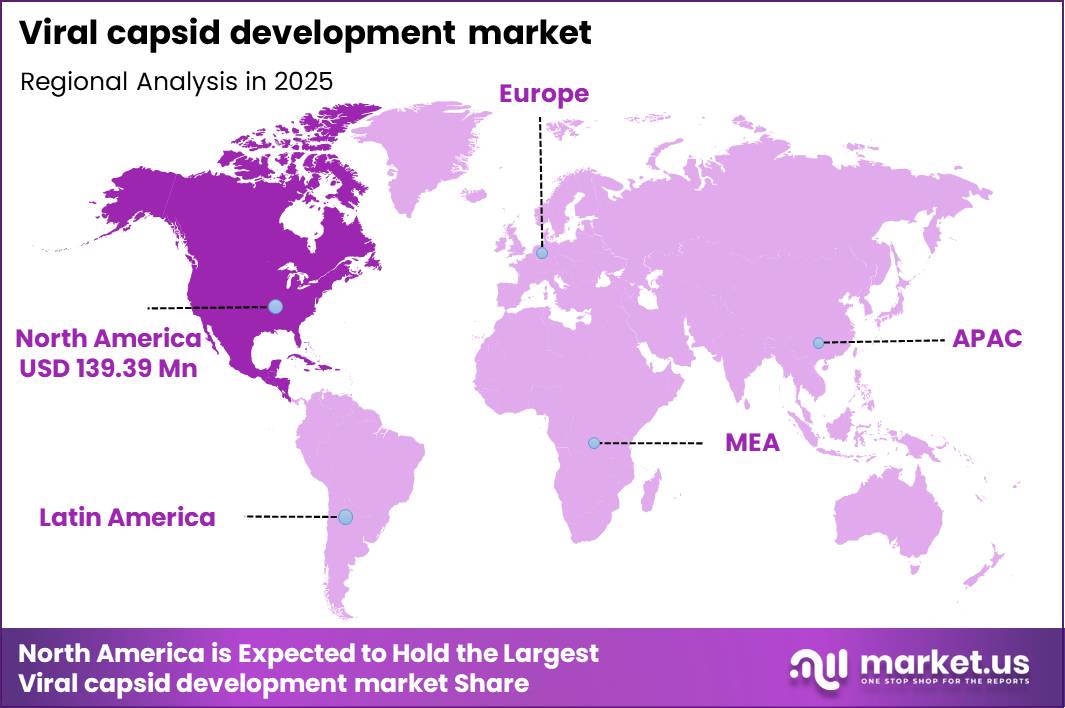
The Global Viral Capsid Development Market size is expected to be worth around US$ 1,046.0 Million by 2035 from US$ 361.5 Million in 2025, growing at a CAGR of 11.2% during the forecast period from 2026 to 2035. In 2025, North America led the market, achieving over a 38.56% share with a revenue of US$ 139.39 million.
The viral capsid development market is expanding due to rising demand for gene therapies, viral vector vaccines, and advanced drug delivery technologies. Viral capsids, particularly adeno-associated virus (AAV) capsids, play a critical role in transporting therapeutic genetic material into target cells while improving treatment precision and safety.
According to the National Institutes of Health (NIH), more than 7,000 rare diseases have been identified, and approximately 80% are caused by genetic changes, creating a strong need for effective gene delivery platforms.
The growth of viral capsid development is supported by increasing clinical research activity and regulatory approvals. The U.S. Food and Drug Administration (FDA) has approved more than 50 cell and gene therapy products through 2025, including several viral vector-based therapies for genetic disorders and cancers. FDA data also highlights that hundreds of investigational gene therapy products are under clinical evaluation, increasing demand for optimized capsid technologies.
AAV capsid engineering has become a major research focus, with scientists developing new variants to overcome challenges such as immune response and limited tissue targeting. Research published through NIH/NCBI indicates that more than 250 clinical trials worldwide have evaluated AAV-based therapies across diseases including hemophilia, spinal muscular atrophy, inherited retinal disorders, and neurological conditions.
Advanced technologies such as artificial intelligence (AI)-based protein design, machine learning, and directed evolution are improving capsid discovery. These innovations help researchers create capsids with enhanced delivery efficiency, reduced immunogenicity, and better manufacturing scalability. With continued investment in precision medicine, increasing gene therapy pipelines, and growing regulatory support, viral capsid development is becoming a key component of next-generation healthcare innovation.
Key Takeaways
- Market Size: The Global Viral Capsid Development Market size was US$ 361.5 Million in 2025. The market is estimated to grow to US$ 1,046.0 Million by 2035.
- Market Share: The Compound Annual Growth Rate (CAGR) of the market from 2026 to 2035 will be 11.2%.
- Therapeutic Area: Genetic Disorders has the largest market share, accounting for 36.2% of total sales.
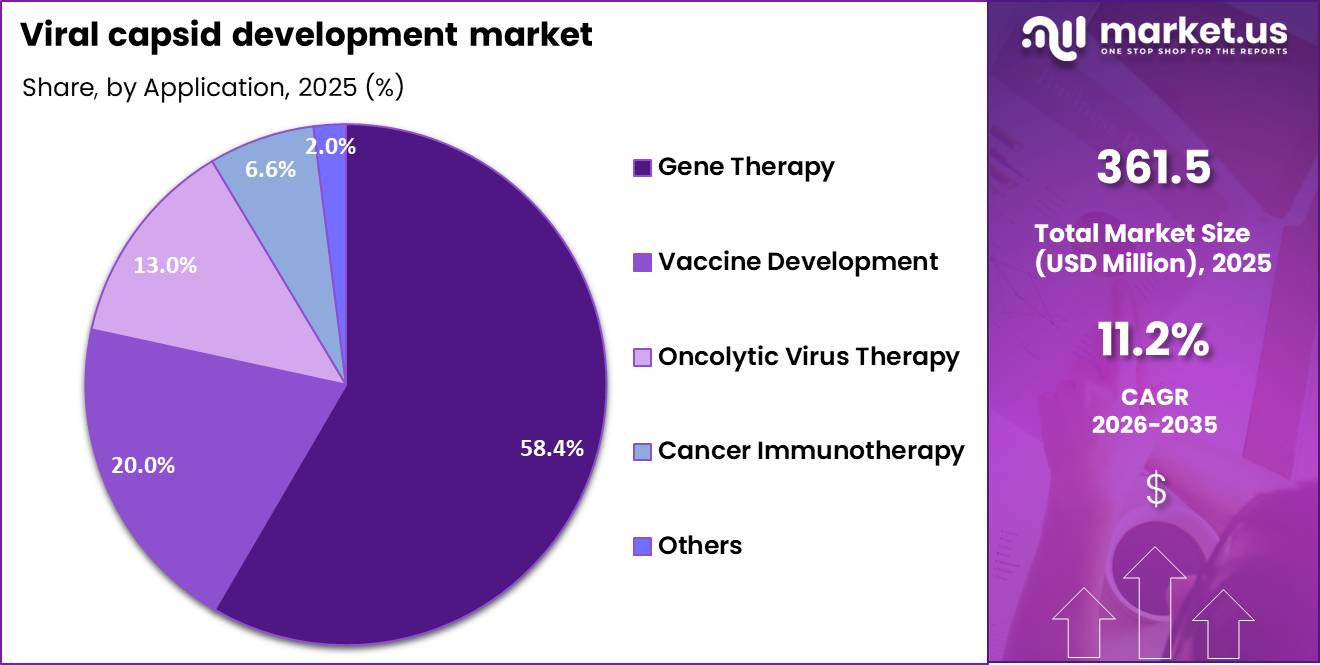
- Application: Gene Therapy dominates the segment, accounting for 58.4% of total revenue.
- End User: Pharmaceutical and Biotechnology Companies dominate the segment, accounting for 48.5% of total revenue.
- Regional: North America is the dominant regional market, accounting for 38.56% of global sales, holding US$ 139.39 Million in revenue.
Therapeutic Area Analysis
The therapeutic area segment of the viral capsid development market is primarily driven by increasing research activities in genetic medicines, rare disease treatments, and advanced biological therapies.
The Genetic Disorders segment dominates the market with a 36.2% share in 2025, supported by growing demand for gene replacement therapies targeting inherited conditions such as haemophilia, spinal muscular atrophy, and retinal disorders. The expanding pipeline of adeno-associated virus (AAV)-based therapies is further strengthening capsid engineering efforts for precise gene delivery.
The Oncology segment accounts for 23.0% market share in 2025, driven by increasing applications of viral vectors in cancer gene therapies, tumor-targeting approaches, and immune-based treatments. The Infectious Diseases segment holds 16.0% share, supported by viral vector research for vaccine development and emerging pathogen response strategies.
The Neurological Disorders segment represents 12.9% share, with growing interest in delivering genetic treatments across the blood-brain barrier for neurological conditions.
The Cardiovascular Diseases segment contributes 8.0% share, supported by research into regenerative medicine and gene-based cardiovascular therapies, while Other therapeutic areas account for 4.0% share. Overall, rising clinical trials and advancements in capsid design are expanding applications across multiple therapeutic fields.
Application Analysis
The application segment of the viral capsid development market is led by the increasing adoption of viral vectors in precision medicine, genetic engineering, and advanced therapeutic development.
The Gene Therapy segment dominates the market with a 58.4% share in 2025, driven by rising demand for efficient gene delivery systems and increasing development of treatments for inherited diseases, cancers, and rare disorders. AAV capsids are widely utilized in gene therapy due to their ability to deliver therapeutic genes with improved safety profiles.
The Vaccine Development segment holds 20.0% market share in 2025, supported by continued innovation in viral vector vaccine platforms and global preparedness for infectious disease outbreaks. The Oncolytic Virus Therapy segment accounts for 13.0% share, benefiting from growing research into engineered viruses that selectively target and destroy cancer cells.
The Cancer Immunotherapy segment represents a 6.6% share, as researchers explore viral capsids for enhancing immune activation and improving targeted cancer treatments. Other applications contribute 2.0% share, including emerging uses in regenerative medicine and experimental therapeutic platforms. Increasing investment in biotechnology research, clinical development programs, and next-generation delivery technologies continues to strengthen viral capsid applications across healthcare.
End User Analysis
The end user segment of the viral capsid development market is witnessing strong growth due to increasing collaboration between biotechnology companies, pharmaceutical manufacturers, and research organizations.
The Pharmaceutical and Biotechnology Companies segment dominates the market with a 48.5% share in 2025, driven by significant investments in gene therapy pipelines, viral vector manufacturing, and development of innovative capsid platforms. These companies are focusing on improving delivery efficiency, reducing immune reactions, and advancing clinical-stage therapies.
Contract Research Organizations (CROs) represent a significant segment as pharmaceutical and biotechnology companies increasingly outsource capsid engineering, preclinical studies, analytical testing, and regulatory support services.
CROs provide specialized expertise that helps accelerate viral vector research and therapeutic development timelines. Academic and Research Institutes contribute to market expansion through advanced studies in molecular biology, genetic engineering, and viral vector optimization.
Universities and research centers are actively involved in discovering novel capsid variants and improving gene delivery technologies. The Others segment includes hospitals, diagnostic organizations, and specialized biotechnology service providers involved in research collaborations and technology development.
Growing partnerships between industry and research institutions, along with increasing demand for personalized medicine, are expected to further support the adoption of viral capsid development solutions.
Key Market Segments
By Therapeutic Area
- Genetic Disorders
- Oncology
- Infectious Diseases
- Neurological Disorders
- Cardiovascular Diseases
- Others
By Application
- Gene Therapy
- Vaccine Development
- Oncolytic Virus Therapy
- Cancer Immunotherapy
- Others
By End User
- Pharmaceutical and Biotechnology Companies
- Contract Research Organizations
- Academic and Research Institutes
- Others
Driver
FDA Platform Guidance Accelerating Capsid Engineering Commercialization
The FDA’s 2026 draft guidance explicitly supports the use of prior scientific and manufacturing knowledge, including CMC, nonclinical, and clinical information, to streamline gene therapy development, while also encouraging early INTERACT and pre-IND engagement.
That matters directly to capsid developers because the commercial model shifts from selling one-off discovery work to monetizing platform evidence packages validated assays, comparability logic, prior capsid characterization, and reusable manufacturing modules.
In practical terms, companies can spread assay-development and process-characterization cost across multiple programs instead of rebuilding each package de novo, which lowers the marginal cost per capsid candidate and improves asset turnover.
The effect is strongest in the US, where regulatory dialogue can compress decision points around process relevance and platform applicability, but it also influences EU and APAC partnering because FDA-credible CMC packages often anchor global licensing discussions.
Capsid engineering remains the core technical growth engine because better tropism and lower immune visibility can reduce the vector dose needed to reach target tissues, which in turn improves safety margin, manufacturing economics, and clinical feasibility.
Recent literature and 2026 field signals point to engineered capsids as a major innovation theme, especially where programs are trying to improve delivery beyond legacy serotypes and address pre-existing neutralizing antibodies that are present in a significant share of the population.
For developers, the business-model consequence is substantial: value migrates away from commodity vector assembly and toward proprietary capsid libraries, in silico design, screening datasets, and licensing royalties tied to tissue-specific performance.
Even a modest dose reduction can have outsized economic impact because upstream plasmid use, bioreactor time, purification load, and release testing all scale with batch intensity; therefore, capsids that improve transduction per vg create both top-line licensing upside and bottom-line manufacturing savings.
| Driver | (~) % Impact on CAGR Forecast | Geographic Relevance | Impact Timeline |
|---|---|---|---|
| FDA platform-knowledge acceleration for capsid/CMC programs | +2.1% | North America core, EU follow-through, APAC partnering | Short term (≤ 2 years) |
| Engineered capsids for tropism gain and immune evasion | +2.8% | North America core, EU core, Japan, China innovation hubs | Medium term (2-4 years) |
| Full/empty capsid improvement and scalable purification | +2.4% | US manufacturing base, EU bioprocess clusters, APAC CDMO corridors | Short term (≤ 2 years) |
| Rising commercial and clinical AAV therapy pipeline pull | +1.9% | US core, EU core, selective APAC spill-over | Medium term (2-4 years) |
| Higher analytical burden in biodistribution, shedding, potency | +1.4% | US and EU core, regulated APAC markets | Short term (≤ 2 years) |
| Shift from bespoke vectors to reusable capsid platforms | +1.7% | North America core, EU core, South Korea/Japan spill-over | Long term (≥ 4 years) |
Challenge
Capsid Process Scale-Up Limitations Affecting Commercial Vector Manufacturing Growth
Scale-up challenges in viral capsid development are primarily associated with the biological complexity of adeno-associated virus (AAV) and other viral vectors, limited process robustness, and the evolving maturity of large-scale manufacturing platforms. Although research and development processes are becoming increasingly optimized, commercial production using 500–2,000 L single-use bioreactors continues to face productivity and consistency challenges.
AAV manufacturing processes often experience limited volumetric productivity in routine production environments, while batch-to-batch yield fluctuations of more than 25–30% can create significant supply uncertainties.
To mitigate these risks, manufacturers commonly maintain additional production capacity buffers of approximately 15–25%, increasing operational complexity and manufacturing costs. Transitioning from 50–200 L development-scale processes to multi-thousand-liter commercial manufacturing requires extensive process characterization, comparability assessments, and stress-testing programs, often extending scale-up timelines by 18–30 months.
Failed optimization cycles or unsuccessful technology transfers can further delay commercialization by 3–6 months and increase development costs by 10–15%. These manufacturing bottlenecks can restrict the ability of viral vector suppliers to match the rising demand generated by gene therapy pipelines, next-generation capsid engineering programs, and expanding clinical trial activities.
As a result, the growth potential of the viral capsid development market may face short-term limitations despite strong demand growth, with manufacturing constraints potentially reducing achievable market expansion by approximately 1.5–2.0 % points.
| Challenge | (~) % CAGR Friction Drag | Geographic Relevance | Mitigation Horizon |
|---|---|---|---|
| Low capsid productivity & yield | -1.3% | North America, EU, East Asia | Medium term (2–4 years) |
| High cost-to-dose economics | -0.9% | North America, EU, Japan | Medium term (2–4 years) |
| Scarce advanced bioprocess talent | -0.8% | North America, EU, UK, APAC hubs | Long term (≥ 4 years) |
| Platform variability & QC complexity | -0.7% | Global clinical hubs | Medium term (2–4 years) |
| Supply chain & cold-chain fragility | -0.6% | North America, EU, APAC logistics corridors | Short term (≤ 2 years) |
| Regulatory data & safety expectations | -0.5% | US, EU regulatory hubs, Japan | Long term (≥ 4 years) |
Restraints
Capital intensity, reimbursement uncertainty and pricing pressure
Capital intensity combined with reimbursement uncertainty and emerging pricing pressure forms a macro‑level restraint that constrains the flow of investment into viral capsid development, particularly for indications with small patient populations or ambiguous payer value frameworks.
Building or retrofitting a dedicated viral capsid development and GMP manufacturing facility with 500–2,000 L upstream capacity and integrated analytics typically requires capex in the USD 150–300 million range, with annual operating expenditures of USD 30–60 million, which demands a pipeline of multiple high‑value programs to reach breakeven.
However, gene therapy reimbursement models are still evolving, with one‑time treatment prices often in the USD 0.5–2.0 million per patient band and payers experimenting with outcomes‑based contracts, annuity payments over 5–10 years, and strict budget caps that can limit annual volumes to dozens or low hundreds of patients per indication.
This misalignment between upfront manufacturing and development spending and delayed, uncertain cash inflows compresses margins by 300–500 basis points relative to initial business plans and pushes sponsors to discount more aggressively or accept lower launch volumes, reducing the internal rate of return on new capsid programs by 4–6 % points.
In parallel, competitive pressure from alternative modalities such as non‑viral delivery systems and gene editing tools encourages payers to benchmark viral capsid‑based therapies against potentially cheaper or more scalable options, further limiting pricing power and hindering the ability to fully pass through high manufacturing costs.
The net effect is an observable slowdown in capex commitments to brand‑new capsid platforms and a preference for incremental optimization of existing vectors, which is captured in this model as a 1.2 % point restraint on CAGR over the long term, especially in North America and Europe where payer frameworks are most influential on global strategy.
| Restraint | (~) % Impact on CAGR Forecast | Geographic Relevance | Impact Timeline |
|---|---|---|---|
| High-cost, low-yield capsid manufacturing | -2.4% | North America, EU, Japan, South Korea | Medium term (2–4 years) |
| Regulatory complexity and long-term safety follow-up | -1.9% | North America core, EU, UK | Long term (≥ 4 years) |
| Limited GMP bioprocess capacity and long lead times | -1.6% | North America, EU, APAC corridors | Short–Medium term (≤ 4 years) |
| Quality risks: empty capsids, impurities, analytics gaps | -1.4% | Global centers (US, EU, China) | Medium term (2–4 years) |
| Capital intensity, reimbursement uncertainty and pricing pressure | -1.2% | North America core, EU, selective APAC | Long term (≥ 4 years) |
| IP fragmentation and capsid access restrictions | -0.8% | North America, EU, developed APAC | Medium–Long term (≥ 3 years) |
Opportunity
CNS and Liver Capsid Verticals Expanding Gene Therapy Opportunities
Dedicated verticals around central nervous system (CNS) and liver-tropic capsids constitute a future opportunity because current baseline growth mostly reflects generic vector demand, while truly organ‑optimized capsids for in vivo gene therapy in neurological and metabolic disorders remain scarce and under‑commercialized relative to disease burden and pipeline potential.
Global estimates indicate that around 6% of births have genetic or partially genetic defects, with haemoglobinopathies and hepatic metabolic diseases forming a large share in certain regions, while neurodegenerative and neurodevelopmental conditions represent multi‑billion‑dollar treatment gaps yet only a limited number of capsid programs today are structured as reusable “vertical product lines” with standardized dosing algorithms, biodistribution profiles, and regulatory packages for CNS or liver indications.
Creating dedicated CNS‑ and liver‑tropic capsid portfolios, each with 3–5 lead serotypes tuned for blood–brain barrier crossing, specific neuronal subtypes, or cross‑species hepatocyte targeting, and bundling them with indication‑agnostic clinical and regulatory toolkits can raise per‑capsid lifetime value by 30–40% and improve manufacturing utilization through multi‑indication campaigns, increasing annual capsid licensing revenue by an estimated 15–20% above baseline in markets such as the US, EU, and Japan where gene therapy approvals are accelerating.
Assuming CNS and liver verticals reach 20–25% penetration of new gene therapy programs by 2035, and that each vertical drives 5–10 additional indication launches beyond the baseline pipeline, this white space supports an incremental 1.9 % point CAGR uplift versus current capsid development forecasts, with upside concentrated in high‑income geographies that can absorb premium pricing for capsid packages tied to high‑value indications.
| Opportunity | (~) % Potential CAGR Upside | Geographic Relevance | Execution Window |
|---|---|---|---|
| AI-guided capsid design platforms | +2.3% | North America, EU, APAC core | Medium term (2–4 years) |
| CNS & liver-tropic capsid verticals | +1.9% | North America, EU, Japan, EM Asia | Medium term (2–4 years) |
| Standardized safety & immunogenicity panels | +1.4% | North America, EU, APAC emerging | Short term (≤ 2 years) |
| Low-immunogenic re-dosing capsids | +2.0% | North America core, EU, China | Long term (≥ 4 years) |
| Capsid IP roll-up and licensing consortia | +1.6% | North America, EU, Global CDMO hubs | Medium term (2–4 years) |
| Population-tailored capsids for high-burden regions | +1.5% | Eastern Mediterranean, South Asia, Sub-Saharan Africa | Long term (≥ 4 years) |
Regional Analysis
In 2025, North America led the market, achieving over 38.56% share with a revenue of US$ 139.39 Million. The North America region dominates the viral capsid development market, supported by strong biotechnology infrastructure, advanced gene therapy research, and significant investments in viral vector manufacturing.
The United States is a major contributor due to the presence of leading pharmaceutical and biotechnology companies, extensive clinical trial activities, and supportive regulatory frameworks from agencies such as the U.S. Food and Drug Administration (FDA). Increasing approvals of cell and gene therapy products and the growing number of investigational gene therapy programs are accelerating demand for advanced capsid engineering technologies.
Europe represents a significant market, driven by increasing adoption of precision medicine, government-supported research initiatives, and expanding collaborations between academic institutions and biotechnology companies. Countries such as Germany, the United Kingdom, and France are actively investing in gene therapy development and viral vector research to address rare genetic disorders and oncology applications.
The Asia-Pacific region is expected to witness strong growth due to rising healthcare investments, expanding biotechnology capabilities, and increasing research activities in countries including Japan, South Korea, and China. Improvements in clinical research infrastructure and growing demand for advanced therapeutic solutions are supporting regional expansion.
The Latin America and Middle East & Africa regions are emerging markets, supported by improving healthcare infrastructure and increasing awareness of advanced therapies. However, limited manufacturing capabilities and regulatory challenges may influence adoption rates. Overall, global advancements in gene therapy and personalized medicine continue to drive viral capsid development across regions.
Key Regions and Countries
North America
- The US
- Canada
Europe
- Germany
- France
- The U.K.
- Italy
- Spain
- Russia & CIS
- Rest of Europe
Asia Pacific
- China
- India
- Japan
- South Korea
- ASEAN
- Australia & New Zealand
- Rest of Asia Pacific
Middle East & Africa
- GCC
- South Africa
- Rest of Middle East & Africa
Latin America
- Brazil
- Mexico
- Rest of Latin America
Key Player Analysis
Competitive advantage in the global viral capsid development market is achieved through proprietary capsid engineering and directed evolution platform capabilities enabling next-generation AAV and viral vector delivery systems with enhanced tissue targeting, reduced immunogenicity, and improved manufacturing yield characteristics, established relationships with pharmaceutical and biotechnology company gene therapy program clients, and continued investment in rational capsid design and machine learning-guided capsid optimization platforms.
Major strategic priorities for leading developers include expansion of proprietary capsid libraries addressing the dominant genetic disorder and gene therapy application segments, development of novel engineered capsids enabling CNS, liver, muscle, and retinal tissue targeting for neurological, cardiovascular, and rare disease gene therapy indications, and growing investment in contract research organization and academic research institute partnerships supporting early-stage capsid discovery and preclinical characterization programs.
Strong pharmaceutical and biotechnology company licensing and collaboration relationships, combined with expanding CRO service channel presence, represent a critical competitive differentiator for capsid development organizations serving the dominant gene therapy application segment globally.
Top Key Players
- Amgen Inc.
- Novartis AG
- Pfizer Inc.
- AbbVie Inc.
- Bristol-Myers Squibb Company
- Johnson & Johnson
- Gilead Sciences Inc.
- Spark Therapeutics Inc.
- BioMarin Pharmaceutical Inc.
- Sarepta Therapeutics Inc.
- Ultragenyx Pharmaceutical Inc.
- Bluebird Bio Inc.
- Sangamo Therapeutics Inc.
- Voyager Therapeutics Inc.
- UniQure N.V.
- Other Key Players
Recent Developments
- In January 2026, Voyager Therapeutics Inc. launched an expanded TRACER capsid discovery platform with new machine learning-guided AAV capsid optimization capabilities, targeting pharmaceutical and biotechnology company clients seeking engineered capsids with enhanced CNS tissue penetration for neurological disorder gene therapy programs.
- In February 2026, Sarepta Therapeutics Inc. advanced its proprietary myotropic AAV capsid technology into a new muscular dystrophy gene therapy program, demonstrating improved muscle tissue transduction efficiency compared to conventional AAV serotypes across preclinical evaluation studies supporting IND application filing.
- In March 2026, UniQure N.V. secured a new licensing agreement with a leading pharmaceutical company covering its engineered AAV capsid portfolio for hepatic gene therapy applications, expanding its capsid intellectual property licensing revenue stream across liver-targeted genetic disorder and cardiovascular disease gene therapy development programs.
- In April 2026, Sangamo Therapeutics Inc. entered into a strategic capsid engineering collaboration with a leading academic research institute, targeting development of next-generation synthetic AAV capsids with reduced pre-existing immunity profiles for repeat-dosing gene therapy applications across genetic disorder and neurological disease indications.
Report Scope
| Report Features | Description |
|---|---|
| Market Value (2025) | US$ 361.5 Million |
| Forecast Revenue (2035) | US$ 1,046.0 Million |
| CAGR (2026-2035) | 11.2% |
| Base Year for Estimation | 2025 |
| Historic Period | 2020-2024 |
| Forecast Period | 2026-2035 |
| Report Coverage | Revenue Forecast, Market Dynamics, Competitive Landscape, Recent Developments |
| Segments Covered | By Therapeutic Area (Genetic Disorders, Oncology, Infectious Diseases, Neurological Disorders, Cardiovascular Diseases, Others), By Application (Gene Therapy, Vaccine Development, Oncolytic Virus Therapy, Cancer Immunotherapy, Others), By End User (Pharmaceutical and Biotechnology Companies, Contract Research Organizations, Academic and Research Institutes, Others) |
| Regional Analysis | North America – The US, Canada; Europe – Germany, France, U.K., Italy, Spain, Russia & CIS, Rest of Europe; Asia Pacific – China, India, Japan, South Korea, ASEAN, Australia & New Zealand, Rest of Asia Pacific; Middle East & Africa – GCC, South Africa, Rest of Middle East & Africa; Latin America – Brazil, Mexico, Rest of Latin America |
| Competitive Landscape | Amgen Inc., Novartis AG, Pfizer Inc., AbbVie Inc., Bristol-Myers Squibb Company, Johnson & Johnson, Gilead Sciences Inc., Spark Therapeutics Inc., BioMarin Pharmaceutical Inc., Sarepta Therapeutics Inc., Ultragenyx Pharmaceutical Inc., Bluebird Bio Inc., Sangamo Therapeutics Inc., Voyager Therapeutics Inc., UniQure N.V., Other Key Players |
| Customization Scope | Customization for segments, region/country-level will be provided. Moreover, additional customization can be done based on the requirements. |
| Purchase Options | We have three licenses to opt for: Single User License, Multi-User License (Up to 5 Users), Corporate Use License (Unlimited User and Printable PDF) |