Video Editing Software Market By Platform (Desktop/Laptop, Smartphone/Tablet, Web-based Studio), By Deployment (On-premise, Cloud-based), By Operating System (Windows, macOS, Linux, iOS/iPadOS, Android/ChromeOS), By Enterprise Size (Large Enterprises, Small and Medium-sized Enterprises), By End-Use (Personal, Professional/Commercial), By Regional Analysis, Global Trends and Opportunity, Future Outlook By 2025-2035
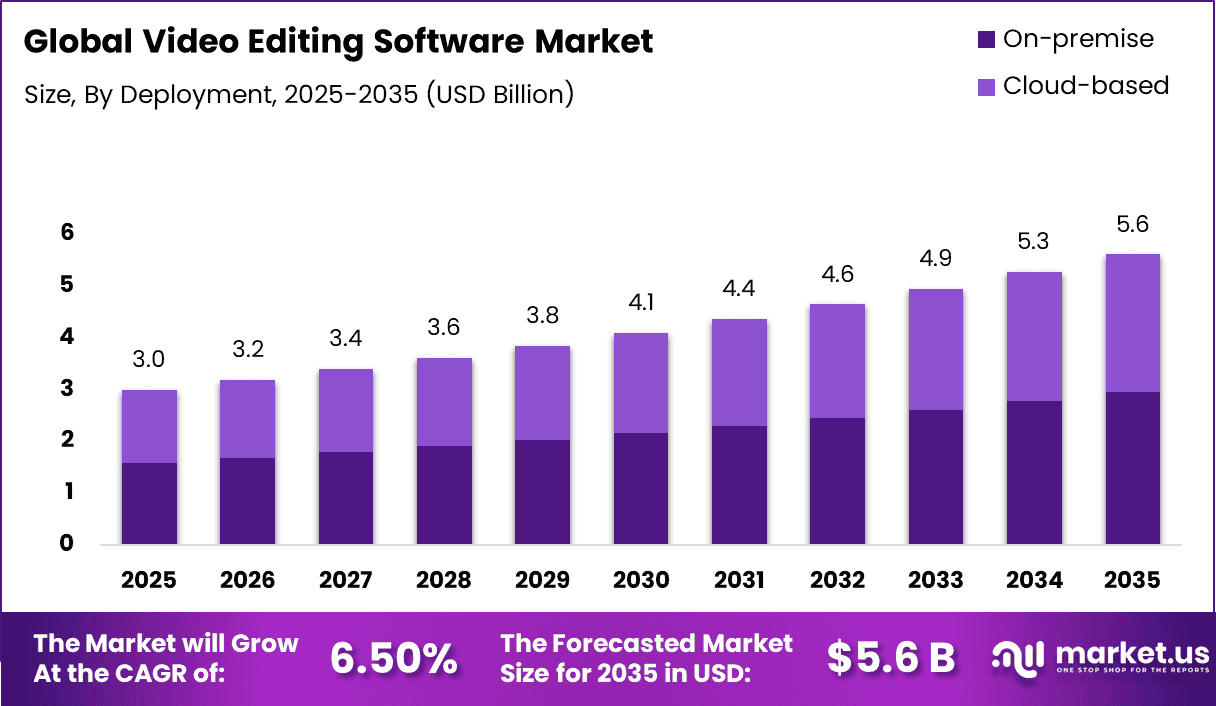
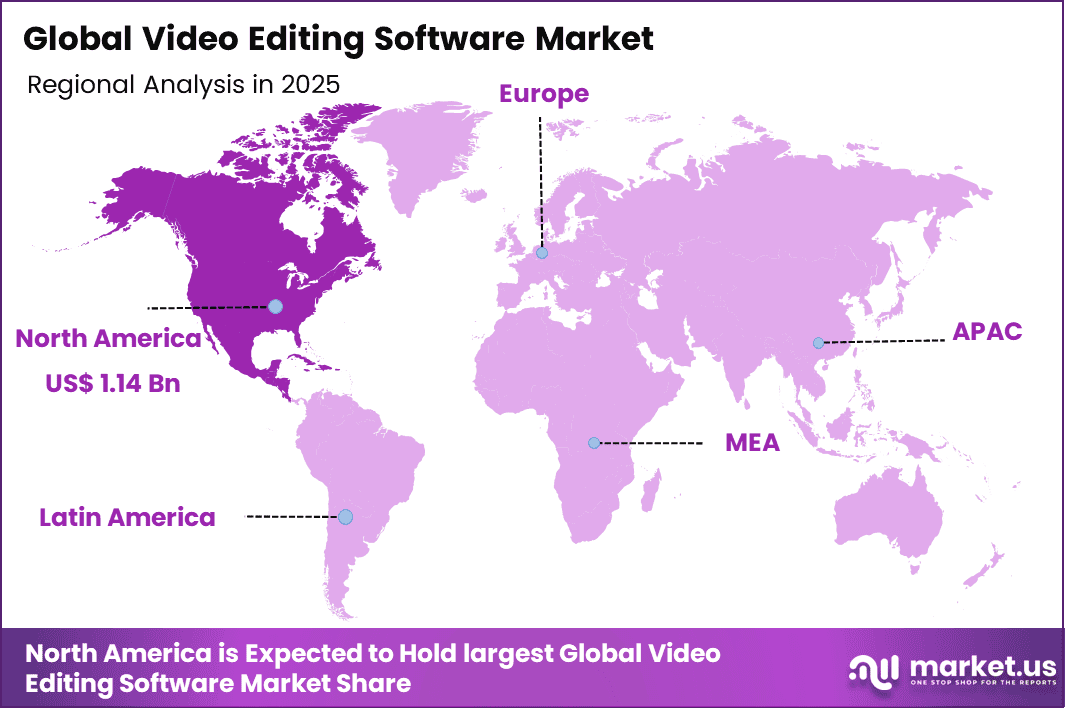
The Global Video Editing Software Market generated USD 3 billion in 2025 and is predicted to register growth from USD 3.2 billion in 2026 to about USD 5.6 billion by 2035, recording a CAGR of 6.50% throughout the forecast span. In 2025, North America held a dominant market position, capturing more than a 38.3% share, holding USD 1.14 Billion revenue.
Top Market Takeaways
Desktop/laptop platforms command 55.1%, delivering high-performance rendering, multi-cam editing, and hardware-accelerated effects for complex timelines and 4K/8K workflows.
On-premises deployment holds 52.6%, ensuring data control, offline processing, and integration with professional storage arrays for studios and broadcast facilities.
Windows operating system captures 46.5%, supporting broad hardware compatibility, plugin ecosystems, and enterprise IT environments for collaborative post-production.
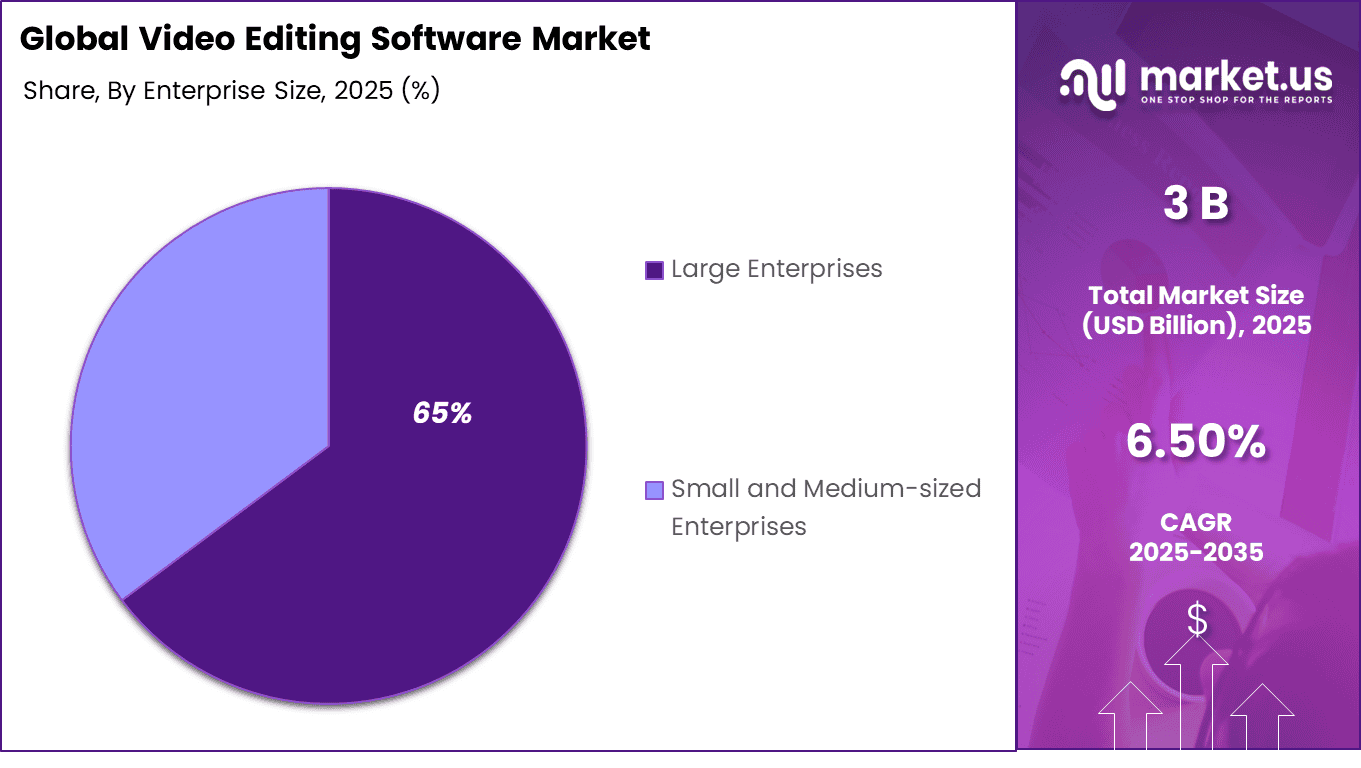
Large enterprises dominate at 64.8% by size, leveraging advanced color grading, AI-assisted editing, and version control for high-volume commercial content pipelines.
Professional/commercial end-use leads with 60.3%, powering film finishing, TV packaging, and advertising deliverables with deadline-driven turnaround requirements.
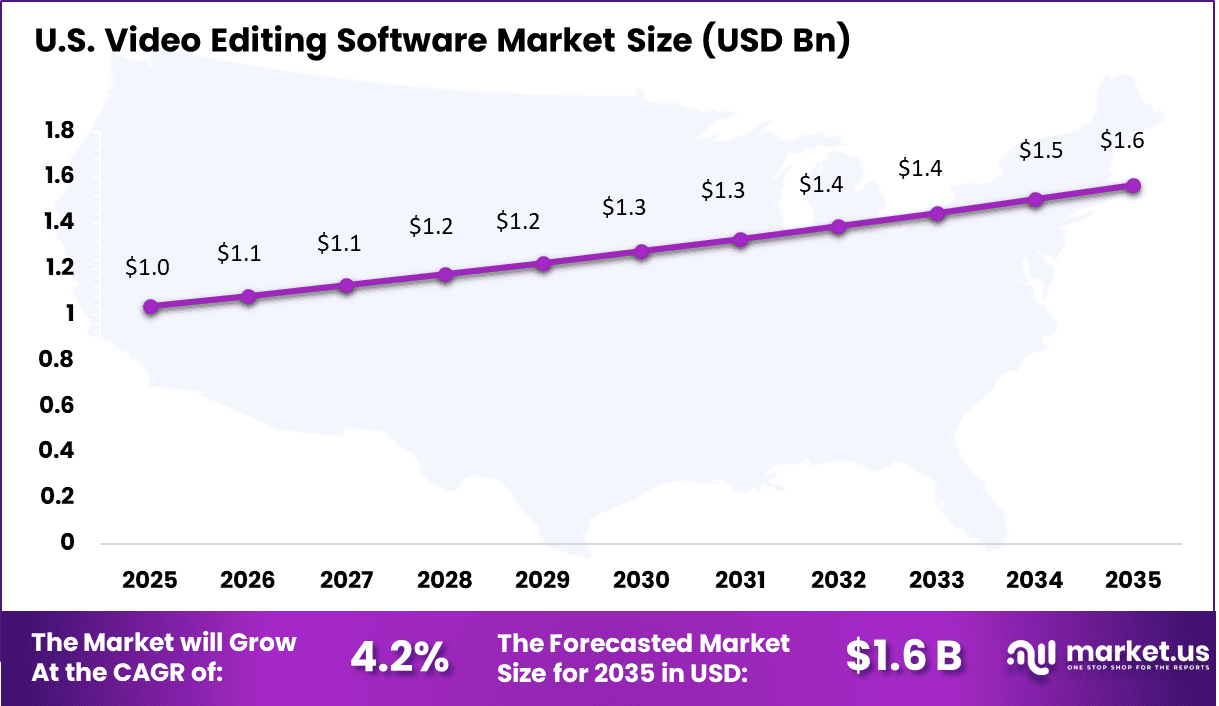
North America drives 38.3% global value, with U.S. market at USD 1.04 billion and 4.2% CAGR, fueled by Hollywood studios, streaming platforms, and advertising agency growth.
Video editing software has become an essential tool for creating and refining digital video content across media, marketing, education, and personal use. It allows users to cut, arrange, enhance, and add effects to video footage, making it suitable for both professional production and everyday content creation.
With the rise of online platforms and digital storytelling, video content is now a primary form of communication, and editing software plays a central role in shaping that content. The shift toward easy to use interfaces and cloud based tools is making video editing more accessible to a wider range of users.
One of the main driving factors is the rapid growth of digital content creation across social media, streaming platforms, and online marketing. Businesses and individuals are producing more video content to engage audiences and communicate messages effectively.
In addition, the increasing use of high resolution video formats is driving the need for software that can handle complex editing tasks and deliver high quality output. The adoption of remote and collaborative workflows is also encouraging the use of cloud enabled editing tools that allow teams to work together from different locations. Continuous improvements in processing power and software capabilities are further supporting this market.
Demand for video editing software is rising as more users seek tools that combine performance with ease of use. There is a strong preference for solutions that offer a range of features, from basic editing functions to advanced effects and color correction. Users are also looking for software that can integrate with other creative tools and support different file formats.
The demand is particularly strong among content creators, marketing teams, and educational institutions that rely on video for communication and engagement. As video continues to dominate digital platforms, the need for flexible and efficient editing solutions is expected to grow steadily.
Drivers Impact Analysis
Key Driver
Impact on CAGR Forecast (~%)
Geographic Relevance
Impact Timeline
Additional Insight
Rising growth of digital content creation and social media
+2.8%
Global
Short to medium term
Content creators drive software demand
Increasing adoption of video marketing by businesses
+2.5%
North America, Europe, Asia Pacific
Medium term
Brands invest in video-based promotion
Expansion of OTT and streaming platforms
+2.3%
Global
Medium to long term
Streaming needs continuous video production
Growing demand for high-quality video production
+2.1%
Developed markets
Medium term
Professional editing tools gain importance
Integration of video editing in education and e-learning
+1.9%
Global
Medium to long term
Educational content drives usage
Restraints Impact Analysis
Key Restraint
Impact on CAGR Forecast (~%)
Geographic Relevance
Impact Timeline
Additional Insight
High cost of professional video editing software
-2.4%
Emerging markets
Short to medium term
Cost limits adoption among small users
Steep learning curve for advanced editing tools
-2.1%
Global
Medium term
Complexity affects new users
Hardware requirements for high-performance editing
-1.8%
Global
Medium term
High specs increase entry barrier
Availability of free and low-cost alternatives
-1.5%
Global
Medium term
Free tools reduce paid adoption
Data storage and processing challenges
-1.3%
Global
Long term
Large files require strong infrastructure
By Platform Analysis
The desktop and laptop segment accounted for 55.1% of the market share, reflecting its strong position as the primary platform for video editing tasks. This dominance is supported by the need for higher processing power, advanced graphics capabilities, and better control over editing workflows. Professionals prefer these platforms for handling complex editing, rendering, and post-production activities that require stable performance.
Another factor driving this segment is the availability of advanced editing tools and software compatibility on desktop systems. These devices support larger storage capacity and allow integration with professional-grade hardware, which improves efficiency and output quality. This makes them a preferred choice for users involved in detailed and high-resolution video production.
By Deployment Analysis
The on-premises segment held 52.6% share, driven by the need for greater control over data, performance, and system configuration. Users prefer on-premises solutions for video editing as they allow faster processing without reliance on internet connectivity. This is especially important for handling large video files and ensuring smooth editing workflows.
In addition, on-premises deployment provides better customization and security, which is important for professional and commercial users. Organizations often require secure environments to manage sensitive content, and local deployment helps maintain control over data. This has supported continued adoption of on-premises video editing solutions.
By Operating System Analysis
The windows segment accounted for 46.5% of the market share, reflecting its widespread use across both individual and enterprise users. Windows-based systems support a broad range of video editing software and hardware configurations, making them accessible and flexible for different user needs. This compatibility has contributed to their strong position in the market.
Furthermore, the availability of cost-effective hardware options and ease of system upgrades have encouraged adoption of Windows platforms. Users benefit from a wide ecosystem of tools and plugins, which enhances editing capabilities and workflow efficiency. This has strengthened the preference for Windows operating systems in video editing applications.
By Enterprise Size Analysis
The large enterprises segment captured 65% of the market, driven by their extensive use of video content for marketing, communication, and media production. These organizations require advanced editing solutions to manage large volumes of content and maintain high production standards. Video editing software helps streamline workflows and improve content quality.
Moreover, large enterprises have the resources to invest in professional-grade tools and infrastructure. They focus on creating high-quality visual content to support branding and engagement strategies. This has increased the demand for reliable and feature-rich video editing software within this segment.
By End-Use Analysis
The professional and commercial segment held 60.3% share, driven by the growing demand for high-quality video content across industries. Businesses, media companies, and content creators rely on advanced editing tools to produce professional output for advertising, entertainment, and digital platforms. This segment benefits from the increasing importance of visual communication.
In addition, the expansion of digital media and online platforms has created new opportunities for professional video production. Users require efficient tools to manage editing, effects, and final output, which has strengthened the adoption of video editing software. This trend continues as demand for engaging and high-quality video content grows.
Investor Type Impact Analysis
Investor Type
Growth Sensitivity
Risk Exposure
Geographic Focus
Investment Outlook
Venture capital firms
Moderate to high
High
US, Europe
Investing in creative software startups
Private equity firms
Moderate
Moderate
North America and Europe
Scaling digital content platforms
Corporate investors
High
Moderate
Global
Strategic investments in media technology
Institutional investors
Moderate
Low to moderate
Developed markets
Prefer stable media software firms
Government and public funding bodies
Low to moderate
Low
Global
Supporting digital media and education initiatives
Technology Enablement Analysis
Technology
Impact on CAGR Forecast (~%)
Geographic Relevance
Impact Timeline
Additional Insight
AI-based video editing and automation
+3.0%
US, Europe
Medium to long term
Automates editing tasks
Cloud-based video editing platforms
+2.7%
Global
Short to medium term
Enables remote collaboration
Integration with content management systems
+2.4%
Global
Medium term
Streamlines content workflows
Real-time rendering and processing technologies
+2.2%
Developed markets
Medium to long term
Improves editing speed
Support for 4K and 8K video formats
+2.0%
Global
Medium to long term
Enhances video quality capabilities
Key Challenges
High cost of advanced software limits adoption for small creators.
Steep learning curve for beginners using professional tools.
High system requirements need powerful computers and hardware.
Compatibility issues with different file formats and devices.
Frequent software updates can disrupt ongoing projects.
Performance issues when editing large or high-resolution videos.
Data loss risk due to crashes or improper file handling.
Limited storage space for large video files.
Integration challenges with other creative tools and plugins.
Piracy and illegal software usage affecting market growth.
Emerging Trends
The video editing software market is evolving toward more intelligent, accessible, and collaborative tools that cater to both professionals and everyday users. One of the key emerging trends is the growing use of AI powered editing features that can automate tasks such as scene detection, color correction, subtitle generation, and background removal. This is making the editing process faster and more efficient, even for users with limited technical skills.
Another important trend is the rise of cloud based editing platforms that allow users to work on projects from different devices and collaborate in real time with teams across locations. There is also increasing demand for mobile first editing solutions, as content creators prefer to shoot and edit videos directly on smartphones. In addition, integration with social media platforms is becoming more common, enabling quick formatting and publishing of content tailored for different channels. The shift toward immersive formats such as vertical video and short form content is further influencing how editing tools are designed and used.
Growth Factors
The growth of this market is driven by the rapid expansion of digital content creation across social media, entertainment, education, and marketing. As more individuals and businesses focus on video as a primary communication tool, the demand for easy to use and efficient editing software continues to rise. The increasing popularity of influencer marketing and online streaming is also encouraging creators to produce high quality video content regularly.
Another major factor is the growing adoption of video in corporate communication, training, and customer engagement, which is pushing organizations to invest in reliable editing tools. The availability of high quality cameras in smartphones is further supporting this trend, as more users are creating content without the need for professional equipment. Additionally, the need to reduce production time and improve content quality is encouraging the use of advanced editing features, supporting sustained demand in this market.
Key Market Segments
By Platform
Desktop/Laptop
Smartphone/Tablet
Web-based Studio
By Deployment
On-premise
Cloud-based
By Operating System
Windows
macOS
Linux
iOS/iPadOS
Android/ChromeOS
By Enterprise Size
Large Enterprises
Small and Medium-sized Enterprises
By End-Use
Personal
Professional/Commercial
Regional Analysis
North America accounted for 38.3% of the Video Editing Software market, supported by strong demand from media, entertainment, and content creation industries. The region has a well-established digital ecosystem where professionals and individual creators actively use editing tools for video production, social media content, and streaming platforms.
Increasing consumption of online video content and the rise of creator-driven platforms are encouraging continuous use of editing software. In addition, growing adoption of advanced features such as real-time rendering, cloud collaboration, and AI-assisted editing is strengthening demand across both professional studios and independent users.
The U.S. market reached USD 1.04 Billion and is projected to grow at a CAGR of 4.2%, driven by steady demand from content creators, production houses, and digital marketers. The expansion of social media platforms and video-based marketing strategies is pushing businesses to invest in editing tools that improve content quality and engagement.
Users are increasingly seeking software that offers ease of use along with advanced capabilities, supporting adoption across a wider audience. The ongoing shift toward digital content creation and online distribution is expected to sustain consistent growth in the US market over the coming years.
Key Regions and Countries
North America
US
Canada
Europe
Germany
France
The UK
Spain
Italy
Russia
Netherlands
Rest of Europe
Asia Pacific
China
Japan
South Korea
India
Australia
Singapore
Thailand
Vietnam
Rest of APAC
Latin America
Brazil
Mexico
Rest of Latin America
Middle East & Africa
South Africa
Saudi Arabia
UAE
Rest of MEA
Competitive Analysis
The competitive landscape of the Video Editing Software Market is highly competitive, with a mix of professional software providers and consumer-focused platforms. Companies such as Adobe, Inc., Apple, Inc., Avid Technology, Inc., Blackmagic Design, and Autodesk, Inc. focus on advanced editing tools used in film production, broadcasting, and professional content creation.
These players offer high-end features such as multi-track editing, visual effects, color grading, and real-time rendering. Their strong brand presence and continuous updates help them maintain leadership in the professional segment.
At the same time, companies such as CyberLink Corporation, Corel Corporation, TechSmith Corporation, Magix Software GmbH, ArcSoft, Inc., Wondershare Technology Group Co., Ltd., Movavi, FXHome (HitFilm), Pinnacle Studio (Corel), Lightworks, Shotcut, Kdenlive, VSDC Free Video Editor, Clipchamp (Microsoft), and InShot focus on user-friendly and affordable solutions for beginners and small content creators.
These players emphasize simple interfaces, quick editing features, and compatibility across devices. Competition in this market is driven by ease of use, advanced editing capabilities, and the ability to support different formats and platforms, as demand for video content continues to grow.
The future outlook for the Video Editing Software Market looks very strong as demand for video content continues to grow across social media, marketing, education, and entertainment. The market is expected to expand with more creators, businesses, and professionals using video to engage audiences. User-friendly tools and mobile editing apps are anticipated to attract new users, while advanced features support professional creators. In the coming years, AI-based editing, cloud collaboration, and real-time processing are expected to make video creation faster and easier, helping the market grow further.
Recent Developments
January, 2026 – PowerDirector 25 adds AI body effects, one-click color grading, and Sky Replacement for drone footage. 360-degree editing with VR headset preview while smartphone-to-desktop workflow auto-syncs via Wi-Fi. PowerDirector 365 subscription adds monthly effects packs; YouTube export templates optimize titles and thumbnails automatically.
March, 2026 – Autodesk Flame 2026 adds AI rotoscoping cutting cleanup 60% for VFX composites on sci-fi films. USD cloud rendering accelerates 8K timelines 3x while Nuke integration imports 3D composites directly into batch rendering. Flame Assist mobile app approves VFX shots remotely; OpenUSD support unifies asset pipelines across studios.
Report Scope
Report Features
Description
Market Value (2025)
USD 3 Billion
Forecast Revenue (2035)
USD 5.6 Billion
CAGR(2025-2035)
6.50%
Base Year for Estimation
2024
Historic Period
2020-2024
Forecast Period
2025-2035
Report Coverage
Revenue forecast, AI impact on Market trends, Share Insights, Company ranking, competitive landscape, Recent Developments, Market Dynamics and Emerging Trends
Segments Covered
By Platform (Desktop/Laptop, Smartphone/Tablet, Web-based Studio), By Deployment (On-premise, Cloud-based), By Operating System (Windows, macOS, Linux, iOS/iPadOS, Android/ChromeOS), By Enterprise Size (Large Enterprises, Small and Medium-sized Enterprises), By End-Use (Personal, Professional/Commercial)
Regional Analysis
North America – US, Canada; Europe – Germany, France, The UK, Spain, Italy, Russia, Netherlands, Rest of Europe; Asia Pacific – China, Japan, South Korea, India, New Zealand, Singapore, Thailand, Vietnam, Rest of Latin America; Latin America – Brazil, Mexico, Rest of Latin America; Middle East & Africa – South Africa, Saudi Arabia, UAE, Rest of MEA