


Global Vegan Omega-3 Supplements Market Size, Share Analysis Report By Source (Algae, Flaxseed, Chia Seeds, Others), By Form (Capsule, Liquid, Powder, Others), By Functionality (Cardiovascular Health, Brain, Nervous System And Mental Health, Eye Diseases, Diabetes, Others), By End-use (Adults, Geriatric, Pregnant Women, Children, Infants), By Distribution Channel (Supermarkets/ Hypermarkets/Food Stores, Drug Stores And Pharmacies, Online Retailers, Others) , By Region and Companies - Industry Segment Outlook, Market Assessment, Competition Scenario, Trends and Forecast 2026-2035
- Published date: Mar 2026
- Report ID: 181874
- Number of Pages: 345
- Format:
-
keyboard_arrow_up
Quick Navigation
Report Overview
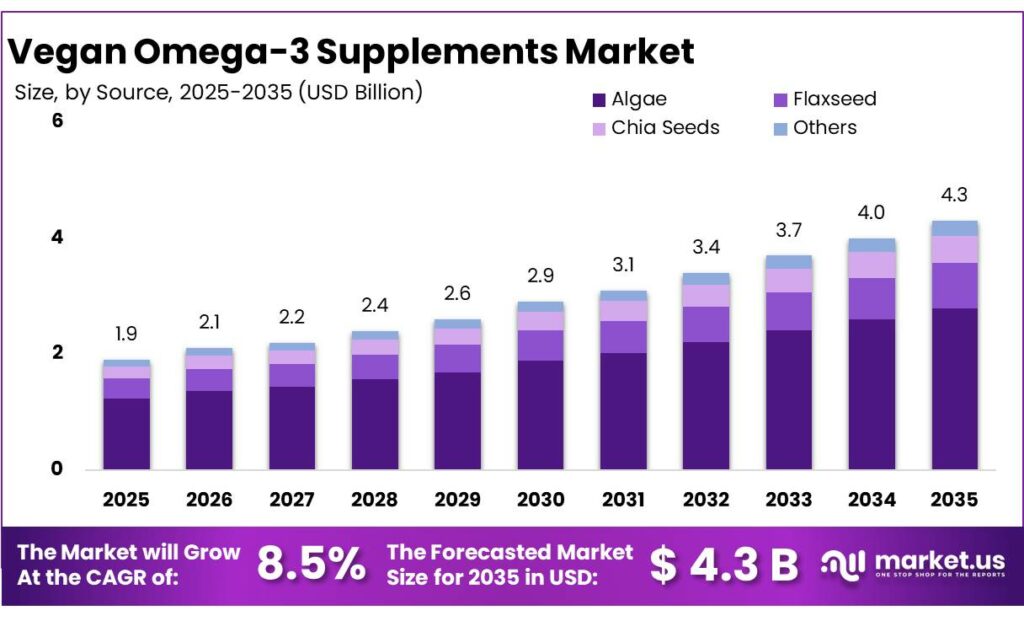
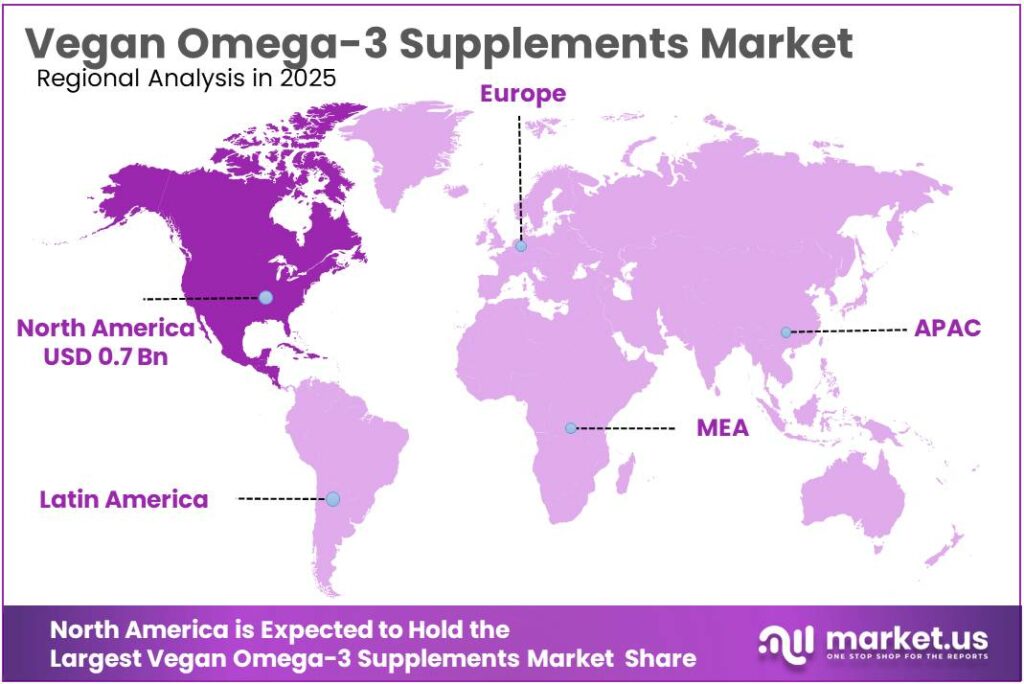
The Global Vegan Omega-3 Supplements Market size is expected to be worth around USD 4.3 Billion by 2035, from USD 1.9 Billion in 2025, growing at a CAGR of 8.5% during the forecast period from 2026 to 2035. In 2025, North America held a dominant market position, capturing more than a 42.1% share, holding USD 0.7 Billion revenue.
The vegan omega-3 supplements industry is evolving from a niche plant-based wellness segment into a more structured preventive-nutrition category built around algae oil, flax oil, and blended ALA/EPA/DHA formats.
The U.S. FDA states that the Dietary Guidelines recommend at least 8 ounces of seafood per week for adults and 8–12 ounces per week for people who are pregnant or breastfeeding, while the NIH Office of Dietary Supplements notes that adult adequate intake for omega-3 as ALA is 1.6 g/day for men and 1.1 g/day for women, rising to 1.4 g/day during pregnancy and 1.3 g/day during lactation.
The Council for Responsible Nutrition reported that 75% of U.S. adults used dietary supplements in 2024, while median monthly spending among supplement users increased from $48 in 2023 to $50 in 2024. At the same time, the International Food Information Council’s 2024 Food & Health Survey, based on 3,000 Americans, found that 77% of people following vegan, vegetarian, or plant-based eating patterns said they did so to be healthier.
Demand-side drivers are becoming clearer and more measurable. WHO reported 19.8 million cardiovascular deaths in 2022, equal to about 32% of all global deaths, which continues to keep heart-health ingredients commercially relevant. The FDA’s qualified health-claim framework also allows EPA/DHA products to communicate potential blood-pressure and coronary-heart-disease benefits, albeit with qualified language, which helps legitimate the supplement category in regulated markets.
Consumer behavior is also supportive: IFIC’s 2024 survey of 3,000 Americans found that among people following vegan, vegetarian, or plant-based diets, 77% said they did so “to be healthier,” and 20% said the eating pattern was recommended by a doctor. Together, these factors favor vegan omega-3 formats that can deliver direct DHA/EPA from algae for flexitarian, vegetarian, and fully vegan users.
Barlean’s Organic Liquid, LLC is active with a liquid vegan format that combines flax and algae oil and provides 7,200 mg of ALA plus 630 mg of vegan EPA/DHA per serving at a listed price of $36.99, illustrating the market’s move toward higher-potency, taste-forward delivery systems rather than basic softgels.
Key Takeaways
- Vegan Omega-3 Supplements Market size is expected to be worth around USD 4.3 Billion by 2035, from USD 1.9 Billion in 2025, growing at a CAGR of 8.5%.
- Algae held a dominant market position, capturing more than a 65.7% share.
- Capsule held a dominant market position, capturing more than a 58.3% share.
- Cardiovascular Health held a dominant market position, capturing more than a 37.8% share.
- Adults held a dominant market position, capturing more than a 51.6% share.
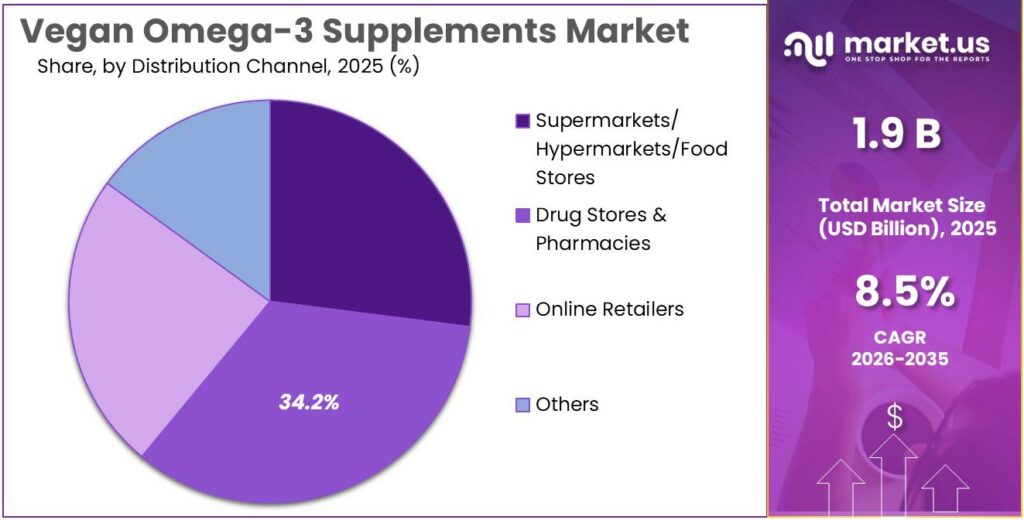
- Drug Stores & Pharmacies held a dominant market position, capturing more than a 34.2% share.
- North America remains the dominating region in the vegan omega-3 supplements market, accounting for 42.1% share with a market value of around USD 0.7 billion
By Source Analysis
Algae dominates with 65.7% as it becomes the preferred vegan Omega-3 source
In 2025, Algae held a dominant market position, capturing more than a 65.7% share in the vegan omega-3 supplements market by source. This strong position is mainly because algae is one of the very few plant-based sources that naturally provides both DHA and EPA, which are the most important long-chain omega-3 fatty acids for heart and brain health.
Unlike flaxseed or chia, which mainly offer ALA that needs conversion in the body, algae-based supplements deliver these nutrients directly, making them more effective and reliable for consumers. This scientific advantage has made algae the first choice among manufacturers as well as consumers who are looking for fully vegan, clean-label, and high-quality supplements.
By Form Analysis
Capsule dominates with 58.3% as it remains the most convenient and trusted format
In 2025, Capsule held a dominant market position, capturing more than a 58.3% share in the vegan omega-3 supplements market by form. This strong preference is largely driven by convenience, ease of consumption, and familiarity among consumers. Capsules are simple to take, require no preparation, and are widely accepted across all age groups, making them a go-to choice for daily supplementation. For many users, especially those already taking multivitamins or other supplements, capsules fit easily into existing routines without any change in behavior.
By Functionality Analysis
Cardiovascular health leads with 37.8% as heart wellness remains a top consumer priority
In 2025, Cardiovascular Health held a dominant market position, capturing more than a 37.8% share in the vegan omega-3 supplements market by functionality. This strong share is mainly because omega-3 fatty acids are widely known for supporting heart health, including helping manage cholesterol levels, supporting healthy blood pressure, and improving overall cardiovascular function. As heart-related conditions continue to be a major concern globally, consumers are becoming more proactive and turning to daily supplements as a preventive step rather than waiting for medical intervention.
By End-use Analysis
Adults dominate with 51.6% as daily health awareness drives supplement use
In 2025, Adults held a dominant market position, capturing more than a 51.6% share in the vegan omega-3 supplements market by end-use. This leading share is mainly driven by increasing awareness among adults about preventive healthcare and the long-term benefits of omega-3 intake. Adults, especially those in working-age groups and middle age, are more focused on maintaining heart health, brain function, and overall wellness, which makes omega-3 supplements a regular part of their daily routine.
By Distribution Channel Analysis
Drug stores & pharmacies lead with 34.2% as trust and accessibility drive purchases
In 2025, Drug Stores & Pharmacies held a dominant market position, capturing more than a 34.2% share in the vegan omega-3 supplements market by distribution channel. This leading position is largely due to the high level of consumer trust associated with pharmacy-based purchases.
Many buyers prefer to purchase supplements from pharmacies because they see them as more reliable and medically guided compared to general retail outlets. The presence of pharmacists also helps consumers make informed decisions, especially when choosing supplements for specific health needs like heart health or prenatal care.
Key Market Segments
By Source
- Algae
- Flaxseed
- Chia Seeds
- Others
By Form
- Capsule
- Liquid
- Powder
- Others
By Functionality
- Cardiovascular Health
- Brain, Nervous System & Mental Health
- Eye Diseases
- Diabetes
- Others
By End-use
- Adults
- Geriatric
- Pregnant Women
- Children
- Infants
By Distribution Channel
- Supermarkets/ Hypermarkets/Food Stores
- Drug Stores & Pharmacies
- Online Retailers
- Others
Emerging Trends
Advanced Algae Technology Improving Product Quality and Efficiency
One of the most noticeable trends in the vegan omega-3 supplements market is the rapid improvement in algae-based production technology. Earlier, algae-derived omega-3 was limited in availability and often expensive, but now companies are investing in controlled fermentation and bioreactor systems to improve both quality and output.
From a nutritional standpoint, algae has become highly efficient. Research shows that algal oils can contain up to 43% to 55% DHA content depending on the strain, which is often comparable or even higher than some fish oils. This makes it a strong alternative not just for vegans but also for mainstream consumers. In addition, plant-based omega-3 supplements from algae typically provide around 100–300 mg DHA per serving, making them suitable for daily intake needs.
Expansion into Functional Foods and Everyday Nutrition
Another key trend is the expansion of vegan omega-3 beyond traditional supplements into everyday food products. Instead of only capsules or liquids, omega-3 is now being added to products like plant-based milk, snacks, and fortified foods. This shift is making it easier for consumers to include omega-3 in their daily diet without relying entirely on supplements.
This trend is supported by growing awareness around nutritional gaps. Studies show that average intake of EPA and DHA in adults can be as low as around 90 mg per day, which is significantly below recommended levels. This gap is encouraging food manufacturers to include omega-3 in commonly consumed products.
Drivers
Widespread Nutritional Gap Creates Strong Market Need
One of the biggest driving factors for vegan omega-3 supplements is the clear gap between recommended intake and actual consumption across global populations. According to joint recommendations from the Food and Agriculture Organization and World Health Organization (FAO/WHO), adults are advised to consume around 250 mg per day of combined EPA and DHA for maintaining good health. Similarly, the European Food Safety Authority (EFSA) also supports a daily intake of 250 mg EPA + DHA for adults, showing consistency across major health authorities.
However, real-world intake is far below these levels. Studies show that many populations consume less than 200 mg per day, and in some regions, intake can drop to below 50 mg per day. In fact, research indicates that more than 95% of the population does not meet the recommended 250 mg daily intake of EPA and DHA. This gap highlights a serious nutritional shortfall, especially because omega-3 fatty acids are essential and cannot be produced efficiently by the human body.
Shift Toward Plant-Based and Sustainable Nutrition
Another major reason behind the growth of vegan omega-3 supplements is the increasing shift toward plant-based and sustainable nutrition. Consumers today are more aware of environmental impact and are actively looking for alternatives that reduce pressure on marine ecosystems. Traditional omega-3 sources rely heavily on fish oil, but concerns around overfishing, ocean pollution, and sustainability are pushing both consumers and industries toward algae-based solutions.
The shift is also visible in government and public health messaging, where there is increasing emphasis on preventive healthcare. Omega-3 is often linked with heart health, brain development, and inflammation control, which are key concerns in modern lifestyles. For example, the American Heart Association recommends around 500 mg per day of EPA and DHA for general cardiovascular health, further strengthening the need for reliable intake sources
Restraints
Expensive Algae-Based Production Limits Price Accessibility
One of the key restraining factors for the vegan omega-3 supplements market is the relatively high cost of production, especially for algae-based sources. Unlike traditional fish oil, which is extracted from widely available marine resources, vegan omega-3 relies on controlled fermentation and cultivation of microalgae. This process requires specialized equipment, controlled environments, and higher operational costs, which directly increases the final product price for consumers.
From a supply perspective, global omega-3 production is already under pressure. Studies indicate that current traditional sources are not sufficient to meet worldwide nutritional needs, and scaling alternative sources like algae requires additional investment and infrastructure
Gap Between Recommended Intake and Willingness to Pay
Another major challenge is the mismatch between nutritional need and consumer willingness to spend on vegan omega-3 supplements. Health authorities such as FAO/WHO and EFSA recommend an intake of around 250 mg per day of EPA and DHA for adults. However, actual consumption levels remain significantly lower, not just due to lack of awareness but also due to affordability concerns.
Research shows that nearly 76% of the global population does not meet the recommended omega-3 intake, highlighting a widespread deficiency. In addition, intake levels in many regions are reported to be far below recommendations, with some populations consuming less than 100 mg per day, which is not sufficient for optimal health
Opportunity
Rising Global Focus on Preventive Health and Nutrition
One of the biggest growth opportunities for vegan omega-3 supplements lies in the increasing global shift toward preventive healthcare. People are no longer waiting for health problems to appear; instead, they are trying to avoid them through better nutrition. Omega-3 fatty acids are strongly linked with heart health, brain function, and inflammation control, making them an important part of this preventive approach.
Global health authorities have consistently highlighted the importance of omega-3 intake. For example, most international guidelines recommend around 250 mg per day of EPA and DHA for adults to maintain overall health. At the same time, organizations such as the American Heart Association suggest about 500 mg per day for cardiovascular support. Studies show that average consumption can be as low as 70–90 mg per day, which is far below recommended levels.
Growing Plant-Based Population and Sustainability Push
Another major opportunity comes from the rapid rise in plant-based diets and sustainability concerns. A large number of consumers are now reducing or completely avoiding animal-based foods due to health, ethical, and environmental reasons. Traditional omega-3 sources depend heavily on fish, but vegan consumers cannot rely on these sources, which makes algae-based supplements highly relevant.
From a sustainability perspective, algae offers a cleaner and more controlled source of omega-3. It avoids issues like overfishing and ocean contamination, which are growing global concerns. At the same time, governments and international organizations are encouraging sustainable food systems, which indirectly supports the shift toward plant-based nutrition.
Regional Insights
North America leads with 42.1% share driven by high supplement adoption and health awareness
North America remains the dominating region in the vegan omega-3 supplements market, accounting for 42.1% share with a market value of around USD 0.7 billion. This leadership position is strongly supported by high consumer awareness around nutrition, preventive healthcare, and widespread use of dietary supplements. In the United States, for instance, about 57.6% of adults reported using dietary supplements in a given month, reflecting a well-established culture of supplement consumption
The region also benefits from strong awareness around omega-3 health benefits, particularly for heart and brain health. Organizations like the American Heart Association continue to recommend regular omega-3 intake through diet, such as consuming fish at least twice per week, which indirectly encourages supplementation when dietary intake is insufficient. Despite these recommendations, actual intake levels remain below optimal levels.
Key Regions and Countries Insights
- North America
- US
- Canada
- Europe
- Germany
- France
- The UK
- Spain
- Italy
- Rest of Europe
- Asia Pacific
- China
- Japan
- South Korea
- India
- Australia
- Rest of APAC
- Latin America
- Brazil
- Mexico
- Rest of Latin America
- Middle East & Africa
- GCC
- South Africa
- Rest of MEA
Key Players Analysis
Barlean’s Organic Liquid, LLC is known for its premium plant-based omega-3 formulations, especially flaxseed and algae-based blends. The company focuses on liquid delivery formats, which often provide higher potency, with some products delivering over 7,000 mg of ALA per serving. Barlean’s operates mainly in North America, where supplement usage is high, with the U.S. omega-3 supplements market valued at around USD 2.18 billion in 2024.
Source Naturals, Inc. is a well-established dietary supplement brand offering a wide range of omega-3 products, including vegan options derived from plant oils. The company emphasizes affordability and accessibility, targeting a broad consumer base. With more than 18.8 million U.S. adults using omega-3 supplements in 2022.
Nordic Naturals is one of the most recognized names in the omega-3 industry, with an estimated revenue of around USD 500 million in 2024 and presence in over 40+ countries. While traditionally known for fish oil, the company is expanding into plant-based omega-3 solutions to meet changing consumer preferences. With over 500 employees, Nordic Naturals continues to invest in product innovation and global distribution, strengthening its role in both conventional and vegan omega-3 markets.
Top Key Players Outlook
- Barlean’s Organic Liquid, LLC
- i-Health, Inc.
- Source Naturals, Inc.
- NUTRU
- Nordic Naturals
- Calgee
- NOW Foods
- Sunwarrior LLC
- Nomolotus, LLC (Truvani)
- Doctor’s Best
Recent Industry Developments
Barlean’s is expected to continue expanding flavored algae-based omega-3 offerings, such as formulations delivering 420 mg DHA and 210 mg EPA per serving, reflecting its focus on innovation, taste, and plant-based nutrition trends.
i-Health particularly relevant in the vegan segment is its direct access to dsm-firmenich’s algal omega-3 portfolio, such as life’s®OMEGA, which is 100% plant-based, non-GMO, and derived from algae.
Report Scope
Report Features Description Market Value (2025) USD 1.9 Bn Forecast Revenue (2035) USD 4.3 Bn CAGR (2026-2035) 8.5% Base Year for Estimation 2025 Historic Period 2020-2024 Forecast Period 2026-2035 Report Coverage Revenue Forecast, Market Dynamics, Competitive Landscape, Recent Developments Segments Covered By Source (Algae, Flaxseed, Chia Seeds, Others), By Form (Capsule, Liquid, Powder, Others), By Functionality (Cardiovascular Health, Brain, Nervous System And Mental Health, Eye Diseases, Diabetes, Others), By End-use (Adults, Geriatric, Pregnant Women, Children, Infants), By Distribution Channel (Supermarkets/ Hypermarkets/Food Stores, Drug Stores And Pharmacies, Online Retailers, Others) Regional Analysis North America – US, Canada; Europe – Germany, France, The UK, Spain, Italy, Rest of Europe; Asia Pacific – China, Japan, South Korea, India, Australia, Singapore, Rest of APAC; Latin America – Brazil, Mexico, Rest of Latin America; Middle East & Africa – GCC, South Africa, Rest of MEA Competitive Landscape Barlean’s Organic Liquid, LLC, i-Health, Inc., Source Naturals, Inc., NUTRU, Nordic Naturals, Calgee, NOW Foods, Sunwarrior LLC, Nomolotus, LLC (Truvani), Doctor’s Best Customization Scope Customization for segments, region/country-level will be provided. Moreover, additional customization can be done based on the requirements. Purchase Options We have three licenses to opt for: Single User License, Multi-User License (Up to 5 Users), Corporate Use License (Unlimited User and Printable PDF)  Vegan Omega-3 Supplements MarketPublished date: Mar 2026add_shopping_cartBuy Now get_appDownload Sample
 -
-
- Barlean's Organic Liquid, LLC
- i-Health, Inc.
- Source Naturals, Inc.
- NUTRU
- Nordic Naturals
- Calgee
- NOW Foods
- Sunwarrior LLC
- Nomolotus, LLC (Truvani)
- Doctor’s Best
Our Clients

- 181874
- Mar 2026






