


Report Overview
The Global Telecom Shelter Cooling Market generated USD 1.9 billion in 2025 and is predicted to register growth from USD 2 billion in 2026 to about USD 3.5 billion by 2035, recording a CAGR of 6.40% throughout the forecast span. In 2025, North America held a dominant market position, capturing more than a 35.6% share, holding USD 0.66 Billion revenue.
Top Market Takeaways
- Air conditioning units command 58.3% market share, delivering precision temperature control, humidity management, and redundant failover for mission-critical telecom enclosures.
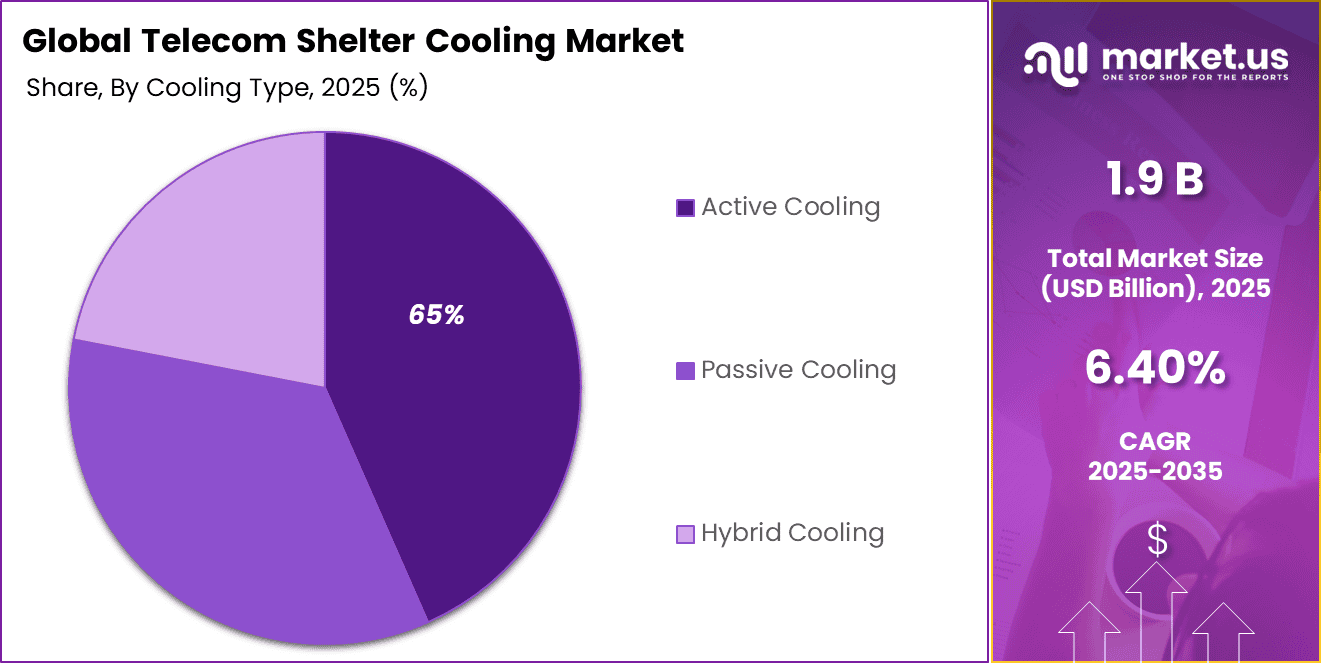
- Active cooling captures 65.2%, enabling compressor-driven heat rejection, direct expansion systems, and integrated free cooling for energy-efficient BTS thermal management.
- Base transceiver stations claim 37.4%, powering RRU/BBU cooling, high-power amplifier dissipation, and multi-band antenna heat extraction in compact cell site deployments.
- Telecom operators hold 34.8%, leveraging specialized cooling for rural macro sites, urban small cells, and edge computing co-location with guaranteed uptime SLAs.
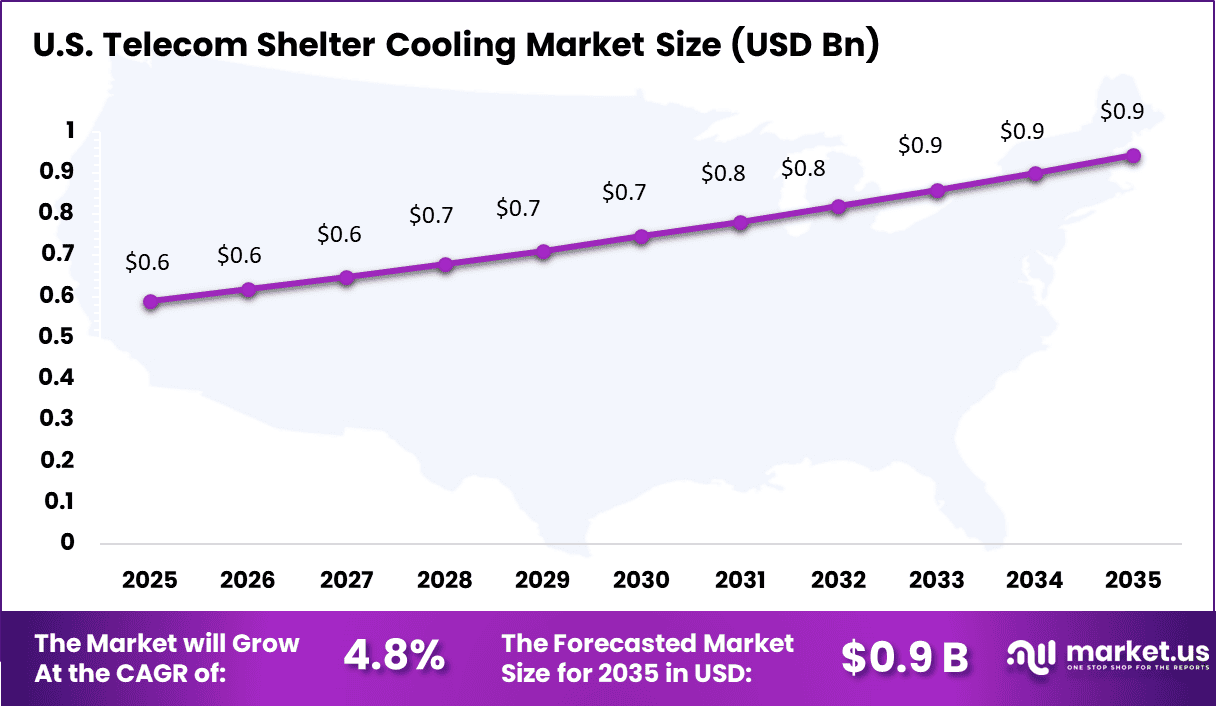
- North America drives 35.6% global value, with U.S. market at USD 0.59 billion and 4.8% CAGR, fueled by carrier aggregation upgrades and C-band spectrum rollouts.
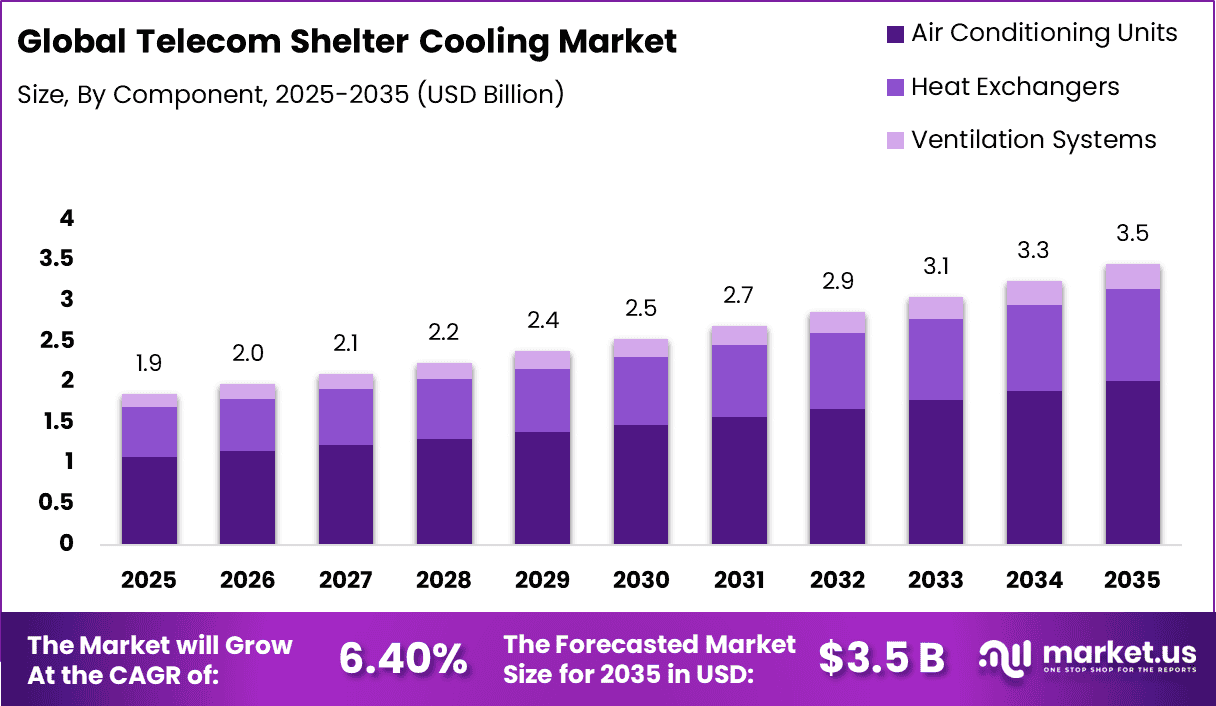
Telecom shelter cooling solutions are used to maintain optimal temperature conditions inside telecom base station enclosures where sensitive electronic equipment is installed. These shelters house critical network components that generate heat during continuous operation, and without proper cooling, performance and reliability can be affected.
As telecom networks expand and become more data intensive, maintaining stable operating conditions is becoming more important. Cooling systems are designed to ensure consistent performance, protect equipment from overheating, and extend the life of network infrastructure in different environmental conditions.
One of the key driving factors is the rapid expansion of telecom networks and the increasing density of base stations. As operators deploy more sites to support higher data demand, the need for efficient thermal management is growing.
In addition, modern telecom equipment is more compact but generates significant heat, which requires advanced cooling solutions to maintain performance. Energy efficiency is also a major concern, as operators aim to reduce power consumption and operational costs. The growing focus on sustainable operations is encouraging the adoption of cooling systems that use less energy while maintaining effective temperature control. Harsh environmental conditions in remote or outdoor locations are further driving the need for reliable cooling systems that can operate under varying temperatures.
Demand for telecom shelter cooling solutions is rising as network operators look for systems that can deliver consistent performance with minimal maintenance. There is a strong preference for cooling technologies that can operate efficiently in different climates and reduce overall energy usage.
Operators are also seeking solutions that can be easily deployed and integrated with existing infrastructure. The demand is particularly high in regions where network expansion is ongoing and environmental conditions are challenging. As telecom networks continue to grow and evolve, the need for dependable and energy efficient cooling solutions is expected to increase steadily.
Drivers Impact Analysis
| Key Driver | Impact on CAGR Forecast (~%) | Geographic Relevance | Impact Timeline | Additional Insight |
|---|---|---|---|---|
| Expansion of telecom infrastructure and base stations | +2.4% | Asia Pacific, North America, Africa | Medium to long term | More towers increase cooling demand |
| Growing deployment of 5G networks | +2.1% | North America, Europe, Asia Pacific | Medium term | 5G sites require efficient thermal management |
| Rising need for energy-efficient cooling solutions | +1.9% | Global | Medium to long term | Operators focus on reducing energy consumption |
| Increasing data traffic and network load | +1.7% | Global | Medium term | Higher load raises heat generation |
| Adoption of outdoor telecom shelters in remote areas | +1.5% | Emerging markets | Medium to long term | Remote deployments need reliable cooling |
Restraints Impact Analysis
| Key Restraint | Impact on CAGR Forecast (~%) | Geographic Relevance | Impact Timeline | Additional Insight |
|---|---|---|---|---|
| High installation and maintenance costs | -2.2% | Emerging markets | Short to medium term | Costs limit widespread adoption |
| Dependence on stable power supply | -1.9% | Developing regions | Medium term | Power issues affect cooling efficiency |
| Environmental concerns and regulations | -1.6% | Europe, North America | Medium to long term | Regulations impact system design |
| Limited adoption of advanced cooling technologies | -1.4% | Developing markets | Medium term | Slow tech adoption delays growth |
| Space constraints in telecom shelters | -1.2% | Urban areas globally | Medium term | Limited space restricts system installation |
By Component Analysis
The air conditioning units segment accounted for 58.3% of the market share, reflecting its strong role in maintaining optimal temperature conditions within telecom shelters. This dominance is supported by the need to protect sensitive telecom equipment from overheating, which can impact network performance and reliability. Air conditioning systems provide consistent and controlled cooling, making them a preferred solution in environments with high heat generation.
Another factor driving this segment is the increasing deployment of telecom infrastructure in regions with extreme weather conditions. These systems ensure stable operation of network equipment and reduce the risk of downtime. Their ability to deliver precise temperature control and support continuous operations strengthens their adoption across telecom facilities.
By Cooling Type Analysis
The active cooling segment held 65% share, driven by its effectiveness in managing heat loads in high-density telecom environments. Active cooling systems use powered mechanisms such as compressors and fans to regulate temperature, ensuring efficient heat dissipation. This approach is essential for maintaining the performance of equipment that operates continuously under heavy workloads.
In addition, the growing expansion of network infrastructure has increased the demand for reliable cooling solutions. Active cooling provides better control and adaptability compared to passive methods, especially in areas with fluctuating environmental conditions. This makes it a preferred choice for telecom operators aiming to maintain consistent system performance.
By Application Analysis
The base transceiver stations segment captured 37.4% of the market, driven by the widespread deployment of these stations to support mobile network connectivity. BTS sites generate significant heat due to continuous operation, requiring effective cooling solutions to ensure uninterrupted service. Telecom shelter cooling systems play a critical role in maintaining the efficiency and longevity of these installations.
Furthermore, the expansion of mobile networks and increasing data traffic have led to a higher number of base stations being deployed. This has increased the demand for reliable cooling systems that can support round-the-clock operations. Efficient temperature management at BTS sites helps reduce maintenance needs and enhances overall network stability.
By End-User Analysis
The telecom operators segment accounted for 34.8% of the market share, reflecting their central role in deploying and maintaining network infrastructure. Telecom operators invest heavily in cooling solutions to ensure the smooth functioning of their equipment and prevent service disruptions. Reliable cooling systems are essential for maintaining network uptime and performance.
Moreover, the increasing demand for high-speed connectivity and network expansion has encouraged operators to upgrade their infrastructure. Cooling solutions are a key part of this investment, helping operators manage operational efficiency and reduce the risk of equipment failure. This has reinforced the importance of telecom shelter cooling systems within the industry.
Investor Type Impact Analysis
| Investor Type | Growth Sensitivity | Risk Exposure | Geographic Focus | Investment Outlook |
|---|---|---|---|---|
| Venture capital firms | Moderate | High | US, Asia Pacific | Investing in innovative cooling technologies |
| Private equity firms | Moderate | Moderate | North America and Europe | Scaling infrastructure and equipment providers |
| Corporate investors | High | Moderate | Global | Strategic investments in telecom infrastructure |
| Institutional investors | Moderate | Low to moderate | Developed markets | Prefer stable infrastructure-related returns |
| Government and public funding bodies | Moderate to high | Low | Asia Pacific, Africa | Supporting telecom network expansion |
Technology Enablement Analysis
| Technology | Impact on CAGR Forecast (~%) | Geographic Relevance | Impact Timeline | Additional Insight |
|---|---|---|---|---|
| Free cooling and ambient air cooling systems | +2.5% | Europe, North America | Medium to long term | Reduces energy consumption |
| Hybrid cooling technologies | +2.2% | Global | Medium term | Combines multiple cooling methods |
| AI-based thermal management systems | +1.9% | Developed markets | Medium to long term | Optimizes cooling efficiency |
| Liquid cooling solutions for telecom shelters | +1.7% | Global | Long term | Improves heat dissipation |
| Remote monitoring and control systems | +1.5% | Global | Short to medium term | Enables efficient system management |
Key Challenges
- High energy consumption increases operational costs.
- Dependence on reliable power supply in remote areas.
- High installation cost of cooling systems.
- Maintenance requirements in harsh environmental conditions.
- Limited efficiency in extreme temperatures.
- Space constraints inside telecom shelters.
- Integration challenges with existing telecom infrastructure.
- Environmental concerns related to cooling systems.
- Equipment failure risks affecting network performance.
- Lack of skilled workforce for installation and maintenance.
Emerging Trends
The telecom shelter cooling market is evolving toward more energy efficient and intelligent cooling solutions designed to handle rising heat loads from modern telecom equipment. One of the key emerging trends is the shift toward smart cooling systems that use sensors and automated controls to adjust temperature based on real time conditions inside the shelter. This helps reduce energy consumption while maintaining optimal performance of network equipment.
Another important trend is the increasing adoption of hybrid cooling approaches that combine passive and active methods to improve efficiency in different environmental conditions. There is also growing interest in liquid based and advanced airflow management techniques, especially in high density installations where traditional cooling methods are less effective. In addition, remote monitoring and predictive maintenance features are being integrated into cooling systems, allowing operators to identify potential issues early and reduce downtime. The focus on sustainable operations is also encouraging the use of eco friendly refrigerants and designs that lower environmental impact.
Growth Factors
The growth of this market is driven by the expansion of telecom infrastructure and the rising need for reliable network performance. As network deployments increase, especially in remote and outdoor locations, maintaining stable operating temperatures becomes critical to prevent equipment failure. The rollout of advanced communication technologies is also increasing the heat output of telecom equipment, which is pushing demand for more efficient cooling systems.
Another major factor is the need to reduce operational costs, as energy consumption from cooling systems represents a significant portion of overall expenses. Telecom operators are also focusing on improving uptime and service quality, which is encouraging investment in reliable and automated cooling solutions. Furthermore, increasing environmental awareness and regulatory pressure are driving the adoption of energy efficient cooling systems that support long term sustainability goals while ensuring consistent network performance.
Key Market Segments
By Component
- Air Conditioning Units
- Heat Exchangers
- Ventilation Systems
By Cooling Type
- Active Cooling
- Passive Cooling
- Hybrid Cooling
By Application
- Base Transceiver Stations
- Data Centers
- Communication Shelters
- Others
By End-User
- Telecom Operators
- Tower Companies
- Data Center Providers
- Others
Regional Analysis
North America accounted for 35.6% of the Telecom Shelter Cooling market, supported by the large base of telecom infrastructure and continuous expansion of network coverage. The region has a high density of base transceiver stations and data transmission facilities that require reliable temperature control to maintain equipment performance.
Increasing deployment of advanced network technologies and rising data traffic are creating consistent demand for efficient cooling solutions. Operators are focusing on energy-efficient systems to reduce operational costs and improve sustainability, which is further supporting adoption across telecom shelters.
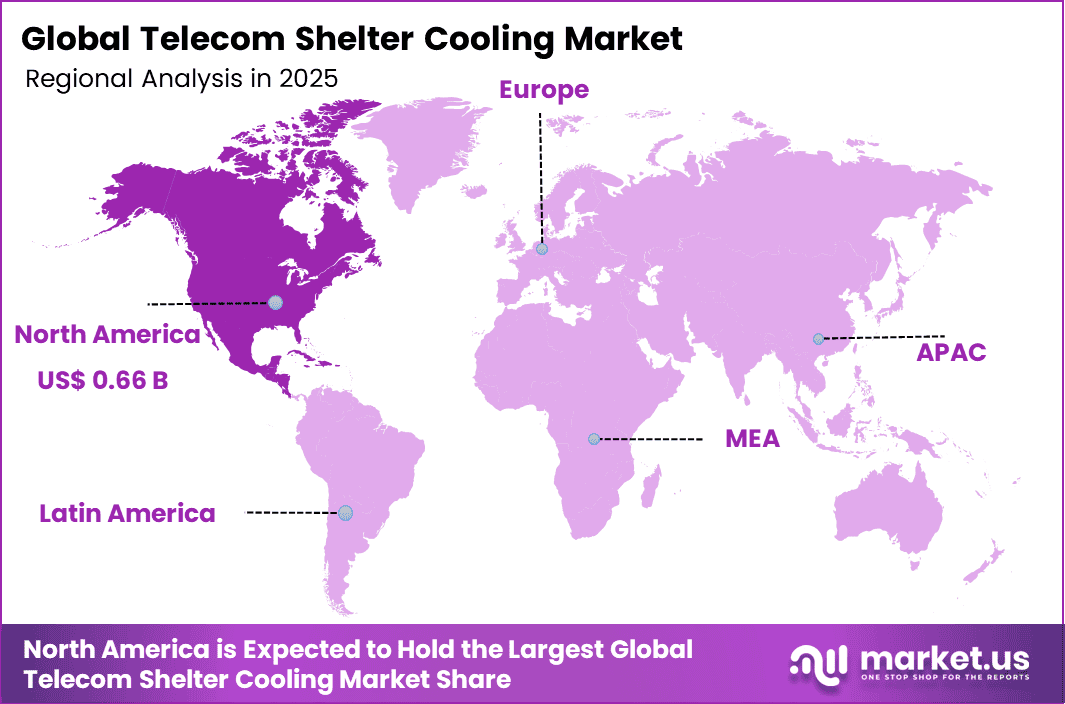
The U.S. market reached USD 0.59 Billion and is projected to grow at a CAGR of 4.8%, driven by ongoing upgrades in telecom networks and the need to maintain optimal operating conditions for sensitive equipment. The expansion of mobile connectivity and growing dependence on uninterrupted network services are encouraging investments in cooling infrastructure.
In addition, efforts to improve energy efficiency and reduce carbon impact are pushing telecom operators to adopt modern cooling technologies. This steady demand is expected to support gradual growth of the telecom shelter cooling market in the US over the coming years.
Key Regions and Countries
- North America
- US
- Canada
- Europe
- Germany
- France
- The UK
- Spain
- Italy
- Russia
- Netherlands
- Rest of Europe
- Asia Pacific
- China
- Japan
- South Korea
- India
- Australia
- Singapore
- Thailand
- Vietnam
- Rest of APAC
- Latin America
- Brazil
- Mexico
- Rest of Latin America
- Middle East & Africa
- South Africa
- Saudi Arabia
- UAE
- Rest of MEA
Competitive Analysis
The competitive landscape of the Telecom Shelter Cooling Market is driven by a mix of global power management companies and specialized cooling solution providers. Companies such as Schneider Electric, Vertiv Group Corp., Delta Electronics, Inc., Huawei Technologies Co., Ltd., and Eaton Corporation plc focus on providing advanced cooling systems integrated with power and energy management solutions.
These players emphasize energy efficiency, remote monitoring, and reliable performance in harsh outdoor environments. Their strong global presence and ability to deliver complete infrastructure solutions help them maintain a leading position in telecom and data communication networks.
At the same time, companies such as Stulz GmbH, Rittal GmbH & Co. KG, Johnson Controls International plc, Emerson Electric Co., Nortek Air Solutions, Airsys Global, and CoolCentric specialize in precision cooling technologies designed for telecom shelters and edge facilities.
Players like Canovate Group and Eltek AS focus on cost-effective and modular cooling systems for emerging markets and telecom operators. Competition in this market is driven by innovation in energy-efficient cooling, compact system design, and the ability to operate in extreme weather conditions, as telecom infrastructure continues to expand in remote and high-temperature regions.
Top Key Players in the Market
- Schneider Electric
- Vertiv Group Corp.
- Delta Electronics, Inc.
- Huawei Technologies Co., Ltd.
- Stulz GmbH
- Rittal GmbH & Co. KG
- Johnson Controls International plc
- Eaton Corporation plc
- Canovate Group
- Eltek AS
- Emerson Electric Co.
- Nortek Air Solutions
- Airsys Global
- CoolCentric
- Other Key Players
Future Outlook
The future outlook for the Telecom Shelter Cooling Market looks steady as telecom infrastructure continues to expand with growing data demand. The market is expected to grow with the rising deployment of 5G networks, which require efficient cooling systems to manage higher heat loads in telecom shelters. Companies are anticipated to focus more on energy-efficient and eco-friendly cooling solutions to reduce operational costs and meet environmental goals. In the coming years, the use of smart monitoring systems and advanced cooling technologies is expected to improve performance and reliability, making cooling solutions an essential part of modern telecom networks.
Recent Developments
- March, 2026 – Schneider EcoStruxure Micro Data Center adds Active Air-Cooling for telecom huts. Handles 10kW racks with 40% energy savings and remote monitoring via EcoStruxure IT. India tower company deployments scale rapidly.
- January, 2026 – Vertiv predicts AI liquid cooling dominance for edge shelters with adaptive thermal management. Digital twins simulate airflow while modular CRACs scale 5-50kW. Global 5G rollout partner.
Report Scope
| Report Features | Description |
|---|---|
| Market Value (2025) | USD 1.9 Billion |
| Forecast Revenue (2035) | USD 3.5 Billion |
| CAGR(2025-2035) | 6.40% |
| Base Year for Estimation | 2024 |
| Historic Period | 2020-2024 |
| Forecast Period | 2026-2035 |
| Report Coverage | Revenue forecast, AI impact on Market trends, Share Insights, Company ranking, competitive landscape, Recent Developments, Market Dynamics and Emerging Trends |
| Segments Covered | By Component (Air Conditioning Units, Heat Exchangers, Ventilation Systems), By Cooling Type (Active Cooling, Passive Cooling, Hybrid Cooling), By Application (Base Transceiver Stations, Data Centers, Communication Shelters, Others), By End-User (Telecom Operators, Tower Companies, Data Center Providers, Others) |
| Regional Analysis | North America – US, Canada; Europe – Germany, France, The UK, Spain, Italy, Russia, Netherlands, Rest of Europe; Asia Pacific – China, Japan, South Korea, India, New Zealand, Singapore, Thailand, Vietnam, Rest of Latin America; Latin America – Brazil, Mexico, Rest of Latin America; Middle East & Africa – South Africa, Saudi Arabia, UAE, Rest of MEA |
| Competitive Landscape | Schneider Electric, Vertiv Group Corp., Delta Electronics, Inc., Huawei Technologies Co., Ltd., Stulz GmbH, Rittal GmbH & Co. KG, Johnson Controls International plc, Eaton Corporation plc, Canovate Group, Eltek AS, Emerson Electric Co., Nortek Air Solutions, Airsys Global, CoolCentric, Other Key Players |
| Customization Scope | Customization for segments, region/country-level will be provided. Moreover, additional customization can be done based on the requirements. |
| Purchase Options | We have three license to opt for: Single User License, Multi-User License (Up to 5 Users), Corporate Use License (Unlimited User and Printable PDF) |





































