One Stop Shop For Reports One Stop Shop For Reports
  • All Reports
  • All Sectors
    • Chemicals & Materials
      • Advanced Materials
      • Bulk Chemicals
      • Coatings | Paints and Additives
      • Composites
      • Renewable | Speciality chemicals
    • Consumer Goods
      • Baby Products
      • Consumer Electronics
      • Consumer Packaging
      • Cosmetics & Personal Care
      • Homecare & Decor
      • Luxury & premium products
    • Energy and Power
      • Energy Efficiency and Conservation
      • Green | Renewable Energy
      • Non Renewable | Conventional Energy
      • Power Equipment and Devices
    • Life Science
      • Biotechnology
      • Diagnostics
      • Healthcare
      • Healthcare IT
      • Medical Devices & Supplies
      • Pharmaceuticals
    • Food and Beverage
      • Agriculture & Agri Products
      • Beverages
      • Food Ingredients
      • Food Services and Hospitality
      • Nutraceutical | Wellness Food
      • Processed & Frozen Foods
    • Automotive and Transportation
      • Automotive components
      • Automotive Logistics
      • Automotive systems and accessories
    • Information and Communications Technology
      • E Commerce and Outsourcing
      • Entertainment & Media
      • High Tech | Enterprise & Consumer IT
      • Information & Network Security
      • Mobility | Telecom & Wireless
      • Software and Services
    • Semiconductor and Electronics
      • Semiconductor Materials and Components
      • Display Technology
      • Electronics System and Components
      • Emerging technologies
      • Security and Surveillance
      • Sensors and Controls
    • Building and Construction
      • Construction Materials
      • HVAC
      • Residential Construction and Improvement
      • Roads & Highways
    • Manufacturing
      • Manufacturing Services
      • Heavy Manufacturing
      • Packaging
      • Engineering | Equipment and Machinery
  • Who Trust Us
  • [email protected]
  • +1 718 874 1545 (International)
  • +91 78878 22626 (Asia)

More Results

One Stop Shop For Reports One Stop Shop For Reports
  • All Reports
  • All Sectors
    • Chemicals & Materials
      • Advanced Materials
      • Bulk Chemicals
      • Coatings | Paints and Additives
      • Composites
      • Renewable | Speciality chemicals
    • Consumer Goods
      • Baby Products
      • Consumer Electronics
      • Consumer Packaging
      • Cosmetics & Personal Care
      • Homecare & Decor
      • Luxury & premium products
    • Energy and Power
      • Energy Efficiency and Conservation
      • Green | Renewable Energy
      • Non Renewable | Conventional Energy
      • Power Equipment and Devices
    • Life Science
      • Biotechnology
      • Diagnostics
      • Healthcare
      • Healthcare IT
      • Medical Devices & Supplies
      • Pharmaceuticals
    • Food and Beverage
      • Agriculture & Agri Products
      • Beverages
      • Food Ingredients
      • Food Services and Hospitality
      • Nutraceutical | Wellness Food
      • Processed & Frozen Foods
    • Automotive and Transportation
      • Automotive components
      • Automotive Logistics
      • Automotive systems and accessories
    • Information and Communications Technology
      • E Commerce and Outsourcing
      • Entertainment & Media
      • High Tech | Enterprise & Consumer IT
      • Information & Network Security
      • Mobility | Telecom & Wireless
      • Software and Services
    • Semiconductor and Electronics
      • Semiconductor Materials and Components
      • Display Technology
      • Electronics System and Components
      • Emerging technologies
      • Security and Surveillance
      • Sensors and Controls
    • Building and Construction
      • Construction Materials
      • HVAC
      • Residential Construction and Improvement
      • Roads & Highways
    • Manufacturing
      • Manufacturing Services
      • Heavy Manufacturing
      • Packaging
      • Engineering | Equipment and Machinery
  • Who Trust Us
Home ➤ Information and Communications Technology ➤ Telecom Data Mesh Platform Market
Telecom Data Mesh Platform Market
Published date: Mar 2026 • Formats:
Request Sample Schedule a Call
  • Home ➤ Information and Communications Technology ➤ Telecom Data Mesh Platform Market

Global Telecom Data Mesh Platform Market Size, Share, Growth Analysis By Component (Software, Services), By Deployment Mode (On-Premises, Cloud), By Application (Network Management, Customer Analytics, Fraud Detection, Billing and Revenue Management, Others), By Organization Size (Large Enterprises, Small and Medium Enterprises), By End-User (Telecom Operators, Internet Service Providers, Managed Service Providers, Others), By Region and Companies - Industry Segment Outlook, Market Assessment, Competition Scenario, Statistics, Trends and Forecast 2025-2035

  • Published date: Mar 2026
  • Report ID: 182599
  • Number of Pages: 273
  • Format:
  • Overview
  • Table of Contents
  • Major Market Players
  • Request a Free Sample
  • Quick Navigation

    • Report Overview
    • Core Key Insights
    • Future Predictions
    • Market Outlook
    • Growth Analysis
    • Key Market Segments
    • Research-Based Segments
    • By Component Analysis
    • By Deployment Mode Analysis
    • By Application Analysis
    • By Organization Size Analysis
    • By End-User Analysis
    • Regional Analysis
    • US Market Size
    • Driving Factors
    • Restraint Factors
    • Growth Opportunities
    • Trending Factors
    • Competitive Analysis
    • Recent Developments
    • Report Scope

    Report Overview

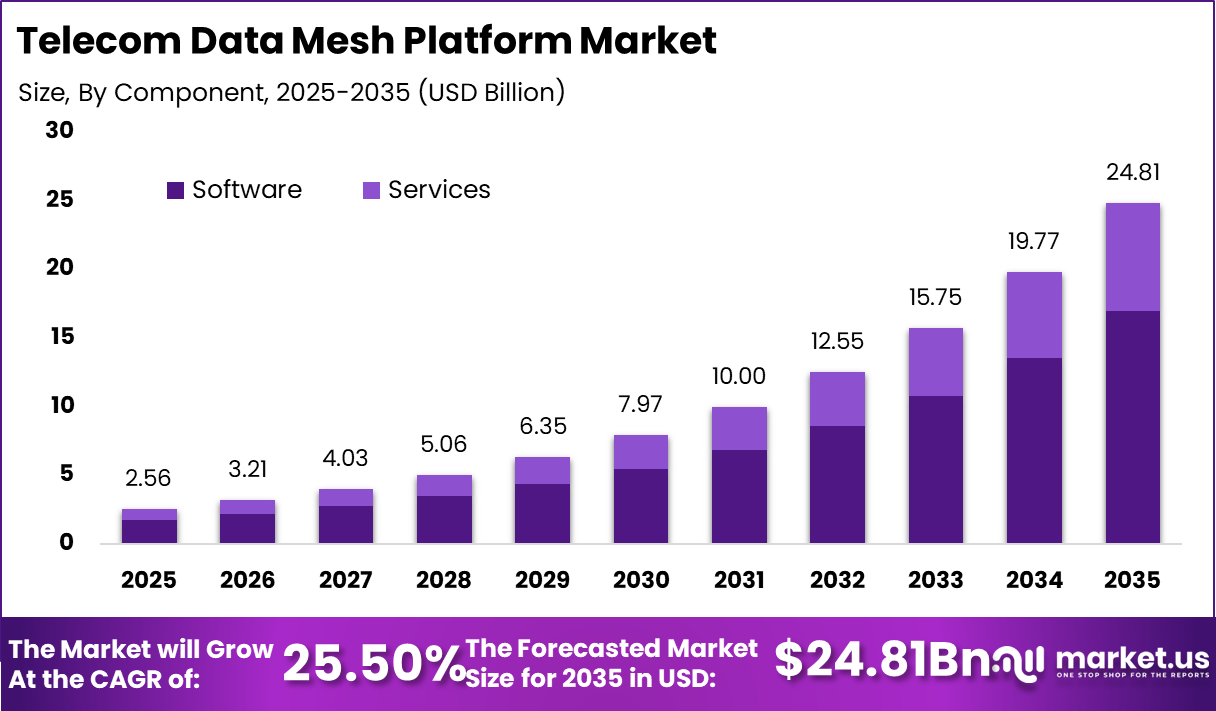
    The telecom data mesh platform market is gaining strong momentum as operators shift toward decentralized data architectures to manage rising data complexity and real-time service demands. The market is valued at USD 2.56 billion in 2025 and is projected to reach USD 24.81 billion by 2035, expanding at a CAGR of 25.50%.

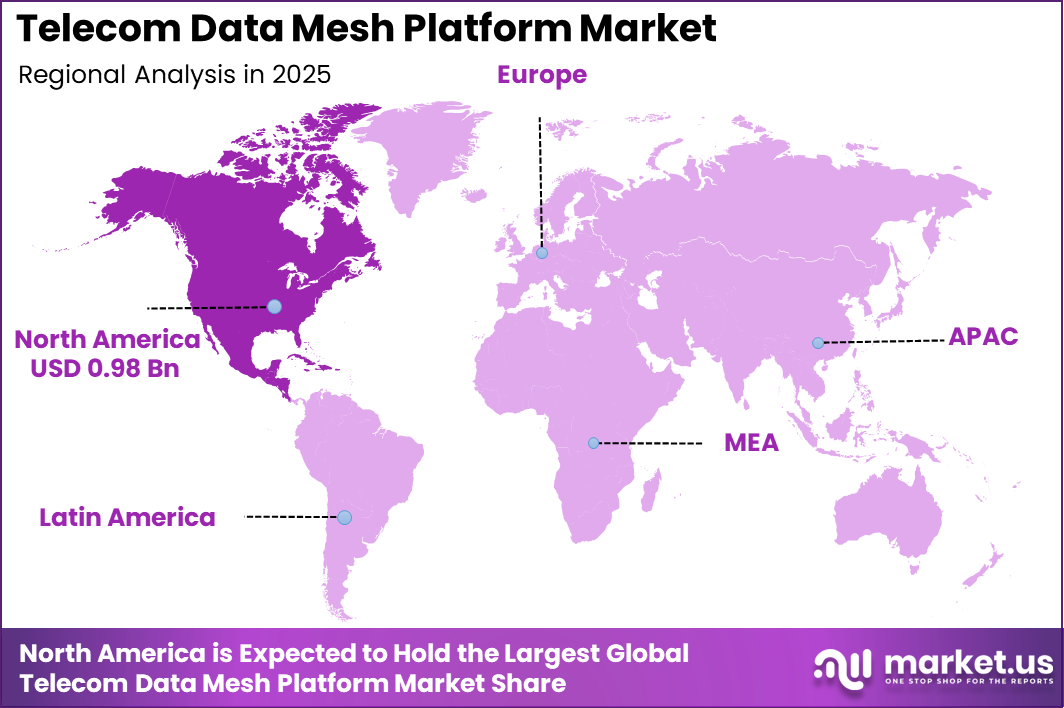
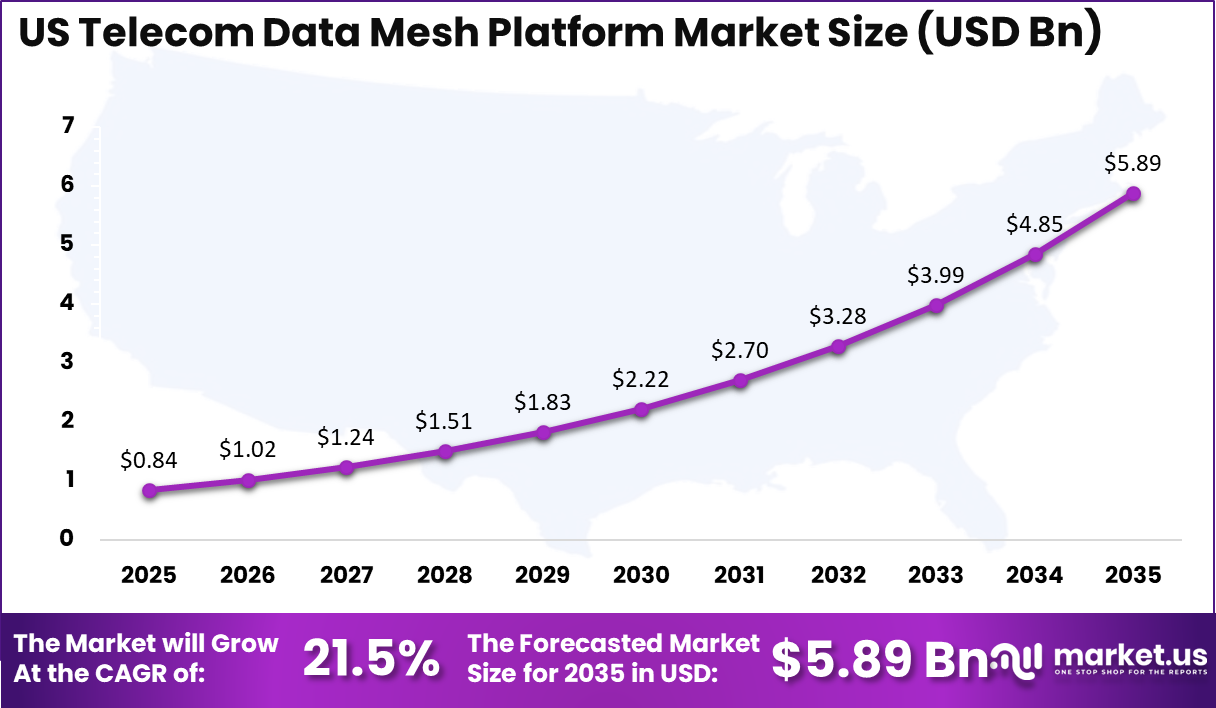
    North America leads the global landscape with a 38.6% share, accounting for USD 0.98 billion in 2025. Within the region, the US holds a significant position with USD 0.84 billion and is expected to reach USD 5.89 billion by 2035, growing at a CAGR of 21.5%.

    From a client perspective, this growth reflects a clear transition toward data-driven telecom ecosystems where agility, scalability, and domain-based data ownership are becoming critical. Telecom providers are increasingly adopting data mesh platforms to break down data silos and enable faster decision-making across network operations, customer management, and service innovation. The rising adoption of 5G, IoT, and edge computing is further increasing the volume and velocity of data, making traditional centralized systems less efficient.

    Clients evaluating this market are likely to benefit from platforms that offer improved data accessibility, governance, and interoperability across distributed environments. As competition intensifies, investing in data mesh solutions is anticipated to support operational efficiency, enhance customer experience, and unlock new revenue streams through advanced analytics and real-time insights.
    Telecom Data Mesh Platform Market Size

    Global telecom data traffic continues to rise sharply, creating strong demand for advanced data architectures. According to the International Telecommunication Union, over 5.4 billion people were using the internet in 2023, representing nearly 67% of the global population.

    Mobile broadband subscriptions exceeded 8.6 billion, indicating dense network activity and continuous data generation. Data consumption is also expanding at the user level, with Ericsson reporting that average monthly mobile data usage per smartphone surpassed 20 GB globally in recent years and is expected to grow significantly with 5G adoption.

    Telecom operators are increasingly investing in data modernization. The research estimates that over 70% of organizations are prioritizing distributed data management approaches to handle scalability challenges. Additionally, around 60% of telecom companies have initiated cloud-native transformation programs, driven by the need for faster data access and analytics.

    In the US, the Federal Communications Commission highlights that broadband deployment now covers more than 92% of the population, increasing data flow across networks. These trends indicate a rapidly expanding data ecosystem where decentralized frameworks such as data mesh are becoming essential to manage high-volume, real-time telecom data environments efficiently.

    Core Key Insights

    • The telecom data mesh platform market is valued at 2.56 billion USD in 2025, reflecting strong early-stage adoption across telecom networks.
    • The market is expected to reach 24.81 billion USD by 2035, driven by rising data complexity and decentralized data strategies.
    • It is growing at a CAGR of 25.5%, supported by increasing investments in advanced data infrastructure.
    • North America holds a leading share of 38.6%, driven by strong digital infrastructure and early technology adoption.
    • The regional market is valued at 0.98 billion USD in 2025, supported by high telecom data consumption.
    • The US market stands at 0.84 billion USD in 2025, reflecting strong demand from major telecom operators.
    • It is projected to reach 5.89 billion USD by 2035, supported by ongoing network modernization.
    • The US market is expanding at a CAGR of 21.5%, driven by investments in cloud and data platforms.
    • Software dominates with a 68.5% share, due to high demand for data integration and analytics tools.
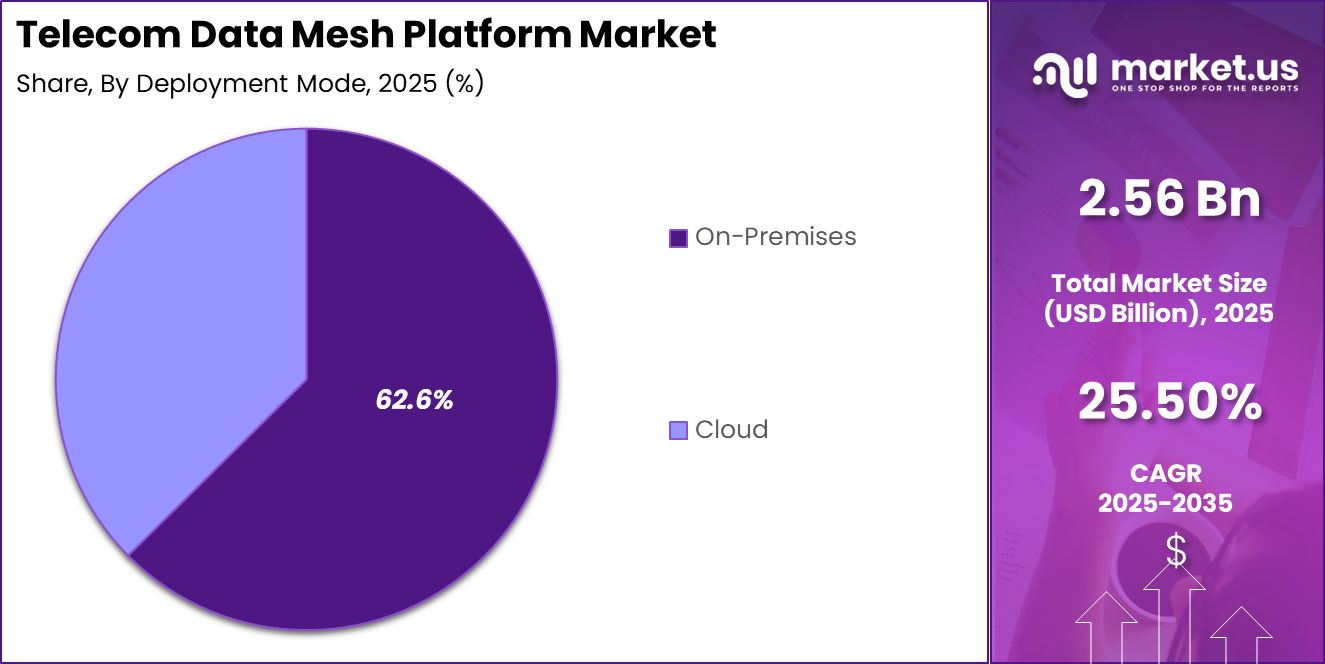
    • On-premises leads with a 62.6% share, supported by data control and security requirements.
    • Network management accounts for 40.7%, driven by the need for real-time network insights.
    • Large enterprises hold 75.5%, as they manage complex and large-scale telecom data environments.
    • Telecom operators account for 45.6%, reflecting their central role in data-driven network operations.

    Future Predictions

    The future of telecom data ecosystems is expected to be shaped by massive growth in network traffic, connectivity, and real-time data processing needs. Global mobile data traffic has already reached around 200 exabytes per month in 2025 and is projected to exceed 480 exabytes per month by 2031, reflecting more than double the growth in data volumes. This rapid increase is closely linked to the expansion of 5G, where global subscriptions are expected to reach about 6.3 billion by 2030, covering a majority of mobile users worldwide.

    Data intensity per user is also rising sharply, with average smartphone data usage projected to grow from about 21 GB per month in 2023 to nearly 56 GB per month by 2029. In parallel, 5G networks are anticipated to carry nearly 80% of total mobile data traffic by 2030, highlighting a shift toward high-speed, data-heavy applications. Fixed wireless access connections are also expanding, expected to reach around 350 million globally by 2030, further increasing distributed data flows across telecom networks.

    These trends indicate a strong need for decentralized data frameworks, as telecom operators will handle increasingly complex and high-volume data environments. Platforms supporting distributed data ownership and real-time analytics are expected to play a critical role in managing future telecom infrastructure efficiently.

    Market Outlook

    The telecom data mesh platform market is expected to witness strong expansion as telecom operators continue shifting toward decentralized and domain-driven data architectures. The increasing rollout of 5G networks, edge computing, and IoT connectivity is generating large volumes of distributed data, which is encouraging operators to move away from centralized data systems.

    This transition is anticipated to improve data accessibility, enable faster analytics, and support real-time decision-making across network operations and customer services. Telecom providers are increasingly focusing on improving operational efficiency and service agility, which is driving the adoption of modern data platforms.

    Data mesh frameworks are expected to support better data governance, scalability, and interoperability, helping organizations manage complex data environments more effectively. The growing demand for personalized services, predictive maintenance, and network optimization is also contributing to market expansion.

    In addition, regulatory requirements around data privacy and localization are encouraging telecom companies to adopt structured and controlled data management approaches. As competition intensifies, investments in advanced data platforms are projected to remain a strategic priority, enabling telecom operators to enhance service delivery, reduce operational costs, and unlock new revenue opportunities through data-driven innovation.

    Growth Analysis

    The telecom data mesh platform market is experiencing rapid growth due to the increasing need for efficient data management across complex telecom environments. Telecom operators are handling vast amounts of structured and unstructured data generated from network operations, customer interactions, and connected devices.

    This rising data volume is encouraging the adoption of decentralized data architectures that enable faster processing and improved data accessibility across different business units. Growth is further supported by the expansion of 5G infrastructure and the rising deployment of IoT devices, which are continuously generating real-time data streams.

    Telecom companies are focusing on improving network performance, reducing downtime, and enhancing customer experience, which is driving demand for advanced data platforms. Data mesh solutions are helping organizations shift from traditional centralized systems to more flexible and scalable frameworks, allowing domain-specific teams to manage and utilize data independently.

    Additionally, increasing investments in cloud technologies and data analytics are supporting market expansion by enabling seamless data integration and governance. As telecom networks become more data-intensive, the adoption of data mesh platforms is expected to accelerate, helping operators improve decision-making, optimize operations, and maintain competitiveness in a rapidly evolving digital landscape.

    Key Market Segments

    The telecom data mesh platform market shows a clear dominance of software, accounting for 68.5% of the total share. This segment leads due to the growing need for advanced data integration, governance, and analytics tools that support decentralized data environments. Telecom operators are increasingly relying on software-driven platforms to manage large-scale, real-time data flows efficiently.

    On-premises deployment holds a 62.6% share, reflecting a strong preference for data control, security, and compliance. Telecom companies manage sensitive network and customer data, which encourages them to maintain infrastructure within their own environments. This approach is expected to remain relevant where regulatory requirements and data sovereignty concerns are great.

    Network management leads the application segment with 40.7%, driven by the need for real-time monitoring, optimization, and predictive maintenance of telecom networks. Data mesh platforms are increasingly supporting faster insights and improved operational efficiency in network operations.

    Large enterprises dominate with a 75.5% share, as they operate complex telecom infrastructures and require scalable data solutions. Telecom operators represent the leading end-user segment with 45.6%, supported by their central role in managing vast telecom data ecosystems and driving adoption of advanced data architectures.

    Research-Based Segments

    By Component

    • Software
    • Services

    By Deployment Mode

    • On-Premises
    • Cloud

    By Application

    • Network Management
    • Customer Analytics
    • Fraud Detection
    • Billing and Revenue Management
    • Others

    By Organization Size

    • Large Enterprises
    • Small and Medium Enterprises

    By End-User

    • Telecom Operators
    • Internet Service Providers
    • Managed Service Providers
    • Others

    By Component Analysis

    Software accounts for 68.5% of the telecom data mesh platform market, reflecting its central role in enabling decentralized data architectures across telecom environments. This dominance is due to the increasing need for advanced data integration, real-time analytics, and governance capabilities that allow telecom operators to manage large volumes of distributed data efficiently.

    Software platforms help in breaking data silos, improving accessibility, and enabling domain-driven data ownership, which is becoming critical for modern telecom operations. The software segment is expected to maintain its leading position as telecom companies continue investing in automation, artificial intelligence, and cloud-native technologies.

    These platforms support faster decision-making, network optimization, and improved customer experience by providing actionable insights from complex datasets. On the other hand, the services segment plays a supportive but important role, focusing on implementation, consulting, and maintenance.

    Telecom operators rely on service providers to ensure smooth deployment, integration with existing systems, and ongoing performance optimization. As adoption increases, demand for specialized services is anticipated to grow, particularly in areas such as system customization, training, and long-term support, helping organizations maximize the value of their data mesh investments.

    By Deployment Mode Analysis

    On-premises deployment holds a dominant 62.6% share in the telecom data mesh platform market, driven by the need for high data security, control, and regulatory compliance. Telecom operators manage highly sensitive network and customer data, which encourages them to deploy solutions within their own infrastructure.

    This approach allows better control over data governance, system performance, and integration with legacy systems that are still widely used across telecom networks. The on-premises model is expected to remain strong in environments where data sovereignty and strict compliance requirements are critical. Telecom companies prefer this deployment mode to ensure reliability and minimize risks related to external data access.

    However, the cloud segment is gaining steady traction as operators increasingly explore scalable and flexible data solutions. Cloud deployment supports faster implementation, cost efficiency, and easier access to advanced analytics and AI capabilities.

    It also enables telecom providers to manage growing data volumes without heavy upfront infrastructure investments. As hybrid strategies emerge, many telecom companies are expected to combine on-premises control with cloud scalability, creating a balanced approach to data management that supports both security and innovation in evolving telecom ecosystems.

    Telecom Data Mesh Platform Market Share

    By Application Analysis

    Network management accounts for 40.7% of the telecom data mesh platform market, making it the leading application segment. This dominance is driven by the growing need for real-time monitoring, performance optimization, and predictive maintenance across complex telecom networks. Data mesh platforms enable faster access to distributed data, allowing operators to detect issues early, reduce downtime, and improve overall network efficiency.

    Customer analytics is gaining importance as telecom providers focus on enhancing user experience and personalization. Data mesh architectures allow seamless access to customer data across multiple touchpoints, helping operators understand usage patterns, improve retention strategies, and deliver targeted services.

    Fraud detection is another critical application, where decentralized data systems support faster identification of unusual activities and potential security threats, reducing financial losses and strengthening network security. Billing and revenue management also benefit from data mesh platforms by improving accuracy, transparency, and real-time processing of transactions.

    Telecom companies can better manage complex pricing models and reduce billing errors through integrated data systems. The other segment includes use cases such as service optimization and capacity planning, which are expected to grow as telecom networks become more data-driven and require advanced analytics for efficient operations.

    By Organization Size Analysis

    Large enterprises account for 75.5% of the telecom data mesh platform market, reflecting their strong capability to invest in advanced data infrastructure and manage complex data ecosystems. This dominance is due to the large volume of data generated across extensive telecom operations, including network management, customer interactions, and service delivery.

    These organizations require scalable and high-performance platforms to ensure efficient data processing, governance, and real-time analytics across multiple business units. Large telecom operators are expected to continue leading adoption as they focus on improving operational efficiency, enhancing customer experience, and supporting next-generation technologies such as 5G and IoT.

    Their ability to integrate data mesh platforms with existing systems and leverage advanced analytics provides a competitive advantage in managing dynamic telecom environments. On the other hand, small and medium enterprises are gradually adopting these platforms as awareness and accessibility increase.

    These organizations are expected to focus on cost-effective and flexible solutions, often leveraging cloud-based models to manage data more efficiently. As digital transformation expands across the telecom sector, adoption among smaller enterprises is anticipated to grow steadily, supported by simplified deployment options and evolving service offerings.

    By End-User Analysis

    Telecom operators account for 45.6% of the telecom data mesh platform market, making them the leading end-user segment. This dominance is driven by their direct involvement in managing large-scale network infrastructure and handling massive volumes of real-time data. Data mesh platforms help telecom operators improve network performance, enable faster decision-making, and support advanced use cases such as predictive maintenance and service optimization.

    Internet service providers are also adopting data mesh solutions to manage increasing data traffic and improve service reliability. These providers rely on efficient data management to ensure consistent connectivity and enhance customer satisfaction. Managed service providers are gaining traction as they support telecom companies in implementing, managing, and optimizing data platforms.

    Their role is becoming more important as telecom operators seek external expertise to handle complex data environments. The other segment includes enterprises and niche telecom players that are gradually adopting data mesh platforms to improve operational efficiency and data accessibility. As data-driven strategies expand across the telecom industry, all end-user segments are expected to increase their investment in decentralized data solutions.

    Regional Analysis

    North America accounts for 38.6% of the telecom data mesh platform market, with a regional value of 0.98 billion USD in 2025, reflecting its strong leadership in digital infrastructure and advanced data technologies. This dominance is driven by the early adoption of decentralized data architectures and the presence of large telecom operators that continuously invest in modernizing their data ecosystems.

    The region benefits from high data consumption, widespread 5G deployment, and a mature cloud and analytics environment, all of which support the adoption of data mesh platforms. The growth in North America is further supported by increasing demand for real-time data processing and improved network performance.

    Telecom companies in the region are focusing on enhancing customer experience, optimizing operations, and reducing latency through advanced data solutions. Strong regulatory frameworks around data security and privacy also encourage structured data management approaches, further driving adoption.

    Additionally, the presence of advanced IT infrastructure and a skilled workforce enables faster implementation of complex data platforms. As telecom networks continue to evolve with increasing data volumes and connected devices, North America is expected to maintain its leading position, supported by continuous investments in innovation and data-driven strategies.

    Telecom Data Mesh Platform Market Region

    US Market Size

    The US telecom data mesh platform market is valued at 0.84 billion USD in 2025 and is expected to reach 5.89 billion USD by 2035, expanding at a CAGR of 21.5%. This growth reflects the country’s strong focus on digital transformation and advanced data infrastructure within the telecom sector. Telecom operators in the US are increasingly adopting decentralized data models to manage large-scale network data and support real-time analytics across operations.

    The market expansion is driven by the rapid rollout of 5G networks, increasing data consumption, and the growing number of connected devices. Telecom companies are investing in modern data platforms to improve network efficiency, enhance customer experience, and enable faster decision-making. The demand for scalable and flexible data solutions is also rising as operators handle complex data environments across multiple domains.

    In addition, strong investments in cloud technologies and artificial intelligence are supporting the adoption of data mesh platforms. Regulatory requirements around data security and privacy are further encouraging structured data management approaches. As competition intensifies, telecom providers in the US are expected to continue investing in advanced data architectures to maintain operational efficiency and drive long-term growth.

    US Telecom Data Mesh Platform Market Size

    Regional Analysis and Coverage

    • North America
      • US
      • Canada
    • Europe
      • Germany
      • France
      • The UK
      • Spain
      • Italy
      • Russia
      • Netherlands
      • Rest of Europe
    • Asia Pacific
      • China
      • Japan
      • South Korea
      • India
      • Australia
      • Singapore
      • Thailand
      • Vietnam
      • Rest of Latin America
    • Latin America
      • Brazil
      • Mexico
      • Rest of Latin America
    • Middle East & Africa
      • South Africa
      • Saudi Arabia
      • UAE
      • Rest of MEA

    Driving Factors

    The telecom data mesh platform market is primarily driven by the rapid increase in data generation across telecom networks. The expansion of 5G infrastructure, IoT devices, and digital services is creating high volumes of real-time data that require efficient management. Telecom operators are focusing on improving network performance and reducing latency, which is encouraging the adoption of decentralized data architectures.

    Data mesh platforms enable faster access to domain-specific data, improving decision-making and operational efficiency. Additionally, the need for enhanced customer experience is pushing telecom companies to adopt advanced analytics solutions that can process data from multiple sources.

    Increasing investments in cloud technologies and automation are further supporting the growth of this market. These factors are collectively strengthening the demand for scalable and flexible data management platforms within telecom ecosystems.

    Restraint Factors

    One of the key restraints in the telecom data mesh platform market is the complexity involved in transitioning from traditional centralized systems to decentralized architectures. Many telecom companies still rely on legacy systems, making integration challenging and time-consuming.

    The lack of skilled professionals with expertise in data mesh frameworks and advanced data governance also limits adoption. High implementation costs, including infrastructure upgrades and system integration, can act as a barrier, especially for smaller organizations.

    Additionally, concerns related to data security, privacy, and compliance create hesitation among telecom operators when adopting new data models. Managing distributed data environments also increases the risk of inconsistencies and governance challenges if not properly handled. These factors can slow down the adoption rate, particularly in regions with limited technological readiness.

    Growth Opportunities

    The telecom data mesh platform market offers strong growth opportunities as telecom operators increasingly focus on digital transformation and data-driven strategies. The growing adoption of edge computing is creating new demand for decentralized data management solutions that can process data closer to the source.

    Data mesh platforms provide the flexibility required to handle distributed data environments efficiently. There is also a significant opportunity in integrating artificial intelligence and machine learning capabilities, which can enhance predictive analytics and automate network operations. Emerging markets present additional potential, as telecom infrastructure continues to expand and data consumption rises.

    Furthermore, the increasing need for personalized services and real-time insights is encouraging telecom companies to invest in advanced data platforms. As organizations seek to improve scalability and interoperability, the demand for data mesh solutions is expected to grow steadily across the telecom sector.

    Trending Factors

    A key trend shaping the telecom data mesh platform market is the shift toward domain-oriented data ownership, where different business units manage their own data independently. This approach improves agility and reduces dependency on centralized teams.

    Another important trend is the growing adoption of cloud-native and hybrid deployment models, allowing telecom companies to balance scalability with data control. The integration of artificial intelligence and automation is also becoming more common, enabling faster data processing and improved operational efficiency.

    Real-time analytics is gaining traction as telecom operators focus on delivering instant insights for network optimization and customer engagement. Additionally, there is a rising emphasis on data governance and compliance, driven by increasing regulatory requirements. These trends are collectively transforming how telecom companies manage and utilize data, supporting the long-term evolution of decentralized data ecosystems.

    Competitive Analysis

    The competitive landscape of the telecom data mesh platform market is shaped by large telecom operators and technology providers investing heavily in network modernization and data infrastructure. In the US alone, total wireless connections reached around 579 million, with nearly half already operating on 5G networks, highlighting the scale at which operators compete to manage and monetize data efficiently.

    This intense competition is pushing companies to adopt advanced data architectures that support real-time processing and distributed data ownership. Infrastructure investment is another key competitive factor. Major telecom players are allocating substantial capital to strengthen their data capabilities, with one leading operator announcing plans to invest over 250 billion USD in network and data infrastructure over five years to support AI, cloud, and connectivity growth.

    In addition, North America recorded over 314 million 5G connections, covering about 83% of the population, reflecting strong competitive pressure to expand coverage and enhance data handling capacity. Technology differentiation is also critical, as companies compete on speed, latency, and data processing capabilities.

    With 5G speeds reaching up to 20 Gbps in ideal conditions and significantly lower latency, telecom providers are focusing on high-performance data systems to stay competitive. This environment is driving continuous innovation and strategic partnerships across the telecom ecosystem.

    Top Key Players in the Market

    • Ericsson
    • Nokia
    • Huawei
    • Cisco Systems
    • IBM
    • Oracle
    • HPE (Hewlett Packard Enterprise)
    • Amdocs
    • Infosys
    • Tata Consultancy Services (TCS)
    • Accenture
    • Capgemini
    • Wipro
    • Tech Mahindra
    • Cloudera
    • Snowflake
    • Databricks
    • AWS (Amazon Web Services)
    • Google Cloud
    • Microsoft Azure
    • Others

    Recent Developments

    • In 2025, global mobile data traffic exceeded 200 exabytes per month, driven by video streaming, cloud services, and IoT applications, creating strong demand for advanced data management and decentralized data platforms.
    • In 2024, global 5G subscriptions surpassed 1.6 billion, reflecting the rapid adoption of high-speed connectivity and significantly increasing the volume of real-time data processed across telecom networks.
    • In 2023, internet usage reached over 5.4 billion people worldwide, accounting for nearly 67% of the global population, which is accelerating the need for scalable and efficient data architectures in telecom ecosystems.

    Report Scope

    Report Features Description
    Market Value (2025) USD 2.56 Billion
    Forecast Revenue (2035) USD 24.81 Billion
    CAGR(2025-2035) 25.50%
    Base Year for Estimation 2025
    Historic Period 2020-2024
    Forecast Period 2026-2035
    Report Coverage Revenue forecast, AI impact on Market trends, Share Insights, Company ranking, competitive landscape, Recent Developments, Market Dynamics, and Emerging Trends
    Segments Covered By Component (Software, Services), By Deployment Mode (On-Premises, Cloud), By Application (Network Management, Customer Analytics, Fraud Detection, Billing and Revenue Management, Others), By Organization Size (Large Enterprises, Small and Medium Enterprises), By End-User (Telecom Operators, Internet Service Providers, Managed Service Providers, Others)
    Regional Analysis North America – US, Canada; Europe – Germany, France, The UK, Spain, Italy, Russia, Netherlands, Rest of Europe; Asia Pacific – China, Japan, South Korea, India, New Zealand, Singapore, Thailand, Vietnam, Rest of Latin America; Latin America – Brazil, Mexico, Rest of Latin America; Middle East & Africa – South Africa, Saudi Arabia, UAE, Rest of MEA
    Competitive Landscape Ericsson, Nokia, Huawei, Cisco Systems, IBM, Oracle, HPE (Hewlett Packard Enterprise), Amdocs, Infosys, Tata Consultancy Services (TCS), Accenture, Capgemini, Wipro, Tech Mahindra, Cloudera, Snowflake, Databricks, AWS (Amazon Web Services), Google Cloud, Microsoft Azure, Others
    Customization Scope Customization for segments, region/country-level will be provided. Moreover, additional customization can be done based on the requirements.
    Purchase Options We have three licenses to opt for: Single User License, Multi-User License (Up to 5 Users), Corporate Use License (Unlimited Users and Printable PDF)
    Telecom Data Mesh Platform Market
    Telecom Data Mesh Platform Market
    Published date: Mar 2026
    add_shopping_cartBuy Now get_appDownload Sample
    keyboard_arrow_up
    • Ericsson
    • Nokia
    • Huawei
    • Cisco Systems
    • IBM
    • Oracle
    • HPE (Hewlett Packard Enterprise)
    • Amdocs
    • Infosys
    • Tata Consultancy Services (TCS)
    • Accenture
    • Capgemini
    • Wipro
    • Tech Mahindra
    • Cloudera
    • Snowflake
    • Databricks
    • AWS (Amazon Web Services)
    • Google Cloud
    • Microsoft Azure
    • Others

Related Reports

  • Electric Vehicle Sensor Market
  • Cloud-based Contact Center Market
  • Pancreatic and Bile Duct Stone Management Market
  • Hairbrush Market
  • Photoacoustic Imaging Market
  • Smartwatch Market

Our Clients

  • Our Clients
Telecom Data Mesh Platform Market
  • 182599
  • Mar 2026
    • ★★★★★
      ★★★★★
    • (142)
add_shopping_cart Buy Now
Trusted by more than 17382 organizations globally
  • Client Logo
  • Client Logo
  • Client Logo
  • Client Logo
  • Client Logo
  • Client Logo
✖
Request a Sample Report
We'll get back to you as quickly as possible

  • location_on420 Lexington Avenue, Suite 300 New York City, NY 10170,
    United States
  • phone+1 718 874 1545 (International)
  • phone+91 78878 22626 (Asia)
  • email[email protected]
  • Facebook Logo
  • Twitter Logo
  • LinkedIn Logo
Find Help
  • Contact Us
  • How to Order
Legal
  • Privacy Policy
  • Refund Policy
  • Frequently Asked Questions
  • Terms and Conditions
Explore
  • About Us
  • All Reports
  • All Sectors
  • Infographics
  • Statistics and Facts
Secured Payment Options

© 2026 Market.Us. All Rights Reserved.