


Global Tele-epilepsy Market By Service Type (Tele-consultation, Tele-diagnosis, Tele-monitoring, Tele-treatment and Others), By Application (Seizure Detection and Monitoring, Medication Management, Treatment Adherence, Patient Education and Support and Others), By End User (Hospitals and Clinics, Neurology Centers, Home Care Settings, Long-term Care Facilities and Research and Academic Institutes), By Age Group (Pediatric, Adult and Geriatric), Region and Companies – Industry Segment Outlook, Market Assessment, Competition Scenario, Trends and Forecast 2026-2035
- Published date: March 2026
- Report ID: 182600
- Number of Pages: 297
- Format:
-
keyboard_arrow_up
Quick Navigation
Report Overview
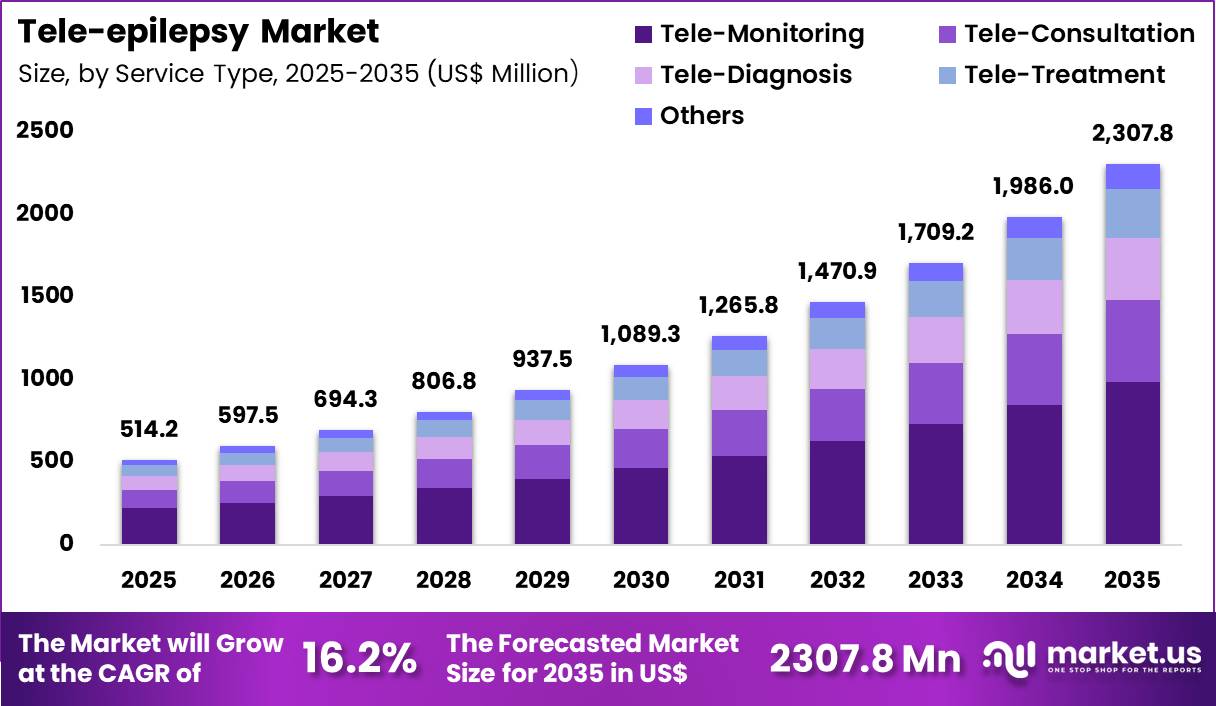
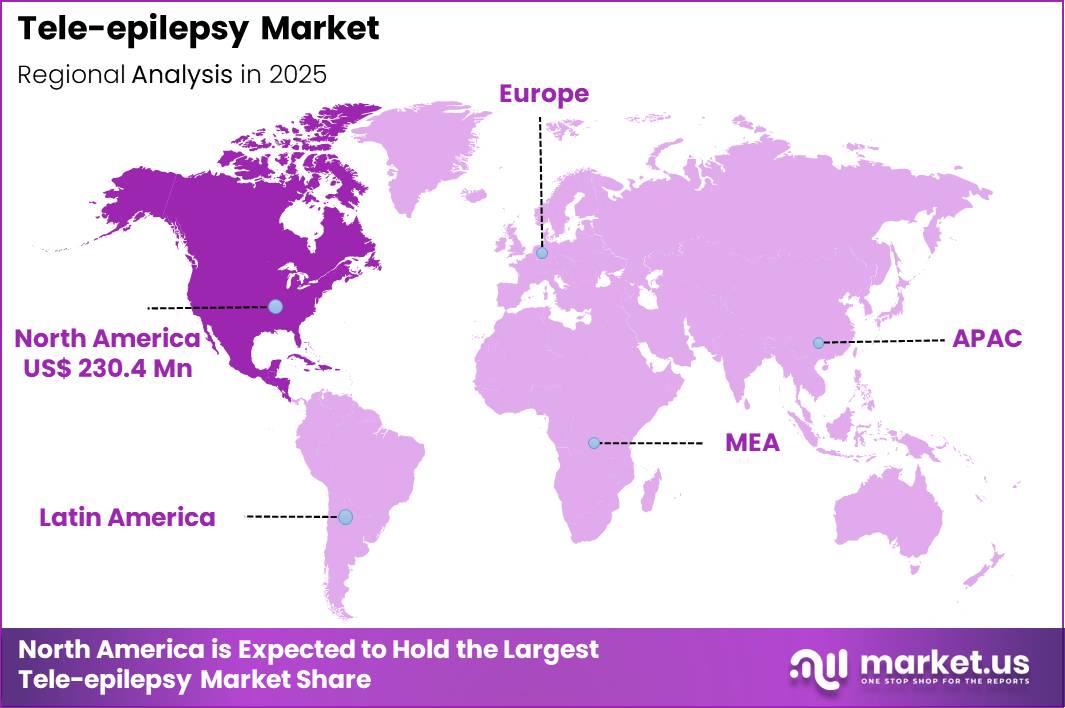
The Global Tele-epilepsy Market size is expected to be worth around US$ 2307.8 Million by 2035 from US$ 514.2 Million in 2025, growing at a CAGR of 16.2% during the forecast period 2026-2035. In 2025, North America led the market, achieving over 44.8% share with a revenue of US$ 230.4 Million.
Rising prevalence of epilepsy and the growing need for remote, continuous neurological care accelerate the tele-epilepsy market as healthcare systems seek scalable solutions that improve access, monitoring, and management of seizure disorders.
Neurologists increasingly utilize connected electroencephalography devices and video-EEG monitoring platforms to conduct remote diagnostic evaluations, allowing timely identification of seizure types and localization of epileptogenic foci without requiring in-person hospital admissions.
These systems support long-term ambulatory monitoring for patients with drug-resistant epilepsy, capturing ictal and interictal activity to optimize antiepileptic drug regimens and assess surgical candidacy. Tele-epilepsy platforms enable virtual follow-up consultations for medication titration and side-effect management, particularly benefiting patients in rural or underserved areas who face barriers to specialist care.
Care teams apply remote monitoring to track adherence and detect breakthrough seizures in real time, facilitating proactive interventions that reduce emergency department visits and improve quality of life.
In late 2025, NeuroPace advanced regulatory efforts by submitting a PMA supplement to expand the clinical use of its RNS System to patients with idiopathic generalized epilepsy that does not respond to medication. A potential approval in 2026 is expected to open access to a broader patient population and support greater use of connected neurostimulation platforms.
Technology providers and epilepsy centers pursue opportunities to integrate artificial intelligence with tele-epilepsy platforms, expanding applications in predictive seizure forecasting and personalized treatment planning.
Developers advance wearable and implantable devices with cloud connectivity that transmit EEG data for remote analysis, broadening utility in pediatric epilepsy management where frequent monitoring supports developmental outcomes. These advancements facilitate hybrid models combining remote EEG with virtual cognitive behavioral therapy for patients experiencing seizure-related anxiety or depression.
Opportunities emerge in population-level data analytics that identify treatment gaps and support value-based care contracts focused on seizure control and reduced healthcare utilization. Companies invest in secure, HIPAA-compliant platforms that enable seamless collaboration between neurologists, epileptologists, and primary care providers.
Recent trends emphasize AI-assisted interpretation, patient-facing mobile applications for self-reporting, and integration with neurostimulation systems, positioning the tele-epilepsy market as a critical enabler of accessible, data-driven, and patient-centered epilepsy care.
Key Takeaways
- In 2025, the market generated a revenue of US$ 514.2 Million, with a CAGR of 16.2%, and is expected to reach US$ 2307.8 Million by the year 2035.
- The service type segment is divided into tele-consultation, tele-diagnosis, tele-monitoring, tele-treatment and others, with tele-monitoring taking the lead with a market share of 42.7%.
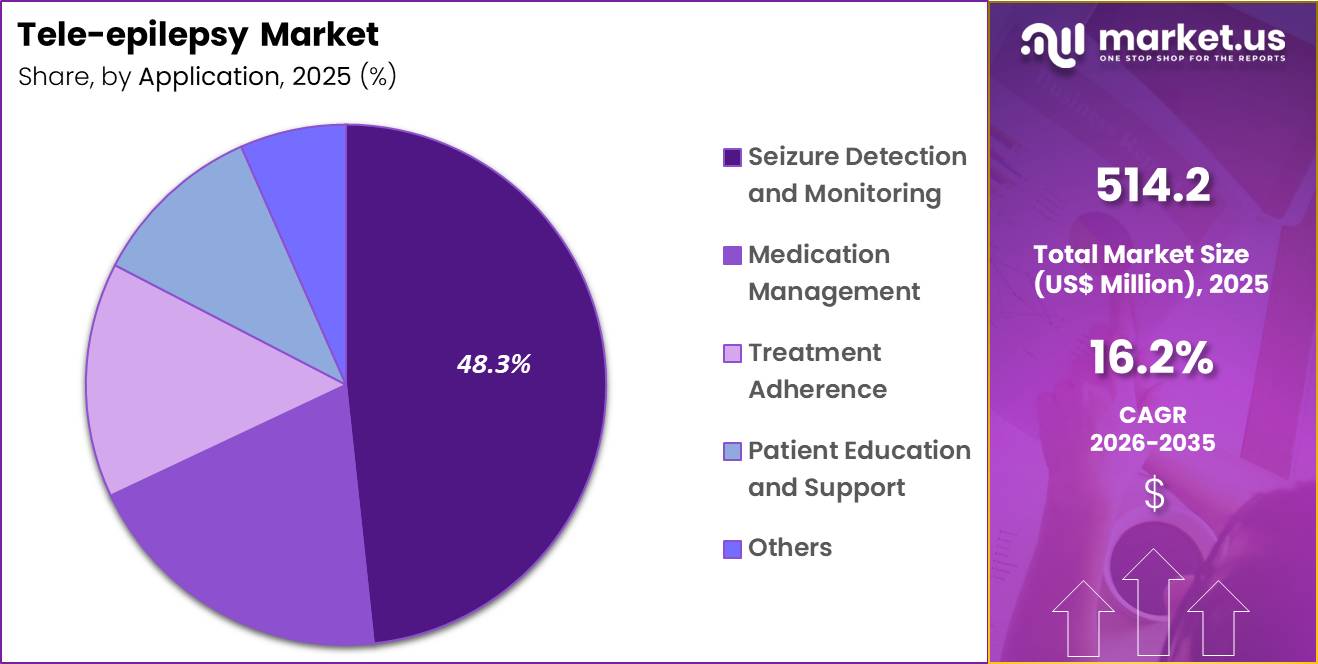
- Considering application, the market is divided into seizure detection and monitoring, medication management, treatment adherence, patient education and support and others. Among these, seizure detection and monitoring held a significant share of 48.3%.
- Furthermore, concerning the end user segment, the market is segregated into hospitals and clinics, neurology centers, home care settings, long-term care facilities and research and academic institutes. The hospitals and clinics sector stands out as the dominant player, holding the largest revenue share of 41.5% in the market.
- The age group segment is segregated into pediatric, adult and geriatric, with the adult segment leading the market, holding a revenue share of 53.7%.
- North America led the market by securing a market share of 44.8%.
Service Type Analysis
Tele-monitoring accounted for 42.7% of growth within service type and dominates the tele-epilepsy market due to the need for continuous, real-time tracking of seizure activity beyond traditional clinical settings. Epilepsy affects nearly 50 million people globally, which increases demand for scalable monitoring solutions that extend care outside hospitals.
Tele-monitoring is expected to expand as wearable EEG devices and mobile health platforms improve in accuracy and usability. Clinicians rely on continuous data streams to identify seizure patterns and optimize treatment plans. Patients prefer remote monitoring because it reduces frequent hospital visits and improves daily life management.
The segment is likely to benefit from integration of AI-based seizure detection tools that enhance early intervention. Healthcare providers are projected to adopt tele-monitoring widely to reduce emergency admissions and improve long-term outcomes.
Growing awareness of digital health solutions is anticipated to support higher adoption rates. As epilepsy management shifts toward continuous care models, tele-monitoring is estimated to remain the leading service segment in this market.
Application Analysis
Seizure detection and monitoring accounted for 48.3% of growth within application and dominates the tele-epilepsy market because accurate identification and tracking of seizures remain central to effective disease management. Patients often experience unpredictable seizure episodes, which increases the importance of continuous monitoring technologies.
Clinical studies indicate that timely detection significantly improves treatment adjustments and reduces complications. This segment is expected to grow as advanced sensors and digital platforms enable real-time seizure tracking and reporting.
Healthcare providers increasingly use remote monitoring tools to assess treatment response and adjust medication regimens. The segment is likely to benefit from rising adoption of connected devices that capture neurological data continuously. Improved patient awareness and caregiver involvement are projected to enhance monitoring compliance.
Early detection capabilities are anticipated to reduce hospitalization rates and emergency interventions. As precision in seizure management becomes more critical, this application segment is estimated to maintain its dominant position in the tele-epilepsy market.
End-User Analysis
Hospitals and clinics accounted for 41.5% of growth within end user and dominate the tele-epilepsy market due to their central role in diagnosis, treatment planning, and integration of digital health solutions into clinical workflows. These facilities provide access to neurologists, diagnostic tools, and advanced monitoring systems that support tele-epilepsy services.
Hospitals and clinics are expected to lead adoption as they integrate telehealth platforms with electronic medical records and patient management systems. The segment benefits from increasing investment in digital healthcare infrastructure and remote patient monitoring programs.
Clinicians use tele-epilepsy solutions to extend care beyond physical visits and improve patient follow-up. The segment is likely to grow as healthcare systems aim to reduce patient load in outpatient departments and enhance service efficiency.
Hospitals and clinics also support multidisciplinary care, which strengthens patient outcomes. As telehealth becomes a standard component of neurological care, this segment is anticipated to retain its dominant position.
Age Group Analysis
Adult accounted for 53.7% of growth within age group and dominates the tele-epilepsy market due to the higher prevalence of epilepsy and related neurological conditions in the adult population. Adults often face lifestyle-related triggers, occupational stress, and comorbidities that increase the need for consistent monitoring and management.
Epidemiological data indicates that a significant proportion of epilepsy cases occur in individuals aged 20 to 60 years, which expands the addressable patient base. The segment is expected to grow as awareness of epilepsy management improves among working-age populations.
Adults are more likely to adopt digital health tools, including mobile applications and wearable monitoring devices. The segment is projected to benefit from increased healthcare access and rising use of telemedicine platforms.
Employers and healthcare providers are likely to support remote monitoring solutions to improve productivity and reduce medical disruptions. As digital healthcare adoption continues to rise, the adult segment is estimated to maintain its leading share in the tele-epilepsy market.
Key Market Segments
By Service Type
- Tele-consultation
- Tele-diagnosis
- Tele-monitoring
- Tele-treatment
- Others
By Application
- Seizure Detection and Monitoring
- Medication Management
- Treatment Adherence
- Patient Education and Support
- Others
By End User
- Hospitals and Clinics
- Neurology Centers
- Home Care Settings
- Long-term Care Facilities
- Research and Academic Institutes
By Age Group
- Pediatric
- Adult
- Geriatric
Drivers
Rising prevalence of epilepsy is driving the Tele-epilepsy market.
The global burden of epilepsy continues to expand the need for accessible specialist consultations, remote monitoring, and follow-up care through telemedicine platforms. According to the World Health Organization, approximately 50 million people worldwide live with epilepsy, with an estimated 5 million new diagnoses each year.
In the United States, the Centers for Disease Control and Prevention reports that about 2.9 million adults aged 18 and older had active epilepsy during 2021 and 2022, representing approximately 1% of all U.S. adults.
An additional 456,000 children aged 17 and younger had active epilepsy as per National Survey of Children’s Health data referenced in 2022. This sustained prevalence generates consistent demand for virtual neurology services, including video consultations and remote EEG interpretation.
Tele-epilepsy solutions address geographic barriers by connecting patients in underserved or rural areas with specialists without requiring travel. The condition’s chronic nature necessitates frequent medication adjustments and seizure tracking, which telemedicine facilitates efficiently.
Higher incidence rates in low- and middle-income countries further amplify the requirement for scalable remote care models. Government recognition of epilepsy as a public health priority supports integration of telehealth into standard management protocols.
Improved digital infrastructure enables real-time data sharing between patients and providers. Consequently, these epidemiological patterns establish a foundational driver for market expansion throughout the 2022–2025 period.
Restraints
Potential expiration of telehealth flexibilities and reimbursement uncertainties are restraining the Tele-epilepsy market.
Uncertainties surrounding the continuation of pandemic-era telehealth policies create hesitation among providers and health systems regarding long-term service delivery. Medicare telehealth flexibilities, extended through January 30, 2026, face a potential cliff thereafter, which could limit reimbursement for home-based visits outside rural originating sites.
This policy ambiguity discourages investment in dedicated tele-epilepsy infrastructure and training. Rural and underserved populations, who benefit most from virtual care, risk reduced access if audio-video modalities lose coverage. Providers encounter challenges in maintaining consistent workflows when reimbursement levels or eligible services remain subject to annual review.
The requirement for in-person evaluations in certain cases adds complexity to hybrid care models for epilepsy management. Compliance with varying state licensure rules further complicates cross-border teleconsultations. Financial planning becomes difficult for clinics relying on tele-epilepsy revenue streams amid these evolving regulations.
Such constraints slow the pace of platform adoption and service scaling. As a result, these reimbursement and policy-related factors impose measurable restraint on broader market momentum during the 2022–2025 timeframe.
Opportunities
Expansion of remote patient monitoring and wearable integration is creating growth opportunities in the Tele-epilepsy market.
Integration of wearable devices for continuous seizure detection and real-time data transmission allows neurologists to monitor patients remotely and intervene promptly. This capability supports personalized treatment adjustments and reduces the frequency of unplanned hospitalizations.
Opportunities arise for combining tele-epilepsy platforms with mobile applications that track medication adherence and seizure diaries. Health systems can extend specialist reach to underserved regions through hub-and-spoke tele-EEG models, enhancing diagnostic accuracy without on-site equipment.
Partnerships with technology developers facilitate the creation of secure, HIPAA-compliant data ecosystems. Potential exists for scaling services in pediatric and adult populations where frequent follow-ups are essential. Remote monitoring aligns with value-based care initiatives by demonstrating improved outcomes and cost efficiencies.
Expansion into home-based long-term monitoring solutions broadens applicability beyond traditional clinic settings. These technological synergies unlock scalable revenue models through subscription-based monitoring services. Overall, such advancements generate substantial prospects for market diversification and enhanced clinical utility across healthcare environments.
Impact of Macroeconomic / Geopolitical Factors
Macroeconomic shifts and geopolitical dynamics are directly influencing growth patterns in the tele-epilepsy market by shaping investment priorities and access to digital care. Rising cost of care is pushing healthcare systems to adopt remote neurology solutions, but inflation is tightening budgets and slowing large-scale deployments in smaller facilities.
Demand for continuous monitoring remains strong as epilepsy requires long-term management, yet uneven reimbursement policies across regions create uncertainty for providers. Global trade tensions are affecting the availability and pricing of critical hardware such as EEG systems and remote diagnostic tools.
Current US tariffs on imported electronic components are increasing procurement costs, which forces providers to reassess expansion plans and pricing strategies. These pressures may limit short-term adoption in cost-sensitive markets, especially in rural or underfunded healthcare systems.
At the same time, companies are investing in local manufacturing and software-driven solutions to reduce dependence on imports. Overall, the market continues to move forward as clinical need, digital health acceptance, and innovation create a strong foundation for sustained growth.
Latest Trends
Integration of AI-driven tools and wearable remote monitoring represents a recent trend in the Tele-epilepsy market.
In 2024 and 2025, platforms increasingly incorporated artificial intelligence algorithms for automated seizure prediction and EEG signal analysis within tele-epilepsy workflows. This development enables more precise remote diagnostics and reduces interpretation times for neurologists.
Wearable devices transmitting real-time physiological data, such as movement and heart rate variability, complement virtual consultations by providing objective seizure documentation. The trend supports proactive management through predictive alerts sent directly to care teams.
Health systems have expanded tele-EEG programs, with examples including national initiatives that doubled access points in certain networks during this period. AI integration aligns with broader digital health adoption, allowing for personalized care plans based on longitudinal patient data.
Publications and clinical implementations in 2025 emphasize improved diagnostic accuracy and patient empowerment through user-friendly applications. This evolution prioritizes continuous, home-based monitoring over periodic in-clinic visits.
The shift, prominent in 2024–2025, redefines standards for epilepsy care delivery by leveraging connected technologies. Continued emphasis on these innovations sustains momentum toward more responsive and accessible tele-epilepsy services.
Regional Analysis
North America is leading the Tele-epilepsy Market
North America held 44.8% of the tele-epilepsy market in 2025 as healthcare systems shifted toward continuous, remote neurological care models to manage long-term seizure disorders more effectively.
Providers across the United States are expanding virtual neurology programs that combine video consultations with digital seizure tracking and remote EEG interpretation, improving access to specialists without geographic constraints.
The Epilepsy Foundation reports that nearly 1 in 26 people in the United States will develop epilepsy at some point in their lifetime, highlighting a sustained need for accessible and ongoing neurological care. Clinicians are increasingly using tele-based follow-ups to optimize medication regimens and monitor treatment response in real time.
Rural and underserved regions are benefiting significantly from virtual consultations, reducing delays in diagnosis and specialist intervention. Integration of cloud-based patient data platforms allows neurologists to review longitudinal health data and make faster clinical decisions.
Hospitals are also investing in tele-neurology hubs that support emergency consultations for seizure-related complications. Reimbursement expansion for telehealth services has further encouraged adoption among providers and patients. These factors collectively drove strong uptake of remote epilepsy management solutions across North America in 2025.
The Asia Pacific region is expected to experience the highest CAGR during the forecast period
Asia Pacific is expected to expand rapidly during the forecast period as healthcare systems work to bridge gaps in neurological care through digital platforms and remote consultation services. Countries such as India, China, and Indonesia face a shortage of trained neurologists, prompting health authorities to promote telemedicine as a scalable solution for managing chronic neurological conditions.
The World Health Organization estimates that nearly 80% of people living with epilepsy reside in low- and middle-income countries, many of which are in Asia, emphasizing the urgency for accessible care models. Hospitals and digital health providers are deploying mobile-based seizure monitoring tools that allow patients to record and share episodes with clinicians.
Governments are strengthening national digital health missions that integrate remote consultation into primary healthcare networks. Private telehealth companies are also introducing subscription-based neurological care services that improve continuity of care.
Increased smartphone usage and internet penetration are enabling wider participation in remote health programs. Medical universities are incorporating tele-neurology training to prepare clinicians for digital care delivery. These developments are expected to accelerate adoption of remote epilepsy care solutions across Asia Pacific in the coming years.
Key Regions and Countries
North America
- The US
- Canada
Europe
- Germany
- France
- The U.K.
- Italy
- Spain
- Russia & CIS
- Rest of Europe
Asia Pacific
- China
- India
- Japan
- South Korea
- ASEAN
- Australia & New Zealand
- Rest of Asia Pacific
Middle East & Africa
- GCC
- South Africa
- Rest of Middle East & Africa
Latin America
- Brazil
- Mexico
- Rest of Latin America
Key Players Analysis
Key participants in the Tele-epilepsy Market expand growth by developing remote neurological care platforms, strengthening collaborations with epilepsy centers, and integrating teleconsultation tools that enable continuous patient monitoring and specialist access.
Companies invest in digital EEG systems, cloud-based data sharing, and AI-assisted seizure tracking solutions that improve diagnosis and long-term disease management. They also focus on expanding outreach programs in underserved regions and enhancing mobile health applications that support patient engagement and medication adherence.
Ceribell Inc. represents a prominent participant in the Tele-epilepsy Market and operates as a U.S.-based medical technology company that develops rapid EEG systems and cloud-connected solutions for neurological monitoring and seizure detection.
The company emphasizes innovation in point-of-care diagnostics and remote neurology services to improve clinical outcomes. Industry competitors continue to introduce advanced tele-neurology platforms, strengthen healthcare partnerships, and invest in digital monitoring technologies to accelerate adoption of remote epilepsy care solutions.
Top Key Players
- Medtronic plc
- Philips Healthcare
- Siemens Healthineers AG
- GE HealthCare
- Natus Medical Incorporated
- Empatica Inc.
- BioSerenity
- Seer Medical Pty Ltd
- NeuroPace Inc.
- LivaNova PLC
- UCB S.A.
- Eisai Co., Ltd.
- SK Life Science Inc.
- Neurava Inc
Recent Developments
- In September 2025, Natus Medical strengthened its digital neurology capabilities through the acquisition of Holberg EEG, a developer of AI-driven EEG interpretation tools. This addition allows Natus to incorporate automated analysis features into its cloud ecosystem, helping clinicians accelerate diagnostic workflows and reduce time spent on manual data review.
- Throughout 2025, Empatica progressed its research on predictive analytics for epilepsy using data from its EmbracePlus wearable device. The initiative focuses on identifying early physiological signals associated with seizure onset, with the aim of delivering advance risk notifications and improving patient preparedness.
- Starting January 2026, updated reimbursement policies from the Centers for Medicare & Medicaid Services increased payment levels for procedures involving neurostimulation devices. The revised structure is expected to improve financial viability for providers and support broader clinical adoption of advanced neuromodulation technologies..
Report Scope
Report Features Description Market Value (2025) US$ 514.2 Million Forecast Revenue (2035) US$ 2307.8 Million CAGR (2026-2035) Base Year for Estimation 2025 Historic Period 2020-2024 Forecast Period 2026-2035 Report Coverage Revenue Forecast, Market Dynamics, Competitive Landscape, Recent Developments Segments Covered Regional Analysis North America – The US, Canada; Europe – Germany, France, U.K., Italy, Spain, Russia & CIS, Rest of Europe; Asia Pacific – China, India, Japan, South Korea, ASEAN, Australia & New Zealand, Rest of Asia Pacific; Middle East & Africa – GCC, South Africa, Rest of Middle East & Africa; Latin America – Brazil, Mexico, Rest of Latin America Competitive Landscape Customization Scope Customization for segments, region/country-level will be provided. Moreover, additional customization can be done based on the requirements. Purchase Options We have three licenses to opt for: Single User License, Multi-User License (Up to 5 Users), Corporate Use License (Unlimited User and Printable PDF) 
-
-
- Medtronic plc
- Philips Healthcare
- Siemens Healthineers AG
- GE HealthCare
- Natus Medical Incorporated
- Empatica Inc.
- BioSerenity
- Seer Medical Pty Ltd
- NeuroPace Inc.
- LivaNova PLC
- UCB S.A.
- Eisai Co., Ltd.
- SK Life Science Inc.
- Neurava Inc
Our Clients

- 182600
- March 2026






